As some of our regular readers undoubtedly know, I am involved in a few weekly live tweets on twitter. I host #FridayNightFlix every Friday, I co-host #ScarySocial on Saturday, and I am one of the five hosts of #MondayActionMovie! Every week, we get together. We watch a movie. We tweet our way through it.
Tonight, at 9 pm et, Tim Buntley will be hosting #ScarySocial! The movie? 2014’s Exists!
If you want to join us this Friday, just hop onto twitter, start the movie at 9 pm et, and use the #ScarySocial hashtag! I’ll be there tweeting and I imagine some other members of the TSL Crew will be there as well. It’s a friendly group and welcoming of newcomers so don’t be shy.
Welcome to Late Night Retro Television Reviews, a new feature where we review some of our favorite and least favorite shows of the past! On Fridays, I will be reviewing Friday the 13th: The Series, a show which ran in syndication from 1987 to 1990. The show can be found on YouTube!
This week, Ryan discovers that Uncle Louis’s latest victim is his own father!
Episode 1.24 “Pipe Dreams”
(Dir by Zale Dalen, originally aired on July 11th, 1988)
Ryan has been invited to the wedding of Connie (Marion Gilsenan) and Ray Dallion (Michael Constantine). Ray is Ryan’s estranged father. As Ryan explains it to Micki, this is only the latest of Ray’s many marriages. Ray has spent his entire life trying to get rich and he often neglected his son while pursuing his dream. Ray will do anything to get rich. Ryan feels that there are more important things than money, like tracking down cursed antiques. Ryan decides to go the wedding but he brings his cousin Micki along with him for moral support. I mean, considering that Micki has just lost twopotential husbands in a row, why wouldn’t she want to attend a wedding?
As the result of inventing a new type of gun, Ray has come into money. Ryan is horrified that his father would get rich off of weaponry but Ray explains that he was inspired by Uncle Louis. If Louis could get rich just by running a rinky dink antique store, why can’t Ray get rich from his inventions? Ryan explains that Uncle Louis got rich by selling cursed antiques and selling his soul to the Devil and now, Ryan and Micki spend all of their time traveling around the country (which is totally Canada, regardless of what the show occasionally claims) and trying to undo Louis’s evil. Ray doesn’t seem to be particularly surprised by any of this.
Ray has an antique of his own, a pipe that Louis gave to him. Whenever Ray smokes the pipe, it produces an orange smoke that disintegrates anyone that it surrounds. You know that gun that Ray invented? Well, it turns out that he didn’t actually invent it. Instead, he stole it after using his magic pipe to kill the original inventor. When Jack shows up for the wedding and informs Ryan of all of this, Ryan cannot believe it. He may be estranged from his father but Ryan can’t accept that he’s turned evil. But, as we all know from previous episodes, using the cursed antiques is like getting hooked on drugs. Once you use it once, you become addicted to using it again and again.
This is yet another episode of Friday the 13th that ends with a freeze frame of someone sobbing. In this case, it’s Ryan crying. As easy as it id to poke fun at how often Ryan and Micki end up either sobbing or staring at the camera with a forlorn look on their face, it’s actually a sign of the show’s intelligence that it realizes and acknowledges that dealing with cursed antiques is going to take a mental and emotional toll on someone. Both Ryan and Micki has lost a lot of people this season. In this episode, Ryan loses his father and, due to the performances of John D. LeMay and Michael Constantine, it definitely carries an emotional punch. Like so many of the “villains” on this show, Ray was not inherently evil. Instead, he was a man who lost his soul due to Louis’s evil deal with the Devil. The best episodes of Friday the 13th are tragedies and that’s certainly the case with this episode.
That’s the question at the heart of the 1975 film, The Man In The Glass Booth.
When we first meet Arthur Goldman (Maximilian Schell), he is a wealthy businessman who lives in a Manhattan high-rise and who appears to rarely leave the safety of his penthouse. He is waited on by two assistants, Jack (Henry Brown) and Charlie (Lawrence Pressman), both of whom he talks to and treats as if they are members of his own family. His most frequent visitor is his psychiatrist, Dr. Weissburger (Robert H. Harris), who frequently stops by and asks Arthur if he’s been taking his medication.
Arthur Goldman is a man who loves to talk. Indeed, the first hour of the film feels almost like a nonstop monologue on the part of Goldman, with just occasional interjections from the other characters. Goldman was born in Germany. He talks about how, when he was young, he and his family were sent to a concentration camp and it was there that he witnessed the murder of his father by the camp’s sadistic commandant, Dorff. Dorff is one of the many Nazis who disappeared to South America at the end of the war.
When Goldman spots a car that always seems to be parked across the street from his building, he becomes paranoid. He says that he’s being watched and even suggests that Dorff has come to capture him. Instead, it turns out that Mossad come for him. As the agents explain it to Charlie, dental records prove that Arthur Goldman is actually Commandant Dorff. Goldman/Dorff is taken back to Israel to stand trial for his crimes.
Are Arthur Goldman and Dorff the same man? Once in Israel, Goldman tells anyone who will listen that he is Dorff and that he feels no guilt for his actions. He insists on being allowed to wear his SS uniform during the trial. Because of threats to his safety, a booth made of bullet-proof glass has been placed in the courtroom. As the trial commences, The Man in the Glass Booth continues to rant and rave and declare his guilt. However, the prosecutor (Lois Nettleton) comes to doubt that the man is who he says he is.
The Man In The Glass Booth is based on a novel and play by Robert Shaw. (The same year that The Man In The Glass Booth was released, Shaw played Quint in Jaws.) The film was produced as a part of an experiment called American Film Theatre, in which well-known plays would be adapted to film and then would be shown at 500 participating movie theaters in America. Each production would only be shown four times at each theater and subscriptions were sold for an entire “season” of films. It sounds like an interesting experiment and the type of thing that I would have enjoyed if I had been around back then. Today, of course, these productions would have just premiered on a streaming service.
The Man In The Glass Booth is a film that very much feels like a filmed play. There are only three locations — Goldman’s penthouse, his cell, and the courtroom where he is put on trial. The three act structure is very easy to spot. Maximilian Schell’s performance is also very theatrical. In fact, it’s so theatrical that, for the first hour or so, I found myself wishing that he would just stop talking for a few second or two. He was so dramatic and so flamboyant and so intentionally over-the-top that he became somewhat exhausting. But, during the second hour, I came to see that all of that “overacting” was actually setting up the film’s final act. Schell talks so much that, when he finally does find himself unable to explain himself, it’s a shocking moment and one that perfectly captures not just the evil of the Nazis and the Holocaust but also how the legacy of that evil lives on after the fall of the Third Reich and the deaths of the majority of the Holocaust’s perpetrators. At that moment, I realized that The Man In The Glass Booth never stopped speaking because silence would force him to confront the horrors of the past and the trauma, guilt, and uncertainty lurking in his subconscious. Maximilian Schell was nominated for an Oscar for his performance here and, by the end of the film, I totally understood why.
The Man In The Glass Booth requires some patience. Actually, it requires a lot of patience. However, those who stick with it will discover an intelligent and thought-provoking film about not only the horror of the past but also how those in the present deal with and rationalize those horrors. Though the film is a bit too stagey for its own good, it’s also one that sticks with you even after the curtain falls and the end credits roll.
Welcome to Retro Television Reviews, a new feature where we review some of our favorite and least favorite shows of the past! On Fridays, I will be reviewing T. and T., a Canadian show which ran in syndication from 1987 to 1990. The show can be found on Tubi!
This week, Terri and Turner take down the loathsome head of a halfway house.
Episode 3.3 “Halfway to Nowhere”
(Dir by Don McCutcheon, originally aired January 20th, 1990)
Roman (Louis Ferreira) is an angry young man who is on parole and who has been living at a halfway house that is run by Eddy (Danny Pawlick). When Roman discovers that Eddy has been harassing Roman’s girlfriend, Sissy (Krista Bridges), Roman attacks Eddy. Eddy kicks Roman out of the halfway house and attempts to have him sent back to prison.
Terri just happens to be in the police station when Roman is brought in and, just like Amy used to do before her mysterious disappearance, Terri declares herself to be Roman’s attorney. (One gets the feeling that the show’s producers just crossed out Amy’s name on a bunch of scripts and wrote in “Terri.”) Roman turns out to be a terrible client who refuses to talk to anyone, including the attorney who is trying to keep him out of jail. Terri finally calls up T.S. Turner and asks him for help.
Turner’s reaction is to growl about how late it is.
Seriously, what’s going on with Turner this season? He’s in an even worse mood than usual. Maybe he’s mad because Amy has mysteriously vanished without explanation. After all, Turner owed Amy. Amy was the one who got him out of prison. It made sense that Turner would always be willing to drop everything to help out Amy. Terri is just some random lawyer who has shown up out of nowhere.
Terri, it should be said, is not a very good lawyer. At the parole hearing, she puts Eddy on the stand and asks him a bunch of questions, despite not having a clue as to how Eddy is going to respond. She also dramatically announces that she will be calling Sissy as a witness before she knows whether or not Sissy has agreed to testify. When Turner steps into the courtroom without Sissy and shakes his head because Sissy refuses to testify, Terri is forced to walk back her words. I doubt that parole board appreciated that and they probably took their frustration out on Terri’s client.
In the end, Sissy does agree to wear a wire and Eddy stupidly talks about all the crimes that he’s committed as the head of a halfway house. Eddy ends up getting arrested and Sissy and Roman are reunited briefly. That said, it appears that Roman is still going to go back to jail because Terri is a terrible attorney.
On the plus side, this episode featured one of the most loathsome villains to ever show up on T&T and it was satisfying to watch Terri and Turner take him down. On the other hand, it would have been even more satisfying if Terri wasn’t terrible at her job and if Turner didn’t seem to be annoyed by even having to be in her presence. This episode was a mixed bag but at least it looked like Eddy was going away for a long time.
As some of our regular readers undoubtedly know, I am involved in a few weekly live tweets on Twitter and Mastodon. I host #FridayNightFlix every Friday, I co-host #ScarySocial on Saturday, and I am one of the five hosts of #MondayActionMovie! Every week, we get together. We watch a movie. We tweet our way through it.
Tonight, at 10 pm et, we’ve got 1987’s The Barbarians!
If you want to join us this Friday, just hop onto twitter, start the movie at 10 pm et, and use the #FridayNightFlix hashtag! It’s a friendly group and welcoming of newcomers so don’t be shy.
The Barbarians is available on Prime and Tubi! See you there!
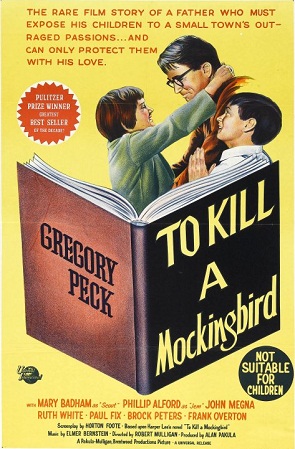
108 years ago today, the actor Gregory Peck was born in San Diego, California. With his deep voice and his Lincolnesque profile, Peck was always best cast as a man of integrity who was willing to take a stand, even if it meant going against the majority. That made him ideal for the role of attorney Atticus Finch in 1962’s To Kill A Mockingbird.
Today’s scene that I love comes from that film. In this scene, Atticus makes his closing statement in the murder trial of Tom Robinson. While Atticus is speaking to the jury, Gregory Peck is speaking to the audience in the theater (and later, in front of the television). Reportedly, Peck only needed one take to perfectly deliver his speech.
4 (or more) Shots From 4 (or more) Films is just what it says it is, 4 (or more) shots from 4 (or more) of our favorite films. As opposed to the reviews and recaps that we usually post, 4 (or more) Shots From 4 (or more) Films lets the visuals do the talking.
Today, we wish a happy 98th birthday to the legendary filmmaker, Roger Corman! And that means that it’s time for….
4 Shots From 4 Roger Corman Films
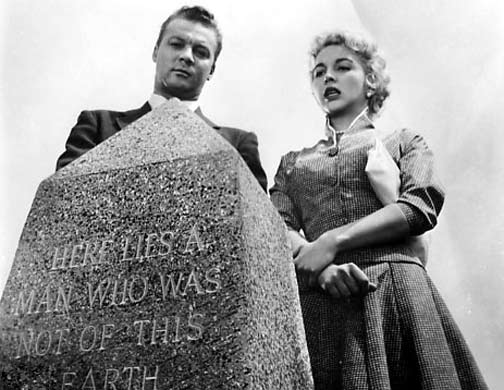
Not Of This Earth (1957, dir by Roger Corman, DP; John J. Mescall)
X: The Man With The X-Ray Eyes (1963, dir by Roger Corman, DP: Floyd Crosby)
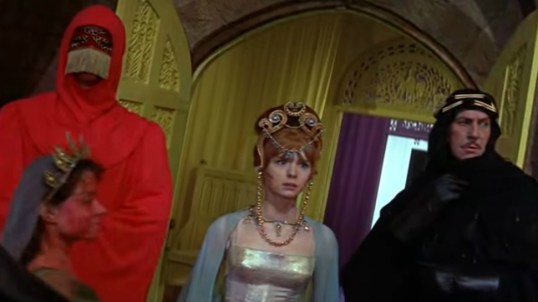
The Masque of the Red Death (1964, dir by Roger Corman, DP: Nicolas Roeg)
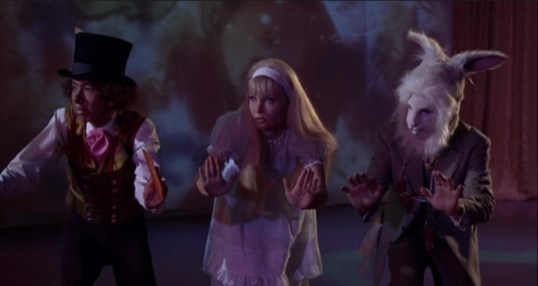
The Trip (1967, dir by Roger Corman, DP: Archie R. Dalzell)
116 years ago today, the great actress Bette Davis was born. Today’s music video of the day is for her.
(Bette Davis, incidentally, loved this song and said that when the Kim Carnes version was released in the 80s, it not only made her “culturally relevant” again but it also caused her grandson to look up to her for the first time.)
Welcome to Late Night Retro Television Reviews, a feature where we review some of our favorite and least favorite shows of the past! On Thursdays, I will be reviewing Highway to Heaven, which aired on NBC from 1984 to 1989. The entire show is currently streaming on Freevee and several other services!
This week, Jonathan and Mark travel to Hollywood …. again.
Episode 2.4 “Cindy”
(Dir by Michael Landon, originally aired on October 23rd, 1985)
Vincent DeGeralimo (Bill Macy) is a fast-talking, good-hearted talent agent who is still trying to sell acts that were out-of-style during Vaudeville. He wants to get a booking for a lion tamer but Jonathan appears to him and says that Vincent’s main concern should be helping out his daughter.
Cindy DeGeralimo (Hallie Todd) is an aspiring actress who is currently working as a waitress in a diner. Her evil boss (Alice Ghostley) has three untalented daughters who all want to be actresses as well. Cindy’s newest coworker, Mark Gordon, just wants to meet a movie star.
Pretending to work in the mailroom of a major Hollywood studio, Jonathan convinces producer Maxim Prince (Kip Gilman) that the best way to find a star for his new picture would be to hold a ball and invite every aspiring actress in town to attend.
Can you see where this is going? Yep, it’s a remake of Cinderella, except this time Cinderella has a pushy father who keeps trying to change her before she goes to the ball. Cindy finally gets fed up and says that she wants to be a star but she also doesn’t want to be some sort of Hollywood phony. Vincent accepts Cindy’s feelings and everything works out in the end.
Usually, I’m pretty lenient when it comes to reviewing this show but this episode just annoyed me. Even by the standards of Highway to Heaven, it was overly sentimental and heavy-handed. Bill Macy gave such a frantic performance as Vincent that it was hard to watch him. As well, Mark was so excited about being in Hollywood that I found myself wondering if he forgot about all the time he spent in Hollywood during the first season.
Indeed, this is not the first episode of Highway to Heaven to feature Jonathan dealing with the entertainment industry and I imagine it won’t be the last. Considering how much control Michael Landon had over this show, I always get the feeling that the Hollywood episodes were personal for him, especially as they always seemed to deal with parents regretting the fact that they put work ahead of their families. That said, the portrayal of Hollywood in this episode was so old-fashioned and idealized that I get the feeling that it was Landon’s way of showing what he wished Hollywood was like as opposed to what it actually was. Landon’s Hollywood is a town where anyone can be a star and anyone can find a happiness.
As for this episode, it was a bit too corny for its own good. Next week, though, Jonathan battles the Devil for Mark’s soul! That should be fun.
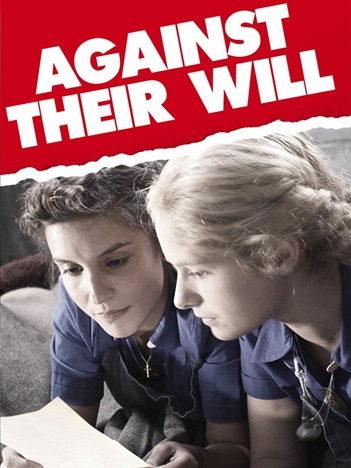
The 2012 French film, Against Their Will, tells the story of two Alsatian teenagers during the Nazi occupation of France.
Lisette (Louise Herrero) is blonde and praised, by the Nazis, for her Aryan appearance. She appears to always have a positive attitude no matter what is going on. Lisette’s father is a collaborationist with the Nazis and Lisette publicly defends the German occupiers while privately disdaining them and the war. Her fiancé, Henri, has been conscripted into the army and has been sent to the Russian front. He writes her letters but, because he is now required to write only in German and not in the French that he and Lisette grew up with, Lisette cannot read them.
Alice (Flore Bonaventura) is dark-haired and therefore considered to be inferior to Lisette. This is despite the fact that Alice is fiercely intelligent and has been trained as a nurse. Alice’s father is a doctor who has been sent to a prison camp as punishment for treating a wounded British soldier. Alice is rebellious and, unlike Lisette, she has no compunctions about telling the Nazis exactly how she feels about them. When she is ordered to salute the Nazi flag, she lifts on arm in a stiff salute while using her other hand to extend her middle finger.
Lisette and Alice are amongst the many teenagers who are taken from their families and sent to a German indoctrination camp, where the strict and cruel Trudl (Julia Thrunau) tries to brainwash them. Lisette and Alice become unlikely friends as they are sent from the camp to work in a munitions factory and finally to serve in the Lebensborn, which was Germany’s eugenics program. While Alice works in the maternity ward, Lisette’s Aryan appearance attracts the attention of a cruel SS officer.
Against Their Will starts out strong, showing how even the most intelligent and independent of people can be forced to do things that go against their beliefs, whether as a result of brainwashing or just plain fear. The scenes in the indoctrination camp and later in the munitions factory show how the Nazi government treated both people in both Germany and the occupied territories as cannon fodder in their war with the Allies. Even during an air raid, Alice is ordered to continue working and, even though one mistake could lead to an explosion that would kill both them and several of their co-workers, Alice and Lisette are continually told to speed up when it comes to making the shells that will later be dropped on the Allies.
The film loses its way during the final third, largely because French girls — even ones from the German-influenced Alsace region of France — would never have been sent to the Lebensborn, which was meant to be exclusively for the breeding of “pure” Germans. By suggesting otherwise, the film unintentionally downplays the nationalism and the racism at the heart of the Nazi ideology. The film’s framing device — in which one of the women tells her story to her granddaughter — also feels a bit awkward and the film also makes a bit too much use of the stereotype of the good German, the one Nazi who is not quite as cruel as the others.
The first half of the film is a strong portrayal of life under an occupation, with both of the lead actresses giving good performances as two women who deal with their circumstances in very different ways. It’s just a shame that the film’s conclusion doesn’t live up to what came before it.




 Through the Shattered Lens