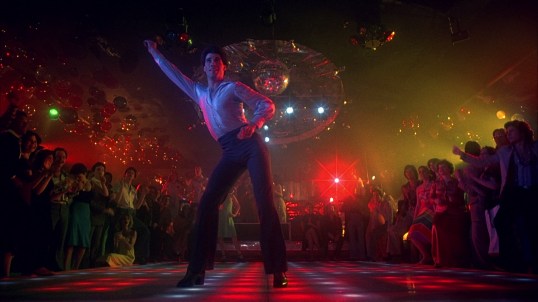
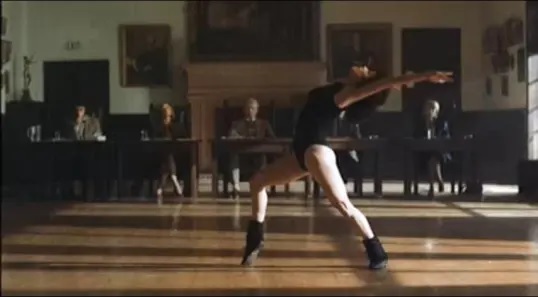
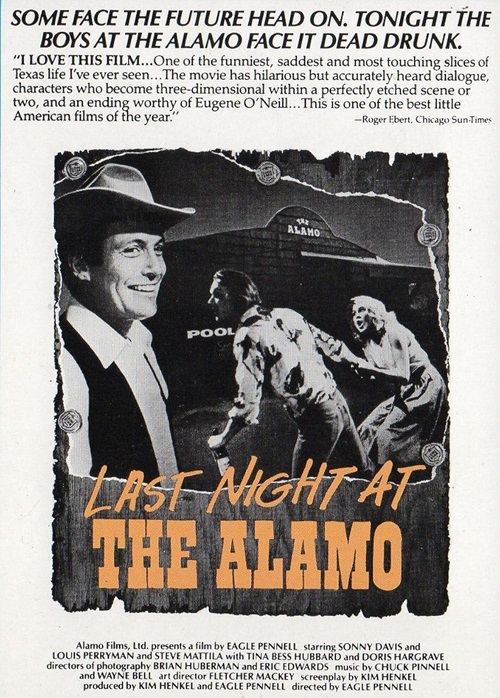
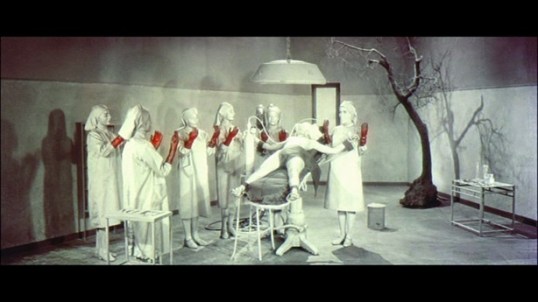
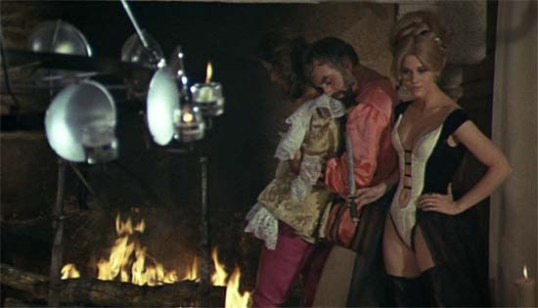
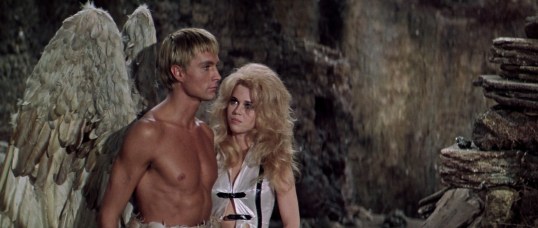
4 Shots From 4 Films is just what it says it is, 4 shots from 4 of our favorite films. As opposed to the reviews and recaps that we usually post, 4 Shots From 4 Films lets the visuals do the talking!
4 Shots From 4 Films
4 Shots From 4 Films is just what it says it is, 4 shots from 4 of our favorite films. As opposed to the reviews and recaps that we usually post, 4 Shots From 4 Films lets the visuals do the talking!
4 Shots From 4 Films
The 1963 film, The Cardinal, opens with an Irish-American priest named Stephen Fermoyle (Tom Tyron) being instituted as a cardinal.
In a series of flashbacks, we see everything that led to this moment. Stephen starts out as an overly ambitious and somewhat didactic priest who, over the years, is taught to be humble by a series of tragedies and mentors. It’s a sprawling story, one that encompasses the first half of the 20th Century and, as he did with both Exodus and Advice and Consent, Preminger tells his story through the presence of several familiar faces. Director John Huston plays the cardinal who takes an early interest in Stephen’s career. Burgess Meredith plays a priest with MS who teaches Stephen about the importance of remaining humble and thankful. When Stephen is in Europe, Romy Schneider plays the woman for whom he momentarily considers abandoning his vows. When Stephen is assigned to the American South, Ossie Davis plays the priest and civil rights activist who teaches Stephen about the importance of standing up for those being oppressed. In the days leading up to World War II, Stephen is sent to Austria to try to keep the local clergy from allying with the invading Nazis. Stephen also deals with his own family drama, as his sister (Carol Lynley) runs away from home after Stephen counsels her not to marry a good Jewish man named Benny (John Saxon) unless Benny can be convinced the convert to Catholicism. Later, when his sister becomes pregnant and Stephen is told that she’ll die unless she has an abortion, Stephen is forced to choose between his own feelings and teachings of the Church. Along the way, performers like Dorothy Gish, Cecil Kellaway, Chill Wills, Raf Vallone, Jill Haworth, Maggie McNamara, Arthur Hunnicut, and Robert Morse all make appearances.
All of the familiar faces in the cast are used to support Tom Tryon and Tryon needs all the support that he can get. Despite Otto Preminger’s attempts to make Tom Tyron into a star, Tryon eventually retired from acting and found far more success as a writer of the type of fiction that Stephen Fermoyle probably would have condemned as blasphemous. Tryon gives a stiff and unconvincing performance in The Cardinal. The entire film depends on Tryon’s ability to get us to like Stephen, even when he’s being self-righteous or when he’s full of self-pity and, unfortunately, Tryon’s stiff performance makes him into the epitome of the type of priest that everyone dreads having to deal with. Tryon gives such a boring performance that he’s overshadowed by the rest of the cast. I spent the movie wishing that it would have spent more time with John Saxon and Burgess Meredith, both of whom give interesting and lively performances.
The Cardinal is a long and rather self-important film. The same can be said of many of Preminger’s films in the 60s but Exodus benefitted from the movie star glamour of Paul Newman and Eva Marie Saint and Advice and Consent was saved by an intelligent script. The Cardinal, on the other hand, is a bit draggy and makes many of the same mistakes that many secular films make when they try to portray Catholicism. Oddly enough, The Cardinal received more Oscar nominations than either Exodus or Advice and Consent. Indeed, Preminger was even nominated for Best Director for his rather uninspired work here. Considering the number of good films for which Preminger was not nominated (Anatomy of a Murder comes to mind), it’s a bit odd that The Cardinal was the film for which he was nominated. (Of course, in 1944, the Academy got it right by nominating Preminger for his direction of Laura.) The Cardinal is largely forgettable, though interesting as a type of self-consciously “big” films that the studios were churning out in the 60s in order to compete with television and the counterculture.
First released in 1960 and based on a novel by Leon Uris, Otto Preminger’s Exodous is two films in one.
The first half of the film takes place in Cyprus in the days immediately following World War II. A young war widow named Kitty (Eva Marie Saint) is sightseeing when she learns of the Karaolos Internment Camp, where the British are interning thousands of Jewish refugees who demand to be allowed to go to the land that will eventually become the State of Israel. Kitty visits with General Sutherland (Ralph Richardson), who oversees the camp and who is rumored to secretly be Jewish because of his relatively benevolent attitude towards the internees. Disgusted by the anti-Semitism displayed by many of the British officers (one of whom is played by Kennedy in-law Peter Lawford), Kitty volunteers at the camp and learns about the Holocaust from those who survived it. She also meets Ari Ben Caanan (Paul Newman), a former officer in the British army. Ari manages to get control of a cargo ship, one that is renamed Exodus. Six hundred refugees stage a hunger strike, vowing that they will willingly starve to death rather than be returned to Europe.
The second part of Exodus takes place in what will become the modern State of Israel. It follows Ari, Kitty, and several of the passengers of the Exodus as they adjust to life and continue to fight for a land of their own, despite the opposition of the British and much of the rest of the world. Karen (Jill Haworth) is a young woman who searches for her father, a brilliant man who has been driven into a nearly catatonic state by the horrors of the Holocaust. Dov Landau (Sal Mineo) is an explosives expert who survived Auschwitz as a Sonderkommando and who was repeatedly raped by the guards at the camp. Dov joins the Irgun, a paramilitary organization that the British consider to be terrorists. Leading the Irgun is Ari’s uncle, Akiva (David Opatoshu), and Dov soon finds himself being targeted by both the British and the Arabs who, despite the moderating efforts of men like Taha (John Derek, who would later direct Ghosts Can’t Do It), want to violently force the Jews out of the land.
Legend has it that, after a private screening on Exodus, comedian Mort Sahl turned to director Otto Preminger and said, “Otto, let my people go.” And it’s true that Exodus is a very long film. Preminger, who started out making film noirs like Laura, spent the latter part of his career making “important” epics and, like many Golden Age directors struggling to compete with television and the 60s counterculture, he tended to make long, star-studded films that dealt with current events and which pushed the envelope just enough to be controversial without actually being radical. However, I would argue that the three-hour running time of Exodus is justified. To understand why Ari, Dov, Karen, and the other passengers of the Exodus would rather risk their lives by staying in what will become the State of Israel, one has to understand both what they went through to get there and also the anti-Semitism that they faced even in post-World War II Europe. If Exodus were made today, it would be a mini-series. Since it was made in 1960, it was instead a 3-hour film with an intermission.
Exodus holds up relatively well, with the sprawling action anchored by the presence of a cast of familiar faces. Paul Newman and Eva Marie Saint bring a good deal of movie star glamour to scenes that would have otherwise just been dry exposition. The film’s heart truly belongs to Jill Haworth and Sal Mineo, both of whom bring two life characters who have very differing views of the world. Karen remains an optimist, one who is convinced that people can live together. Dov, fueled by his own guilt and anger, has no room for negotiations and compromises. Mineo received his second and last Oscar nomination for his performance in Exodus, though he lost to Peter Ustinov’s showy turn in Spartacus. Exodus itself was clearly made with a hope for Oscar glory. While Exodus did pick up a handful of nominations, it was left out of the five movie Best Picture slate. The Academy only had room for one historical epic and they went for John Wayne’s The Alamo. The eventual winner was The Apartment, the best of the nominated films. (Indeed, even if Exodus had taken the Alamo’s spot, The Apartment would still be the best of the nominees.) The Oscars aside, Exodus remains a good example of the type of epic filmmaking that once defined the Hollywood studios.
Start your week with this atmospheric and wacky video from Clairo. Look out, it’s a Yeti!
Enjoy!
Welcome to Late Night Retro Television Reviews, a feature where we review some of our favorite and least favorite shows of the past! On Sunday, I will be reviewing the Canadian series, Degrassi High, which aired on CBC and PBS from 1989 to 1991! The series can be streamed on YouTube!
This week, we have a special one-hour episode of Degrassi High!
Episode 1.9 and 1.10 “Sixteen”
(Dir by Kit Hood, originally aired on January 9th, 1990)
Everyone’s turning sixteen at Degrassi High and they’re all dealing with in their own different ways.
Snake and Joey, for instance, are old enough now to take Driver’s Education. Snake is nervous. Joey says that he’s been driving since he was twelve. Both of them end up failing their driving test. Don’t feel bad, guys! It took me a few tries too! Snake actually turns out to be an even worse driver than Joey and even takes out a cardboard family at one point. Thanks to Joey and Snake’s bad driving, their poor driving instructor ends up with two black eyes and wearing a neck brace. Nancy (Arlene Lott) finally get her first storyline in forever as she easily shows up Joey and Snake and gets her license on the first try.
(When I was learning how to drive, the instructor claimed that I had a lazy eye and yelled at me so much that I went home in tears. My mom went to the driving school and raised Hell. I never had to drive with that instructor again.)
Michelle, meanwhile, celebrates her birthday by moving out of her house. Apparently, in Toronto, you only have to be sixteen to leave your parents and live on your own. Michelle moves out because her racist father (Richard Krovsky) is upset with her for dating BLT. Michelle gets her own apartment but she also has to take a job to pay the rent and she soon finds herself exhausted and sleeping through school. Concerned with his physical and academic well-being, BLT sets aside his differences with Michelle’s father and tells him where to find her. Michelle and her dad have a conversation. Michelle is going to continue to live on her own but her father is going to help with the rent. So …. okay. I mean, Michelle left him because she didn’t want to live under her father’s rules and that was understandable because Michelle’s father really is a jerk. But now that she’s on her own, Michelle’s father is going to pay her rent. So, presumably, Michelle is once again in a position where her Dad can make the rules. What if he tells her that he won’t pay her rent if she keeps seeing BLT?
While that’s going on, Lucy shoots a video for LD’s 16th birthday. LD is still in the hospital, battling Leukemia. LD doesn’t want anyone to know that she’s sick or that she’s lost all of her hair. Still, Lucy does tell the Farrell twins about what’s going on. Anyway, there’s a sweet scene in which Lucy, the twins, and Alexa visit LD in the hospital and bring her a birthday cake. It was a nice scene and well-acted by Anais Granofsky (who plays Lucy) and Amanda Cook (who plays LD). This episode was LD’s final appearance on Degrassi High which …. well, that’s kind of ominous, isn’t it?
Finally, Alexa can only watch helplessly as everyone announces that they will be missing her sweet sixteen birthday party. Even her boyfriend, Simon, is going to be busy filming a commercial on Alexa’s birthday. “Fine!” Alexa shouts, after cancelling her part, “I’ll be fifteen forever!” In fact, the cake that Alexa brings to the hospital for LD was actually supposed to be for Alexa’s party. “I’ll just have my mother bake another,” Alexa says. Good for you, Alexa!
This was a bit of an uneven episode. I actually preferred the driving class scenes to all of the birthday drama. Of course, as a longtime Degrassi fan, I know that Joey is going to grow up to be a used car salesman. Watching him struggle to drive made me smile.
Next week: Caitlin discovers that Claude is no good! It’s about time!
I’ve got a cold, which is why I didn’t post my usual film reviews today. It says something about how much I love doing all of this that I actually feel guilty about not doing so. But I promised a lot of people that I would do a better job of taking care of myself in 2025 than I have in previous years. So …. bleh, being sick sucks!
Been a busy week. I’ll just say that I’ve enjoyed everything other than being sick. The week started with a presidential inauguration and then, a few days later, the Oscar nominations were announced and now, tonight, my fever is breaking.
Here’s what I watched, read, and listened to this week.
Films I Watched:
Books I Read:
Music To Which I Listened:
Live Tweets:
News From Last Week:
Links From Last Week:
Links From The Site:
Want to check out last week? Click here!
Welcome to Retro Television Reviews, a feature where we review some of our favorite and least favorite shows of the past! On Sundays, I will be reviewing Homicide: Life On The Street, which aired from 1993 to 1999, on NBC! It can be viewed on Peacock.
This week, we begin the third season!
Episode 3.1 “Nearer My God To Thee”
(Dir by Tim Hunter, originally aired on October 14th, 1994)
The third season of Homicide opens with a disgusted Stan Bolander watching a relatively tame soap opera in the breakroom. He’s offended by the fact that two of the show’s characters are shown in bed. To Bolander, that’s the equivalent of pornography on network television. Lewis points out that television execs force showrunners to add sex in order to bring in ratings. Munch mentions that it’s strange that television is allowed to show sex but not nudity. Munch then goes on to predict that there will soon be hundreds of channels, a channel for every interest. There will be channels about animals and religion and politics and soon, anything you want to see will be at your finger tips and it will lead to people becoming dull and lazy. John Munch, super prophet!
Hmmm …. do you think maybe Tom Fontana, who wrote this script and was one of Homicide’s executive producers, was maybe venting some of his own frustration over the demands that NBC was making in return for giving a third season to the critically acclaimed but low-rated Homicide? Because the third season premiere of Homicide is a bit different from the previous two seasons. For one thing, Jon Polito is no longer in the cast. (Lewis mentions that Crosetti is on vacation in Atlantic City.) Isabelle Hofman, who is certainly more attractive than anyone who has previously appeared on the show, has joined the cast as Lt. Megan Russert, the second shift commander. And this episode features its share of nudity and sex.
At the same time, it’s still an excellent episode of Homicide. Isabelle Hofman gives a tough and no-nonsense performance as Russert and, by the end of the episode, she seems as if she belongs in the ensemble as much as her less glamorous castmates. And this episode has its share of sex and nudity but it’s all essential to the plot. This episode lets us know that, for now, Homicide is a show that can adjust without losing its integrity.
The episode’s case is a red ball (which is a term used to indicate it’s a case that’s going to get media attention). Katharine Goodrich, the 30 year-old founder of a shelter for battered women, has been found dead in a dumpster, nude except for a pair of long white cotton gloves, the type of gloves that you might expect to see at a royal procession but not at a crime scene. Russert’s shift has picked up the case and, to everyone’s horror, the incompetent and racist Roger Gaffney (Walt MacPherson) is the primary detective. The brass ask Giardello to keep an eye on Russert because they feel she’s too inexperienced to handle the investigation. Giardello (and let’s take a moment to acknowledge just how wonderful Yaphet Kotto was in this role) calls in his own detectives to help out the second shift. As you might have guessed, the two shifts do not have much respect for each other. It’s chaos, especially when Gaffney and Pembleton nearly come to blows over Gaffney’s racism, Russert defuses the situation and the scene, to be honest, is a bit overwritten. From the first minute she appeared in the episode, Hofman has been credible as a detective and a lieutenant so writing one heavy-handed scene just so she can further prove herself feels almost an insult to the strength of her performance. Hofman (and Russert) has already proven herself without having to dare Pembleton to shoot Gaffney and throw his life away.
That said, this was a strong episode. Goodrich was a devout Catholic and Pembleton and Bayliss discuss their own views on religion. Bayliss has tried out all the Protestant denominations (even the — *snort* — Unitarians) and is a bit of a cynic. Pembleton was educated by Jesuits and says at one point that, “There are two types of Catholics. Devout and fallen. I fell.” It’s a scene that could have been awkward but Andre Braugher and Kyle Secor pull it off wonderfully. Secor, especially, has really come into his own. Bayliss is no longer the awkward and earnest rookie from the first season. In fact, Bayliss has so come into his own that he agrees to invest in a bar with Lewis and Munch. They’re burying the Waterfront!
(Before Bayliss offers to invest, there’s a humorous scene where Much and Lewis try to convince Bolander to not only invest but to also be the bar’s mascot. “A big man deserves a big meal,” Munch says. Bolander — who I’m happy to say is far less whiny in this episode than he was during the previous two seasons — is not interested. It’s kind of funny how Munch basically hero worships a guy who really seems like he wants nothing to do with him outside of work.)
Kay spends the episode taking calls from Felton’s wife, Beth (Mary B. Ward). Beth recently kicked Felton out of the house because she thought Felton was cheating on her. Felton admits to Kay that he is cheating on her. When Kay isn’t running interference for her partner, she’s defending Russert when the other detectives insinuate that Russert must be slept her way to the top. Kay lists all of Russert’s qualifications and commendations. Yay, Kay! You tell them! Later, Russert sees Kay looking exhausted and snaps at her to get to work. “Bitch,” Kay mutters. Ouch! Still, I laughed.
Felton breaks into his house to retrieve a suit, just to be confronted by Beth. An obviously unstable Beth proceeds to take a pair of scissors to Felton’s jacket before then stripping down to her underwear, getting in bed, and asking Felton to leave so she can get some sleep. (I’m going to guess that rather disturbing and deliberately anti-erotic scene was Fontana’s subversive answer to the NBC execs who asked him to sex up the show a little.) Later, Russert finally goes home to get some rest and check in on her daughter. Felton shows up at her front door and, after he tells her the one of his leads on the Goodrich murder went dry, she responds by passionately kissing him. Now, we know where Felton has been going whenever Beth kicks him out.
As for the Goodrich murder, it turns out that, despite what everyone assumed, she was not raped. After a nun tells Pembleton and Bayliss that Katherine never wore gloves, Pembleton deduces the gloves were put on her body after she was killed. Gaffney insists that Katherine’s murderer was probably the boyfriend of one of the women at the shelter but Pembleton disagrees. (This leads to the fight that I mentioned earlier.) While Russert wants to keep the gloves out of the news, a smarmy reporter (Tony Todd) threatens to reveal their existence unless she agrees to come to him first with any developments. As the episode ends, Pembleton and Bayliss are canvassing the crime scene and it’s hard not to notice that they are now the ones wearing white gloves, rubber in this case. Bayliss says its pointless to keep canvassing the crime scene. But then he and Pembleton spot a storage shed with a busted lock. As they open the door, the end credits begin.
To be continued!
What a great way start to season 3. Yes, I realize that this case is pretty much the exact opposite of the gritty, pointless murders that the first two seasons focused on but still, I am now very much wondering who killed Katherine Goodrich and why they put the gloves on her hands. I hope this won’t be another unsolvable Adena Watson case. Fortunately, I have total faith in Frank Pembleton.
I can’t wait to see what happens next week!
I was trying to figure out what song to pick for song of the day when I happened to see that today would have been Eddie Van Halen’s birthday. I nearly picked Panama for our song but then I saw this video for a song called Mean Street on YouTube and I felt the video showed off Van Halen’s guitar playing a bit more than the video for Panama.
And that’s how Mean Street become today’s song of the day!
(Plus, I want to save Panama for whenever we get around to officially annexing it.)
At night I walk this stinkin’ street past the crazys on my block and I see the same old faces and I hear that same old talk and I’m searching for the latest thing, a break in this routine, I’m talkin’ some new kicks, ones like you ain’t never seen
This is home, well, this is Mean Street, it’s our home, the only one I know
And we don’t worry ’bout tomorrow ’cause we’re sick of these four walls
Now what you think is nothin’ might be somethin’ after all
Now you know this ain’t no through street, the end is dead ahead
The poor folks play for keeps down here, they’re the living dead
Come on down, huh, down to Mean Street
They’re dancin’ now, Lord, out on Mean Street
Dance, baby
It’s always here and now, my friend, it ain’t once upon a time, it’s all over, but the shouting, I come, I take what’s mine
We’re searching for the latest thing, a break in this routine, talkin’ some new kicks ones like you ain’t never seen
This is home, mmm, this is Mean Street, it’s our home, only one I know
See, a gun is real easy in this desperate part of town, turns you from hunted into hunter (yeah), you go an’ hunt somebody down, wait a minute, ah, somebody said fair warning, Lord, Lord, strike that poor boy down
Songwriters: Edward Van Halen / Alex Van Halen / Michael Anthony / David Lee Roth
Today would have been Paul Newman’s 100th birthday!
For today’s scene that I love, we have Paul Newman winning a fight in 1969’s Butch Cassidy and the Sundance Kid.
“There aren’t any rules for a knife fight.”
4 Shots From 4 Films is just what it says it is, 4 shots from 4 of our favorite films. As opposed to the reviews and recaps that we usually post, 4 Shots From 4 Films lets the visuals do the talking!
Controversial French director Roger Vadim was born 97 years ago today. It’s time for….
4 Shots From 4 Roger Vadim Films