California Straight Ahead! (1937, directed by Arthur Lubin)


Biff Smith (John Wayne), fired from his job as a school bus driver, becomes a partner in a trucking company.  In order to show-up the railroads that are determined to put any potential competitors out of business, Biff and his fleet race a train to the Pacific Coast, where a boat needs to be unloaded before a labor strike begins.  Making this personal for Biff is that he’s in love with Mary Porter (Louise Latimer), the sister of Biff’s late business partner.  Embittered by her brother’s death in a trucking accident, Mary is now working for the head of the railroad, James Gifford (Theodore van Eltz).  Biff not only wants to prove that his small trucking firm can compete with the big boys but also wants to show Mary that her new boss is nothing but a smooth-talking weasel.

This film is from John Wayne’s B-movie star period, before John Ford cast him in Stagecoach and made him one of the biggest stars in the world.  California Straight Ahead! features Wayne in a contemporary role, though the movie still has a western sensibility.  There’s not much difference between a wagon train and Wayne’s fleet of trucks and, as in so many westerns, the greedy railroad baron is the villain.  This is one of Wayne’s better B-movie performances.  He was clearly comfortable in front of the camera by the time he made this movie and was no longer as stiff as he was in his earlier films.  California Straight Ahead! is a crowd-pleasing film that finds Wayne standing up for small businesses and their workers.  Though this may just be a 61-minute B flick, California Straight Ahead! reveals the movie star that Wayne would soon become.

Westward Ho (1935, directed by Robert N. Bradbury)


As a young man, John Wyatt (John Wayne) witnessed an attack on a wagon train by the evil outlaw Wick Ballard (Jack Curtis).  John’s parents were killed and his younger brother Jim was abducted.  Years later, the grown John Wyatt realizes that the law cannot be depended upon in the wild west so he raises his own band of vigilantes and delivers justice to the frontier.  (Wayne’s second-in-command is played by the legendary Glenn Strange.)  Wyatt remains committed to taking down Ballard.  Going undercover as John Allen, Wyatt joins a cattle drive that he thinks will be attacked by Ballard.  Also working undercover as a member of the cattle drive is Jim Wyatt (Frank McGlynn Jr), John’s long-lost brother, who is now working for Ballard!  Both the Wyatt bothers end up falling for Mary Gordon (Sheila Bromley), the daughter of rancher Lafe Gordon (Jim Farley).

This was a good example of the the type of B-movies that John Wayne made in the years before John Ford cast him in Stagecoach.  The story is simple but Wayne gives a commanding performance as Wyatt.  Unlike many of the B-movies that featured Wayne as a callow singing cowboy or a fun-loving rogue, Westward Ho features Wayne playing the type of character that he would often play after he became a star.  Wyatt is determined to get justice for his family and to protect the innocents who are attacked by men like Ballard.  The presence of his brother in the enemy camp adds an extra dimension to Westward Ho.  Wyatt learns that vengeance isn’t everything.

It’s only 61 minutes long but it tells a good story and it has all the gunfights and horse chases that Western fans expect from their movies.  Of Wayne’s poverty row westerns, Westward Ho is one of the better ones.

Hidden Assassin (1995, directed by Ted Kotcheff)


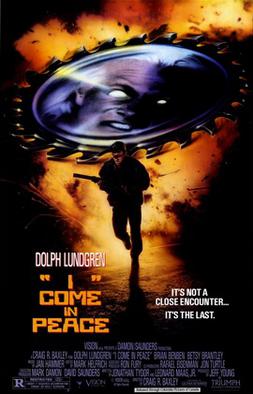
After the Cuban ambassador to the United States is assassinated, the CIA worries that someone is trying to create trouble between the USA and Cuba.  With another Cuban-American summit due to be held in Prague, CIA Agent Dolph Lundgren is sent to arrest the assassin and bring her back to America to be tried before she can cause anymore trouble.  The CIA claims that the assassin is a sniper-turned-club owner named Simone (Maruschka Detmers) but, once it becomes obvious that whoever wants to keep her from going to America want to not only kill him but also her as well, Dolph starts to suspect that there’s a bigger conspiracy at work.

Hidden Assassin was the last feature film to directed by Ted Kotcheff and, while it’s definitely a direct-to-video action flick, it’s still a cut above similar films that were being released at the time.  Not surprisingly, the director of First Blood and Uncommon Valor knew how to shoot action films but he also did a good job directing the actors and everyone gives it their all in this film.  Amongst the lower-tier action films of the 90s, Dolph Lundgren was always a better actor than Van Damme and he also more likable than Seagal.  (Of course, a rabid bobcat is more likable than Steven Seagal.)  Lundgren is at his best here, believable as both an action star and a spy.  John Ashton of Beverly Hills Cop fame plays his partner and Gavan O’Herlihy plays his superior.  They’re both pros who know exactly how to handle the material.

Hidden Assassin has some plot holes, the least of which anyone would go through that much trouble to sour relations between America and Cuba.  America and Cuba haven’t gotten along for a very long time.  Still, the movie makes great use of Prague as a location and Lundgren is characteristically strong as the film’s hero.  There’s even some moments of deliberate humor that work surprisingly well.  Lundgren and Kotcheff were a killer combination and it’s too bad they didn’t do more movies together.

Buckaroo From Powder River (1947, directed by Ray Nazarro)


Pop Ryland (Forrest Taylor) is a frontier outlaw who makes law-breaking a family business.  With his two sons, Pop is planning on flooding the territory with counterfeit bonds.  His stepson, Tommy (Paul Campbell), doesn’t want anything to do with any criminal activity so Pop sends for McCall (Frank McCarroll), an assassin.  In a letter, Pop explains that he wants his stepson murdered.  When federal agent Steve Lacey (Charles Starrett) captures McCall, he finds the letter.  Steve heads into town and goes undercover, pretending to be McCall.  He also uses his other identity, the Durango Kid, to thwart Pop’s plans.

More than usual, this Durango Kid film leans more into the undercover aspect of Steve’s work.  What’s interesting is that, after Tommy fakes his own death, Tommy also disguises himself as the Durano Kid and keeps his stepfather from suspecting that Steve is actually a member of law enforcement.  It’s actually pretty clever, as far as these movies go, and it answers the question of why no one ever wonders why Steve and Durango are never in the same place at the same time.

Smiley Burnette shows up as Steve’s sidekick and he sings a few songs with the The Cass County Boys.  Along with Smiley’s antics, this film has all of the horse chases and gunfights that we expect from a Durango Kid movie.  Most of the usual stock company is present, including Ted Adams and Kermit Maynard.  As always, Charles Starrett looks authentic riding horse and handling a gun.  If you’re not into westerns, this film won’t convert you.  But, for fans of the genre, this is another entertaining outing for the Durango Kid,

Summer Dreams: The Story of the Beach Boys (1990, directed by Michael Switzer)


Bruce Greenwood stars as Dennis Wilson and Greg Kean plays his brother Brian in this made-for-TV movie about the history of the Beach Boys.  The movie focuses on Dennis and his struggle with his abusive father (Arlen Dean Snyder) and his ultimately fatal addictions.  Bo Foxworth plays Carl Wilson, who doesn’t get a line until half an hour into the movie.  Andrew Myler plays Al Jardine and Casey Sanders plays Mike Love, both of whom are portrayed as being bystanders while Brian and Dennis create the Beach Boys sound.  (Jardine doesn’t get a single line in the movie.)  An actor named Michael Reid MacKay shows up briefly as Charles Manson, wearing a fake beard and crashing at Dennis’s pad in the 60s.  The movie portrays the Beach Boys transformation from being a clean-cut group of California teenagers to psychedelic pioneers by putting everyone in a wig once the late 60s arrive.

Summer Dreams claims to be The Story of the Beach Boys but next to no time is spent on the recording of Pet Sounds and Smile isn’t mentioned at all.  (Don’t go looking for Van Dyke Parks.)  Admittedly, this film was made before Brian Wilson made his touring comeback so I guess it would make sense that the story would focus on Dennis, who had died seven years previously.  (Brian is portrayed as being neurotic and sensitive but not mentally ill.)  Bruce Greenwood doesn’t do a bad job as Dennis and there definitely is a place for a movie that takes a real look at Dennis Wilson and his contributions to the group.  Dennis was, in many ways, as serious an artist as Brian but, due to his early death, he’s often overlooked.  But this film, mired as it is in biopic cliches and bland recreations of the 60s and 70s, doesn’t do justice to either Brian or Dennis or the group as a whole.

Watch Love & Mercy instead.

Uncommon Valor (1983, directed by Ted Kotcheff)


Retired Marine Colonel Jason Rhodes (Gene Hackman) and oilman Harry MacGregor (Robert Stack) share a tragic bonf.  Both of them have sons that served in Vietnam and are listed as being MIA.  Believing that their sons are still being secretly held in a POW camp in Loas, Rhodes and MacGregor put together a team to sneak into Southeast Asia and rescue them.

With MacGregor supplying the money and Rhodes leading the mission, the team includes Blaster (Red Brown), Wilkes (Fred Ward), Sailor (Randall “Tex” Cobb), and Charts (Tim Thomerson), all of whom served with Rhodes’s son.  Also joining in his helicopter pilot Curtis Johnson (Harold Sylvester) and former Marine Kevin Scott (Patrick Swayze), whose father was also listed as being MIA in Vietnam.  After a rough start, the group comes together and head into Laos to bring the prisoners home!

Uncommon Valor is one of the many movies released in the 80s in which Vietnam vets returned to Asia and rescued those who were left behind.  In the 80s, there was a very strong belief amongst many Americans that soldiers were still being held prisoner in Vietnam, Cambodia, and Laos and Hollywood was quick to take advantage of it.  The box office success of Uncommon Valor set the stage for films like Rambo and Missing In Action, film in which America got the victory that it had been denied in real life.

What set Uncommon Valor apart from the films that followed was the cast.  Not surprisingly, Gene Hackman brings a lot more feeling and nuance to his performance as the obsesses Col. Rhodes than Sylvester Stallone and Chuck Norris brought to their trips to Vietnam.  The film surrounds Hackman with a quirky supporting cast, all of whom represent different feelings about and reactions to the war in Vietnam.  Fred Ward’s character suffers from PTSD.  Randall “Tex” Cobb, not surprisingly, is a wild man.  Patrick Swayze’s character is trying to make the father he’ll never know proud.  Robert Stack and Gene Hackman represent the older generation, still trying to come to terms with everything that was lost in Vietnam and still mourning their sons.  The raid on the POW camp is exciting but it doesn’t feature the type of superhuman action that’s present in other POW-rescue films.  Col. Rhodes and his soldiers are ordinary men.  Not all of them survive and not all of them get what they want.

Uncommon Valor started out as a screenplay from Wings Hauser, though he’s not present in the cast of the final film and he was only given a “story” credit.  John Milius served as producer. Director Ted Kotcheff is best-known for First Blood, another action film about America’s struggle to come to terms with the Vietnam War.

Command 5 (1985, directed by E.W. Swackhamer)


Morgan (Stephen Parr) is a mysterious government operative who puts together a special paramilitary force to take on extreme threats.  He says that only misfits are allowed to join his group because they have the edge he needs.  Smith (William Russ) is a wild Texan who drives like a maniac.  Psychiatrist Winslow (Sonja Smits) can fire an Uzi better than any man.  Kowalski (John Matuszak) is a demolitions expert who listens to Beethoven.  Jack Coburn (Wings Hauser) is a rebellious detective who is good with a throwing knife.

After a montage of their extensive training and a scene where our heroes take a look at the bullet-proof RV that they’ll be traveling the country in, the movie finally gets down to business.  A motorcycle-riding terror cult led by Delgado (Gregory Sierra) has taken an entire town hostage and is threatening to kill everyone unless they’re given a flight out of the country.  Our heroes drive their bulletproof van into town and try to defeat the bad guys.  There’s one good scene where the RV is driving down the town’s main street and getting hit nonstop with bullets.  The scene was obviously ripped off from the end of Clint Eastwood’s The Gauntlet but it’s still exciting to watch.  Otherwise, the action in this one is pretty rudimentary.

I guess Command 5 was supposed to be a pilot for television show that never went into production.  It is very much a television production.  There’s a lot of shooting but no blood.  Wings Hauser is less dangerous than usual.  The whole thing ends with Command 5 looking forward to adventures that were never to come.  Watching the pilot, you can see why it never became a show.  The characters were all thinly-written and never seemed to have much of a connection with each other and Hauser and Russ both seemed to be competing to be the loose cannon of the group.  This one is for Wings Hauser completists only.

The Lawless Nineties (1936, directed by Joseph Kane)


The year is 1890 and Wyoming is on the verge of voting for statehood.  Newspaperman Major Carter (George “Gabby” Hayes) believes that it’s time for Wyoming to become a state and most of the locals agree with him.  Businessman Charles Plummer (Harry Woods) does not want Wyoming to become a state and he’s willing to send out his main henchman, Steele (Al Bridge), to intimidate the voters and to silence Carter.  Plummer has a profitable racket going and the last thing he wants is for the U.S. government to get involved in his activities.  It falls to two federal agents, John Tipton (John Wayne) and Bridger (Lane Chandler), to supervise the voting and protect the citizen.  When Major Carter is shot by a drunk anti-statehood activist, the mission to make Wyoming a part of the Union becomes personal.

The Lawless Nineties is typical of the B-movies that John Wayne made for Republic Pictures before John Ford resurrected his struggling career by casting him as The Ringo Kid in Stagecoach.  There are plenty of gunfights and horse chases and explosions as the bad guys try to keep the townspeople from voting and the federal agents set up their own sting operation to expose Plummer’s gang.  Wayne seems more relaxed here than he did in some of his other B-movies.  He was obviously getting more comfortable with being on camera and playing the hero.  Probably the most interesting thing about this film is that Gabby Hayes (credited as George Hayes, without his famous nickname) plays the renowned and intelligent Major Carter.  Hayes was just a year away from establishing himself as a perennial B-movie sidekick and supplier comedy relief.  He would soon be best-known for playing characters who had little in common with the intelligent and well-spoken Major Carter.  In The Lawless Nineties, Hayes gets a chance to play something other than the comedic relief and turns out to be petty good at it.

This is another one of those westerns that will be enjoyed by fans of the genre.  It’s nothing special but it does allow Wayne to show hints of his future stardom and it also gives Gabby Hayes a chance to show what he was actually capable of.

4 Shots From 4 Films: Special Barry Levinson Edition


4 (or more) Shots From 4 (or more) Films is just what it says it is, 4 (or more) shots from 4 (or more) of our favorite films. As opposed to the reviews and recaps that we usually post, 4 (or more) Shots From 4 (or more) Films lets the visuals do the talking.

Happy birthday to Baltimore’s own Barry Levinson!

4 Shots From 4 Barry Levison Films

Diner (1982, directed by Barry Levison, DP: Peter Sova)

The Natural (1984, directed by Barry Levinson, DP: Caleb Deschanel)


Tin Men (1987, directed by Barry Levinson, DP: Peter Sova)

Avalon (1990, directed by Barry Levinson, DP: Allen Daviau)


Arizona (1931, directed by George B. Seitz)


In one of his earliest starring roles, John Wayne plays Lt. Bob Denton, a West Point football star who gets assigned to a post in Arizona where he’ll be under the command of his mentor, Colonel Frank Bonham (Forrest Stanley).  Bonham is married to Evelyn (Laura La Plante), who is Bob’s former girlfriend and who only married Bonham after Denton told her that he didn’t even intend to marry anyone.  In Arizona, Denton meets Bonnie (June Clyde), who is the younger sister of Evelyn.  Bonnie and Denton fall for each other so the jealous Evelyn rips her dress and accuses Denton of trying to force himself on her.  Bonham is ready to drum Denton out of the service but then Evelyn learns that Denton and Bonnie are secretly married and destroying Denton’s life will also mean destroying Bonnie’s happiness.

Arizona is a simplistic melodrama and probably one that wouldn’t be made today.  Denton is undeniably a cad, telling Evelyn that he didn’t want to make a commitment to her after dating her for two years and then turning right around and deciding to pursue Evelyn’s sister.  But Evelyn’s reaction goes overboard.  She marries an older man just to get back at Denton (even though Denton didn’t want to marry her so why would he care?) and then she accuses Denton of trying to force himself on her.  Evelyn needs to move on and Bonham needs to get a divorce.  Instead, Evelyn tries to destroy one man’s life and Col. Bonham is very understanding.  What’s a false accusation of rape between friends?

This was one of John Wayne’s first starring roles in a major studio production.  The film was produced by Columbia, where Harry Cohn did seven films with Wayne before exiling him back to Poverty Row, where Wayne did B-pictures before John Ford finally cast him in Stagecoach.  Wayne seems awkward and uncomfortable in much of Arizona.  Top-billed Laura La Plante does a better job as Evelyn but the way the film ultimately shrugs off her false accusations just doesn’t feel right.

Arizona is a misfire in the Duke’s early filmography.