A Movie A Day #15: Special Bulletin (1983, directed by Ed Zwick)


specialbulletin2

“We interrupt our regularly scheduled programming for a special report…”

Led by veteran anchor John Woodley, the RBS news team is providing continuing coverage of a developing crisis in Charleston, South Carolina, where terrorists are holding several members of the coast guard, a local new reporter, and his cameraman hostage on a small tugboat.  These are not typical terrorists, though.  Two of them are nuclear scientists.  One of them is a social worker.  Another one is a nationally-renowned poet.  The final terrorist is a former banker robber who was just recently released from prison.  This unlikely group has only two demands: that the U.S. government hand over every single nuclear trigger device at the U.S. Naval Base and that RBS give them a live television feed so that they can explain their actions to the nation.  If either of those demands are not met, a nuclear bomb will be detonated and will destroy Charleston.

This made-for-TV movie was shot on video tape, to specifically make it look like an actual news broadcast.  Though much of the movie seems dated when compared to today’s slick, 24-hour media circus, Special Bulletin was convincing enough that, when it was originally broadcast in 1983, it caused a mini-panic among viewers who missed the opening disclaimer:

specbull_disclaimer

Because the movie deals with the threat of nuclear terrorism instead of a U.S.-Soviet nuclear war, it still feels relevant in a way that many of the atomic disaster films of the 1980s do not.  Beyond making an anti-nuclear statement, Special Bulletin is also a critical look at how the news media sensationalizes every crisis, with the RBS news team going from smug complacency to outright horror as the situation continues to deteriorate.  David Clennon and David Rasche are memorable as the two most outspoken of the terrorists and Ed Flanders is perfectly cast as a veteran news anchor struggling to maintain control in the middle of an uncontrollable situation.  Special Bulletin won an Emmy for Outstanding Drama Special and can be currently be found on YouTube.

Keep an eye out for Michael Madsen, who shows up 57 minutes in and gets the movie’s best line: “That guy’s a total psycho ward.”

madsen-special-bulletin

A Movie A Day #14: Eyewitness (1970, directed by John Hough)


eyewitness-1970-film

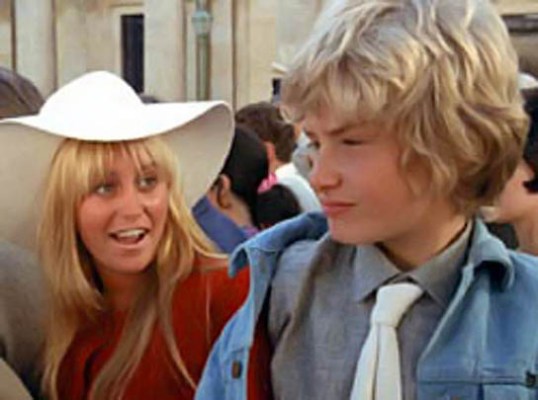
In Eyewitness (which is also known as Sudden Terror), eleven year-old Ziggy (Mark Lester) witnesses a policeman (Peter Vaughan) assassinating a visiting African dignitary but, because he has a history of “crying wolf,” he can’t get anyone to believe him.  Not his older sister, Pippa (Susan George).  Not his grandfather (Lionel Jeffries), the lighthouse keeper.  Not the housekeeper, Madame Robiac (Betty Marsden).  Not even Tom Jones (Tony Bonner), a tourist who fancies Pippa.  When he sees two policemen driving up to his grandfather’s lighthouse, Ziggy panics and runs.  Though John Hough’s direction, which is full of zoom shots and Dutch angles, is dated, Eyewitness holds up well as a tight thriller.  Susan George was beautiful in 1970 and Peter Vaughan is a great villain.

If Sam Peckinpah had ever made a children’s movie, it would probably look a lot like Eyewitness.  The movie starts out with Ziggy playing on the beach and pretending to be a soldier while imaginary gunshots and explosions are heard in the background.  It ends with a strange joke about a man who looks like Hitler, followed by a cheery freeze frame.  In between all that cheeriness, the assassin and his brother (Peter Bowles) chase Ziggy across Malta and kill anyone who gets in their way, from a friendly priest to a ten year-old girl being held by her father.  I counted ten onscreen death, which is a lot considering that this British movie was released at a time when some were still arguing that Jon Pertwee-era Dr. Who was too scary for children.  There’s even an exciting car chase that ends with one car overturned and the blood-covered survivors struggling to drag themselves out from underneath the wreckage.  How many British children were traumatized by Eyewitness?


A Movie A Day #13: Ringmaster (1998, directed by Neil Abramson)


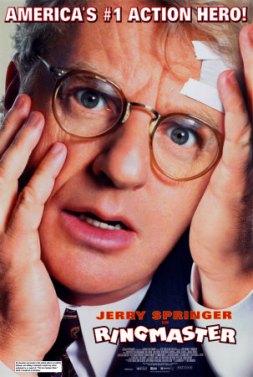
ringmaster-posterJerry Springer has been many things over the course of his long life.  Lawyer.  Anti-war activist.  Adviser to Bobby Kennedy.  Congressional candidate.  City councilman.  Brothel aficionado.  Mayor.  Journalist.  Commentator.  Talk show host.  Destroyer of culture.  Scourge of humanity.  Twice, he was a highly recruited candidate for the U.S. Senate but, both times, it was decided that there was no way a morally questionable television personality could actually win high political office in the United States.

(Yeah, about that…)

There is one thing that Jerry Springer has never been and that is a movie star.  However, that’s not for lack of trying.  At the height of his talk show’s popularity, Jerry Springer starred in Ringmaster.  Though he played a character named Jerry Farrelly and his show was retitled The Jerry Show, there was never any doubt that Jerry Springer was meant to be playing himself.

Who is Jerry Springer, according to Ringmaster?  He’s a sad and weary man who sleeps with his guests and worries that his raunchy show will be his only legacy.  After one show, he tells his staff that he will never again be elected to political office.  His staff laughs but Jerry didn’t sound like he was making a joke.  Why does Jerry do it?  Because he cares about America!  When a man in his audience starts yelling that Jerry and his guests are all going to Hell, Jerry gets in his face and let him know that his show is providing a voice for the people who live in the real America.

In Ringmaster, the real America is made up of people like trailer park nymphomaniac Angel Zorzak (Jaime Pressly) and her mother, Connie (Molly Hagan).  Angel and Connie appear on The Jerry Show after Angel sleeps with her stepfather (Michael Dudikoff, the American Ninja himself) and Connie gets revenge by sleeping with Angel’s boyfriend.  Also on the show is Demond (Michael Jai White), who cheated on his girlfriend with her two best friends and, the night before the show, cheats with Angel too.  Thanks to the show, Demond gets his comeuppance and Angel and Connie’s relationship is repaired.  The movie ends with mother and daughter back in the trailer park, talking about how their new neighbor has big feet.

Pressly and Hagan are the best thing about Ringmaster.  The worst thing is undoubtedly Jerry Springer.  For someone who has made a career in both politics and television, Jerry Springer turns out to be a terrible actor.  He sleepwalks through the movie with a please-kill-me look on his face, keeping his head down and muttering the majority of his lines.

According to Wikipedia, Ringmaster had a budget of $20,000,000 and grossed back less than half of that.  Why would people pay money to watch what they could see on TV for free?  Jerry Springer never became a senator or a movie star.  He continues to host his talk show and probably will until the end of time.

A Movie A Day #12: Stoked: The Rise and Fall of Gator (2002, directed by Helen Stickler)


gatorIn the 1980s, Mark “Gator” Rogowski was a superstar.  A professional skateboarder, Gator was one of the most popular vert skaters, competing and partying alongside Tony Hawk, Christian Hosoi, Steve Caballero, and Lance Mountain.  Yet today, unlike his contemporaries, Gator is almost totally forgotten.  In 1991, after having changed his name to Mark Anthony and declared himself to be a born again Christian, Gator raped and killed Jessica Bergstrom, a friend of his ex-girlfriend.  Convicted of first degree murder, Gator was sentenced to life imprisonment.  He is currently an inmate of the California State Prison System.

Through archival footage and interviews with both his fellow skaters and his ex-girlfriend, Stoked tells the story of Rogowski’s rise and fall.  Even if you know nothing about the history of skating, the interviews are interesting and frequently insightful about the fickle nature of fame.  Anyone who was not already a fan of Jason Jessee’s will be after seeing him interviewed in Stoked.  Because California state law prohibits inmates from giving video interviews, Rogowski is interviewed over the phone and his disembodied voice provides a ghostly accompaniment for much of the film.

Stoked not only tells the story of how Gator ended up in jail but also of how vert skating became big business in the 1980s.  At the height of his popularity, Gator was making $20,000 a month, just through board sales and the sponsorship of Vision Street Wear.  When street skating became popular in the 90s and a new generation of skaters rejected Vision’s commercial approach, Gator found himself washed up before he even turned 25.  By using Gator’s story as a way to examine an entire era, Stoked is to skateboarding what O.J.: Made in America is to football.

A Movie A Day #11: O.J.: Made in America (2016, directed by Ezra Edelman)


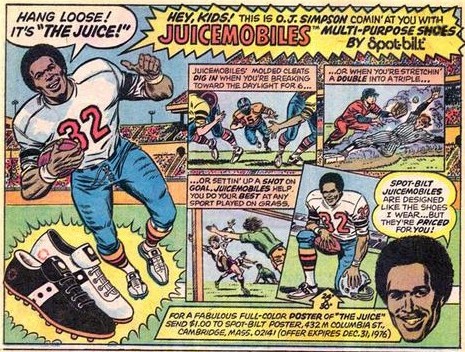
juicemobile-comic

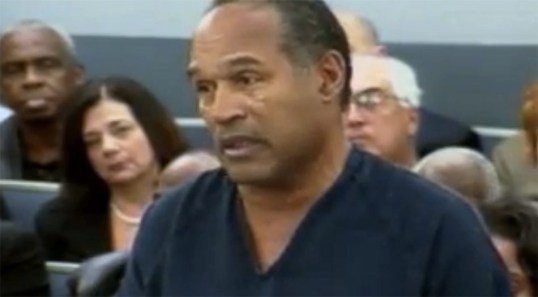
O.J.: Made in America, the best film of 2016, opens with a parole hearing in Nevada.  The inmate is surprisingly friendly and affable.  He talks about how he has tried to make the best use of his time in prison.  He chuckles as he talks about his prison duties.  For a prisoner, he seems like a really nice guy.

Then the parole commissioner asks him about the first time he was ever arrested and the prisoner’s entire demeanor changes.

“We’re going to talk about that?” he asks.
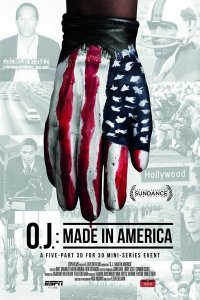
ojThe prisoner, of course, is former football great and actor Orenthal James Simpson and the first time that he was arrested, he was charged with murdering both his ex-wife, Nicole Brown Simpson, and Ronald Goldman.  In 1995, after a long and controversial trial that both forced people to reconsider how they viewed race relations in America and also marked the beginning of what would become reality television, O.J. Simpson was acquitted.  13 years to the day of his acquittal, he was sentenced to 33 years in prison for armed robbery in Nevada.

O.J.: Made in America leaves little doubt that O.J. got away with murder, though it should be pointed out that O.J. Simpson did not respond to requests for an interview and that Johnnie Cochran, who headed the legal team that won Simpson’s acquittal, died in 2005.  But with a sprawling running time of 7 and a half hours and featuring interviews with hundreds of people who either knew or were affected by O.J., O.J.: Made in America is about much more than just the trial of the century.
486940_032

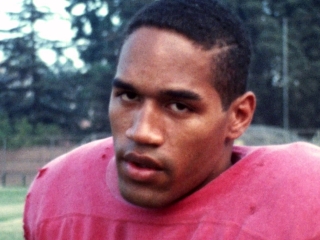
The first three hours of O.J.: Made in America deal with who O.J. was before he was charged with murder.  Things open in the 1960s, with the nation torn apart by racial unrest, and O.J. Simpson winning the Heisman Trophy and setting rushing records with both the USC Trojans and the Buffalo Bills.  While other black athletes, like Mohammad Ali, were putting their careers on the line and speaking out about civil rights, O.J. was deliberately apolitical.  When O.J. was pressured to speak out on civil rights, he would reply, “I’m not black.  I’m O.J.”

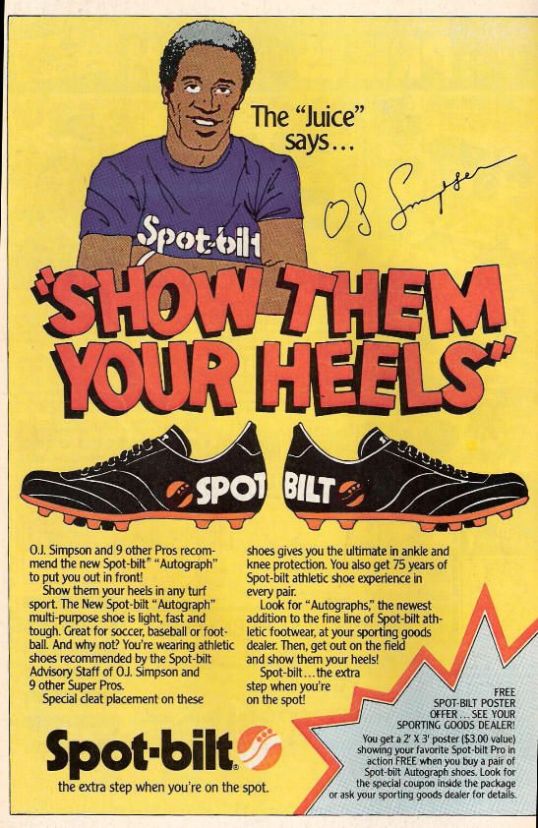
In turbulent times, O.J. emerged as a black celebrity that whites could safely embrace.  O.J. made history as the first black man to be used as a spokesman in an advertising campaign, running through airports for Hertz Rent-A-Car while onlookers shouted, “Go, O.J., go!”  A Hertz executive explains that, whenever they filmed a commercial, they were careful to make sure that it was only white people who were seen cheering O.J. on.  Retiring from football, O.J. moved to Brentwood, an all-white enclave in Los Angeles.  Surrounded by sycophants, O.J. pursued an acting career and remained silent while Los Angeles dealt with a series of racial incidents, culminating in the riots that followed after four LAPD officers was acquitted in the beating of Rodney King.
wedding

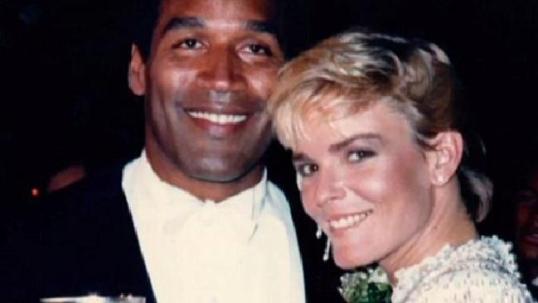
During all of this, O.J. divorced his first wife and married Nicole Brown.  One of the commendable things about O.J.: Made in America is that it gives a face and a personality to Nicole, who is often the forgotten victim when people discuss the O.J. Simpson case.  At the same time, O.J.: Made in America also documents how O.J. never faced any serious consequences for abusing Nicole.  Even after he was charged with domestic battery, all O.J. had to do for his community service was set up a charity golf tournament.  He later did an interview with Roy Firestone where the two of them joked away the charges and Firestone worried that they may have led some people to think that the Juice was a bad guy.

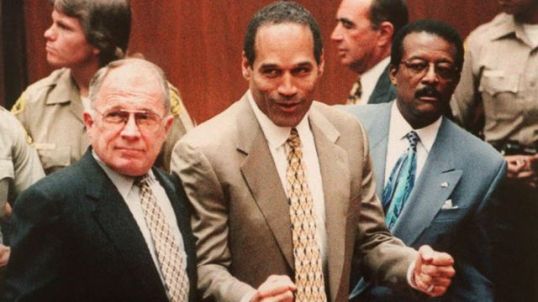
The next three hours deal with not only the murders of Nicole and Ronald Goldman but also with the national ramifications of the so-called “trial of the century.”  The first three hours were dominated by interviews with childhood friends, business associates, and neighbors.  It’s during the 2nd three hours that the familiar faces start to pop up.  Gil Garcetti, Bill Hodgman, and Marcia Clark talk about prosecuting O.J.  (Unfortunately, Chris Darden declined to be interviewed.)  From the defense team, F. Lee Bailey, Barry Scheck, and Carl E. Douglas share their memories of how this murder trial became a national Rorschach test on how Americans viewed race, celebrity, and justice.  The irony is not lost on anyone that O.J., who never made any public commitment to civil rights and who surrounded himself with rich, white people, was largely acquitted because of race.

Until I saw O.J.: Made in America, I could never understand how O.J, manages to win acquittal.  His guilt has always seemed so obvious to me.  But, as O.J.: Made in America made clear, reasonable doubt can mean different things to different people.  A black jury in downtown Los Angeles had reason to both distrust and dislike the LAPD.  When Mark Furhman is heard using racial slurs, Carl Douglas says that it confirmed everything that he had always suspected by the LAPD.  Beyond that Cochran and his team put on a better show than the prosecution, who often seemed unsure how to respond and who repeatedly shot themselves in the foot with unforced errors, like asking O.J. to try on the bloody glove.  (Mike Gilbert, O.J.’s agent, reveals that O.J. had stopped taking his arthritis medication during the trial, causing his fingers to swell up.)  Even though the late Cochran could not be interviewed, he still easily dominates the documentary.
o-j

O.J.: Made in America features interviews with two of the jurors, Carrie Bess and Yolanda Crawford.  When Crawford is asked if the acquittal was payback for the Rodney King verdict, she weakly protests that it was not.  When ask the same question, Carrie Bess unapologetically nods in the affirmative.

With the trial over, the best part of the documentary is yet to come.  The final 90 minutes deals with the decade between O.J.’s acquittal and his Nevada conviction.  Freshly acquitted from murdering his wife, O.J. Simpson swore that he was going to track down the real killers, returned to his Brentwood mansion, and discovered that none of his old friends wanted to hang out with him anymore.  The once popular O.J. Simpson was now a pariah.  Simpson was taken to civil court by the Goldmans and the Browns and a new jury found him liable for the deaths of both Nicole and Ron.  Ordered to pay $33,000,0000, a bankrupt and friendless O.J. spent ten years in the wilderness.

If things could not get any more surreal, O.J. was hired to star in a Punk’d-style TV show that would have been called Juiced.  The Juiced footage would have been the strangest part of O.J.: Made in America if not for what happened in Las Vegas.  Convinced that a memorabilia collector had stolen his stuff, O.J. and his entourage confronted the man in his hotel room.  In a comedy of errors, O.J. grabbed everything that he felt had been stolen from him and ended up taking a lot of other things as well, with the entire encounter being audio recorded.  Because a member of Simpson’s entourage had a gun on him, O.J. was charged with armed robbery.
2016-06-18-oj-acting

Tom Riccio, a member O.J.’s Las Vegas entourage, talks about how, in the minutes before leaving to confront the memorabilia collector, O.J. was watching the Tyra Banks Show in his hotel room.  Tyra’s guest?  O.J.’s goddaughter, Kim Kardashian.  Kim announced that she and her family were going to be starring in a new show for E!  O.J. laughed and said, “That show will never last.”  Ironically, just as no one would have known (or cared) who Kim Kardashian was if not for her father’s role on O.J.’s defense team, O.J.’s murder trial also set the stage for the emergence of the reality television genre that would make stars of everyone from the Kardashian daughters to Donald Trump.

One final note about what happened in Las Vegas: O.J.’s Nevada trial was covered, for Entertainment Tonight, by Marcia Clark.

Convicted of armed robbery, O.J. was sentenced to prison.  As Carl Douglas puts it, it was not a coincidence that the judge waited until a year to the day after Simpson’s previous acquittal to sentence him.  And it was not a coincidence that Simpson, found liable for $33,000,000 in the civil lawsuit, was sentenced to 33 years.  Douglas calls it the “fifth quarter,” the fight that happens after the fourth quarter to determine who really won the game.  O.J.’s childhood friend, Joe Bell, calls it “white justice in America.”

Most people saw O.J.: Made in America when it was broadcast over five nights by ESPN.  But the best way to see this documentary is the way it was originally viewed at Sundance: as a seven and a half hour movie, watched with little break or interruption.  Full of candid and thought-provoking interviews and previously unseen footage, O.J.: Made in America is a powerful look at race, fame, and crime.

For tomorrow’s movie a day, it’s another documentary about a sports hero who ended up in prison, Stoked: The Rise and Fall of Gator.
juice


A Movie A Day #10: The Longest Yard (1974, directed by Robert Aldrich)


longest-yard-burt-reynolds

Once, Paul “Wrecking” Crewe (Burt Reynolds) was a superstar NFL quarterback.  That was until he was caught up in a point-shaving scandal and kicked out of the league.  When a drunk Crewe steals his girlfriend’s car, gets into a high-speed police chase, and throws a punch at a cop, he ends up sentenced to 18 months at Citrus State Prison.

The warden of the prison, Rudolph Hazen (Eddie Albert), is a football fanatic who, at first, is excited to have Crewe as an inmate.  The prison guards have a semi-pro football game and Hazen wants Crewe to coach the team and help them win a national championship.  Though initially reluctant and just wanting to do his time, Crewe relents after witnessing and experiencing the cruelty of the prison system.  Crewe forms The Mean Machine, a team made up of prisoners, and agrees to play an exhibition game against the guards.

At first, the members of the Mean Machine are just looking for an excuse to hit the guards without being punished but soon, they realize that they have a chance to win both the game and their dignity.  But Hazen is not above blackmailing Crewe to throw the game.

When it comes to understanding the Tao of Burt, The Longest Yard is the place to start.  Starting with a car chase and ending with near martyrdom, The Longest Yard is the ultimate Burt Reynolds film.  Paul Crewe ranks alongside Deliverance’s Lewis Medlock and Boogie Night‘s Jack Horner as Reynolds’s best performance.  Before injuries ended his athletic career, Reynolds was a college football star and, on the prison’s playing field, he holds his own with the large group of former professional football players who were cast to play the guards and the prisoners.  The Longest Yard’s climatic football game takes up over an hour of screen time and reportedly, the action was largely improvised during shooting.  Unlike most movie football games, the one in The Longest Yard looks and feels like a real game.

The Longest Yard was directed by Robert Aldrich, who specialized in making movies about anti-authoritarians fighting the system.  The scenes of Crewe recruiting and training The Mean Machine are very reminiscent of Aldrich’s best-known movie, The Dirty Dozen.  With its combination of dark humor, graphic violence, rebellious spirit, and Southern-friend melodrama, The Longest Yard is a movie that could only have worked in the 1970s.  The Adam Sandler remake may have made a lot of money at the box office but it still comes nowhere close to matching the original.

For tomorrow’s movie a day, it’s the best film of 2016, which also happens to be about a football player in prison.

thelongestyard

A Movie A Day #9: Gator (1976, directed by Burt Reynolds)


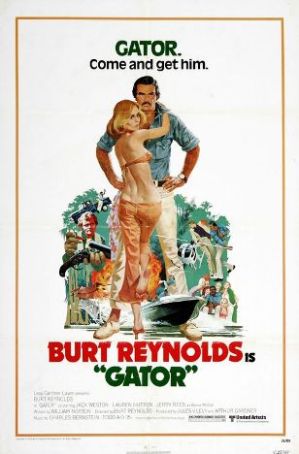
gatorposterGator McClusky is back!

Since the events in White Lightning, Gator (Burt Reynolds) has been released from prison and he’s now living in the Okefenokee Swamp.  Other than running moonshine, Gator is laying low and keeping to himself.  Gator may be done with the feds but the feds are not done with him.

Gator’s old friend, Bama McCall (Jerry Reed), is now unofficial boss of Dunston County and both the Department of Justice and the Governor of Georgia (played by talk show host Mike Douglas) are determined to take him down.  Federal agent Irving Greenfield (Jack Weston) is convinced that he can get Bama on charges of tax evasion.  But Irving’s from New York and he does not know how to talk to the good ol’ boys.  He needs someone on the inside and that’s where Gator comes in.

Gator not only starred Burt Reynolds but it was his directorial debut as well.  Though it’s a sequel to White Lightning, Gator feels like a very different movie.  Whereas Joseph Sargent kept White Lightning relatively serious, Reynolds take a more jokey approach with Gator.  Reynolds has his famous mustache and his hairpiece in Gator and the self-amused attitude that went along with them.  Gator is full of car chases, fist fights, willing women, and corny jokes.  It also has Lauren Hutton, playing a familiar character who would appear in all of Reynolds’s movies, the sophisticate who cannot resist Burt’s good ol’ boy, country charm.  In the 1970s, audiences couldn’t resist Burt’s good old boy charm, either.  Critics hated Gator but it made a lot of money.

Gator is dumb but fun.  The most interesting part of the movie is seeing Jerry Reed playing a ruthless villain.  Reed is thoroughly convincing as a Dixie Mafia crime boss, the type of redneck who earlier inspired Buford Pusser to pick up a baseball bat and destroy pool halls.  One year later, Jerry would play Burt Reynolds’s best friend in Smoky and the Bandit so it’s interesting to see them playing deadly rivals in Gator.

For tomorrow’s movie a day, Burt’s a football player in jail in The Longest Yard.

A Movie A Day #8: White Lightning (1973, directed by Joseph Sargent)


white-lightning-02

A year after co-starring in Deliverance, Burt Reynolds and Ned Beatty reunited for another movie about life in the backwoods, White Lightning.

White Lightning starts with two hippies, bound and gagged and floating in a canoe.  While a banjo plays in the background, two rednecks use a shotgun to blow the canoe into pieces.  They watch as the hippies drown in the swamp.  It turns out that one of those hippies was the brother of legendary moonshiner and expert driver, Gator McCluskey (Reynolds).  Gator is doing time but when he hears that his brother has been murdered, he immediately realizes that he was probably killed on the orders of corrupt Sheriff J. C. Connors (Ned Beatty).  The Feds arrange for Gator to be released from prison, on the condition that he work undercover and bring them enough evidence that they can take Connors down.

Back home, Gator works with a fellow informant, Dude Watson (Matt Clark), teams up with local moonshiner, Roy Boone (Bo Hopkins), and has an affair with Roy’s girl, Lou (Jennifer Billingsley).   Connors and his main henchman, Big Bear (R.G. Armstrong) both suspect that Gator and Dude are working for the government.  Since this is a Burt Reynolds movie, it all ends with a car chase.

A classic of its kind and a huge box office success, White Lightning set the template for almost every other film that Burt Reynolds made in the 1970s and 80s.  There is not much to the movie beyond Burt’s good old boy charm and Ned Beatty’s blustering villainy but if you’re in the mood for car chases and Southern scenery, White Lightning might be the movie for you.   Joseph Sargent also directed the New York crime classic, The Taking of Pelham One Two Three, and he gives White Lightning an edginess that would be lacking from many of Burt Reynolds’s later movies.

For tomorrow’s movie a day, it’s the sequel to White Lightning (and Burt Reynolds’s directorial debut), Gator.

white-lightning-05

A Movie A Day #7: Sharky’s Machine (1981, directed by Burt Reynolds)


220px-sharkys_machine_ver3After a drug bust goes wrong, Atlanta police detective Tom Sharky (Burt Reynolds, who also directed) is transferred from narcotics to the vice squad, the least desirable assignment in the Atlanta police department.  Despite all of his honors and commendations, Sharky finds himself reduced to busting hookers with Papa (Brian Keith) and Arch (Bernie Casey).  But then Sharky discovers evidence of a prostitution ring being run by Victor D’Anton (Vittorio Gassman), one that services the wealthiest and most powerful men in Georgia.

Working with Papa, Arch, and a burned-out bugging expert named Nosh (Richard Libertini), Sharky begins a surveillance of Domino (Rachel Ward), one of Victor’s girls.  As the days turns into weeks, Sharky falls in love with Domino, who doesn’t even know that she’s being watched.  Sharky also discovers that Domino is sleeping with Hotckins (Earl Holliman), who is about to be elected governor of Georgia.  At the same time, a heroin-addicted assassin named Billy Score (Henry Silva) is assassinating anyone who could reveal Victor’s crimes.

There are two great sequences in Sharky’s Machine.  One is the opening credits scene, in which a bearded Burt Reynolds walks through the roughest parts of Atlanta while Randy Crawford sings Street Life.  This scene lets everyone know from the start that this is not another Burt Reynolds good ol’ boy comedy.  The other is a cat-and-mouse chase through an Atlanta skyscraper, as Sharky and his partners try to track down Billy Score, who is so doped up on painkillers that he barely flinches whenever he’s shot.  Billy Score is one of the most frightening movie villains of all time, seemingly indestructible and capable of moving like a ghost.

henry-silvaWith the exception of maybe Deliverance, Sharky’s Machine is Burt Reynolds’s darkest movie.  There are moments of humor and appearances by the usual members of the Burt Reynolds stock company, like John Fiedler and Charles Durning.  But overall, this is one dark movie.   Likable characters die.  Sharky cries and loses two fingers when they are graphically chopped off by the bad guys.  A woman’s face is literally blown off.  Even when Sharky starts to talk about his childhood, a sentimental moment the occurred in almost every Burt Reynolds film, Domino tells him that she doesn’t care.

In other words, this ain’t The Cannonball Run.

Burt Reynolds’s first cut of Sharky’s Machine reportedly ran for 140 minutes.  Twenty minutes were cut before it was released into theaters and, as a result, Sharky’s Machine sometimes seems to be rough around the edges.  (One important supporting character is killed off-screen and if you don’t pay close attention to the dialogue, you might never know what happened to him.)  Still, this violent film noir, which Reynolds once called “Dirty Harry in Atlanta,” is one of Burt’s best.

sharky-machine

A Movie A Day #6: The Cannonball Run (1981, directed by Hal Needham)


cannonball_runA legendary Hollywood stuntman, Hal Needham moved into directing in the 1970s and proved that all he required to make a successful film were willing stuntmen, fast cars, Coors beer, and Burt Reynolds.  Following that logic, The Cannonball Run may very well be the ultimate Hal Needham movie.

The Cannonball Run follows several teams of racers as they compete to see who can be the first to reach California from Connecticut.  Trying to stop them is Arthur J.  Foyt (George Furth), who represents the Safety Enforcement Unit and who believes that cars are a menace.  However, Foyt is no match for these racers, who include:

  • J.J. (Burt Reynolds), who is racing in memory of his father, and his mechanic Victor (Dom DeLuise), who turns into Captain Choas whenever he is feeling threatened.  J.J. and Victor are driving an ambulance and are accompanied by crazy Dr. Van Helsing (Jack Elam) and a fake “patient” (Farrah Fawcett),
  • Bradford Compton (Bert Convy) who is riding a motorcycle and who, because of the weight of his mechanic, has to pop a wheelie for the entire race,
  • An Arab oil sheik (Jamie Farr) who is racing for “the glory of Islam” and who would probably not be in the movie if it were made today,
  • Sidney Goldfarb (Roger Moore), the heir to a mattress fortune who has had extensive plastic surgery to make himself look like Roger Moore,
  • Jackie Chan and Michael Hui, called “The Japanese team” even though they both speak Cantonese throughout the entire movie,
  • Terry Bradsahw and Mel Tillis because why the Hell not?,
  • Marcie (Adrienne Barbeau) and Jill (Tara Buckman), using their cleavage to get out of speeding tickets, or at least they do until they’re pulled over by Valerie Perrine,
  • And Dean Martin and Sammy Davis, Jr., pretending to be priests and apparently drunk throughout filming.

Based on a real life (and very illegal) cross-country race that was held four times in the 1970s, The Cannonball Run is profoundly stupid movie that, if you’re in the right mood for it, is also profoundly fun.  It’s a movie that really has no plot but it does have a lot of cars, a lot of stunts, a lot of cleavage, and a lot of politically incorrect humor, some of which has not aged well.  Despite being hated by the critics, The Cannonball Run was a huge box office hit and it still remains a nostalgic guilty pleasure for a lot of people, myself included.  One person who did not like The Cannonball Run was Burt Reynolds who, in an interview with the New York Times, once said, “”I did that film for all the wrong reasons.  I never liked it. I did it to help out a friend of mine, Hal Needham. And I also felt it was immoral to turn down that kind of money. I suppose I sold out so I couldn’t really object to what people wrote about me.”

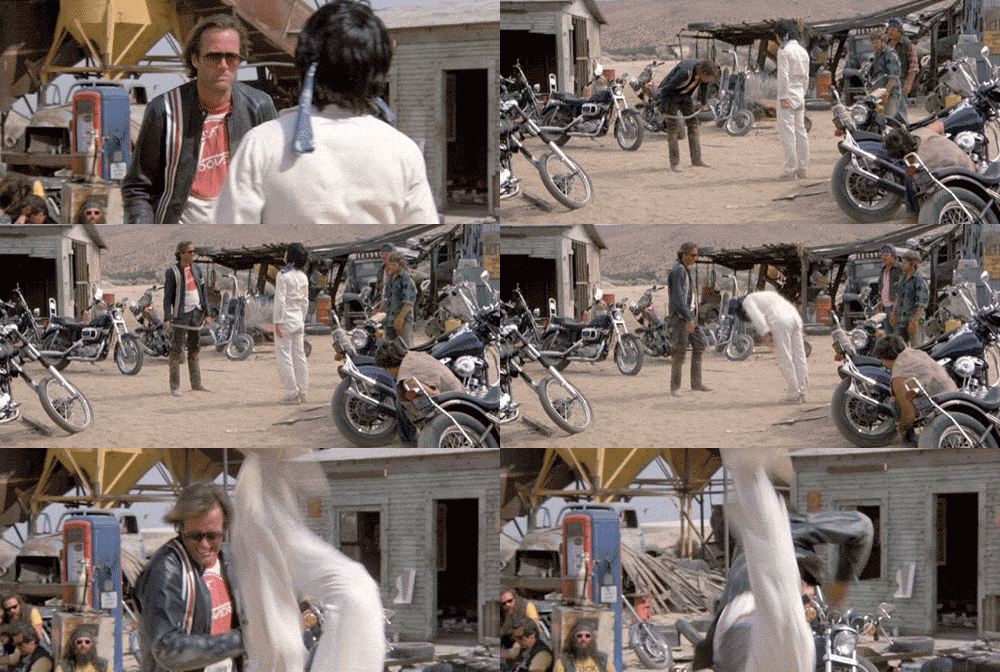
Burt has a point but, in defense of The Cannonball Run, what other movie actually features Jackie Chan beating up Peter Fonda?

chan-fonda-cannoball-run

Or Roger Moore playing someone who thinks that he’s Roger Moore?

roger-moore

Or Jack Elam playing a mad scientist?

jack-elam

Or Sammy and Dino, phoning it in one last time?

sammy-and-dean

Or Captain Chaos?

captain-chaos

Like most of Hal Needham’s films, The Cannonball Run ends with outtakes of Burt Reynolds blowing his lines and hitting people.

Tomorrow’s movie a day will be a film that Burt Reynolds is presumably much more proud of, Sharky’s Machine.