Knockout (2011, directed by Anne Wheeler)


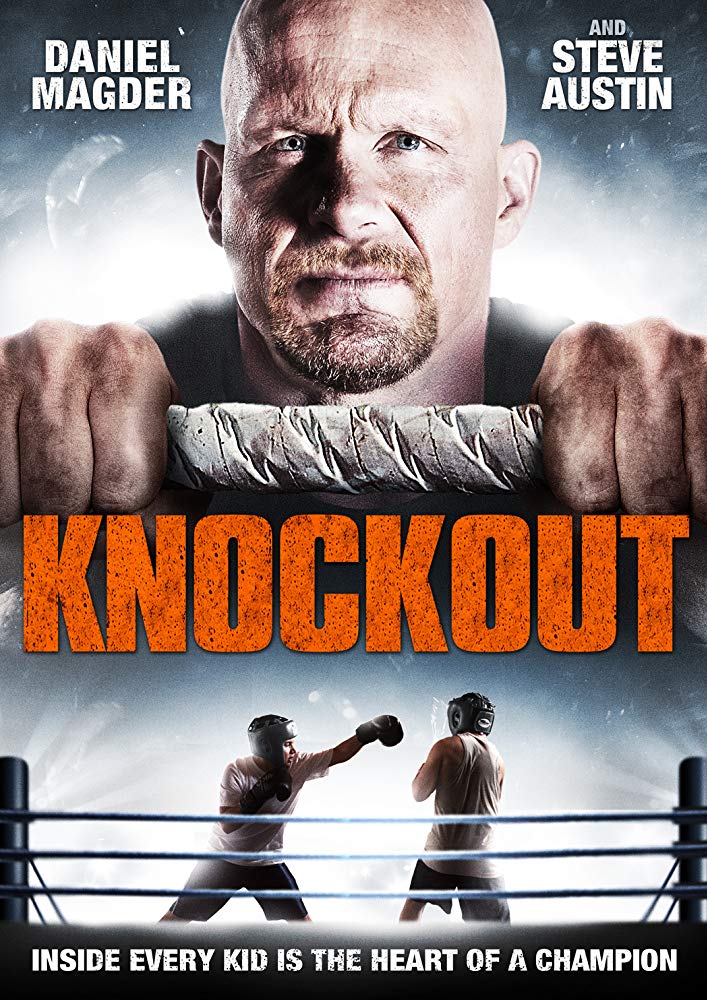
15 year-old Matthew Miller (Daniel Magder) is the grandson of a great boxer and would love to follow in his grandfather’s footsteps but his mother (Janet Kidder) would rather that Matthew become a doctor or a lawyer.  Looking at Matthew, who is out-of-shape and wears glasses, it is hard not to think that his mother might have the right idea.

When Matthew transfers to a new school, he’s picked on by a group of bullies led by Hector (Jaren Brandt Bartlett).  Matthew is lucky enough to find a group of fellow outcasts to hang out with but he still feels like something is missing from his high school experience.  He decides to break his mother’s heart and join the school’s boxing club.  The only problem is that Matthew doesn’t know how to throw a punch and Hector is the school’s boxing champion.

It’s a good thing that Dan, the school’s janitor, is both an ex-boxer and that he happens to be played by Stone Cold Steve Austin.  Dan could have been a champion but he retired from professional boxing because he grew tired of the sport’s violent nature.  Now, he’s just a high school janitor who looks out for the bullied and the oppressed.  Dan takes Matthew under his wing and teaches Matthew not only how to throw a punch but how to take one as well.

One of the things that I loved about this movie is that whenever Dan would see Matthew being picked on and he would tell the bullies to stop, the bullies would laugh and say something like, “You’re just the janitor!” or “Shouldn’t you be mopping something up?”  Yes, Dan is just the janitor but he still looks like Steve Austin.  I don’t think even the worst teenage bully is going to look at someone who could obviously crush him without breaking a sweat and say, “Why don’t you take out the trash!?”  When Dan steps up and tosses one of the bullies away from Matthew, everyone is shocked but again, haven’t they looked at him?  He’s Steve Austin.  He’s huge!

If you can suspend your skepticism about anyone outside of professional wrestling talking smack to Steve Austin, Knockout is a predictable but likable movie with a big heart.  Nothing, and I mean nothing, about this movie will take you by surprise.  But the actors are all good and the film wins points from me for having Matthew fall for one of his fellow outcasts instead of having him trying to win over a cheerleader-type.  Plus, you got Steve Austin doing what he does best.  That’s pretty cool.
Music Video of the Day: Hungry by Lita Ford (1990, directed by Jesse Dylan)


Here are the lyrics to Lita Ford’s Hungry:

My nylons are melting down my legs 
Your heart is pounding at my throat 
I can’t catch my breath 
I lost it when your fingertips 
Ran down my back and up my neck 
Your kiss makes me feel like this 
I’m so hungry for your sex 
I got an appetite for love tonight 
I wanna taste your sweet thing 
I wanna feel the sting of your sex, of your sex 
My body all painted lipstick red 
We ripped the sheets right off the bed 
My fingernails left fiery trails 
Across your back, oh, tell me baby 
How’d you like that little pussycat scratch 
I’m so hungry for your sex 
I got an appetite for love tonight 
I wanna taste your sweet thing 
I wanna feel the sting of your sex, of your sex 
I’m so hungry for your sex 
I got an appetite for love tonight 
I wanna taste your sweet thing 
I wanna feel the sting of your sex, of your sex 
I’m so hungry for your… 

I’m not sure how you go from those lyrics to Alice in Wonderland, though Wonderland in this video is portrayed as being a very dark place.  While Alice explores, Lita Ford writhes in a shallow pool of water.  How it all links up is anyone’s guess.

This video was directed by Jesse Dylan, who also did videos for Lenny Kravitz and 3rd Bass.

Enjoy!

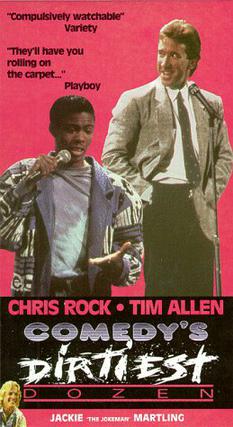
Comedy’s Dirtiest Dozen (1988, directed by Lenny Wong)


If you ever wanted to see Tim Allen snap, “Fuck you!” at a room full of yuppies, Comedy’s Dirtiest Dozen might be for you.

Comedy’s Dirtiest Dozen was a stand-up comedy concert film, featuring 12 comedians who all “worked blue.”  In the 80s, that meant a lot of cursing and a lot of jokes about oral sex and setting farts on fire.  Some of the jokes are funny but, as far as being dirty, not a single comic on the stage comes anywhere as close to being as filthy as Bob Saget was in The Aristocrats.  Today, Comedy’s Dirtiest Dozen is best-known for featuring early appearances from not only Tim Allen but also Chris Rock, Jackie Martling, and Bill Hicks.  The audience goes crazy when Hicks is introduced and Hicks does his trademark act, pacing the stage while smoking a cigarette and encouraging everyone to not shoot the John Lennons of the world but instead the assholes who sit at a stoplight with their right turn signal blinking.  At the time that this film was shot, Chris Rock was all of 21 but he already knew how to take over and control a stage.  Rock effortlessly goes from talking about little old white ladies dialing 9-1 whenever they see him on the street to the Jesse Jackson presidential campaign to the difficulty of living at home with a mother who regularly throws away his dirty magazines.

Some of the jokes are funnier than others.  When you’re watching 12 comedians making jokes from the vantage point of 32 years in the future, it is to be expected that the end results might seem uneven.  Since this was filmed in 1988, there’s a lot of dated jokes about cocaine, AIDS, the Olympics, and Ronald Reagan.  The jokes that seem to work the best are the ones about men being immature and women getting sick of them, which just proves that universal truths never go out of fashion.

It seems like whenever you watch a comedy concert film from the 80s, you have to ask yourself whether or not these comedians would be able to perform on a college campus today.  (Chris Rock, for instance, has said that he refuses to perform on campus because students are too sensitive.)  Bill Hicks would get kicked off stage for daring to light up a cigarette and Jackie Martling would probably cause a riot.  As for the rest of the performers, their acts in this film are frequently more profane than controversial.  For the most part, though, they’re still funny and that’s the important thing.

Music Video of the Day: Lord of the Flies by Iron Maiden (1995, directed by ????)


Lord of the Flies is based on William Golding’s famous book about a group of school children who get stranded on a deserted island and turn into savages.  The lyrics are a literal interpretation of the book’s plot:

I don’t care for this world anymore
I just want to live my own fantasy
Fate has brought us to these shores
What was meant to be is now happening

I’ve found that I like this living in danger
Living on edge it makes feel as one
Who cares now what’s right or wrong,
it’s reality
Killing so we survive
Wherever we may roam
Wherever we may hide
We’ve got to get away

I don’t want existence to end
We must prepare ourselves for the elements
I just want to feel like we’re strong
We don’t need a code of morality

I like all the mixed emotion and anger
It brings out the animal the power you can feel
And feeling so high on this much adrenalin
Excited but scary to believe what we’ve become

Saints and sinners
Something within us
We are lord of flies

Saints and sinners
Something willing us
To be lord of the flies

The video was shot while Iron Maiden was touring the Holy Land and it’s a typical no frills Iron Maiden production.  One thing that I’ve respected about bands like Iron Maiden is that the majority of their music videos are just clips of the band performing.  They don’t need to do anything fancy to hold your attention.  They just get out there on stage and play the Hell out of every song.

Enjoy!

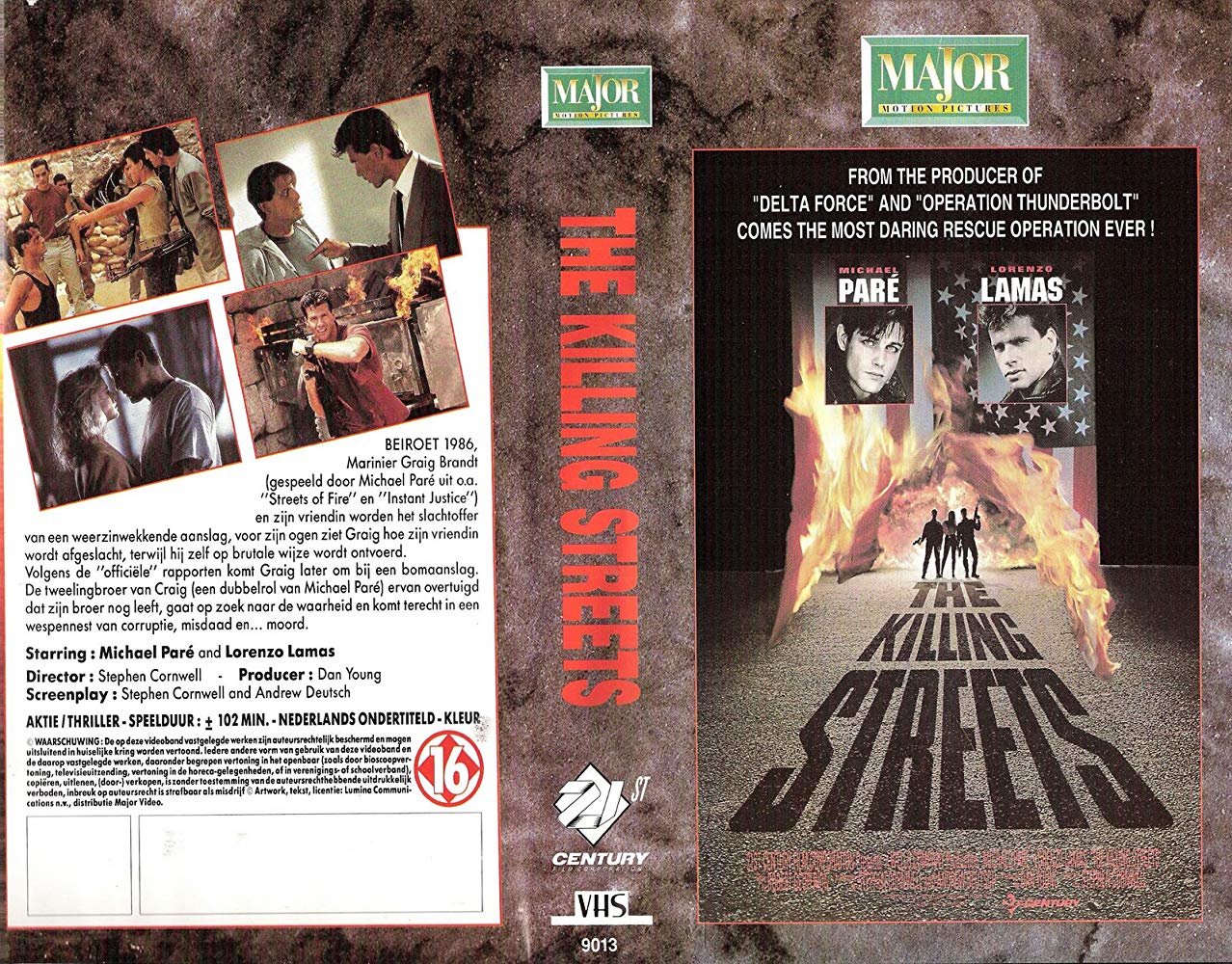
Cinemax Friday: Killing Streets (1991, directed by Stephen Cornwell)


Most of the time, late night Cinemax was dominated by noirish films starring Shannon Tweed but, occasionally, the network did slip in a low-budget action flick.  Killing Streets is a typical example of one of those films.

A Marine named Craig Brandt (Michael Pare) has disappeared in Beirut so his twin brother Chris (also played by Michael Pare) flies all the way over from Dayton, Ohio to search for him.  Even though everyone says that Craig’s dead, Chris knows that it isn’t true because, as a twin, he and Craig have a psychic connection.  It turns out, of course, that Chris is right.  Craig is being held prisoner by terrorist leader Abdel (Alon Aboutboul).  Chris is determined to rescue Craig, even though Charles (Lorenzo Lamas), an official at the American embassy, orders him to leave the country.  Chris may just be a high school basketball coach but that doesn’t stop him from going all Jack Bauer on every terrorist that he meets.  With the help of diplomat Sandra Ross (Jennifer Runyon) and Gilad (Gabi Amrani), the Middle East’s most helpful taxi driver, Chris sets out to rescue his brother.

When I started watching Killing Streets, I was excited because, according to the opening credits, it starred Lorenzo Lamas and it was produced by Menahem Golan.  Unfortunately, for the most of the movie, Lamas doesn’t get to do much other than bark out orders in one of the least convincing Southern accents that I’ve ever heard.  Instead, the first part of the movie is all about Michael Pare.  Michael Pare usually isn’t capable of showing enough emotion to be convincing as one character.  Now, imagine him playing two characters.  While one Michael Pare is walking around Beirut and searching for clues, the other Michael Pare is sitting in a cell and getting beaten and, since they both always have the same blank expression on their face, the only way you can tell which Michael Pare is which is by paying attention to who has more blood on them.  The whole time, you just want Lorenzo Lamas to show up and start showing off his Renegade skills but instead, he’s stuck telling one of the Michael Pares that he better get on the next plane back home.

Luckily, towards the end of the movie, the two Michael Pares team up with Lorenzo Lamas and they spend about ten minutes shooting guns and blowing stuff up and doing all of the other things that we want to see happen in a film like this.  It just takes a while to get there and while Menahem Golan may have produced this film, he didn’t direct it so, even though the ending is exciting, most people will probably lose interest before they get there.  As far as action films about rescuing hostages in the Middle East are concerned, this is no Delta Force.

4 Shots From 4 Films: Special Sam Peckinpah Edition


4 Shots From 4 Films is just what it says it is, 4 shots from 4 of our favorite films. As opposed to the reviews and recaps that we usually post, 4 Shots From 4 Films lets the visuals do the talking!

95 years ago today, Sam Peckinpah was born in Fresno, California.  He went on to become one of the most influential and most self-destructive directors of all time.  Peckinpah was as legendary for his combative personality and his behind-the-scenes conflicts with the studios as he was for his talent.

Even after he revolutionized the western with The Wild Bunch, Peckinpah often struggled to get work and, when he died at the too young age of 59, it was after years of being neglected by the same industry that had once embraced him.  Fortunately, a new generation of filmmakers discovered and appreciated Peckinpah’s work and have kept Mad Sam’s legacy going today.  Directors like Quentin Tarantino and Robert Rodriguez owe a huge debt to him.  (Once Upon A Time In Hollywood particularly felt as if it was suffused with the spirit of Peckinpah.)  Whenever you see someone getting shot in slow motion or a group of old timers (whether they’re criminals or cowboys) getting ready to take a final stand, you’re seeing the influence of Sam Peckinpah.

In honor of Sam Peckinpah, here are:

4 Shots from 4 Films

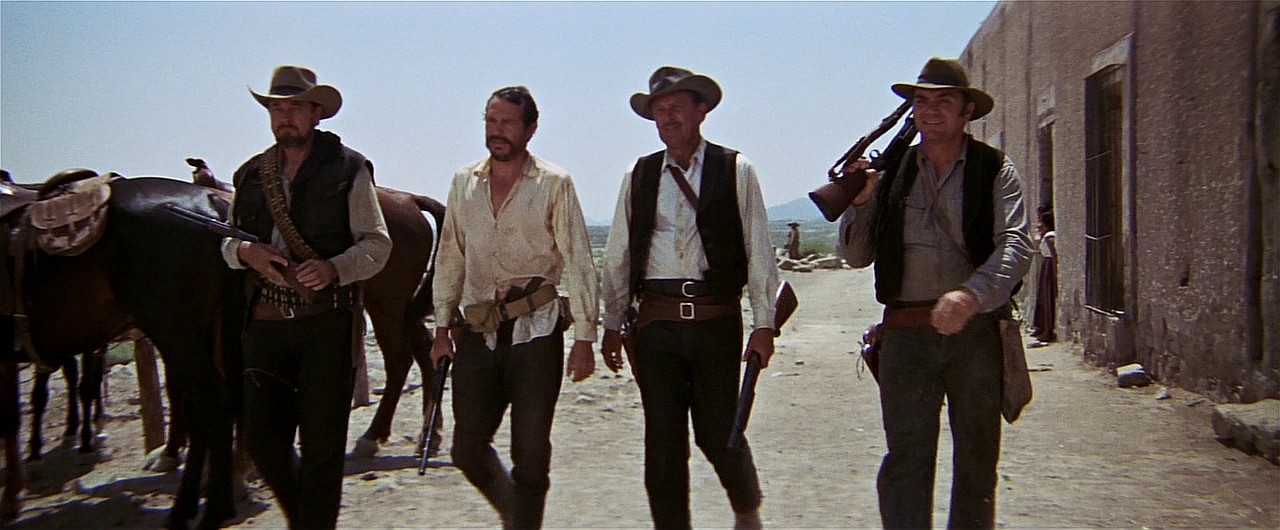
The Wild Bunch (1969, directed by Sam Peckinpah)

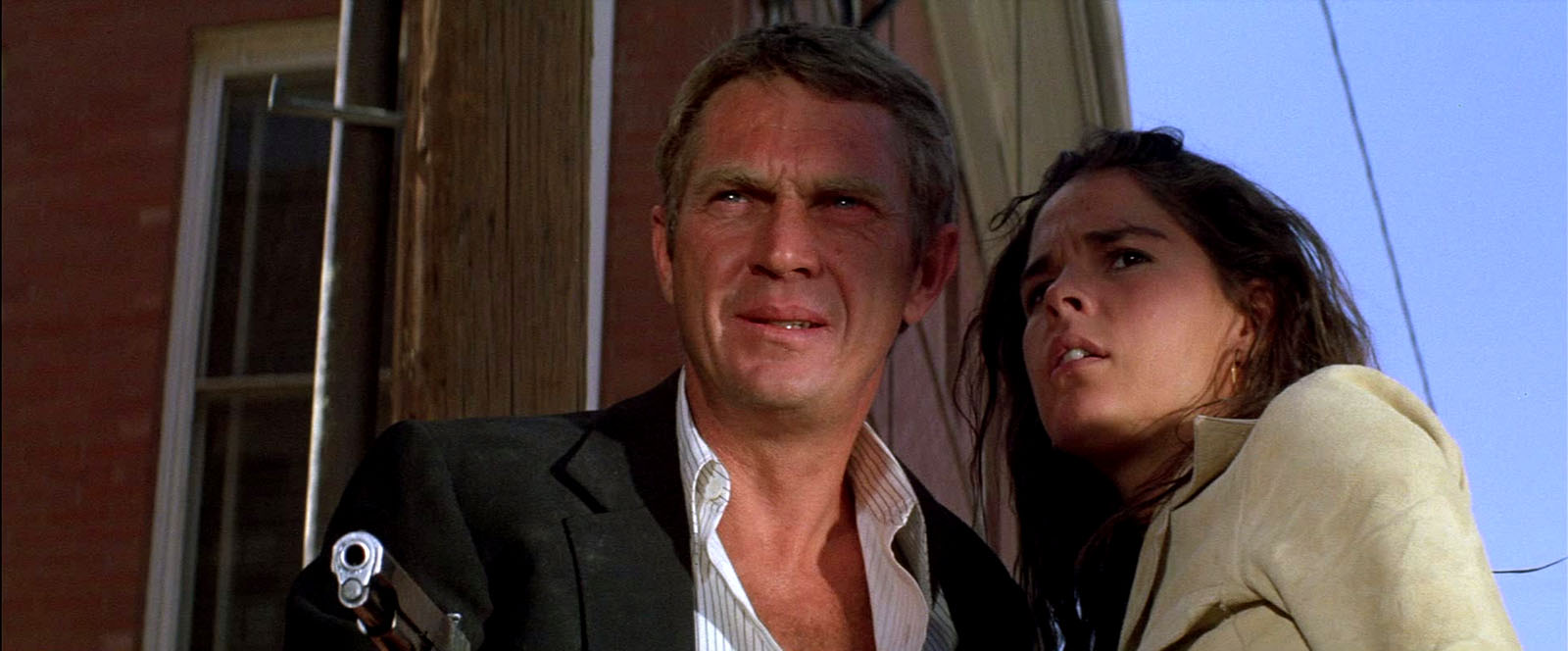
The Getaway (1972, directed by Sam Peckinpah)

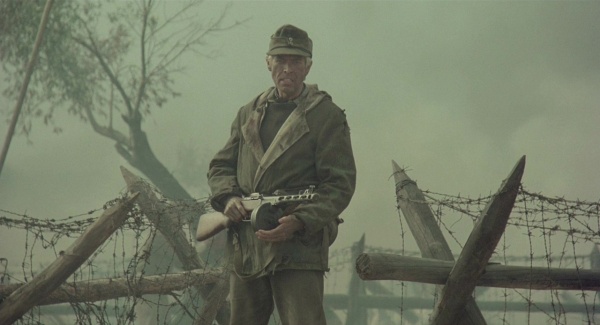
Cross of Iron (1977, directed by Sam Peckinpah)

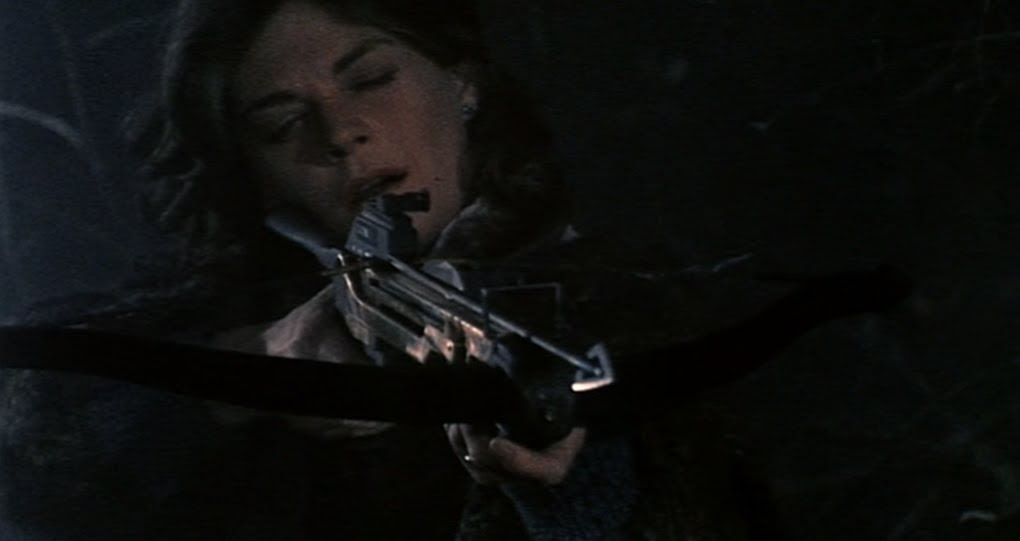
The Osterman Weekend (1983, directed by Sam Peckinpah)

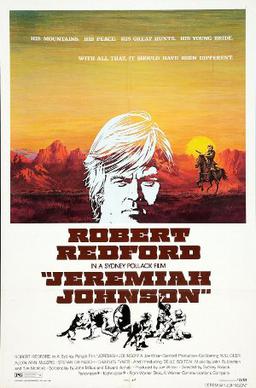
Jeremiah Johnson (1972, directed by Sydney Pollack)


In the 1840s, Jeremiah Johnson (Robert Redford) is a veteran of the Mexican War who wants to get away from civilization.  He sets up an isolated life for himself in the Rocky Mountains and looks to support himself by working as a trapper.  At first, he struggles but eventually he gets some much-needed help from a veteran trapped named Chris Lapp (Will Geer).  Along the way, Johnson discovers that life in the mountains can be harsh and violent.  He adopts a mute boy named Caleb, whose family has been killed by Blackfoot warriors.  Later, the chief of the local Flathead tribe “gives” Jeremiah his daughter.  Despite the language barrier between him and his new wife, Jeremiah is soon the head of a happy family.

One day, when the U.S. Calvary shows up and requests that Jeremiah guide them through the mountains so that they can rescue some starving missionaries, Jeremiah reluctantly leaves behind his family and helps them.  However, Lt. Mulvey (Jack Colvin) insists that Jeremiah lead them through a sacred Crow burial ground.  The Crow retaliate by killing Jeremiah’s family.  Driven mad by grief, Jeremiah sets out to kill every Crow that he can find.

Jeremiah Johnson is really two movies in one.  The story starts out with Jeremiah as a proto-hippie who wants to get away from the hypocrisy and violence of modern society.  Jeremiah takes care of the land, makes friends with other outcasts, and makes a good life for himself.  After Jeremiah’s family is killed, the movie turns into a Death Wish-style revenge thriller, with Jeremiah losing himself in his rage and killing almost everyone that he sees.  Redford is surprisingly convincing as the insane, murderous Jeremiah and the sudden outbursts of violence provide a strong contrast to the relatively peaceful first half of the film.

Jeremiah is a like a lot of the early American settlers.  He wants to get away from the world and start an entirely new life for himself.  He’s seen what the civilization has to offer and he would rather just build a cabin in the mountains and pretend that the rest of the world doesn’t exist.  If Jeremiah had been born earlier, he probably could have pulled it off.  But, by the time Jeremiah tries to go off the grid, it’s already too late.  Society is growing too fast for him to escape from it.  Jeremiah discovers that it’s impossible to truly cut yourself off from humanity. In the end, he’s much like the Crow Indians that he’s declared war upon.  His way of life is ending, whether he’s ready for it or not.  When he and the Crow chief greet each other with a raised open hand (meaning that they come in peace), they are both acknowledging that they are bonded as men whose time is coming to an end.

Jeremiah Johnson was the second of Robert Redford’s many collaborations with director Sydney Pollack and it’s one of their best.  This may be an epic film but it never loses its humanity and, for once, Redford plays someone who isn’t a cut-and-dried hero.  Jeremiah Johnson has recently been rediscovered because of a popular meme of a bearded Redford looking at the camera and nodding but people should know that it’s also a damn fine film on its own.


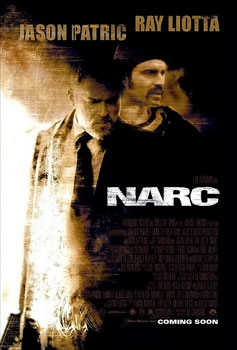
Narc (2002, directed by Joe Carnahan)


Nick Tellis (Jason Patric) is an undercover narcotics agent who has spent the last year under investigation for a shooting that went wrong.  Nick was firing his gun at a fleeing drug dealer but he hit a pregnant woman instead.  After 18 months of being caught in administrative limbo, Nick is made an offer.  It’s thought that, with his knowledge of Detroit’s crime and drug scene, that he might be uniquely suited to investigate the murder of another undercover agent, Michael Calvess.  Nick agrees but, in return, he wants a desk job.  He’s got a wife and a baby and he’s tired of putting his life on the line for nothing.  Nick also wants to work with Detective Henry Oak (Ray Liotta).  Oak was one of the original investigators of Calvess’s murder.  Nick is warned that Oak has a reputation for being unstable and out-of-control.  Nick isn’t fazed because he has the same reputation.

Oak turns out to be more than just out of control.  He is the epitome of a bad cop, beating suspects and thinking nothing of threatening to kill a man unless he confesses.  However, Oak gets results.  Oak suggests that you can’t fight crime in Detroit if you play by the rules and Narc is the type of grim and gritty film that doesn’t give you any reason to think that Oak is incorrect.  Oak and Nick investigate Calvess’s death and both of them discover that the department would rather just sweep the case under the rug than actually discover what really happened.  The department just wants someone that they can pin the crime on, not the truth.  Even after the case is officially declared as being closed, Nick and Oak continue their investigation.  Nick, however, starts to suspect that Oak knows more about Calvess’s death than he’s willing to admit.

Narc opens with an amazingly shot chase scene that will leave you breathless and then it just keeps going without once letting up on the intensity.  Narc is a grim and violent film about two damaged men trying to solve a case that no one else cares about.  Jason Patric has never been better than he was in Narc and, while Ray Liotta has played his share of unstable cops, he takes things to whole other level with Narc.  Director Joe Carnahan does such a good job of capturing the decay and desperation of life in Detroit that, even while you’re worried that both Nick and Oak are going to end up going too far in their pursuit of what they consider to be justice, you still can’t help but feel that they’ve both got a point.  Who plays by the rules when the world’s on fire?

4 Shots From 4 Films: Special Lee Marvin Edition


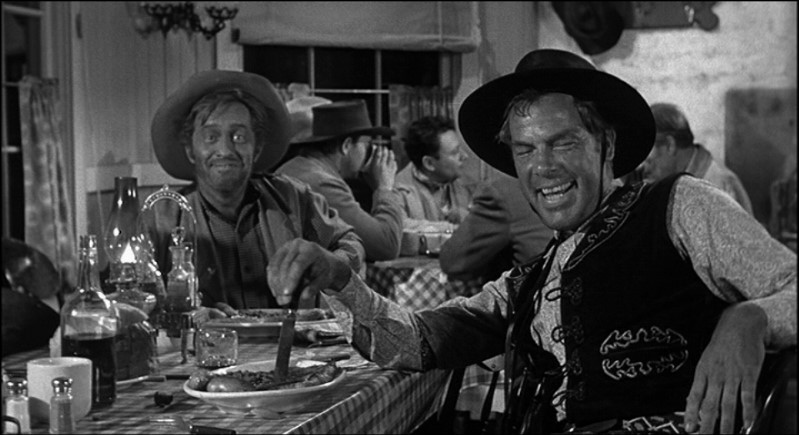
Prime Cut (1972, directed by Michael Ritchie)

4 Shots From 4 Films is just what it says it is, 4 shots from 4 of our favorite films. As opposed to the reviews and recaps that we usually post, 4 Shots From 4 Films lets the visuals do the talking!

96 years ago, Lee Marvin was born in New York City.  After getting kicked out of several prestigious prep schools for “bad behavior,” 18 year-old Lee Marvin enlisted in the Marin Corps, was briefly a corporal before getting demoted back to private (again, because of “bad behavior”), and was wounded in action during the Battle of Saipan.  (Marvin was one of the few members of his unit to survive the battle.)  After he was discharged from the Marines, he worked as a plumber’s assistant at a local community theater and, after being asked to temporarily replace an actor who had fallen ill, Marvin decided to pursue a career as an actor.

Marvin became one of Hollywood’s premier tough guys.  He played his share of gangsters, cops, and cowboys but, because of his background, he was a natural for playing military men.  Whether it was The Dirty Dozen, The Big Red One, or The Delta Force, Lee Marvin was a natural leader and brought authenticity to every military role the played.  His final film was The Delta Force, which just happens to be the greatest film ever made.

In honor of Lee Marvin’s birthday, here are:

4 Shots From 4 Films

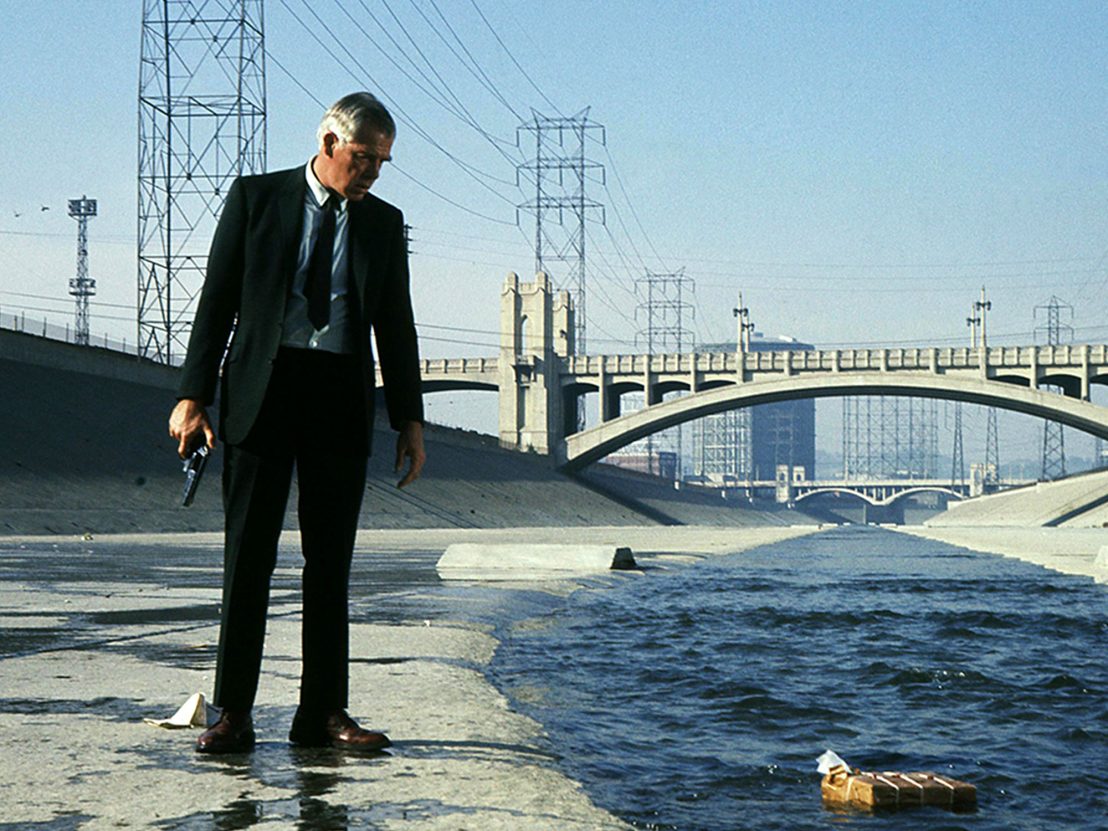
The Man Who Shot Liberty Valance (1962, directed by John Ford)

Point Blank (1967, directed by John Boorman)’

The Big Red One (1980, directed by Sam Fuller)

The Delta Force (1986, directed by Menahem Golan)

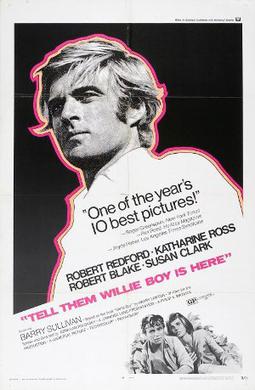
Tell Them Willie Boy Is Here (1969, directed by Abraham Polonsky)


In 1908, a Paiute Indian named Willie (Robert Blake) has fallen in love with a white woman named Lola (Katharine Ross).  After Lola’s father discovers Willie and Lola together, Willie shoots him.  Willie claims that the shooting was in self-defense while the white citizens of California insist that it was cold-blooded murder, motivated by a tribal custom that would allow Willie to claim Lola as his wife upon the death of her father.  Willie and Lola go on the run, trying to escape through the Morongo Valley.

Because President Taft is scheduled to make a trip to the area, the locals are eager for Willie Boy to either be captured or killed.  Several posses form, all intent on tracking Willie down.  A humane deputy sheriff named Cooper (Robert Redford) reluctantly leads the search for Willie.  Cooper’s occasional lover is a school teacher named Elizabeth (Susan Clark) who insists that Cooper rescue Lola from Willie.  The only problem is that Lola doesn’t want to be rescued and Willie would rather die than surrender to the white men.

Tell Them Willie Boy Is Here is one of those revisionist westerns that were all the rage in the late 60s and the early 70s.  (The same year that he led a posse in Tell Them Willie Boy Is Here, Robert Redford also tried to outrun a posse in Butch Cassidy and the Sundance Kid.Willie Boy gets off to a good start, showing how Willie has to spend almost every hour of the day dealing with prejudice and racism.  The film does a good job of showing that even “liberal” whites, like Elizabeth, are capable of being prejudiced.  There are hints that Cooper and Willie share a mutual respect and both Blake and Redford do a good job portraying the weary respect that the lawman and the outlaw have for each other.

Things start to fall apart when Willie shoots Lola’s father.  The scene is shot so confusingly that it’s hard to know what exactly happened and it feels like a cop out.  Rather than definitely saying whether Willie had no choice but to shoot Lola’s father or that Willie intentionally committed murder, the scene tries to have it both ways and it doesn’t work.  Once the chase begins, the movie is equally split between Cooper and the posse and Willie and Lola and the end result is that the two main characters end up getting short changed.

Tell Them Willie Boy Is Here was directed by Abraham Polonsky, a screenwriter who was blacklisted during the McCarthy era.  While this is definitely a film made from a left-wing perspective, its actual message still feels muddled.  Willie is the driving force behind the plot but the film seems to be more interested in the less intriguing Cooper.  The film ends on a note of ambiguity, which perhaps felt daring in 1969 but today, just feels like another cop out.  Despite a great performance from Blake and a better-than-usual one from Redford, Tell Them Willie Boy Is Here is an unfortunate misfire.