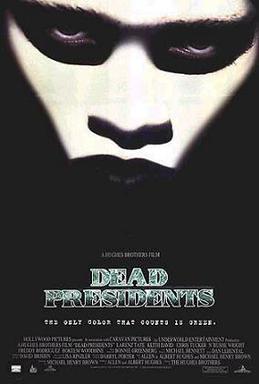
Dead Presidents (1995, directed by the Hughes Brothers)


In 1969, Anthony (Larenz Tate) graduates from high school in the Bronx and shocks his family by announcing that he will not be following in his brother’s footsteps by enrolling in city college but that he will instead be enlisting in the Marines and going off to fight in Vietnam.  While his friends taunt him for choosing to fight in a “white man’s war,” Anthony thinks that serving in the Marines will make him a man.  His two biggest heroes, his father and the local numbers boss, Kirby (Keith David), both served in Korea.  Kirby’s even lost his his leg in the war but he can still keep order in the neighborhood.

Vietnam doesn’t turn out to be what Anthony was expecting.  He serves two tours of duty and becomes an efficient killing machine but he is also forced to do things that will haunt him long after the war is over.  When Anthony finally returns to the Bronx in 1971, the old neighborhood has changed.  Crime, drugs, and poverty are destroying the community and Anthony struggles to support his girlfriend (Rose Jackson) and his daughter.

Finally, with no other opportunities available and feeling as if his country has abandoned him, Anthony agrees to take part in an armored car robbery.  Working with him are a few friends from the old days and a few members of the revolutionary Nat Turner Cadre.  Anthony thinks that he has the robbery planned out perfectly but nothing ever goes as planned.

In 1993, The Hughes Brothers made their directorial debut with Menace II Society, an incendiary film that holds up as one of the best feature debuts of any filmmaker.  Their follow-up to Menace II Society was Dead Presidents.  While Dead Presidents operates on a more epic scale than Menace II Society, it’s also a far more uneven film.  While the first part of the film (which follows Anthony and his friends during their final days of high school) is strong, things start to fall apart once the action moves to Vietnam.  The Hughes Brothers tried to recreate the Vietnam War on a Grenada Invasion budget and the action never feels credible.  When Anthony returns to the Bronx, Dead Presidents regains some of its footing but the eventual armored car heist is never as exciting as it could be.

Still, Dead Presidents has enough good moments that it’s always watchable.  Larenz Tate gives a good performance as Anthony and he’s surrounded by the some of the best black character actors of the 90s.  Keep an eye out for a young and incredibly obnoxious Terrence Howard, playing an aspiring gangster and getting a deserved beating at the hands of Anthony.  Though the movie often bites off more than it can chew, it does do a good job of seriously dealing with the issues that returning vets have to contend with when they come back home.  Anthony suffers from PTSD, which is something that a lot of people didn’t talk about in 1995, and the Hughes Brothers deserve much credit for their sensitive handling of the topic.  Dead Presidents may not be perfect but it’s impossible not to admire the film’s ambition.
Music Video of the Day: The Prisoner by Iron Maiden (1982, directed by ????)


Inspired by the cult 60s television show that was created by and starred Patrick McGoohan, The Prisoner is one of Iron Maiden’s best songs.  This music video is taken from a 1982 performance at the Hammersmith Odeon.  One thing I like about this performance is that, even in the live show, the song still opened with a recording of McGoohan being interrogated in The Prisoner.

According to the band, getting McGoohan’s permission to use the dialogue from the show was the most intimidating part of recording The Prisoner.  The band’s manager, Rod Smallwood, was the one who called McGoohan.  McGoohan has apparently never heard of Iron Maiden but when Smallwood told them that they were a “rock band,” McGoohan said, “Do it!” and then promptly hung up on him.

Did I pick this song for music video of the day because I’m currently going stir crazy as a result of being locked down for three weeks?  No comment.

Enjoy!

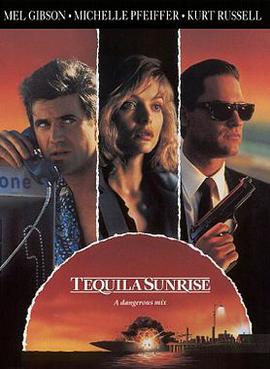
Tequila Sunrise (1988, directed by Robert Towne)


Mac (Mel Gibson) and Nick (Kurt Russell) are old friends who are on opposite sides of the law.  Mac was once a legendary drug dealer though he says that he’s now retired.  Nick is a narcotics detective with the Los Angeles County Sheriff’s Department.  Early on, Nick warns Mac that, if he is dealing again, he’s going to have to arrest him.  Mac says that he has no interest in getting back into the business but no one believes him.

Mac is actually more interested in Jo Ann Valleneri, who owns his favorite restaurant.  Since Jo Ann is played by Michelle Pfeiffer, who can blame him?.  After tracks Mac to the restaurant, he becomes attracted to Jo Ann too and again, it’s impossible to blame him.  Soon, Jo Ann and Nick are a couple but is Nick just using her to find out about Mac’s relationship with a mysterious drug lord named Carlos?  And when Mac moves in and starts his own relationship with Jo Ann, does he really love her or is he using her to throw Nick off of his trail?

Tequila Sunrise should be a great film but instead, it’s only a good one.  It has all the elements of greatness — Michelle Pfeiffer at her sultriest, Kurt Russell at his coolest, and Mel Gibson before he lost his mind.  It also has a good supporting cast, including Raul Julia, J.T. Walsh, and Arliss Howard.  Ultimately, it doesn’t really come together because the film’s director and screenwriter, Robert Towne, doesn’t seem to be sure what type of story he wants to tell.  Tequila Sunrise could have either been a great crime thriller or a steamy love story but, by trying to be both, it gets bogged down in its own convoluted plot.  That probably won’t matter to most viewers, though.  Not when Russell, Gibson, and Pfeiffer are all on screen together at the same time.  Tequila Sunrise tries to be many things but it works best as a celebration of movie star charisma.

One final note: The film looks great.  Visually, this is one of the ultimate California films.  Cinematographer Conrad Hall received an Oscar nomination for his work on this film and it was more than deserved.

Music Video of the Day: Livin’ On The Edge by Aerosmith (1993, directed by Marty Callner)


Written during the 1992 Los Angeles riots, Livin’ On The Edge was the first single off of Aerosmith’s 11th studio album, Get A Grip.  It’s still one of their most commercially successful songs to date, spending nine weeks at the number one spot on the Billboard Album Rock Tracks chart.

The video features Edward Furlong, living a life almost as dangerous as the life lived by the delinquents in the video for Skid Row’s 18 and Life.  Furlong, fortunately, manages to survive his time living on the edge.  Furlong did this video shortly after starring in Terminator 2: Judgment Day.

The video also features Joe Perry playing a guitar solo in front of an incoming train.  This scene was filmed on Lake Britton Bridge in Shasta County, California.  The same bridge also appears in Stand By Me.  If I remember correctly, at the same time that this video came out, there was also a PSA about the dangers of walking on railroad tracks that used to show up on television constantly.  The spot featured two kids walking across a bridge, much like the one featured in this video when a train starts bearing down on them.  At the end of the PSA, one of the kids manages to get off the bridge and then has to watch as the train runs over his slower friend.  Whenever I see this video or hear this song, that’s what I think of.

This video was directed by Marty Callner, who directed the majority of Aerosmith’s videos.

Enjoy!

Allan Quatermain and The Lost City Of Gold (1987, directed by Gary Nelson)


Having previously discovered and escaped King Solomon’s mines, Allan Quatermain (Richard Chamberlain) and Jesse Huston (Sharon Stone) are now living in a domestic bliss in Africa.  They’re planning on eventually returning to America so that they can get married but it turns out that Allan has one more quest that he has to complete before he can truly settle down.

When Allan receives information that his long last brother is not only still alive but has also discovered a fabled Lost City of Gold, Allan sets out to discover the city for himself.  Traveling with Jesse and an old friend named Umslopogaas (James Earl Jones!), Allan makes his way across the Sahara, survives a battle with a group of native, and manages to find both the city and his brother!

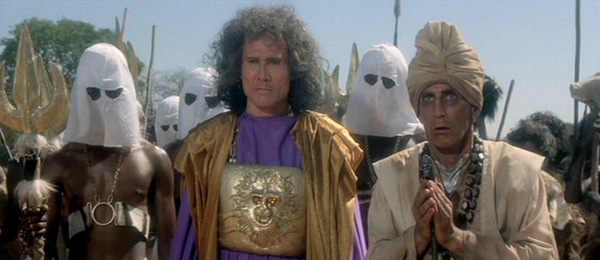
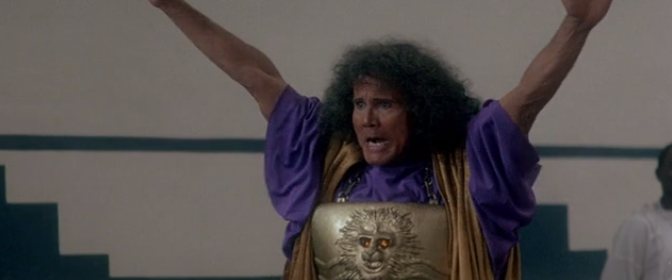
However, all is not well in the City of Gold.  Queen Nyelptha (Aileen Marson) is on the verge of going to war with Queen Sorais (Cassandra Peterson, a.k.a Elvira, Mistress of the Dark!!).  Manipulating both of the queens is the evil high priest, Agon (Henry Silva!!!!).  To save the City of Gold and his future marriage, Allan will first have to figure out a way to defeat Agon.

Allan Quatermain and the Lost City Of Gold was filmed back-to-back with King Solomon’s Mines.  The two films were released within a year of each other and, while King Solomon’s Mines was a minor box office success, Allan Quatermain and the Lost City of Gold was not.  I wasn’t expecting much when I watched the film but, believe it or not, Allan Quatermain and the Lost City of Gold is not that bad.  It’s a definite improvement on King Solomon’s Mines.  Richard Chamberlain is more believable as Quatermain in the sequel and he and Sharon Stone share the minimum amount of chemistry to be somewhat believable as a couple in love.  If that sounds like I’m damning with faint praise, it’s still an improvement over King Solomon’s Mines, where the two of them often seemed as if they couldn’t stand to be anywhere near each other.  Best of all, Allan Quatermain and the Lost City of Gold has Henry Silva in a ridiculous costume and that automatically makes the film worth watching.

Henry Silva, everyone.

Like King Solomon’s Mines, Allan Quatermain and The Lost City of Gold adds a large dose of intentional humor to its adventure story.  Fortunately, the comedy here is better executed than in the previous film.  There’s less mugging on Chamberlain’s part and some of the dialogue is genuinely amusing.

Of course, Allan Quatermain and The Lost City of Gold is not without its flaws.  This is a low-budget Cannon film that often tries too hard to duplicate the success of the Indiana Jones films without ever showing much understanding of what made those films successful in the first place.  Allan Quatermain and the Lost City of Gold can’t hold a candle to the classic adventure films of the past.  But, for a low-budget Cannon film starring Richard Chamberlain as a rugged, jungle explorer, it’s actually a lot of fun.

Plus, did I mention Henry Silva?

Music Video of the Day: The Unnamed Feeling by Metallica (2004, directed by the Malloys)


Are you suffering from anxiety?

Don’t worry, James Hetfield has got your back.  In fact, he wrote an entire song about the moments right before someone starts to panic.  The song calls it The Unnamed Feeling and this is probably the rare Metallica song to which everyone can relate.  St. Anger will probably always be a controversial album but I think it’s aging well.  Hetfield was obviously dealing with some serious things during the recording,  You don’t need to watch Some Kind of Monster to know that.  You just have to listen to the songs.  Personally, I like knowing that even a pioneer of thrash metal can sometimes get nervous.  That means there’s hope for the rest of us.

The video features the band playing in a room in which the walls are slowly closing in.  In between scenes of the band, we watch people dealing with that unnamed feeling.  Keep an eye out for Edward Furlong, who previously lived on the edge for Aerosmith.

Enjoy!

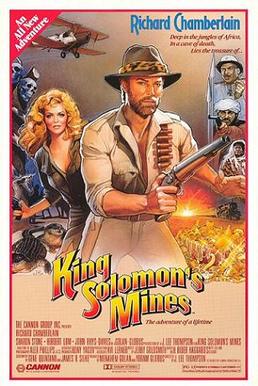
King Solomon’s Mines (1985, directed by J. Lee Thompson)


After her archaeologist father disappears while searching for the fabled mines of King Solomon, Jesse Houston (Sharon Stone) hires famed explorer Allan Quartermain (Richard Chamberlain) to help her find him.  After walking around in the jungle and exploring a nearby village, Allan and Jesse discover that her father has been kidnapped by a German military expedition who want to use King Solomon’s treasure to fund their war effort.  Working with the Germans is Allan’s old enemy, Dogati (John Rhys-Davies).  Allan and Jesse find themselves in a race against time to find the mines before the Germans.  Along the way, they steal an airplane, fight German soldiers on a train, and nearly get cooked alive in a giant cauldron.

Because this is a Cannon film and it was made at the height of Indiana Jones’s popularity and it stars John Rhys-Davies and it has a score that sounds like it was written by someone trying too hard to be John Williams, you might be tempted to think that King Solomon’s Mines is a rip-off of Raiders of the Lost Ark.  However, there are some crucial differences between Raiders and King Solomon’s Mines.  For instance, Raiders of the Lost Ark took place during World War II.  King Solomon’s Mines takes place during World War I.  Raiders of the Lost Ark had angels that melted a man’s face.  King Solomon’s Mines has a lava pit that makes you explode if you fall into it.  Raiders of the Lost Ark has a big fight in an airfield while King Solomon’s Mines has a big fight at an airfield …. well, wait, I guess they do have a few things in common.

Probably the biggest difference between Raiders of the Lost Ark and King Solomon’s Mines is that Raiders had Harrison Ford and Karen Allen while King Solomon’s Mines has to make due with Richard Chamberlain and Sharon Stone.  (If the imdb trivia section is to be believed, Sharon Stone was cast because Menahem Golan mistook her for Kathleen Turner.)  Along with generating zero romantic sparks, neither Chamberlain nor Stone come across as if they’ve ever even seen a jungle, much less explored one.  The only time that the two of them are credible as anything other than actors slumming on Cannon’s dime is when they’re yelling at each other.  There’s also a scene where they’re trying to steal an airplane and Chamberlain tells Stone to “reach between your legs and grab it.”  That was funny, I guess.

Along with trying to be an adventure, King Solomon’s Mines also tries to be a comedy.  As a general rule, Cannon films are great when they’re unintentionally funny but not so much when they actually try to be funny.  The film’s idea of comedy is Richard Chamberlain having to do an impromptu jig while someone shoots at his feet.  Add in a healthy dose of casual racism as Allan and Jesse run into a tribe in Africa who want to cook them in a giant stew pot and you’ve got a film so bad that you’ll hardly believe it could have been produced by the same people who gave us Delta Force, which is, of course, the greatest film ever made.

Golan and Globus had enough confidence in King Solomon’s Mines that they shot a sequel before the first film was even released.  Tomorrow, I will force myself to watch and review Allan Quartermain and The Lost City of Gold.  And, after that, I’ll probably go sit in a corner and think about what I’ve done.

Cinemax Friday: Stranger By Night (1994, directed by Gregory Brown a.k.a. Gregory Hippolyte a.k.a. Gregory Dark)


Detective Bobby Corcoran (Steven Bauer!) is a cop with an anger problem.  Whenever he and his parter, Troy Rooney (William Katt!!), catch a criminal, Bobby just loses control.  Since, for some reason, they seem to catch a lot of criminals on rooftops, this often leads to Bobby threatening to throw someone over the edge.  Even when his boss, Detective Larson (Michael Parks!!!) tells Bobby to stop trying to kill all of the suspects, Bobby still struggles to control his rage.  He’s seeing a Dr. Anne Richmond (Jennifer Rubin!!!!), a psychiatrist, about his anger issues but since their sessions usually get interrupted by bouts of soft-core, saxophone-scored sex, it is debatable how much time they actually spend digging into the roots of Bobby’s problems.

Bobby also suffers from frequent blackouts.  While he’s unconscious, he’s haunted by black-and-white memories of his abusive father (J.J. Johnston) beating up his mother.  When he wakes up, he’s often in a different room from where he blacked out.  Anne says that Bobby must be sleep-walking.  Bobby says that he’s not sleep walking because he’s stubborn and doesn’t feel safe letting anyone into his mind.  Lately, whenever Bobby passes out, a prostitute ends up dead.  An unknown killer is stalking them and chopping off their ears.  Bobby, with his anger issues and his dislike of prostitutes, is an obvious suspect.  Is Bobby the killer or is he being framed?

Stranger By Night‘s credited director is Gregory Brown, who is better known as Gregory Dark.  Dark is one of the best-known of the directors who specialized in erotic thrillers in the 90s.  Dark was responsible for some of the classics of the genre but, unfortunately, Stranger By Night is not one of his better efforts.  The action frequently drags and, with the exception of Bobby’s black-and-white flashbacks, Stranger By Night has none of Dark’s usual visual style.  The film looks and feels flat and the plot is never feels as involving as it should.  The discovery of the killer’s identity inspires not shock but an indifferent shrug.

On the positive side, it’s got a cast of skilled genre vets and all of them do what they can to elevate the material.  William Katt is jittery and frequently funny while Jennifer Rubin, who deserved to have a much bigger career, is as sultry as ever.  (Rubin brought both intelligence and sex appeal to almost every role that she played and it made her one of the best genre actresses around.)  Steven Bauer, another actor who probably deserves a bigger career than he’s had, does a good job in the lead role.  Bobby isn’t always a likable character and Bauer doesn’t try to make him one.  On the other hand, it’s frustrating that Michael Parks does not get to do much, other than frown.  There’s nothing more frustrating than watching a film that doesn’t take full advantage of the casting of Michael Parks.

Stranger By Night does seem to have a serious subtext.  It tries to deal seriously with how Bobby’s abusive childhood has scarred him and there’s a lengthy scene where Bobby finally talks to his aged father.  The scene is played straight and it’s not the sort of thing that you’d normally expect to see in a direct-to-video erotic thriller.  (It’s a good example of what set Gregory Dark apart from some of the other directors churning out these type of films in the 90s.)  For the most part, though, Stranger By Night is a forgettable trip to the world of late night Cinemax.

Music Video Of The Day: I’m Just A Singer (In A Rock And Roll Band) by The Moody Blues (1972, directed by ????)


Today’s music video of the day was written by John Lodge, the bassist and vocalist for The Moody Blues.  The song was inspired by Lodge’s feeling that his fans were expecting him to have all of the solutions for the world’s problems.  His reply, in this song, is that he doesn’t have the answers.  He’s just a singer in a rock and roll band.

The Moody Blues may not have been able to give any answers in this song but it was still one of their biggest hits in the U.S.  For whatever reason, it was significantly less popular in the UK.  In the US, it reached the 12th position on the charts.  In the UK, it could only make it to the 36th position.

After the release of this single, The Moody Blues went on a five year hiatus so that the members of the band could work on other projects.  They wouldn’t release another single until 1978, with Steppin’ In A Slide Zone.

Enjoy!