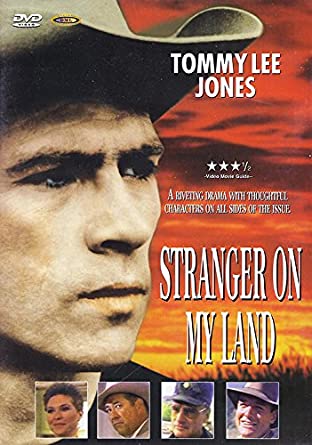
Stranger On My Land (1988, directed by Larry Elikann)


The Air Force wants to build a new air base in Utah but the Whitman family refuses to sell their ranch.  Bud Whitman (Tommy Lee Jones) served in Vietnam and he disapproved just as much of forcing Vietnamese villagers to move as he now disapproves of the idea of allowing the government to force American citizens to move.  When a judge rules that the Air Force can force the Whitmans to vacate their property under the rule of eminent domain, Bud announces that he still will not be moving.  With several of Bud’s old combat buddies showing up to support Bud, the villainous county surveyor, Connie Priest (Terry O’Quinn), prepares to take matters in his own hands.

Tommy Lee Jones vs. Terry O’Quinn?  That sounds like it should have the makings of a classic but Stranger On My Land is a largely forgettable made-for-TV movie.  A huge part of the problem is that O’Quinn’s character doesn’t have any real motivation beyond just being a prick and that seems like a waste when you consider the number of interesting villains that Terry O’Quinn has played over the years.  This is the actor who, in The Stepfather, actually made a multiple murderer seem a little bit likable.  Connie Priest seems like a villain that O’Quinn could have done a lot with if only the film’s script hadn’t been so simplistic.  Tommy Lee Jones is always well-cast as a modern day western hero but again, the script doesn’t do much with his character.  He’s just Tommy Lee Jones yelling at people to get off his property.  You could probably go to Tommy Lee Jones’s own ranch and have the exact same experience without having to sit through the rest of this movie.  Even Bud’s ethical objections to the Vietnam War feel like something that was just tossed in to assure the people watching at home that he’s not meant to be some sort of gun-toting militiaman.  The best performance in the movie comes from Ben Johnson, who is plays Tommy Lee Jones’s father.  That’s prefect casting.  If Ben Johnson wasn’t actually Tommy Lee Jones’s father, he probably should have been.

The main problem with Stranger On My Land is that it was made for television and it had to operate within the limits of what was acceptable for television in 1988.  The entire movie seems to be building up to a fierce battle between Bud and law enforcement but instead, it settles for a personal fight between Bud and Connie.  The film’s sudden ending doesn’t feel authentic but it does feel like what you’d expect to find on ABC in the late 80s.
Music Video of the Day: 3 A.M. Eternal by The KLF (1991, directed by ????)


There are so many stories about the careers of British musicians Bill Drummond and Jimmy Cauty that it would probably take several posts to tell them all.

Drummond’s musical career began in 1977 when he formed a punk band called Big in Japan.  After Big In Japan broke up, Drummond was one of the co-founders of Zoo Records and he worked as a manger and producer for several post-punk bands, including Echo and the Bunnymen.  He also worked with a band called Brilliant, which had been formed by former Killing Joke bassist, Jimmy Cauty.

Drummond and Cauty must have hit it off because they went on to start their own musical project.  Originally known as the The Justified Ancients of Mu Mu (The JAMs), the project also recorded under the name The Time Lords and, eventually, the KLF.  Among their first hits (as The Time Lords) was Doctorin’ The Tardis.  After Doctorin’ The Tardis hit number one despite being intentionally designed to have no musical value whatsoever, Drummond published a book called The Manual (How To Have A Number One The Easy Way), a semi-satirical how-to book about how to write a song vapid enough to become a hit.  Drummond promised that anyone who read the book would have a hit song or they would get their money book.  Drummond later admitted that some readers did subsequently contact him, asking for a refund.

As the KLF, their biggest hit was 3 A.M. Eternal.  3 A.M. Eternal was originally recorded in 1988 and was subsequently re-recorded in 1991, this time with the addition of rapper Ricardo Da Force and vocalist Maxine Harvey.  This video feature Da Force rapping while playing with a very big phone while Maxine Harvey sings in what appears to be a pyramid.  Meanwhile, the members of the KLF drive around at three in the morning.  The car from the driving scenes also appeared in the video for Doctorin’ The Tardis.

When the KLF performed this song at the 1992 Brit Awards, they fired machine guns at the audience.  Though the machine guns were full of blanks, no one had informed the audience of that fact and there was quite a panic as a result.  After the show, the KLF announced that they were retiring from the music business and then deleted their back catalog.  They also had a dead sheep sent to the after party.

Enjoy!

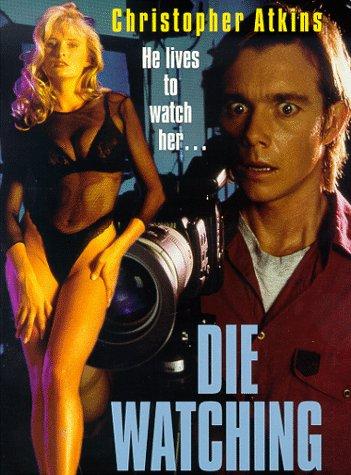
Cinemax Friday: Die Watching (1993, directed by Charles Davis)


Mentally scarred by the night that his mother murdered his father, Michael Terrence (Christopher Atkins) is a video editor who makes his living filming naked models and who deals with his mental issues by then asphyxiating those same models.  Michael’s main kink is that he ties his victims up in front of a monitor and then films them as they die, basically forcing them to witness their own murders.  In other words, Michael is one sick puppy who has perhaps seen Michael Powell’s Peeping Tom a few too many times.

Despite the fact that dead actresses and models are turning up all over Los Angeles, Detectives Lewis (Tim Thomerson) and Barry (Carlos Palomino) have no idea that Michael is responsible.  In fact, no one suspects Michael.  His neighbor, an aspiring artist named Nola (Vali Ashton), even hires Michael to help her promote her artwork.  Despite the fact that Nola already has a boyfriend, she and Michael fall in love.  Falling in love causes Michael to lose his urge to kill but it may already be too late as a video of one of his murders has fallen into the wrong hands.

For some reason, Christopher Atkins was a direct-to-video and Cinemax mainstay in the 90s.  I’ve never understood why because he was a terrible actor with absolutely no screen presence.  Unlike C. Thomas Howell, who was bland in mainstream films but usually surprisingly good when he did direct-to-video work, Atkins was always forgettable regardless of whether he was appearing in a major studio production or something like Die Watching.  For a film like this to work, the film has to convince you that there’s at least a chance the murderer could have been a decent human being if not for his tragic past.  Atkins just comes across like a natural born weirdo.  Atkins gives a sweaty and nervous performance but he makes Michael so obviously disturbed that it’s impossible to buy that Nola would dump her boyfriend for him.  Judd Nelson or, again, C. Thomas Howell probably could have pulled off the role.  Christopher Atkins just feels wrong.

Of course, the target audience for this film doesn’t care about the acting or the plot or anything else.  They care about the women and those who watch a film like this solely for the nudity won’t be disappointed.  Vali Ashton is actually really likable as Nola, though the film is stolen by Erika Nann, who plays Nola’s sex-obsessed roommate and who gets the best lines.  (Of course, there’s a difference between getting the best lines in Die Watching and getting the best lines in something like Hamlet.)  It’s also good to see Tim Thomerson in practically anything, even when it’s something as dumb as Die Watching.  

Die Watching is pretty dire but it does predict the rise of a very specific type of internet culture.  When Michael accidentally sends one of his murder tapes to a producer instead of one of his sex tapes, the producer is not disturbed but instead, he’s intrigued by the commercial possibilities.  Even Michael knows that’s messed up!  If Die Watching were made today, of course, that producer would probably own an adult website and he would be talking about selling the murder videos on the dark web.  It just goes to show that the more things chance, the more they remain the same.


Cave-In! (1983, directed by Georg Fenady)


Sen. Kate Lassiter (Susan Sullivan) is visiting a cave in order to determine whether it’s safe to leave it open to the public.  Giving the senator and her group the grand tour is Gene Pearson (Dennis Cole), who is not only a park ranger but who is also Kate’s ex-boyfriend.  The question as to whether or not the cave is safe for the general public is answered by a sudden cave-in, which leaves Kate, Gene, and the others trapped.  Now, Gene has to lead the group across often dangerous terrain to safety.

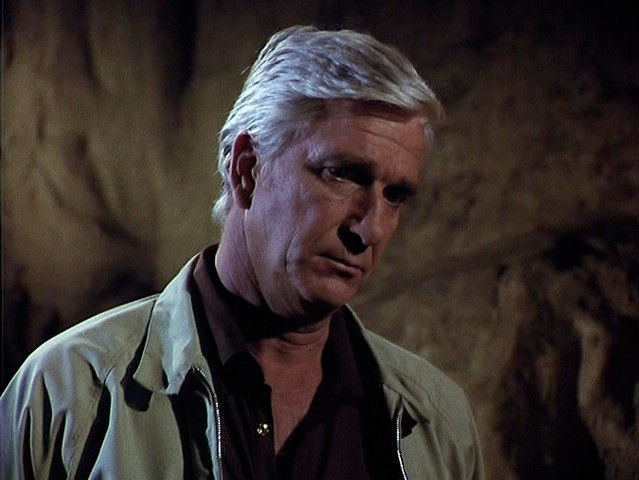
Along with Kate, the group includes a bitter cop named Joe Johnson (Leslie Nielsen!), his wife Liz (Julie Sommars), arrogant Prof. Harrison Soames (Ray Milland), and the professor’s shy daughter, Ann (Sheila Larkin).  Joe and Liz are struggling to keep their marriage together.  Prof. Soames refuses to allow his daughter to have a life of her own.  The six of them are going to have to somehow work together if they’re going to survive this cave-in!  Of course, they’re not alone.  There’s a seventh person in the cave.  Tom Arlen (James Olson) is a dangerous convict who was in the cave hiding out from the police.  Now, he’s trapped along with everyone else.

Cave-In is a pretty standard disaster movie.  Produced by Irwin Allen, it was originally filmed in 1979 but it didn’t air on NBC until 1983.  By that time, Airplane! had pretty much reduced the disaster genre to a joke.  Ironically, Leslie Nielsen himself has a starring role in Cave-In, playing exactly the type of character that he parodied in both Airplane! and Police Squad.  At the time he filmed Cave-In, Neilsen was still a dramatic actor but by the time the movie aired, his deadpan style was firmly associated with comedy.  Even when his dialogue is serious, the natural instinct is to laugh.

Cave-In gets bogged down by flashbacks.  Even though everyone should be concentrating on making their way to safety, it instead seems that they’re too busy obsessing on their backstory.  Since no one’s backstory is that interesting, the flashbacks don’t do much to liven up the film and, unfortunately, a cave-in just isn’t as compelling as a fire in skyscraper or an upside down boat.

On the plus side, every disaster movie needs an arrogant bastard who makes escape unnecessarily difficult and, in the 70s, no one played a better arrogant bastard Ray Milland.  Otherwise, Cave-In is a forgettable entry from the final days of the disaster genre.

Blood River (1991, directed by Mel Damski)


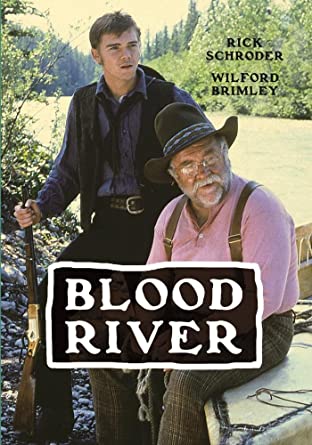
In the old west, Jimmy Pearls (Ricky Schroder), a seemingly dissolute young man, kills the three men who he hold responsible for the murder of his parents.  Unfortunately for Jimmy, one of those men was the son of powerful rancher Henry Logan (John P. Ryan) and Logan is now determined to track down Jimmy and get some revenge of his own.

Jimmy only his one ally in his attempt to make it to safety and that’s Winston Culler (Wilford Brimley).  In his younger days, Culler was a legend.  He tamed the frontier and he lived with the Indians and everyone knew better than to get in his way.  Now, Winston is older and no one give him the respect that he deserves.  Winston allows Jimmy to stay with him but Winston has more than just Jimmy’s safety in mind.  Winston has his own reasons for wanting to get revenge on Logan and, despite their constant bickering, he and Jimmy are soon working as a team.

Adrienne Barbeau has a cameo as a madam and, while she’s always a welcome sight in any film, I imagine her casting has to do with the fact that this film was actually written by John Carpenter.  Yes, that John Carpenter!  Carpenter actually wrote the script for what would become Blood River in 1971.  When he wrote it, he pictured John Wayne as Winston and either Elvis Presley or Ron Howard as Jimmy.  (The Duke and Elvis in the same film?  That would have been something, regardless of how the film itself turned out.)  Carpenter sent copies of the script to both John Wayne and director Howard Hawks but neither one responded.  It would be 19 years before the script was finally filmed.

Blood River is an amiable western.  It was ultimately produced for television and it first aired on CBS.  Despite the fact that the film was originally written to be a theatrical film, it plays more like a pilot than a film.  You could imagine a weekly series featuring Winston and Jimmy riding from town to town and getting into adventures.  The plot is nothing special but Ricky Schroder and Wilford Brimley make for a good team.  Brimley is especially ornery, even for him.  Blood River may be a simple film but it will be appreciated by those looking for a likable and old-fashioned western.

The Love War (1970, directed by George McCowan)


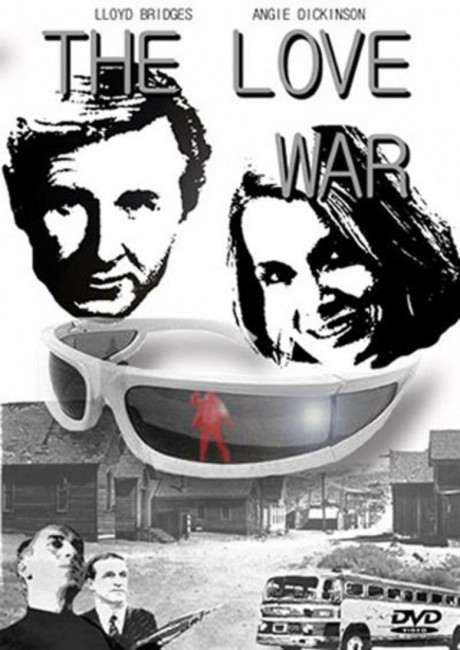
Two warring alien races are settling their conflict in California.  Two teams of three have been sent down to Earth.  Though they may appear to be human, their true form is revealed whenever anyone looks at them while wearing a special pair of glasses.  (Yes, just like in They Live.)  Kyle (Lloyd Bridges) is the last surviving member of his team but, even if his side has lost two battles, Kyle is still determined to win the war.

After killing one of his opponents in Los Angeles, Kyle hops on a bus and heads to a small town.  While he’s on the bus, he’s approached by Sandy (Angie Dickinson).  Though Kyle tries to avoid talking to her, Sandy manages to break down his defenses because she’s Angie Dickinson.  If 70s era Angie Dickinson started talking to you on a bus, would you be able to ignore her?  When Kyle reaches his destination and gets off the bus, Sandy decides to follow him.  Even after Kyle explains that he’s an alien and allows her to see his true form, Sandy says that she’s in love with him.  Kyle starts to fall in love with her too but what will he do when the other aliens show up in the town, looking to kill him?

Even though this made-for-TV movie’s 70 minute runtime makes it feel more like an extended episode of The Outer Limits than an actual movie, The Love War makes good use of both its intriguing premise and its two lead actors.  Lloyd Bridges and Angie Dickinson might not be the first two actors who come to mind you think about who could credibly play an alien and the woman in love with him but they both pull it off.  The Love War works because it takes its premise seriously.  I can only imagine how audiences in 1970 reacted the film’s ending, which is hardly typical of the type of feel-good stuff that we usually associate with 70s television.

The Love War has never officially been released on DVD but it can be viewed on YouTube.

The Bounty Man (1972, directed by John Llewellyn Moxey)


Kinkaid (Clint Walker) is a bounty hunter in the old west who doesn’t have time for sentiment or friendship.  All he cares about is the money that his next bounty is going to bring in.  When he captures outlaw Billy Riddle (John Ericson), it should be a cool $5,000 payday.  The only problem is that Billy’s girlfriend, a prostitute named Mae (Margot Kidder), insists on accompanying Kinkaid while he takes Billy to jail.  Though she initially conspires to help Billy escape, Mae soon starts to fall for the outwardly unemotional Kinkaid, especially when she discovers the details of his tragic backstory.  (Every bounty hunter has one!)

However, the three of them soon run into another problem.  Angus Keogh (Richard Basehart) and his gang have decided that they want to collect the bounty for themselves.  Kinkaid, Billy, and Mae find themselves trapped in a canyon, under siege and with no food or water.  The three of them will have to work together to survive but can they trust one another?

The Bounty Man was a made-for-TV western and it feels like it was originally mean to be a pilot.  There’s not really much to the story, beyond establishing Kinkaid and Mae as characters who could potentially have a new adventure every week.  I did like the performance of Richard Basehart, especially in the scene where he taunts the trapped Kinkaid by demonstrating that he has so much water that he can pour it out of his canteen without having to worry about running out.  Basehart was a good villain and Walker was a believable hero, even if the character wasn’t very interesting.  Margot Kidder, not surprisingly, is the best thing about the film.  Mae is stock role, the prostitute with a heart of gold, but Kidder brings a lot of life to the part.

The Bounty Man was one of many TV movies directed by John Llewelleyn Moxey.  He does a good job moving the action along.  The Bounty Man is a quick, 70-minute diversion for undemanding western fans.

War Hunt (1962, directed by Denis Sanders)


In the last days of the Korean War, Pvt. Roy Loomis (Robert Redford) is assigned to an infantry unit that’s serving on the front lines.  Loomis is an idealist who believes in always doing the right thing and who believes that he’s truly fighting for the American way of life in Korea.  The company’s commander (Charles Aidman) is more cynical.  As he explains it, the job of the soldiers is not to win the war.  Their job is to stall the advance of the enemy long enough to let the politicians and the diplomats get what they want out of a peace settlement.  The soldiers are merely there to be sacrificed.

Loomis soon finds himself in conflict with Pvt. Endore (John Saxon).  Endore spends his night sneaking around behind enemy lines, killing soldiers, and gathering intelligence.  No one goes with Endore on these missions and Endore makes it clear that he doesn’t want to have anything to do with the other solders in the unit.  Because Endore usually returns with valuable intelligence, he’s allowed to do what he wants but it becomes clear that gathering intelligence is not what motivates Endore.  Endore loves war and killing.  In the United States, he would probably be on death row.  In Korea, at the height of the war, he’s a valuable asset.

Charlie (Tommy Matsuda) is an orphan boy who has been adopted as the company’s mascot.  Both Loomis and Endore have a bond with Charlie.  Loomis wants Charlie to go to an orphanage after the war so that he can hopefully be adopted and maybe brought over the United States.  Endore, however, plans to stay in Korea even after the war ends and he wants to keep Charlie with him.  He wants to turn Charlie into as efficient a killing machine as he is.

This low-budget but effective anti-war film may be best known for featuring Robert Redford in his first starring role but the film is stolen by John Saxon, who is frighteningly intense as Endore.  Endore is so in love with war that he continues to fight it even after the Armistice is declared.  Saxon plays him like a cool and calculating predator, a natural born killer.  He’s an introvert who rarely speaks to the other members of the company.  Even though he helps them by killing the enemy before the enemy can kill them, it’s clear that Endore doesn’t really care about the other members of the unit.  He just cares about killing.  He’s close to Charlie because Charlie is too young to realize just how dangerous Endore actually is.

Along with Saxon and Redford, War Hunt also features early performances from Tom Skerritt, Sydney Pollack, and Francis Ford Coppola.  (Coppola, who goes uncredited, plays an ambulance driver.)  Pollack and Redford met while they were both acting in this film and Pollack would go on to direct Redford in several more films.  One of those films, The Electric Horseman, would reunite Redford and Saxon.  Again, they would play adversaries.

Last night, when I heard John Saxon had died, I tried to pick his best performance.  I know that most people know him from his horror work and his role in Enter the Dragon.  Those are all good performances but, for me, Saxon was at his absolute best in War Hunt.


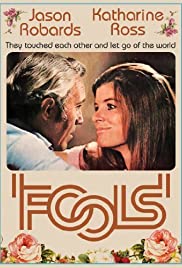
Fools (1970, directed by Tom Gries)


What the Hell, 1970?

In this self-conciously hip and with-it portrait of life in San Francisco at the tail end of the hippie era, Jason Robards plays Matthew South, a veteran B-movie actor who is fed up with everyday life and who is prone to long monologues about how the machines are taking over.  (Just imagine how Matthew would feel about the world today.)  When Matthew gets into an argument with two people in a park, Anais Appleton (Katharine Ross) comes to his rescue and soon, they’re in the middle of a falling in love montage.  Actually, there are several falling in love montages and they’re almost all scored by Kenny Rogers and the First Edition.  It’s easy listening with a hippie tinge.

Fools follows Matthew and Anais as they wander around San Francisco and have several strange encounters, none of which make much sense.  For instance, there’s a scene where two FBI agents suddenly burst into the room and then admit that they’re at the wrong address.  Why is that scene there?  What does it mean?  Later, Matthew and Anais go to a dentist and they listen to a patient try to seduce her psychiatrist (who is played by Mako).  Why is that scene there?  What does any of it mean?  Everywhere that Matthew and Anais go, they see evidence that society is dumb and that the answer to all life’s problems is a love song from Kenny Rogers.  Matthew never stops talking and Anais never stops looking pretty (she’s Katharine Ross after all) but neither ever becomes a strong enough character to ground Fools in any sort of reality.  It’s a movie that preaches nonconformity while so closely imitating A Thousand Clowns and Petulia that the entire thing feels like plagiarism.

Anais has a husband, an emotionally distant lawyer named David (Scott Hylands).  David isn’t prepared to let Anais leave him, no matter how tired she is of their marriage.  He hires a detective to follow Anais around.  It all leads to an act of violence that doesn’t fit the mood of anything that’s happened before.  Cue another falling love montage before the end credits role.

Fools is one of those films that probably would never have been made without the success of Easy Rider.  Everyone wanted a piece of the counterculture in 1970 and Fools tries so hard that it’s painful to watch.  Of course, neither Matthew nor Anais are really hippies.  They do eventually come across some hippies playacting in the street.  One of them is played by future David Lynch mainstay Jack Nance so that’s pretty cool.  Otherwise, Fools deserves to stay in 1970.


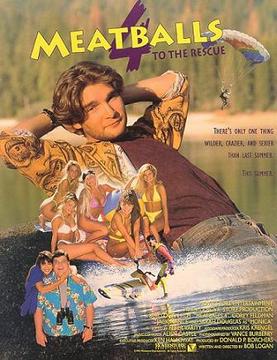
Cinemax Friday: Meatballs IV (1992, directed by Bob Logan)


Neil (Jack Nance … yes, Eraserhead Jack Nance) owns a summer camp where he teaches people how to water ski.  Unfortunately, it’s been a while since Neil’s been a success.  The camp is old and run down and Neil is just too good-hearted to enforce any discipline on his campers or his counselors.  The evil Monica Shavetts (Sarah Douglas) owns the water ski camp on the other side of the lake and she is determined to put Neil out of business.  Fortunately, Neil does have one ace up his sleeve.  One of his former campers, Ricky Wade (Corey Feldman), has gone to become one of the top water skiers in the world and he has returned to help Neil save the camp!

Meatballs IV covers all the usual summer camp hijinks.  The fat kid learns how to believe in himself.  The female counselors all appear in topless.  There’s a shower scene, of course, and there’s also a lot of humor centering around flatulence.  When you’re 11 years old, this movie is pretty cool.  Of course, saving the camp means winning a competition against the evil camp.  At least Sarah Douglas appears to be relishing her evil role.  There is one funny joke where Corey Feldman attempts to hit on a girl by telling her, “I was in Goonies.”  I guess even back then, Feldman knew which one of his movies people would actually remember.

Jack Nance is his usual eccentric self in the role of Neil but he doesn’t get to do much.  Sadly, it was while he was in upstate New York making this film that his then-wife, Kelly Van Dyke, committed suicide in Los Angeles.  Reportedly, Nance had been on the phone consoling her and trying to talk her down.  Unfortunately, a lightning storm knocked out the phones in the middle of Nance’s conversation with Kelly and she hung herself immediately afterwards.  For many of us, Jack Nance would be the main reason we would sit through something like Meatballs IV but knowing that story makes it difficult to watch him in this film.  Both Jack Nance and his wife deserved better.

Meatballs IV started out as a movie called Happy Campers, which was intended to be a low-budget rip-off of the original Meatballs.  Then, someone realized that an even better idea than ripping off a successful film would simply be to change your movie’s title and turn it into a sequel.  Meatballs IV tells the same basic story as the original Meatballs, with a bunch of plucky outsiders proving themselves over the summer.  The main difference is that Meatballs IV has a lot more T&A than the original film and that the first film has Bill Murray as a camp counselor while this one has to settle for Corey Feldman.  It’s not that Feldman’s bad in the role, of course.  Despite what happened to his career in the 90s and beyond, Corey Feldman has always been capable of giving good performances, even if he often didn’t.  (I can’t really blame him.  Would you make much of an effort if you were appearing something like Dream A Little Dream 2?)  It’s just that Corey Feldman is no Bill Murray.  When Ricky first shows up at the camp, he energizes the campers by doing an elaborate dance routine, which he ends by shouting, “Elvis has left the building!”  It has the same energy as that episode of The Simpsons where Homer is hired to voice Poochie on Itchy & Scratchy.  It feels desperate, like the film is trying too hard to convince us that Ricky Wade is as cool as everyone says he is.  If you have to work that hard to convince people that you’re cool, then you’re probably not.