The Death of the Incredible Hulk (1990, directed by Bill Bixby)


David Banner (Bill Bixby), still hoping to find a cure for the condition that causes him to turn into the Hulk (Lou Ferrigno) whenever he gets injured or stressed out, heads up to Portland.  Pretending to be a simple-minded janitor named David Bellamy, Banner gets a job working in the lab of Dr. Ronald Pratt (Philip Sterling).  Banner hopes that Dr. Pratt’s research holds the secret that can release him from being the Hulk.  When Dr. Pratt learns Banner’s secret, he and his wife (Barbara Tarbock) work with Banner to try to cure him and to understand the Hulk.

David Banner is not the only person who has infiltrated the lab.  KGB agent Jasmin (Elizabeth Gracen) has also been sent to the lab with orders to steal Pratt’s research.  Jasmin hates working for the KGB but she’s been told that her sister will be killed unless she complete one final mission.  When Jasmin meets and falls in love with David, she starts to reconsider her loyalties.  When the KGB finally makes their movies, Jasmin is going to have to decide who to help and the Hulk is going to have to come through and save the day one final time.

David Banner’s saga finally comes to a close in The Death of the Incredible Hulk, the third and last of the Incredible Hulk television movies.  It’s also the best of the three, though that might not by saying much when you consider the quality of the first two.  While the other two movies both served as backdoor pilots for other heroes and the Hulk was barely even present in the 2nd movie, The Death of the Incredible Hulk keeps the focus squarely on David Banner and the Hulk.  (Though Jasmin does seem like she could be a version of the Black Widow, I think the similarities between the two characters are a coincidence.  Beautiful and conflicted KGB agents were a popular trope in the 80s and early 90s.)  Both Bixby and Ferrigno get to show off what they can do in their signature roles.  Bixby is especially good at capturing Banner’s tortured and lonely existence and his performance helps to make The Death of the Incredible Hulk something more than just another cheap sci-fi TV movie.

Though the film stays true to its title and ends with a mortally wounded Banner saying that he’s finally free, it was not intended to be the final Hulk film.  There were plans to bring David Banner back to life and presumably, the Hulk would have come back with him.  Unfortunately, Bill Bixby himself died in 1993, before shooting could begin on The Return of the Incredible Hulk.

 

Game Review: Alone (2020, Paul Michael Winters)


You’re alone.

You want to be alone.

Surviving what has happened to the world requires you to be alone.

But if you want to keep driving down the hallway, you’re going to have to find the closest garage and get some gas.  And when the gas pumps turn out to be locked, you’re going to have to figure out how to get them unlocked and you might not be able to do it alone.

Alone is a post-apocalyptic Interactive Fiction game.  While you try to solve the puzzle of how to unlock the gas pumps, you also find journals and other notes that reveal what has happened to the world and why it’s so important to stay isolated from other people.  It’s not a bad text game.  The descriptions are sparse but effective and the puzzles are not that difficult to solve as long as you pay attention.  As befits its story, it’s a straight forward game without any unnecessary padding.  In the game, you don’t have any time to waste and neither does Alone.

Not surprisingly, Alone is one of many IF games that I’ve played this year that deals with people having to isolate themselves because of an apocalyptic events.  This is the year of the quarantine so, of course, it’s going to be reflected in our games, books, and movies.  I think that’s one reason why Alone sticks with you.  Right now, a lot of people are feeling alone.  Depending on the choices you make and how you play the game, Alone can end on a note of either hope or uncertainty.  It’s up to you.

Alone is one of the entrants in the 26th annual Interactive Fiction Competition, which is currently ongoing and accepting entries until November 29th.  You can play it (and all the other entries) by visiting the Interactive Fiction Comp’s home page.

The Trial of the Incredible Hulk (1989, directed by Bill Bixby)


Still on the run and hoping to find a cure for the condition that causes him to transform into the Incredible Hulk, David Banner (Bill Bixby) is now in New York and using the name David Belson.  He’s grown a beard to keep himself from being recognized.  I guess it’s like when Superman used to put on his glasses.  When David sees a woman being harassed on the subway by two thugs, it’s too much stress for him and he transforms into the Hulk (Lou Ferrigno).  When the Hulk turns back into David, he is arrested and charged with being a mugger.  (No one believes the witness’s account of seeing a huge green man on the subway.)

Despite the title, the Hulk never goes on trial, though there’s a dream sequence where David turns into the Hulk in a courtroom.  (Stan Lee plays the jury foreman.)  Just having a nightmare about turning into the Hulk is enough to cause the transformation for real.  No New York jail can hold the Hulk.

David’s lawyer is blind and yes, his name is Matthew Murdock (played by Rex Smith).  Murdock thinks that the attack on the subway was somehow linked to a crime lord named … yes, Wilson Fisk.  Fisk (John Rhys-Davies) wants to set up a national crime syndicate, as if Lucky Luciano didn’t already do that.  Using the name Daredevil, Murdock tries to prevent that.  David eventually ends up helping.

The Trial of the Incredible Hulk is a huge tease.  It promises the Hulk on trial but, instead, it’s just a backdoor pilot for a Daredevil TV series.  Just like in The Incredible Hulk Returns, the Hulk is forced to make room for a new hero.  But at least The Incredible Hulk Returns actually featured the Hulk working with Thor.  In Trial of the Incredible Hulk, the Hulk is hardly present at all.  Banner encourages Murdock not to give up, even after he’s badly beaten by Fisk’s men, and he works with Matt to help him prepare for a rematch.  But the final battle is almost all Daredevil.  Once he escape from prison, Banner doesn’t turn into the Hulk once.

Rex Smith isn’t bad as Daredevil.  While he’s not as good as Charlie Cox, he’s still better than Ben Affleck.  While the movie does not feature the classic Daredevil costume, it does at least get Daredevil’s origins and powers correct.  John Rhys-Davies hams it up as Wilson Fisk.  One of Marvel’s most intriguing villains is turned into just another generic bad guy in an office.  It’s disappointing.

The Trial of the Incredible Hulk ends with Murdock pledging to protecting the city and Banner again hitchhiking away.  Daredevil would have to wait for another 25 years before getting his own series.  Banner would return in The Death of the Incredible Hulk.


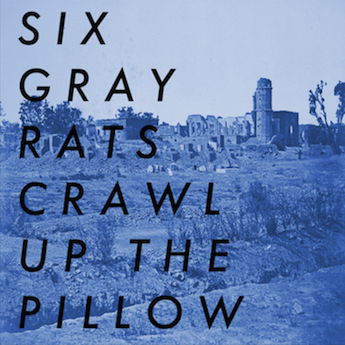
Game Review: Six Gray Rats Crawl Up The Pillow (2015, Caleb Wilson as “Boswell Crain”)


You are Rinaldo di Gorgonzola, a spoiled fop living in Renaissance-era Italy.  With the plague shutting down most of the country and with you needing money to pay your rent, you accept a bet.  All you have to do to win is spend the night in the deserted castle of a recently deceased nobleman.

The main challenge of this Interactive Fiction game is to figure out how to get to sleep.  Getting in the caste is easy.  Since there’s only three rooms in the castle, finding the bedroom is easy.  Once you figure out that the command is “enter bed” and not “lie on bed,” getting on the bed is easy.  It’s getting to sleep that’s the hard part.  Not only are there things you have to do — like get undressed, eat, and read — before you can go to sleep but you also have to deal with a series of memories.  This game is unique in that your inventory includes memories that have to be examined before you can go to sleep.  Each memory leads to another memory until you finally reach one memory that will not go away.  The solution for getting rid of that memory is so simple that I’m worried that it took me so long to solve the puzzle.  I might not be as good at these games as I think I am.

The game doesn’t end once you fall asleep.  There’s some other things that you have to deal with.  You didn’t think that spending the night in a dead nobleman’s castle would be easy, did you?  But those puzzles are considerably easier to solve than the puzzle of how to get to sleep in the first place.

Six Gray Rats Crawl Up The Pillow is a well-written and atmospheric game.  There’s a lot of unexpected wit to be found in the game.  At one point, I grew so frustrated with trying to figure out how to go to sleep that I commanded the game “shoot shelf,” just to be reprimanded for always thinking about myself.  Another entertaining thing to do is to try to pick up the corpse of the nobleman.  (Yes, it does seem that the body was just left in the bedroom.)  I liked the way the game incorporated memories into the inventory, though I think some of the memories could have been combined to help the game flow better.  It took me about 40 minutes to play the entire game.  Someone who is actually good at this will probably be able to do it in 10.  It can be downloaded from here.

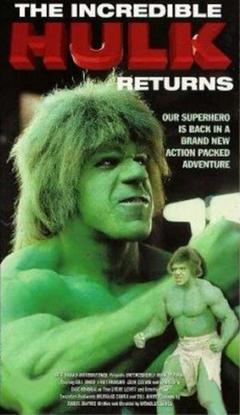
The Incredible Hulk Returns (1988, directed by Nicholas Corea)


Scientist David Banyon (Bill Bixby) has a secret.  His real name is David Banner and he has spent the last ten years in hiding, traveling up and down the highway and searching for a cure to a very strange condition.  As the result of getting dosed with gamma rays, David Banner sometimes transforms into an angry green monster known as the Hulk (Lou Ferrigno).  The world believes that David Banner is dead and Banner must let them continue to believe that until he can find a cure for the monster within.

The Incredible Hulk Returns is a continuation of the old Incredible Hulk television series, which was the first (and, until the MCU came along, only) successful attempt to build a live action show around a Marvel super hero.  Premiering in 1978, The Incredible Hulk ran for 5 seasons and got good ratings and, for a comic book series, surprisingly decent reviews.  However, it was also expensive to produce and it was abruptly cancelled in 1982, before the show got a chance to wrap up David’s story.  When The Incredible Hulk ended, David Banner was still alone and hitchhiking from town to town.  Six years later, The Incredible Hulk Returns caught up with David and tried to sell viewers on a “new” Marvel hero as well.

David “Banyon” is now living in California and working at the Joshua-Lambert Research Institute.  It’s been two years since he last turned into the Hulk.  He controls his rage by being careful not to get involved in any dangerous situations.  He also has a girlfriend, Dr. Maggie Shaw (Lee Purcell).  David is designing the Gamma Transponder, which he thinks will cure him of his condition.  Life’s good until Donald Blake (Steve Levitt) shows up.

A student of Banner’s, Blake recognizes his former teacher and approaches him with a crazy story.  When Blake was in Norway, he stumbled across a tomb that contained a hammer that contained the spirit of Thor, a Viking warrior who was banished to Earth by Odin.  To prove that he’s telling the truth, Blake commands Thor to emerge from the hammer.  When Thor (played by Eric Kramer) does, he makes such a mess in the laboratory that David transforms into the Hulk.

Thor is not Banner’s only problem.  Jack LeBeau (Tim Thomerson!) and Mike Fouche (Charles Napier!!) want to steal the Gamma Transponder and turn it into a weapon.  Also, reporter Jack McGee (Jack Colvin) s back in town and still obsessed with proving that the Hulk exists.

The Incredible Hulk Returns may be a continuation of David Banner’s story but the main reason it was filmed was so it could serve as a backdoor pilot for a Thor television series.  The Thor TV series never happened and, for those who are used to Chris Hemsworth’s comedic take on Thor, it’s jarring to see Eric Kramer playing the role like a third-tier professional wrestler.  For fans of The Incredible Hulk TV series, it’s even more jarring to see the Hulk fighting alongside a viking.  Unlike the comic book, the TV series usually tried to ground its stories in reality, with Banner’s transformations into the Hulk serving as the show’s only concession to its comic book origins.  The villains played by Thomerson and Napier both seem like typical bad guys from the show’s heyday but Thor just doesn’t belong.  Fans of the show will resent Thor taking the spotlight away from David Banner and the Hulk while fans of Thor will notice that this version of Thor is apparently not the god of thunder but instead just an egotistical viking who got on Odin’s nerves.

Bill Bixby was always The Incredible Hulk‘s not-so-secret weapon, taking and playing his role very seriously.  He continues to do that in The Incredible Hulk Returns but how seriously can anyone come across when they’re speaking to Thor?  By the end of the movie, Thor and Blake head off on their own adventures while Banner resumes hitchhiking.  Thor and Blake would not be seen again but David Banner’s adventures would continue in The Trial of the Incredible Hulk.

Game Review: Ghosts Are Good Hosts (2015, Leonard Pilchin)


Waiting for an invitation to arrive
Goin’ to a party where no one’s still alive
Waiting for an invitation to arrive
Goin’ to a party where no one’s still alive

— Dead Man’s Party by Oingo Boingo, lyrics by Danny Elfman

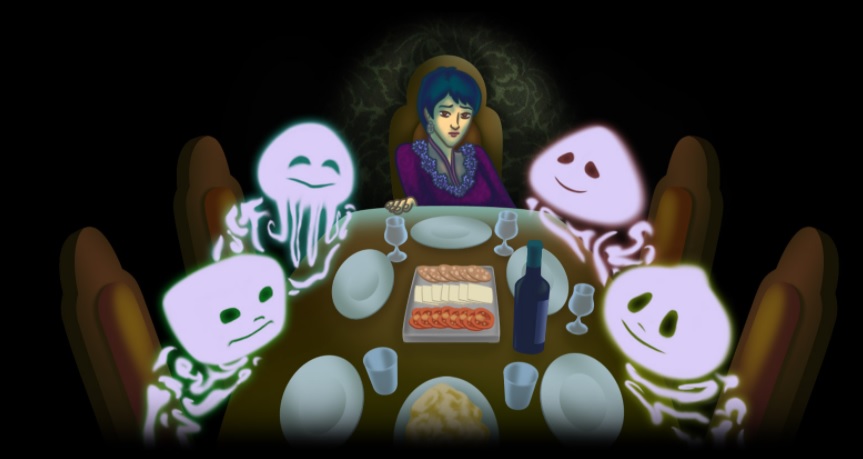
Last night, you dreamed about going to a party that was being thrown by ghosts.  The next morning, you receive an invitation to just such a party.  Of course, you go.  When you arrive, you meet Annabel, who is not a ghost.  However, the ghosts soon arrive and, once gathered around the table, they look at you with hungry eyes.

As the title of this game states, ghosts are good hosts.  However, they also want to eat you and Annabel for dinner!  Since there’s no way for you to leave the dining room without the permission of your hosts, you’re going to have to talk to the ghosts and somehow win them over.  Not even a ghost would be willing to eat its own friend.

Talk to Corsair, Halle, Kal, and Soul.  It’s not hard.  (All you have to do is point and click and then select what questions you want to ask them.)  Get to know them.  Ask them about each other.  Learn about their stories and compliment them at the right time.  Once you think that you’ve won each ghost over, ask them if they want to be “ghost friends.”  Ask too soon and you’ll get rejected and you might even get eaten.  Ask at the right time and you’ll have a pleasant ghost party and you might even make a living friend out of Annabel.

Ghosts Are Good Hosts is a surprisingly challenging but good-natured TWINE game.  The challenge isn’t finding the right questions to ask as much as it’s asking them in the right order and to the right ghost at the right time.  It’s not easy but it is fun, mostly because each ghost has their own unique story and personality.  Along with the wonderful graphics, the game has a retro feel which will appeal to the nostalgia of every 90s kid who used to play games on a big, bulky personal computer.

Ghost Are Good Hosts can be played here.  If you’re struggling to not get eaten, a walk-through is available here.

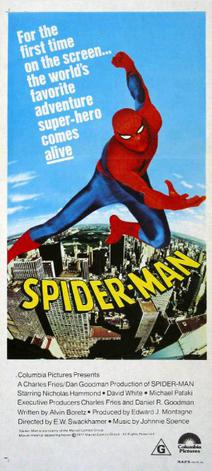
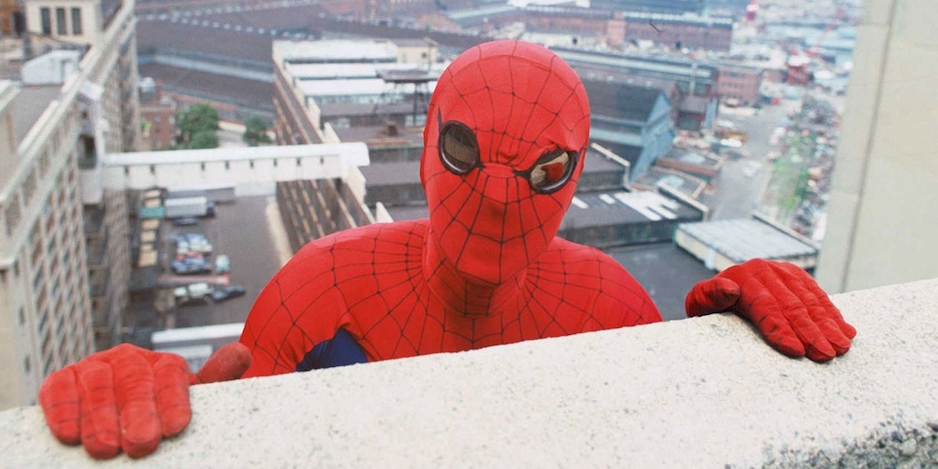
Spider-Man (1977, directed by E.W. Swackhemer)


When a college student named Peter Parker (Nicholas Hammond) is bitten by a radioactive spider, he’s stunned to discover that he can now do everything that a spider can.  He can climb walls.  He has super strength.  He has super senses.  And, once he invents a sticky web serum, he can shoot webs and swing around the city!  All he has to now is sew himself a red and blue costume and he’ll be ready to fight crime in New York City!

It’s not a minute too soon because New York is dealing with a crime wave that only Spider-Man can deal with.  Seemingly ordinary people are suddenly going into hypnotic trances, stealing money and committing suicide.  An extortionist sends words that, unless he’s paid a lot of money, he’s going to unleash a wave hypnotic chaos on the city.  Could it have anything to do with a sinister New Age guru and hypnotist named Edward Byron (Thayer David)?

Though it was released theatrically in Europe, Spider-Man was produced for television and it served as the pilot for a short-lived CBS television series.  Along with The Incredible Hulk, this was one of the first attempts to build a television series around one of Marvel’s characters.  Unfortunately, the series only last 14 episodes before being canceled.  Though it can be hard to believe nowadays with the nonstop hype around every single comic book movie, there was a time when television and film executives were actually weary about trying to bring super heroes like Spider-Man and Captain America to life.  According to Stan Lee (who served as a consultant on Spider-Man), CBS wanted to distance their version of Spider-Man from its comic book origins.  While both the pilot and the series features Peter Parker crawling up walls and shooting webs, there’s no Uncle Ben.  There’s no talk about how with great power comes great responsibility.  Worst of all, there are no members of Spider-Man’s famed rogue’s gallery.  No Electro, no Sandman, no Green Goblin, and certainly no Dr. Octopus.  CBS wanted the show to feature down-to-Earth villains, which is an interesting strategy for a show about a grad student who can climb walls.

The television version of Peter Parker isn’t as insecure and angsty as either the comic book version or even the movie versions.  Hammond is likable and sincere in the role but he is also almost too self-assured as Parker, proof that CBS didn’t understand that a huge part of Spider-Man’s appeal was that he was never as confident as Superman or Captain America.  Instead, much like many of the people who read his comic, Peter was frequently worried and consumed with self-doubt.  The comic book version of Spider-Man was always wracked with guilt for not stopping the thief who eventually killed Ben.  The television version was more worried about selling enough selfies to The Daily Bugle to be able to go on a date with his professor’s daughter.

At least the pilot film featured a villain who wouldn’t have felt out of place in an issue of The Amazing Spider-Man, though he probably would have had a cool villain name, like the Mesmerizer, if he had appeared in the comic.  Thayer David played a lot of smug villains in the 70s, not to mention the fight promoter in Rocky.  In Spider-Man, David goes all in as the villain and he’s got the perfect posh accent for delivering threats and sarcastic put-downs.  Unfortunately, this version of Peter Parker is not the wise-cracking machine that he was in the comic books and he never really gets a chance to verbally put Byron in his place.

If you can overlook its deviations from the comic book, the pilot isn’t a bad made-for-TV adventure.  Though miscast and playing a far different version of Peter Parker than we’re used to, Nicholas Hammond does his best to make Peter and his transformation credible.  Thayer David, as always, is a good villain and the story, with ordinary people suddenly turning into ruthless criminals, isn’t bad.  Though there are a few convincing shots of Spider-Man web-slinging, most of the special effects are lousy but they’re really not any worse than what you would expect to see in a 70s made-for-TV movie.  Though the series ultimately didn’t work, the pilot is still an enjoyable precursor to what, decades later, would become the Marvel Cinematic Universe.

Game Review: The Sock Puppet Killer (2019, Jason Cantalini)


In this diabolically clever work of interactive fiction, the narrator needs you to track down the Sock Puppet Killer!

Who is the Sock Puppet Killer?  A killer who kills sock puppets, of course!  And why are you the only one who can stop him?  Because that narrator says that you’re former Chief Inspector Caine Slade, the brilliant detective who has been a pathetic drunk ever since the tragic death of your family!

You can tell the narrator that you’re not interested in catching the Sock Puppet Killer.  You can say that you won’t even “do it for the children!”  (Yes, that is an option.)  You can say that you have no memory of ever being Caine Slade.  You can tell the narrator, in detail, why his story doesn’t make any sense.  But eventually, you’re going to end up in a bar, approaching a beautiful woman who you’ve been told is the Sock Puppet Killer.

This is one weird game and winning it going to require more than one try.  Fully understanding everything that is happening is going to take probably a dozen tries.  There are a variety of different decisions to be made throughout the game.  Make the wrong decision and you’ll end up dead.  Make the right decision and you very well could still end up dead.  The best piece of advice that I can give you (without spoiling the game, of course) is to avoid pissing off the narrator.  At one point, I very adamantly told him that I wasn’t going to approach the Sock Puppet Killer and I suddenly found myself drowning in the ocean.  It’s accepted in almost all Interactive Fiction games that the narrator is basically God but The Sock Puppet Killer is remarkable for featuring an easily angered and very vengeful God.

The Sock Puppet Killer is well-written and often loud out loud hilarious.  It’s not an easy game but that just makes it all the more rewarding if you manage to get through the entire thing without dying.

The game can be played by clicking here.

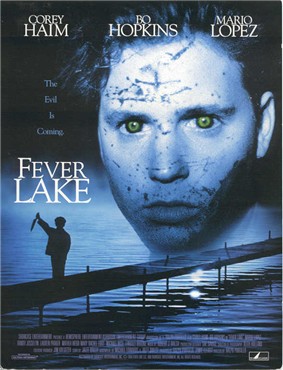
Cinemax Friday: Fever Lake (1997, directed by Ralph Portillo)


I’ve seen my share of bad slasher films but Fever Lake is definitely one of the worst.

The plot is a familiar one.  Six college students (including Corey Haim, Mario Lopez, and Lauren Parker) head to the lake for the weekend.  The lake has a bad reputation and they’ll be staying at a house where a terrible murderer occurred ten years earlier.  The sheriff (Bo Hopkins) doesn’t want any foolishness.  The local Native American medicine man (stiffly played by Michael Wise) says that there is a demon in the lake and that it’s about to reawaken.  The students go to the lakehouse anyway.  Can you guess what happens?  It’s a 93 minute film where the killer doesn’t show up for 70 minutes. There’s not much gore and zero nudity and it has a twist that anyone will be able to see from a mile away.  Haim alternates between sleepwalking his way through the film and screeching unintelligibly and Mario Lopez comes across like he’s playing A.C. Slater on speed.  It’s thoroughly inept in almost every way that a film can be and, even worse, it’s boring.

Fever Lake is the type of film that, in the 90s, you always hated coming across on late night Cinemax.  Because you were watching 2 in the morning, you would expect something extreme and instead you ended up with an hour of Corey Haim and Mario Lopez driving up to the lake.   Late night connoisseurs held films like this in a special kind of contempt.  For the most part, we never asked much from more late night Cinemax offerings and when a movie like this couldn’t even deliver what little we did ask for, it was hard not to take it personally.  (To be honest, the PG-13 rating should have given the game away.  I’m not sure what the film did to rate the addition of that 13, though.  This film is a solid PG, all the way through.)

Today, of course, we can enjoy Fever Lake because of RiffTrax.  Mike, Kevin, and Jim ripped Fever Lake apart in 2015.  The film, with their commentary, is available on Prime.  It’s the best way to watch Fever Lake.