Game Review: You Are SpamZapper 3.1 (2021, Leon Arnott)


You Are Spam Zapper 3.1 is an entrant in the 2021 Interactive Fiction Competition.  All of the entries can be browsed and experienced here.

Sometimes you play a game and it totally takes you by surprise. That’s what You Are Spam Zapper 3.1 did to me.

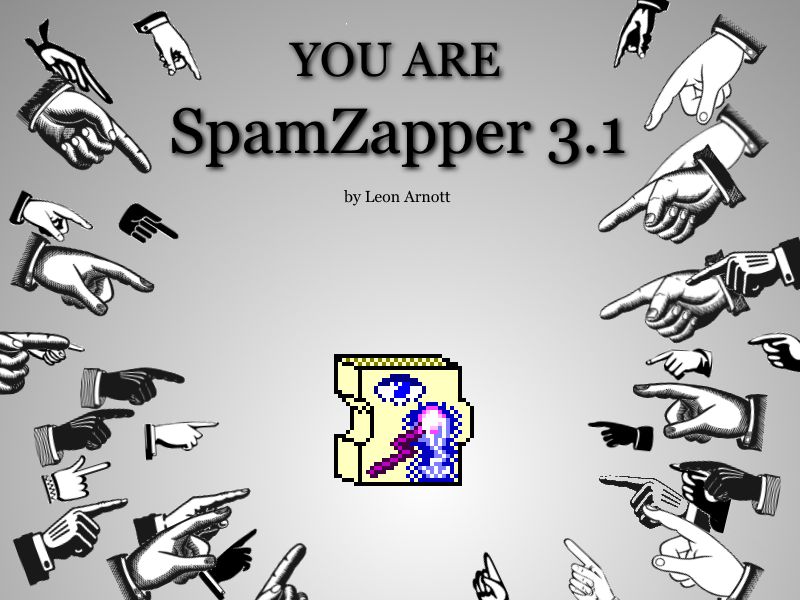
This Twine game takes place in the early 2000s. You are Spam Zapper 3.1. Your job is zap spam emails and keep them from getting into your human’s email inbox. Sometimes, the job is easy. Many of the emails are obviously fake and it’s easy to know that they should be zapped. Sometimes, it’s more difficult. Do you zap all of the ads or just some? What do you do when humans use weird symbols in their emails? Is it an emoji or is it a virus?

When I started playing, I thought the entire game was just going be reading email that were meant to parody the type of junk that we all used to get back in the early days of the the new century and laughing at how the internet used to be. There is a lot of that in the game but, as you read the emails, another story develops about your human and their friends and their attempts to communicate in a world that’s becoming depersonalized by technology. Do you get involved in your human’s life and with the lives of their friends? Do you reach out to the other plug-ins, who all have their job to do whenever the human turns on their computer? Or do you just do your job and zap anything that looks suspicious?

You Are Spam Blocker 3.1 is a memorable mix of comedy and drama that will take most players by surprise.

Play You Are Spam Blocker 3.1.

Music Video of the Day: A Message To You, Rudy by the Specials (1979, directed by ????)


On August 1st, 1981, MTV premiered. Over the course of 24 hours, 166 unique music videos were played on MTV. Yes, there was a time when the M actually did stand for music.

The 70th video to play on MTV was The Specials’s cover of A Message To You, Rudy. A Message To You, Rudy was originally recorded by Dandy Livingstone in 1968. The original version didn’t get much play but the Specials version, which was produced by Elvis Costello, was a different story, reaching the number 10 spot on the UK charts. This video features The Specials performing the song and it’s one of the few times that black musicians appeared on MTV during the channel’s first day of broadcast.

Enjoy!

The First Videos Shown on MTV:

  1. Video Killed the Radio Star by the Buggles
  2. You Better Run by Pat Benatar
  3. She Won’t Dance With Me by Rod Stewart
  4. You Better You Bet By The Who
  5. Little Suzi’s On The Up by PH.D
  6. We Don’t Talk Anymore by Cliff Richard
  7. Brass in Pocket by Pretenders
  8. Time Heals by Todd Rundgren
  9. Take It On The Run by REO Speedwagon
  10. Rockin’ in Paradise by Styx
  11. When Things Go Wrong by Robin Lane & The Chartbusters
  12. History Never Repeats by Split Enz
  13. Hold On Loosely by .38 Special
  14. Just Between You And Me by April Wine
  15. Sailing by Rod Stewart
  16. Iron Maiden by Iron Maiden
  17. Keep On Loving You by REO Speedwagon
  18. Better Than Blue by Michael Johnson
  19. Message of Love by The Pretenders
  20. Mr. Briefcase by Lee Ritenour
  21. Double Life by The Cars
  22. In The Air Tonight by Phil Collins
  23. Looking for Clues by Robert Palmer
  24. Too Late by Shoes
  25. Stop Draggin’ My Heart Around by Stevie Nicks and Tom Petty and the Heartbreakers
  26. Do Ya Think I’m Sexy by Rod Stewart
  27. Surface Tension by Rupert Hine
  28. One Step Ahead by Split Enz
  29. Baker Street by Gerry Rafferty
  30. I’m Gonna Follow You by Pat Benatar
  31. Savannah Nights by Tom Johnston
  32. Lucille by Rockestra
  33. The Best of Times by Styx
  34. Vengeance by Carly Simon
  35. Wrathchild by Iron Maiden
  36. I Wanna Be a Lifeguard by Blotto
  37. Passion by Rod Stewart
  38. Oliver’s Army by Elvis Costello
  39. Don’t Let Me Go by REO Speedwagon
  40. Remote Control and Illegal by The Silencers
  41. Angel of the Morning by Juice Newton
  42. Little Sister by Rockpile with Robert Plant
  43. Hold On To The Night by Bootcamp
  44. Dreamin’ by Cliff Richard
  45. Is It You? by Lee Ritenour 
  46. Tusk by Fleetwood Mac
  47. He Can’t Love You by Michael Stanley Band
  48. Tough Guys by REO Speedwagon
  49. Rapture by Blondie
  50. Don’t Let Go The Coat by The Who
  51. Ain’t Love A Bitch by Rod Stewart
  52. Talk of the Town by The Pretenders
  53. Can’t Happen Here by Rainbow
  54. Thank You For Being A Friend by Andrew Gold
  55. Bring It All Home by Gerry Rafferty
  56. Sign of the Gypsy Queen by April Wine
  57. The Man With The Child In His Eyes by Kate Bush
  58. All Night Long by Raindow
  59. Boys Keep Swinging by David Bowie
  60. Rat Race by The Specials
  61. Once in a Lifetime by Talking Heads
  62. Victim by Bootcamp
  63. Tonight’s the Night (Gonna be Alright) by Rod Stewart
  64. Cruel to be Kind by Nick Lowe
  65. A Little In Love by Cliff Richard
  66. Wild-Eyed Southern Boys by 38 Special
  67. Wuthering Heights by Kate Bush
  68. Celebrate The Bullet by The Selecter
  69. More Than I Can Say by Leo Sayer

Cover Me (1995, directed by Michael Schroeder)


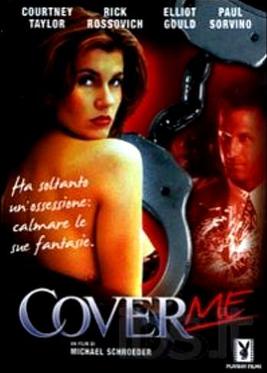
A serial killer is stalking Los Angeles, killing the models who have appeared in an adult magazine. Because they’re not very good at their jobs, neither Sgt. Bobby Colter (Rick Rossovich) nor Detective J.J. Davis (Paul Sorvino!) have come up with any leads that could lead them to the murderer. Facing a dead end, they come up with a brilliant idea. Maybe a cop could go undercover as an erotic model! Fortunately, Bobby just happens to be dating a surprisingly attractive cop named Holly (Courtney Taylor). You have to love it when a plan comes together.

At first, Holly is hesitant but, realizing that there’s no other possible way to get the killer off the streets (because it’s certainly not like Bobby or J.J. could actually do any police work on their own), she agrees to pose for some pictures. Soon, she’s appearing in the magazine, working as a stripper, and discovering that she enjoys her new uninhibited lifestyle. Meanwhile, the killer has noticed her. The killer, by the way, is Dimitri (Stephen Nichols), who frequently disguises himself as a woman and who is driven to kill by his mother. Dimitri’s identity is revealed early on in the film so this doesn’t count as a spoiler. Cover Me is a mystery but it’s a mystery where everyone figures it all out except for the people who are supposed to be figuring it out.

Cover Me was one of the many direct-to-video films that found a home on late night Cinemax in the 90s. These films were advertised as being “erotic thrillers,” though there was usually little about them that was either erotic or thrilling. Cover Me was produced by Playboy and distributed by Paramount, which means that Hugh Hefner probably used to show up on set, wearing his sea captain’s hat and asking the strippers if they wanted to come back to the mansion and help him look for his Viagra. Because it’s a Playboy film, Cover Me has higher production values than the typical 90s erotic thriller but it’s still interesting that a company best known for publishing an adult magazine would produce a film about a killer targeting nude models. In the 70s, Playboy produced things like Roman Polanski’s adaptation of MacBeth, a cinematic triumph regardless of how one feels about Polanski as a human being. By the time the 90s rolled around, they were producing slightly less classy versions of Stripped to Kill.

Still, Cover Me is better than many of the other erotic thrillers that came out during the direct-to-video era. That doesn’t mean that it was a good movie, of course. There’s a reason why “Skinemax” was go-to punchline during the 1990s. As opposed to many of the other movies of the era and the genre, Cover Me has a talented cast that tries to make the best of the material that they’ve been given. I don’t know how Rick Rossovich went from appearing in The Terminator and Top Gun to starring in something like Cover Me but he delivers his lines with a straight face, which could not have always been easy. Paul Sorvino, Elliott Gould, and Corbin Bernsen are also on hand, all playing their parts like pros. (Between L.A. Law and Psych, Bernsen was a mainstay in these type of films, almost always playing either a pimp, a pornographer, or a strip club owner.) Finally, there’s Courtney Taylor, who is actually pretty good in the role of Holly. Though the role really only calls for her to be sexy, Taylor still plays it with a lot of conviction. Taylor’s performance is natural and likable and she sells even the most clichéd dialogue. Just as when she starred in the fourth Prom Night film, Taylor is always better than her material. Unfortunately, Courtney Taylor appears to have stopped acting around 2000.

Cover Me was shot at the same time as an early CD-Rom game called Blue Heat, where I guess the player would step into Holly’s shoes and try to solve the case. Because the company that developed the game went out of business before the game was published, Blue Heat didn’t come out until two years after Cover Me. I’ve never played the game but, from what I’ve read online, it was a point-and-click game where you could go to various places in Los Angeles and search for clues and interrogate suspects. The game came with multiple endings, depending on the decisions you made. Did anyone ever play this game? Let me know in the comments!

As for Cover Me, it’s not great but it’s also not terrible, which is high praise when it come to late night CInemax.


Game Review: This Won’t Make You Happy (2021, Mike Gillis)


This Won’t Make You Happy is an entrant in the 2021 Interactive Fiction Competition.  All of the entries can be browsed and experienced here.

You are standing outside the Caves of Despair and you’re feeling sad. Maybe it’s not a good idea to go into the Caves of Despair, then. Maybe you should stand outside and check your phone. Take a look at Twitter. Check out your dating apps. Play a game … you know something? Caves of Despair are looking pretty damn good right now.

Inside the Caves of Despair, there are gems! That shouldn’t come as a surprise to any Interactive Fiction veteran. How many games have we played where we were supposed to be happy just because we found a gem or a diamond in some musty old cave? This Won’t Make You Happy is one of the few games with the courage to directly address the absurdity of wasting your imaginary life on not only gems but also protecting them from obnoxious gnomes.

This Won’t Make You Happy is a meta game that comments on the shallowness of hunting for gems and paying attention to a narrator. It’s the type of game that will probably annoy people searching for a more traditional IF adventure but I liked it because it addressed several issues that I always wondered about whenever I played any of these games. For instance, who is the narrator and why are we following his orders? It’s a quick game and there’s enough funny moments that it’s worth replaying.

Play This Won’t Make You Happy.

Music Video of the Day: More Than I Can Say by Leo Sayer (1980, directed by ????)


On August 1st, 1981, MTV premiered. Over the course of 24 hours, 166 unique music videos were played on MTV. Yes, there was a time when the M actually did stand for music.

The 69th video play on MTV was the video for Leo Sayer’s version of More Than I Can Say, which features Leo as an artist who paints himself into a better existence.  Visually, this feels like a precursor for A-ha’s video for Take On Me.

Enjoy!

The First Videos Shown on MTV:

  1. Video Killed the Radio Star by the Buggles
  2. You Better Run by Pat Benatar
  3. She Won’t Dance With Me by Rod Stewart
  4. You Better You Bet By The Who
  5. Little Suzi’s On The Up by PH.D
  6. We Don’t Talk Anymore by Cliff Richard
  7. Brass in Pocket by Pretenders
  8. Time Heals by Todd Rundgren
  9. Take It On The Run by REO Speedwagon
  10. Rockin’ in Paradise by Styx
  11. When Things Go Wrong by Robin Lane & The Chartbusters
  12. History Never Repeats by Split Enz
  13. Hold On Loosely by .38 Special
  14. Just Between You And Me by April Wine
  15. Sailing by Rod Stewart
  16. Iron Maiden by Iron Maiden
  17. Keep On Loving You by REO Speedwagon
  18. Better Than Blue by Michael Johnson
  19. Message of Love by The Pretenders
  20. Mr. Briefcase by Lee Ritenour
  21. Double Life by The Cars
  22. In The Air Tonight by Phil Collins
  23. Looking for Clues by Robert Palmer
  24. Too Late by Shoes
  25. Stop Draggin’ My Heart Around by Stevie Nicks and Tom Petty and the Heartbreakers
  26. Do Ya Think I’m Sexy by Rod Stewart
  27. Surface Tension by Rupert Hine
  28. One Step Ahead by Split Enz
  29. Baker Street by Gerry Rafferty
  30. I’m Gonna Follow You by Pat Benatar
  31. Savannah Nights by Tom Johnston
  32. Lucille by Rockestra
  33. The Best of Times by Styx
  34. Vengeance by Carly Simon
  35. Wrathchild by Iron Maiden
  36. I Wanna Be a Lifeguard by Blotto
  37. Passion by Rod Stewart
  38. Oliver’s Army by Elvis Costello
  39. Don’t Let Me Go by REO Speedwagon
  40. Remote Control and Illegal by The Silencers
  41. Angel of the Morning by Juice Newton
  42. Little Sister by Rockpile with Robert Plant
  43. Hold On To The Night by Bootcamp
  44. Dreamin’ by Cliff Richard
  45. Is It You? by Lee Ritenour 
  46. Tusk by Fleetwood Mac
  47. He Can’t Love You by Michael Stanley Band
  48. Tough Guys by REO Speedwagon
  49. Rapture by Blondie
  50. Don’t Let Go The Coat by The Who
  51. Ain’t Love A Bitch by Rod Stewart
  52. Talk of the Town by The Pretenders
  53. Can’t Happen Here by Rainbow
  54. Thank You For Being A Friend by Andrew Gold
  55. Bring It All Home by Gerry Rafferty
  56. Sign of the Gypsy Queen by April Wine
  57. The Man With The Child In His Eyes by Kate Bush
  58. All Night Long by Raindow
  59. Boys Keep Swinging by David Bowie
  60. Rat Race by The Specials
  61. Once in a Lifetime by Talking Heads
  62. Victim by Bootcamp
  63. Tonight’s the Night (Gonna be Alright) by Rod Stewart
  64. Cruel to be Kind by Nick Lowe
  65. A Little In Love by Cliff Richard
  66. Wild-Eyed Southern Boys by 38 Special
  67. Wuthering Heights by Kate Bush
  68. Celebrate The Bullet by The Selecter

The Night Brings Charlie (1990, directed by Tom Logan)


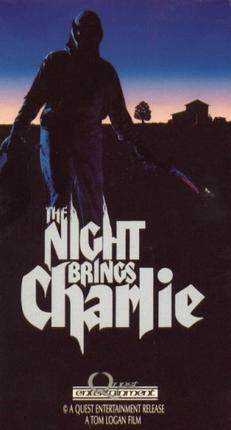
The small town of Pakoe has 1,251 residents but that number is about to steadily decline because there is a killer on the loose. Wearing overalls, a burlap sack, and a pair of swimming goggles, the killer comes out at night and removes people’s heads from their bodies.

Sheriff Carl Carson (Kerry Knight) and Walt the coroner (Joe Fishback) suspect that the killer might be a disfigured handyman named Charlie (Chuck Whiting). Not only has Charlie been disturbed ever since he returned from Vietnam (where he served with Walt) but he also just happens to wear an outfit that looks exactly like the outfit that the killer wears. Charlie seems like the obvious suspect but, when he refuses to confess despite all of the evidence against, Sheriff Carson wonders if he’s really guilty.

The Night Brings Charlie has plenty of flaws. The acting is often amateurish and the pacing is slow, especially at the start of the film. For a film that only runs 77 minutes (and seven of those minutes are devoted to the opening and ending credits), there’s a lot of filler, most of it dealing with Walt’s daughters and their idiot friends. But, all of that aside, The Night Brings Charlie is not that bad. At its best, the film does capture the feeling of a small community under siege by a mysterious killer. (The influence of The Town That Dreaded Sunset is easy to spot, in both the look of the killer and the emphasis on on a town paralyzed by fear.) There’s a few moments of unexpected humor, my favorite being the killer taking the time to update the population number on the town’s welcome sign after committing his latest murder. Even better, the film has not just one surprise twist but two! Though the first twist was easy to guess, the second one was actually pretty clever and it did take me by surprise. Finally, while the first hour is slowly paced, the same can’t be said of the final 17 minutes, when the film comes alive. The Night Brings Charlie may start off on the wrong foot but it ends strong. Stick with The Night Brings Charlie and the film will pay off.

For a low budget, direct-to-video slasher that was made with an obviously amateur cast, The Night Brings Charlie isn’t bad at all. Unfortunately, it’s never been released on anything other than VHS but it can be found (with Spanish subtitles) on YouTube.

Game Review: The Waiting Room (2021, Billy Krolick)


The Waiting Room is an entrant in the 2021 Interactive Fiction Competition.  All of the entries can be browsed and experienced here.

In The Waiting Room, you have just been hired work at a nursing home. From the minute you show up for your first day, it seems like something is off. The lights keep flickering. A patient named Ethel says she needs help but your co-worker, Austin, orders you to ignore her. The night nurse, Maria, refuses to go in the back hallway. The patients all say that the nursing home is haunted by shadow people, waiting to abduct the dying.

Can you solve the mystery? That’s up to you. One of the things that I like about The Waiting Room is that it actually is a work of interactive fiction. The choicse that you make actually do effect the direction of the story. How the game ends will depend on how brave or cowardly you decide to be. Will you be a compassionate caregiver or will you be cruel and self-centered? The choice is yours but there are consequences for each choice.

The Waiting Room is a well written twine game. (If you’ve never played a twine game, they’re like the old Choose Your Own Adventure books, just with more options and details.) There have been a lot of good IF gams about haunted house and the atmospheric The Waiting Room brings to mind some of the best of them while also establishing its own identity. There are a few puzzles to be solved but they’re not extremely difficult. Instead, the emphasis is just on making the right decisions when it comes to dealing with both the living and the dead.

Play the Waiting Room.

Music Video of the Day: Celebrate The Bullet by The Selecter (1981, directed by ????)


On August 1st, 1981, MTV premiered. Over the course of 24 hours, 166 unique music videos were played on MTV. Yes, there was a time when the M actually did stand for music.

How’s this bad for bad luck?  In 1981, The Selecter was an up-and-coming British ska band, led by Pauline Black on vocals.  In February, they released their second album, Celebrate The Bullet.  A month later, towards the end of March, they released the album’s title track as a single.  That same week, a mentally disturbed man named John Hinckley, Jr. attempted to impress Jodie Foster by shooting President Ronald Reagan.  Though Reagan survived the assassination attempt, there wasn’t a radio station in America that was going to play a song called Celebrate The Bullet.  As a result, both the single and the album flopped and The Selecter struggled on for just a few more years before they (temporarily) broke up.

Not even a music video that aired on MTV could save the single.  This despite the fact that it was a good video that showed the direction that music videos would follow in the 80s, mixing shots of the band performing with cryptic images of Pauline Black walking through what appears to be a catacomb.

Celebrate The Bullet was the 68th music video to air on MTV.

Enjoy!

The First Videos Shown on MTV:

  1. Video Killed the Radio Star by the Buggles
  2. You Better Run by Pat Benatar
  3. She Won’t Dance With Me by Rod Stewart
  4. You Better You Bet By The Who
  5. Little Suzi’s On The Up by PH.D
  6. We Don’t Talk Anymore by Cliff Richard
  7. Brass in Pocket by Pretenders
  8. Time Heals by Todd Rundgren
  9. Take It On The Run by REO Speedwagon
  10. Rockin’ in Paradise by Styx
  11. When Things Go Wrong by Robin Lane & The Chartbusters
  12. History Never Repeats by Split Enz
  13. Hold On Loosely by .38 Special
  14. Just Between You And Me by April Wine
  15. Sailing by Rod Stewart
  16. Iron Maiden by Iron Maiden
  17. Keep On Loving You by REO Speedwagon
  18. Better Than Blue by Michael Johnson
  19. Message of Love by The Pretenders
  20. Mr. Briefcase by Lee Ritenour
  21. Double Life by The Cars
  22. In The Air Tonight by Phil Collins
  23. Looking for Clues by Robert Palmer
  24. Too Late by Shoes
  25. Stop Draggin’ My Heart Around by Stevie Nicks and Tom Petty and the Heartbreakers
  26. Do Ya Think I’m Sexy by Rod Stewart
  27. Surface Tension by Rupert Hine
  28. One Step Ahead by Split Enz
  29. Baker Street by Gerry Rafferty
  30. I’m Gonna Follow You by Pat Benatar
  31. Savannah Nights by Tom Johnston
  32. Lucille by Rockestra
  33. The Best of Times by Styx
  34. Vengeance by Carly Simon
  35. Wrathchild by Iron Maiden
  36. I Wanna Be a Lifeguard by Blotto
  37. Passion by Rod Stewart
  38. Oliver’s Army by Elvis Costello
  39. Don’t Let Me Go by REO Speedwagon
  40. Remote Control and Illegal by The Silencers
  41. Angel of the Morning by Juice Newton
  42. Little Sister by Rockpile with Robert Plant
  43. Hold On To The Night by Bootcamp
  44. Dreamin’ by Cliff Richard
  45. Is It You? by Lee Ritenour 
  46. Tusk by Fleetwood Mac
  47. He Can’t Love You by Michael Stanley Band
  48. Tough Guys by REO Speedwagon
  49. Rapture by Blondie
  50. Don’t Let Go The Coat by The Who
  51. Ain’t Love A Bitch by Rod Stewart
  52. Talk of the Town by The Pretenders
  53. Can’t Happen Here by Rainbow
  54. Thank You For Being A Friend by Andrew Gold
  55. Bring It All Home by Gerry Rafferty
  56. Sign of the Gypsy Queen by April Wine
  57. The Man With The Child In His Eyes by Kate Bush
  58. All Night Long by Raindow
  59. Boys Keep Swinging by David Bowie
  60. Rat Race by The Specials
  61. Once in a Lifetime by Talking Heads
  62. Victim by Bootcamp
  63. Tonight’s the Night (Gonna be Alright) by Rod Stewart
  64. Cruel to be Kind by Nick Lowe
  65. A Little In Love by Cliff Richard
  66. Wild-Eyed Southern Boys by 38 Special
  67. Wuthering Heights by Kate Bush

Great Moments In Comic Book History: Zombie!


Back in 1954, Marvel Comics was known as Atlas and, like most publishing companies, it was putting out its share of horror-themed comics.  In those days, before Fredric Wertham declared that comic books were destroying America’s youth and the industry sought to protect itself by creating the Comics Code Authority, comic books were full of stories about monsters, killers, and macabre revenge.

Published by Atlas, Menace was one of many horror comics to populate the nation’s newsstands in the 50s.  It was an anthology series and today, it’s best remembered for featuring work from Golden Age artists like Bill Everett and George Tuska.  The credited writer for the first eight issues was a young Stan Lee, decades away from becoming the public face of Marvel Comics.

Menace only ran for 11 issues but during that time, it introduced one character who would later make a comeback and become a part of the Marvel universe.  That character was The Zombie!

Zombie was introduced in the top story of Menace #5 (July 1953).  At the time, he had no name and was given no past, beyond having a daughter.  Living in the swamps of Louisiana, he is controlled by a madman who orders the Zombie to mug someone in New Orleas.  The Zombie goes down to the French Quarter (where, humorously, no one notices anything strange about him) but his attempt at mugging is thwarted by a policeman.  The Zombie returns home, where his angry master orders the Zombie to attack the young woman that the master is in love with.  His master wants to rescue the young woman and win her love.  However, the woman reminds the Zombie of his daughter so the Zombie strangles his master instead!

It was a typical horror comic stuff, not quite as graphic as what EC was producing but still more macabre than what Marvel would later be known for.  Though Menace only lasted for 6 more issues and the Comics Code would temporarily put an end to the horror comics boom, the Zombie would eventually return, with a slight makeover.

In the 1970s, when the Comics Code Authority finally started to loosen up, Marvel returned to publishing horror with vengeance.  Along with comic books featuring Dracula, Frankenstein’s Monster, and Werewolf By Night, Marvel also published black-and-white horror magazines, which were not regulated by the Comics Code and could therefore include graphic violence, tame profanity, and cleavage, lots and lots of cleavage.  Among those magazines was Tales of the Zombie.

The Zombie returned, now with longer hair and a backstory that established that he was once a millionaire named Simon Garth until his former gardener (his master from the original story) put him under a voodoo curse.  The first issue of Tales of the Zombie featured an extended retelling of the first Zombie story.  The subsequent issues followed the undead Simon as he haunted the bayous of Louisiana and fought other supernatural creatures.  It turned out that there wasn’t really much that could be done with a mindless zombie and Tales of the Zombie only ran for 10 issues, one less than Menace.  In 1975, Tales of the Zombie ended with Simon Garth finally reaching his final resting place and dying a second time.

But you know Marvel!  No one, not even a zombie, dies forever.  Simon Garth has since been resurrected, though he’s only been used sparingly.  There’s not much that can be done with him but his first appearance in Menace remains popular and has since been included in many horror comic anthologies.

You can’t keep a good zombie down.

Menace (Vol.1 #5, July 1953)

“Zombie!”

  • Writer — Stan Lee
  • Artist — Bill Everett
  • Inker– Bill Everett
  • Letterer — Bill Everett

Previous Great Moments In Comic Book History:

  1. Winchester Before Winchester: Swamp Thing Vol. 2 #45 “Ghost Dance” 
  2. The Avengers Appear on David Letterman
  3. Crisis on Campus
  4. “Even in Death”
  5. The Debut of Man-Wolf in Amazing Spider-Man
  6. Spider-Man Meets The Monster Maker
  7. Conan The Barbarian Visits Times Square
  8. Dracula Joins The Marvel Universe
  9. The Death of Dr. Druid
  10. To All A Good Night

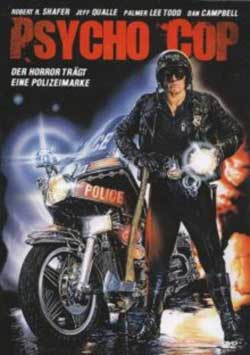
Psycho Cop (1989, directed by Wallace Potts)


When six interchangeable college students spend the weekend at an abandoned mansion, strange things start to happen. First, the caretaker disappears. Then, the students start to disappear, one-by-one. “We should call the police!” Sarah (Linda West) says, once it becomes apparent that more than half of the cast has vanished without a trace.

However, there’s already a cop on the scene.

Unfortunately, that cop is Joe Vickers (Robert R. Shafer), an escapee from the local mental institution who subsequently became a member of the California Highway Patrol. He drives a squad car and sometimes a motorcycle. He wears a uniform. He carries handcuffs and he uses cop lingo. He’s a CHiP with an attitude and no one would ever mistake him for Ponch or Jon Baker. He’s also a Satanist, who likes to draw pentagrams in the dirt and kill anyone who comes across his path. We may see six interchangeable college students but Joe Vickers sees six blood sacrifices and, while the students search for each other, Vickers hunts them down.

Psycho Cop was one of the many, low-budget slashers to come out in the 80s. It attempts to mix the wilderness mayhem of Friday the 13th with the quippy villainy of A Nightmare on Elm Street but the movie never comes anywhere close to being as memorable as either one of those films. The main problem is that Joe Vickers is not a very interesting killer. His one-liners are forgettable and, in this film at least, Robert R. Shafer is one of the least intimidating killers in the history of the genre. He has the right build to be menacing but, whenever he speaks, his weak voice ruins whatever element of danger may have been present. Even his attempt at an evil smile comes across as being more goofy than creepy. As opposed to the Maniac Cop films, Psycho Cop also doesn’t do much with the idea of Vickers being a cop. It’s just a uniform that he happens to be wearing, much like the masks worn by Jason Voorhees and Michael Myers. A film like this is only as strong as its villain and Vickers, to put it gently, is not Freddy Krueger.

Psycho Cop was followed by a sequel called Psycho Cop Returns, which not only made Vickers being a cop a key part of the film’s plot but which also featured Shafer returning in the lead role and giving a much stronger performance. (It helps that Vickers doesn’t speak much in Psycho Cop Returns.) Because the sequel had all of the nudity and the blood that was missing from the tame first film, it was frequently aired on Cinemax and Showtime in the 90s, developed a cult following, and was released on DVD and blu-ray by Vinegar Sydrome in 2017. The first film, on the other hand, has never been released on anything other than VHS and it’s so obscure that several reviewers assumed that the title of Psycho Cop Returns was meant as a joke, a play on how every slasher film released in the early 90s was a sequel.

No, it’s no joke. Psycho Cop does exist. It’s just not every good. If you’re dying to see a killer cop film, Maniac Cop is still the one to go with.