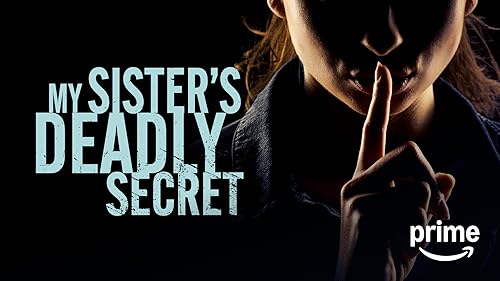
Hi, everyone! Tonight, on twitter, I will be hosting one of my favorite films for #MondayMania! Join us for 2019’s My Sister’s Deadly Secret!
You can find the movie on Prime and Tubi and then you can join us on twitter at 9 pm central time! (That’s 10 pm for you folks on the East Coast.) See you then!
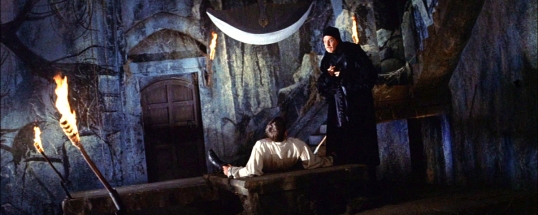
Today’s scene that I love is from the 1961 Roger Corman-directed Edgar Allan Poe adaptation, The Pit and The Pendulum!
Not only is that pendulum nightmarish as Hell but check out that set design! One can see that Corman definitely took some inspiration from the work being done in the UK by Hammer. Watching this scene, it is easy to see why Corman devoted so much of the early 60s to directing Vincent Price in various Edgar Allan Poe adaptations.
4 (or more) Shots From 4 (or more) Films is just what it says it is, 4 (or more) shots from 4 (or more) of our favorite films. As opposed to the reviews and recaps that we usually post, 4 (or more) Shots From 4 (or more) Films lets the visuals do the talking.
217 years ago today, Edgar Allan Poe was born in Boston, Massachusetts. From his humble beginnings as the son of two struggling actors, Poe would go on to become one of the first great American writers. (It’s been said that, when Charles Dickens first traveled to the United States in 1842, he specifically wanted to meet Edgar Allan Poe. Unfortunately, it appears that popular story my not be true but it’s still a good story.) Poe was controversial in life and even his death generated more questions than answers but no one can deny his strength as a poet and as a prose writer. Both the detective and the horror genres owe a huge debt to Edgar Allan Poe.
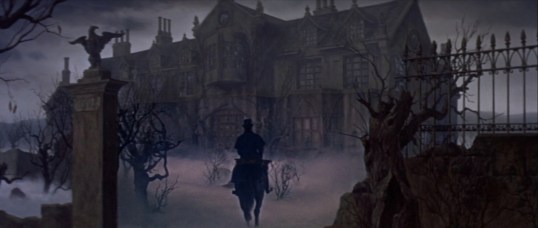
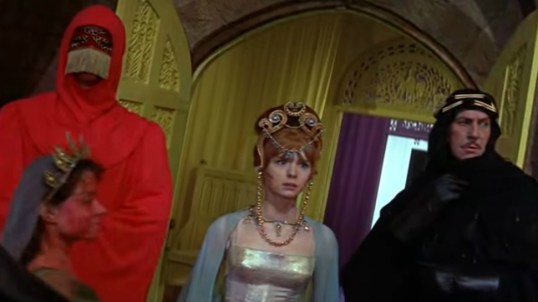
Today, in honor of Edgar Allan Poe’s legacy, TSL presents 4 shots from 4 films that were inspired by the work of Edgar Allan Poe!
4 Shots From 4 Films
House of Usher (1960, dir by Roger Corman, DP: Floyd Crosby)
Pit and the Pendulum (1961, dir by Roger Corman, DP: Floyd Crosby)
The Raven (1963, dir by Roger Corman, DP: Floyd Crosby)
The Masque of the Red Death (1964, dir by Roger Corman, DP: Nicolas Roeg)
As some of our regular readers undoubtedly know, I am involved in hosting a few weekly live tweets on twitter and occasionally Mastodon. I host #FridayNightFlix every Friday, I co-host #ScarySocial on Saturday, and I am one of the five hosts of Mastodon’s #MondayActionMovie! Every week, we get together. We watch a movie. We snark our way through it.
Tonight, for #MondayActionMovie, the film will be 2000’s Tripfall!I picked it so you know it’ll be good.
It should make for a night of fun viewing and I invite all of you to join in. If you want to join the live tweets, just hop onto Mastodon, find the movie on YouTube, Tubi, or Prime hit play at 8 pm et, and use the #MondayActionMovie hashtag! The watch party community is a friendly group and welcoming of newcomers so don’t be shy.
Today is Edgar Allan Poe’s birthday! You would think that there would be a hundred music videos based on the writings of Edgar Allan Poe. Well, you would be wrong. While Poe’s work has inspired countless musicians (and there have been several songs based on his work), there aren’t many “official” music videos of those songs.
However, there is a band that was not only influenced by Poe but which proudly displays that influence. Edgar Allan Poets is a Los Angeles band that lists its two greatest influences as being Poe and Hitchcock. This video is for their song Old Black Clown.
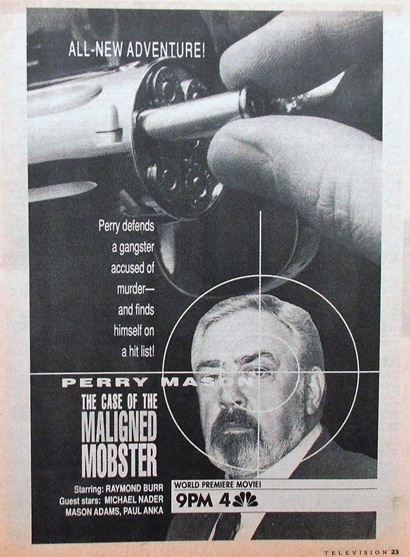
Despite being asked to take the case by an old friend (Mason Adams), Perry Mason (Raymond Burr) is reluctant to defend Johnny Sorrento (Michael Nader) in court. Johnny is a former gangster who has been credibly accused of murder in the past. Now, he’s on trial for killing his wife and not even Perry is totally convinced that he’s innocent.
Of the 18 Perry Mason films that I’ve watched so far, this was definitely the best. This is the first time that I’ve seen Perry defend someone who he both dislikes and, even more importantly, distrusts and Raymond Burr was really convincing whenever he got angry at Johnny. For once, the case wasn’t wrapped up as neatly as usual. Solving the murder of Johnny’s wife meant delving into a past murder and it uncovered a lot of dark secrets. The identity of the killer was a real surprise but there was a lot more going on than just solving the mystery of who killed Johnny’s wife. At the end of this movie, Perry looked like he was about to cry, no matter how much Della (Barbara Hale) tried to comfort him.
Sharing much more would be the same as spoiling all of the movie’s twists and turns so I’ll just repeat that this is the best of the Perry Mason movies that I’ve seen so far. The guest cast is great, especially Mason Adams and Paul Anka. The Perry Mason films always follow the same plot and sometimes, they can blend together but this one made a real impression and really took me by surprise.
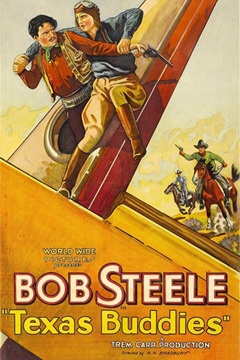
Ted “Jet” Morgan (Bob Steele) returns home from World War I. When he gets off the train in his small, western town, he’s met by Si “Old Timer” Haller (George “Gabby” Hayes). Si explains that Ted’s aunt is dead and his uncle was run out of town for being a drunk. Alice, “the girl next door” who Ted hoped to marry, married someone else. Si invites Ted to stay with him. Ted agrees and things start to look up when he meets Si’s niece, June (Nancy Drexel).
Meanwhile, a gang of outlaws led by Ken Kincade (Harry Semel) hijack a mail plane and steal the payroll that it was carrying. Ted is not nicknamed Jet for nothing. He not only know how to ride a horse but he’s good with planes too. With the help of Si and the local sheriff (William Dyer), he aims to stop those turn of the century skyjackers before they can force another unexpected landing.
Though the film takes place after World War I and features Bob Steele flying a plane and Gabby Hayes driving the same car he drove in Rainbow Valley, this is definitely a western. Before he proves himself as a pilot, Ted has to prove himself as a horseman and the movie ends with a traditional western gunfight. The postwar setting does still bring some unexpected elements to the story. Ted’s lonely arrival in his hometown reflects what it was like for many veterans returning home from Europe. At first, Ted doesn’t feel like he has a place in his old town but he soon gets a chance to prove to both himself and the townspeople that he belongs.
Bob Steele and Gabby Hayes are good heroes. Robert N. Bradbury, who was also Steele’s father, was one of the best of the B-western directors. For fans of the genre, this film is a definite treat.
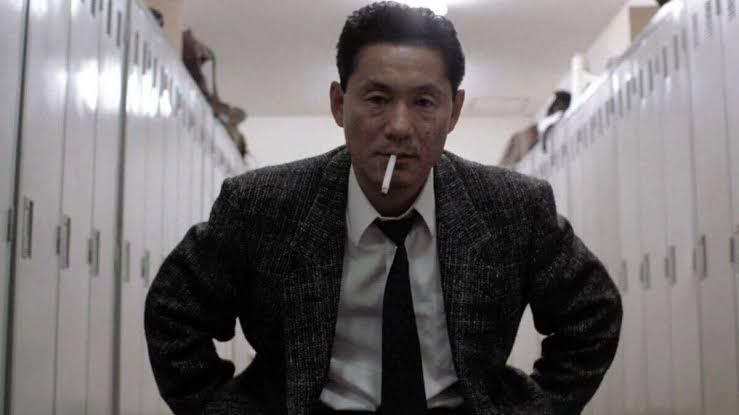
To celebrate the incredible Takeshi Kitano’s 79th birthday, I decided to revisit his directorial debut, VIOLENT COP (1989). I first discovered Kitano in the late 90’s when I saw that his film FIREWORKS (1997) was available for rent at my local Hastings Entertainment Superstore. Of course I rented it. It was slow, but it was also incredibly powerful, and I found myself paying attention to Kitano’s career. He has this incredible screen presence, and I was soon watching everything he came out with from BROTHER (2000) and BATTLE ROYALE (2000) to the update of ZATOICHI: THE BLIND SWORDSMAN (2003). I also looked back at the earlier work in his career, which brings us back to VIOLENT COP.
VIOLENT COP introduces us to Detective Azuma (Takeshi Kitano), a Tokyo cop whose methods are almost as brutal as the crimes he investigates. When his best friend, the corrupt cop Iwaki (Sei Hiraizumi), is murdered, Azuma uncovers a criminal network tied to drugs, corruption, exploitation, you name it! Through a series of beatings and threats, Azuma closes in on the professional killer, Kiyohiro (Hakuryu). Complicating matters is Azuma’s sister, Akari (Maiko Kawakami), a mental case and drug addict. When Akari is kidnapped due to his investigation, Azuma will stop at nothing to get his own, unique brand of justice.
First time director Takeshi Kitano brings an interesting and minimalist quality to VIOLENT COP through his long static shots and sparse dialogue. He’s able to create an atmosphere where the brutality of his story feels raw and natural. Actor Takeshi Kitano’s performance as Azuma follows suit. Once the violence comes, it resonates and lands extremely hard precisely because it’s presented in such a straightforward manner. Kitano’s film is way more realistic than most of us would probably care to admit.
Ultimately, VIOLENT COP doesn’t condemn or endorse Azuma, choosing to just observe him as his story leads to tragedy. As Kitano’s directorial debut, however, it introduces us to a unique and confident new voice… bleak, unsentimental, and unsettling. Kitano, the actor and the director, isn’t afraid to just stare at the camera and dare you to decide if there’s any difference between the good guy and the bad guy!



 Through the Shattered Lens