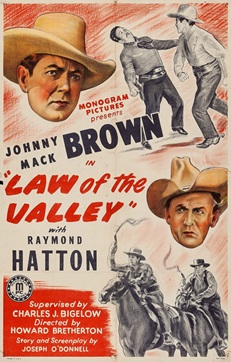
Law of the Valley (1944, directed by Howard Bretherton)


Dan Stanton (Edmund Cobb) and Condon (Tom Quinn) are planning to run a bunch of ranchers off their land by cutting off their water supply.  Once the ranchers leave, Stanton and Condon will be able to sell their land to the railroads.  After the bad guys murder a rancher named Jennings (George Morell), the rancher’s daughter (Lynne Carver) sends a message to U.S. Marshals Nevada Jack McKenzie (Johnny Mack Brown) and Sandy Hopkins (Raymond Hatton).  Old friends of the murdered rancher, Sandy and Nevada come to town to rally the ranchers against Stanton and his men and to free up the water that’s been dammed up.
This was a pretty standard Johnny Mack Brown western.  Johnny Mack Brown and Raymond Hatton always made for a good team but the story here is pretty predictable.  After you watch enough B-westerns, you start to wonder if there were any made that weren’t about outlaws trying to run ranchers off their land.  It’s interesting that these movies almost always center, in some way, around the coming of the railroad.  The railroad is opening up the frontier and bringing America together but it also brings out the worst in the local miscreants.

As with a lot of B-westerns, the main pleasure comes from spotting the familiar faces in the cast.  Charles King and Herman Hack play bad guys.  Tex Driscoll plays a rancher.  Horace B. Carpenter has a small role.  These movies were made and remade with the same cast so often that that watching them feels like watching a repertory company trying out their greatest hits.

Sinners Dominates The Oscar Nominations


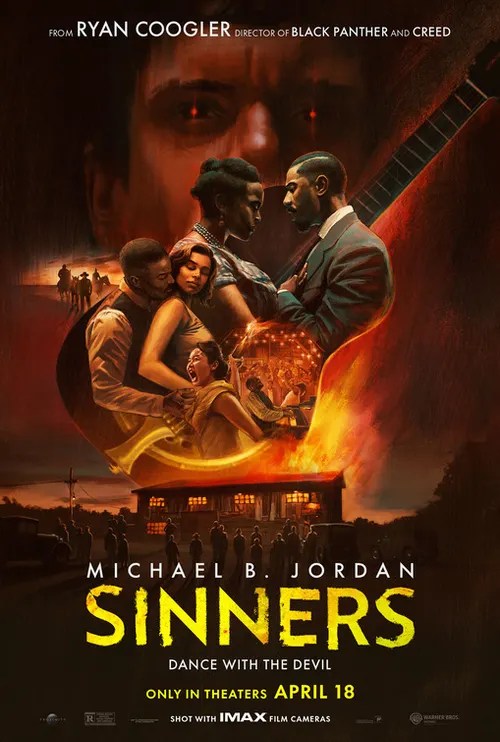
Here are the Oscar nominations!  Sinners received a record-setting 16 nominations but will that be enough to overcome the fashionable radical chic on One Battle After Another?

I’m happy that F1 and Train Dreams were nominated.  I’m less happy that I’m going to have to sit through another Yorgos Lanthimos film.  I haven’t seen Song Sung Blue but I like Kate Hudson and I love her mom and stepfather.

Wicked: For Good was pretty much shut out.  Not even Ariana Grande made the list and I’m okay with that.  Avatar: Fire and Ash received a few technical nominations and not much else so I guess the tyranny of Avatar at the Oscars is now finished.

Best Picture
“Bugonia”
“F1”
“Frankenstein”
“Hamnet”
“Marty Supreme”
“One Battle After Another“
“The Secret Agent”
“Sentimental Value”
“Sinners”
“Train Dreams”

Best Director
Paul Thomas Anderson – “One Battle After Another“
Ryan Coogler – “Sinners“
Josh Safdie – “Marty Supreme“
Joachim Trier – “Sentimental Value”
Chloé Zhao – “Hamnet”

Best Actress
Jessie Buckley – “Hamnet”
Rose Byrne – “If I Had Legs I’d Kick You”
Kate Hudson – “Song Sung Blue”
Renate Reinsve – “Sentimental Value”
Emma Stone – “Bugonia”

Best Actor
Timothée Chalamet – “Marty Supreme”
Leonardo DiCaprio – “One Battle After Another”
Ethan Hawke – “Blue Moon”
Michael B. Jordan – “Sinners”
Wagner Moura – “The Secret Agent”

Best Supporting Actress
Inga Ibsdotter Lilleaas – “Sentimental Value”
Amy Madigan – “Weapons”
Wunmi Mosaku – “Sinners“
Teyana Taylor – “One Battle After Another”
Elle Fanning – “Sentimental Value”

Best Supporting Actor
Benicio Del Toro – “One Battle After Another”
Jacob Elordi – “Frankenstein”
Delroy Lindo – “Sinners”
Sean Penn – “One Battle After Another”
Stellan Skarsgård – “Sentimental Value”

Best Adapted Screenplay
“Bugonia” – Will Tracy
“Frankenstein” – Guillermo Del Toro
“Hamnet” – Maggie O’Farrell & Chloe Zhao
“One Battle After Another” – Paul Thomas Anderson
“Train Dreams” – Clint Bentley & Greg Kwedar

Best Original Screenplay
“Blue Moon” – Robert Kaplow
“It Was Just an Accident” – Jafar Panahi, Nader Saeivar, Shadmehr Rastin & Mehdi Mahmoudian
“Marty Supreme” – Ronald Bronstein & Josh Safdie
“Sentimental Value” – Joachim Trier & Eskil Vogt
“Sinners” – Ryan Coogler

Best Animated Feature
“Arco”
“Elio”
“KPop Demon Hunters”
“Little Amélie or The Character of Rain”
“Zootopia 2”

Best Documentary Feature
“The Alabama Solution”
“Come See Me in the Good Light”
“Cutting Through Rocks”
“Mr. Nobody Against Putin”
“The Perfect Neighbor”

Best International Feature Film
“It Was Just an Accident” – France
“The Secret Agent” – Brazil
“Sentimental Value” – Norway
“Sirāt” – Spain
“The Voice of Hind Rajab” – Tunisia

Best Casting
Gabriel Domingues – “The Secret Agent”
Nina Gold – “Hamnet”
Cassandra Kulukundis – “One Battle After Another”
Francine Maisler – “Sinners”
Jennifer Venditti – “Marty Supreme”

Best Cinematography
“Frankenstein”
“Marty Supreme”
“One Battle After Another”
“Sinners”
“Train Dreams”

Best Costume Design
“Avatar: Fire and Ash”
“Frankenstein”
“Hamnet”
“Marty Supreme“
“Sinners”

Best Film Editing
“F1”
“Marty Supreme”
“One Battle After Another”
“Sentimental Value”
“Sinners”

Best Make-Up & Hairstyling
“Frankenstein”
“Kokuho“
“Sinners”
“The Smashing Machine”
“The Ugly Stepsister”

Best Production Design
“Frankenstein”
“Hamnet”
“Marty Supreme”
“One Battle After Another”
“Sinners”

Best Original Score
“Bugonia”
“Frankenstein”
“Hamnet”
“One Battle After Another”
“Sinners”

Best Original Song
“Dear Me” – “Diane Warren: Relentless”
“Golden” – “KPop Demon Hunters”
“I Lied to You” – “Sinners”
“Sweet Dreams of Joy” – “Viva Verdi!”
“Train Dreams” – “Train Dreams”

Best Sound
“F1”
“Frankenstein”
“One Battle After Another”
“Sinners”
“Sirāt“

Best Visual Effects
“Avatar: Fire and Ash”
“F1”
“Jurassic World: Rebirth”
“The Lost Bus”
“Sinners”

Best Animated Short Film
“Butterfly”
“Forevergreen”
“The Girl Who Cried Pearls”
“Retirement Plan”
“The Three Sisters”

Best Documentary Short Film
“All the Empty Rooms”
“Armed Only with a Camera: The Life and Death of Brent Renaud”
“Children No More: ‘Were and are Gone’”
“The Devil is Busy”
“Perfectly a Strangeness”

Live Action Short Film
“Butcher’s Stain“
“A Friend of Dorothy”
“Jane Austen’s Period Drama”
“The Singers”
“Two People Exchanging Saliva”

Music Video of the Day: Whenever I’m Away From You by John Travolta (1977, dir by ????)


John Travolta sings!

Actually, I guess that’s not a surprise.  He did co-star in Grease and all that.  Still, it’s kind of interesting to see Travolta doing the sensitive singing teen idol routine.  Why is he dressed like Prince Valiant?  It was the 70s, I guess.

Enjoy!

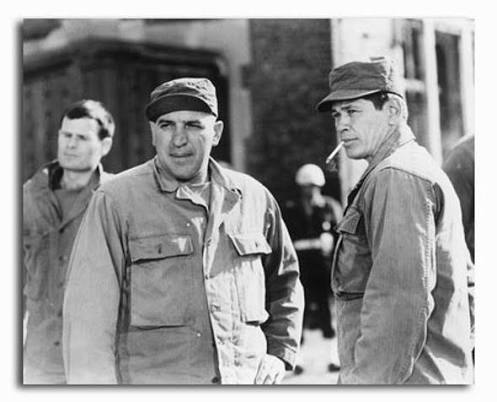
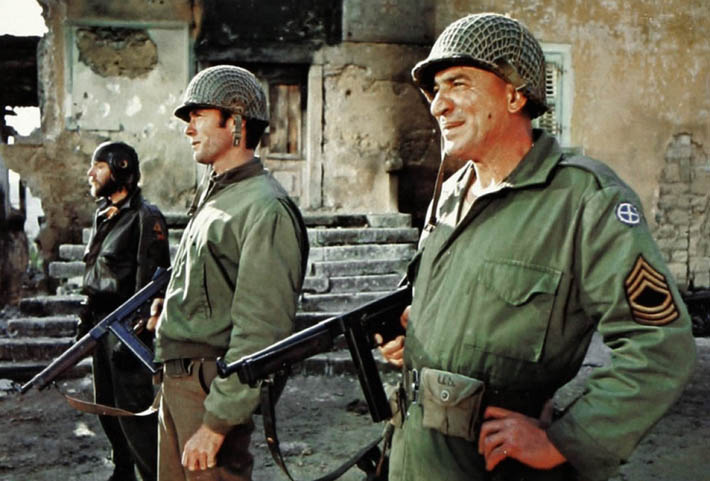
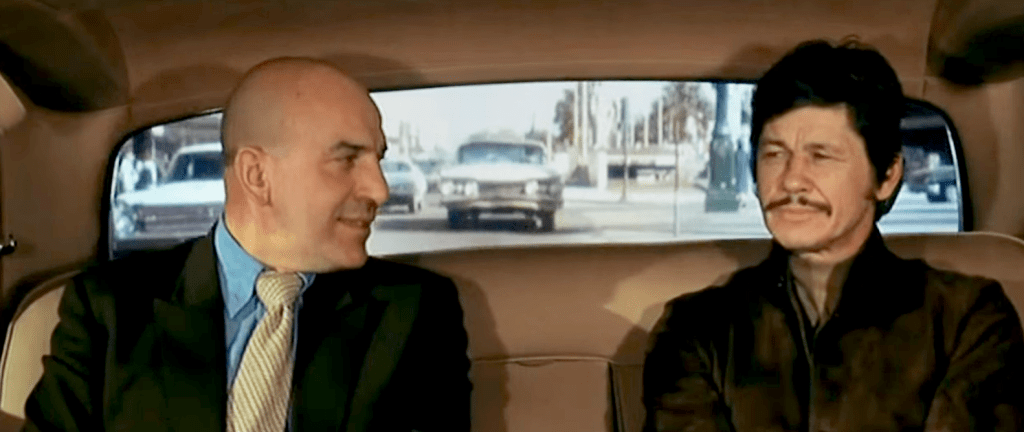
4 Shots From 4 Films: The Telly Savalas Edition! Happy Birthday, Telly!!


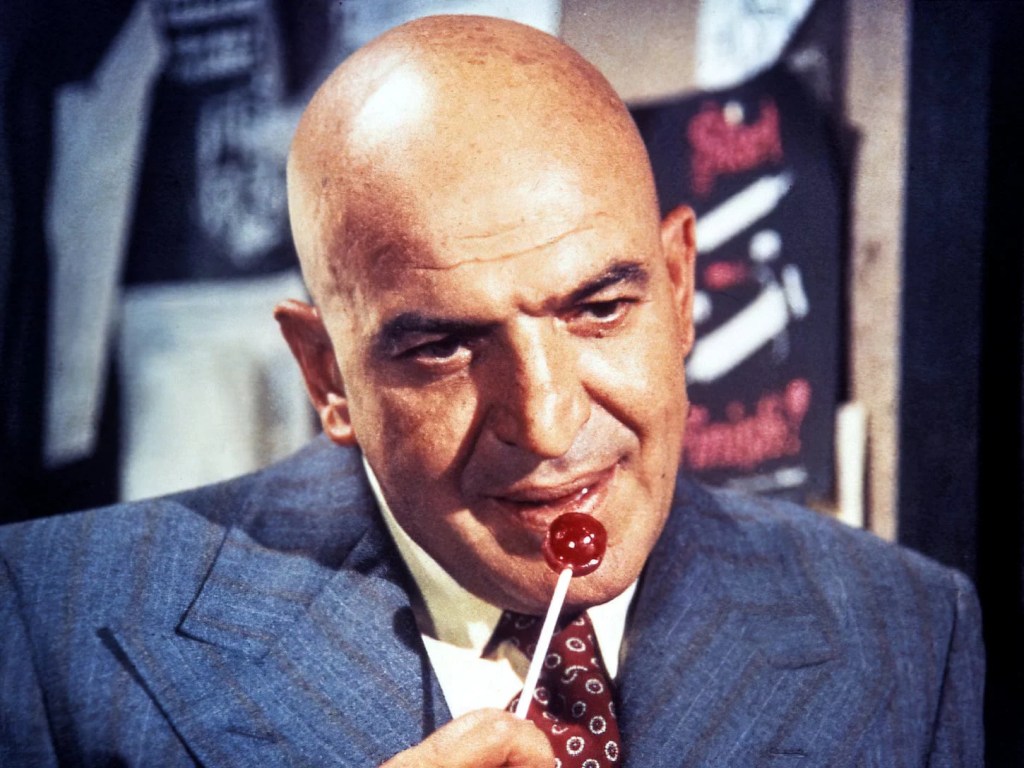
Telly Savalas would have been 104 years old today. He’s been in many of my favorite movies so I’m glad to celebrate him today with 4 Shots from 4 of my favorites!

Who loves ya, baby? (Telly Savalas as Kojak!)
With Charles Bronson in THE DIRTY DOZEN!
With Clint Eastwood & Donald Sutherland in KELLY’S HEROES!
With Charles Bronson in VIOLENT CITY!

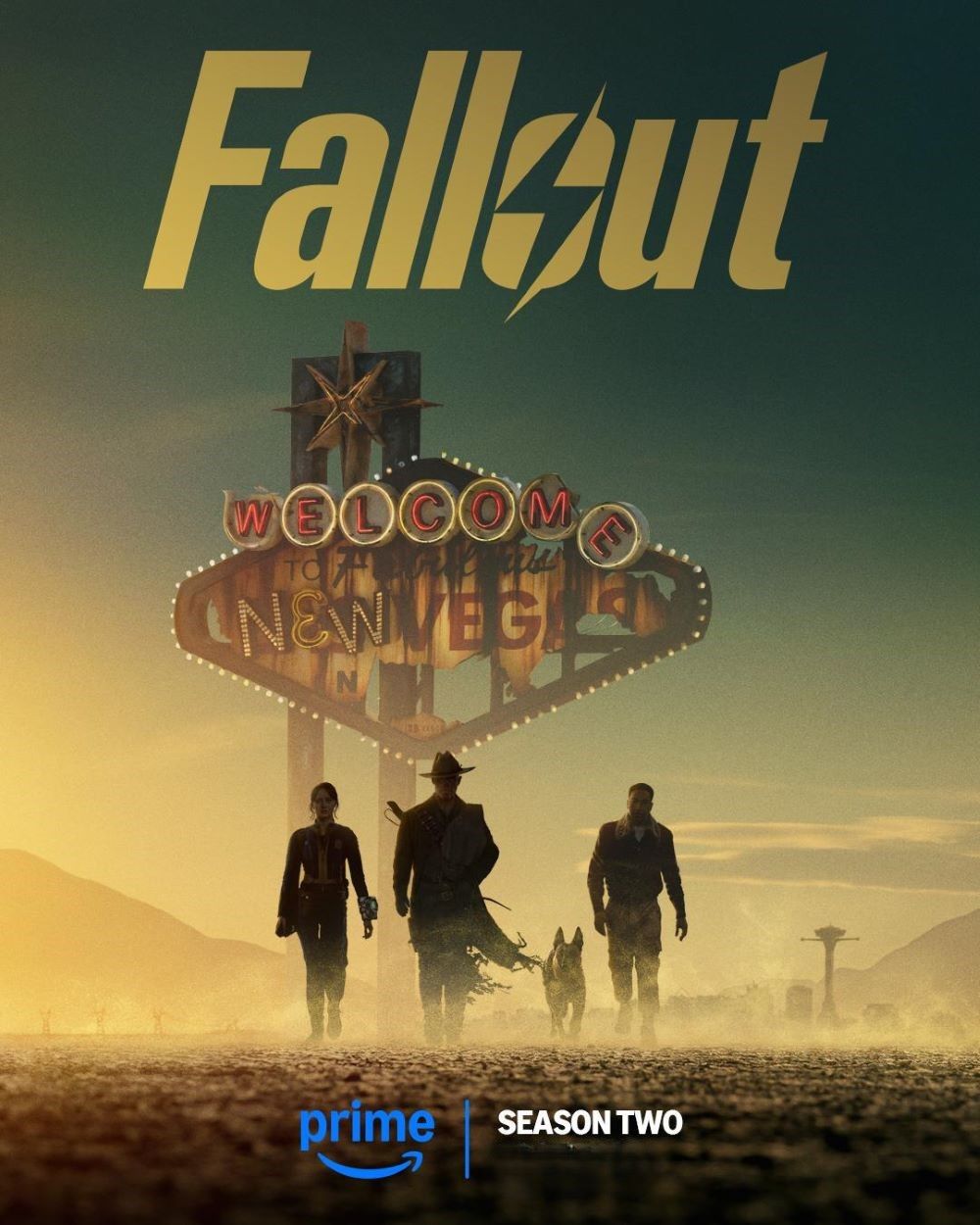
Review: Fallout (Season 2, Episode 6 “The Other Player”)


“So, for our daughter, you would kill millions of people. Billions of people. Other-other mothers just like you. Other daughters just like our daughter!” — Copper Howard

Episode 6 of Fallout season 2, titled “The Other Player,” ramps up the tension as the series dives deeper into the messy origins of the apocalypse and the fragile illusions of control in its aftermath. This installment centers on power dynamics—who pulls the strings before the bombs fall, who grabs them afterward, and who dares to cling to ideals like justice in a wasteland that mocks them at every turn. It delivers some standout moments for key characters like Barb and Lucy, blending corporate horror with personal reckonings, though a few subplots in the irradiated wilds feel like they’re just treading water ahead of bigger payoffs.

Barb’s storyline takes the spotlight early, peeling back the pre-war curtain to reveal Vault-Tec’s chilling machinery of doom. Picture her navigating a day packed with boardroom horrors: pitches for vaults rigged to fail on purpose, exclusive escape routes for elite clients, and slick strategies to polish the end times into a marketable package. The satire bites hard, but things darken when she brushes up against the shadowy layers beneath the corporate facade, including a tense encounter that exposes the ruthless leverage being used against her family. By the time she’s cornered into advancing the nuclear launch herself, her shift from confident insider to reluctant pawn feels raw and human—someone who glimpses the abyss but steps closer anyway.

This arc shines because it doesn’t paint Barb as a cartoon villain or a blameless dupe; she’s stuck in that gray zone of complicity, making choices under duress that echo through centuries. Her eventual clash with Cooper, where he probes just how deep the rot goes, hits with real weight, forcing her to confront the fallout of her inaction. When she aids in a high-stakes extraction involving Hank, it’s a flicker of atonement laced with disaster, underscoring how good intentions in this universe always curdle. The episode leaves her arc hanging in a compelling limbo, hinting at ripple effects that could redefine loyalties as the Enclave’s shadow looms larger.

Lucy’s journey mirrors this theme of fractured morality, thrusting her into a reconstructed slice of her Vault 33 life that’s equal parts nostalgic trap and dystopian experiment. She stirs in a familiar setup, only to spot the mind-control collars on patrolling guards—Hank’s twisted vision of order, where impulses are leashed to forge a “civilized” society from savages. True to form, Lucy opts for due process over vengeance, collaring her dad for a trial back home, betting on the vault-bred rules that have crumbled around her. It’s a stubborn spark of optimism that the show handles with nuance, never letting it tip into naivety.

As she prowls Hank’s operation, Lucy witnesses the eerie results: former killers and cannibals reshaped into mundane workers, content in their programmed bliss. Her bid to liberate them backfires when some admit they’d rather stay subdued, posing the gut-punch question at Fallout‘s core—is peace worth the chains if it’s chosen? The episode’s visceral demo drives it home: a restrained brute turns feral, brutalizing a captive in a frenzy of violence until Lucy flips the override switch, transforming rage into rote camaraderie. Hank’s philosophy—that curbing free will is the ultimate mercy—creeps under the skin, challenging Lucy’s worldview without fully vindicating him.

Hank embodies the franchise’s archetype of the self-righteous tyrant, framing his atrocities as paternal duty. Shackling himself for “accountability” feels like calculated theater, a nod to Shady Sands’ destruction wrapped in protective bluster. Their father-daughter standoff crackles with unresolved pain, elevating what could be talky scenes into emotional tinder. He doesn’t dodge blame entirely, but his rationalizations muddy the waters just enough to keep Lucy—and viewers—wrestling with the cost of survival.

The wasteland threads, by contrast, deliver flashes of grit but lack the same punch. The Ghoul kicks off skewered and desperate, his radiation-fueled rasp devolving into pleas about lost family as he fights for his gear. A massive super mutant swoops in for the save, channeling that gravelly lore vibe with a uranium “cure” and whispers of an anti-Enclave uprising. It’s a thrilling nod to the games’ icons, yet the sequence fizzles by sidelining the mutant’s deeper motives and knocking Ghoul out cold too soon—cool on paper, but it whets the appetite without satisfying.

Maximus and Thaddeus fare worse, stuck in nomadic chit-chat mode. Ditching the traceable armor leads to debates over hawking their prize or gifting it to some vague “greater good,” laced with buddy-cop quips around the campfire. It’s breezy filler that humanizes them amid the heavier drama, and their eventual Ghoul rendezvous teases convergence, but it drags compared to the vault intrigue. These beats keep the ensemble breathing, yet they underscore how the episode prioritizes cerebral clashes over explosive action.

Down in the vaults, bureaucratic farce provides lighter relief: a support group devolves into snack-hoarding chaos until the overseer axes it over budget cuts. Reg’s defiant munching on pilfered treats captures that petty vault defiance, a microcosm of resistance against soul-crushing routine. Still, this undercurrent ties loosely to the topside stakes, feeling more like world-building seasoning than plot fuel.

Clocking in as a character-driven pivot, “The Other Player” excels at unpacking ethical quagmires—Barb’s pre-war slide, Lucy’s moral tightrope, Hank’s paternal authoritarianism—while teasing Enclave escalation. The super mutant tease and wasteland wanderings underwhelm in execution, marking time until the ensemble collides, but the thematic heft carries it. Season 2’s back half feels primed for chaos, with these personal fractures promising a powder keg payoff amid the radiation storms. If it balances the introspection with more wasteland fury, this episode will slot neatly as the calm before the irradiated storm.

Fallout Season 2 Episodes

  1. Episode 1: “The Innovator”
  2. Episode 2: “The Golden Rule”
  3. Episode 3: “The Profligate”
  4. Episode 4: “The Demon in the Snow”
  5. Episode 5: “The Wrangler”

Music Video of the Day: Profane Prophecy by The Black Crowes (2026, dir by Dagger Polyester)


Today’s music video of the day is the latest from the Black Crowes.  Enjoy it and spare a thought for those of us at the North Texas branch of Through the Shattered Lens because we are about to get hit by snow and 8 degree weather.

The last time we had weather this bad, we had rolling black-outs and were actually off-line for a few days.  So, if you don’t see me or Erin or Jeff around for a while, don’t worry.  We’re just waiting for the sun to come out!

Enjoy!

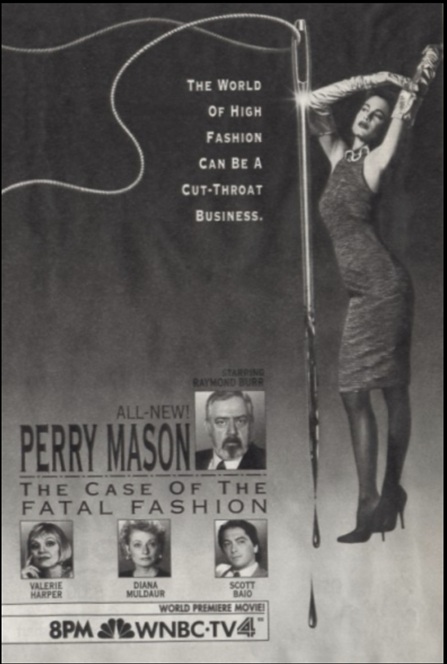
I Watched Perry Mason: The Case of the Fatal Fashion (1991, Dir. by Christian I. Nyby II)


Perry Mason (Raymond Burr), Della Street (Barbara Hale), and Ken Malansky (William R. Moses) are in New York when an old friend of Perry’s, magazine editor Lauren Jeffreys (Diana Muldaur) is accused of murdering a rival editor, Dyan Draper (Valerie Harper). Dyan was infamous for writing about the personal lives of celebrities in her column so there’s a ton of possible suspects. While Ken teams up with a mobster named Tony Loomis (Robert Clohessy) to search for clues, Perry finds himself facing off against a young district attorney (Scott Baio) who is smarter than he seems.

This Perry Mason movie is unique because, for once, the prosecutor is as good an attorney as Perry.  It reminded me of how, when the movies started, David Ogden Stiers always played the prosecutor and came across like someone who would probably win if he has going up against anyone other than Perry Mason.  Even though I immediately thought of Bob Loblaw as soon as I saw him, Scott Baio gives a good performance as a lawyer who worships Perry and can’t wait to face him in court.  For once, there’s mutual respect between the two sides.

The mystery was another one of those where I was able to guess who the killer was from the start.  They had to really stretch things to get the mob involved so that Ken could team up with Tony.  (Ken wanted to bring the killer to court while Tony just waned to shoot them.)  Also, it was obvious that Raymond Burr was not doing well when he filmed this movie.  In almost every scene, he’s either seated or leaning against something.  There are only 6 more Perry Mason films featuring Burr after this one and one of those aired after he died.  Burr still gives a commanding performance whenever Perry’s in court, though.  Sick or not, there’s no other attorney you want on your side.

The Tioga Kid (1948, directed by Ray Taylor)


Singing Ranger Eddie Dean (played by the same-named Eddie Dean) and his sidekick, Soapy Jones (Roscoe Ates), are sent to track down the Tioga Kid, an outlaw who happens to look just like Eddie.  Soapy suggests that The Tioga Kid could be a long lost twin brother.  Eddie isn’t sure because his parents were killed in an Indian ambush when he was just a baby.  This seemed to be the backstory for many of Poverty Row’s favorite western heroes.

Dean plays both Eddie and the Tioga Kid.  You can tell them apart because the Tioga Kid doesn’t sing and always dresses in black while Eddie dresses in white and won’t stop singing.  Twin rivals were another big thing when it came to B-westerns.  Thanks to then revolutionary split-screen technology, matinee audiences could enjoy the sight of their favorite heroes shooting at themselves.  Eddie Dean was usually cast as a mild-mannered hero so he really seems to enjoy the chance to be bad as the Tioga Kid.

The Tioga Kid is a film that will be appreciated by those who are already fans of B-westerns.  The Tioga Kid was made late in the B-western cycle and there are a lot signs that it was made in a hurry.  There’s a scene involving a stunt man where he’s not even wearing the same shirt as the person he’s standing in for.  Matinee audiences probably didn’t mind.  They were too busy watching Eddie Dean shoot at himself and cheering him on during the movie’s big fist fight scene.  Eddie Dean may not have been a great actor but he could throw a punch with the best of them.