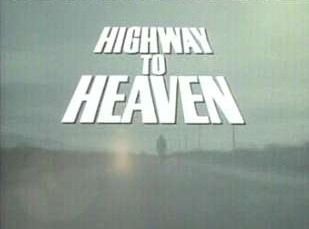
Welcome to Late Night Retro Television Reviews, a feature where we review some of our favorite and least favorite shows of the past! On Thursdays, I will be reviewing Highway to Heaven, which aired on NBC from 1984 to 1989. The entire show is currently streaming on Tubi and several other services!
This week, Mark finally gets the stuff.
Episode 4.21 “A Dolphin Song For Lee: Part One”
(Dir by Michael Landon, March 9th, 1988)
After he complains for the hundredth time about not having “the stuff,” Mark finally gets the boss’s attention in this episode. Suddenly, Mark is the one who doesn’t need to eat, who knows where to go for the assignment, and who instinctively realizes that the young woman they’ve been assigned to help — Lee (Bess Meyer) — desperately needs a bone marrow transplant. Meanwhile, Jonathan becomes human yet again.
That’s not a bad idea for a story, though it’s hard not to notice that this is the second time that Jonathan’s gone from being an angel to being mortal during season four. One would think that either Jonathan or Mark would have noted this fact but neither one does. Maintaining continuity has not been season four’s strong point.
As for the story itself, it’s pretty simple but then again, it’s only Part 1 of a two-parter. Lee refuses to get the bone marrow transplant because she fears her parents won’t be able to afford it. Using “the stuff,” Mark essentially commands a local news producer to do a story on Lee and her need for a transplant. In a scene that feels like a fantasy today, we see people apparently all across the country watching the news story on Lee. One guy in a bar yells at everyone to be quiet so he can hear the story. It feels incredibly dated and almost too earnest for its own good, if just because it’s hard to imagine people actually sitting around the TV and watching a network newscast nowadays. (It’s also hard not to wonder if Mark essentially zapping the producer and taking over his mind is a good example of what the Boss wants done with the stuff. That’s not something that Jonathan has ever done, even though it would have made things a lot simpler.)
People across the country donate money so that Lee can get her operation. Lee’s cancer goes into remission but the “To Be Continued” announcement at the end of the episode feels a bit ominous. If Lee’s going to be okay, why does the story need to be coninuted?
In honor of Ethan Hawke’s birthday, here is the wonderfully romantic Ferris wheel scene from 1995’s Before Sunrise. Director Richard Lnklater considered this scene to be an homage to The Third Man.
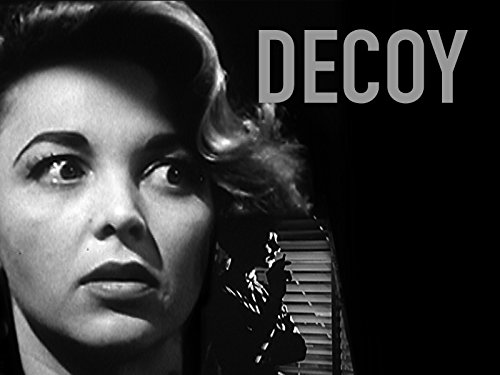
Welcome to Retro Television Reviews, a feature where we review some of our favorite and least favorite shows of the past! On Thursdays, I will be reviewing Decoy, which aired in Syndication in 1957 and 1958. The show can be viewed on Tubi!
This week’s episode is really, really good!
Episode 1.11 “Two Days To Kill”
(Dir by Stuart Rosenberg, originally aired on December 23rd, 1957)
Selma Richmond (played by a young Diane Ladd!) is the girlfriend of gangster Johnny Troy (Michael Strong). Johnny is about to go on trial and Selma’s testimony about his crimes is the key piece of evidence against him. Knowing that Johnny wants Selma dead, the police put her up in an apartment. Casey is assigned to protect her.
At first, Casey and Selma seem to become unlikely friends. Selma is flighty and obsessed with Hollywood. Even though she’s testifying against him, she claims that Johnny is just misunderstood. Casey, taking some sympathy on her, tells Selma about the man that she loved. For the first time, we learn something about Casey’s background. We learn that her husband was a cop and he died in a shoot out. It’s a surprising moment and one that’s poignantly played by Beverly Garland. (The camera closes in on her face while she slowly smokes a cigarette.) Not only does it help us understand why Casey sometimes to seems to be emotionally detached but it also shows the friendship between the two women. Casey doesn’t open up for many people but she does for Selma.
However, that friendship ends when Selma realizes that Johnny will be facing the death penalty. Selma manages to sneak a letter Johnny, letting him know where she’s being held. Johnny shows up at the apartment, carrying a knife. Casey is waiting for him with her gun drawn. During the stand-off, Johnny tells Selma that he loves her and Selma believes it. The Johnny uses his foot to unplug the apartment’s lamp. In the darkness, he lunges at Selma and Casey opens fire, killing Johnny. Selma’s response is to shout, “I bet you’re glad you killed him!”
This was an outstanding episode. Director Stuart Rosenberg, taking over from Teddy Sallis, makes good use of the gritty New York locations. Each scene is lit like a film noir, with Johnny literally emerging from the shadows at one point. Rosenberg also gets excellent performances from both Ladd and Garland. This was a strong episode and the best of the series so far.
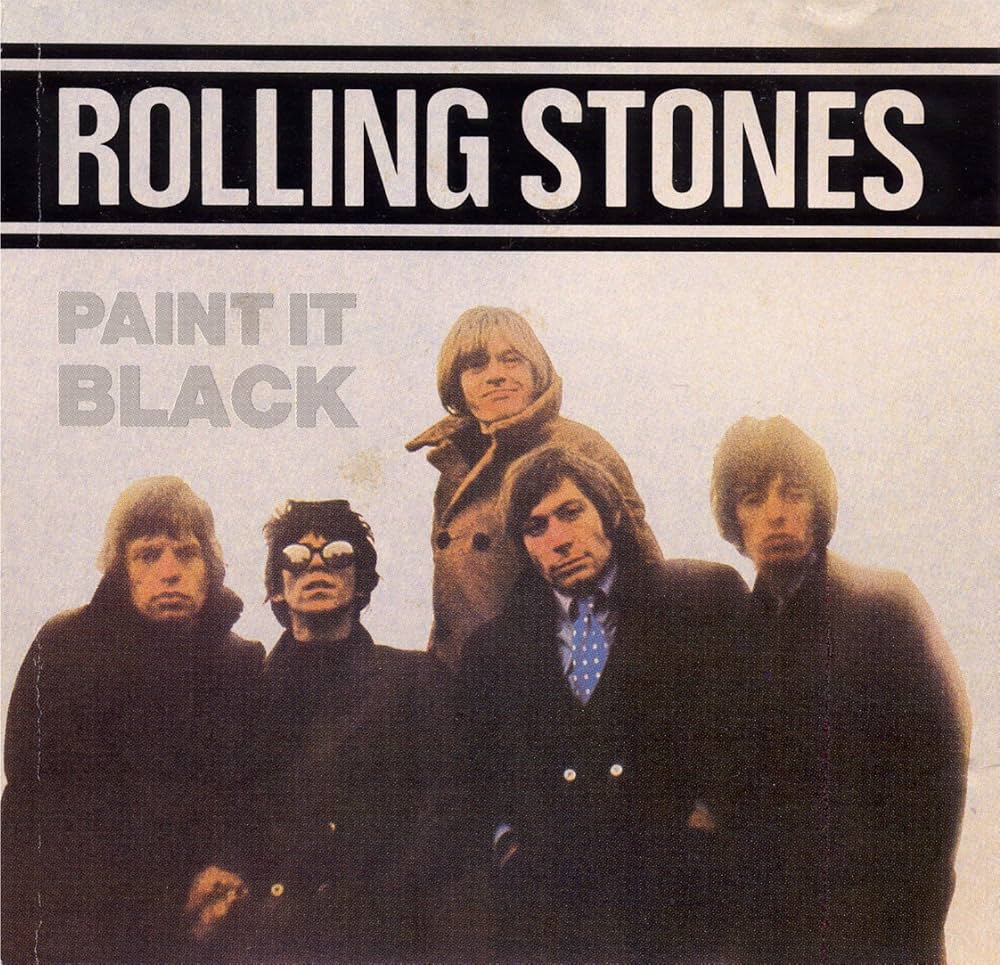
You ever notice how “Paint It Black” doesn’t really start so much as it unfolds—that strange sitar riff creeping in like a bad dream you can’t quite shake? The Stones captured something that feels less like heartbreak and more like a total emotional blackout. The sound is restless, paranoid even, like someone pacing around inside their own thoughts at 3 a.m. That’s what makes it such a sharp symbol of depression: it’s not just sadness, it’s this all-consuming fog where color, joy, and even meaning itself disappear.
The thing that always strikes me is how the song turns that private darkness into a worldview. The singer doesn’t only feel grief—he wants the whole world to match how he feels inside. That line between self and everything else completely breaks down. You can hear it in the drumming, that pounding rhythm chasing itself in circles, or the sitar’s looping melody that never resolves. It’s like he’s trapped in motion, unable to stop thinking or feeling, stuck in a spiral that makes sense only to him. It’s haunting because it sounds familiar to anyone who’s been that low.
And that’s why, even decades later, “Paint It Black” still feels so alive—so uncomfortably modern. Underneath the 60s cool, it taps into that quiet nihilism a lot of people still wrestle with today: the idea that maybe there’s nothing left worth looking at, so you might as well black it all out. But there’s something cathartic in that honesty. The song doesn’t try to fix anything or offer redemption; it just sits in the darkness. And sometimes, that’s what makes it hit harder than any happy ending could.
Paint It Black
I see a red door And I want it painted black No colors anymore I want them to turn black
I see the girls walk by Dressed in their summer clothes I have to turn my head Until my darkness goes
I see a line of cars And they’re all painted black With flowers and my love Both never to come back
I’ve seen people turn their heads And quickly look away Like a newborn baby It just happens everyday
I look inside myself And see my heart is black I see my red door I must have it painted black
Maybe then, I’ll fade away And not have to face the facts It’s not easy facing up When your whole world is black
No more will my green sea Go turn a deeper blue I could not foresee this thing Happening to you
If I look hard enough Into the setting sun My love will laugh with me Before the morning comes
I see a red door And I want it painted black No colors anymore I want them to turn black
I see the girls walk by Dressed in their summer clothes I have to turn my head Until my darkness goes
I wanna see it painted Painted black Black as night Black as coal I wanna see the sun Blotted out from the sky I wanna see it painted, painted, painted Painted black, yeah
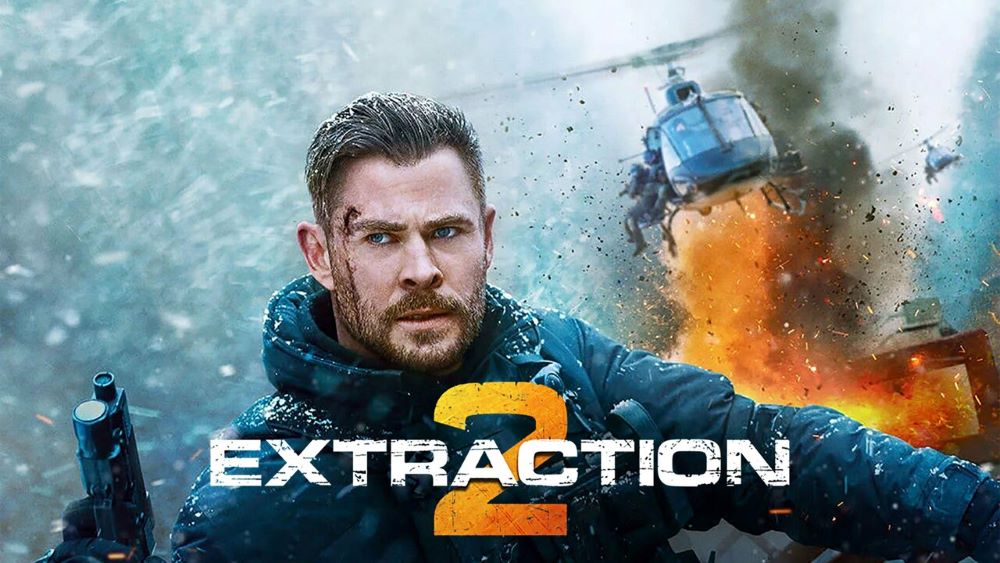
Extraction 2 drops you right into the thick of things, cranking the intensity way past the first film. To quickly recap, the original Extraction introduced Tyler Rake, a gritty mercenary with a troubled past played with undeniable grit by Chris Harmsworth. The story was simple but effective—a high-stakes rescue of a kidnapped boy in Dhaka, Bangladesh, filled with edge-of-your-seat action and those now-iconic, almost balletic long-take fight sequences. It was raw, realistic, and emotionally grounded. Harmsworth’s portrayal anchored the chaos in human vulnerability, helping the film stand out from the typical action fare.
Now, the sequel’s aim is clear—it wants to go bigger, bloodier, and more relentless, and it pulls that off in many ways. The standout here is definitely the action choreography. Sam Hargrave, the director, really flexes his muscle with several jaw-dropping sequences, especially a breathtaking 21-minute continuous take that makes you feel like you’re running alongside Rake, dodging bullets and throwing punches in real time. It’s an impressive technical feat but, more importantly, it’s incredibly immersive. The fights have that gritty realism where each blow counts, and the camera work lets you see every tense moment clearly instead of hiding behind shaky cuts.
Chris Hemsworth, once again, owns the role. This time around, you can see a bit more of the toll the mercenary life has taken on Rake. Hemsworth brings a subtle layer of weariness mixed with fierce determination. His physicality is on full display—he’s convincing in those brutal hand-to-hand combats without ever feeling like a stuntman stand-in. He does it all, and it’s clear he’s not just punching air; this is a man fighting for something beyond just survival. The emotional beats land a bit more naturally this time around, helped by Hemsworth’s grounded performance, which balances the nonstop action with moments of quiet reflection.
Visually, the film is a significant step up. The settings shift from humid, congested streets to icy, oppressive Georgia, and the cinematography makes the most of this change. The chilly, bleak palette fits perfectly with the film’s mood—harsh, unforgiving, and tense. The camera work is bold yet measured; it takes its time to show us the fights fully, letting the choreography breathe without rushing or confusing the viewer. This clarity turns the action scenes into mini-masterpieces, where every movement, every shot, and every punch feels deliberate and impactful.
That said, not everything clicks perfectly. The plot plays it safe with familiar revenge and rescue-mission beats, and the supporting characters don’t get much development beyond their utility to the story. Golshifteh Farahani steals a few scenes as Nik, adding fresh energy and complexity as a tough and capable ally, but others around her mainly exist to get the body count up. There’s a formulaic feel to the storyline—with plenty of high-stakes tension but little in the way of surprise. If you go in looking for deep storytelling or rich character arcs, you might be left wanting.
The film truly embraces the “bigger is better” mantra, and in many ways, it pays off spectacularly with larger, more intricate action sequences and expanded scale. This escalation brings a fuller, more thrilling spectacle that keeps you hooked from start to finish. However, this increase in scope leads to a trade-off: the narrative feels more convoluted and sometimes weighed down by its own ambition. The plot introduces multiple new characters and intersecting agendas, which lengthens the storyline unnecessarily and complicates what could have been a more straightforward mission. This convolution makes the story not only more formulaic but also harder to follow, detracting from the lean storytelling charm that made the first movie so effective.
Tone-wise, the movie trades some of the first film’s grounded grit for a flashier, more stylized look and feel. Some sequences stretch believability—Rake’s near-indestructibility and certain stunt setups can pull you out of the moment. Still, if you’re willing to accept that and enjoy the ride, the movie delivers on adrenaline and spectacle in full force.
One of the most refreshing things about Extraction 2 is how well it balances raw, physical combat with moments of emotional depth. Between the intense fight scenes, there are small windows into who Tyler Rake is and what drives him. These touches give the film a heartbeat beneath all the explosions and punches. Rake is no cookie-cutter action hero; he’s a broken man clawing his way toward redemption, and that gives the film a surprising amount of emotional weight for a movie mainly about violence and chaos.
Ultimately, Extraction 2 isn’t reinventing the wheel, but it doesn’t need to. It knows its audience and delivers exactly what it promises: high-octane, impeccably executed action sequences tied together by a thread of humanity. Hemsworth’s portrayal elevates it beyond just a flashy romp, lending it a gritty soul. The villains feel suitably menacing, and the stakes are convincingly high, which keeps the tension ticking throughout.
If you loved the first Extraction for its mix of brutal realism and emotional punch, the sequel will feel familiar but amplified—more intense, more expansive, and a bit louder. If you’re new to the series, Extraction 2 still stands solid on its own as a showcase of what well-choreographed action cinema looks like today—raw, precise, and emotionally resonant with just enough story to keep you invested without dragging you down.
In short, Extraction 2 is a wild, thrilling ride with a surprisingly human heart beating beneath all the chaos. It’s a film that knows how to entertain, showcasing Chris Harmsworth at his physical and emotional best and proving that action movies can still push creative boundaries while keeping viewers hooked. The movie brings bigger and bolder set pieces that truly live up to the “bigger is better” slogan, but this comes at the cost of making the plot more convoluted and overly complicated than it needed to be. While the intricate story layers may strain some viewers, the explosive action and solid performances make it a must-watch for any fan of visceral, edge-of-your-seat thrillers. If you want a no-nonsense blockbuster with a pulse, Extraction 2 delivers in spades.
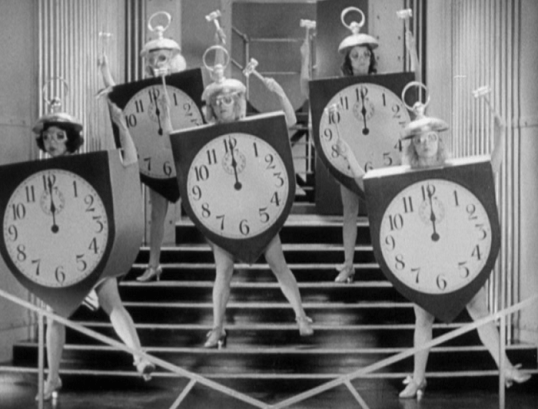
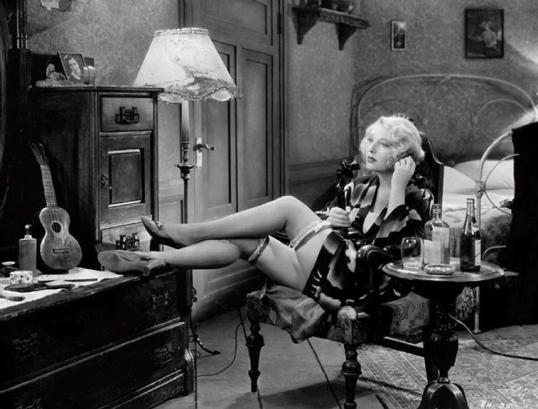
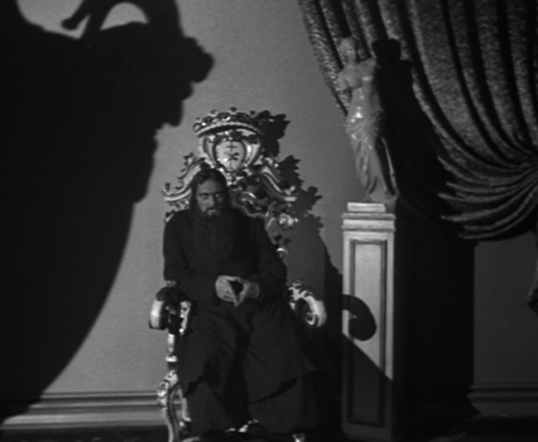
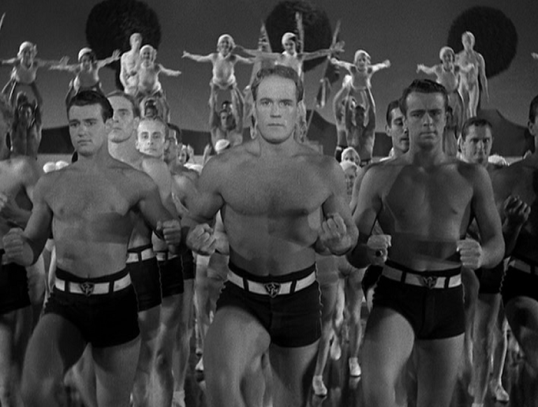
4 Shots From 4 Films is just what it says it is, 4 shots from 4 of our favorite films. As opposed to the reviews and recaps that we usually post, 4 Shots From 4 Films is all about letting the visuals do the talking.
All of the scenes below come from films that were made and released between the introduction of sound in the late 1920s and the adoption of the infamous Hays Production Code in 1934. This was truly an exciting time for film as an art form. Not only were filmmakers intoxicated with discovering what they could accomplish through the medium but they were also unhindered by censorship or regulation. The end result was some of the most visually imaginative and narratively daring films to ever be released by the major American studios.
There’s a reason why film lovers continue to eagerly seek out pre-code films. And if you want to experience what made the pre-Code era so memorable, you could not do any worse than to start with the four films featured in this post.
Madam Satan (1930, dir by Cecil B. DeMille)
Safe in Hell (1931, dir by William Wellman)
Rasputin and the Empress (1932, dir by Richard Boleslawski)
 Through the Shattered Lens