October Positivity: My Brother’s Crossing (dir by Ricky Borba)


I have to admit that, when I see Joe Estevez’s name in the credits, I’m usually not expecting to see him cast as a saintly man whose faith holds his family together and gives people a reason to keep on living.

That’s nothing against Joe Estevez.  Estevez is the youngest brother of actor Martin Sheen and there’s definitely a family resemblance between the two.  That said, while Martin is best-known for playing priests and absurdly left-wing presidents, Joe Estevez has often been cast as villains.  If Joe Estevez plays a cop, you can bet he’ll turn out to be dirty.  If he plays a politician, he’ll turn out to be corrupt.  If he’s a CEO, you can bet his company is going to be pouring sludge into the reservoir.  Some actors just get typecast as villains and that seems to be the case with Joe Estevez.

That makes My Brother’s Crossing a definite change-of-pace.  Estevez appears as Bobby Clark, a former fireman who rides a motorcycle and who tells all of his bickering relatives, including brother JT (Daniel Roebuck), that they need to turn their lives over to God.  Bobby is married to Pam (Eliza Roberts) and they’re both beloved members amongst their community.

One night, both Bobby and Pam are killed when they collide with a car.  The driver of the car is CJ Martin (James Black), a pastor.  As a stunned CJ sits in an ambulance, he’s approached by a biker (Duane Whitaker) who introduces himself as Pastor Mike Price.  Pastor Mike says a prayer over CJ.  As he walks away, he’s approached by two EMTs who say, “Pastor, we want to serve your God.”  Mike looks up to Heaven and gives praise to Bobby for bringing people to God, even in death.

Yep, this is one of those movies.  It’s a low-budget, not particularly well-made, painfully slow faith-based movie.  CJ is forgiven by Bobby’s daughter and indeed, the entire Clark family eventually comes to forgive him.  He’s even invited to eat dinner with surviving members of the family.  At first, JT is driven by his need for revenge but, ultimately, he not only insists that CJ not be charged with vehicular manslaughter but he also pays CJ’s fine for reckless driving.  “Praise Jesus,” CJ says.  Oh, the mixed feelings!  I’m all about forgiveness but everything about the accident suggests that the vehicular manslaughter charge was totally justified.  Forgiving someone doesn’t mean that there shouldn’t be consequences for their actions.

To be honest, though, I almost feel guilty about giving this film a negative review, just because it’s based on a true story and it’s told so earnestly (if also amateurishly).  My father died a few months after he was involved in a car accident.  This woman and her lawyers attempted to sue his estate after he passed and, for months, I was consumed by hatred for her and the people representing her in court.  Eventually, I realized that I had to let go of that hate and I had to forgive her, if just so I could move on.  That doesn’t mean that I’m obligated to like her, though.  I did give that some thought while I watched this movie and that’s probably the compliment that I can give My Brothers’s Crossing.
Late Night Retro Television Review: Highway to Heaven 4.17 “We Have Forever: Part One”


Welcome to Late Night Retro Television Reviews, a feature where we review some of our favorite and least favorite shows of the past!  On Thursdays, I will be reviewing Highway to Heaven, which aired on NBC from 1984 to 1989.  The entire show is currently streaming on Tubi and several other services!

This week, Jonathan loses his powers.

Episode 4.17 “We Have Forever: Part One”

(Dir by Michael Landon, originally aired on February 10th, 1988)

When Jonathan’s former wife (Dorothy McGuire) dies, Jonathan assumes that God will release him of his duties and bring him to Heaven to be with her.  Instead, Jonathan is told that he is still needed on Earth and that he has an assignment.  Jonathan gets upset and uses some language that one doesn’t always expect to hear from an angel.  God responds with thunder and lightning.

Long story short, Jonathan loses his angelic powers.  He becomes a human again.  But since Jonathan died 40 years ago, shouldn’t taking away his powers cause him to drop dead on the spot?  I’m a bit confused on how this works but then again, it’s also pretty obvious that God is trying to teach him a lesson as opposed to just punishing him.

Jonathan runs away from Mark, refusing to speak to him.  He sees a movie theater that is showing Heaven Can Wait and he proceeds to throw beer bottles at the marquee until all of the letters have fallen.  Jonathan ends up in jail but Mark manages to track him down and gets him released.  Jonathan borrows some money from Mark so that he can go get drunk.

Later, walking along the beach, Jonathan sees a young woman named Jennifer (Leann Hunley) who looks just like his wife did when they first got married.  Jennifer attempts to commit suicide by walking into the ocean.  Jonathan saves her life.  It turns out that Jennifer is suicidal because her boyfriend dumped her.  Jonathan tells her that her boyfriend isn’t going to care that she killed herself.  In fact, he’ll probably brag about it to all of his friends.

Long story short, it’s obvious that Jonathan and Jennifer are falling in love.  Meanwhile, Mark is looking for some way to occupy himself and considers accepting a job at the camp for the blind that he and Jonathan visited earlier in the season.  Finally, this is a two-parter so we’ll see how everything works out next week!

I will say that this was a nice change-of-pace for the series.  Seeing Jonathan finally get mad after four seasons of doing whatever he was assigned to do was interesting and Michael Landon’s anger and sadness felt very real.  Victor French also did a good job of portraying Mark’s sadness over not being able to help his best friend.  This was an episode where Highway to Heaven‘s unabashedly earnest and emotional approach really paid off.

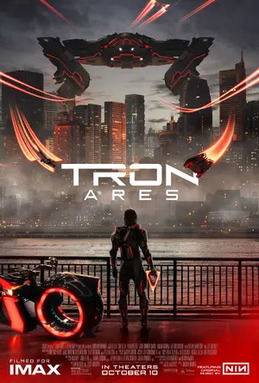
Tron Ares (dir. by Joachim Rønning)


Tron Ares is this year’s Spawn for me. 

For those unaware (and I really should write about Spawn one of these days), I saw Spawn with a friend when it first came out. I loved it, walking out the theatre and raving about it. Over pizza, my friend explained in great detail the many ways it actually sucked. Even Michael Jai White hated it. 

With my expectations being lower than they ever were for anything, Tron Ares surprised me. I leaned forward in my seat. I chuckled, and bobbed my head to the music and stayed until all of the credits were done. It could have done many things much better than it chose to do, but given the distance in time between Legacy and the choices for where the story could go, it’s not the worst film in the world. It’s not like Tron as an entire franchise was ever that deep with its storytelling (with the clear exception being Tron Uprising, of course). It brings some new elements to the overall tale that I didn’t even consider. Imagine what the writers could have done if they started working on this right after Legacy. With 15 years gone, it’s hard to get actors together for a project.

Both Trent Reznor and Atticus Ross are Executive Producers on Tron Ares. They threw money at this. They even have cameos in the film. At best, Tron Ares is the coolest looking Nine Inch Nails feature length music video to have ever existed since perhaps The Perfect Drug. The music compliments the film exactly as Daft Punk’s did for Legacy and Wendy Carlos’ did for the original. The sights are dazzling and the sounds are sharp. The music isn’t so much the subtle Reznor/Ross we’ve had with Bones and All, or the weirdness of Teenage Mutant Ninja Turtles: Mutant Mayhem. This is loud and kind of booming. We finally get light cycles in the real world (which isn’t giving anything away that wasn’t already in the trailers). In that sense, it’s a win on a few levels. 

If it’s a deep story with characters you’ll root for and possibly worry about, however, Tron Ares is not that film. You’re probably better off with either One Battle After Another or Weapons, both of which are equally good. I will say that what Tron Ares lacks in story, it does make up for with some generous fan service moments. There are tons of references to both Tron and Legacy if you pay attention, even if the story itself veers off tangent. I felt it handled this so much better than Legacy ever did. You can’t say the other films weren’t considered in making this. It’s not that far from another Disney project, F/X’ and Hulu’s Alien: Earth in some ways. 

In the years after Tron Legacy, there have been many changes. Encom encounters some competition in the form of the Dillinger Corporation, lead by genius Julian Dillinger (Evan Peters, X-Men: Days of Future Past) and his mother, Elizabeth (Gillian Anderson, The X-Files). Kevin Flynn’s (Jeff Bridges, The Big Lebowski) dream of crossing the digital frontier has become a race to see who can make their digital assets a reality. Dillinger’s newest, greatest program is Ares (Jared Leto, Morbius), who is fully versed in various fighting techniques and security protocols. What does this mean for life in The Grid, the universe inside the machine? Can Ares be trusted, or controlled, for that matter?

Acting-wise, everyone has a job to do. To his credit, Leto is not bad in this. It’s not robotic, but it’s not quite the second coming of Jordan Catalano (if anyone even recalls who that is). It’s not like the script, written by Jesse Wigutow (Daredevil: Born Again) and David DiGilio (The Terminal List & The Terminal List: Dark Wolf) calls for his character to have a great depth of emotion. Greta Lee (Past Lives) and Evan Peters do most of the work, along with Jodie Turner-Smith, who seemed to have the most fun. Anderson also does a good job, but again, there’s not a whole lot to work with. 

Tron Ares hovers right above the Incident mark for me. It could have been so much better than what it was, and who knows how long the visuals will stay with me. Yet, just like the films before it, it’s rescued by a score that may be remembered more than the film itself in the years to come. I don’t know if I’d go back out to see this, but would happily catch it once it comes to digital. 

The TSL Horror Grindhouse: Dance of the Damned (dir by Katt Shea)


In 1989’s Dance of the Damned, Cyril O’Reilly plays a vampire with a sensitive side.

The Vampire is out on his nightly prowl.  He goes to a strip club where he finds himself drawn to a dancer named Jodi (Starr Andreef).  The Vampire is drawn to Jodi because Jodi is thinking of committing suicide.  It’s her son’s birthday and the boy’s father refuses to even let her see him.  The Vampire approached Jodi and says the wants to talk to her because he hasn’t talked to anyone in a long time.  He offers to pay Jodi one thousand dollars if she’ll come back to his house and have a conversation with him.

Because the Vampire doesn’t drive, they take a city bus back to his place.  While sitting on the bus, they are harassed by two wannabe punks.  The Vampire pierces one of their eyes with the stem of a rose.  Oddly, Jodi barely notices.

At the house, the Vampire reveals his fangs and explains that he rarely feasts but tonight is one of those nights when he does.  He says that he picked Jodi because he could sense her loneliness and could tell that she wanted to die.  He also explains that, contrary to the vampire mythology, Jodi will not turn into a vampire after he drinks her blood.  Instead, she’ll just die.  Jodi’s response is to shoot the Vampire several times.  The bullets fall off of his body.

Jodi and the Vampire end up talking.  In fact, Dance of the Damned often feels more like a one-act play than a traditional vampire film.  Both Jodi and the Vampire are lonely and they discuss what its like to feel like they have nothing in the world.  The Vampire cannot exist in the daylight and, as a stripper, Jodi’s life is centered around the night as well.  When Jodi learns that the Vampire has never been to the beach because he never felt like there was much point in going during the night, Jodi insists that they go immediately.  The Vampire discovers what sand feels like.  He struggles to walk on it which was kind of weird but whatever.  At least the movie was trying to do something different!

The main theme of the film is that both the Vampire and Jodi are outsiders.  The Vampire was born a vampire and has no idea what it’s like to be a mortal being that can safely walk around in the daylight.  Because he has scars from a childhood incident with the humans, even the Vampire’s own people have rejected him.  Jodi, meanwhile, has been rejected by conventional society because she’s a stripper and now, she can’t even see her own child.  They are two outsiders who are linked together by their feelings of being lost.  Over the course of the night, they fall in love but it’s obvious that only one will still be around the next night and it’s also fairly obvious which one it will be.

I liked Dance of the Damned, though I imagine that it might be too talky for a lot of fans of the horror genre.  It’s more of a dual character study than a traditional vampire film.  Just as she did with films like Poison Ivy and The Rage: Carrie 2, director Katt Shea uses the horror genre as a way to explore the pressure that society puts on women to act, look, and dress a certain way.  Shea’s direction is moody and atmospheric and she gets an excellent performance from Starr Andreef.  Dance of the Damned is not a film for everyone but for those who are looking for a little emotional honesty to go along with their horror, it’s an intriguing film.

Horror On TV: Hammer House Of Horror #9: Carpathian Eagle (dir by Francis Megahy)


Tonight’s episode of Hammer House of Horror is Carpathian Eagle.

Men are being murdered in bed by a woman who removes their heart.  Inspector Clifford (Anthony Valentine) investigates with the help of a true crime historian named Natalie (Suzanne Danielle).  Natalie tells the story of an ancient Carpathian countess who murdered men in the same way and suggests that the murders might be the work of a modern-day descendant.  The truth turns out to be a bit more complicated, if also a bit predictable.

This is not my favorite episode Hammer House of Horror but still, it’s worth watching to catch a young Pierce Brosnan in an early small role.  This episode originally aired on November 8th, 1980.

October Hacks: Out of the Dark (dir by Michael Schroeder)


In 1989’s Out of the Dark, a man dressed in a clown costume is killing phone sex operators.  He lurks in the darkness and jumps out of the shadows to commit his dastardly crimes.  Especially during the first hour or so, the film has its share of both suspense and gruesome moments.  In the style of Italian giallo and pre-Halloween American slasher pics, the film actually tries to create some mystery about who the killer could be.  Lt. Frank Meyers (Tracey Walter) suspects that the killer might photographer Kevin Silvers (Cameron Dye).  Kevin and his girlfriend, Kristi (Lynn Danielson-Rosenthal), think that the police should be taking a closer look at David Stringer (Bud Cort), an accountant who has an office in the same building as the phone sex company.  Meanwhile, Detective Langella (Divine) thinks that the murders might be linked to a serial killer who is targeting prostitutes.

The main problem with Out of the Dark is that it’s pretty obvious from the start who the killer is and it’s hard not to judge the people who can’t figure it out for themselves.  The movie doesn’t really offer up enough viable suspects to keep you guessing and than it spends so much time trying to make it look like one of the suspects is guilty that any experienced film watcher will automatically know that he isn’t.  The viewers are supposed to be shocked by the killer’s identity but there’s nothing shocking about it.  It’s pretty obvious.

On the plus side, Out of the Dark does have a one-of-a-kind cast.  Divine and Tracy Walter play detectives.  Bud Cort is intense and nerdy as the bitter accountant.  Cameron Dye is vacuously handsome as the photographer.  Geoffrey Lewis shows up as an alcoholic.  Lainie Kazan plays an aging prostitute.  Tab Hunter drives a car.  Paul Bartel manages a motel and gets upset when he sees the blood pooling in one of his rooms.  And finally, Karen Black plays the owner of the phone sex company and gives a far better performance than the material actually deserves.  Black brings some much needed emotional reality to the film.

As I said at the start of this review, Out of the Dark has its moments.  The clown costume is truly creepy and the opening murder is all the more disturbing because it happen outside and in a public park.  (You do have to wonder how no one noticed a weirdo dressed like a clown wandering around.)  A scene in which the clown attacks a phone sex operator who has agreed to serve as bait is also well-done and genuinely frightening.  The story moves at a quick and steady pace and it deserves some credit for ending on a definitive note as opposed to trying to copy the ambiguity that was so popular with other slasher films of the era.

If only the identity of the killer had actually been a surprise, Out of the Dark would probably be considered a classic.  As it is, it’s just another well-made slasher film.

Doctor Who — Invasion of the Dinosaurs (1974, directed by Paddy Russell)


Fresh from defeating an attempt by a Sontaran to disrupt British history, the Third Doctor (Jon Pertwee) and his newest companion, reporter Sarah Jane Smith (Elisabeth Sladen), return to present-day London and discover that it has been transformed into a ghost town.  Dinosaurs are roaming the streets.  The Doctor teams up with UNIT to try to figure out who has been monkeying with time but what he doesn’t know is that the trusted Captain Yates (Richard Franklin) is working with the people responsible for the dinosaur invasion.

Invasion of the Dinosaurs was the second serial of the 11th season.  Like The Sea Devils, this was another case where I read the novelization long before I got a chance to see the actual serial.  Well-written by Malcolm Hulke, the novelization really got me excited to watch Invasion of the Dinosaurs.  It did not prepare me for how fake the dinosaurs would look.

It was to be expected, though.  Classic Doctor Who was never known for its wonderful special effects.  Instead, it was known for rubber monsters, torn costumes, and alien landscapes that were often made out of cardboard.  For many of us, that was a part of its charm.  The dinosaurs in this serial look like toys that have been unleashed on a still photo of London.  I’ve read that the serial was criticized for its bad dinosaur effects when it originally aired 1974 and that was long before Jurassic Park made everyone take the idea of seeing a realistic dinosaur for granted.


Despite the very fake dinosaurs, Invasion of the Dinosaurs still has one of the better scripts of the Pertwee era.  The villains aren’t the typical evildoers who usually showed up on Doctor Who.  Instead, they are people who have convinced themselves that the only way to save humanity is to dial back time to what they consider to be the “Golden Age,” before technology and industry blighted what they believe to be the ideal landscape.  Of course, they plan to take only the very best among the population to their golden age with them.  The villains are elitist environmentalists, convinced that they and only they know what is best.  This may be the first episode of Doctor Who where the main antagonist, Sir Charles Grover (Noel Johnson), is a member of Parliament.

Captain Yates’s betrayal of UNIT and the Doctor adds some emotional depth to this story.  While Yates was never as important a character as the Brigadier or Sgt. Benton, he was still present for almost all of the Third Doctor’s adventures and the small scenes where he would flirt with Jo Grant were some of the most awkward moments of the Pertwee era.  Captain Yates was a loyal member of the Third Doctor’s entourage and his betrayal was motivated not by greed or resentment but instead by a desire to make the world a better place.  The novelization made it clear that it was actually the terrible things that Yates saw as a member of UNIT that convinced him that time needed to be turned back.

This was the final Jon Pertwee story to be set entirely on Earth and, though Yates and the Brigadier would return for Pertwee’s final serial, it was the last true UNIT story of the Pertwee years.  Jon Pertwee had already decided that the 11th season would be his last.  The 12 season would feature a new Doctor.  And while the BBC considered actors like Graham Crowden, Bernard Cribbins, and Jim Dale for the role, the Fourth Doctor was ultimately be played by Tom Baker, an actor who was working as a construction worker when Invasion of the Dinosaurs first aired.

Doctor Who would never the same.

Clash of the Titans (1981, directed by Desmond Davis)


High atop Mt. Olympus, Zeus (Laurence Olivier) and his fellow Gods look down on Earth and jealously manipulate its citizens.  When Zeus impregnates Danae (Vida Taylor), the daughter of the King of Argos, she and her son Perseus (Harry Hamlin) are banished to sea.  Zeus responds by ordering Poseidon (Jack Gwillim) to release the Kraken.

Years later, when Callibos (Neil McCarthy), the son of the Goddess Thetis (Maggie Smith), destroys all but one of Zeus’s flying horses, Zeus transformer Callibos into a tailed monster.  Thetis tries to get her revenge by having Callibos kill Perseus but instead, Perseus chops off Callibos’s hand, comes to possess Pegasus, the last of the flying horses, and also wins the right to marry Andromeda (Judi Bowker).

At the wedding, Cassiopeia (Sian Phillips) declares Andromeda to be even more beautiful than Aphrodite (Ursula Andress).  Big mistake.  Aphrodite demands that Andromeda by sacrificed to the Kraken.  Along with Pegasus, Ammon (Burgess Meredith), Thallo (Tom Pigott-Smith), and robot owl, Perseus goes on a quest to get the snake-haired head of Medusa so he can turn the Kraken into stone.

There’s a lot that I love about Clash of the Titans, from the Ray Harryhausen’s stop-motion special effects to the blind witches who pass one eyepiece among them to Burgess Meredith’s performance as Ammon.  I even like the robot owl.  But the thing that has always made the biggest impression on me is that Mt. Olympus is portrayed as having a shelf that holds a figurine for every human in the world.  The Gods casually move the pieces around and transform them on whims.  Of all the films that have been based on Greek mythology, Clash of the Titans is one of the few that really captures the idea of the Gods essentially being a bunch of petty and jealous libertines who view humans are just being their playthings.

Let’s not overthink Clash of the Titans, though.  The main appeal of Clash of the Titans is that it’s just a good, old-fashioned adventure movie.  In this age of CGI and humorless heroes, it’s hard not love the film’s mix of old-fashion stop-motion animation, strong characters, and occasional moments of humor.  (I like the owl and I won’t apologize for it.)  Also, Medusa has appeared in a lot of movie but she’s never been scarier than in this movie.  Who can forget the yellow glow of her eyes, followed by men turning to stone?  Who can forget the hiss of her tail or the moment when Perseus waits to strike while trying not to look into her eyes?  Beyond Medusa, who can forget the Kraken rising from the sea or the blood of Callibos giving birth to giant scorpions?  Without CGI, Clash of the Titans still captures the feel of living in a different time and a different land.  Clash of the Titans brings mythology to life in a way that few other films have been able to,

I loved the original Clash of Titans when I was a kid.  I rewatched it last month and I happy to say that I love it still.

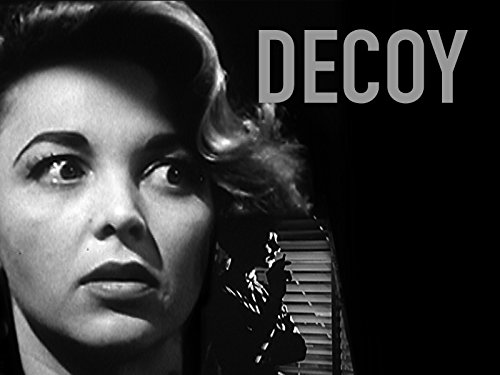
Retro Television Review: Decoy 1.7 “Deadly Corridor”


Welcome to Retro Television Reviews, a feature where we review some of our favorite and least favorite shows of the past!  On Thursdays, I will be reviewing Decoy, which aired in Syndication in 1957 and 1958.  The show can be viewed on Tubi!

This week, Casey goes to prison!

Episode 1.7 “Deadly Corridor”

(Dir by Teddy Sills, originally aired on November 25th, 1957)

A murder has occurred in the medium security wing of a woman’s prison.  The Warden (Agnes Young) and the District Attorney (John Newton) asks Casey to go in undercover to discover who killed a prisoner.  Casey will pretend to be a prisoner and only the Warden will know that she’s actually a cop.  Casey won’t have her gun, her badge, or her usual backup.  It’s a dangerous assignment but the medium security wing will be shut down if there’s another incident.  The District Attorney starts to explain the importance of rehabilitation.  Casey replies, “I’m a police woman, not a sociologist.”  Casey accepts the assignment because that’s her job.

Casey’s in jail!  She has a really nice cell.  It comes with a dresser, a vanity mirror, a bed, a lamp, and a desk!  She’s even allowed to wear makeup in prison.  Sign me up!  Casey comes to suspect that the murder was committed by the butch Taffy (Colleen Dewhurst) but instead, it turns out the killer was the mentally-fragile Lois (Lois Nettleton).  Lois is a kleptomaniac and killed the other prisoner after she ratted Lois out to the warden and caused Lois’s sentence to be lengthened.  Lois subsequently attacks Casey because she’s worried that Casey is also “a fink” and Lois doesn’t want to end up spending any more time in prison.  She wants to be released in three months so she can finally visit the grave of her baby.  (Awwww!)  Unfortunately, by the end of this episode, it’s looking like Lois will be lucky to escape the electric chair.

This episode has all of the usual women-in-prison cliches but they were all handed in a way so as to not upset the 1950s television viewing audience.  For instance, the episode never came out and said that Taffy was a lesbian but the way she stared at Casey and ordered her to “come and see me,” didn’t really leave much doubt.  When Taffy beats up Casey, she’s establishing her dominance and reminding the viewer that no one can walk away from a fight in prison.  When Casey snitches to the warden, it’s because she wants to get Taffy out of the way for 24 hours so that Casey can investigate the murder.  Casey can get away with that because she’s a cop and she can always just go to the Warden and ask to be released from the prison.  If Casey were an actual prisoner, being labeled a snitch (or a “fink” as they apparently put it back then) would be a fatal error.

This episode had its campy moments but Lois Nettleton and Colleen Dewhurst both gave excellent performances and the final confrontation between Casey and Lois was actually pretty suspenseful.  To my surprise, this turned out to be a good episode.

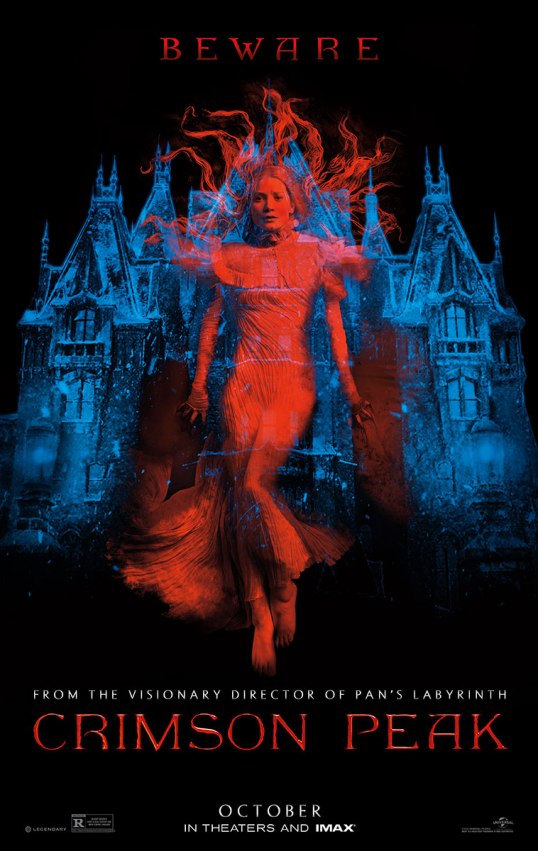
Horror Scenes That I Love: Crimson Peak


Since it’s Guillermo Del Toro’s birthday, it just seems appropriate that today’s horror scene that I love should be one of my favorite scenes from one of my favorite Del Toro movies.

Here’s the opening of 2015’s haunting (and, in my opinion, underrated) Crimson Peak!