Love On The Lens: Once (dir by John Carney)


First released in 2007, Once tells the story of two people who fall in love in Dublin.

Or maybe they don’t.

Really, it depends on how you look at it.

Guy (Glen Hansard) is the son of a man who owns a machine repair shop.  He spends his days standing on a street corner in Dublin, playing his guitar and singing song that he’s written.  Guy is polite and mild-mannered and probably the nicest guy you could ever expect to meet on a street corner.  He’s also incredibly talented, singing his songs with an emotional intensity that demands you stop and listen.  Guy is haunted by a lost love, a woman he dated but then broke up with.  She now lives in London and Guy always wonders, “What if?”

Girl (Marketa Irglova) is originally from the Czech Republic.  She sells flowers and magazines.  She lives at home with her mother and her toddler.  He husband is still back in their home country.  Girl is a musician as well, though she had to leave her piano behind when she came to Ireland.  She hears Guy singing and becomes intrigued.  The fact that she needs her vacuum cleaner (her “hoover” as she puts it) repaired gives her an excuse to keep seeing Guy.  Soon, they’re friends and they’re writing music and even recording a demo tape of their songs.  If Guy goes to London, he wants to take the tape with him because the songs and the music express his emotions more eloquently than he can with just words.

Do Guy and Girl fall in love?

I believe that they they do but then again, I’m a born romantic and it’s hard not to get swept up in the chemistry that’s shared between Glen Hansard and Marketa Irglova.  (They were a couple when they filmed Once and one need only watch them onscreen together to see why.)  I think that Guy and Girl did fall in love, even if the film concludes without them physically acting on those feelings.

But it’s also possible that I’m wrong.  Once is as much a celebration of friendship as it is a love story and it’s possible that Guy and Girl, despite their obvious attraction, never quite reached the point of falling love.  It’s possible that they were utlimately just two close friends who loved creating music together.

Shot on the streets of Dublin on a low budget and featuring likable performances from a cast largely made up of nonprofessionals, Once is a truly special film.  It was my favorite film of 2007 and it definitely has a place on my list of the top films of all time.  The music, the location shooting, the chemistry between Hansard and Irglova, the extended sequence where Guy records his demo tape, all of them come together to create a truly unforgettable and ultimately very touching film.  It’s a film that celebrates not just love and friendship but also the act of artistic expression.  It’s film about creating something that will live forever and touch the souls of the people who hear it.

I’m not typically one to get involved in following the personal lives of celebrities.  But I will admit that I was sincerely saddened when, in 2009, I heard that Hansard and Irglova had broken up.  They seemed so perfect together but, then again, movies are movies and real life is real life.  Once is truly a special movie and, in the end, that’s what truly matters.
4 Shots From 4 Films: Special St. Patrick’s Day Edition


4 Shots From 4 Films is just what it says it is, 4 shots from 4 of our favorite films. As opposed to the reviews and recaps that we usually post, 4 Shots From 4 Films lets the visuals do the talking!

It’s St. Patrick’s Day so it’s time for….

4 Shots From 4 Films About Ireland

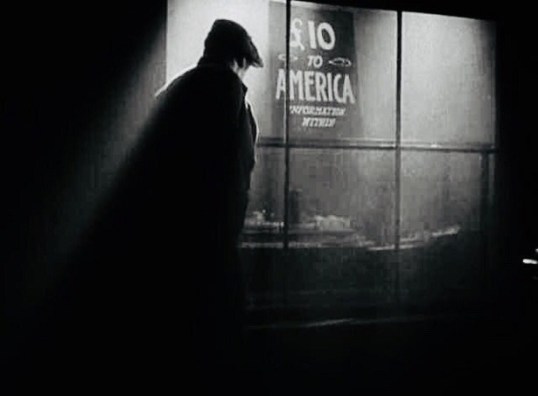
The Informer (1935, directed by John Ford. Cinematography by Joseph August)

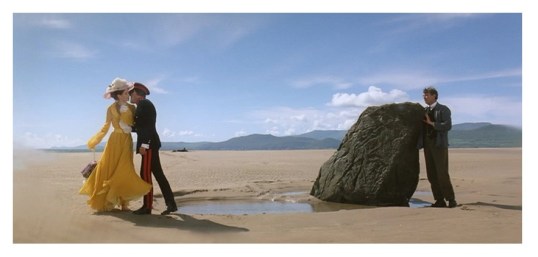
The Quiet Man (1952, dir by John Ford, DP: Winston C. Hoch)

Ryan’s Daughter (1970, dir by David Lean, DP: Freddie Young)

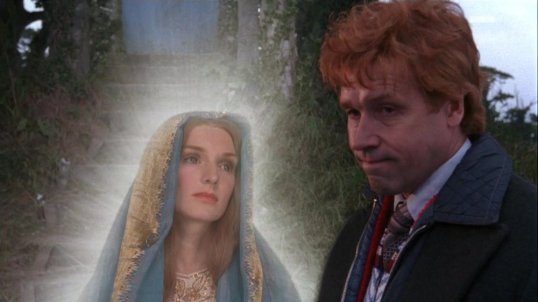
The Butcher Boy (1998, dir by Neil Jordan, DP: Adrian Biddle)


Film Review: The Van (dir by Stephen Frears)


1996’s The Van opens with a depressed Bimbo Reeves (Donal O’Kelly) attempting to drink away his troubled thoughts.  As he explains to his friend, Larry (Colm Meaney), he has been “made redundant.”  After two decades of working at a Dublin bakery, he has lost his job and, it would appear, his reason for living.

Now, I have to stop right here and point out how disturbing that term sounds.  “Made redundant,” sounds like the worst possible way to tell someone that they’re out a job.  Admittedly, I don’t live in Ireland or in the UK.  Perhaps if I did and if had grown up hearing the term, it wouldn’t disturb me quite so much.  But, to my American ears, being told that you’re redundant feels like not only being stabbed  but also then having the blade twisted.  Not only are you out of a job but you’re also useless.  You’re redundant.  Here in America, we tell people that they’ve been “fired,” and that obviously carries some disturbing connotations with it as well.  The original people to be fired were people who lost their jobs as a result of being burned at the stake.  But somehow, going up in flames seems preferable to being told that you’re totally and completely useless.

Bimbo is depressed.  Larry, who has a much more easy-going nature than his friend, tries to cheer him up.  Afterall, Bimbo has his “redundancy check.”  Bimbo and his wife, Maggie (Ger Ryan), purchase a food van and Bimbo decides to go into business for himself.  He’ll sell food from his van.  After refurbishing the van (which truly did look horrible when it was initially purchased), he’s ready to go into business with Larry as his only employee.

It seems like a good idea and, at first, the food van is a success.  Ireland is doing well in the World Cup and it leads to a lot of hungry customers.  Unfortunately, it also leads to conflict between Bimbo and Larry as they discover that being a boss and being an employee is a lot different than just being friends.  In the end, the question becomes what is more important, the business or the friendship?

Based on a novel by Roddy Doyle, The Van is the third part of the Barrytown trilogy.  Despite being named Larry in this film instead of Des, Colm Meaney is basically playing the same character that he played in The Commitments and The Snapper.  (Though I’m not sure, I think the film’s opening “1990” title card is meant to let us know that The Van is actually a prequel to those two films.)  It’s also the least engaging of the three films, largely because it doesn’t have the narrative momentum provided by the music in The Commitments or the pregnancy in The Snapper.  Instead, it’s just a story of two friends who get on each other’s nerves.  Donal O’Kelly doesn’t give a bad performance as Bimbo but he’s still overshadowed by Colm Meaney’s charismatic and larger-than-life Larry.  As a result, there’s not much of a question as to which friend the audience will side with.  Even though Bimbo’s complaints are often justified, we’re on Larry’s side all the way.

The Van is not a particularly memorable film but the message still comes through.  Life goes on, in both Dublin and elsewhere.


Film Review: The Snapper (dir by Stephen Frears)


Sharon Curley (Tina Kellegher) is 20 years old, a member of a large, working class Dublin family.  Her father is Des Curley (Colm Meaney), plain-spoken, a bit old fashioned, but also someone who sincerely loves his family and works hard to give them the best that he can.  Des is someone who brags about the fact that he hasn’t cried in over 20 years.  Of course, when he says that, he means that he hasn’t cried sober.  Crying drunk, especially while watching the World Cup, doesn’t count.

Speaking of drinking, one night out with her friends leads to Sharon finding herself pregnant.  As Sharon is young and unmarried, the identity of the father becomes a subject of gossip in her close-knit neighborhood.  At first, Sharon refuses to tell anyone who the father is.  Eventually, she confesses that the father was a Spanish sailor who picked her up and gave her the greatest night of passion of her life.  Of course, Sharon’s lying.  The father is actually a rather unimpressive middle-aged man named George Burgess (Pat Laffan).  George picked her up while she was inebriated.  He’s the type of person who kept her panties after they had sex but expects to be thanked for not showing them to his friends.  George reacts to the prospect of becoming a father by disappearing.

Sharon struggles, with both the gossip and the knowledge that her neighbors, people who she has known her entire life, are judging her for being pregnant and unmarried.  Continually, she is asked, “Who are you having the baby for?,” as if she’s doing a favor for the man who knocked her up and then abandoned her.  Sharon decides to keep the baby and even has a laugh at the thought of naming it Georgina.  Des, at first, has a hard time understanding Sharon’s decision but eventually, he supports his daughter.  He even reads all of the pamphlets on pregnancy and giving birth.  When a young man at the hospital mentions that he’s waiting on the delivery of his third child, Des offers him a pamphlet on “family planning.”

Made for British television and released theatrically in 1993, The Snapper is based on a book by Roddy Doyle.  The book was a sequel to The Commitments but, because 20th Century Fox owned the rights to The Commitments, the family’s name was changed for the film version of The Snapper.  The Rabbittes became the Curleys and there’s certainly no mention of the fact that Sharon’s brother once managed a soul band.  That said, Colm Meaney reprises his role as the befuddled but loving family patriarch. He and Tina Kellegher give performances in The Snapper that feel authentic and honest.  Every laugh, every smile, and even every tear feels earned.

Much as The Commitments did with music, The Snapper uses a domestic drama, the type that has inspired countless glossy films, to examine the realities of being working class in 20th Century Dublin.  With the tight-knit community full of judgment and not much support, Sharon learns who she can and cannot depend on but she also learns that’s she’s far stronger than anyone, including herself, knew.  The Snapper is a wonderful snapshot of life.

Musical Film Review: The Commitments (dir by Alan Parker)


First released in 1991 and based on a novel by Roddy Doyle, The Commitments is the story of a manager with a dream and a band with a chip on its collective shoulder.

Living in working class Dublin, Jimmy Rabbitte (Robert Arkins) dreams of managing a band.  He’s a fan of old school soul and rock and roll music, the type that was played by black artists in the American South.  Jimmy feels that the Irish have a special connection to that music because, as he explains it, “the Irish are the blacks of Europe.”  (I think one could argue that the black people living in Europe are the blacks of Europe but we’ll go with it.  I understand Jimmy’s argument, even if it is the sort of thing that would send social media into a tizzy if it were made today.)  Jimmy puts an ad in the paper and discovers that there are a lot of aspiring musicians in Ireland and very few of them know much about soul music.  Even Jimmy’s father (a delightful Colm Meaney) seems to believe that he could be a part of the band.  In the end, Jimmy puts together the band himself, recruiting an unlikely collection of friends and barely know acquaintances.  He finds a lead singer in the talented but unruly Deco Cuffe (Andrew Strong), a pianist in the religious Steven (Michael Aherne), a saxophonist in Dean Fay (Felim Gormley), a guitarist in Outspan Foster (Glen Hansard), and three back-up singers in Bernie (Bronagh Gallagher), Imelda (Angeline Ball), and Natalie (Maria Doyle).  He also finds a mentor in trumpeter Joey “The Lips” Fagan (Johnny Murphy), an American who claims to have played with everyone who is anyone and who names the band The Commitments.  They’re a working class band and one that doesn’t always mix well with each other.  Deco’s gets on everyone’s nerves from the start but, as Dean puts it at the unemployment office, he’s much happier being a saxophonist on the dole than a plumber’s assistant on the dole.

There’s a raw energy to The Commitments, as both a film and a band.  Both the film’s comedy and its music comes from a very real pain.  No one in the film is rich.  No one has been given much of a chance by British society.  Deco may be obnoxious but he also epitomizes the wild spirt of someone who refuses to be tamed by society.  Jimmy Rabbitte may occasionally be a bit in over his head but it’s hard not to admire his refusal to surrender.  From the minute the band comes together, it’s obvious that they’re not going to last.  Nearly every gig ends in disaster and Joey, despite his knowledge of soul, is a bit rigid in his demands of the band.  When Dean improvises, Joey acts as if it’s the end of the world that Dean would rather play jazz than soul.  Joey sees jazz as being elitist.  Dean sees it as being a way to express his own artistic vision.  The wonderful thing about The Commitments is that they’re both allowed to be right.

The band might not last but the film leaves you happy that they still had their moment.  The Commitments is a film that feels alive, not just with artistic desire but with the anger of people who have been pushed to the side by the establishment.  For a while, the band gives them a chance to express that anger and, afterwards, it’s gratifying to see that the majority of the members still carry the legacy of The Commitments with them, with some members continuing to pursue music and others returning to their everyday lives in Dublin.  It’s a good film, one that celebrates both music and humanity.


Happy St. Patrick’s Day From The Pulps


by Enoch Bolles

Happy St. Patrick’s Day!  I’ll be wearing green and celebrating my Irish heritage today.  Luckily, the pulps are here to help us get into the mood.  Unfortunately, the pulps didn’t always focus on the positive things about Ireland but, for that, we’ve got countless Hallmark movies!  Enjoy St. Patrick’s Day with a little pulp art!

Artist Unknown

by Chris Schaare

by Edward Mortlemans

by George Gross

by Hunter Barker

by James Avati

by James Meese

by Robert McGinnis

The Unnominated #11: The General (dir by John Boorman)


Though the Academy of Motion Picture Arts and Sciences claim that the Oscars honor the best of the year, we all know that there are always worthy films and performances that end up getting overlooked.  Sometimes, it’s because the competition too fierce.  Sometimes, it’s because the film itself was too controversial.  Often, it’s just a case of a film’s quality not being fully recognized until years after its initial released.  This series of reviews takes a look at the films and performances that should have been nominated but were, for whatever reason, overlooked.  These are the Unnominated.

Directed by John Boorman, 1998’s The General tells the story of Martin Cahill.

Martin Cahill (Brendan Gleeson) was a Dublin-based crime lord, a thief by trade who never made any apologies for his profession.  The film opens with the end of Martin Cahill’s life.  Leaving his suburban home, he’s sitting behind the steering wheel of his car when a young man runs up and shoots him in the face.  Cahill’s car rolls forward while his wife (Maria Doyle Kennedy) screams for help.  Cahill has been assassinated in front of his family and the reaction of the local police is to celebrate until Cahill’s oldest nemesis, Inspector Ned Kenney (Jon Voight), announces that they have nothing to cheer about.  The film leaves it somewhat ambiguous as to who shot Cahill, though it heavily suggests that he was shot by the IRA, both because of their mistaken belief that he was moving drugs into the neighborhood but also because of his refusal to share his profits with them.

The film flashes back and we watch as Martin Cahill, a rebellious young man who stole to impress girls and to get a shot back at the establishment, grows up to become Martin Cahill, the crime lord that the papers nickname The General.  Cahill is a professional thief and he’s fairly honest about it.  When his government-controlled flat is torn down, Cahill camps out on the site in a tent, refusing to leave because the location of the new building is to close to the police station.  He says he’d rather be moved to a richer part of town.  It’s better for his work.  As portrayed by Brendan Gleeson, Cahill is a fascinating and complex character, a ruthless criminal who is also devoted to his pigeons, his children and both his wife and his girlfriend (Angeline Bail).  (Fortunately, for Martin, his wife and his girlfriend know about each other and are good friends.)  He’s the type of crime lord who will test a man’s loyalty by nailing him to a pool table and then take him to the hospital afterwards.  “Sorry, Martin,” another associate says after Martin shoots him in the leg to make a fake break-in look authentic.  It’s hard not to like the film’s version of Martin Cahill, an intelligent and ultimately honest man who understands the importance of allowing his enemies to believe him to be a buffoon.  He may be a criminal but he considers it to be an honest living, unlike the government officials who force unwanted laws and exorbitant taxation on the citizenry  Director John Boorman certainly seems to like Cahill, which is interesting as Boorman was actually the victim of one of Cahill’s robberies.  (Boorman recreates the robbery in the film.)

The film went unnominated at the Oscars, which were dominated that year by Shakespeare in Love and Saving Private Ryan.  Brendan Gleeson definitely deserved a nomination for his charismatic performance as Martin Cahill.  Equally worthy of a nomination was Seamus Deasy’s black-and-white cinematography, which gives the film the dream-like feel of a half-remembered legend.  (The version of the film that’s on Tubi features desaturated color.  It’s actually an effective look for the film’s story but I still prefer the black-and-white original.)  Neither was nominated and, indeed, Brendan Gleeson would have to wait until 2023 to finally receive his first Oscar nominations for The Banshees of Inisherin.

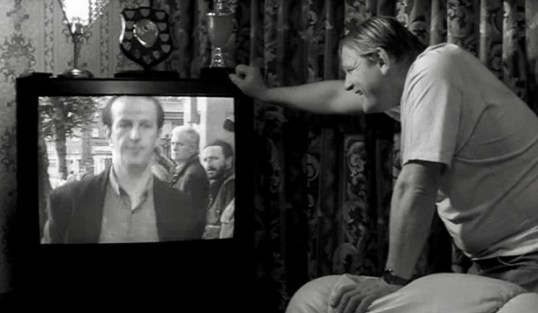
The General (1998, dir by John Boorman, DP: Seamus Deasy)

Previous entries in The Unnominated:

  1. Auto Focus 
  2. Star 80
  3. Monty Python and The Holy Grail
  4. Johnny Got His Gun
  5. Saint Jack
  6. Office Space
  7. Play Misty For Me
  8. The Long Riders
  9. Mean Streets
  10. The Long Goodbye

Film Review: Circle of Friends (dir by Pat O’Connor)


1995’s Circle of Friends tells the story of three friends who come of age in 1950s Ireland.

Bernadette Hogan (Minnie Driver), better known as Benny, is our narrator, the daughter of a local tailor whose shyness and insecurity disguises a quick mind and a sarcastic wit.  After years of jokes about her weight (which feel particularly cruel since Benny doesn’t appear to be particularly overweight), Benny has resigned herself to being alone.  Her parents may want her to marry their accountant, Sean Walsh (Alan Cumming), but Sean is obviously a creep.  He’s one of those guys who drinks his tea with his pinky extended.  Everyone knows better than to trust him.

Eve (Geraldine O’Rawe) is an orphan and was largely raised in a convent.  Now that she’s 18, the Westawards — the protestant heretics who once employed her father — are grudgingly keeping their promise and paying for her education.  She gets 60 pounds per term.  (I know my uncle, who paid my college tuition, would have loved it if my college tuition had been whatever the American equivalent of 60 pounds may be.)  Eve has inherited a cottage, a nice and isolated little building that becomes quite important later on in the film.

And finally, there’s Nan (Saffron Burrows).  Nan grew up with Bernadette and Eve, though her family eventually moved to Dublin.  Benny says that Nan is destined to be known for being pretty.

Nan is reunited with Benny and Eve when they all enroll at University College Dublin.  The film follows their friendship at the college, examining how they grow and change over the course of the term.  Benny develops a crush on and eventually starts dating Jack Foley (Chris O’Donnell), a medical student who enjoys playing rugby.  (I’ve never quite understood rugby, to be honest.  It seems weird to me that everyone always starts all huddled up and then apparently, they all try to grab a muddy ball until someone ends up with a compound fracture.  I’m not sure why someone would want to risk losing a limb over a game.)  Eve dates Jack’s friend, Aidan (played by a young Aiden Gillen).  And Nan …. at first glance, Nan would seem to be living every film lover’s dream!  Not does she lose her virginity to a character played by Colin Firth (in this case, Firth is playing Simon Westward) but they also regularly have sex in Eve’s lovely little cabin.  Of course, they don’t bother to let Eve know what they’re doing.  That’s part of the forbidden appeal of it all!  Unfortunately, despite being played by Colin Firth, Simon turns out to be a bit of cad.

Indeed, all of the men turn out to be a bit of a disappointment, though some do manage to redeem themselves.  The film is less about Benny finding love and more about Benny discovering that it’s even more important to love and respect herself.  As so often happens when it comes to lifelong friends, there are some struggles.  Not all of the friendships survive.  Unfortunately, that’s just a part of growing up.  Still, Benny, Eve, and Nan are all wonderfully written and acted characters and the film does a great job of portraying their difficult but very true-to-life relationship.

Circle of Friends is a lovely film and a personal favorite of mine.  Unfortunately, it’s not always an easy film to watch.  It’s not streaming on any of the usual services.   However, the film has been uploaded to YouTube so be sure to watch it while you can.

Film Review: Michael Collins (dir by Neil Jordan)


Released in 1996, Michael Collins tells the story of the early 20th century struggle of Ireland to gain independence from Britain.

Liam Neeson stars as Michael “Mick” Collins, the revolutionary leader who perfected the use of guerilla warfare against the British and then, in the greatest of ironies, found himself fighting some of his former allies during the Irish Civil War.  Aidan Quinn plays Mick’s friend and fellow revolutionary, Harry Boland.  Both Harry and Mick fall in love with Kitty Kiernan (Julia Roberts).  Stephen Rea shows up as Ned Broy, a member of the Dublin police department who is inspired by Mick’s words to become a double agent.  Charles Dance has a cameo as the fearsome Soames, a British intelligence agent who is sent to Ireland to violently put down the Irish insurgency.  Finally, Alan Rickman plays Eamon de Valera, who goes from being one of Mick’s strongest allies to being one of his fiercest rivals.  The film follows Collins from the Easter Rising of 1916 to his eventual assassination in 1922, providing a look at the history of Ireland that is as much directed towards those outside of Ireland as those on the inside.

When watching Michael Collins, it helps to have a working knowledge of Irish history.  Otherwise, it can occasionally be a bit difficult to keep track of who is angry with who at any particular point in time.  Of course, it should be noted that the movie itself is not exactly historically accurate.  In the film, the gentle and likable Ned Broy becomes a victim of British bloodlust.  In real life, Ned Broy outlived Michael Collins by several decades and died peacefully at the age of 84.  For that matter, the film presents Eamon de Valera as being coldly Machiavellian and it suggests that de Valera was jealous of Mick’s popularity.  Though both Rickman and director Neil Jordan later said it wasn’t intentional, the film also seems to suggest that de Valera played a role in Collins’s assassination.  While Eamon de Valera remains a controversial figure for many reasons (including his neutrality during World War II), Jordan has said that he feels de Valera was not necessarily treated fairly in Michael Collins and indeed, de Valera — who plays as big a role in the founding of the Irish republic as anyone — is portrayed as often being ineffectual and unwilling to truly put himself at risk to fight the British.  De Valera’s relationship with Collins was undoubtedly more complex than portrayed in this film but, when one makes a movie for an international audience, nuance is often the first thing that’s abandoned.

Seen today, 29 years after it was released, Michael Collins is an impressively made film that has a few inescapable flaws.  It’s gorgeous to look at, full of moody shots of dark Dublin streets.  The violence is often shocking and Jordan doesn’t shy away from considering the moral implications of Collins’s guerilla warfare.  Michael Collins doesn’t make the mistake of blindly celebrating violence, which would be a valuable lesson for the world’s current crop of self-styled revolutionaries if they were only willing to hear it.  Having gotten used to seeing Liam Neeson cast in one generic action film after another, it was interesting to watch Michael Collins and see what a good actor he truly could be.  Even in 1996, He was perhaps a few years too old to playing a man who was only 31 when he died but Neeson still plays the role with a ferocious charisma that makes him believable as a leader.  His scenes with Aidan Quinn have a joie de vivre that brings out the both in best actors.  Alan Rickman is memorably sinister as Eamon de Valera and Stephen Rea’s gentle style makes Ned Broy into a truly tragic figure.  That said, the very American Julia Roberts feels miscast as Kitty Kiernan.  One gets the feeling that she was cast solely for her box office appeal.  Every film, the feeling goes, needs  a love story and those love stories need to be between people with familiar faces and Roberts is such a familiar face that her every appearance in the film feels like a distraction from the story being told.  That said, the film captures the excitement and danger of being in the middle of history-making events.  It’s a historical epic that’s never boring and manages to hold the viewer’s interest.

Michael Collins is ultimately a flawed but entertaining look at the early days of the Irish republic.