Earlier this year, Cha Cha Real Smooth was one of the biggest hits on the Sundance Film Festival. I have to admit that my main reaction to hearing about the film was to think that Cha Cha Real Smooth is one of the worst titles that I’ve ever come across. Either call the movie “Cha Cha” or call it “Real Smooth” but stringing all four of those words together …. ugh.
That said, the critics loved it and there’s been some talk that it could duplicate CODA’s success as an early streaming Oscar contender. The film will be released in June and here’s the trailer!
She is looking very wayward. Should a doctor be smoking? This cover was done by Rudolph Belarski, whose work has been featured on this site many times in the past.
Adam Sandler has got the beard going in this trailer so I guess this is going to be one of his serious roles. That’s fine, I prefer Sandler when he’s being serious.
This is from 1944. It seems like the jockey could have been a little more discreet. I like that his hat actually says, “Tipster.” This cover was done by Richard Cardiff.
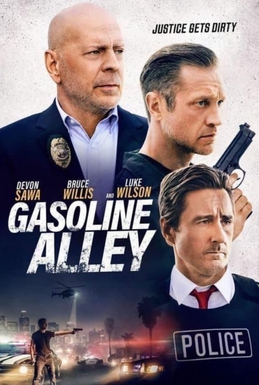
Believe it or not, Gasoline Alley is not that bad.
Don’t get me wrong. Gasoline Alley is definitely a pulpy film. The plot is full of twists and turns and it doesn’t always hang together. There’s more than a few holes to be found in the story. There’s also a few threads that are left hanging. Much as in real life, characters appear and then disappear almost at random. In many ways, the film plays out like a dream, a jumbled mix of concerns and ideas and images. The viewer is often left to figure out how to fit everything together on their own. Obviously, that type of approach won’t appeal to everyone but, for me, it was the perfect way to tell the film’s story. The world of Gasoline Alley often doesn’t make sense but neither does the world outside of your window. Gasoline Alley‘s mystery often feels like a jigsaw puzzle where someone has jammed pieces randomly into each square and then pounded on them until they managed to fit in the slots. It’s chaos but it’s an appropriate approach for a film that takes place in a chaotic world.
Gasoline Alley also one of the final films that Bruce Willis made before his retirement and, with all the rumors about whether or not Willis was pushed into spending the last few years of his career appearing in low-budget and B-movies, it’s often undeniably awkward to watch him in his final films. As is the case with almost all of Willis’s recent films, he doesn’t get much screen time in Gasoline Alley. He’s only in a handful of scenes and his dialogue is limited and delivered in a flat monotone. He plays a key character but much of what the character does and says occurs off-screen and is described to us second-hand. And yet, at the same time, Willis still has enough natural presence that his performance works as far as the basic needs of the film are concerned. He’s playing a character who is meant to be intimidating and Willis still has enough of that tough guy energy that his performance is effective.
Willis plays a homicide detective named Freeman. Freeman and his partner, Vargas (Luke Wilson), are investigating the murder of four prostitutes and their number one suspect is a tattoo artist named Jimmy Jayne (Devon Sawa). Jimmy’s father was a decorated police detective. His mother was a prostitute. Jimmy spent several years in prison for assault, though Jimmy claims that he was simply acting in self-defense. (“He came at me with a screwdriver,” Jimmy says, without further elaboration.) While he was in prison, Jimmy befriended an actor who was doing time for DUI. Having been released, Jimmy is now the tattoo artist to the stars. He has his own tattoo parlor, called Gasoline Alley. Because one of the murdered women was found with one of Jimmy’s personalized lighters on her body, Jimmy is a suspect. Jimmy, however, claims that he merely met her in a bar.
Jimmy starts to investigate the murders on his own and it quickly becomes clear that he’s a better investigator than either of the detectives who are on the case. Though Jimmy is trying to clear his name, he’s also determined to get justice for the murdered women, all four of whom appear to him as either ghosts or drug-induced hallucinations at a key moment in the film. Jimmy’s investigation leads him into the world of human trafficking, police corruption, and the darkest corners of the film industry. Indeed, one of Gasoline Alley‘s major points seems to be that everyone in Hollywood is corrupt. The actor who Jimmy saved in prison is a pretentious loser who, at one point, goes off on a rant that was obviously based on Christian Bale’s infamous Terminator meltdown. Meanwhile, the adult film industry is represented by a sleazy director who snorts cocaine, tells bad jokes, and throws parties that are almost exclusively populated by crooked cops. As one cop puts it, “He knows whose lives matter.”
Gasoline Alley has gotten terrible reviews but I think those reviews have more to do with the fact that this is a low-budget Bruce Willis flick than the film itself. Gasoline Alley is actually not bad at all. It’s an entertaining work of pulp fiction, a quickly-paced film that takes a look at how life is lived and lost in the shadows of “decent” society. Because he’s an ex-con, Jimmy is destined to be an outcast, regardless of how many stars come to him for their tattoos. But, at the same time, it’s Jimmy’s outcast status that allows him to infiltrate and understand the dark side of Los Angeles. It’s because Jimmy’s an outcast that he’s determined to get justice for the victims that respectable society would rather just ignore. Director Edward Drake fills the movie with images of neon-suffused decadence. The atmosphere may be sleazy but it’s also undeniably plausible. Luke Wilson does a good job playing Willis’s talkative partner but the film is stolen by Devon Sawa, who brings a mix of weary dignity and righteous fury to the role of Jimmy. Sawa has been through his own well-publicized troubles and perhaps that’s why he seems to instinctively understand why it’s so important that Jimmy not only clear his name but also get justice for those who have been victimized in the shadows. As played by Sawa, Jimmy is cynical and often tired but he still hasn’t given up his desire to make the world a better place.
No, Gasoline Alley is not a bad film at all. Instead, it’s a portrait of a harsh world and a look at the people who are simply trying to make it from one day to the next. Much like Robert Aldrich’s Kiss Me Deadly, Gasoline Alley is a journey through a brutal world where people get what they want at the cost of their own souls. It’s a film that, like many of the classic B-movies and film noirs of the 40s and 50s, will be rediscovered and better appreciated in the future.
Anyone who saw Doctor Strange and the Multiverse of Madness was treated to the Teaser Trailer for James Cameron’s Avatar: The Way of Water. This one shocked me because it picked up a bit of applause in the theatre. After all, it’s been 13 years. Not that anyone ever asked for a sequel (or 2 more), I get the feeling Cameron has faith in himself and his crew.
Two things really stood out for me with this teaser. One, Mech-Spiders fixing buildings, what are those?! Two, is that Simon Franglen’s score playing? It’s nice, and with James Horner gone (and missed), I’m hoping the rest of it will be good.
Taking place some time after the first story, Jake Sully (Sam Worthington) and Neytiri (Zoe Saldana) have a family now, and we’ll get to see Pandora’s watery depths. Supposedly, Cameron’s been pushing for upgrades in 3D technology, so it’ll be interesting to find out what advances have happened in a decade.
Avatar: The Way of Water is set for a December release.
 Earlier this year, Cha Cha Real Smooth was one of the biggest hits on the Sundance Film Festival. I have to admit that my main reaction to hearing about the film was to think that Cha Cha Real Smooth is one of the worst titles that I’ve ever come across. Either call the movie “Cha Cha” or call it “Real Smooth” but stringing all four of those words together …. ugh.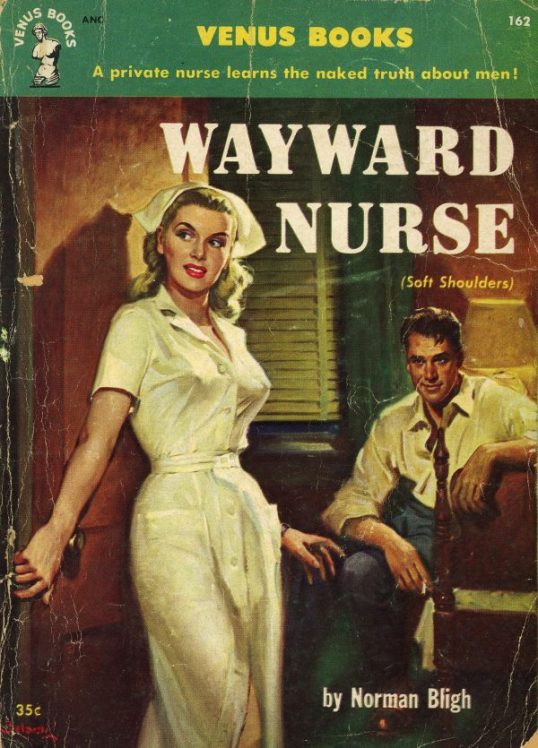


 Through the Shattered Lens