Monthly Archives: September 2020
The Florida Project : Ross Jackson’s “Sticky Sweets”

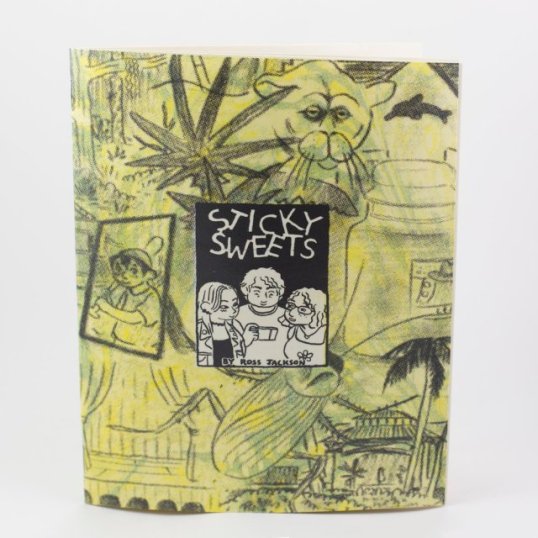
If life in suburbia constitutes a kind of long, drawn-out soul death on the installment plan — and I’d contend there’s probably no need to start that sentence with an “if” — then what must life in suburban Florida be like? The mind shudders at the prospect of such a barren cultural wasteland, and yet — either enough people simply don’t care where the hell they live, or don’t see a problem with the idea of chugging gas-guzzling SUVs from one monstrous “cookie-cutter” chain business to another that the so-called “Sunshine Stare” is literally loaded with suburbs. And, like anywhere else, the kids who live there need to do something for fun.
In Portland cartoonist Ross Jackson’s 2017 Cold Cube-published mini Sticky Sweets, a pair of bored (of course) young teens decide the best way to while away part of their ample free time is to fuck off at…
View original post 621 more words
Music Video of the Day: Another Angel by Above & Beyond (2019, dir by ????)
Enjoy!
The Lonesome Trail (1955, directed by Richard Bartlett)
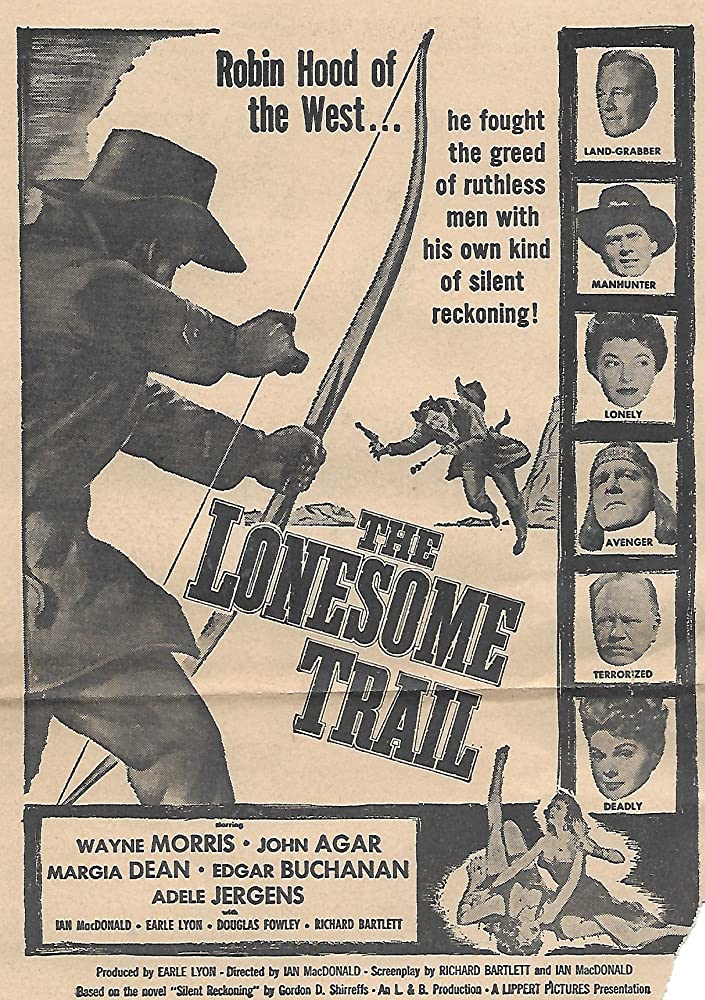
Returning home from the Civil War, Johnny Rush (John Agar) discovers that his family’s land has been confiscated by corrupt rancher Hal Brecker (Earle Lyon, who co-wrote the script). With the aid of corrupt Sheriff Baker (played by Richard Bartlett, who also directed the film), Brecker has taken over the entire town. Honest ranchers like Charley Bonesteel (Douglas Fowley) are giving up their land and heading out of town. Meanwhile, Dan Wells (Edgar Buchanan) has managed to hold onto his land by offering up his daughter, Pat (Margia Dean), as Brecker’s bride. Since Johnny’s in love with Pat, he’s not happy about this development.
Johnny wants to take on Brecker but the local bartender, Dandy Don (Wayne Morris), talks him out of it. Realizing that there’s nothing he can do alone, Johnny tries to leave town but, as he rides out, he’s ambushed by Baker. Though Johnny survives the ambush, his shooting hand is injured. Fortunately, Indian Chief Gonaga (Ian MacDonald, the script’s other writer) and Charley are on hand to teach Johnny how to fight with a bow and arrow. Johnny goes on to become an old west Robin Hood, using his newly learned archery skills to fight the greedy land grabbers and protect the poor land-owners.
The Lonesome Trail is a low-budget, grade Z western that is slightly saved by the novelty of seeing John Agar fighting off the bad guys with a bow and arrow. The film is clearly set up to be a western version of the Robin Hood saga, complete with a corrupt sheriff, a greedy landlord, and an archer who has just returned from war. Errol Flynn and Olivia de Havilland could have really made something out of this story back in 1938. Unfortunately, to say that John Agar is no Errol Flynn is putting it lightly. There’s nothing “merry” about John Agar’s performance. He looks genuinely miserable in the majority of this scenes. Agar is just as stiff as usual but the bow and arrow is just enough of a twist to make his confrontations with Brecker’s men more interesting than the typical gunfights that usually wrapped these films up. Otherwise, this is another forgettable Robert Lippert-produced western, though old pro Edgar Buchanan does give a good performance as a man desperate enough to offer up his daughter in order to keep his land.
Scribbling Down Some Thoughts On “Scribbles” #2
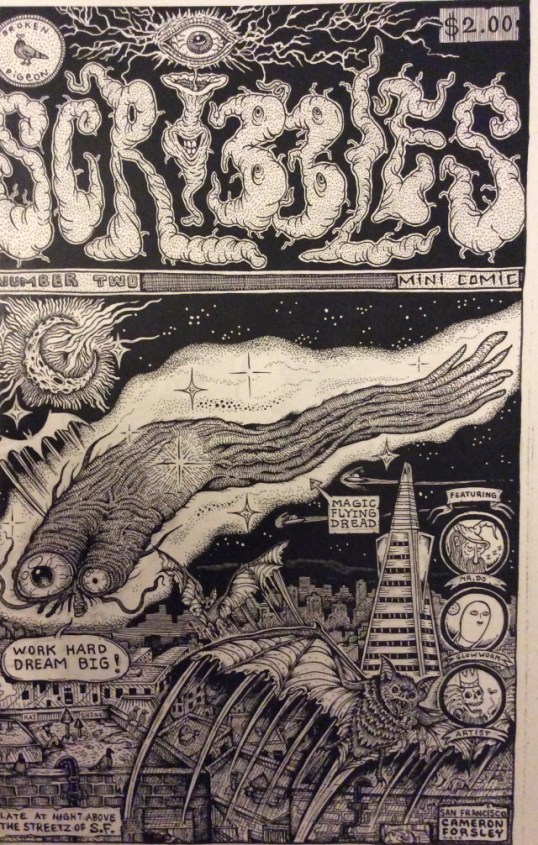
One of the reasons I keep this blog going, despite having a fair number of other writing commitments and a distinct lack of time, is that around here I can write about whatever I want. And while I highly doubt that any cartoonist expects that they’ll get more than a 75- or 100-word “capsule” review for a 10-page mini they’ve made that sells for two bucks, reviewing stuff that nobody expects to see full-length reviews for, including the book’s creator, is one of those “whatever I want” things that I love doing. And you know what? A lot of those things nobody else is gonna review actually offer a fair amount to discuss and dissect.
All of which brings us to Scribbles #2, the latest (I think, at any rate) self-published mini from Bay Area “ink stud” Cameron Forsley, this time flying as a solo act without a story assist…
View original post 644 more words
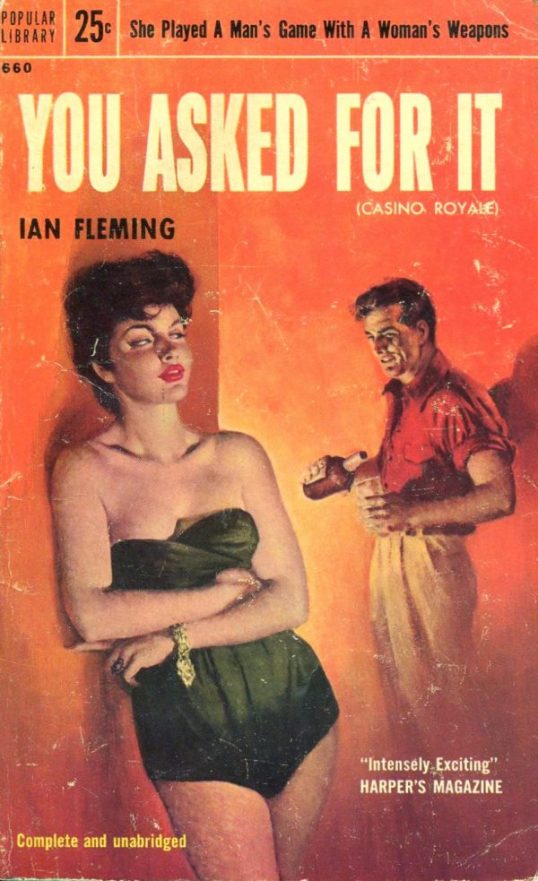
Artwork of the Day: The Pursuit of Agent M (by Mitchell Hooks)
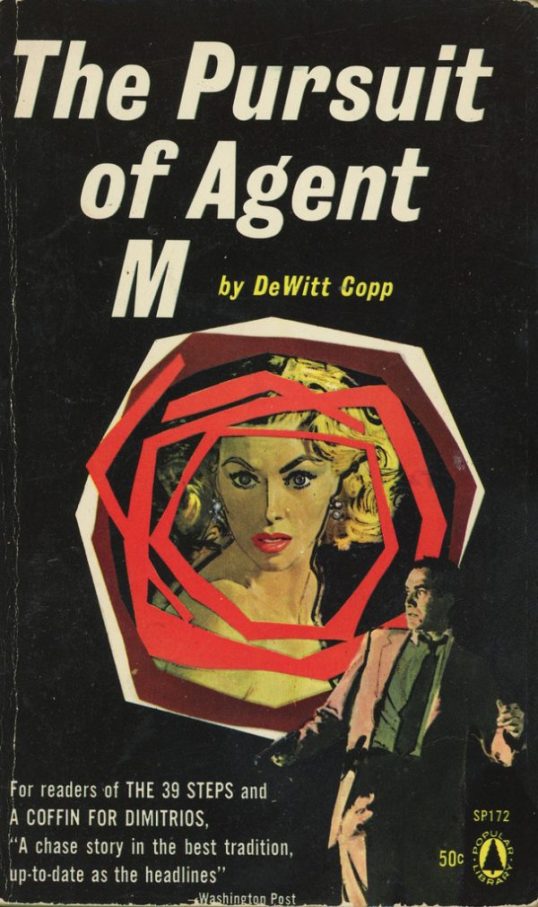
by Mitchell Hooks
Catching Up With “Ley Lines” : Simon Moreton’s “The Lie Of The Land”
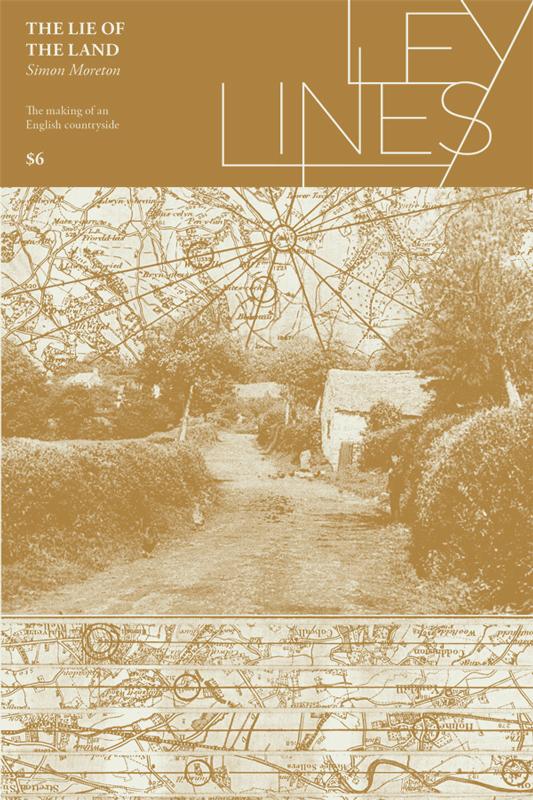
The rural British countryside has always held a certain mystique to those who aren’t from there — and to those who are, as well. The supernatural and the entirely natural seem to have a way of converging in this “green and pleasant land” — from the stone circles to the crop circles to the fogous to the hill figures to, of course, the rumored lines in the Earth from which the Czap Books/Grindstone Comics visual poetry series Ley Lines derives its name. Hypothesized by antiquarian/photographer/entrepreneur Alfred Watkins in three tracts he wrote in the 1920s to have been literally straight lines which connected many of the ancient mysteries just mentioned with hills, lakes, rivers, and villages, and to have served purposes both mystical (hidden energy grids) and mundane (trade and transportation routes), the Ley Lines remain an intriguing enigma, even if they might be complete bullshit — hell, maybe even
View original post 591 more words
Music Video Of The Day: Artemis by Lysandra (2020, dir by Marianne Métivier)
Enjoy!
A Town Called Bastard (1971, directed by Robert Parrish)
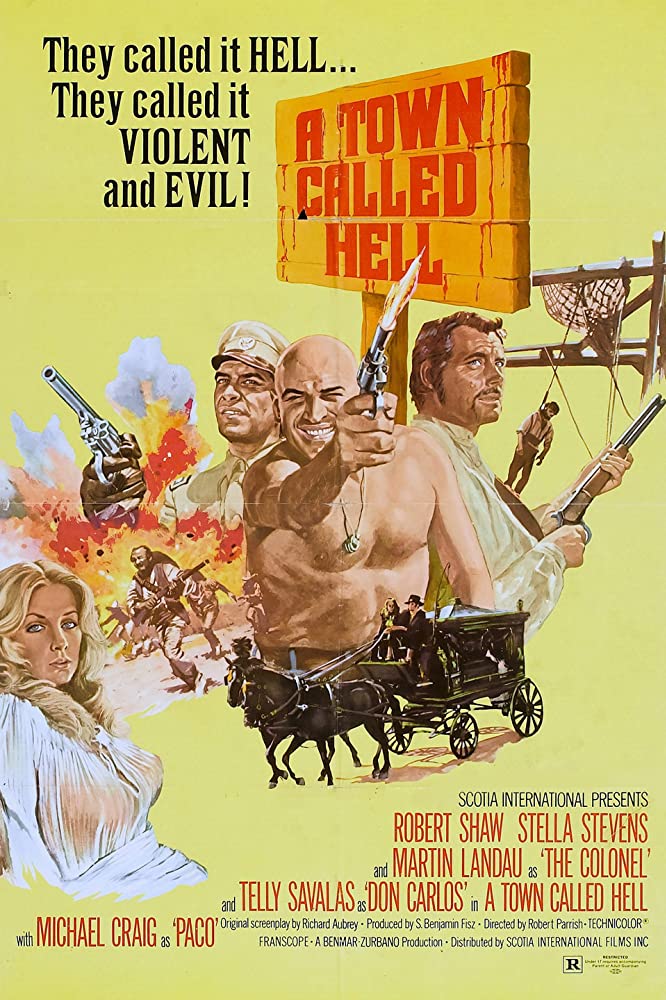 A Town Called Bastard is a British-produced Western that was shot in Spain and which was obviously designed to capitalize on the popularity of the Spaghetti westerns of the two Sergios, Leone and Corbucci. When the movie was released in the United States, the title was changed to A Town Called Hell because it was felt that Americans would find the word “bastard” to be too offensive. I’m not sure how naming your town Hell is somehow an improvement on naming a town Bastard but apparently, that was the thinking. Actually, the town is called Bastardo is both versions of the film so the American title makes less and less sense the more you think about it.
Of course, how you can expect a film to make sense when the opening scenes feature Martin Landau and the very British Robert Shaw as two Mexican revolutionaries who, in the year 1895, ride into the town town of Bastardo and murder almost everyone that they see. Ten years later, Robert Shaw is still living in the town but he’s now a priest and he’s renounced his formerly evil ways. The town itself is ruled by a ruthless outlaw played by Telly Savalas, who doesn’t bother to hide his New York accent despite playing a Mexican outlaw.
One day, a black carriage arrives in town. Inside the carriage is a glass coffin and inside the coffin in Stella Stevens, who is very much alive. Stevens’s husband was among those killed by Shaw and Landau back in the day and she offers gold to anyone who can avenge his death. Savalas is interested in the gold but then his character literally disappears from the film. Instead, Martin Landau rides back into town. He’s now a colonel in the Mexican army and is searching for a fugitive.
A Town Called Bastard has potential but it’s done in by poor casting and Robert Parrish’s inconsistent direction. The story is told so messily and the editing is so sloppy that it often feels like major scenes were left on the cutting room floor. (Just try to figure out what’s going on with Telly Savalas’s character, for example.) Stella Stevens has one or two good moments as the vengeful widow and her entrance into the town is one of the few interesting moments in the movie but both Savalas and Shaw overact in an attempt to hide just how miscast they are while Martin Landau’s main concern seems to be to get his paycheck and move on to the next movie.
In the end, A Town Called Bastard goes straight to Hell.
The Many Adventures of Dan Turner, Hollywood Detective!
Hollywood could be a dangerous place and no one understood that better than Dan Turner, Hollywood Detective! Turner was a hardboiled detective who made his first appearance in a 1934 issue of Spicy Detective. Turner proved to be so popular that he not only continued to appear in Spicy Detective but he also got his own magazine. Dan Turner, Hollywood Detective ran from 1942 to 1950 and featured Turner solving cases involving directors, producers, stuntmen, and starlets. In fact, the stories often featured details about the infamous “Hollywood casting couch,” which made Turner’s adventures both popular and controversial in the 40s.
Here are a few of the covers of Dan Turner, Hollywood Detective! Where known, the artist has been credited:

Artist Unknown

Artist Unknown

Artist Unknown

Artist Unknown
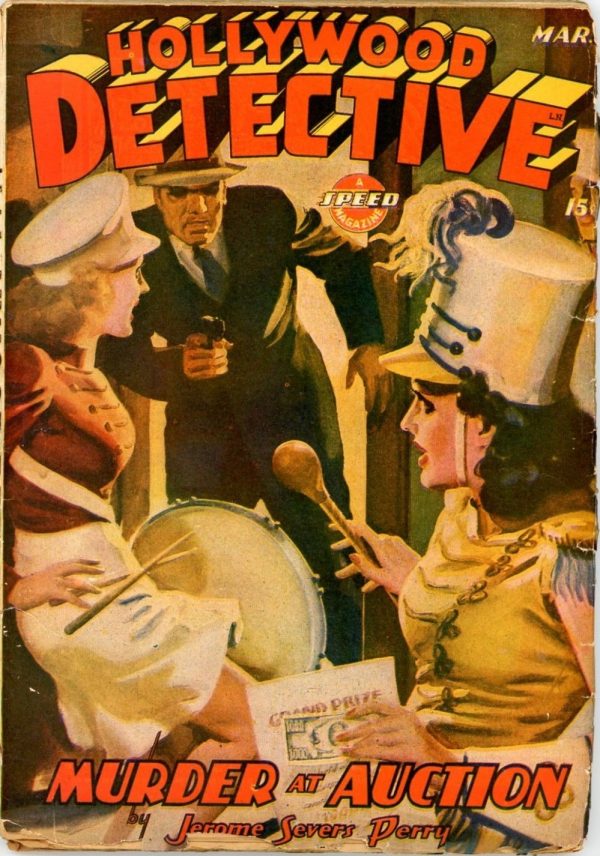
by Hugh Joseph Ward

by Hugh Joseph Ward

by Hugh Joseph Ward

by Hugh Joseph Ward

by Joe Szokoli
 Through the Shattered Lens