
by Jerry Allison
by Jerry Allison
For today’s music video of the day, we have another song from the Dutch progressive band, Earth and Fire. I wrote a little about the history of Earth and Fire yesterday.
This is off of their third album, Atlantis. From what I can tell, Maybe Tomorrow Maybe Tonight was the only single released off of Atlantis. It was a hit for the band, breaking into the top ten in both their native Netherlands and in Belgium. It only reached the 44th position in the German charts. Who knows why.
This video, like the majority of the music videos from the 70s, is a performance clip. Apparently, it was originally filmed for a Dutch television show.
Enjoy!
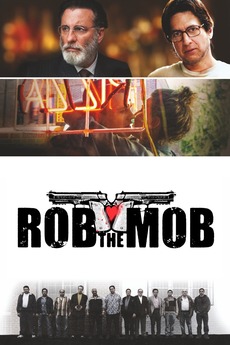
The 2014 film, Rob the Mob, tells the true story of a young couple in love who became minor celebrities when they robbed the mob. Of course, they also ended up with a huge target on their back, which tends to happen when you repeatedly humiliate a bunch of angry men who have weapons at their disposal.
The year is 1992 and Tommy Uva (Michael Pitt) and his wife, Rosemarie (Nina Arianda) are professional criminals who, after getting busted for trying to rob a florist on Valentine’s Day, end up working at a debt collection agency. Their boss (played by Griffin Dunne) spent time in prison for insider trading and he believes in giving convicts a second chance. The problem is that Tommy doesn’t really want a second chance. He’s actually pretty happy being a criminal.
Tommy has some issues with the Mafia, largely due to the fact that his father borrowed money from the mob to open up a shop and spent the rest of his short life being beaten and humiliated by loan sharks. Tommy believes that the pressure is what led his father to an early grave. Tommy’s mother (Cathy Moriarty), on the other hand, claims that it was the stress caused by Tommy being a criminal. Regardless, seeing his father repeatedly mistreated has definitely left Tommy with some anger issues.
Even though Tommy claims that he hates the Mafia, he still seems to be rather obsessed with them. At times, it’s hard to tell if Tommy is angry with the Mafia or if he’s just jealous about the fact that he’ll never be as rich or as powerful as the local neighborhood mobster. Tommy starts to skip work so that he can observe the trial of John Gotti. It’s while doing this that Tommy hears that guns are not allowed in Mafia social clubs.
Soon, Tommy is robbing those same clubs, taking all of the money that he can and humiliating the mobsters at the same time. (He forces one group of paunchy gangsters to march outside in their underwear.) With Rosemarie serving as his getaway driver, Tommy soon becomes something of a legend. The mobsters even nickname the pair “Bonnie and Clyde.” Because the Mafia doesn’t want to attract any unnecessary attention during the Gotti trial, Tommy and Rosemarie are able to get away with their activities for a while. But then they make the mistake of stealing a list that could bring down the entire New York Mafia….
Rob the Mob is a bit of an uneven film. The film starts with Tommy and Rosemarie getting high and then attempting to rob a florist and, in that scene, they both seemed like such idiots that I really wasn’t sure that I wanted to spend 104 minutes of my life watching a film about them. Even after Tommy got out of a prison and got a legitimate job, he still seemed like such an unsympathetic loser that I found myself wondering why I should care.
However, once Tommy and Rosemarie start actually robbing the mob, the film picks up. We meet Big Al, the temporary head of the New York mafia, and he’s played by Andy Garcia, who gives an intelligent and understated performance. Big Al may be a mobster but he’s not an unsympathetic character. The film presents him as being someone who has been unexpectedly thrust into a position of power and who is doing his best to keep everything from falling apart. Then, as the robberies continue, Ray Romano shows up as Jerry Cardozo, a reporter who makes “Bonnie and Clyde” famous but who realizes too late that he’s also put their lives in even greater danger than they were before. Over the past few years, Romano has gone from being a former sitcom star to being a surprisingly effective character actor and his performance here gives Rob the Mob its conscience.
Perhaps even more importantly, during the second half of the film, the chemistry of Michael Pitt and Nina Arianda finally won me over and I actually started to care about what would happen to Tommy and Rosemarie. Tommy and Rosemarie find a reason for living in their criminal activities. They go from being losers to being minor New York celebrities, even if they can’t reveal their actual identities. They may be idiots but their love is real and there’s something very touching about how much they actually do care about each other. It’s hard not to be happy for them, even if it’s obvious from the start that their story is not going to have a happy ending.
Rob the Mob is uneven but, in the end, it’s more than worth watching. This is an offer you should not refuse.
Previous Offers You Can’t (or Can) Refuse:
 John (Keith Carradine) and his wife, Leanne (Daryl Hannah) are two white trash murderers who are on the run with the police. When the cops catch them in the act of burglarizing a house (and murdering the people who live there), John and Leanne manages to narrowly escape but they’re forced to leave behind their 6 year-old daughter, Janie (Julia Devlin).
Traumatized by her former life, Janie is adopted by an architect named Russell (Vincent Spano) and his wife, Dana (Moira Kelly). Dana, who lost her previous baby, and Russell are convinced that they can give Janie a loving home and help her overcome her past traumas. And it seems like they might be correct, even though Janie is still terrified of a mysterious monster that she calls “the tooth fairy.”
However, John and Leanne are determined to get their daughter back and they’ve just found out where Russell and Dana live.
The Tie That Binds is a stupid movie from 1995 that, like a lot of stupid movies from the 90s, was put into heavy rotation on HBO and Cinemax after a brief box office run. The main problem with the film is that everyone consistently makes the dumbest decisions possible but then we’e expected to sympathize with them when everything goes wrong. John and Leanne may be extremely evil but they’re also extremely stupid so it’s hard to really buy into the idea that they could somehow successfully evade being caught by the police long before the inevitable scene where they confront Russell and Dana in the unfinished house that Russell’s spent the entire movie working on.
The Tie That Binds does feature good performances, all from actors who deserved better. Keith Carradine and Daryl Hannah are frightening and Moira Kelly and Vincent Spano are convincing as a normal couple who just want to do the right thing. Both Kelly and Spano should have been bigger stars back in the day but instead, it seems like they usually just ended up in stuff like The Tie That Binds.

by James E. McConnell
Up until YouTube recommended this video to me a few hours ago, I had never heard of Earth & Fire. In fact, when this video first popped up under my recommendations, I assumed that it was for a song that Earth, Wind, and Fire had performed with a special guest singer.
Once I played the video, I discovered that wasn’t the case. Instead, Earth & Fire was a Dutch group that was active from 1968 to 1983. They were big in the Netherlands but it appears that they never really broke through in the rest of the world. This was also apparently one of those bands that went through a large number of different line-ups over the course of its existence. Wikipedia lists a total of 16 musicians who were, at one time or another, a member of Earth & Fire. The band’s lead singer was Jerney Kaagman, who went on to become the president of the Dutch musicians’ union and who was one of the judges on Idols, the Dutch version of the British show Pop Idol. (Pop Idol also served as the inspiration for American Idol.)
Earth & Fire had a series of hits as a prog rock outfit in the early to mid-70s. In the later part of the 70s, they tried to rebrand themselves as a disco act. Apparently, it didn’t work because the band broke up shortly afterwards.
When it was released as a single in 1975, Thanks For The Love reached number 8 on the Dutch Top 40. This music video, like many of the videos that were released in the days before MTV, is a simple performance clip.
Enjoy!


In fairly short order, I’ve become convinced beyond any shadow of a doubt that Aussie Many Ord ranks right up there with the likes of Alison McCreesh and Eleanor Davis as one of the great “travelogue” cartoonists of our time, But whereas her previous globetrotting works concerned themselves with singular elements that tied the experiences together, with her 2019 self-published mini, Kyoto Pants Down, she take a different, and frankly more standard, approach, focusing on a set of general impressions of, and experiences set in, Kyoto, Japan. But hey — please don’t take “standard” to be at all synonymous with “dull.”
In point of fact, the narrative in this thick (52 pages!) little book book is as tight as Ord’s always-agreeable line is loose, and that balance between plotting/storytelling precision and fluid, organic art gives the comic a distinct vibe all its own, a flair and flavor that accentuates…
View original post 547 more words

The 1948 film noir, Force of Evil, plays out like a fever dream of dark and disturbing things.
The film begins on the third of July with attorney Joe Morse (John Garfield) telling us that, by the end of the 4th of July, he will have made his first million dollars, something that he describes as being “an important moment in every man’s life.” Joe has an appreciation of money that one can only get from growing up poor. By his own admission, Joe spent most of his youth on the streets, committing petty crimes. It was his older brother, Leo (Thomas Gomez), who held things together back home and who kept Joe from getting into any truly serious trouble. Now, years later, Joe is an attorney and Leo is a small-time player in New York’s numbers racket.
(The numbers racket, as the film explains, is an illegal lottery in which people — mostly in working class neighborhoods — bet on which three numbers will be drawn at the end of the day. In this film, those three numbers are the last three digits of “the handle”, the amount race track bettors placed on race day at a major racetrack, published in the major newspapers in New York.)
Joe now works for Ben Tucker (Roy Roberts). Tucker may look like a respectable businessman and he may operate out of an office building but he’s actually a gangster. He got his start as a bootlegger and then, after prohibition ended, he moved into the number game. He and Joe have come up with a scheme to consolidate and take over the entire New York numbers racket. They’re going to fix the handle so that, on July 4th, everyone who picks “776” as their three numbers will win. (As Joe explains, a mix of patriotism and superstition leads to thousands of people picking 776 on every Independence Day.) When the small time operators don’t have the money to pay off the winners, Tucker will loan them the money to stay afloat. However, by accepting the loan, the operators will now be in debt to Tucker and Tucker will basically control their operations. Anyone who doesn’t want to work for Tucker will either be out of work or dead. It’s all strictly business.
The only problem is that Joe knows that the plan will basically bankrupt Leo. When Joe goes to Leo and tries to warn him, Leo refuses to listen to him. Leo may be a criminal but he’s an honest criminal and he has no interest in getting involved with someone like Ben Tucker. Leo watches out for the people working underneath him and treat them fairly, a concept that men like Ben Tucker will never understand. In fact, the only thing that Leo asks from Joe is that Joe make sure that Leo’s longtime secretary, Doris Lowry (Beatrice Pearson), is taken care of.
Needless to say, things get even more complicated from there….

Force of Evil presents us with a world where everyone — with exception of maybe Doris — is corrupt and where everything — from blackmail to murder — is strictly business. Greed is the motivator for every action and the more money that comes in, the easier it is to justify every ruthless act. Joe makes his fortune over the course of one of America’s most sacred holidays but it comes at the expense of his brother. His brother tries to do the right thing as far as his employee are concerned, just to discover that the Walter Tuckers of the world don’t care what happens to the people who work for them as long as the money keeps coming in. It’s a dark and cynical movie, a gangster movie were the cops are just as dangerous as the people they’re arresting and where concepts like love and loyalty mean nothing when there’s money to be made.
As directed by Abraham Polonsky, Force of Evil plays out like a filmed nightmare. Every interior seems to be full of ominous shadows and the exterior scenes always seem to find characters like Leo Morse and his timid accountant (Howland Chamberlain) dwarfed by the city around them. Gangsters like Ben Tucker and his associates emerge from the darkness, with the film’s final shoot-out taking place in complete darkness and featuring characters shooting at shadows despite not knowing who that shadow might belong to. It’s a dark and claustrophobic world that Polonsky presents, one that always seems to be closing in on the Morse brothers and the people unlucky enough to be around them. (The real world would later close in on Polonsky, an unapologetic Marxist whose ideology is obvious in the film’s portrait of crime just being another form of big business. Polonsky was among those blacklisted in the 50s. Force of Evil was the first of only three movies that he would ever direct.)
John Garfield plays Joe Morse with a barely contained anger. Even after he’s made his first million, he’s still angry at the world. Getting rich is his revenge on a society that predicted that someone like him would never amount to anything. Roy Roberts is perfectly sleazy as the outwardly respectable Walter Tucker and Marie Windsor has a few wonderful scenes as his vampish wife. Perhaps the film’s best performance comes from Howland Chamberlain, playing an accountant who soon finds himself in over his head as Tucker makes his move on Leo’s operation.
Tough, violent, and visually unforgettable, Force of Evil is an excellent gangster film and a classic noir. It’s definitely an offer that you can’t refuse.

John Garfield in Force of Evil
Previous Offers You Can’t (or Can) Refuse:
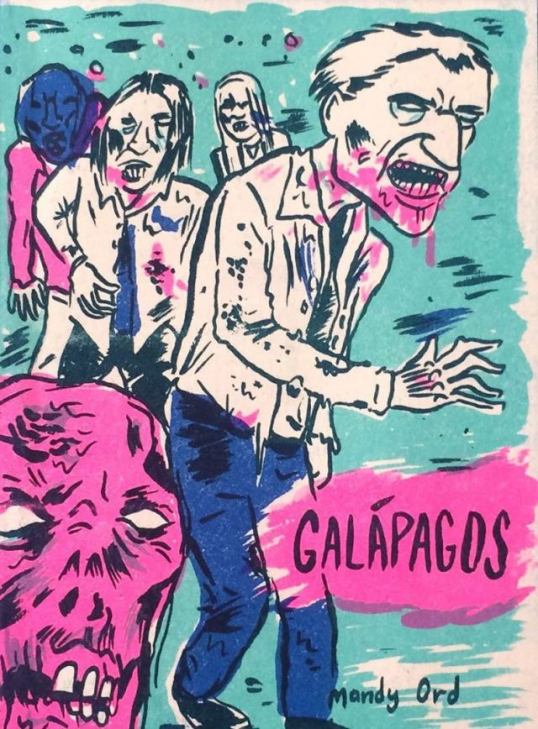
Ludicrously impressed as I was by a couple of Mandy Ord minis — Water and Cold — that I scored awhile back from John Porcellino’s Spit And A Half distro, I was delighted to explore more of this talented Australian cartoonist’s work, and to find that the first thing I opened up in the new (okay, newer, it was published by Glom Press in 2018) package of books that I got from her represented something of a step out of her usual autobio nest and into the realm of horror. Or slapstick horror. Or nature horror. Or maybe it’s all (or mostly) autobio after all? Or something.
Anyway, it’s called Galapagos, it’s 48 pages long in a riso-printed “chapbook” format, and it’s pretty weird and cool and off-kilter and great. And it has zombies. Right on the cover. And inside. And people like zombies. In fact, they…
View original post 544 more words
 After going away to college, Carl Dixon (25 year-old Michael Douglas, in his film debut) has returned to his rural hometown. Though Carl comes from a family with a long military tradition, he’s against the war in Vietnam and is considered to be a hippie by his family. As soon as his stern father (Arthur Kennedy) sees Carl, he sits him down in the kitchen and, after declaring that no one is going to mistake his son for a girl, cuts his hair. Meanwhile, Carl’s mother (Teresa Wright) stays out of the conflict between her husband and her son while Carl’s older brother (Peter Strauss) continues to resent Carl for the accident that injured his spinal cord and kept him from going off to war.
Carl has an announcement to make. Despite being against the war in Vietnam, he’s joined the army. He will soon be going overseas, where he’ll get a chance to be a hero and where he says he hopes to love the enemy. No one in his family can understand his decision, though they certainly spend a lot of time talking about it. Carl can’t explain it either, though he certainly keeps trying. Eventually, Carl ends up going for a swim with a local girl (Deborah Winters), smoking weed with a woman who lives in a cave with a mummified baby, and painting the family barn with a mural that’s supposed to explain it all.
Hail, Hero! is an extremely talky film that wants to say something about the war in Vietnam but it doesn’t seem to know what. The film’s too sincere in its confusion to be a disaster but it’s also too muddled to really be effective. Carl is opposed to the war but he drops out of college and enlists because it’s what his father would have wanted him to do but his father doesn’t seem to be impressed with the decision and Carl doesn’t seem to like his father to begin with so why volunteer for something that you find to be immoral? The film would have been effective if Carl had been drafted into the war and had to choose between reporting for duty or fleeing to Canada. But having him drop out of college and volunteer to serve makes it more difficult to sympathize with him when he talks about how opposed he is to the war.
If the film gets any attention today, it is probably because of Michael Douglas in the lead role. This was Douglas’s film debut. He was 25 when he made the film and he was already a dead ringer for his father. Unfortunately, he doesn’t give a very good performance. He’s miscast in the lead role. Carl Dixon is supposed to be insecure and conflicted. Insecure is not something that comes to mind when you think about Michael Douglas. Instead, Carl just comes across as being petulant and self-righteous. Hail, Hero! tries to say something about the war in Vietnam but Carl Dixon’s the wrong messenger.
 Through the Shattered Lens