Great Moments In Television History: Planet of the Apes The TV Series


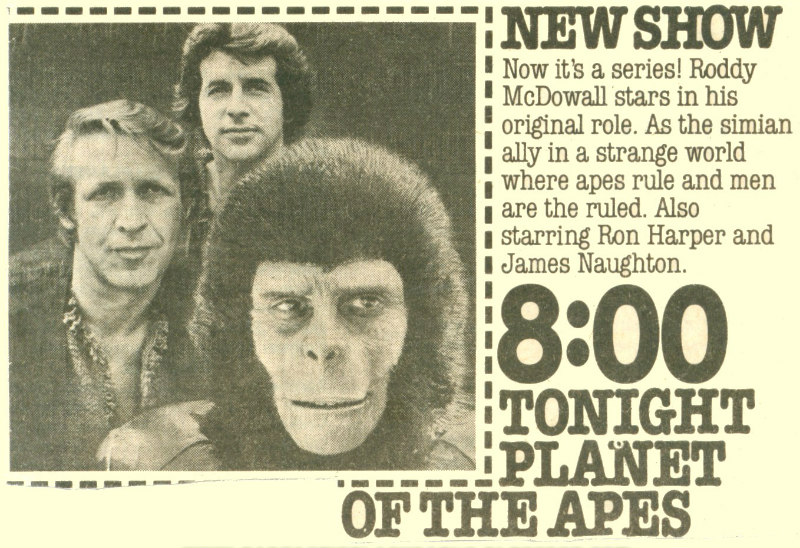
On September 13th, 1974, audiences that tuned into CBS saw the premiere of a new TV show with a familiar premise.

The episode opened with a spaceship crashing on an Earth-like planet.  One of the astronauts was killed.  Two of the astronauts — Alan Virdon (Ron Harper) and Peter Burke (James Naughton) — survived.  Virdon and Burke discovered that the planet was inhabited by humans who, despite it being the year 3085, were living in medieval villages.  The humans were kept in a state of serfdom by the Apes who ruled the planet.  The Apes spoke English and had formed their own society of militaristic gorillas and scientific-minded chimpanzees.  Looking through an old book, Virdon and Burke discovered that they had crash landed on Earth, far in the future!

You know the drill.  Planet of the Apes was based on the famous series of films, with the first pilot episode featuring Virdon and Burke discovering in less than an hour what took Charlton Heston a journey into the forbidden zone to figure out.  Because the humans had “blown it up,” the Earth was now ruled by Apes!

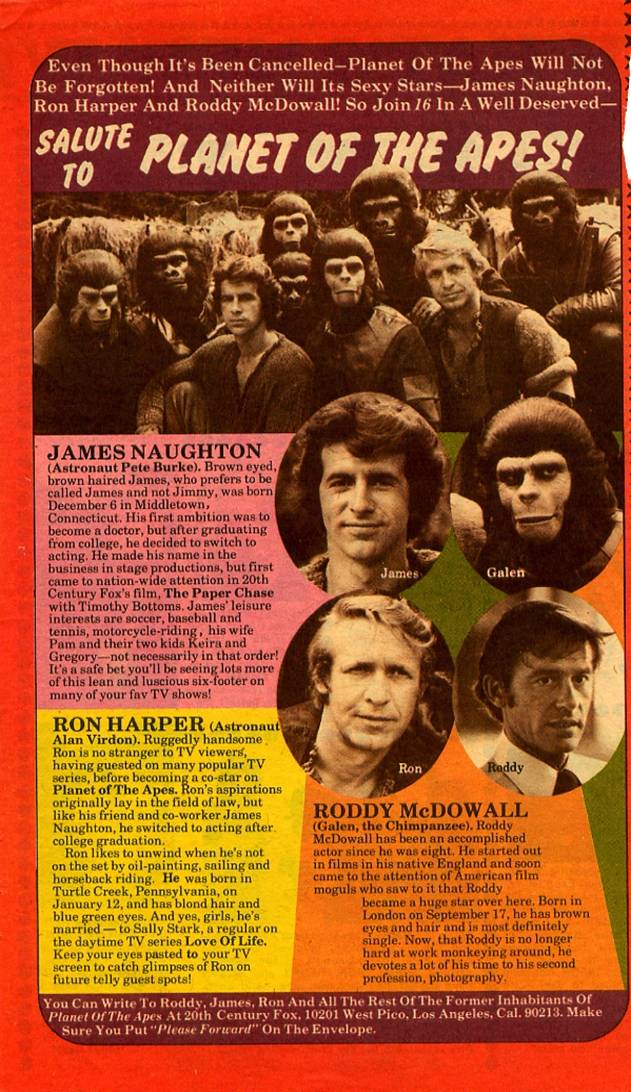
As fugitives from ape justice, Virdon and Burke spent the next fourteen episodes being pursued by the fanatical General Urko (Mark Lenard), who was determined to capture the two astronauts before they revealed that Apes had not always been the planet’s masters.  Traveling with Virdon and Burke was a sympathetic chimpanzee named Galen (Roddy McDowall).  Usually just one step ahead of Urko, Virdon, Burke, and Galen traveled from village to village, seeking a way to fix their spaceship so that they could escape the Planet of the Apes.
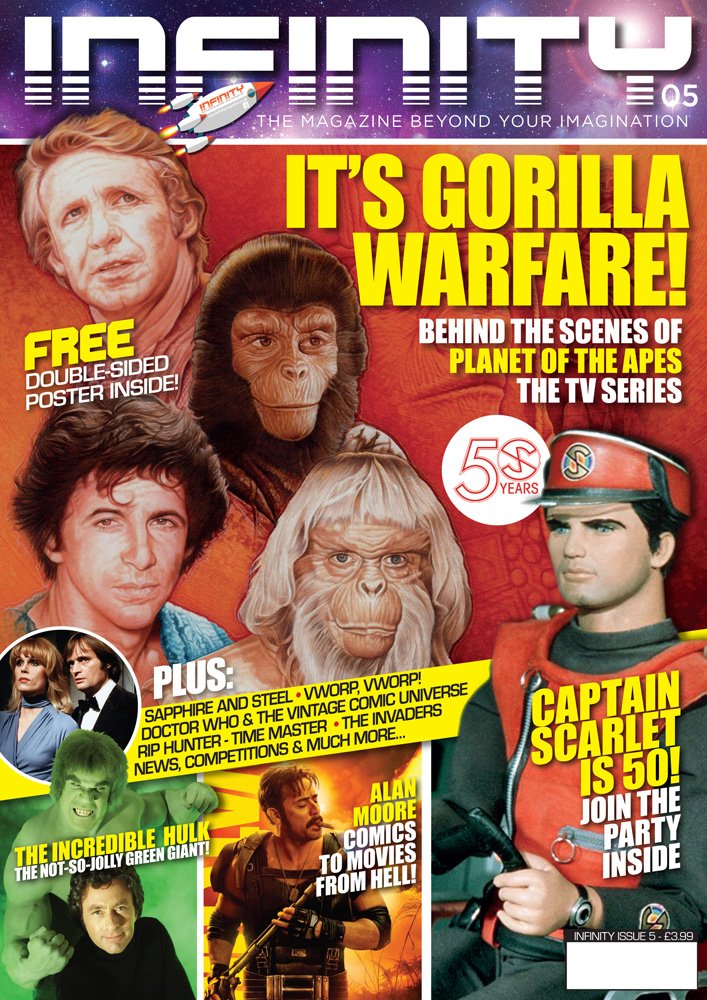
Planet of the Apes got off to a strong start with an exciting and concise first episode but the series quickly ran out of gas.  Because Virdon, Burke, and Galen had to flee to a new village at the end of every episode, the show was never able to devote much time to exploring the most intriguing thing about the original Planet of the Apes films, the culture of a world where humans were subservient to apes.  Because Virdon and Burke were largely interchangeable with little in the way of backstory or personality, the show very quickly ran out of a stories to tell.  It didn’t take long for Planet of the Apes to start repeating itself with multiple episodes in which Virdon or Burke got involved in local village drama before Urko showed up and forced them to flee again.

There were some good moments, though.  Probably the highlight of the series was the third episode of the series, The Trap.  In this episode, Virdon, Burke, Galen, and Urko all reach the ruins of San Francisco at the same time.  After an earthquake buries Burke and Urko in a subway tunnel, the two of them are forced to work together to survive.  Burke and Urko make an unexpectedly good team and Urko seems like he’s on the verge of a change of heart when he spots an old poster for the San Francisco zoo, one that features a caged gorilla being gawked at by humans.  Urko’s angry reaction to seeing the poster is well-acted by Mark Lenard and, for a few minutes, his obsession with capturing Virdon and Burke can be understood.  It wouldn’t last but, in that moment, Urko went from being just another villain to being a complex character with his own clearly defined motivations.
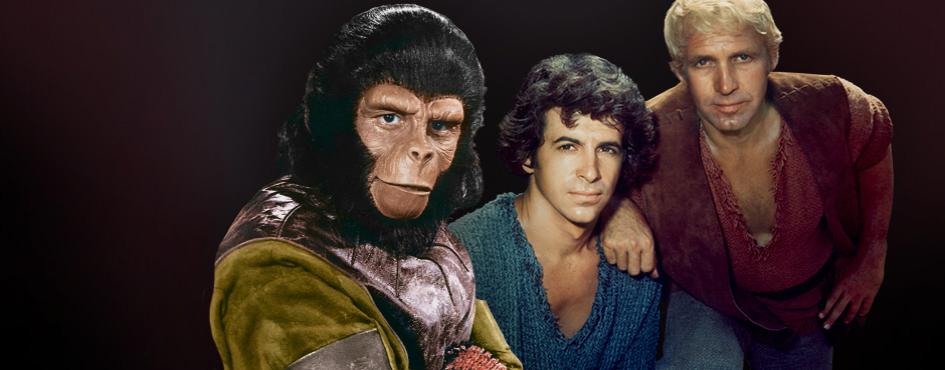
The show also benefited from Roddy McDowall, who, by this point, was an expert at acting while wearing chimpanzee makeup.  McDowall brought heart and humor to the role of Galen, even if he was too often treated like a servant by Burke and Virdon.  Whenever the two humans were scared to go out in public, they sent Galen off to gather information.  Galen did a good job but he still deserved better.

Finally, Planet of the Apes had one of the coolest opening title sequences of all time!  Take a look:

Though cancelled after only 14 episodes, Planet of the Apes The Television Series lives on.  Episodes can currently be seen on MeTV.
Horror Film Review: The Hunger (dir by Tony Scott)


“Bela Lugosi’s dead….” Peter Murphy sings at the start of 1983’s The Hunger and, in the case of this film, it’s as much of a challenge as a tribute.

Bela Lugosi and Dracula are gone, the film announces, and so is the old-fashioned vampire movie.  Here’s a new look at an old favorite….

Of course, seen today, The Hunger doesn’t seem new.  Since The Hunger‘s release, there’s been  a countless number of films in which vampires have been decadent and chic aristocrats, hanging out in dark nightclubs and looking at the world with ennui-stricken eyes.  By today’s standards, the stylish decadence of The Hunger can seem almost quaint.  Much like Paul Schrader’s remake of Cat People, The Hunger is such a film of the 80s that you half-expect someone to offer you a line coke while you’re watching it.  Also, like Cat People, it’s such a glorious tribute to excess that there’s no way you can’t watch it once it starts.  It’s hypnotic in its excess.

In The Hunger, our vampires are Miriam Blaylock (Catherine Deneuve) and her lover, John (David Bowie).  Miriam has been a vampire since at least the time of the ancient Egyptians.  Rather than sinking her fangs into the necks of her victims, Miriam uses an Ankh pendant to slit their throats.  John was once a cellist in 18th century France.  Now, they live in an expensive New York townhouse, where they teach classical music and occasionally murder anyone that they can convince to come up to see them.

When they first met, Miriam promised John that he would have eternal life but she didn’t promise him eternal youth.  Unfortunately, it takes 200 years for John to notice.  When he starts to rapidly age, he seeks out aging expert Dr. Sarah Roberts (Susan Sarandon) for help.  Though Dr. Roberts is originally dismissive of his claims, she is shocked to see John age several years in just an hour.

When an angry and desperate John kills the music student (Beth Ehlers) that Miriam was hoping to transform into her next lover, Miriam is forced to search elsewhere.  When Sarah shows up, searching for the man who aged years in an hour, Miriam feels that her search may be over.

As one might expect from a film directed by Tony Scott, The Hunger is an extremely stylish film, to the extent that the film’s story is often secondary to the way that Scott chooses to tell it.  The set design is so ornate and every scene is so precisely lit and shot and that, at times, the movie feels a bit like a commercial for vampirism.  It’s easy to imagine Britney Spears singing “Work Bitch” in the background of some of the scenes.  (“You want a hot body?  You want a Bugatti?  You Want a Maserati?  You better work vamp.”)  Throughout the film, New York glows like a neon wonderland while John and Miriam coolly look out over the world like 18th century French aristocrats who have no idea that they have a future date with the guillotine.  At times, it’s a film that becomes almost ludicrous in its celebration of grandeur and style.  One could imagine Jean Rollin telling the same story just as effectively while spending a lot less money.

And yet, it’s that very embrace of the over-the-top ludicrousness of it all that makes The Hunger a memorable film.  The film’s a tribute to excess, with an ending that falters precisely because it attempts to reject precisely what it’s spent the past hour and a half celebrating.  The Hunger doesn’t add up too much but its hypnotically stylish and well-acted by a cast who does their best to keep up with Tony Scott’s camera.


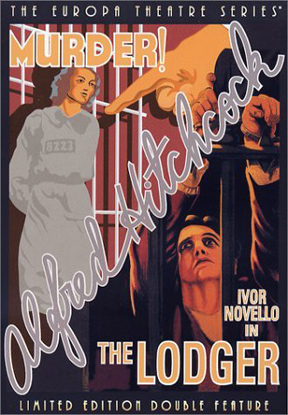
Horror on the Lens: The Lodger (dir by Alfred Hitchcock)


A serial killer known as “The Avenger” is murdering blonde women in London (which, once again, proves that its better to be a redhead).  And while nobody knows the identity of the Avenger, they do know that the enigmatic stranger  (Ivor Novello), who has just recently rented a room at boarding house, happens to fit his description.  They also know that the lodger’s landlord’s daughter happens to be a blonde…

Released in 1927, the silent The Lodger was Alfred Hitchcock’s third film but, according to the director, this was the first true “Hitchcock film.”  Certainly it shows that even at the start of his career, Hitchcock’s famous obsessions were already present — the stranger accused of a crime, the blonde victims, and the link between sex and violence.

Also of note, the credited assistant director — Alma Reville — would become Alma Hitchcock shortly before The Lodger was released.

Weekly Reading Round-Up : 10/13/2019 – 10/19/2019


Ryan C. (fourcolorapocalypse)'s avatarRyan C.'s Four Color Apocalypse

We have three first issues and one last issue to go over this week and so, in the spirit of taking last things first —

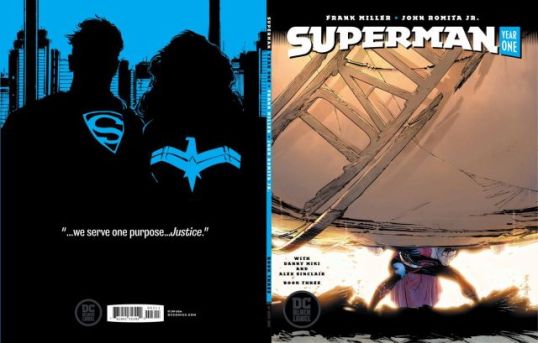
A mercy killing that arrives three issues too late, Frank Miller and John Romita Jr.’s Superman : Year One #3 exits the world the same way it came in — with no clear idea of its reason for being and no coherent plan to at least fool us into thinking it has one. Miller’s script changes narrators frequently but tone never, Romita’s art is up and down and seriously down when it’s down (a splash near the end of this one features arguably the worst Wonder Woman illustration I’ve ever seen in my life), and precisely why this non-canonical revisionist take on Superman’s origin even exists is, at this point, anyone’s guess. It doesn’t count for anything, it only plays around with surface-level details of…

View original post 770 more words

Is “Free Shit” Worth Anything?


Ryan C. (fourcolorapocalypse)'s avatarRyan C.'s Four Color Apocalypse

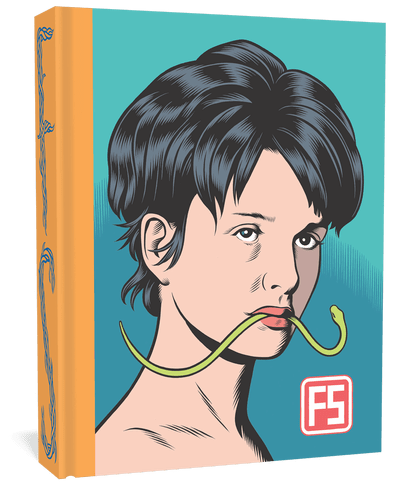
For nearly two decades, celebrated comics auteur Charles Burns has been occasionally self-publishing a “secret” ‘zine that he gives away to — I dunno, a select few people in his “inner circle,” I suppose is the best way to define it. Friends, fellow cartoonists, for all I know maybe even the occasional critic. Not that I’m one of them, mind you, but despite never landing a copy personally I’ve certainly heard tell about it — a “process ‘zine” of sorts, featuring everything from rough sketches to finished drawings, some of which make their way into Burns’ widely-released work, most of which don’t. It’s called Free Shit, and now the entirety of its contents (as far as I know, at any rate) have been made available to the unwashed masses via a nice little digest-sized hardback published by Fantagraphics.

On first flip-though — as well as subsequent ones — it…

View original post 679 more words