Lisa Reviews An Oscar Winner: Cimarron (dir by Wesley Ruggles)


(With the Oscars scheduled to be awarded on March 4th, I have decided to review at least one Oscar-nominated film a day.  These films could be nominees or they could be winners.  They could be from this year’s Oscars or they could be a previous year’s nominee!  We’ll see how things play out.  Today, I take a look at the 1931 best picture winner, Cimarron!)

“Be careful, Hank!  Alabaster may be a little dude but he’ll mess you up.”

“No offense … but he’s from Oklahoma.”

— King of the Hill Episode 5.13 “Ho Yeah”

Some best picture winners are better remembered than others.  Some, like The Godfather, are films that will be watched and rewatched until the end of time.  Others, like Crash, seems to be destined to be continually cited as proof that the Academy often picks the wrong movie.  And then you have other films that were apparently a big deal when they were first released but which, in the decades to follow, have fallen into obscurity.

1931’s Cimarron would appear to be a perfect example of the third type of best picture winner.

Based on a novel by Edna Ferber (who would later write another book, Giant, that would be adapted into an Oscar-nominated film), Cimarron is an epic about Oklahoma.  The film opens in 1889 with the Oklahoma land rush.  Settlers from all across America rush into Oklahoma, searching for a new beginning.  Among them is Yancey Cravat (Richard Dix) and his wife, Sabra (Irene Dunne).  Yancey is hoping to become a rancher but, upon arriving at the settlement of Osage, he discovers that the land he wanted has already been claimed by Dixie Lee (Estelle Taylor).

So, Yancey gives up on becoming a rancher.  Instead, he becomes a newspaper publisher and an occasional outlaw killer.  Soon, Yancey and Sabra are two of the most prominent citizens in Osage.  Under the guidance of Yancey, Osage goes from being a wild outpost to being a respectable community.  It’s not always easy, of course.  Criminals like The Kid (William Collier, Jr.) still prey on the weak.  As the town grows more respectable, some citizens try to force out people like Dixie Lee.  Struck by a combination of personal tragedy and wanderlust, Yancey occasionally leaves Osage but he always seems to return in time to make sure that people do the right thing.  When even his wife reveals that she’s prejudiced against Native Americans, Yancey writes a vehement editorial demanding that they be granted full American citizenship.

The film follows Sabra and Yancey all the way to the late 1920s.  Oklahoma becomes a state.  Sabra becomes a congresswoman.  Oil is discovered.  Throughout it all, Yancey remains a firm voice in support of always doing the right thing.  In fact, he’s such a firm voice that you actually start to get tired of listening to him.  Yancey may be a great man but he’s not a particularly interesting one.

By today’s standards, Cimarron is a painfully slow movie.  The opening land rush is handled well but once Yancey and Sabra settle down in Osage, the film becomes a bit of a chore to sit through.  Richard Dix is a dull lead and the old age makeup that’s put on Dix and Dunne towards the end of the movie is notably unconvincing.  Considering some of the other films that were eligible for Best Picture that year — The Front Page, The Public Enemy, Little Caesar, Frankenstein — Cimarron seems even more out-of-place as an Oscar winner.

And yet, back in 1931, it would appear the Cimarron was a really big deal.  Consider this:

Cimarron was not only well-reviewed but also a considerable box office success.

Cimarron was the first film to ever receive more than 6 Academy Award nominations.  (It received seven and won 3 — Picture, Screenplay, and Art Direction.)

Cimarron was the first film to be nominated in all of the Big Five categories (Picture, Actor, Actress, Director, and Screenplay).

Cimarron was the first film to be nominated in every category for which it was eligible.

Cimarron was the first RKO film to win Best Picture. The second and last RKO film to win would be The Best Years of Our Lives, a film that has held up considerably better than Cimarron.

Cimarron was the first Western to win Best Picture.  In fact, it would be 59 years before another western took the top award.

Though Cimarron may now be best known to those of us who watch TCM, it’s apparent that it was a pretty big deal when it was first released.  Though it seems pretty creaky by today’s standards, they loved it in 1931.

Music Video of the Day: Texas Forever by Kevin Fowler (2016, dir by ????)


Admittedly, I’m not really a big country music fan.  My musical tastes pretty much start with EDM and end with more EDM.  But you know what?

Today is Texas Independence State and I love my home state.  So, it just seems right that today’s music video of the day should Kevin Fowler’s Texas Forever!

Enjoy the beautiful Texas scenery!

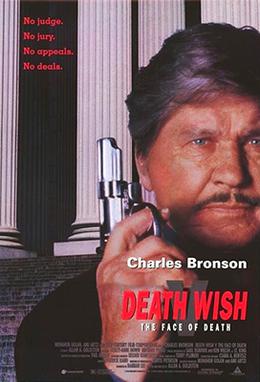
Bronson One Last Time: Death Wish V: The Face of Death (1994, directed by Allen Goldstein)


To quote Geoffrey Chaucer, “All good things must come to an end.”

Death Wish V: The Face of Death marked the end of the original Death Wish franchise, concluding the violent saga of Paul Kersey 20 years after it began.  It probably should have ended sooner.

After the box office failure of Death Wish IV and the subsequent bankruptcy of Cannon Films, future plans for the Death Wish franchise were put on hold.  After the collapse of Cannon, Menahem Golan started a new production company, 21st Century Film Corporation.  In 1993, needing a hit and seeing that the previous Death Wish films were still popular on video, Golan announced that Paul Kersey would finally return in Death Wish V: The Face of Death.  Charles Bronson also returned, though he was now 72 years old and in poor health.  Death Wish V would also mark the end of Bronson’s feature film career.  He would make appearances in a few television movies before subsequently retiring from acting.

Death Wish V finds Paul in the witness protection program.  His latest girlfriend, Olivia (Lesley-Anne Down), just happens to be the ex-wife of a psychotic mobster named Tommy O’Shea (Michael Parks).  Throughout the entire franchise, the Death Wish films argued that crime is so out of control that no one was safe and that Paul had no choice but to pick up a gun and shoot muggers.  But, judging from Death Wish V, Paul just seems to have incredibly bad luck.  What are the odds that a mild-mannered architect would lose his wife, his maid, his daughter, his best friend from the war, his next two girlfriends, and then end up dating the ex-wife of New York City’s craziest gangster?

The district attorney’s office wants Olivia to testify against her ex-husband so Tommy gets his henchman, the dandruff-prone Freddie Flakes (Robert Joy), to kill her.  Looks like it’s time for New York’s favorite vigilante to launch a one-man war against the Mafia!

The only problem is that New York’s favorite vigilante is too old to chase people down dark alleys and shoot them.  He has to get creative, which means using everything from poisoned cannoli to a vat of acid to take out his targets.  One gangster is killed by an exploding soccer ball!

With both Bronson and Lesley-Anne Down giving an indifferent performances, it is up to the supporting cast to keep the movie interesting.  Appearing here after his bravura turn as Jean Renault in Twin Peaks but before Robert Rodriguez and Quentin Tarantino introduced him to a whole new generation of filmgoers, Michael Parks is flamboyantly evil as Tommy O’Shea and injects the movie with what little life that it has.  Speaking of Twin Peaks alumni, Kenneth Welsh (who played Windom Earle in the last few episodes of season 2) plays this installment’s understanding police detective.  Saul Rubinek plays the district attorney who is willing to look the other way when it comes to killing gangsters.

Dull and cheap-looking, Death Wish V was a box office bomb and it brought the original franchise to a definite end.  Will the Eli Roth/Bruce Willis reboot of Death Wish also lead to a reboot of the franchise?  Time will tell!

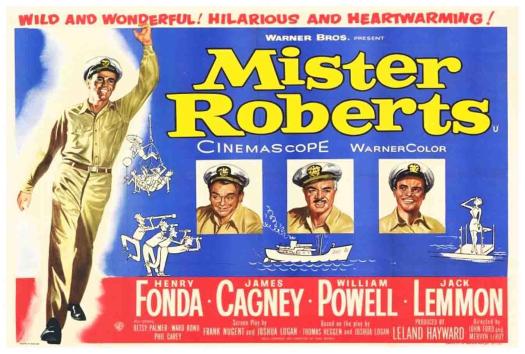
Navy Blue & Gold: MISTER ROBERTS (Warner Brothers 1955)


gary loggins's avatarcracked rear viewer

I grew up a “Navy brat”, often accompanying my dad to bases in Newport, RI. and Bethesda, MD. I’d hang out at the Enlisted Men’s Club he ran, watching Bugs Bunny and Road Runner cartoons with the sailors while dad did the books. I remember going aboard ship plenty of times, and saw one of my first movies with the crew on Family Night (the Cary Grant/Doris Day flick THAT TOUCH OF MINK). So naturally, I have a soft spot for nautical tales, and one of my favorites has always been MISTER ROBERTS.

The film marked Henry Fonda’s return to the screen after an eight year absence. Fonda had starred in the original Broadway production to great acclaim, and his performance is imbued with his own experiences during WWII. Douglas Roberts is a lieutenant (j.g.) assigned to the cargo ship Reluctant in the South Pacific, run by the vain…

View original post 733 more words

Music Video of the Day: We Ready (Dallas) by Moses Uvere


I’ll be honest.

The main reason why I like this video is because I recognize every location where it was filmed, from the DART Station to Reunion Tower to Forrest Lane to that stairs.  I think I even recognize the elevator.

Enjoy!

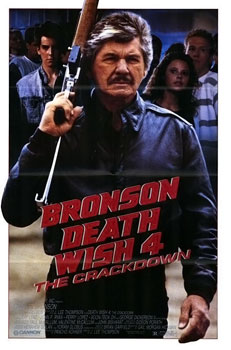
Bronson’s Rich: Death Wish 4: The Crackdown (1987, directed by J. Lee Thompson)


To quote The Main With No Name, “When a man’s got money in his pocket, he begins to appreciate peace.”

Two years have passed since Paul Kersey (Charles Bronson) last visited and cleaned up New York.  He is back in Los Angeles, the president of his own successful architectural firm.  Now a rich man, he has retired from killing criminals, though he still has dreams where he shoots muggers in parking garages.  Paul has a new girlfriend, journalist Karen Sheldon (Kay Lenz).  When Karen’s teenage daughter, Erica (Dana Barron), dies of a cocaine overdose, it’s time for Paul to get his gun out of storage and blow away a drug dealer.

Shortly after shooting that drug dealer, Paul finds a note on his front porch.  “I know who you are,” it reads.  Paul then gets a call from a mysterious man (John P. Ryan) who identifies himself as being a reclusive millionaire named Nathan White.  Nathan explains that his daughter also died of a cocaine overdose.  He wants to hire Paul to take out not just the drug dealers but also the men behind the dealers, the bosses.  Using his vast resources, Nathan has prepared a file on every major drug operation in Los Angeles.  He offers to share the information with Paul.

“I’ll need a few days to think about it,” Paul says but we all know he’s going to accept Nathan’s offer just as surely as we know that Nathan White has an ulterior motive that won’t be revealed until the movie’s final twenty minutes.

For the first time, Paul is no longer just targeting muggers and other street criminals.  This time, Paul is going after the guys in charge and trying to bring an end to drug trade once and for all.  (The idea that the best way to win the war on drugs was just to kill anyone involved in the drug trade was a very popular one in the late 80s.)  L.A.’s two major drug cartels are led by Ed Zacharias (Perry Lopez) and the Romero Brothers (Mike Moroff and Dan Ferro).  Along with their own activities, Paul and Young work the turn the two cartels against each other.

It’s not just the criminals that have changed in Death Wish 4.  Paul has changed, too.  Paul used to just shoot criminals and run away.  In Death Wish 4, he gets more creative.  He sneaks into Zacharias’s mansion and bugs the phone so that he can keep track of what’s going down.  When it comes time to kill a table full of drug dealers (one of whom is played by Danny Trejo), Paul doesn’t shoot them up.  Instead, he sends them a bottle of champagne that explodes when they open it.  By the end of the movie, Paul is blowing away the bad guys with a grenade launcher!  How many former conscientious objectors can brag about that?

The biggest difference between Death Wish 4 and the films that came before it is the absence of director Michael Winner.  Winner and Bronson had a falling out following Death Wish 3 and, as a result, Winner had little interest in returning to the franchise.  Instead, Winner was replaced by J. Lee Thompson, who had already directed Bronson in several other Cannon films.  As a result, Death Wish 4 is less “heavy” than the previous Death Wish films.  Whereas Winner’s direction often felt mean-spirited and exploitive, Thompson plays up the film’s sense of airy adventure.

Though it barely made a profit at the box office and has been dismissed by critics, Death Wish 4 is an enjoyable chapter in Paul’s story.  If you’re looking for mindless 80s mayhem, Death Wish 4 gets the job done with admirable efficiency.  It would have made a great ending for the franchise but Bronson would return to the role one last time.

Tomorrow: Death Wish V: The Face of Death!

‘Annihilation’ Review (dir. Alex Garland)


wewewewe.PNG

It has been quite some time since I last wrote a review. But sometimes a film hits the right notes and sits with you and the only way to shake it is by getting your thoughts out in writing. ’Annihilation’ was one of the first films in awhile to have that effect on me. I should preface this by saying that I’ve been waiting 3 years for its release ever since I read Jeff VanderMeer’s brilliant ‘Southern Reach’ trilogy. That it was going to be directed by Alex Garland only heightened that excitement. It is fitting that the last film I reviewed on this site was ‘Ex Machina’ – another Garland film that I loved and ended up being my favorite of that year. It might only be February but I can honestly say I could see ‘Annihilation’ taking that spot this year.

Alex Garland has stated that he read the first book of the ‘Southern Reach’ trilogy – from which the film gets its title – only once and then wrote the screenplay as if remembering a dream. To him it was a “dream like” book – one that would be hard to adapt outright. So he wrote the screenplay as if recalling a dream – attempting to capture the tone but also offering up his own interpretation of the story.  I think that you could say that this is also how I approached this review. I’ve only seen the film once and in writing this it  really was like trying to remember a dream. The film is so layered and so visceral of an experience that to discuss it without multiple viewings doesn’t quite do it justice, because like a dream you only remember what stood out, the parts that affected you the most and things might get overlooked. Those things might not be the same for everyone so my interpretation of it may not mirror what others have thought – it might also just seem like pseudo intellectual babel! But I’ll do my best.

tumblr_p4oj9i62Jw1rr1756o6_1280.png

It would be damn near impossible to describe the plot of the film in any great detail without spoiling it but I will do my best to set it up. The film stars Natalie Portman as Lena – an ex army soldier turned biology professor. When we first meet her she is still grieving her missing husband Kane (Oscar Isaac) who was also in the military. He was sent on a mission a year prior and there has been no word of his status since. That is until one evening when he turns up to their house, his memory hazy, his explanation of his disappearance unclear. Before long he begins to have seizures and Lena rushes him to the hospital only to be intercepted by the Southern Reach – a secret government agency – and taken to a secure location.

There they explain to Lena that years prior something seemingly extraterrestrial crashed into the coastline. In subsequent days and weeks after the crash a shimmering pearl and translucent bubble began to grow and expand covering miles of swampland. It doesn’t seem to ever stop expanding and its presence is being monitored and kept secret. Their fear is that if it continues to grow at its current pace, it’ll eventually end up engulfing populated areas. They have sent in multiple exploratory teams over the years, consisting of trained military forces – to discover what lies within but none have returned. The prevailing theory/rumor? Something either killed them or they went crazy and killed each other. Lena learns that her husband – now on life support and quickly fading – was a part of one of those missions and is the first member to ever return. Determined to find out what happened – and possibly save him – Lena volunteers to join four other women on the next expedition into what the organization calls the “Shimmer”.

tumblr_p4oj9i62Jw1rr1756o10_1280.png

From there what Garland creates is a cerebral – at times haunting – sci-fi masterpiece. To me ‘Annihilation’ works brilliantly as two things. First as a genre film in the vein of ‘The Thing’ and ‘Alien’. It is at times bone chillingly eerie with a persistent sense of unease and paranoia from start to finish – and it contains one scene with a bear that is one of the more frightening scenes I’ve seen in awhile. This side of it raises a lot of questions about genetics, bioengineering and the effects of outside forces on an ecosystem. You could take it as a climate change allegory where human interference has altered the environment and now it has turned on them.

Second – and more importantly –  it is a metaphysical examination of depression, self destruction – and in my eyes – renewal that has ties to Tarkovsky and Kubrick. It is a film about characters dealing with issues that hang over them like a dark cloud. Addiction, the loss of a child, self harm, cancer. Each and every one of them goes on this mission not just because they want to know what lies within the Shimmer – but also because the unknown is better than what they currently know. In an almost subconscious way – and for some very conscious  – the threat of death doesn’t scare them and it perhaps would be a release. Once inside they are faced with an ever increasing state of anxiety. They can’t trust their eyes or their thoughts. Eventually even their bodies turn on them. Are they even any longer in control? Will they ever escape or be able to go back to being who or what they were before entering? Or will they be consumed by the Shimmer – the dark cloud that hangs over them?

For Lena specifically, the deeper she goes the more the Shimmer takes effect, the weight of guilt and grief consuming her, until she nears a breaking point. By the film’s end she must effectively confront herself head one – and for many people with depression that “self” is their worst enemy as it is here. She can’t get away from it, at one point it is literally suffocating and crushing the more she fights. It isn’t until she stops fighting that she is able to overcome. But still the question lingers – even once we get through the darkest moments in our life – when we shed that grief, guilt, loss or sadness – are we still the same? Has the effects of those things, of the Shimmer, changed us forever for better or for worse? That I think it open to interpretation. For me I found the ending hopeful. There was a sense of renewal, or rebirth, in the same way as ‘2001’ and the Starchild or the Titan-esque Ryan Stone crawling out of the “primordial soup” in the end of ‘Gravity’.

tumblr_p4qcibM26L1s8esgpo9_1280

Production wise I’d say the film is a marvel. The CGI is used to great effect creating a dreamy, gorgeous and colorful landscape. Garland has mentioned that although the film is set in Florida they shot the film in the UK and made the sets look like swampland. It is a minor production detail that I found interesting and in a way one that helps in making the Shimmer feel more unnatural. The score is equal parts hypnotic and kinetic. The finale in particular had my skin crawling as the images on screen danced along with the pounding score.

The two biggest complaints I have heard about the film are the pacing and the narrative structure. Neither bothered me. The pace was at times slow – but it felt deliberate as if building towards something great – which very much paid off. There are quiet moments but all serving a purpose to either further the progression of the story and Lena’s arc – or to build a sense of unease. As far as the structure of the film – which consists of flashbacks and jumps between the past and present – it didn’t hinder the film in any way. And to be quite honest, given the feeling of the unknown, I enjoyed the slow revelation of Lena’s past along with the questions about Lena’s state of mind in the present that the structure produced. One must remember she is an unreliable narrator at that point – something that I think could be rewarded with multiple viewings

tumblr_owy7rkOIBc1v6bg8ho2_540.gif

I do highly recommend that everyone see this on the big screen- especially because love it or hate it, we need to support these sorts of films. The studio already gave up on ‘Annihilation’ before it was even released. It won’t hit theaters overseas and hasn’t even opened in a lot of theaters in the US which is a shame.

Ultimately for me ‘Annihilation ‘ was a film that was as earthly – almost cosmic – as it was intimate. It is a horror story about how we change the world around us and how it changes us – as well as a fascinating examination of depression, anxiety and overcoming self destruction. It is a divisive film for sure. It won’t click with everyone and many will outright hate it. Even those that love it might not walk away with the same impression as I did. But that to me is the sign of a truly great film – one that is subversive, layered and truly unafraid to take risks.

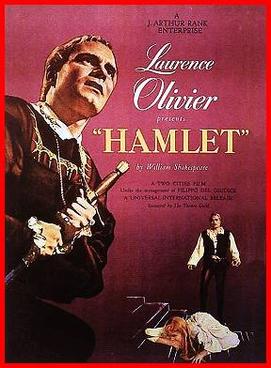
Lisa Reviews An Oscar Winner: Hamlet (dir by Laurence Olivier)


(With the Oscars scheduled to be awarded on March 4th, I have decided to review at least one Oscar-nominated film a day.  These films could be nominees or they could be winners.  They could be from this year’s Oscars or they could be a previous year’s nominee!  We’ll see how things play out.  Today, I take a look at the 1948 best picture winner, Hamlet!)

Hamlet is a film of firsts.

It was the first British production to win the Oscar for Best Picture.  In winning, it beat out three American films (Johnny Belinda, The Snake Pit, and The Treasure of the Sierra Madre) and one other British film (The Red Shoes).

It was also the first adaptation of Shakespeare to win Best Picture.  Of course, it wasn’t the first Shakespeare adaptation to be nominated.  That honor would go to 1935’s A Midsummer Night’s Dream.  Adaptations of Romeo and Juliet would be nominated in 1936, 1961, and 1968.  Henry V (which, like Hamlet, was directed by and starred Laurence Olivier) was a 1946 nominee.  Then there was 1953’s Julius Caesar.  The Dresser featured scenes from Shakespeare.  Shakespeare in Love imagined the circumstances behind the writing of Romeo and Juliet.  However, Hamlet was the first to win.

It also remains the only traditional Shakespearean adaptation to win.  West Side Story updated Romeo and Juliet while Shakespeare in Love … well, let’s just not get into it.

It was the first Best Picture winner to be directed by the man starring in the movie.  Laurence Olivier was nominated for both Best Director and Best Actor.  He lost the directing Oscar to John Huston but he won for his performance as Hamlet.  In winning, he became the first actor to direct himself to an Oscar.

Finally, Hamlet was the first of 24 films to feature both Peter Cushing and Christopher Lee!  In fact, this was Lee’s film debut.  Now, before anyone gets too excited, I should point out that Cushing and Lee don’t actually interact.  In fact, Lee doesn’t even speak in the film.  He appears in the background as a Spear Carrier and it’s pretty much impossible to spot him.  He has no dialogue and wasn’t even listed in the final credits.  From what I’ve read, I don’t think Lee and Cushing even knew each other at the time and, when they later met, they were surprised to learn that they had both appeared in the film.  For his part, Cushing plays Osiric, the courtier who everyone remembers because he had such a cool name.

It’s always fun to play “what if.”  Rosencrantz and Guildenstern do not appear in Olivier’s adaptation of the play.  To modern audiences, that might seem strange but, really, that’s just because we’re all familiar with the two characters from Tom Stoppard’s Rosencrantz and Guildenstern Are Dead.  When Olivier filmed Hamlet, he excised portions of the play in the interest of time.  (Hamlet uncut runs over four hours.  Olivier’s version clocks in at nearly three.)  Rosencrantz, Guildenstern, Fortinbras, and the second gravedigger are all dropped from Olivier’s version and, to be honest, none of them are particularly missed.

And yet … as I watched Hamlet, I found myself wondering what would have happened if Olivier had kept Rosencrantz and Guildenstern around and had cast Cushing and Lee in those roles.  It probably wouldn’t have happened, of course.  Cushing maybe but Lee was a total unknown at the time.  Still, how amazing would that have been?

As for the actual film, Olivier’s Hamlet turned out to be far more cinematic than I was anticipating.  Olivier’s camera snakes through the darkened hallways of Elsinore Castle while Olivier’s Hamlet veers between self-righteous fury and apparent madness as he seeks revenge on his Uncle Claudius (Basil Sydney).  As Hamlet grows more obsessed with death and vengeance, the castle seems to grow darker and the hallways even more maze-like, as if the castle’s changing shape to conform with the turmoil in Hamlet’s mind.  Among the cast, Jean Simmons is poignantly fragile as Ophelia while Eileen Herlie is the perfect Gertrude, despite being 12 years younger than the actor playing her son.  Olivier gives a wonderfully physical performance as Hamlet, killing Polonious with a demented gleam in his eye and literally leaping towards his uncle at the end of the film.

If you’re one of those people who thinks that Shakespeare is boring … well, Olivier’s Hamlet probably won’t change your mind.  One thing I’ve noticed about the “Shakespeare is boring” crowd is that nothing can change their minds.  But, for the rest of us, Olivier’s Hamlet is an exciting adaptation of Shakespeare’s more difficult play.

You won’t miss Rosencrantz and Guildenstern at all.  And seriously, Fortinbras who?