Lisa already shared this week’s big trailer, the one for Barry Jenkins’sIf Beale Street Could Talk. Here’s the best of the rest:
Starring Chloe Sevigny and Kristen Stewart, Lizzie is revisionist take on the infamous Lizzie Borden murder trial. Lizzie received some attention at Sundance this year and is set to be released into theaters on September 14th.
The Puppet Master and his puppets are back in the red band trailer for Puppet Master: The Littlest Reich . Keep an eye out for them on August 17th!
Josh Groban is The Good Cop, in this upcoming series from Netflix. Based on an acclaimed Israeli series, The Good Cop drops on September 21st.
And finally, Maniac. Dropping the same day as The Good Cop, Maniac is described as being “a dark 10-episode comedy based on the 2014 Norwegian series about a guy who lives a fantasy life in his dreams but in reality is locked up at an institution.” Directed by True Detective‘s Cary Fukunaga, Maniac reunites Superbad co-stars, Jonah Hill and Emma Stone.
I did some actual research and I discovered that two years ago, on this date, Valerie selected Whitesnake’s Here I Go Again for the music video of the day. That was a perfect choice because that video is the first thing that most people think of when they hear the name “Tawny Kitaen.” The song may have been called Here I Go Again and the band may have been Whitesnake but the video will always be known as “The Tawny Kitaen video.”
Today’s music video of the day is the other Tawny Kitaen video.
I like to think of this video as being a direct sequel to Here I Go Again. David Coverdale has asked Tawny to stop dancing on his car because he’s worried that she’ll dent the hood and Tawny’s finally walking out on him. Good for her! She packs up her suitcase and she leaves. Meanwhile, David Coverdale leans against a wall and thinks about Tawny dancing while wearing the same white dress she was wearing when she walked out on him.
He’s upset to have lost her and, when you see screenshots like this, you can’t blame him:
One of the reasons why the Tawny Kitaen videos were so popular was because they suggested you could come across as being a total douche and still end up with a girlfriend as hot as Tawny Kitaen. Seeing her walking out at the start of this video should have been a warning to every man watching. It takes more than just soulful looks at the camera to keep Tawny Kitaen happy.
At the end of the video, Coverdale and Tawny are reunited. It had been a while since I last watched this video so I had forgotten that Coverdale wins her back by jumping out from around a corner, grabbing her, and throwing her down on the hood of a car. That wouldn’t play today.
Speaking of coming across as being a total douche, Coverdale fired all of the other members of Whitensake after recording this song so, with the exception of Coverdale, no one that played on the original recording is actually present in the video. As for Tawny and Coverdale, they separated for real in 1991.
It’s been quite a ride so far these past couple of weeks, but it’s not over yet —
In Elijah Brubaker’s Reich #9 , the FDA makes its move against our increasingly-ostracized (partly by choice, partly due to circumstance) protagonist, who’s also getting noticeably more prickly in his dotage (not that he was ever exactly pleasant company), and as it happens it turns out that it was someone very close to him who ended up selling him out to the feds. These intrigues pass by unbeknownst to Willy, though, as he’s far too busy “discovering” the negative counterpart to Orgone, which he calls D.O.R., an acronym for Dark Orgone Energy. The cover for this issue is one of my favorites, the detail is just amazing and I love the lime green — a bold color choice that really draws in the eye. The interior art is solid as ever, and…
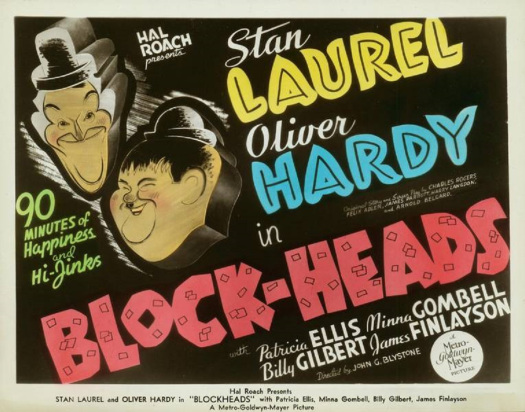
Hal Roach first teamed Stan Laurel with Oliver Hardy in 1927, beginning a long and prosperous screen comedy collaboration. The pair became the movie’s most beloved, and funniest, screen team, a point that’s hard to argue against after a recent rewatching of BLOCKHEADS and SAPS AT SEA, two films that each clock in at less than an hour, but pack more laughs than many longer, larger budgeted films of the era – or any era, for that matter!
In BLOCKHEADS, L&H are soldiers during WWI, and Stan is ordered to stand guard in the trench until the troop returns from battle. Twenty years later, he’s still there! Found by a pilot he shoots down, Stan is taken to an Old Soldiers’ Home, when Ollie (once again a henpecked husband) spots his picture in the newspaper. Ollie rushes to see his old pal, and finds him sitting in a wheelchair with…
I recorded Cheerleader Nightmare off of Lifetime on July 29th, 2018.
According to the imdb, Cheerleader Nightmare was originally titled Teen Drone Stalker. Lifetime often changes the title of the movies that it acquires so I guess it’s not a shock that Teen Drone Stalker became Cheerleader Nightmare. And I guess I can understand the reasoning behind the title change. Teen Drone Stalker is a bit of an unwieldy title while Cheerleader Nightmare rolls right off the tongue. Add to that, as a title, Cheerleader Nightmare promises both cheerleaders and nightmares, which has been a successful Lifetime formula in the past.
That said, Teen Drone Stalker is actually a far more accurate title. Don’t get me wrong. There are cheerleaders in this film and one of them does get murdered. So, it’s not as if the new title is deceptive or anything. But, in the end, it’s the teen drone stalkers who are far more important to the story than the dead cheerleaders.
(Add to that, Teen Drone Stalker is a great name for a band. I’d probably call them TDS for short, however.)
Anyway, the story centers around Sophie (Taylor Murphy), who is her high school’s official photographer. She and her friend Mickey (Johnny Vistocky) use a drone to capture exciting action shots of the school’s football team and the cheerleaders. Sophia has a complicated history with cheerleading. On the one hand, her mother (Melissa Ponzio) is the cheerleading coach and never makes a secret of the fact that she wishes Sophie was on the team. On the other hand, Sophie wants to find her own identity and maintain her independence. Meanwhile, Sophie’s former best friend, Leah (Mia Stallard) is the head cheerleader and Sophie’s boyfriend, Tyler (Jeremy Shada), is on the football team. You would think that Sophie’s mother would be happy that Sophie’s dating a football player but, instead, she’s concerned because Tyler used to be a juvenile delinquent.
Got all that?
Good, because things are about to get complicated.
While using Mickey’s drone to spy on a party being given at the football coach’s house, Sophie catches Tyler making out with Leah! Then, someone murders Leah! Was it Tyler? Was it one of the other cheerleaders? Was it Mickey, who seems to have issues with popular students? Or …. could it have been Sophie!? Seriously, Sophie seems to have a lot of unresolved issues towards cheerleaders.
I’ll be honest. I spent the first 45 minutes or so convinced that Sophie would be revealed to be the murderer. I had it all worked out in my mind. I was convinced that Sophie suffered from blackouts, during which time she became a murderous named Sofia. Was I right? Was I wrong? I guess you’ll have to watch the film to find out.
That said, I did relate to the character of Sophie. When I was in high school, I was frequently told that I should I be a cheerleader but I never tried out because my sister was a cheerleader and I was all like, “I have to have my own identity!” Looking back, it seems like kind of a silly thing to worry about but, at the time, it was like my declaration of principles. Needless to say, I made my sister watch Cheerleader Nightmare with me so that I could get her opinion. Erin says that it was an okay movie but she also pointed out that, if the cheerleaders had done a better job, everyone would have been too full of school spirit to commit any murders. I have to agree with her on that.
Cheerleader Nightmare got off to a good start but it lost its way about halfway through. I did enjoy counting up all of the red herrings that the film introduced before revealing the identity of the killer but there’s only so much you can really do with a red herring. In the end, the identity of the murderer was not a big shock and it was hard not to feel that the murder would have been solved a lot earlier if Sophie and her mom had just stayed out of everyone’s way. Unfortunately, Cheerleader Nightmare was no The Cheerleader Murders.
Today’s music video of the day is for a song that always makes me nostalgic and, for reasons I’ll explain further down, sad. When I was growing up, I used to regularly spend my summers visiting family in the UK. For most of the 90s, you couldn’t go anywhere in Europe without coming across Stakka Bo’s Here We Go playing somewhere and whenever I hear it, I’m reminded of those brilliant summers.
Stakka Bo’s real name is Bo Johan Renck. Music was largely a side project for him. He is best known as a highly respected director. Not only has he directed music videos for Madonna, Beyonce, New Order, Lana del Rey, and David Bowie but he’s also directed episodes of Breaking Bad and The Walking Dead. In 2008, Renck directed his first feature film, Downloading Nancy.
He also directed the video for Here We Go. Undoubtedly a part of the video’s popularity was due to the girl in the video, model Alma Jansson-Eklund. (Though Alma did a great job lip synching, the vocals were provided by Nana Hedin.) Tragically, Alma struggled with depression and committed suicide ten years after the release of Away We Go. While I was doing research for this post, I came across two blog posts written by people who knew Alma: this one and this one. (The second post is written in Swedish.) No one can know the exact events that led to her death but it’s impossible to watch this video and not mourn for a talent the left this world far too early.
A bunch of strangers sit in a bar. On the television, a blandly handsome anchorman delivers the news. He talks about foreign wars. He talks about domestic conflicts. One of the bar patrons asks the bartender to turn off the news. Who cares about all of that stuff? All he wants to do is have a nice drink before heading home to his cattle ranch. Can’t he just do that in peace? The bartender agrees and turns off the news…
That’s a scene that gets played out a lot nowadays. No one wants to watch the news. Certainly not me. I guess we all know that we should because it’s important to know what’s going on in the world and blah blah blah. But seriously, people who spend all of their time watching the news inevitably seem to end up going insane and ruining twitter. I’ve got no interest in doing that.
Here’s the thing, though. Invasion U.S.A. may open with a contemporary scene but it’s hardly a contemporary movie. Instead, it was made in 1952 and it serves as proof that we’re not the first Americans to get sick of watching the news and that our current crop of politically minded filmmakers are not the first to try to change our mind with heavy-handed propaganda.
Everyone at the bar has a complaint. The Arizona rancher resents having to pay high taxes just to support the defense department. The Chicago industrialist is upset that the government wants to use his factories to build weapons. Congressman Haroway (Wade Crosby) is a drunk. Socialite Carla Sanford (Peggie Castle) worked in a factory during World War II but she no longer follows the news. Newscaster Vince Potter (Gerald Mohr) is a cynic. Tim the Bartender (Tom Kennedy) is too busy selling cocktails to worry about the communists.
Only the mysterious Mr. Ohman (Dan O’Herlihy, who would later play Conal Cochran in Halloween III) seems to care. While holding a conspicuously oversized brandy glass, Mr. Ohman explains that he’s a forecaster. What’s a forecaster? A forecaster is … oh wait! There’s no time to explain it because the communists have invaded!
Everyone sits in the bar and watches as the news reports on the invasion of the U.S.A. (Everyone except for Mr. Ohman, who has mysteriously vanished.) In the tradition of all low-budget B-movies, the invasion is represented through stock footage. Lots and lots of stock footage. Planes drop bombs. Soldiers run out of a barracks. Cities burn.
When everyone leaves the bar, they discover that America has been crippled by people like them, people who never thought it would happen. Some of our bar patrons die heroically. (Not Tim the Bartender, though. He’s still making dumb jokes and cleaning beer mugs when the bomb drops.) Some of our patrons regret that they didn’t care enough when it would have actually made a difference. The industrialist discovers that, because he wouldn’t let the government take over his factory, he now has to take orders from sniveling little Marxist. The rancher discovers that taxis get really crowded when everyone’s fleeing the Russians. And others discover that better dead than red isn’t just a catch phrase. It’s a way of life.
Of course, there’s a twist ending. You’ll guess it as soon as you see Mr. Ohman with that brandy glass…
Invasion U.S.A. is often cited as one of the worst films ever made but I have to admit that I absolutely love it. I have a soft spot for heavy-handed, over the top propaganda films and they don’t get more heavy-handed than Invasion, U.S.A. There’s not a subtle moment to be found in the entire film. You have to love any film that features character authoritatively declaring that something will never happen mere moments before it happens. Best of all, you’ve got Dan O’Herlihy, playing Mr. Ohman with just a hint of a knowing smile, as if he’s as amused as we are.
Politically, this film is a mixed bag for me. The film argues that you should trust the government and basically, shut up and follow orders. I’m a libertarian so, as you can imagine, that’s not really my thing. At the same time, the villains were all communists and most of the communists that I’ve met in my life have been pretty obnoxious so I enjoyed the part of the film that advocated blowing them up. The only thing this film hates more than communists is indifference.
In the end, Invasion U.S.A. is a real time capsule of a film, one that shows how different things were in the past while also reminding us that times haven’t changed that much. Though the film’s politics may be pure 1952, its paranoia and its condemnation of apathy feels very contemporary.
(For the record, apathy is underrated.)
Seen today, what makes Invasion U.S.A. memorable is its mix of sincerity, paranoia, and Dan O’Herlihy. Unless the communists at YouTube take down the video, you can watch it below!
Yesterday was James Baldwin’s birthday so it was also the perfect day to release the trailer for Barry Jenkins’s upcoming film, If Beale Street Could Talk. If Beale Street Could Talk is based on a 1974 novel by Baldwin.
Jenkins, of course, previously directed Moonlight, which won the Oscar for best picture. Interestingly enough, Moonlight defeated Damien Chazelle’s La La Land for the prize. This year, not only is Jenkins back but so is Chazelle with First Man.
So, could we be looking at another Jenkins vs Chazelle Oscar race? Maybe. Who knows, to be honest? That is what a lot of people are hoping for, of course. Jenkins vs. Chazelle: The Rematch!
Check out the trailer and try to guess what will happen for yourself!






 Through the Shattered Lens