Lisa Reviews An Oscar Nominee: Kitty Foyle (dir by Sam Wood)


(With the Oscars scheduled to be awarded on March 4th, I have decided to review at least one Oscar-nominated film a day.  These films could be nominees or they could be winners.  They could be from this year’s Oscars or they could be a previous year’s nominee!  We’ll see how things play out.  Today, I take a look at the 1940 best picture nominee, Kitty Foyle!)

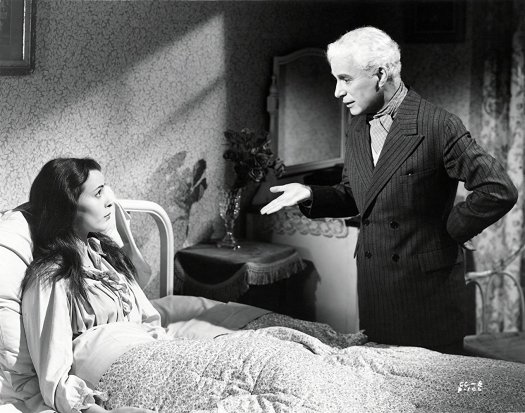
Kitty Foyle opens with a title card informing us that, before the film can tell us the story of Kitty Foyle, it is necessary to remind audiences of how Kitty Foyle — and so many other “white-collar” girls — arrived in their present (which is to say, 1940) situation.

We then get a strange little montage of life at the turn of the century.  A woman meets a man.  The man marries the woman.  They’re a happily married couple.  The man goes to work.  The woman takes care of the house.  The man comes home.  Everything’s perfect.  Then suddenly — oh my God, it’s the suffragettes!  They’re holding rallies!  They’re parading around with signs!  They’re demanding the right to vote!  They’re demanding prohibition!  Suddenly, women are expected to be independent and to have careers…

Which leads us to New York in the 1940s, where a bunch of women in an elevator discuss how difficult it is to find a good husband, especially now that they’re all busy working as salespeople and administrative assistants.  Apparently, this is the price that we all had to pay for the right to vote.  On the one hand, the women who cast their first votes in 1920 elected Warren G. Harding and spared the nation from another four years of Wilsonianism.  On the other hand, it’s now difficult to find a husband.

Fortunately, Kitty Foyle (Ginger Rogers) doesn’t have that problem.  She has a wonderful suitor, a man who has just asked her to marry him.  His name is Dr. Mark Eisen (James Craig).  He may not have a lot of money but he’s handsome, he’s considerate, and he spends all of his time providing medical care to the poor and indigent.  When Mark asks her to marry him, he asks her if she’s sure that she’s over that man from Philadelphia.  Kitty says that she is.

Of course, as soon as Kitty returns home, that man from Philadelphia is waiting for her.  Wyn Stafford VI (Dennis Morgan) is handsome, rich, and totally in love with Kitty.  Of course, he’s also married to his second wife.  (The identity of his first wife isn’t revealed until late in the film but you’ll be able to guess who she is.)  Wyn is in love with Kitty and he wants her to run away to South America with him.  Kitty says yes.

However, as Kitty is packing to leave, her reflection in the mirror starts talking to her.  It turns out to be a pretty judgmental mirror.  The rest of the film is an extended flashback, showing us how Kitty was raised by her single father (Ernest Cossart), how she first moved to New York, and how she met and fell in love with both Wyn and Mark.  Will she run off and live in wealthy sin with Wyn?  Or will she stay in New York and marry honest, hard-working Mark?

The main problem with Kitty Foyle is that there really isn’t much suspense as far as the film’s central dilemma is concerned.   Mark is a living saint who heals children.  Wyn is a heel who wants to abandon his wife and son so that he and Kitty can live in South America.  About the only thing that Wyn has going for him is that he’s got a better sense of humor than Mark but, in 1940, that wasn’t necessarily considered to be a good thing.  There’s really no question about who Kitty is going to pick and, in fact, the answer is so obvious that you kind of lose respect for Kitty when it takes her so long to make up her mind.  It’s like being told you could either marry a Nobel Peace Prize winner or someone who embezzles from a charity and replying, “Let me think about it…”

Of course, the main focus of Kitty Foyle is less on the love triangle and more on Ginger Rogers’s performance as Kitty.  This was one of Ginger’s first films after she stopped making films with Fred Astaire and it’s obvious that the film’s main theme was that Ginger Rogers could do more than just dance with Fred.  In Kitty Foyle, she gets to make jokes.  She gets to cry.  She gets to fall in love.  She gets a huge dramatic scene in which she mourns the loss of a child.  She does it all and yes, she does it very well.  Still, Kitty Foyle is never as much fun as the movies that she made with Fred.

Ginger Rogers won the Oscar for Best Actress for her performance in Kitty Foyle, beating out Katharine Hepburn, Joan Fontaine, Bette Davis, and Martha Scott.  Kitty Foyle was nominated for Best Picture but lost to Hitchcock’s Rebecca.

Film Review: The Cutting Edge: Fire and Ice (dir by Stephen Herek)


Right now, like all good people, I am totally obsessed with the Winter Olympics.  The skiing, the figure skating, the bobsleds, the luge .. even that silly speed skating thing that they do.  For the next two weeks, I’ll be loving all of it.  Last night, I not only watched the Opening Ceremonies but I also watched two movies about figure skating: Ice Princess and The Cutting Edge: Fire and Ice!

The Cutting Edge: Fire and Ice tells the story of Alex Delgado (Francia Raisa) and James McKinsey (Brendan Fehr).  Alex used to be a champion figure skater until her partner (both on the ice and in romance) retired.  This led to Alex not only retiring but also breaking up with the man who she thought was the love of her life.  Now, she spends her time teaching children how to skate and not going out on dates.  Her mother worried about Alex.  Not only is she throwing away her dreams but she also appears to be destined to be alone forever.

James was a champion speed skater, until his cocky attitude and his anger management programs got the better of him.  After punching out one of his teammates, James is suspended from speed skating.  However, James and his agent have a plan!  What if James becomes a … figure skater!?  He just needs a good coach and a great partner.  The coach is easy to find.  Zhen Zheng (Zhenhu Han) may not speak English but he loves a challenge and he travels with a translator (Russell Yuen).

But what about finding the right partner?  No one wants to skate with James, especially since everyone assumes that this is all just a publicity stunt until he’s able to get his suspension overturned.  When Alex is first approached about coming out of retirement and partnering up with James, she refuses.  But then, she realizes that, even if she doesn’t like James, she loves to skate and she loves to compete…

It’s not a match made in heaven, for all of the usual PG-13 reasons.  James is cocky and, instead of getting rest before practice, he goes to a party and then he has to skate with a hangover.  Alex is determined and disciplined but she’s afraid to take chances.  When James comes up with a spectacular move, Alex isn’t sure if they should do it or not.  At first, it doesn’t seem like they’ll ever be able to work together but then, things change.  Alex discovers that James loves children.  James discovers that Alex can shoot pool.  Add to that,  they’re the best-looking people in the movie and that means that they’re destined to get together.

The Cutting Edge: Fire and Ice is a film that is all about montages.  The film proves that you can learn anything in a montage.  As long as the right music is playing in the background, you can go from being awkward on the ice to a championship skater in one montage.  You can go from hating each other to being madly in love in montage.  Any questions you may have about the film’s plot can be answered by a montage.

This movie was made for Freeform, back when it was still ABC Family.  So, don’t expect anything too edgy.  At one point, James and Alex play strip poker and are both in their underwear when Alex’s mom drops by.  That’s about as wild as things get.  That said, this was a sweet if predictable movie.  Brendan Fehr and Francia Raisa had a lot of chemistry and the skating scenes were fun to watch.  I liked the fact that Alex refused to put up with anyone’s crap and the film celebrated her for that.  (Just compare this film to the original The Cutting Edge.)  I also liked the fact that James and Alex initially bonded during a bar fight.  Seriously, some of the greatest relationships in the world began with a brawl in a bar.

The Cutting Edge: Fire and Ice was a sweet, little movie.  It won’t change the world but I enjoyed it.

A Mardi Gras Film Review: Mardi Gras For The Devil (dir by David A. Prior)


A maniac is holding New Orleans hostage!  He’s committed a series of savage, Satanically-influenced homicides and the police cannot seem to even slow him down!  The entire city is terrified!

Well, actually … New Orleans doesn’t seem to be scared at all.  In fact, no one in this movie seems to be all that disturbed by all of the brutal murders that are happening around them.  Some people would probably say that’s because this film takes place during Mardi Gras and everyone’s too drunk to notice.  Why worry about being murdered when all you have to do to get a bunch of cheap beads is flash a boob?  Add to that, this is New Orleans.  New Orleans is a very forgiving city.

Anyway, regardless of whether people care or not, there’s a Satanic murderer prowling through the city.  Who is the killer?  Could he possibly be that guy who always dresses in black, who has a perfectly trimmed beard, and who is always throwing back his head and laughing before doing something evil?  The guy’s name is Bishop and he’s played by everyone’s favorite Canadian character actor, Michael Ironside.  As far as Michael Ironside villains are concerned, Bishop is pretty frightening though he’s nowhere near as a frightening as Darryl Revok.  I mean, he does a lot of evil stuff but he doesn’t actually make anyone’s head explode.

Detective Mike Turner (Robert Davi) is obsessed with stopping Bishop.  Unfortunately, Detective Turner doesn’t appear to be very good at his job.  I mean, everyone he knows he keeps getting seriously injured.  His first partner dies.  His second partner gets run over by a bus.  His ex-wife (Lesley-Anne Down) ends up trapped in a pool.  His girlfriend (Lydie Denier) ends up getting tied up in a barn while a time bomb ticks down across from her.  Fortunately, a few of these people do manage to survive.  Turner may not be a very good cop but, fortunately, Bishop isn’t that good of a serial killer.

It soon becomes apparent that Bishop has a motive for all of his murders, one that goes beyond the usual serial killer weirdness.  It turns out that Bishop’s murders are actually sacrifices and he has given his soul to Satan.  Giving your soul to the devil apparently gives you the power to do whatever the script needs you to do at any particular moment in the movie.  Fortunately, it also leaves you with a weakness that can be exploited whenever the movie decides to come to an end.

Am I saying that Mardi Gras For the Devil makes no sense?  I most definitely am!  However, that’s actually the film’s charm.  The film was made with so little concern for continuity and narrative logic that it plays out like a fever dream.  The cast is surprisingly good for a film like this, which means that everyone delivers the strangest of lines with the utmost sincerity.  Michael Ironside plays his role without a hint of subtlety, which is exactly the type of bad guy that a film like this requires.  Meanwhile, Robert Davi brings a weary cynicism to his role.  You can just hear him thinking, “Satanic serial killers?  I’m too old for this shit.”  Combine that with a fiery ending that doesn’t even try to make sense and you have a movie that, perhaps through no intention of the film’s director, manages to create and sustain a very surreal atmosphere.  The film may not be any good but it’s hard to look away from.

Though the film takes place at Mardi Gras and was released, in some countries, as both Mardi Gras For The Devil and Mardi Gras Nightmare, it actually has very little do with Mardi Gras.  The opening scenes were shot during a Mardi Gras parade but that’s about it.  The film was also released under the title Night Trap, which is a woefully generic title.  You can find the movie on YouTube.

Tears of A Clown: Charles Chaplin’s LIMELIGHT (United Artists 1952)


gary loggins's avatarcracked rear viewer

Charlie Chaplin was unquestionably one of the true geniuses of cinema. His iconic character ‘The Little Tramp’ has been entertaining audiences for over 100 years, enchanting both children and adults alike with his winning blend of humor and pathos. But by 1952, the 63-year-old Chaplin had been buffeted about by charges of immoral behavior and the taint of Communism during the HUAC years, and filmgoers were turning against him. It is at this juncture in his life and career he choose to make LIMELIGHT, a personal, reflective piece on the fickleness of fame, mortality, despair, and most prominently, hope. It could be considered Chaplin’s valedictory message to the medium he helped establish, even though there would be two more films yet to come.

“The story of a ballerina and a clown…” It’s 1914 London, and the once-great Music Hall clown Calvero arrives home from a drunken bender. Fumbling with the…

View original post 818 more words

RIP, Johann Johannsson


We have some sad news to report: the Icelandic composer Johann Johannsson has passed away at the age of 48.  Johannsson was probably best known for his Oscar-nominated work with director Denis Villeneuve and the score he composed for The Theory of Everything.  Most recently, he worked as a sound and music consultant for mother!

My favorite Johansson score was Sicario:

Johann Johannsson, RIP


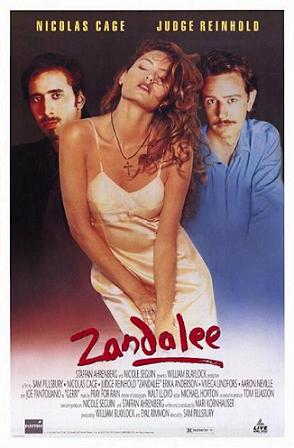
Scenes That I Love: Celebrate Mardi Gras Weekend With Nicolas Cage and Judge Reinhold in Zandalee!


I’m pretty sure that I’ve shared this scene before but, since it’s Mardi Gras weekend, it feels like a good time to share it again!

In this scene from the 1991 New Orleans-set melodrama, Zandalee, Judge Reinhold and Nicolas Cage share a dance on a bayou dock.  Reinhold knows that Cage has been sleeping with his wife.  Cage knows that Reinhold knows.  So, they decided to have an impromptu dance-off.

It sounds like a good to idea to me and, with everyone flooding into Louisiana this weekend, it seems like a good pick for today’s scene that I love!

#Dance!

Film Review: Ice Princess (dir by Tim Fywell)


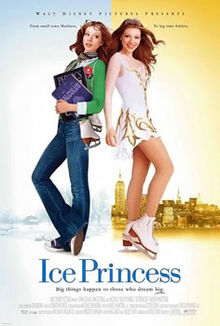
In the 2005 Disney film, Ice Princess, Michelle Trachtenberg plays Casey Carlyle.

Casey is a brilliant high school student with a potentially wonderful future.  At least that’s what her mother, Joan (Joan Cusack), has decided.  As far as Joan is concerned, Casey’s destiny is to go to Harvard, become an award-winning physicist, and serve as an inspiration for young women everywhere.  When Joan looks out of her kitchen window and sees that Casey is skating on a nearby frozen pond, she doesn’t praise her daughter’s athleticism.  Instead, Joan taps on the window and holds up a text book.  It’s time to study!

If Casey’s going to go to Harvard, she’s going to need to win a scholarship.  And Harvard doesn’t just give out scholarships to anyone!  I mean, I sent them a note asking for money a few years ago and I still haven’t heard back from them.  So, Casey decides to prove that she’s Harvard-worthy by filming a bunch of ice skaters and showing how she can use physics to make their routines even more impressive.  Or something like that…

(Look, I’ll just be honest.  Science was always my worst subject in school.  Quite frankly, I don’t have the attention span necessary for it and I kind of like the idea of not knowing how the universe works.  I love the mystery of it all.  I realize that Neil deGrasse Tyson would probably be disappointed in me but, honestly, I know more about movies than he ever will.  So, I figure it all evens out.)

For her experiment, Casey tries to watch and film some other skaters, just to discover that the parents of ice skaters are insane.  Not only are they convinced that Casey is some sort of spy who has been sent by a rival skater but they also put their children under a tremendous amount of pressure.  They expect their kids to be champions and, even more importantly, to land the type of endorsement deals that go with being champions.  Casey, on the other hand, just wants to skate.

When Tina Harwood (Kim Cattrall), a former Olympic skater, agrees to teach Casey how to skate, she is shocked to discover that Casey is a natural on the ice.  Casey not only befriends Tina’s daughter, Gen (Hayden Panettiere), but she is also soon competing in regional competitions.  However, Casey’s mother still doesn’t know what Casey is actually doing and Tina soon becomes paranoid that Casey will outshine Gen.

So, what happens?

Does Joan discover that Casey is more into skating than science?

Does Casey win her scholarship to Harvard or does she give it up so she can pursue her dreams?

Does Tina try to sabotage Casey?

Does Gen encourage Casey to follow her dreams?

And, most importantly, does Casey win the heart of the guy driving the Zamboni?

You probably already know the answer to all these questions.  I mean, this is a Disney movie.  It was rated G and, after a somewhat unsuccessful run at the box office, it found a second life on the Family Channel.  Ice Princess is not exactly a revolutionary film.  It doesn’t set out to rewrite the rules of sports film genre.  Instead, it’s content to be a likable crowd-pleaser.  Michelle Trachtenberg and Hayden Panettiere were both perfectly cast as the unlikely friends and their relationships with their respective mothers feel authentic and true.  More importantly, the film features enough real-life ice skaters to lend verisimilitude to the competition scenes.

Right now, like all good people, I am insanely enthusiastic about the Winter Olympics.  (For the record, I’m hoping that Team Ireland and Team Italy takes everything.)  That’s one reason why I watched Ice Princess.  While no one in the movie actually goes to the Olympics, it’s still a figure skating movie and I imagine that, if there had been a sequel, Casey would have been skating at the Winter Games.

Ice Princess is an entertaining and thoroughly light-weight film.  There aren’t any surprises but you don’t really watch a movie like this to be surprised.  In an uncertain world, there’s a definite comfort to be found in movies that are content to simply be likable and entertaining.

My advice is to watch Ice Princess as a double feature with I, Tonya.

(This trailer is Italian but you’ll get the general idea…)

Music Video Of The Day: Louisiana Blue (2012, dir by Steven Boyle)


It’s Mardi Gras weekend so I’m going to guess right now that people are flooding into Louisiana.

I’ve always loved Louisiana.  My family lived in Shreveport for nearly two years, from December of ’96 to May of ’98.  It was the last state that we lived in before returning to Texas and it’s a place that I’ve visited a few times since.  (Shreveport, I might add, also celebrates Mardi Gras.  It’s just that it tends to be a little bit more sedate in Shreveport than in New Orleans.)  Louisiana is a state that is full of atmosphere and eccentric historical oddities.  If you ever think your political leaders are crazy, do a google search on “Edwin Edwards” or “Earl Long.”  If you ever think there’s never been a stranger moment in history than now, read T. Harry Williams’s biography of Huey Long.

Anyway, today’s music video of the day is all about Louisiana.  Radney Foster’s Louisiana Blue has a nice mellow mood to it.  Consider it to be the calm before the storm.

Enjoy!