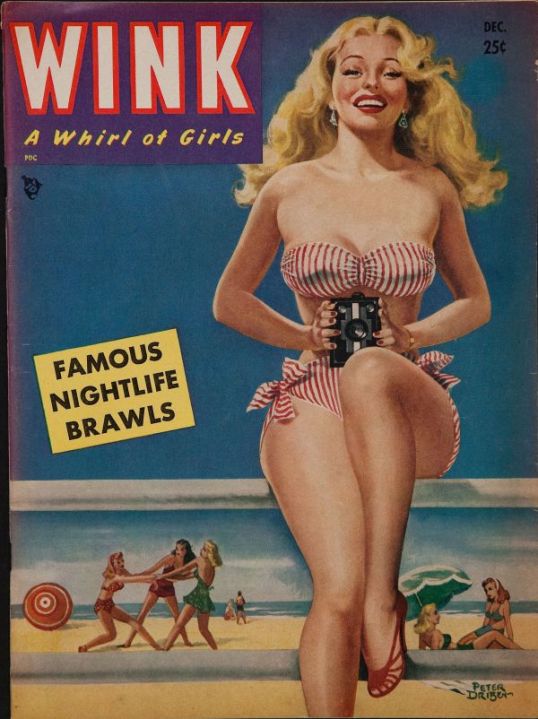
by Peter Driben
by Peter Driben
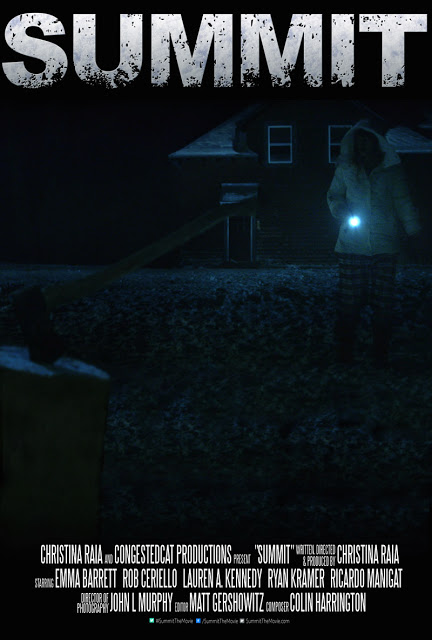
To the extent that any “micro-budget” production that is destined to be seen by only a few thousand people (if that) can be said to have generated something of a “buzz” around it, writer/director Christina Raia’s 2015 debut feature Summit seems to have done precisely that.
Fair enough, it’s not a flick you’re going to be hearing about everywhere or anything — but everywhere this sort of thing is discussed? Sure, there’s been some largely positive chatter there, and so when I noticed that it was available for streaming while browsing the horror selections on Amazon Prime the other night, I was sufficiently intrigued enough to give it a go. Funded via a (successful) Kickstarter campaign at the tail end of 2012, the set-up for this one sounds like fairly standard-issue stuff — five friends headed to a ski lodge for a weekend of partying find themselves royally fucked by…
View original post 698 more words
I’m terrible with anniversaries or other things I should be aware of to make tie-in posts for. That’s why I missed the 50th anniversary of Sgt. Pepper’s Lonely Hearts Club Band. I’m sure everyone posted the music video for Strawberry Fields Forever yesterday. So let’s go with something else Beatles related.
Back in 1982–or 1981 according to mvdbase–a short film was made starring Ringo Starr that is an extended music video for the songs Private Property, Sure To Fall, and Attention. From what I’ve read, this earned Lol Creme and Kevin Godley a nomination for a Palme d’Or at the Cannes Film Festival for Best Short Film. Also from what I’ve read, it not only has Ringo in it, but Paul, Linda, and Barbara Bach.
I know I’ve said on numerous occasions that when something crosses the into A Hard Day’s Night territory then I don’t include it in one of these posts, but I’m making an exception here. Besides, it’s only about 10 minutes long. It’s not like the ABC film Mantrap (1983). That is over 50 minutes long.
I’m guessing this is Barbara Bach. I’m not really sure. I have no idea where Linda is in this.
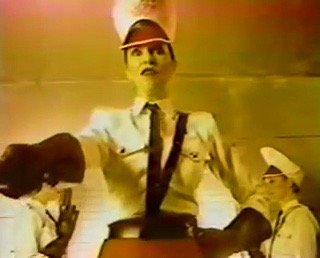
I do know that this is definitely Paul.

The gist is that the audience travels with Ringo as he goes through a bunch of references to prison movies like The Great Escape (1963). As we go along we see Ringo try to escape in different ways. He has to shine Ilsa: She-Wolf of the SS’ boots. He has a delusion that he is in the Old West where Paul may have also played the following cowboy:

I’m quite sure it’s him. I’m just not 100% sure.
Eventually Ringo McClane…
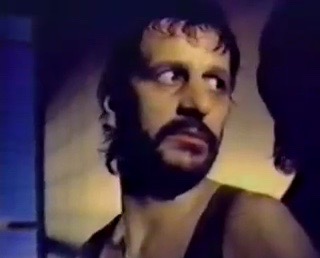
comes across what he thinks is going to be an exit, but it just takes him back to the cooler again.
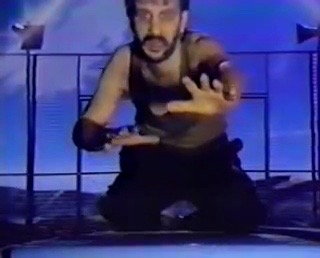




Seeing as this came out in 1982, that would make this year the 35th anniversary of The Cooler. I found it to be enjoyable. It’s a nice little piece of post-Beatles work that I have to imagine has all but fallen into obscurity.
We can do one better than just that though. Since it is 2017, that means it’s also the 30th anniversary of when Ringo did commercials for Sun Country Classic Wine Cooler.
Ringo and a polar bear. I love it. I would have enjoyed it more if it were the polar bear played by Vincent Price, but I still enjoy these.
Enjoy!
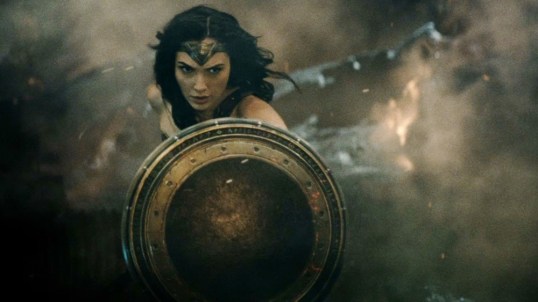
Wonder Woman is awesome!
I spent a while trying to think of the best way to begin this review. There’s a lot to be said about Wonder Woman, as both a film and as a character. Over the next few weeks, we’re going to be flooded with think pieces. Is Wonder Woman too feminist or not feminist enough? Does Wonder Woman herald a new direction for the DC Expanded Universe or is it destined to just be an anomaly among the ruins of crap like Man of Steel and Suicide Squad? Does it announce the arrival of new star? Is Wonder Woman pro-war or a plea for peace? Does Wonder Woman live up to the rapturous early reviews or is it destined to suffer the same fate as the initially acclaimed, later-reviled Ghostbusters reboot?
Those are all legitimate questions. They’re all worthy of debate and discussion. And I look forward to reading everyone’s thoughts on blah blah blah blah….
Yes, Wonder Woman is empowering, both as a film and as a character. It’s amazing to think that, with all the super hero adaptations that have come out over the past ten years, Wonder Woman is the first one to center around a female super hero.
Yes, Wonder Woman does finally prove that DC Expanded Universe can produce a good film, though I do have to say that two of the best things about Wonder Woman is that it had very little to do with any of the other DCEU films and it felt more like an MCU film. With the period setting (the film takes place during World War I) and it’s weary view of the wars that men fight, Wonder Woman has far more in common with the first Captain America film than it does with Man of Steel.
Yes, Gal Gadot is going to be a huge star and her performance here suggests that she has range beyond action films and comic book melodramas.
Yes, Wonder Woman is a plea for peace but it’s a sincere and honest plea and one that does not ignore the realities of human nature.
And, finally, yes, Wonder Woman deserves those good reviews and I believe it will stand the test of time.

When all is said and done, what really matters is that Wonder Woman is freaking awesome! The teaming of director Patty Jenkins and star Gal Gadot has resulted in one of the most entertaining and exciting comic book movies of recent times. Usually, I resent it when an audience breaks into applause at the end of a movie, largely because it makes me feel as if I’m being pressured to make a snap judgment about a movie’s worth before I’ve had time to give it proper thought. However, this time, when the applause broke out at the Alamo Drafthouse, I happily joined in.
I could be wrong about this but I don’t think Wonder Woman is ever actually called “Wonder Woman” at any point during the film. If she was, I missed it and I’m sure someone will correct me in the comments. Instead, she is referred to by her proper name, Diana. When the film opens (after the obligatory modern-day prologue), Diana is a child living on the island of Themyscira, the home of the legendary Amazons. Diana is the only child among the Amazons. The daughter of Queen Hippolyta (Connie Nielsen), Diana dreams of becoming a warrior but her mother refuses to allow it. When Diana is trained, it’s in secret by her aunt, General Antiope (Robin Wright). At one point, Antiope tells Diana that if she’s going to be warrior, she’s going to have to be prepared to fight for everything. No victory, Antiope tells her, will ever come easily. I nodded at that line and I’m sure every other woman in the audience did so as well. We understood what Antiope was saying.
In 1918, for the first time in centuries, a man reaches the island. His name is Steve Trevor (Chris Pine) and he’s an American spy. No sooner does Steve’s plane crash on the beach then a boat full of Germans arrive. After a genuinely exciting battle (perhaps the first exciting action scene to appear in any of the DCEU films), Steve reveals that the world is at war. Suspecting that it is the influence of Ares, the god of war, that is causing people to kill one another, Diana defies her mother’s orders and leaves the island with Steve. Steve’s goal is to keep the Germans from developing and deploying a lethal gas. Diana, meanwhile, plans to track down and kill Ares.
While Steve is convinced that, as a result of human nature, wars are inevitable, Diana is resolute in her belief that all the evil in the world can be linked to Ares. Their conflicting world views give Wonder Woman far more emotional depth and intellectual resonance than any of the other films that have, so far, been a part of the DC Expanded Universe. By refusing to indulge in portentous hypermasculinity, it avoids becoming a pretentious slog like Man of Steel or Batman v Superman. By refusing to treat war, death, and violence as a joke, it avoids falling into the soulless trap that imprisoned Suicide Squad. When Diana runs and leaps into battle, she’s not just fighting for good against evil. She’s fighting for the soul of humanity.
Some of the action scenes in Wonder Woman are nothing less than amazing. The scene where Diana crosses the aptly named “No-Man’s Land” is destined to be remembered as a classic moment in comic book cinema. I don’t want to spoil too much of the film but I will say that you’ll also never forget the way that Diana takes out a German sniper. It’s an amazing moment, one that is matched by the film’s final battle. Again, I don’t want to spoil anything so I’ll just say that the film’s finale brought tears to my eyes.
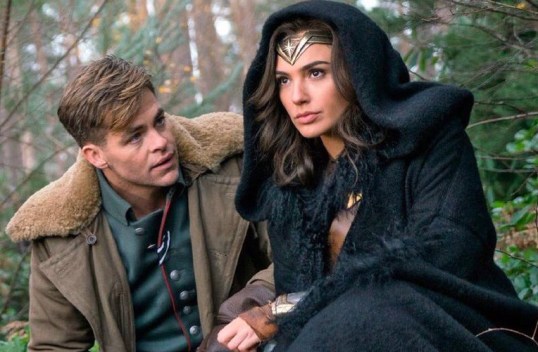
After providing Batman v Superman with its only good moments, Gal Gadot finally gets the film that she deserves and she gives an amazing performance. As played by Gadot, Diana is confident but never arrogant, occasionally naive but never foolish. She’s a fighter, one who refuses to surrender even when the rest of the world tells her to go home. (There’s a rather interesting throw-away line, in which Steven’s secretary says that she’s looking forward to getting to vote in her first election. Wonder Woman is saving a world that wouldn’t even allow her a voice in selecting the man who are constantly putting it in danger.) Gal Gadot gives a charismatic and star-making performance.
Also giving a good performance — perhaps a career best if you take Hell or High Water out of the equation — is Chris Pine. When Pine first appears, he seems to be doing a riff on his too-perfect Prince Charming performance in Into the Woods. But, as the film progresses, Pine brings unexpected depth to this role. Special mention should also be made of David Thewlis, who may not have a huge role but who makes the most of his limited screen time.
But, with all that in mind, the most important thing that I can tell you about Wonder Woman is that the film is an absolute blast, a fast-paced and exciting action film that is complimented by strong performances and an unexpectedly poignant subtext.
It’s empowering.
It’s entertaining.
It’s worthy of the applause that filled the Alamo Drafthouse.
In short, it’s absolutely awesome.
See it this weekend.

(Now, Marvel, where’s that Black Widow movie that y’all better be developing?)
 Following the events of The Incredible Hulk and with the world convinced that he is dead, Dr. David Banner (Bill Bixby) is hitchhiking his way across California, hoping to reach a hospital where research is being done on the effects of gamma radiation. When he stops off in an orange grove, he spots a young, crippled woman named Julie (Laurie Prange). When Julie faints, David carries her back to her mansion. It turns out that, after the mysterious death of her father, Julie stands to inherit millions. David suspects that her doctor (played by William Daniels) may be poisoning her and he gets a job working on the grounds of her mansion. At first, David thinks that his biggest problem is going to be the head groundskeeper (Gerald McRaney), who is jealous of David’s relationship with Julie. But, actually, it’s Julie’s stepmother (Dorothy Tristan) that David has to watch out for. When David tries to protect Julie and a bitter hermit (John McLiam) from the stepmother’s evil plans, he soon finds himself being pursued through the swampland by both men with guns and tabloid journalist Jack McGee (Jack Colvin). They are all making David Banner angry and they’re about to discover that they wouldn’t like David Banner when he’s angry.
This was the second pilot for The Incredible Hulk. It aired a week after the first pilot and, like that one, it was also given a theatrical release in Europe. While the first movie established David Banner’s backstory and explained why he transformed into the Hulk whenever he bumped his head on a door frame or twisted his ankle, A Death in The Family is more typical of the series that would follow. Like every subsequent episode, A Death In The Family opens with David Banner finding an odd job and ended with him walking down the road with his thumb stuck out. In between, Banner helps a special guest star.
Watching the second pilot, it’s easy to see why CBS took a chance on The Incredible Hulk even though, at the time, comic book adaptations were considered to be a risk. Both Bill Bixby and Lou Ferrigno really throw themselves into playing Banner and his alter ego and the show takes the idea seriously.
There’s nothing special about the pilot’s story. The stepmother and the doctor are obviously guilty from the start. But the plot (and the 90 minute running time) does allow for four appearances by the Hulk. David Banner even gets attacked by a grizzly bear, which brings the Hulk right out. David Banner always had the worst luck with wild animals and barbed wire. The Hulk, though, just throws the grizzly bear over into the next pond. The bear is not harmed. The Hulk may have been angry but he was never really dangerous.
Finally, for the record, Death In the Family featured the first of many aliases that David Banner would assume over the next four years. This time, he’s David Benton.

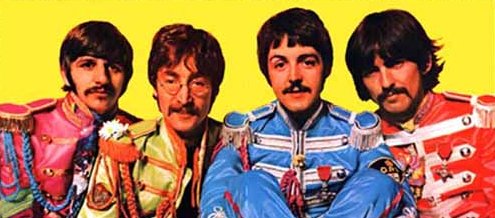
June 2, 1967. The beginning of the so-called “Summer of Love”. The underground hippie culture was grooving toward the mainstream. And those four loveable mop tops, The Beatles , released their eighth album, “Sgt. Pepper’s Lonely Hearts Club Band”, on America’s shores, ushering in the concept of “concept albums” that still reverberates in music today. The Fab Four were Fab no more, but genuine artists, with a little help from their friend, producer George Martin.
The Beatles had stopped touring the previous year, tired of the grind and the hysterical screaming that drowned their music out. They had done some experimenting in the studio with “Revolver”, their previous LP, but “Sgt. Pepper” was something different. Martin and the band members, influenced by both The Beach Boys’ “Pet Sounds” and Frank Zappa’s “Freak Out!” discs, utilized then cutting edge studio techniques (tape loops, sound effects, varying speeds) and instrumentations (sitar, harmonium, Mellotron, tubular bells, even…
View original post 651 more words
by Paul Rader
I really wish I hadn’t done Shooting Shark by Blue Öyster Cult last year because it would be a perfect fit here. Also, Burnin’ For You by Blue Öyster Cult just doesn’t cut it for me as far as being part of this surreal videos collection. That’s not going to keep me from referencing it in a later post. I just wish I had an excuse to do it before I do the post on the video where I’ll reference it.
Anyhow, let’s take a look at this one brought to us by the same director as Burnin’ For You. He also brought us Buck Dharma having a guitar battle with a Mad Max type character in Born To Rock.
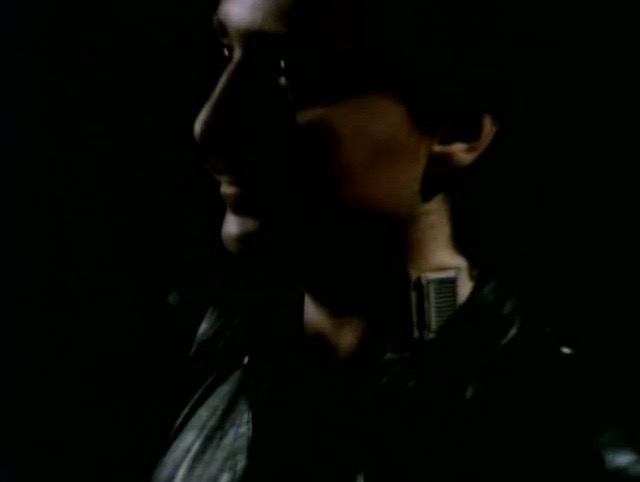
The video starts off with some guy playing a game while we can hear aliens inviting people to join them. The guy has a chip on his neck for…reasons.
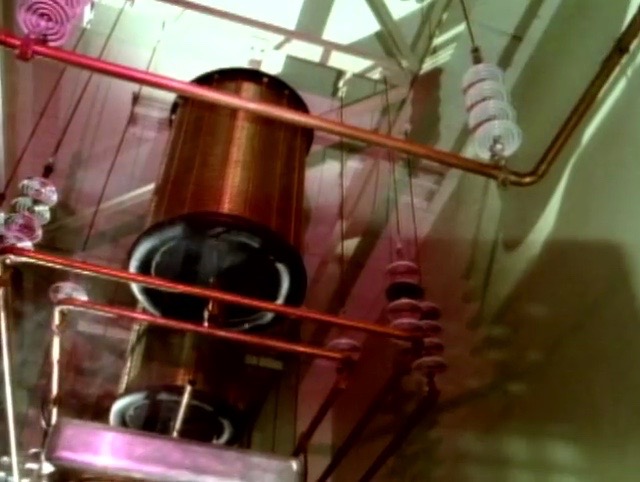
Meanwhile, in a giant circuitboard.
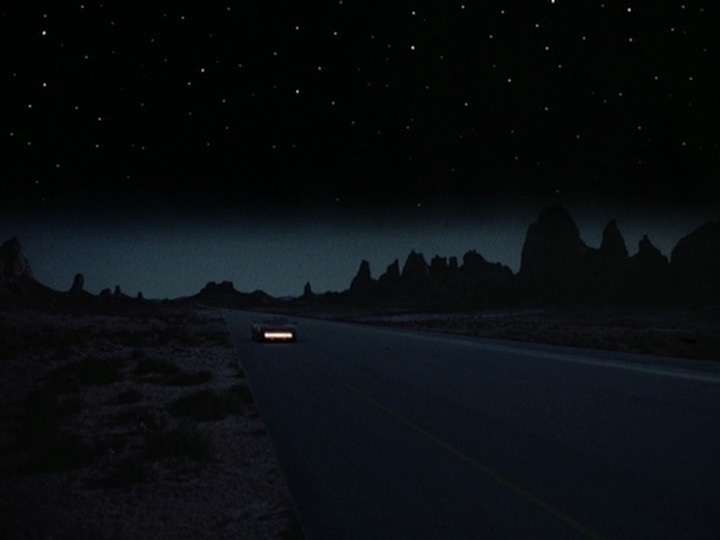
Now we meet our main character as she rides with the lead singer of the band to somewhere.

That looks suspicious.
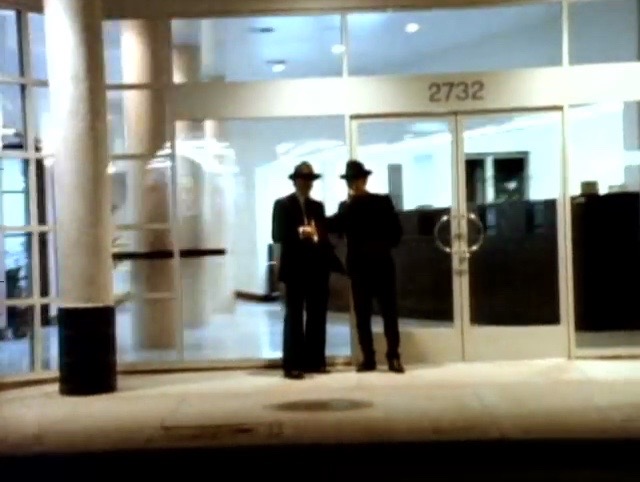
Imagine, if this were a few years later. Then she could have gotten a ride from Admiral Al Calavicci.
Quantum Leap

Instead, she is taken to a gas station run by someone creepy.
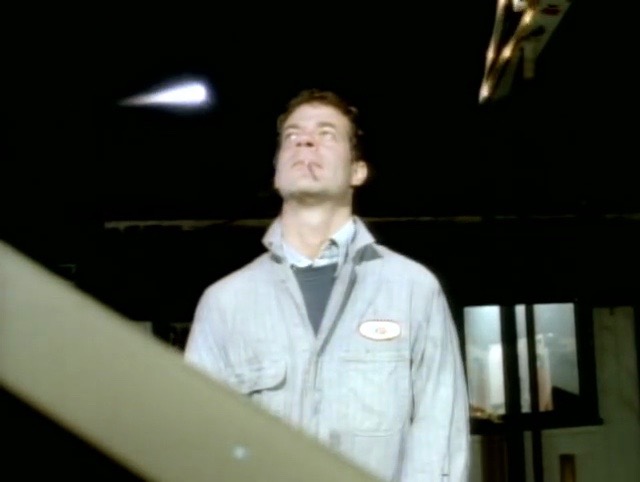
Don’t worry honey, that light back there is just waiting around to make an appearance in the music video for Let It Go by Loudness.
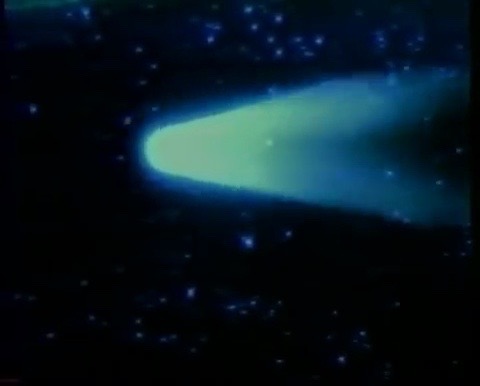
Let It Go by Loudness (1986)
I was more concerned about him. Wait…how do you know that?
We did a song called Godzilla, and not only are Loudness a Japanese heavy metal band, but that video ends with Godzilla showing up.
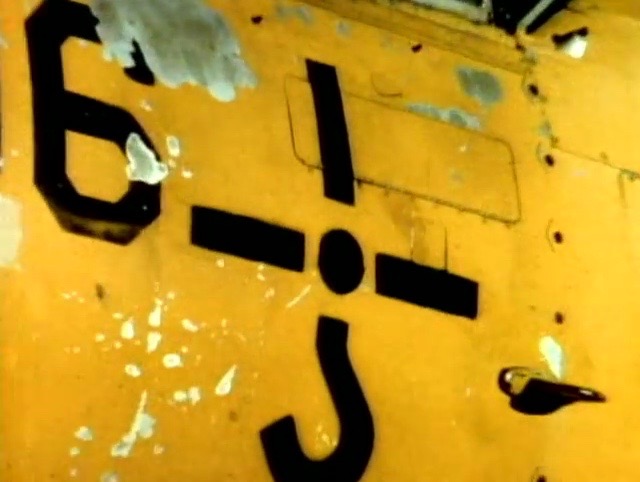
That doesn’t explain anything. What are those symbols?
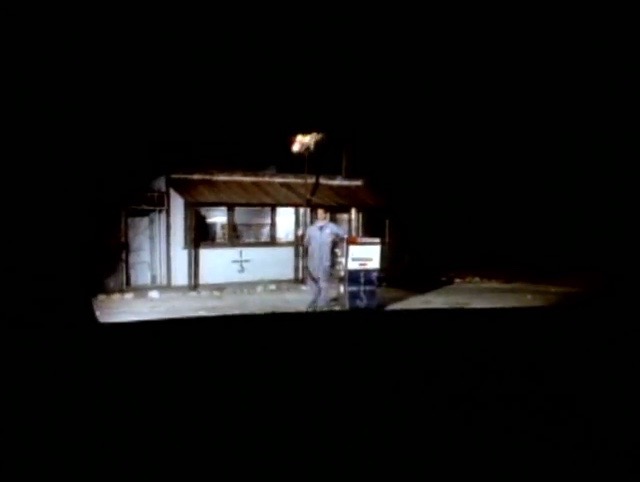
Just step over that “Caution” sign. Also, that lock always closes on its own. I never understood why either since we can just hop the gate.
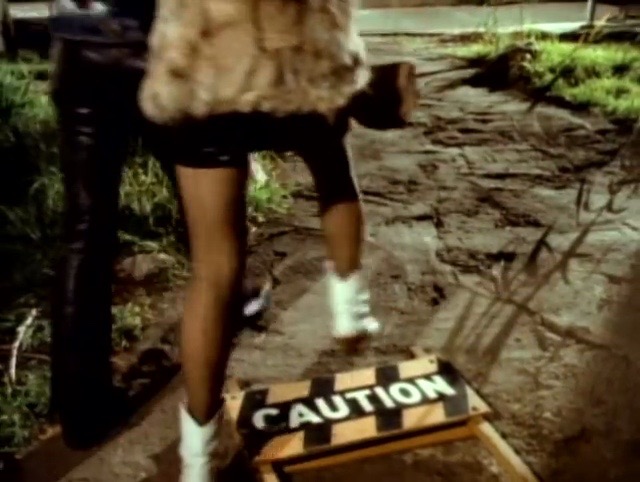
Seeing as this is a horror related video, they don’t have peripheral vision. That’s why these people go unnoticed.

Honey, who exactly are you singing to?
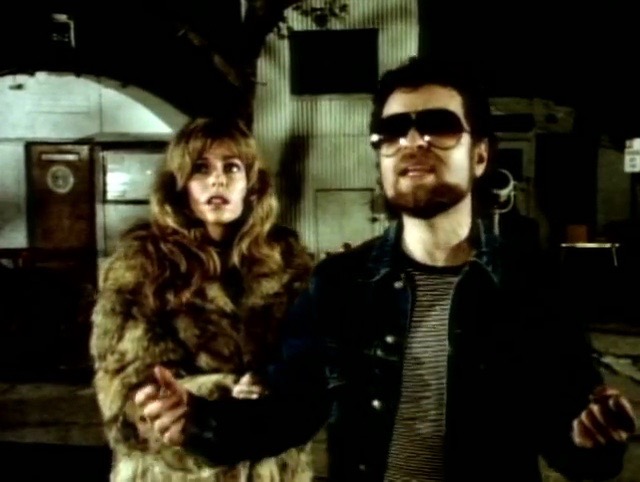
Never mind, I’m going to investigate whatever this is.
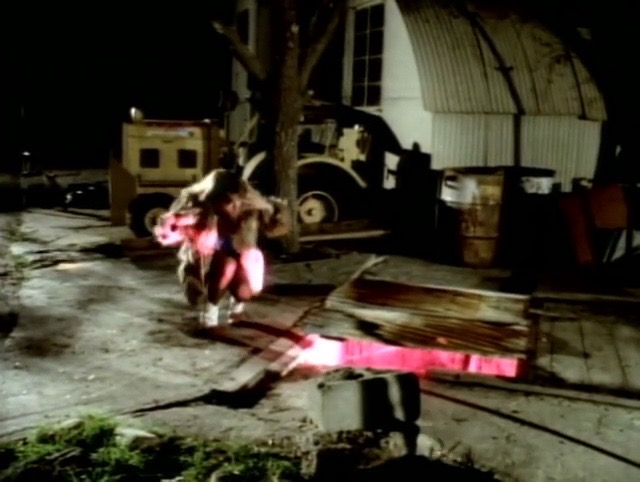
I didn’t notice till I was going through these screenshots that this light turned into a skull.
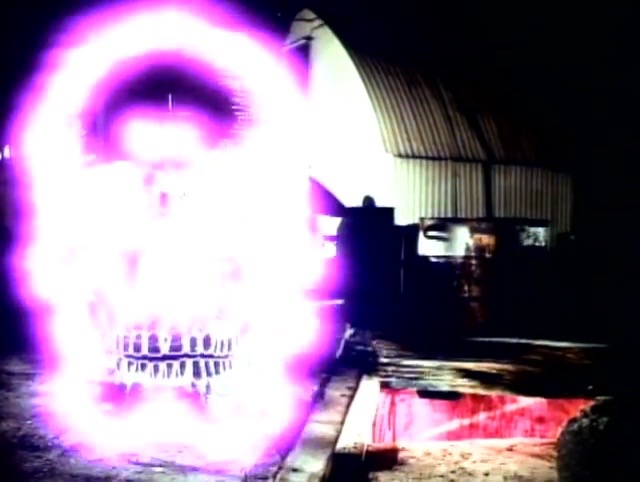
It has the same effect as the ending of Death Game (1977) except with better music.

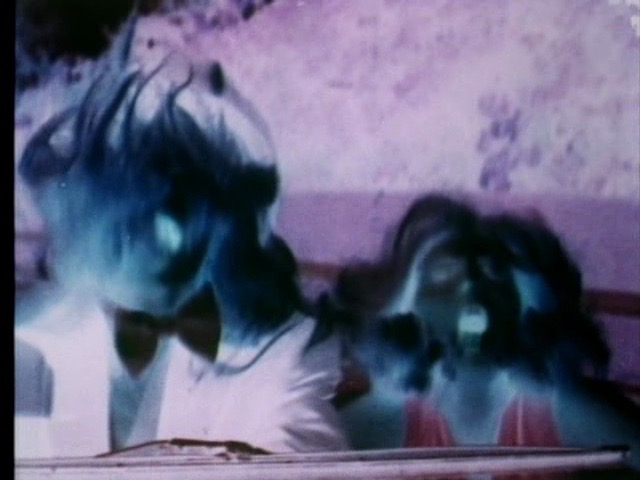
Death Game (1977, dir. Peter S. Traynor)
There’s all sorts of weird stuff going on down there, including this guy.
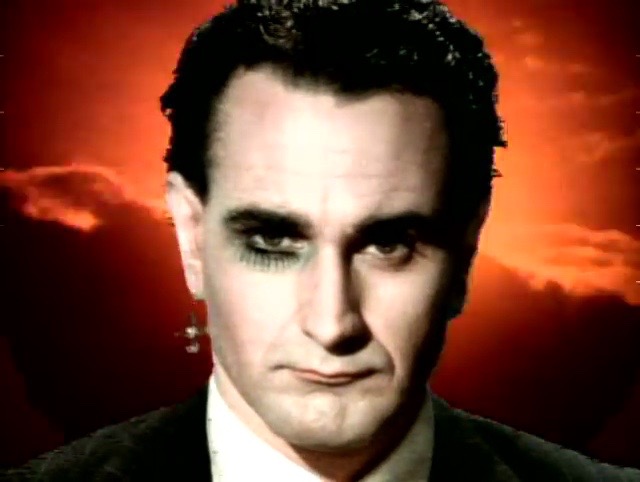
She eventually screams and a nearby plane starts up. She appears inside and can’t get out.
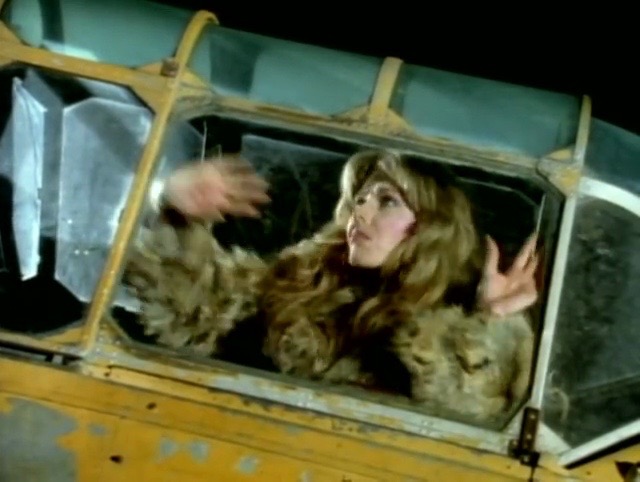
Cult Tim Curry looks really happy to be taking her away.
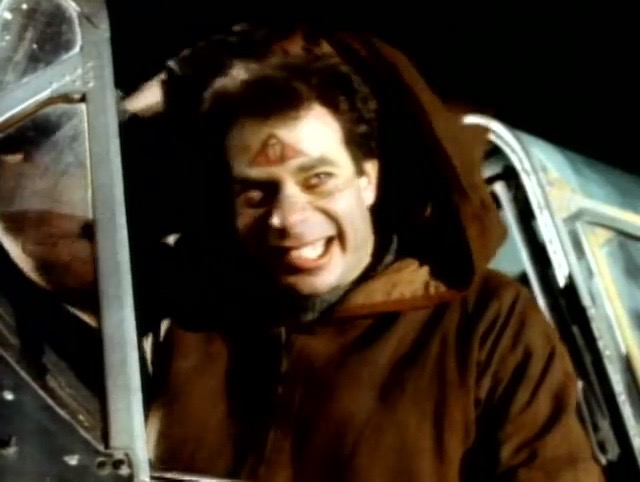
The gas station was in on it all along.
He tries to stop things, but Cult Robert Z’Dar stops him.
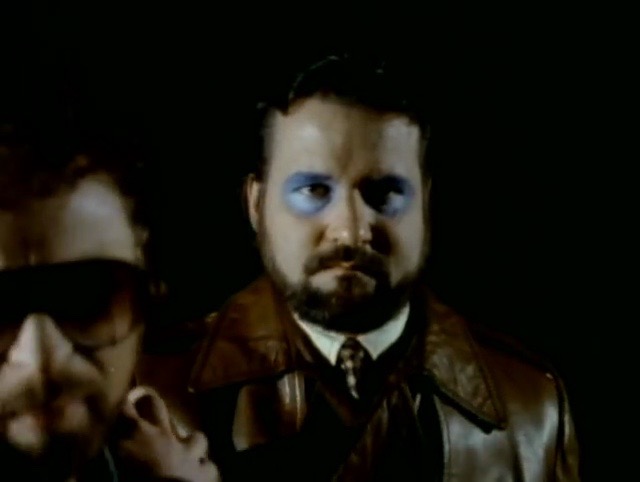

Samurai Cop (1991, dir. Amir Shervan)
In the end, she’s taken away.

And the audience is left wondering just how long they’ve been there.
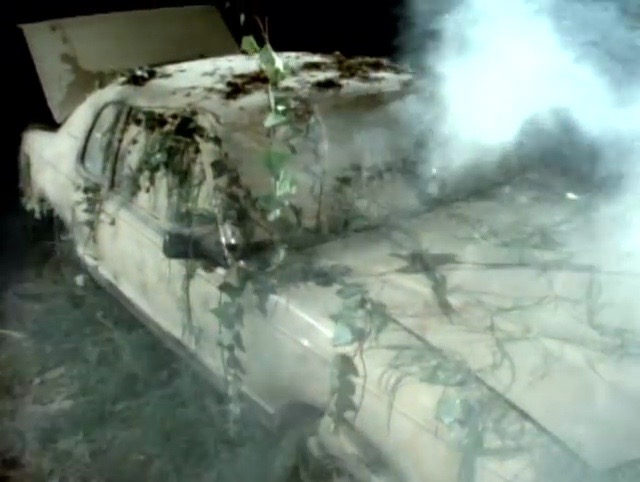
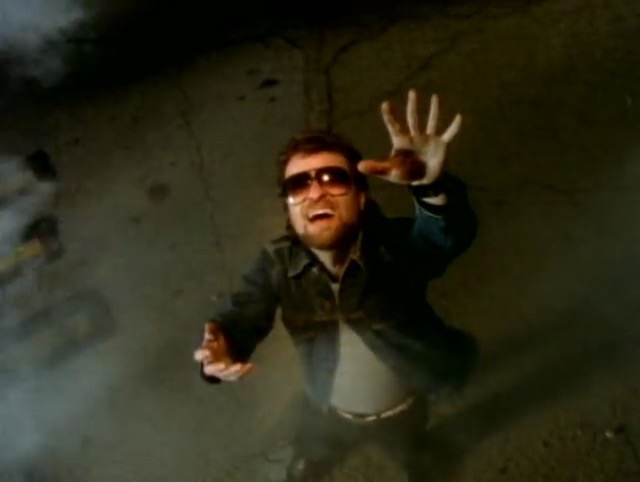
I think the moral of the story is that while you’re obsessed with leaving this world, someone you love can be suddenly taken away from you while you were completely focused on yourself. That’s my best guess. According to Songfacts, lead singer Eric Bloom was referring to aliens that he would go with if they were good ones. Obviously these ones weren’t good.
Nova of Aldo Nova wrote the music for the song, Eric Bloom ended up writing the lyrics, and it became a Blue Öyster Cult song. You might recall that director Richard Casey directed the music video for Fantasy by Aldo Nova.
John Marsh produced the video. He seems to have only worked on 4 music videos. He would go on to be an executive producer on Richard Casey’s film Horror On Highway Five (1985) and on a film my parents would watch on occasion called V.I. Warshawski (1991).
Enjoy!
30 Days Of Surrealism:
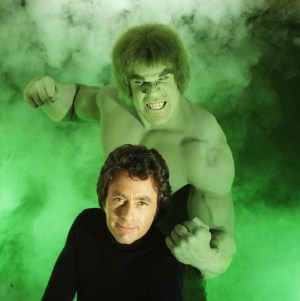 It may seem hard to believe now but there was a time when comic book adaptations were considered to be a risky bet at best. In 1977, Marvel Comics sold the television rights for four of their characters to Universal Productions. This led to three unsuccessful pilots (one for Dr. Strange and two for Captain America), a Spider-Man series that lasted for two seasons, and The Incredible Hulk. As opposed to the other Marvel adaptations, The Incredible Hulk series was popular with fans and (some) critics and ultimately lasted for four seasons.
It all started with a 90 minute pilot that aired in 1977. Haunted by the car accident that caused the death of his wife and his inability to rescue her, Dr. David Banner (Bill Bixby) is researching why, in times of extreme stress, ordinary people can suddenly experience moments of super human strength. What he theorizes is that it is a combination of body chemistry and gamma radiation caused by sun spots. Eager to test his theory, David straps himself into a chair and zaps himself with gamma radiation. At first, it seems as if nothing has changed. But when David’s driving home, he gets a flat tire. When he struggles to change the tire, in the middle of a hurricane nonetheless, David gets mad. Suddenly, his eyes turn green and soon so does the rest of him as David Banner is transformed into the Incredible Hulk (Lou Ferrigno, except for one shot where the Hulk is played by Richard Kiel). The Hulk runs through the woods, accidentally scaring a girl and getting shot by a hunter. When the Hulk falls asleep, he transforms back into David, who has no memories of what he did while he was the Hulk. While David and his colleague, Elaina Marks (Susan Sullivan), investigate what happened to him, tabloid reporter Jack McGee (Jack Colvin) tries to uncover the results of David and Elaina’s research.
Other than introducing the Hulk and giving Banner a backstory, the pilot didn’t have much in common with the series that followed. Along with being a comic book adaptation, the series was also a remake of The Fugitive. With everyone convinced that the Hulk had murdered both him and Elaina, David was always on the run and trying to find a way to cure his condition. Every episode would begin with David working a new odd job and getting involved in a new situation and almost every episode ended with David hitchhiking while the show’s famous piano theme played over the final credits. Because David was always either getting beaten up or tangled in barbed wire, the Hulk would show up twice an episode. David Banner just couldn’t catch a break.
The pilot seems to take forever to get going, devoting a lot of time to David and Elaina doing research. In those days before the success of The Dark Knight and the MCU legitimized comic books as a cultural force, The Incredible Hulk was determined to show that it was not just a show for kids. Today, the pilot is too slow-paced and self-consciously serious but still contains the elements that made the show itself became a success. Bill Bixby takes his role seriously and Lou Ferrigno is the perfect choice for the Hulk. Decades after they first aired, the Hulk-transformation scenes are still undeniably cool. It was also during the pilot that Dr. Banner uttered those famous and oft-parodied words: “Mr. McGee, don’t make me angry. You wouldn’t like me when I’m angry.”
As of this week, reruns of The Incredible Hulk are now being shown, daily, on both H&I and the El Rey network. I will be watching.

As some of you may know, I have been on a mission for a while now. My goal is to see and review every single film that has been nominated for best picture by the Academy of Motion Picture Arts and Sciences. (Of course, with the 1928 nominee, The Patriot, being a lost film, that may seem like an impossible mission. No matter! For me, nothing is impossible. What Lisa wants, Lisa gets.) For that reason, I spent part of last night watching the 1958 best picture nominee, Separate Tables, on TCM.
Separate Tables is one of the more forgotten of the best picture nominees but then again, the 50s were not the greatest decade as far as the Academy was concerned. Consider some of the other films released in 1958: Big Deal on Madonna Street, High School Confidential, Indiscreet, The Last Hurrah, Machine-Gun Kelly, The Fly, The Blob, The Horror of Dracula, The Revenge of Frankenstein, Some Came Running, Thunder Road, A Touch Of Evil, and Vertigo! The thing they all have in common is that none of them were nominated for best picture but Separate Tables was.
That’s not to say that Separate Tables was, in any way, a bad film. Actually, it’s a pretty good film and I’m glad that I watched it. It’s not bad at all. However, it is … what’s the right term to use here? Stately perhaps? Maybe stagey. Separate Tables is based on two one-act plays and, though it’s obvious that some effort was made to open up the material, it still feels undeniably stage-bound. Separate Tables was directed by Delbert Mann, who had previously won an Oscar for his lively direction of Marty. With Separate Tables, his direction is far less lively. Watching it, you get the feeling that he was not only straight-jacketed by the theatrical origins of the material but also by the fact that the film was clearly made to win Academy Awards.
So, ignore the direction and pay attention to the performances. Separate Tables works best as a tribute to good acting. The film follows the lives of several guests at an English seaside hotel. Some people are just staying for a few days. Some people live at the hotel. John Malcolm (Burt Lancaster) is a moody writer, a recovering alcoholic who is planning on asking the hotel’s manager, the level-headed Pat Cooper (Wendy Hiller), to marry him. Of course, then his ex-wife, Anne (Rita Hayworth), shows up. As quickly becomes obvious, John and Anne may hate each other but they also love each other. Neither one is particularly sympathetic but, in their scenes together, Lancaster and Hayworth do create a fascinating portrait of mutual self-destruction. Ultimately, you’re left with the impression that both of them are so self-destructive that they belong together, if just to keep from drawing anyone else into their messed up orbit.
And then there’s Major Pollock (David Niven). David Niven won the Oscar for Best Actor for his role as Major Pollock and he does give an excellent performance. Major Pollock is one of those roles that often seems to attract comedic actors looking for a chance to prove their dramatic abilities. When he first appears, he seems to be a bit of a joke but then, as the film progresses, we learn that he’s actually struggling with his own demons. In the case of Major Pollock, those demons are more hinted at than defined. As we learn at the start of the film, Pollock was convicted of “harassing” several “young women” at a movie theater. Separate Tables does not make clear how young or, for that matter, the exact details of the harassment. Some residents of the hotel want Major Pollock to be kicked out of the hotel. Some residents say that it is none of their business and that everyone deserves a second chance. John Malcolm is in the latter group, though he’s more concerned with his ex-wife than with the scandalous Major (who, to no one’s great surprise, isn’t actually a major and whose war stories have all largely been lies). Also seeking to defend Major Pollock is the shy Sibyl (Deborah Kerr, playing against type). Sibyl’s mother (Gladys Cooper) is among those most determined to exile Pollock.
And really, the only reason this plotline works is because of the performances of Niven and Kerr. As written, it’s way too vague about the exact details of what it was that Pollock did. We’re just told that he was caught “behaving immorally.” (According to Wikipedia, Pollock was originally written as being gay but, apparently, that was considered to be too controversial for 1958, hence the mention that Pollock’s crime involved “young women.”) But Niven gives such a soulful and wounded performance that, much like Sibyl, you want to believe the best about him. You want to give him a second chance, even though you know he’s going to let you down. As Major Pollock, David Niven uses his trademark charm to paint a portrait of a man who is painfully aware that he has little to offer beyond charm.
At the same time, I was surprised by how little screen time Niven actually had in Separate Tables. The majority of the film is taken up with Lancaster and Hayworth. Niven definitely deserved some consideration for best supporting actor but best actor? Not in the year that saw Orson Welles in Touch of Evil and James Stewart in Vertigo.
Separate Tables is not a great film, at least not in the way that we might wish that a film nominated for best picture would be. It’s way too stagey and vague. But, with all that in mind, it’s still wonderfully acted and always watchable. It may not be great but it is very, very good.
Separate Tables was nominated for best picture but lost to Gigi.


 Through the Shattered Lens