Of the vaporwave I’ve heard so far, no individual song has struck me more than “Airglider”, the opening track on フライトを楽しむ (Enjoy Your Flight!) by 日本航空株式会社 ✈ Japan Airlines. Expanding on the sort of feathery easy listening you might hear while boarding an airplane, the song lifts you up into the sunlit skies above an Asian metropolis in a way that the original sampled tunes could never realistically accomplish. The guitar is totally contrived–the sort of thing that a washed-up rock star might produce under contract from a commercial director–but 日本航空株式会社 ✈ Japan Airlines manages to twist it into this dreamy ride. The hyper-generic solo becomes stimulating–a vision of soaring through the clouds aboard a wonder of no-longer-so-modern technology. You feel like you are experiencing a commercial flight in the 70s or 80s, when it was not such a common affair. The very brief, unintelligible vocal line carries a sense of style. You are in the very least a first class customer. You might be taking off on your own private jet after a long day of insider trading on the Tokyo Stock Exchange.
Well, no, that’s just what the airline wants you to believe. You’re sitting in coach. Everything about this presentation is over the top in a clumsy, reckless sort of way. The song cuts in a moment too late, missing a split second of the opening note. The artist’s name is outrageous, going so far as to visually remind you that you are on a plane. (It has since been reduced to simply AIR Japan.) The song is bombastic, slamming its product down your throat. The video shows an attendant passionately spoon-feeding you information dumbed down to a child’s level in that uniquely artificial, condescending Japanese way. It’s pseudo-class for the middling mass consumer. It is everything vaporwave was initially intended to reflect, made all the more poignant through a careful, precise effort to capture the aesthetic. A lot of vaporwave has its go at cheap marketing by being intentionally careless. This one crafts the carelessness with a keen awareness, and the result is a lot more revealing. It feels more authentic than the real deal. It creates in the listener the sort of sales-minded artificial experience that real commercial music is usually too shallow to achieve. You will fly Japan Airlines again.
“He’s thrown a tripus! Steve Tevere has thrown a tripus! The most outstanding dismount tonight, or any night!”
— Really Excited Announcer In American Anthem (1986)
Way back in March, I dvr’d a movie called American Anthem off of Encore. I did this for two reasons. First off, the film was described as having something to do with gymnastics and that’s always been my favorite part of the Summer Olympics. Secondly, any film from the 1980s that has the word “American” in the title is sure to be fun or, at the very least, achingly sincere.
When I finally got around to watching American Anthem, I wasn’t expecting much. The film turned out to be largely what I expected it would be: the story of gymnasts hoping to qualify for the Olympics and find some personal redemption along the way. All of the stock characters were present. We had Steve Tevere (Mitch Gaylord), the brooding rebel who had to decide between pursuing his Olympic dreams or working in a garage for the rest of his life. We had Steve’s girlfriend, Julie (Janet Jones), who had to learn to be humble before she could be great. We had Kirk (Stacy Maloney), Steve’s best friend and fellow gymnast. We had kinda bitchy Becky Cameron (Maria Anz), who was Julie’s friend and rival. And then there was Arthur (Andrew White), Julie’s crippled, musician cousin. And let’s not forget Tracy Prescott (Jenny Ester), the 12 year-old gymnast with the impressive afro. And, of course, there was Coach Sarnoff (Michael Pataki) who was tough, compassionate, and Russian. The majority of the cast was made up of real-life gymnasts and, with the exception of the genuinely charismatic Stacy Maloney, they all gave performances that suggested that they should stick with gymnastics.
And yet, despite all of that, I absolutely loved American Anthem. Now, don’t get me wrong. For the most part, I loved it for all the wrong reasons. My love for the film is not the type of love that would lead to me being quoted on the back of a Blu-ray case. American Anthem is a thoroughly bad film but it’s also compulsively watchable. From the minute that I started watching it, I became obsessed with American Anthem‘s bizarre ineptness. Since that first night in March, I’ve rewatched American Anthem a few dozen times. I’ve lost track of how many times that I have grimaced at the cutesy music that Sarnoff tried to force Julie to use for her floor routine. I can imitate Becky’s squeal of pain when she’s tries to compete with an injured knee. Whenever Julie and the girls start to chant, “Kirk! Kirk! Kirk!,” I chant with them. And don’t even get me started on how much I love hearing, “He’s thrown a tripus!”
American Anthem is pure style. This is one of the few films that I’ve seen that has absolutely no subtext. There is literally nothing going on beneath the surface. It’s almost as if somebody dared director Albert Magnoli to make a film that was just one big montage. This is one of those films where the camera is always moving, the colors are always bright, and the soundtrack is always soaring. Hardly anyone in the film can actually act but oh my God, everyone looks so good (in a 1986 sort of way, of course).
The other “great” thing about American Anthem is that there’s not a single cliché that the film doesn’t include and, as a result, you really don’t have to pay that much attention to the film to understand what’s going on. To its credit, this film doesn’t even pretend to be anything other than a collection of clichés. It’s almost as if the characters themselves realize that they are in a film and understand that they have no choice but to conform to what the audience has been conditioned to expect.
(Hmmm…I guess American Anthem does have a subtext. And kind of a disturbing one at that!)
For instance, within minutes of meeting and despite having no chemistry, Steve and Julie are in love. Why? Because the only reason that they are in the film is to fall in love. It has to be done.
Steve fights with his father (John Aprea) and we’re never quite sure why, beyond the fact that all brooding rebels fight with their fathers. When his father shows up to watch his son compete, the triumphant music soars and it no longer matters that he’s been portrayed as being an abusive rageaholic up until that moment.
All of the characters tell us that Coach Sarnoff is the best, despite the fact that we don’t actually see any evidence of that fact. But Sarnoff has to be the best because nobody ever makes a movie about athletes training under a merely adequate coach.
When Becky suddenly shows up at the final competition with a bandaged knee, it doesn’t matter that we don’t actually see her get injured beforehand or, for that matter, hear anything about it. All that matters is that, in films like this, someone has to compete with an injury. Becky is simply playing her part.
American Anthem. It’s not a particularly good film but it sure is watchable. And, as I’ve come to realize while writing this review, it’s a bit of an existential nightmare as well!
I don’t think I’m ever going to erase it from my DVR.
I am not sure whether my recent discovery of vaporwave was a coincidence or not. When people check out my Last.fm profile, I always return the serve, and I happened to be listening to a lot of other music that will be featured in this series when I got a new visitor. This person’s profile was filled with really odd artist names, mostly consisting of katakana followed by a seemingly random English word in all caps. Click click.
This was vaporwave, as it turned out, and vaporwave was pretty odd. I guess the genre emerged beginning in 2011 as electronic and dance artists, partly in jest and partly as a sort of social commentary, began to resurrect trash audio from the 70s, 80s, and 90s. The background sounds of shopping malls and elevator shafts twisted in conformity to dance beats and reemerged packaged with bad 90s digital imagery. The artist titles are a nod to those used in Asian markets to sell western hits without having to pay royalties. The genre title, too, was a hoax, referring to vaporware–products which are heavily marketed but never actually released or cancelled. (Remember when Duke Nukem Forever gained so much fame after 14 years “in development” that Gearbox slapped together a garbage FPS under the title?) Some of the early artists in the scene suggested that their music was not intended to be enjoyed for any intrinsically pleasing qualities. Rather, they were taking music that was trashy in spirit and making it trashy in sound, degrading it to a state where its shallow capitalist origins could shine while, as a possibly unintended consequence, infusing it with actual conceptual value.
The earlier artists I sampled were, as you might expect from the description, entertaining but not particularly pleasant to listen to. In 2014, a label called Dream Catalogue launched and helped to really redirect the genre. Taking the same technical approach of restructuring muzak, smooth jazz, funk, lounge, new age, and R&B into electronic and dance tracks, Dream Catalogue artists showed a generally keener eye towards making the music aesthetically pleasing in its own right. The result was a sound that’s simultaneously modern and nostalgic, and a collection of albums that show a lot more individual character and vision.
Hong Kong Express, the Dream Catalogue founder’s personal project, presents a consistent vision of dreamy nighttime travels in a modern city. In describing his first release, 浪漫的夢想, the label’s website concludes that “This dream, ultimately, is a mysterious and romantic trip through the neon haze of a night in Hong Kong – a journey of subway carriages and fast cars, a love both lost and found, and a connection between souls.” I can definitely hear that. The pitched, echoing pop and jazz samples generate the sense that you aren’t fully taking in your surroundings. You drift through a landscape of glowing billboards and signs, recognizing the products subliminally while reflecting on the light itself, becoming lost in a vibrant capitalist world. What could be more appropriate for the theme of this series?
Mad Max: Fury Road opened this weekend and, taking in 45 million at the box office and maintaining an amazing 98% rating at Rotten Tomatoes, it has thrilled both critics and audiences. From George Miller’s breakneck direction to Charlize Theron’s performance as a one-armed warrior queen, there is much to praise about Mad Max: Fury Road. For many, though, the best part of the film is the “crazy guitar guy.”
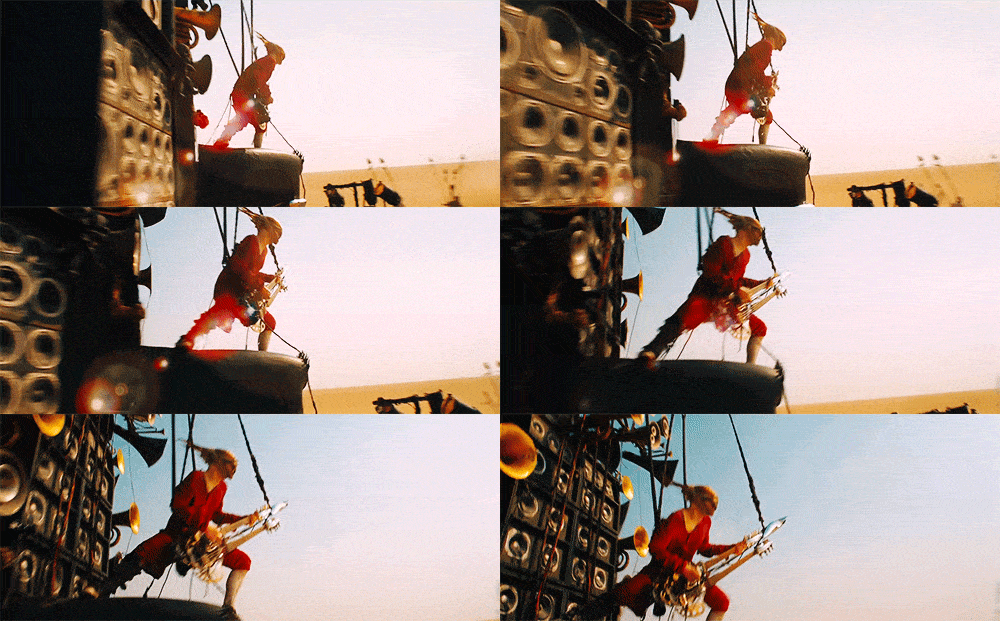
If you have seen Max Max: Fury Road, you know exactly who I am talking about. He is the red jumpsuit-wearing, masked man who plays a mean guitar and wields a flamethrower at the same time. When the War Boys chase Furiousa and Max across the desert, he is a passenger on a massive truck. On the back of the truck, drummers pound away. On the front of truck, he dangles above a stack of speakers and amplifiers while playing a double-neck guitar that is also a flame thrower. Though he is known to many as simply being the crazy guitar guy, his character has a name. He is Coma, the Doof Warrior. In just one weekend, he has become a cult hero.
iOTA
The Doof Warrior is played by Australian musician and theatrical actor, iOTA (born Sean Hape). In an interview with Yahoo Movies, iOTA describes the Doof Warrior as being “a post-apocalyptic drummer boy.” From the drummer boys who played and often died on Civil War battlegrounds to the modern-day soldiers who blasted Rock the Casbah during the Invasion of Iraq, music and war have always gone together. The Doof Warrior’s heavy metal riffs are the perfect battle music for Mad Max‘s hyper-masculine War Boys.
Why, in a film full of crazy characters and exciting moments, has the Doof Warrior become so popular? The most obvious answer is that he looks cool and he has a flamethrower. However, another reason is that we know nothing about him. For all the attention that he has received, the Doof Warrior is only onscreen for a handful of minutes and he has no dialogue. Miller and iOTA worked out an elaborate backstory for the Doof Warrior but none of it is revealed in the movie. Much like Boba Fett in The Empire Strikes Back (and before the character was ruined with Attack of the Clones), the Doof Warrior remains an enigma who can be whatever we want or need him to be.
Beyond that, the Doof Warrior is living the fantasy of everyone who has ever played air guitar or spent hours debating whether James Hetfield or Kirk Hammett is the better guitarist. Anyone who has ever taken a guitar lesson has fantasized about watching an audience go mad while listening to his music. The War Boys may be going to war but the Doof Warrior is playing the greatest concert of his life. No wonder that, even when he is in the middle of a battle, the Doof Warrior never stops playing.
So, before his legacy is tarnished by bad fanfic and tumblr overexposure, let us take a minute to raise a glass to the coolest character in the coolest film of the year, the one and only Doof Warrior.
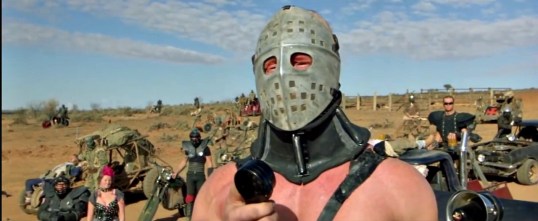
“…warrior of the wasteland, the Lord Humungus, [and] the ayatollah of rock-and-rollah.”
This past weekend saw George Miller release the fourth film in his classic Mad Max film series. Mad Max: Fury Road has been receiving critical-acclaim both from film critics and the general public. It’s a film that has shown the return of an action-film maestro to the forefront of a genre he helped create.
Yet, today I would like to share a favorite scene of mine from the second film in the series, Mad Max 2 aka The Road Warrior. This scene introduces the leader of the roving band of post-apocalyptic raiders who have besieged the small-community and it’s supply of precious oil and gasoline. Lord Humungus has become such an iconic figure in this series and in action-film lore.
The look of Humungus and his band of raiders would influence other post-apocalyptic films for years to come. It has even had a hand in creating the look for the Dr. Dre and Tupac music video “California Love.”
I’ve been remiss about posting the winners of the Sakura-Con 2015 AMV Contest. This particular video won the “Fun” category and it’s a production from one of my favorite AMV creators, IleaiAMVs.
“Another Fanny Service Video” is a short, but to the point AMV that combines not just the romance-comedy anime series Kemeko Deluxke! but also the Jason Derulo song “Wiggle.” It’s a pairing made to order and just goes to show that an AMV doesn’t have to use an epic length song (though nothing bad about those).
Ileai has always been very using timed edits to her chosen song to tell the particular story her video are trying to tell. Whether the original intent of the anime being used comes across doesn’t matter. She could take a super serious anime and turn it hilarious through clever editing and the correct choice of music. This time around this video doesn’t stray too far from the comedic aspect of the anime Kemeko Deluxe! and instead highlights the ecchi sequences from the series.
The video has already won several AMV Contest awards reaching back to last year and all accolades Ileai’s way have been well-deserved.
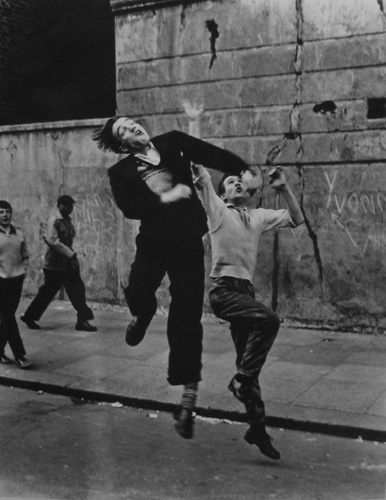
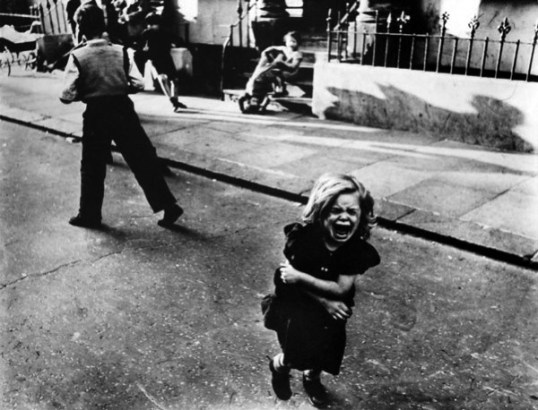
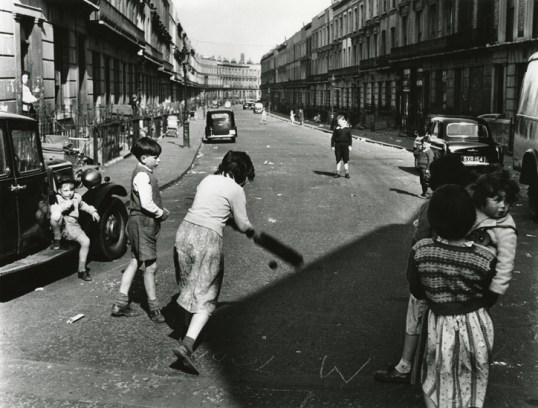
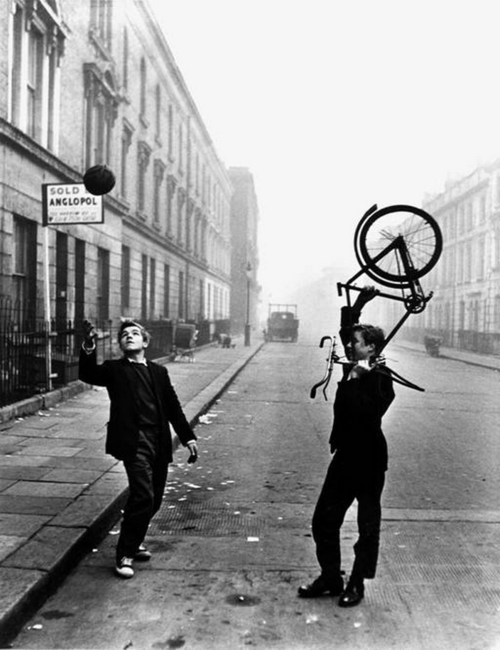
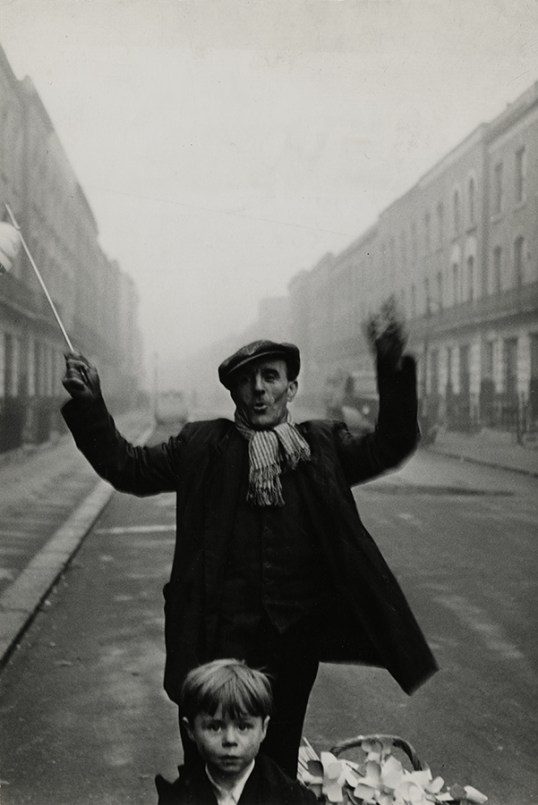
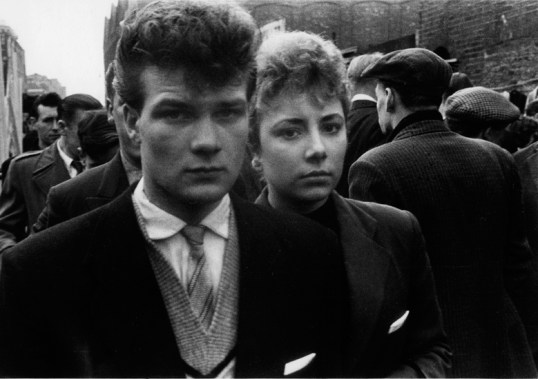
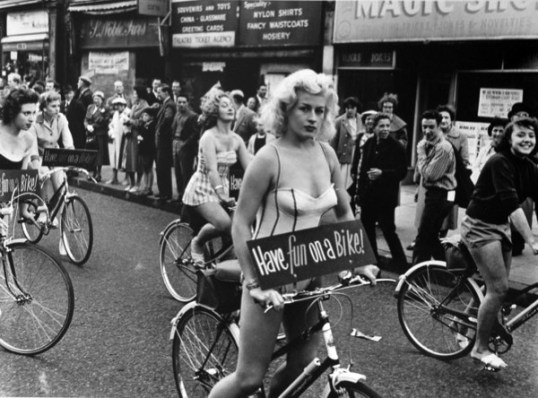
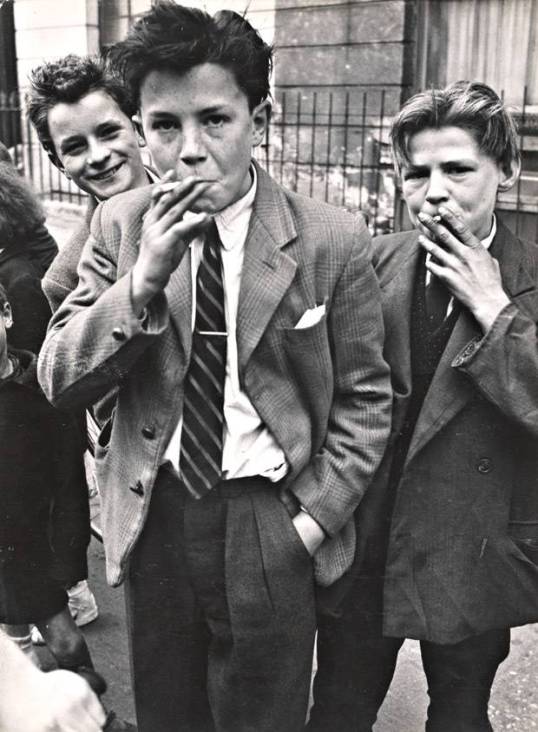
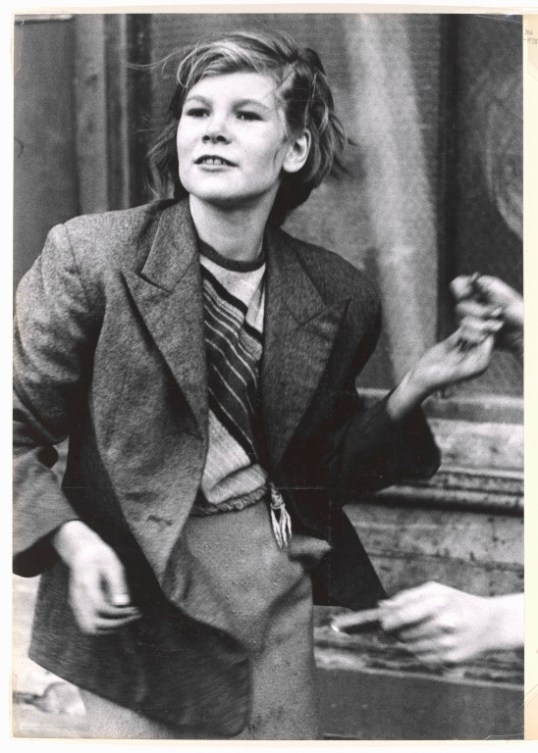
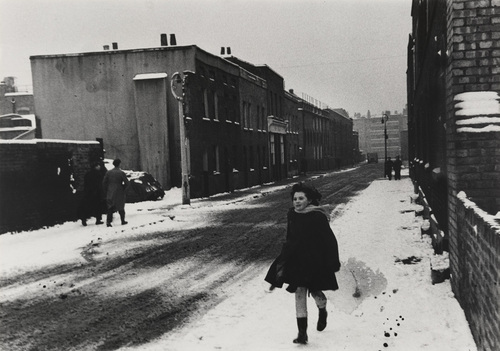
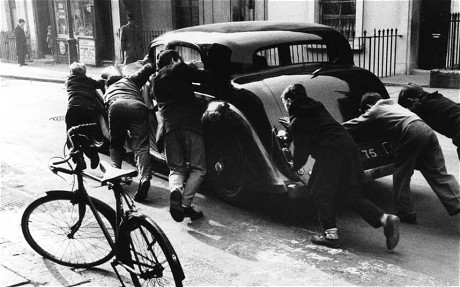
British photographer Roger Mayne was born in Cambridge and studied Chemistry at Balliol College, Oxford. It was here that he became interested in photographic processing and took his first pictures. Mentored by photographer Hugo van Wadenoyen, Mayne pursued a career as a photographer after graduating in 1951. His photographs of life on Southam Street in Notting Dale made him a key figure in British photography’s break from pictorialism. You can learn more about his life and his work by visiting Rogermayne.com.
If you ever wonder what it’s like to roam the midnight streets of a cynical, depraved city full of alcoholics and deadbeats, you will never find a more poetic account than Small Change, the 1976 masterpiece by Tom Waits. It flows as a shambling, drunken journey through neon squalor. On each track, he takes us to some bar, nightclub, diner, or strip joint, and tells the stories of the people he finds there. Hawkers on “Step Right Up” offer him an incoherent slur of sales pitches. (“We’ve got a white sale on smoke-damaged furniture. You can drive it away today!”) A young punk on “Jitterbug Boy” nonchalantly brags about accomplishing all sorts of improbable feats and then tells Tom to get lost. (“If it’s heads I go to Tennessee, tails I buy a drink. If it lands on the edge I’ll keep talking to you.”) A shameless deviant on “Pasties and a G-String” rambles about his lust. (“Crawling on her belly, shaking like jelly, and I’m getting harder than Chinese algebra.”)
The album is brilliant from start to finish. Lyrically, I think I can safely call it my all-time favorite. And while the title track, “Small Change”, is not my first pick on the album generally, it’s the one that most robustly captures the dystopian theme in this music series. It tells of a small-time gangster who gets murdered, and how the community passes by in apathy or else dives like vultures to try and make a buck off the tragedy.
Small Change got rained on with his own .38,
And nobody flinched down by the arcade,
And the marquees weren’t weeping; they went stark-raving mad,
And the cabbies were the only ones that really had it made,
And his cold trousers were twisted, and the sirens high and shrill,
And crumpled in his fist was a five-dollar bill,
And the naked mannequins with their cheshire grins,
And the raconteurs and roustabouts said “Buddy, come on in,
Cause the dreams ain’t broken down here now; they’re walking with a limp,
Now that Small Change got rained on with his own .38”,
And nobody flinched down by the arcade,
And the burglar alarm’s been disconnected,
And the newsmen start to rattle,
And the cops are telling jokes about some whorehouse in Seattle,
And the fire hydrants plead the Fifth Amendment,
And the furniture is bargains galore,
But the blood is by the jukebox on an old linoleum floor,
And what a hot rain on forty-second street,
Now the umbrellas ain’t got a chance,
And the newsboy’s a lunatic with stains on his pants,
Cause Small Change got rained on with his own .38,
And no one’s gone over to close his eyes,
And there’s a racing form in his pocket circled “Blue Boots” in the 3rd,
And the cashier at the clothing store didn’t say a word,
As the sirens tear the night in half, and someone lost his wallet,
It’s surveillance of assailance, if that’s what you want to call it,
And the whores hike up their skirts and fish for drug-store prophylactics,
And their mouths cut just like razor blades, and their eyes are like stilettos,
And her radiator’s steaming, and her teeth are in a wreck,
She won’t let you kiss her, but what the hell did you expect?
And the gypsies are tragic, and if you want to buy perfume,
They’ll bark you down like carnies, sell you Christmas cards in June,
But Small Change got rained on with his own .38,
And his headstone’s a gumball machine,
No more chewing gum or baseball cards or overcoats or dreams,
Someone’s hosing down the sidewalk and he’s only in his teens,
Cause Small Change got rained on with his own .38,
And a fistful of dollars can’t change that,
And someone copped his watch fob, and someone got his ring,
And the newsboy got his porkpie Stetson hat,
And the tuberculosis old men at The Nelson wheeze and cough,
And someone will head south until this whole thing cools off.
As of this writing, Monday is upon us. As many of us are still riding the high from George Miller’s Mad Max Fury Road, I thought I’d share one of my favorite tracks from the film’s score.
“Brothers in Arms” has a mixture of both the madness that Max & Furiosa and the hope of escape. The song itself seems simple, using 3 beats as the background while layering other sounds on top. By the time the strings have joined in on the fun, the song is moving at full throttle. By the halfway point, it switches gears, becoming something orchestral that feels like it belongs on a Two Steps From Hell album. I love this piece.
Hope you enjoy this. For those of you facing rough Mondays, may it spur you towards greater success.
Japan’s three-piece prodigy Boris have played every style of music in the books over the years, and they do it all well. “Intro” appears fairly early in their discography, on the 2005 reissue of Akuma No Uta. (The original 2003 release features a much shorter intro track.) If you had any question about the sort of diversity Boris brought to the table even this early on, you could look at Akuma No Uta‘s multiple album covers. One was a play on the cover art of Bryter Layter by Nick Drake. Another, Welcome to Hell by Venom.
This track also made my mix after I used it in a game. The task I set for myself when I purchased a copy of RPGMaker was to take an incongruous cyberpunk story written by a bunch of kids in the 90s and make it work. It was in pretty bad shape. Apparently being chaotic evil made you a great candidate for leadership; the CEO calling the shots was supposedly some genius who had carefully crafted his rise to power, but then he’d turn and do crafty things like scream “bwahahaha” and murder his advisers. It was the sort of nonsense only a bunch of children or Joseph McCarthy could dream up. I wanted to retain the basic progression of events–I was doing this for fun and nostalgia, after all–but the opening sequence, where the leader shoots a passenger airline out of the sky in order to sense the euphoric death rattle of hundreds of innocents burning in unison, was uh…. yeeeeah….
When I listened to “Intro” by Boris, the scene rewrote itself. The plane was suddenly slowly drifting over a scene of urban anarchy, where police stations and hospitals barely hung on behind walls of garbage and broken glass. Casinos and brothels lit up the night sky. The pilot commits a minor breach in security protocol while requesting permission to land, and a culture of paranoia spirals the situation out of control. Ultimately, a general authorizes force with a hint of satisfaction, and the plane explodes. Wata’s high pitched, siren-like guitar seems to simulate ambulances rushing to the scene. Boris set the tone for how I would rewrite the entire script. The foreboding, dystopian vibe of this instrumental song was powerful enough alone to create a setting I couldn’t handle with graphics and dialogue at my disposal.






 Through the Shattered Lens