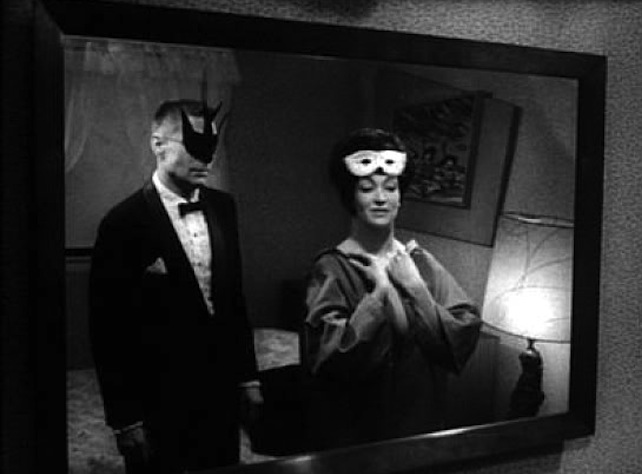
Embracing The Melodrama #19: Sin In The Suburbs (dir by Joe Sarno)


Sin In The Suburbs

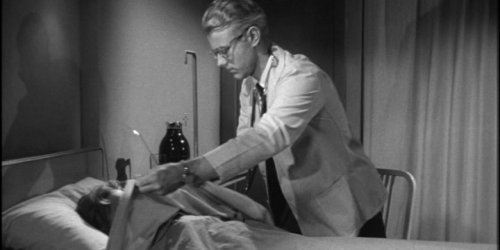
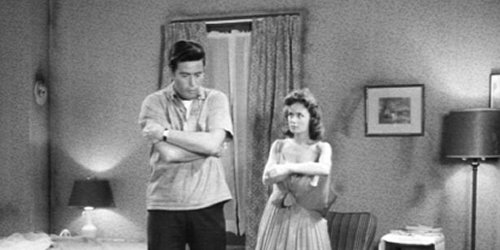
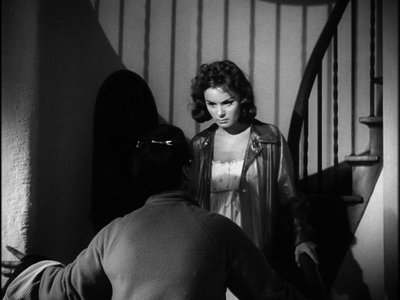
Released in 1964, Sin In The Suburbs is probably one of the best films that you’ve never heard of.  The fact that it is also an unapologetic product of and for the grindhouse does nothing to change that fact.  Well-acted and telling a disturbingly(and occasionally amusingly) plausible story, Sin In The Suburbs is a masterpiece of exploitation cinema.

As you can probably guess from the title, the setting here is the suburbs.  To the naked eye, it’s a perfectly normal and placid neighborhood.  However, to the housewives who are expected to spend all of their time in their identical suburban homes while their husbands head into the city for the day, the suburbs have become an existential prison, a world of sexual frustration and repressed desires.

Everyone finds their own way to handle living in the suffocating atmosphere of suburban perfection.  Lisa Francis (Marla Ellis), for example, deals with it by sitting around her living room in black lingerie and waiting for various salesmen to come and knock on her door.

Geraldine Lewis (Audrey Campbell) isn’t quite as blatant as her neighbor, though Geraldine does find the time to dance with a teenage boy who comes by looking for her daughter, Judy (Alice Linville).  Geraldine does not know how to deal with her developing daughter and, as a result, Judy starts spending more and more time with another neighbor, Yvette Tallman (Dyanne Thorne).

Yvette and her creepy brother Louis (W.B. Parker) run an interesting business on the side.  They set up suburban sex clubs, where everyone wears a robe and a mask and gets to engage in anonymous sex with their neighbors.  While Louis is certainly creepy looking whenever he puts on a mask that he himself describes as being “demonic,” director Joe Sarno goes out of his way to make this sex club look about as unsexy as possible.  The film’s characters may think that they’re being terribly sophisticated but Sarno undercuts their fantasy by playing up the seedy desperation of the sex club’s masked meetings.

In fact, it’s easy to laugh at the Tallmans’ ludicrous little club until the film’s final ten minutes, at which point a case of mistaken identity leads to one of the most downbeat endings ever.

Joe Sarno may have specialized in making what the rest of the world considered to be exploitation films but the fact that he was an artist at heart is obvious from watching Sin In The Suburbs.  Even before I decided to embark on this series of melodramatic film reviews, I had already seen a countless number of films about the what goes on behind closed suburban doors and none of them are quite as dark (or authentic) as the suburban Hell that Sarno portrays in Sin In The Suburbs.  There’s a seediness to the film that, while not exactly pleasant, is also so all-pervasive and convincing that it becomes oddly compelling.

As opposed to a film like Peyton Place, which gave us small town sin in glamorous technicolor, Sin in the Suburbs is filmed in drab black-and-white and takes place on sets that are notable for their minimal decoration.  The only time the film truly comes to life visually is when everyone is wearing a mask and hoping to conceal who they really are.  But even then, Sarno refuses to glamorize his characters.  Instead, he intentionally plays up the absurdity of a bunch of middle class suburbanites trying to convince themselves that they’re actually decadent free spirits.

If Jean-Paul Sartre had abandoned No Exit to instead write a grindhouse sex film, the end result would probably look a lot like Sin In The Suburbs.

sinsuburb

Embracing the Melodrama #18: The Naked Kiss (dir by Sam Fuller)


The Naked Kiss

When I first decided to do this series on embracing the melodrama, I knew that I would have to include at least one film from Sam Fuller.  A former war hero and tabloid journalist, Sam Fuller made films that felt like a punch in the face to everything that he considered to be hypocritical about American society.  Fuller’s films may have been B-movies and they certainly were unapologetic about being melodramas but, at the same time, they were — at the time of their release — some of the only films willing to deal with controversial subject matter.  While the rest of American filmmakers embraced safety, Fuller could always be counted on to be dangerous.

For instance, at a time when most films were celebrating “good girls” and punishing the bad ones with unplanned pregnancies and bad reputations, Fuller directed a film in which the heroine was a former prostitute and the main villains came from every corner of respectable society.  That film was 1964’s The Naked Kiss.

The Naked Kiss opens with a scene as striking and as memorable as one of the tabloid headlines that Fuller would have cranked out back in his days as a journalist.  Kelly (Constance Towers), a prostitute, attacks her pimp with her purse (with the camera often standing in for the pimp’s point-of-view so, for a good deal of the scene, Kelly appears to be striking those of us in the audience).  During the struggle, Kelly’s wig is knocked from her head, revealing her to be bald.

Fleeing from her pimp, Kelly ends up in the town of Grantville, where her first customer turns out to be Griff (Anthony Eisley), the chief of police.  Once they’ve completed their business, Griff informs Kelly that it might be a better idea for her to find a more permissive town in which to set up operations.  However, Kelly has decided that Grantville would be the perfect place for her to escape from her past and start a new life.

Despite Griff’s continued attempts to get her to leave town, Kelly finds a job working, with handicapped children, in a pediatric ward.  Full of empathy for children who have been just as abused as she has, Kelly proves herself to be an excellent nurse.  She is also soon dating the most powerful and popular man in town, J.L. Grant (Michael Dante).  Grant, at first, seems to be the perfect man and Kelly soon falls in love with him.  Even after she reveals the truth about her past, Grant says that he wants to marry her.

However, things change when Kelly drops by Grant’s mansion one day and discovers Grant on the verge of molesting a little girl.  (Making the scene all the more disturbing is the children’s song that plays in the background through almost the entire scene.)  Grant explains that he’s a deviant, just like her.  Kelly’s reaction forces both her and the citizens of Grantville to confront the truth about who they really are.

Though The Naked Kiss is often overshadowed by Fuller’s Shock Corridor (which was released the year before), The Naked Kiss is actually the better film of the two.   Along with Fuller’s lively direction and Constance Towers’ strong performance as Kelly, The Naked Kiss is also distinguished by Stanley Cortez’s atmospheric black-and-white cinematography.  The scenes in which Kelly sings with the children and then discovers Grant with his potential victim could both be textbook examples of how to properly stage a scene.  This unapologetically tawdry film is also an undeniably great one and you can watch it below!

Embracing The Melodrama #17: The Shame of Patty Smith (dir by Leo A. Handel)


The Shame of Patty Smith

“The story you’re about to see is true.  It’s happening right now.  The subject is illegal abortions.” — The narrator (Barney Brio) at the beginning of The Shame of Patty Smith (1962)

I began this series on embracing the melodrama by taking a look at one of the most anti-abortion films ever made, 1916’s Where Are My Children?  It, therefore, seems only appropriate that the first melodrama that I review from the 1960s should be a film that argued for the right to legal and safe abortion eleven years before the Supreme Court’s historic Roe v Wade decision, 1962’s The Shame of Patty Smith.

As with many a great melodrama, this film features a narrator.  He informs us that Patty Smith (played by an instantly sympathetic actress named Dani Lynn) is an “average girl with an average life and average dreams.”  One night, while she’s out on a date with Alan (Carlton Crane), she is attacked and raped by three thugs in leather jackets who speak like they’ve wandered over from the set of High School Confidential.  Afterwards, Alan tells her, “Three against one … there wasn’t much I could do…still, it was horrible to watch.”  He follows this up by advising her to “Try to forget about the whole thing.”

When Patty discovers that she’s pregnant, Alan refuses to speak to her and the stress causes her to make so many mistakes at her job that she ends up getting fired.  Not wishing to tell her religious parents what has happened, Patty goes to sympathetic Dr. Miller (J. Edward McKinney) and tells him that she simply cannot have a child.  Dr. Miller tells her that he sympathizes with her situation but, legally, he cannot help her.  All he can do is offer to help her put the baby up for adoption after she gives birth.

With the help of her roommate Mary (Merry Anders), Patty starts to search for a doctor who will perform the illegal procedure.  She manages to find one reputable doctor but he explains that he will need 600 dollars in cash because he could quite literally end up in jail for helping her.  Patty does not have that type of money.

Growing increasingly desperate, Patty eventually does find someone to help her.  This “doctor” (who, the narrator informs us, is actually a former pharmacist) works out of a massage parlor.  From the minute that Patty is picked up by one of the doctor’s associates to the moment that she finally steps into the pharmacist’s filthy operating room, The Shame of Patty Smith takes on the feel of a true nightmare.  For the final 30 minutes or so of the film, the screen is filled with such seediness that you literally feel the need to take a shower after watching it.  Director Leo A. Handel directs these scenes as if he were making a horror film (and, in many ways, he was) and Dani Lynn’s sensitive and frightened performance make these scenes all the more disturbing and tragic.

The Shame of Patty Smith is a real surprise.  Largely based on the title and the fact that Something Weird Video included The Shame of Patty Smith as part of a double feature with You’ve Ruined Me, Eddie!, I assumed that this would be your typical low budget melodrama.  I figured that it might be good for a few laughs and that it might have a few moments of unintentional clarity.

Instead, it turns out that The Shame of Patty Smith is a serious-minded, well acted, and thought-provoking look at one of the most important issues facing America today.  One reason that I found Patty Smith to be such a fascinating film was the fact that it was made before Roe v. Wade.  I think sometimes we hear a term like “back alley abortion” so many times that the words run the risk of losing their ominous power but Patty Smith, in detail that is chilling precisely because it is presented in such a matter-of-fact way, actually takes us into the back alley.  Those of us who were born long after the Roe V. Wade decision are often too quick to take for granted the idea that abortion has always been legaland safe and that it always will be.

A film like The Shame of Patty Smith serves to remind us of how things once were and how they very well could be again.

Patty Smith

AMV of the Day: Otaku Paradise


maxresdefault

It’s the 4th of July Weekend and one of the things I’ve gotten used to these past couple years is that it means Anime Expo has come around once more. While I don’t have the anime convention experience as pantsukudasai56 it is still a event that I’ve gotten used to attending once a year when possible.

The latest “AMV of the Day” arrives just in time for the largest North American anime convention held every 4th of July weekend in Los Angeles. Not to say that the other anime conventions around the country are nothing to sneeze at, but Anime Expo is a whole different animal that every otaku in North America needs to experience at least once in their life. It’s a video that comes courtesy by the very talented video editor who goes by the handle of BecauseImBored1.

A video that combines scenes from anime and real-life footage of cosplayers and anime con-goers into one timely video that celebrates the positive nature of the word “otaku”. It’s a word that has a negative reputation in Japan, but one that’s seen as a celebration of anime and Japanese pop-culture fandom worldwide. It’s a label taken on proudly.

“Otaku Paradise” has such a huge number of anime referenced yet barely scratches the surface of what “otaku” watches and follows year in and year out. I love the fact that the video intersperses these anime scenes with real-life people in cosplay of those very same anime characters. Not everyone cosplays, but every otaku appreciates and admires those who do. Yet, cosplayers and non-cosplayer otaku both have one thing in common and that is their acceptance of the label of “otaku”.

One thing this video made me do while I watched it for the first time and the many times since was put such a huge, happy smile on my face. It’s small consolation for having to miss this weekend’s Anime Expo 2014.

Anime: Another, Attack On Titan, Baccano!, Baka And Test – Summon The Beasts, Bakuman, Black Lagoon, CANAAN, Clannad, Code Geass – Lelouch Of The Rebellion, D.Gray-Man, DragonBall Z, Durarara!!, Fate/Stay Night, Free! – Iwatobi Swim Club, Fruits Basket, Fullmetal Alchemist, Fullmetal Alchemist: Brotherhood, Genshiken, Genshiken Nidaime, Haikyuu, Hellsing Ultimate, Howl’s Moving Castle, Idolmaster, K, K-ON!, Kampfer, Kanon, Kara No Kyoukai – The Garden Of Sinners, Kill La Kill, Kuroko’s Basketball, Kyoukai No Kanata, Kyousougiga, Little Witch Academia, Love, Chunibyo & Other Delusions, Lucky Star, Macross Frontier MUSIC CLIP Collection – Nyankuri, Melancholy Of Haruhi Suzumiya, MM!, Munto, My Little Sister Can’t Be This Cute, My Neighbor Totoro, Naruto, Ookami-San To Shichinin No Nakama-Tachi, Ore No Kanojo To Osananajimi Ga Shuraba Sugiru, Ouran High School Host Club, Panty & Stocking With Garterbelt, Persona 4: The Animation, Pokemon : White, Pokémon: Movie 2, Pokemon 2000, The Power Of One, Princess Jellyfish, Puella Magi Madoka Magica, Romeo × Juliet, Sailor Moon, Sakura Trick, School Rumble, School Rumble 2, Shugo Chara!, Soul Eater, Soul Eater Not, Summer Wars, Super Smash Bros, Sword Art Online, Tales Of Xillia, Tengen Toppa Gurren-Lagann, Toradora!, Trigun, Uta No Prince Sama, Welcome To The NHK, Yu Yu Hakusho

Song: “Raging Fire” by Phillip Phillips

Creator: BecauseImBored1

Past AMVs of the Day

Embracing the Melodrama #16: A Summer Place (dir by Delmer Daves)


A Summer Place

Judging from the films I’ve seen from the decade, the 50s were a time when everyone was obsessed with sex but nobody felt comfortable talking about it.  Boys were, of course, allowed to do whatever they wanted, as long as they kept their hair perfectly straight and went out for a school team or two.  Girls, meanwhile, were divided into “good girls” and “bad girls.”  The most important thing in the world was to remain a good girl and to understand that the bad girls really weren’t having as much fun as they appeared to be having.  As for adults, their lives apparently revolved around sheltering their daughters and encouraging their sons to go get laid.  Now, to be honest, the culture really hasn’t changed that much.  I guess what distinguished 50s hypocrisy from the hypocrisy of today is that people in the 50s were apparently so much more sincere about that hypocrisy.

Case in point: 1959’s A Summer Place.  A Summer Place is one of those films where everyone is obsessed with sex but nobody can ever come right out and admit it.  It’s a film where people seem to exclusively speak in the language of euphemism.  It’s a film, about sex, in which you never see anyone actually having sex though, of course, there is an unplanned pregnancy towards the end of it.  That was the 50s for you.  Have sex outside of marriage once and you’re pretty much guaranteed to get knocked up.  You just better hope that the father is played by Troy Donahue.

(Has ever an actor has a more appropriate name than Troy Donahue?  The name itself just resonates a certain handsome blandness.)

In A Summer Place, Troy Donahue plays all-American boy Johnny Hunter.  Johnny’s father (played by Arthur Kennedy) is an alcoholic.  Johnny’s mother, Sylvia (Dorothy McGuire), is frustrated with her perpetually drunk husband and spends her days dreaming of a lifeguard that she once knew.  The Hunters own an inn, located on beautiful Pine Island off the coast of Maine.

One summer, Ken (Richard Egan) and his cold wife Helen (Constance Ford) come to stay at the inn.  Accompanying them is their teenage daughter, Molly (Sandra Dee).  Helen insists on trying to control every aspect of Molly’s life.  Ken, on the other hand, takes a much more relaxed attitude towards his daughter.  When Molly complains that Helen forces her to wear a bra and a girdle, Ken grabs his daughter’s underwear and tosses it all into the ocean.

(Uhmmm …. yeah, that’s more than a little creepy…)

Molly meets Johnny and, despite the fact that the stiff Troy Donahue generates absolutely zero romantic  sparks, the two of them soon fall in love. (It probably has something to do with the Theme From A Summer Place, a hypnotic piece of music that plays on the soundtrack whenever the two of them so much as even glance in each other’s direction.)  Helen, however, doesn’t want Molly to have anything to do with Johnny.  When Molly and Johnny spend a day stranded on an island together, Helen forcefully checks to make sure that Molly’s virginity is still intact while Molly repeatedly shouts, “I WANT MY FADDAH!  I WANT MY  FADDAH!”

However, her father is not there because he’s too busy having an affair of his own.  It turns out that Ken is the former lifeguard who Sylvia Hunter once loved…

And through all of the complications and the melodrama (and believe me, there’s a lot), the Theme From A Summer Place keeps on playing in the background.

Apparently, A Summer Place was considered to be incredibly risqué back in 1959.  Watched today, it all seems to be rather quaint and, in its way, oddly likable.  It’s not necessarily a good film but it’s an agreeable enough offering if you’re looking to waste two hours with whatever happens to be on TCM.  As opposed to some of the other regular directors of 50s melodrama —  like Douglas Sirk and Nicholas Ray — director Delmer Daves made films where the only subtext was unintentional.   As a result of Daves’s direction and Donahue’s “nice young man” blandness, A Summer Place is a pleasant film that never quite becomes a memorable one.

Still, just try to get that music out of your head…

a summer place, sandra dee, troy donahue


Embracing The Melodrama #15: You’ve Ruined Me, Eddie! (dir by R. John Hugh)


Patty and EddieFilmed down in Florida and originally released in 1959, You’ve Ruined Me, Eddie! was originally known as Touch of Flesh.  Of the two titles, I prefer You’ve Ruined Me, Eddie!  While I’m sure that Touch of Flesh, as a title, was good for convincing horny teenager boys at Southern drive-ins to contribute to the film’s the box office, it’s also a rather boring title.  You’ve Ruined Me, Eddie!, however, is properly histrionic and over-the-top.  It’s the perfect title for a perfectly pulpy film.

You’ve Ruined Me, Eddie! takes place in Dentonville, Florida, which is one of those small Southern towns where you can sit out on your porch and watch the mist hang over the bayous while you attempt to survive both the humidity and the crazy rednecks who apparently make up the entire population of the town.  Dentonville is the home of the wealthy Dr. Denton (Charles Martin), a casually corrupt man who rules with the help of a dim-witted sheriff.

Dr. Denton has a daughter named Joan (Jeanne Rainer), a spoiled and promiscuous hedonist who spends all of her spare time seducing boys from the wrong side of the tracks.  When Joan gets together with the dumb but decent Eddie (Ted Marshall), the end result is that Joan gets pregnant.  Joan announces that she’s going to get an abortion but guess who wants to both be a father and have an oppurtunity to become a part of the most powerful family in town?  Even after Joan tells him that she has no interest in getting “fat and sick and ugly,” Eddie demands that she not abort her child.

Dr. Denton reacts by having Eddie framed for a crime and thrown in jail.  However, Eddie’s friend Vicky (Sue Ellis) knows a lawyer who can get Eddie out of jail.  So, what choice does Joan have but to grab a gun and chase Eddie through the swamps while shooting at him?

You’ve Ruined Me, Eddie! is a wonderfully odd and sordid piece of Southern gothic.  Along with featuring everything that you might expect from a film like this — overheated dialogue, unapologetic overacting, and over-the-top plotting, You Ruined Me, Eddie! is distinguished by Jeanne Rainer’s ferocious performance as Joan.  Whether she’s taunting Eddie or dancing around her bedroom in her underwear or demanding that her father help her find the best abolitionist in Tampa, Jeanne Rainer turns Joan into such a determined force of nature that she becomes the unexpected heroine of the film.  By the end of it, you can’t blame her for wanting to get boring old Eddie out of her life.  He would only slow her down.

You’ve Ruined Me, Eddie! is not an easy film to find.  However, it has been released on DVD by Something Weird Video as a double feature with The Shame of Patty Smith, a film that will be reviewed in a future installment of this melodramatic series.

Joan

Embracing the Melodrama #14: Bigger Than Life (dir by Nicholas Ray)


Bigger Than Life 2

Today, we continue to embrace the melodrama by taking a look at Nicholas Ray’s 1956 Hell-In-The-Suburbs masterpiece, Bigger Than Life.  Unfortunately for some of you, this review is going to contain minor spoilers because there’s no way you can talk about Bigger Than Life without talking about that ending.

Bigger Than Life is a film about deception.

English teacher Ed Avery (James Mason, who not only gives a brilliant lead performance but produced the film as well) pretends to be happy with his safe and dull life but it only takes a few minutes of looking at his strained smile and listening to him wearily  make perfunctory conversation to realize that Ed is a deeply disappointed man.  He decorates his house with travel posters for locations that he’s never visited and spends too much time thinking about when he played football in high school, the one time in life when he truly stood out from the crowd.

Ed doesn’t want his wife Louise (Barbara Rush) to know that they’re in financial trouble so he gets a job working as a taxi dispatcher without telling her.  While Louise fears that he’s actually having an affair, Ed spends his time coming up with excuses for why he can never come straight home from school.

Ed doesn’t want either Lou or his son Richie (Christopher Olsen) to know that he’s been feeling pain and dizziness.  It’s only after he faints at home that he finally agrees to go to the hospital.

The doctors who inform Ed that he has a life threatening condition don’t want Ed to know how dangerous the medicine that they’ve prescribed for him can truly be.  They tell him that cortisone can save his life but they don’t tell him about the side effects.  It’s up to his friend Wally (Walter Matthau) to research the drug and, by the time he does, it’s already too late.

Ed doesn’t want anyone to know that he’s becoming a drug addict.  However, as he takes more and more of the pills, his personality starts to change.  The once meek Ed is now demanding perfect service at stores and restaurants.  At a PTA meeting, Ed has no problem announcing that most of his students are stupid.  (“You should make that young man principal!” one parent shouts, apparently relieved to hear that a teacher thinks of little of his children as he does.)  At home, Ed pushes his son to become a football great and announces that he no longer loves his wife.

Richie doesn’t want his father to know that he now hates him.  Lou doesn’t want her husband to know how much she is growing to fear him.

Ed doesn’t want Richie to know that, after reading the biblical story of Abraham and Isaac, Ed has decided that he has to murder his son.  When Lou points out that God kept Abraham from killing Isaac, Ed replies, “God was wrong.”

And finally, the film itself deceives you into thinking that it has a happy ending with Lou and Richie hugging a now recovered Ed.  Everyone laughs and the happy music swells but there’s prominent shadow cast on the wall close to the family, a reminder that the darkness that Ed has unleashed on his family will not be so easily contained or forgotten.

bigger than life

Bigger Than Life is famous for being one of those films that flopped when it was originally released, just to eventually be rediscovered and acclaimed decades later when it was released as part of the Criterion Collection.  It’s easy to understand why the film flopped because the power of Bigger Than Life is almost entirely to be found in the film’s subtext.  On the surface, Bigger Than Life is a typical social problem film.  In this case, that problem would appear to be drug abuse.

However, as you watch the film, it becomes obvious that, for director Nicholas Ray, the real problem is the conformist and repressed society that the Avery family finds themselves living in.  When Ed’s personality changes, all he is really doing is achieving an extreme version of the ideal suburban existence.  The suburban ideal is that the man should be the king of his castle.  Ed becomes a king but he’s one of those kings who would behead his subjects on a whim.  In telling this tale of American exceptionalism gone mad, Nicholas Ray uses the techniques of European expressionism, using skewed camera angles and creating a world that is full of shadows.  Even before Ed takes his first pill, his world is a dark and threatening one.

By the end of the film, Ed may be off the drugs and he may be recovering but, as Nicholas Ray makes clear, the real problem remains.

Bigger Than Life

Embracing The Melodrama #13: Peyton Place (dir by Mark Robson)


Poster - Peyton Place_04

“Just remember: men can see much better than they can think. Believe me, a low-cut neckline does more for a girl’s future than the entire Britannica encyclopedia.” — Betty (Terry Moore), speaking the truth in Peyton Place (1957)

Sex!  Sin!  Secrets!  Scandal!  It’s just another day in the life of Peyton Place, the most sordid little town this side of Kings Row!  It’s also the setting of the 1957 best picture nominee, Peyton Place.

Peyton Place is a seemingly idyllic little village in New England.  The town is divided by railroad tracks and how your fellow townspeople views you literally depends on which side of the tracks you live on.  As the film itself shows us, the right side of tracks features pretty houses and primly dressed starlets.  The wrong side of the tracks features shacks and a bunch of people who look like the ancestors of the cast of Winter’s Bone.  The difference in appearance is not particularly subtle (but then again, the same thing could be said for the entire film) but, regardless of which side of the tracks live on, chances are that you’re keeping a few secrets from the rest of the town.

On the right side of the tracks, you can find Constance McKenzie (played by Lana Turner, who is just about as convincing as a New England matron as you would expect a glamorous Hollywood star to be), a dress shop owner who is so prim and proper that she literally flies into a rage when she comes across her daughter kissing a boy.  Could it be the Constance’s repression is the result of her once having been a rich man’s mistress?  And will the new high school principal, the progressive and rather dull Mr. Rossi (Lee Phillips), still love her despite her sordid past?

Constance’s daughter is Allison (Diane Varsi) and poor Allison just can not understand why her mother is so overprotective.  Will Allison ever find true love with the painfully shy Norman Page (Russ Tamblyn) or will she be forced to settle for someone like the rich and irresponsible Rodney Harrington (Barry Coe)?

Rodney, for his part, is in love with Betty (Terry Moore), a girl from the wrong sides of the tracks.  Rodney’s father (Leon Ames) is the richest man in town and makes it clear that he will not allow his son to marry someone with a “reputation.”  Will Rodney get a chance to redeem himself by going off to fight in World War II?

And what will happen when Rodney and Betty go skinny dipping and are spotted by a local town gossip who promptly mistakes them for Norman and Allison?  Reputations are at stake here!

Meanwhile, over on the bad side of the tracks, Lucas Cross (Arthur Kennedy) sits in his shack and drinks and thinks about how the world has failed him.  His long-suffering wife (Betty Field) works as housekeeper for the McKenzie family.  Meanwhile, his abused daughter Selena (Hope Lange, giving the film’s best performance) is Allison’s best friend.  When Lucas’s attempt to rape Selena leads to a violent death, the sins and hypocrisy of Peyton Place are revealed to everyone.

Peyton Place is a big, long  movie, full of overdramatic characters, overheated dialogue, and over-the-top plotting and, for that reason, I absolutely love it!  Apparently, the film was quite controversial in its day and the scenes where Arthur Kennedy attacks Hope Lange still have the power to disturb.  However, the main reason why I enjoy Petyon Place is because anything that could happen in Peyton Place does happen in Peyton Place.

Seriously, how can you not love a film this sordid and melodramatic?

Embracing The Melodrama #12: Giant (dir by George Stevens)


Giant

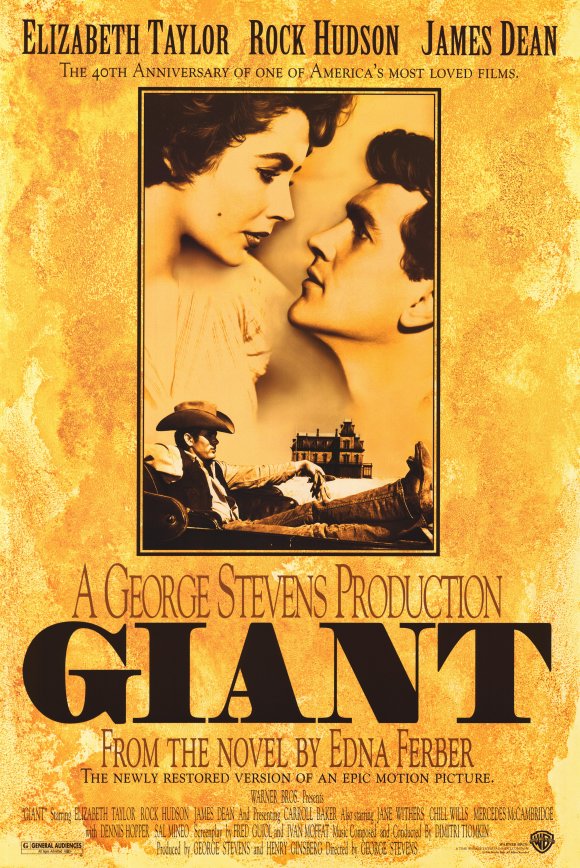
Let’s continue to embrace the melodrama by taking a look at the 1956 best picture nominee, Giant.

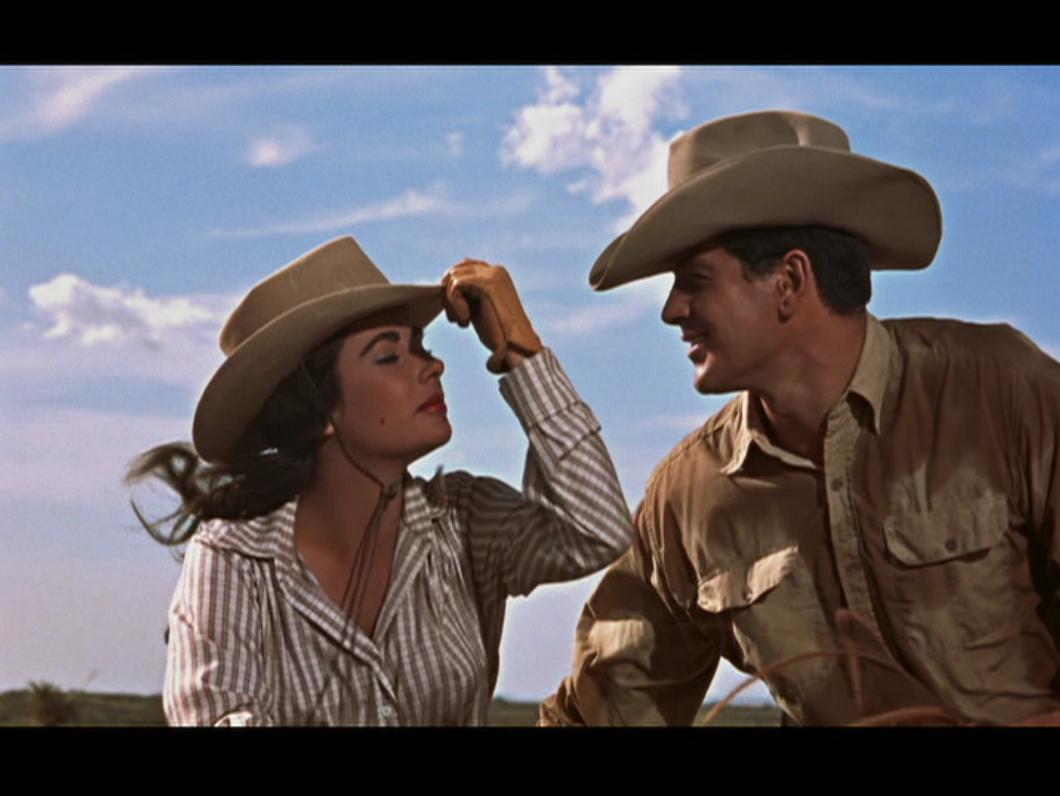
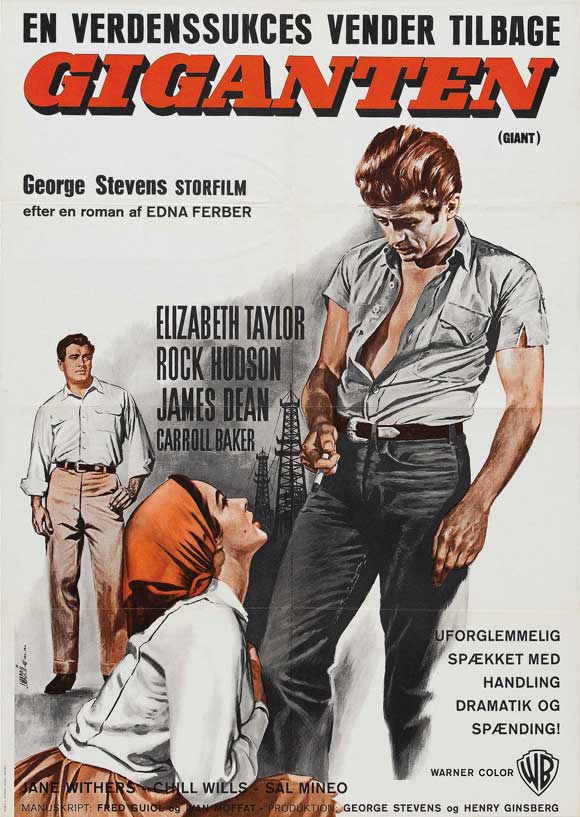
Giant is a film about my home state of Texas.  Texas rancher Bick Benedict (Rock Hudson) goes to Maryland to buy a horse and ends up returning to Texas with a bride, socialite Lesley Lynnton (Elizabeth Taylor).  At first, Lesley struggles to adapt to the harsh and hot Texas landscape.  Bick’s sister, Luz (Mercedes McCambridge) takes an instant dislike to Lesley and Bick is annoyed by Lesley’s concern over the living conditions of the Mexicans that work on Bick’s ranch.  It sometimes seems like the only person who appreciates Lesley is Jett Rink (James Dean), an ambitious ranch hand who secretly loves her and who is planning on becoming a rich man.  That’s exactly what happens when oil is found on the land around Bick’s ranch.  While Bick stubbornly clings to the past, oilman Jett represents both the future of Texas and the nation.  Meanwhile, Bick and Lesley’s son (played by a very young Dennis Hopper) challenges his father’s casual bigotry when he falls in love with a Mexican girl.

Taylor and Hudson

Giant is appropriately named because it is a huge film.  Clocking in at 201 minutes, Giant tells a story that spans several decades and features a big cast that is full of familiar faces, all struggling for their chance to somehow stand out from everyone else around them.  Even the film’s wonderful panoramic shots of the empty Texas landscape only serve to remind us of how big the entire film is.  To a certain extent, the size of Giant‘s production is to be understood.  In the 1950s, Hollywood was having to compete with television and they did this by trying to make every film into a major event.  You watch a movie like Giant and you practically hear the old Hollywood moguls shouting at America, “See!?  You can’t get that on your precious TV, can you!?”

For those of us watching Giant today, the length is both a blessing and a curse.  It’s a curse because the movie really is too damn long.  The opening scenes drag and many of them really do feel superfluous.  It’s hard not to feel that the real story doesn’t really start until about 90 minutes into the movie.  And once the story really does get started,  there’s still way too much of it for it all to be crammed into one sitting.  Oddly enough, you end up feeling as if this extremely long film is still not telling you everything that you need to know.  If Giant were made today, it would probably be a two-part movie on either HBO or Lifetime and it would definitely feature a lot more sex.

However, to be honest, one of the reasons that I did enjoy Giant was because it was as big as it was.  I mean, the film is about Texas so of course it should be a little excessive!  Everything’s bigger in Texas and that includes our movies.  Add to that, Giant may be too long but it uses that length to deals with issues that are still relevant today — oil, immigration, and racial prejudice.  Rock Hudson may not have been a great actor but he is at least convincing as he transitions from bigotry to tolerance.

But really, when it comes to Giant, most people are only interested in James Dean.  And they definitely should be because Dean gives a great and compelling performance here.  Dean brings all of the emotional intensity of the method to material that one would not naturally associate with method acting and the end result is amazing to watch.  Giant was released after Dean had been killed in that infamous car wreck.  I can only imagine what it must have been like to be sitting in a theater in 1956 and to see this compelling and charismatic actor towering above the world on the big screen while aware, all the time, that his life had already been cut short and he would never been seen in another film.

James Dean

Even better, Dean’s new style of acting clashes perfectly with Hudson’s old style of acting, making the conflict between Bick and Jett feel all the more real and intense.  Much as Bick represents old Texas and Jett represents the new Texas, Hudon and Dean represented the two sides of Hollywood: the celebrity and the artist.  Needless to say, Dean wins the battle but, surprisingly, Hudson occasionally manages to hold his own.

I can’t necessarily say that Giant is an essential film.  A lot of people are going to be bored by the excessive length.  But if you’re a fan of James Dean or if you’re from Texas, Giant is a film that you need to see at least once.

elizabeth_taylor_giant_swedish_movie_poster_2a

Embracing the Melodrama #11: All About Eve (dir by Joseph L. Mankiewicz)


Bette Davis

“Fasten your seat belts, it’s gonna be a bumpy night!” — Margo Channing (Bette Davis) in All About Eve (1950)

If you’re a lover of classic films or even if you’re just someone who occasionally watches TCM, chances are that you already know All About Eve.  It’s one of those films that is endlessly quoted and it features at least two performances — Bette Davis’s turn as aging Broadway diva Margo Channing and George Sanders’ acidic theater critic Addison DeWitt — that serve as frequent inspiration for professional impersonators.  It’s the film that was named best picture of 1950 and it continues to hold the record for both the most Oscar nominations overall and it’s the only film in Oscar history to receive four female acting nominations.

Even more importantly, it’s a film that everyone already knows it great.

So, that brings up the question that every film blogger dreads: how do you review a classic film that everyone already knows about?  I’ve often said that it’s easier to review a bad film than a great one.  It’s easy to pinpoint why a film fails but when it comes time to explain why a film is great, it’s often difficult to put to words the intangible qualities that elevate it.

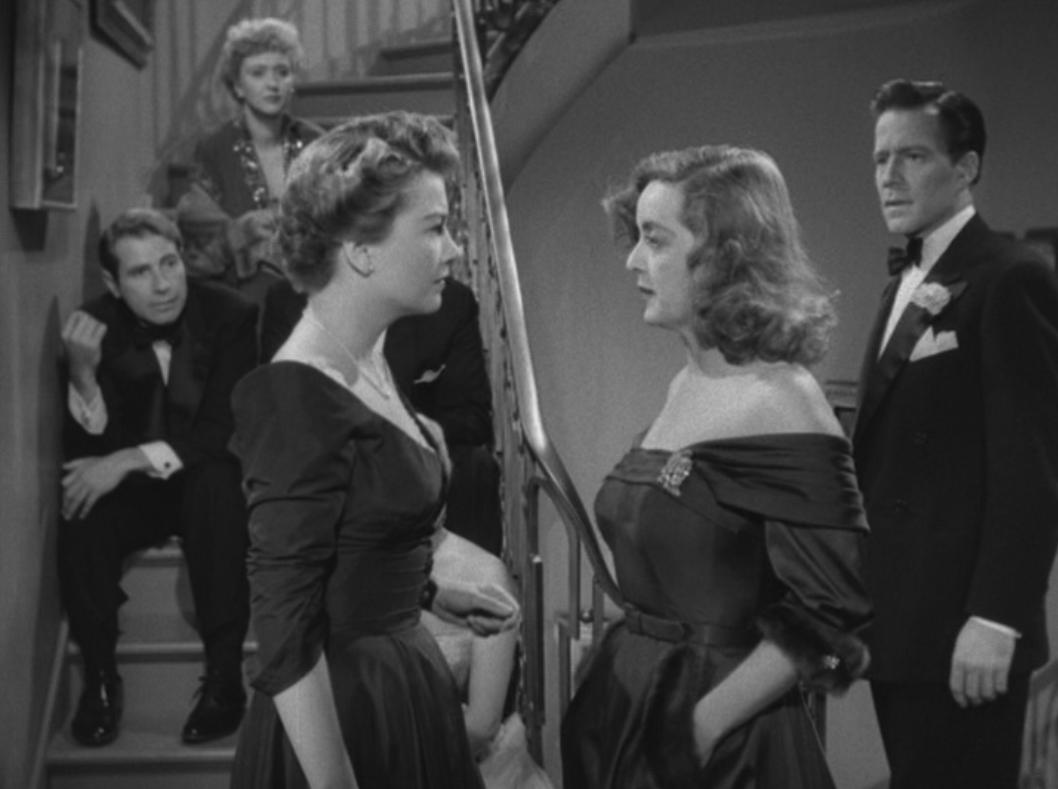
Eve and Margo

For instance, I could tell you that the film has a fascinating plot but that barely only begins to scratch the surface of everything that’s going on underneath the glossy and melodramatic surface of All About Eve.  The movie tells the story of how scheming young actress Eve Harrington (Anne Baxter) becomes a star with the help of Addison DeWitt and at the expense of the talented but aging Margo Channing.  In telling Eve and Margo’s stories, All About Eve explores issues of female friendship and competition, sexuality, and why older men are celebrated while older women are constantly at risk of being pushed to the side for a newer model.  The complexity and power of All About Eve’s storyline can be summed up by the fact that right now, when I watch the film, I relate to Eve but I imagine that  twenty years from now, I’ll rewatch and I’ll relate to Margo.

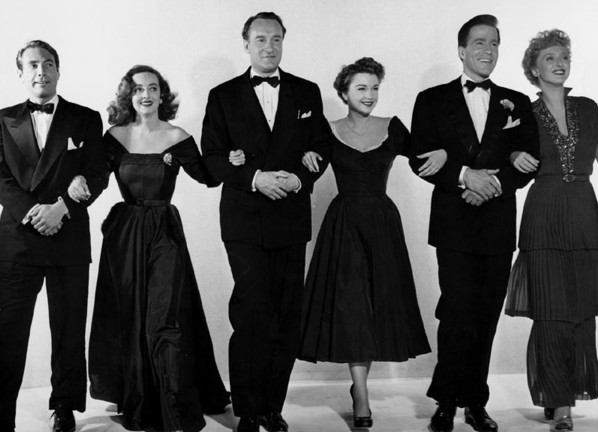
I could tell you that this is a film that is full of bigger-than-life characters and iconic performances but that doesn’t even begin to scratch at the surface of how well-acted and perfectly cast this film is.  Even boring old Hugh Marlowe is a perfect choice for playing boring old playwright Lloyd Richards.  (His wife is played by Celeste Holm.  Reportedly Bette Davis hated working with Celeste Holm but onscreen, their friendship feels very real and poignant and leads to some of the best scenes in the entire film.)  Gary Merrill, who later married Bette Davis, is likable as Margo’s boyfriend and Thelma Ritter is great as Margo’s outspoken assistant, largely because she’s Thelma Ritter and she was always great.  Marilyn Monroe famously makes the most of her minor role in All About Eve, playing an aspiring actress who has a very good reason for calling the butler a waiter.  And then there’s Bette Davis and George Sanders, both of whom are simply brilliant.

My favorite scene from All About Eve

My favorite scene from All About Eve

But to me, the best performance in All About Eve comes from Anne Baxter.  Baxter plays Eve as a perpetually smiling schemer and one of the great pleasures of the film is watching as Eve wrecks passive-aggressive havoc through Margo’s circle of friends.  Just watch the scenes where she deftly manipulates Celeste Holm.  All About Eve is usually referred to as being a vehicle for Bette Davis but if you actually watch the film, you see that the title is absolutely appropriate.  The film really is all about Eve.

And I could always tell you about how wonderfully sardonic the dialogue is but you already know that.  There’s a reason why even people who have never seen the film still quote Margo’s suggestion that everyone fasten their seat belts!

Bette Davis 2

So, in the end, what can I tell you about All About Eve?  Well, all I can really tell you is that it’s a great film and, if you haven’t seen it, you need to make time to learn all about Eve.

AllAboutEvecastpromo