Today’s dance scene that I love comes from Spike Lee’s frustrating yet brilliant 1998 film, Summer of Sam. In this scene, a perpetually unfaithful husband (John Leguizamo) dances with his wife (Mira Sorvino). In this scene, Lee establishes the dynamic of Leguizamo and Sorvino’s troubled marriage. Leguizamo may be the man but Sorvino is definitely the star.
Yay! It’s another trailer featuring my favorite actor — JAMES FRANCO! He not only stars in Palo Alto but he produced it and it’s even based on his short stories. Can we just go ahead and announce that 2013 will be forever remembered as the Year of Franco?
It’s time for another edition of Let’s Second Guess the Academy! This time, we’re taking a second look at the race for Best Picture of 1987.
Can you remember which film won Best Picture for 1987? Don’t feel bad if you can’t because Bernardo Bertolucci’s The Last Emperor is one of the lesser known Oscar winners. The film’s relative obscurity leads to one natural question: was it truly the best film released in 1987?
Or should the Oscar have gone to one of the other films nominated — Broadcast News, Hope and Glory, Fatal Attraction, or Moonstruck?
Let your voice be heard by voting below!
After voting for which nominated film you think should have won, give some thought to some of the 1987 films that were not nominated. Was Moonstruck truly a better film than Near Dark or Full Metal jacket? Ask yourself what would have happened if The Last Emperor hadn’t been released in the United States or what if Fatal Attraction hadn’t been a huge box office smash. What if none of the five best picture nominees had been eligible to be nominated in 1987? Which five films would you have nominated in their place?
Let us know by voting below. As always, you can vote for up to five alternative nominees and write-ins are accepted!
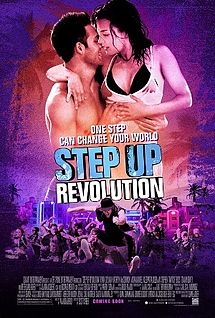
Last year’s Step Up Revolution is, in many ways, the epitome of guilty pleasure. On the one hand, it’s totally and complete ludicrous. And, then on the other hand — well, there is no other hand, to be honest. It’s a silly little film but the dancing is really good and how can you not love something that over-the-top? With it’s quick-cut editing, relentless beat, and hilarious attempts at being socially relevant, Step Up Revolution is the type of film that, in the future, our children will watch and laugh at even as we savor the nostalgia.
The past year or so I’ve been enamored and addicted to an anime series which came out in 2011. This anime is Nichijou and it’s one of the funniest, most confusing and irrelevant piece of entertainment I’ve ever seen. So, it’s only natural that the latest “AMV of the Day” comes from Nichijou.
The AMV is simply called “Event” and it goes a different route when it comes to the song used. It’s creator, JustRukia, doesn’t use techno, rock or pop songs as the foundation for the video, but instead goes for a more classical base. One wouldn’t think that Jacques Offenbach’s “Orpheus in the Underworld” aka the Can-Can song would fit in well with this irreverent anime, but it so does.
This is the third AMV I’ve posted that uses Nichijou and I don’t think it will be the last. The previous two were just as funny with “Safety Dance” being the first and “Affective Schoolgirls” the one before this one. This latest just continues the tradition of well-done and hilarious Nichijou AMV’s.
Anime:Nichijou
Song:“Orpheus in the Underworld (Can-Can)” by Jacques Offenback
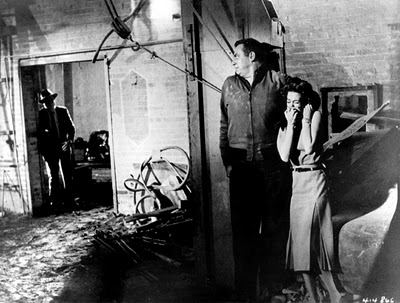
Thanks to TCM, I’ve gotten the chance to discover a lot of old films that I, otherwise, would have probably never even heard about. One of those films is A Cry In The Night, a low-budget, 1956 crime story that I randomly came across last month.
Harold Loftus (Raymond Burr) has issues. He lives in a shack, he’s totally dominated by his overbearing mother, and he spend most of his time secretly peeping at couples who are parked at the local lover’s lane. When he comes across Liz (Natalie Wood) and her boyfriend Owen (RIchard Anderson), he overpowers Owen and kidnaps Liz. Now, Owen must work with Liz’s overprotective policeman father, Dan (Edmond O’Brien), to track down Harold and Liz. Making things difficult is the fact that Dan blames Owen for the kidnapping and simply cannot bring himself to accept that his daughter was actually “one of those girls” who spent her Saturday night sitting in a car and sharing chaste kisses with her boyfriend.
(Seriously, the film made it sound like this was the worst possible thing that a girl could do with her time. I’m not sure if Dan was supposed to come across like a reactionary or if this was just a case of the film having been made in 1956. Personally, if that’s what the 50s were like, I’m glad I wasn’t born until the 80s.)
As directed by Frank Tuttle, A Cry In The Night tells its story in a stark, no-nonsense, semi-documentary manner. (There’s even narration at the beginning and end of the film.) O’Brien bellows his way through the role and Anderson’s colorless performance does little to make Owen seem like any less of a wimp. However, Raymond Burr makes for a disturbingly plausible pervert and Natalie Wood is well-cast as Liz. The film came out a year after Rebel Without A Cause and, watching her performance in A Cry In the Night, you can tell why Natalie Wood was Hollywood’s favorite vulnerable teenager.
I have to admit that I love films like A Cry In The Night, not so much because they’re great films (and, while always watchable, A Cry In The Night is certainly not a great film), but because they’re totally a product of their time. As opposed to the big budget extravaganzas that were churned out by the Hollywood studio system during the 50s and 60s, low-budget B-movies like A Cry In The Night were designed to exploit contemporary headlines and contemporary concerns and, therefore, provide a lot of insight into what was going on with the American psyche at the time.
A Cry In The Night combines several themes that ran through the majority of the films of the period. In the role of Harold, Raymond Burr is the epitome of the 1950s weirdo. As opposed to the normal, all-American boys who make out with their girls in cars, Harold can only bring himself to lurk about and attempt to catch a peek of what normal society does on Saturday night. When he kidnaps Liz, he’s not only threatening Natalie Wood, he is by extension attacking America itself. Meanwhile, Liz’s boyfriend comes across like the type of intellectual liberal who probably cast two ballots for Adlai Stevenson while her father is definitely an Eisenhower man. Boyfriend and father do not get along at first but what’s important is that they set aside their difference so that they can vanquish the other. By the end of the film, the father is willing to invite the boyfriend to dinner and the boyfriend has learned that sometimes, you have to be willing to fight.
For those of you who keep crying about how the solution for all of America’s problems lie in bipartisan compromise, A Cry In The Night is the film for you!
For the rest of us, A Cry In The Night is an occasionally entertaining time capsule.
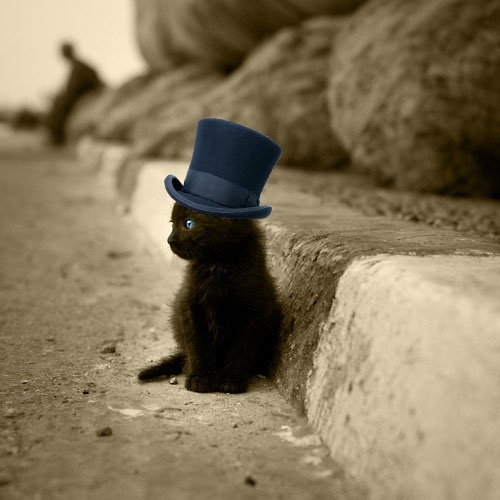
Before I left on my vacation, I sent the trailer kitties to collect some trailers that would be perfect for Labor Day! They returned with a bunch of movies about the mafia! I think they’re trying to make a subtle comment about the Teamsters but, regardless of their logic, enjoy this week’s edition of Lisa Marie’s Favorite Grindhouse and Exploitation Film Trailers and Happy Labor Day!
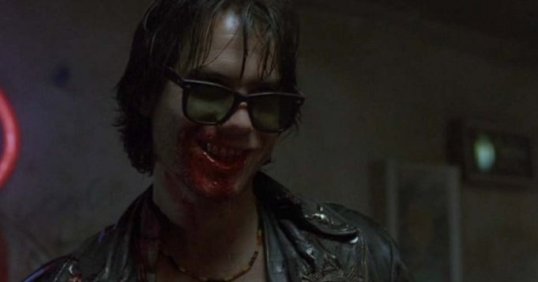
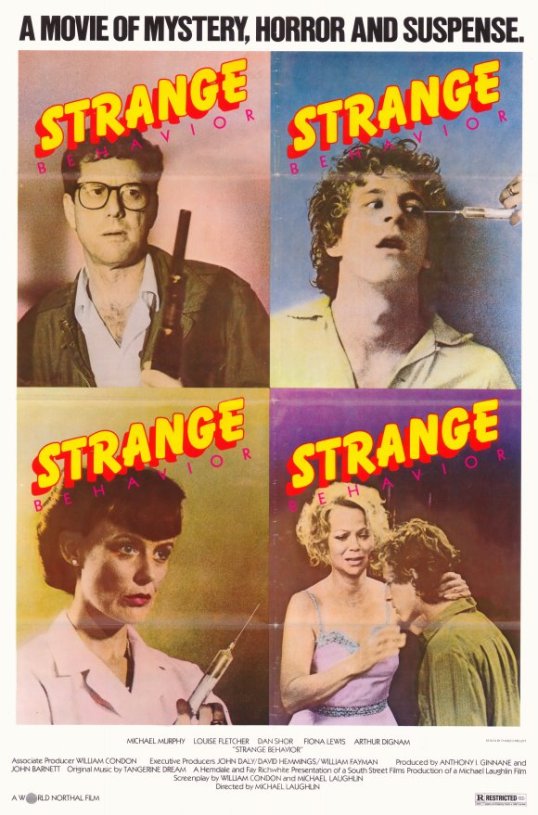
Today’s dance scene that I love comes from the 1981 cult classic, Strange Behavior. This scene proves that every horror films needs a totally random dance sequence.
It’s in the end of the month and you know what that means!
It’s time to combine two of my favorite things: a poll and a list of film titles.
Which four films are you most looking forward to seeing in October? Let us know by voting below. You can vote up to four times and, as always, write-ins are accepted!
There’s no way that I could ever write about the dance scenes that I love without including at least one scene from 1961’s best picture winner, West Side Story.
Sadly, people tend to underappreciate West Side Story. They focus on the fact that the singing voices of Natalie Wood and Richard Beymer are overdubbed by Marni Nixon and Jimmy Bryant, respectively. They laugh at the sight of “tough” street kids dancing around and singing that when you’re a jet, you’re the best.
Well, they’re wrong.
West Side Story is still one of the best musicals ever made and every time I see it, it’s a magical experience for me.
I think my favorite number from the film remains America. Watching this scene, you can tell why both Rita Moreno and George Chakiris won Academy Awards for their performances. They both bring a lot of fire and passion to their roles and nowhere is that more apparent then in America.




 Through the Shattered Lens