Every year since he retired from acting we seem to get one film from Clint Eastwood and this year it’s going to be one major prestige picture due this November. The film is J. Edgar and it’s a biopic detailing the life of the FBI’s founder and first director, J. Edgar Hoover.
This film will be the first time Leonardo DiCaprio and Eastwood will be working together. From the look of the cast assembled Eastwood has surrounded DiCaprio with some talented performers from Dame Judi Dench, Naomi Watts right up to Jeffrey Donovan, Geoff Pierson and Stephen Root.
The trailer shows just how much the film just screens “Awards Picture” from beginning to end. It’s not a suprise that J. Edgar has become one of the films this coming fall/winter to be a major frontrunner for the many film circles awards and, most likely, for the next Academy Awards. Here’s to hoping that this film will be a major bounce back for Eastwood after 2010’s very uneven and dull Hereafter.
J. Edgar is set for a limited release this November 9, 2011 before going worldwide a couple days later on November 11.
Here at the Shattered Lens, we’ve been eagerly awaiting Nicolas Winding Refn’s Drive, which has picked up some major buzz over the last few months. So note that this will not be the only review you’ll see for the film. As the other reviews come in, I’ll update this paragraph to link to them.
Addendum:
Leonth3duke has added his Drive Review, which examines the film from a lens closer to the director’s point of view and remains spoiler free. Definitely worth reading!
Arleigh has also added his Drive Review – which compares the film to both Michael Mann and David Cronenberg’s styles.
* * * * *
I was so excited by Drive that I treated my extended family to it (just in case the film went sour, it would be easy to apologize). This is going to be a quick review, because I’m going to ramble.
To quickly sum it up, Drive is a beautiful, artistic film that hits all the right buttons when it comes to the crimes it showcases. It occasionally explodes between quiet reflection and ultra violent action. Even the music was sweet. It’s just a shame though that all that coolness is wrapped up in dialogue and scenes where the pacing……moves……as……………slow…………..as………………this. Honestly, the book this was adapted from felt like it must have been about 50 pages, at best.
Drive is the tale of Driver (Ryan Gosling), a stuntman for the movies by day, and a Wheelman by night. His partner, Shannon (a nice performance by Breaking Bad’s Bryan Cranston) gets involved with a mobster (Albert Brooks) on a business venture. After getting caught up in a heist that goes awry, Driver has to try to protect himself along with the woman and child he’s recently befriended.
Drive has a fantastic sequence before we actually see the opening credits. Everything about that opening is downright sharp and creative. I haven’t seen that cool an opening to a film in quite a while. What a way to hook the audience in.
Overall, the film feels great and unique, but it suffers from one problem that I’ve only seen a few people actually mention. It feels like there’s this pause between every statement between Driver and Irene (Carey Mulligan). Imagine having one character say “Hello”, and then having someone pause the movie for a few minutes before picking it up from there. Drive ended up doing this quite a bit. I can understand if Driver is a soft spoken, man of action, but there were moments where I wanted to shake both Gosling and Mulligan to communicate more. I’m not saying they had to move in a particular direction, but they had a lot of patience waiting for replies from each other. There were other scenes where I felt Refn should have considered adding just a few cuts to the film to increase the speed of the film. The slow pace keeps it from becoming The Transporter, but most of this movie felt like that 3rd act in Heat after the robbery (or the multiple endings in Return of the King) to me. The film felt more like it was in love with itself than anything.
I understand that Drive is an independent film, and with independent filmmaking, there’s a bit more freedom to do things artistically instead of having movie marketers breathe down your throat. While I may lack the film appreciation skills to effectively grasp the artistic impact of Drive on screen, I can say that as a dialog or story driven piece, the movie suffers that one hiccup. Others may see the movie differently than I did.
Pacing aside, Drive is easily worth seeing, and is in some ways similar to some of Michael Mann’s films like Thief and the aforementioned Heat. Ryan Gosling was cool, but knowing that you’re not going to get the kind of emotion from his character compared to maybe Blue Valentine helps to brace you. Working from Mann’s concept of movies, you could relate Driver to a Neil McCauley. In Heat, DeNiro’s McCauley took action when he needed to. If someone forced his hand, the response was harsh. Driver felt like he had something of the same approach, which I really did like.
Visually speaking, I loved it, but it just has areas where Refn appears to be in love with a shot so much that he lingers longer than he needs to. If you never told me who directed this, I might assume it was David Lynch. The driving scenes themselves are done very well, and the action is also explosive, breaking the silence in the film a number of times. The silence is so strong that something as simple as a gunshot caused most of the audience to jump, which I found interesting.
The other performances in Drive are interesting, especially Albert Brooks and Oscar Issac, particularly. I didn’t even recognize him in this film, compared to his bad guy role in Sucker Punch. Christina Hendricks, though nice to see, didn’t really do too much here.
So with Drive, you can go see it. I may see it again myself. I’m not saying you shouldn’t, but if you yawn somewhere down the line, don’t say I didn’t warn you.
One other thing I had to add here. The Marketing for this film a few months ago (including the original trailer) is closer to the impact of the actual film than some of the marketing that’s being done now. Most of the recent posters and tv ads push Drive as something of an action piece. I would consider it more of a Drama with action occasionally spliced in.
For the latest “Song of the Day” I only had one choice in mind. No other song has wormed it’s way into my waking consciousness than the song I chose. It’s the 80’s-like synth-pop song “A Real Hero” by the band College feat. Electric Youth.
To say that Nicolas Winding Refn’s first Hollywood film (though still quite modestly budgeted) was something that stuck to me would be an understatement. One of the factors which just made the film one of the best films of 2011 has to be the 80’s retro synthpop soundtrack by Cliff Martinez and some perfectly chosen licensed songs. The one song which definitely has become a favorite and also one which has stuck itself in my mind since I saw the film is “A Real Hero” which we fully hear in the end of the film and into the end credits (the song get a brief appearance in the middle of the film).
This song perfectly encapsulates the restrained love story between the characters played by Ryan Gosling and Carey Mulligan. It explores the dynamic between The Kid (Gosling’s role) and Irene the young mother (Mulligan’s role) as heard through the song’s sparse lyrics which intersperse itself between the electronic synth keyboard play. It’s inclusion in two spots in the film adds different meanings to the song. The first time we hear it the song adds a soft layer of old-school romanticism to Gosling and Mulligan’s characters, but when we finally hear it in full in the end that romanticism takes on an ambiguous tone with just a tinge of bittersweet to the romance.
There’s another song from the Drive soundtrack which also made quite an impact not just in the film’s overall quality but in me as a listener and an audience. That would be explored in a day or so.
Well, we’ve finally reached the end of the 33-day marathon which saw 32 dream-memories penned by renowned Japanese author Shigematsu Kiyoshi for the rpg title Lost Odyssey. For Day 33 (despite what the video may say it’s the 33rd dream and not 32nd) we have quite an appropriate memory from Kaim, the immortal warrior, who has seen 1000-plus years of war and experiences both good and bad. “An Old Soldier’s Legacy” speaks very much to the times we’re having now.
The memory ends this series on a down note. We see through Kaim’s reminiscing eyes how war creates a cycle of hate that never seems to end. Victor will punish the defeated. The defeated will rise up generations later to bring down their oppressors and begin the cycle of hate and violence anew.
It’s always the young men who have seen war strip them of their humanity and the men who led from safety who never seem to get the lesson needed to finally bring peace after years of war. It’s always the old soldier’s who have survived countless battles and have learned the lesson of compassion for one’s enemies who know how to stop the cycle. But in the end no one ever listens to these old warriors who only want peace.
As we look at the wars happening now across the globe are we just sowing the seeds for future generations who will rise up and do the same to their enemies or will the leaders and young men now fighting learn the lesson the old soldiers before them have learned through blood and tears: when the fighting ends let peace rule and not vengeance.
An Old Soldier’s Legacy
Kaim spent the entire summer surrounded by a fence that towered over him.
He was trapped in a prisoner of war camp.
It was a terrible mistake – not his but the dimwitted, cowardly commander’s. Kaim was a mercenary attached to the man’s regiment. They were invading the enemy’s main port city when the officer miscalculated at the end and the unit’s line of retreat was cut off. While the troops were prepared for an all-or-nothing charge, the commander almost casually opted for surrender.
“Don’t worry,” he had said to his men before they were locked up.
“Whatever happens now, the ultimate victory in this war will be ours. Instead of making a stand and dying for nothing, we’ll be much better off if we just quietly let them take us as prisoners of war. We’ll be liberated right away in any case.”
This made perfect sense.
But the officer completely misread the feelings of an enemy on the brink of defeat.
Having survived hundreds of battles, Kaim knew better than anyone how people felt towards prisoners of war after the hated enemy had taken the lives of their friends and loved ones and torched their hometowns.
To the members of his platoon at least, as they were preparing to enter the camp, he whispered,
“You’d better forget about any rosy pictures. This could be worse than the battlefield.”
His words proved all too accurate.
Life in the POW camp was bitterly harsh. Day after day, the men were forced to do backbreaking labor on a diet of scraps. The sick and injured went untreated and were not even allowed to rest. To collapse on the job was to die. Indeed, several of the prisoners died not by collapsing on the job but from brutal beatings for minor infractions.
Everyone with access to the camp – both the soldiers assigned to guard duty and ordinary citizens with business there – looked upon the prisoners with hatred in their eyes. Some guards would wave swords at them and boast, “I can kill you bastards any time I like,” and certain officers slaughtered one prisoner after another, disguising the killings as accidents.
Even as they tormented the prisoners, such men were suffering the deaths of their families and friends in the war, and spending their days in fear of the coming invasion. The camp was a place ruled by hatred and revenge, but also a place shrouded in uncertainty and fear of the day when the captives would become their captors. This tense, complicated atmosphere ate away at the spirits of all, friend and foe alike.
The horror of war lay not only in the mutual killing of enemies clashing on the battlefield but even more so in places such as this that were far from the front lines.
Kaim knew this with every bone in his body.
A month passed after the platoon entered the POW camp.
The enemy troops were thoroughly exhausted.
The fall of the capital was said to be imminent.
In spite or because of that, life in the camp was worse than ever.
The tasks assigned the prisoners were even crueler than before, and their diet, which was meager enough to begin with, fell below the level needed to sustain life.
The military guards bullied the prisoners as if for their own amusement, wounding them, and mistreating them with fatal consequences. All kinds of civilians did their part, too, hurling human waste over the fence into the camp. And even if secret stashes of food might be left for them, none of the prisoners dared eat them for fear they might be poisoned.
Hatred climbed to unseen heights.
To one prisoner who moaned “Why are you doing this to us?”
A guard spat out the answer, “It’s just what your country is doing to us.”
And it was true.
All the young men of the enemy country were being sent into battle, where most of them were being killed. Whole towns had been burned down and transformed into rubble.
While the soldiers assigned to guard duty knew that defeat in the war itself was certain, they continued to be victors where the POWs were concerned.
And while the captured soldiers believed in the victory of their fatherland and waited for the day when their comrades would resuce them, they continued to be vanquished among victors.
The moans of the POWs could be heard throughout the camp:
“When is the war going to end?”
“The war doesn’t have to end. Just let them get us out of here!”
“Have we been abandoned by the fatherland?”
Kaim kept offering the same advice to them again and again:
“Be patient,” he would say, “Don’t give up hope.”
Kaim knew everything there was to know about war, and so he realized what was happening now. The fatherland’s supreme commanders were trying to bring down the capital first and leaving the fall of this military port city for later. The POWs had, in fact, been abandoned.
The commander in chief would no doubts say, “For the sake of a great victory, we cannot let ourselves be concerned by a small set back.”
And he would be right.
But precisely because he would be right, Kaim could not convey this to the prisoners, who firmly believed that their side was trying their best to rescue them.
One POW after another made plans to escape, and for every one of those there was an informant who exposed his plan to the guards.
Both types of prisoner had the same thing in mind: to save himself alone. No one could be trusted. THere were even some “informants” who made up phony escape stories about perfectly innocent men just to put themselves in a little better position with the guards. The only thing awaiting such traitors when the war finally ended would be the revenge of their comrades. As much as they understood this, all they could do was ingratiate themselves with the guards so as to secure their momentary safety.
The fence was not the only thing surrounding the POWs. It was not just their bodies but their minds that had been taken captive. In addition to the ones who died from illness and injury were increasing numbers of those who ended their own lives after a period of mental suffering.
Be patient.
Don’t give up hope.
Kaim’s word gradually ceased to make an impression on anyone.
After the men had been prisoners of war for two months, a new guard took charge of Kaim’s barrack.
In place of the young warrior who had been guarding them came an old soldier.
His name was Jemii.
When he introduced himself to the men, he remarked with a grim smile,
“Things must be getting pretty desperate if they’re calling up an old goat like me.”
The young guard had been sent to the front lines. This probably meant that the battle for the capital had entered its final phase.
“I tell you, this war is almost over. In another month, you young fellows will be on the other side of the fence, and we’ll be locked in here. Our positions will be completely reversed.”
Jemii needed no prompting from the POWs, and his vocie contained none of the hate-filled agitation of the young guard’s.
“All you fellows have to do is hang in there a little longer, be patient, and not give up hope.”
His words were almost identical to Kaim’s, which meant that Jemii, like Kaim, had experienced many a battle over the years.
“We may be in different positions, but deep down we’re the same. You men are unarmed prisoners, and we’ll be under your control as soon as you come to occupy the country. I’m what you will be tomorrow, and you’re what I will be tomorrow. I don’t know how long we’re going to go on like this, but if you stop and think about it, isn’t it stupid for us to keep hating each other and snarling at each other? Let’s at least try to get along.”
He twisted his wrinkled face into a big grin and laughed aloud.
His smile deeply affect the mentally and physically exhausted men.
Before they knew it, they were smiling, too. THis was the first carefree smile that any of them had managed since their capture, or, rather, since their time on the battlefield.
Jemii’s kindness was not limited to words. Of course, the change of a single guard was not enough to substantially improve the prisoners’ treatment. The hard labor and meager food were the same as before. But Jemii would speak to them with real feeling.
“Sorry for working you so hard, but there aren’t any young men left in this town to do the muscle work. We’re not making you do these jobs to punish or discipline you but because the town needs your help with these constructing projects.”
“I’m sorry we can’t give you anything decent to eat. I really am. But everybody outside the fence is starving, too. We’re all in this together, so try to put up with it.”
Jemii would try to order somewhat easier jobs for prisoners who had taken ill, and he would sneak them extra food. THat is the kind of guard he was.
The prisoners started calling him “Uncle Jemii,” and would even joke around with him sometimes.
“We’d be way better off if the other guards were like you, Uncle Jemii,” said one prisoner, to which Jemii nodded sadly.
“I’ll tell you what, Uncle Jemii,” said another prisoner. “If I had known that there were people like you in this country, I never would have volunteered. I’m not forgetting my place as a POW, but let me shake your hand once.”
Jemii allowed himself the faintest of smiles at this and gave the man his hand.
“You know something, Kaim…” Jemii said, sitting down beside Kaim during a break in the heavy lifting.
It was a clear, beautiful day, but the sunlight pouring down on them had lost its midsummer glare. The season was shifting to autumn.
“I’d say you’re a little different from these other young prisoners.”
“Am I?”
“I know you’ve seen your share of battles. I can smell it on you.”
Kaim’s only reply to Jemii was a strained smile. Jemii seemed to have known what Kaim’s response to his remark would be, and he wore the same kind of smile as he carried on the conversation.
“Why haven’t you escaped?” It would be easy for a man like you to break through the flimsy security they have here.”
“You give me too much credit.”
“You could make it by yourself, but taking everybody with you would be tough. Is that why you stayed?”
Kaim gave him another strained smile, saying nothing.
Jemii was right. If he decided to escape on his own, it would be easy for him to climb over the fence. If, however, he manged to gain his freedom, the prisoners he left behind would be punished or, at the very least, would have to live with increasingly harsh security measures. The young soldiers abandoned in the camp would feel only despair.
If he was going to escape, it would have to mean getting everyone over the fence. Most of the others, however, were so wasted away that they were beginning to lose even the strength to go on living. Men like that could only be a drag on his own flight to freedom.
“You’re a kind-hearted fellow, aren’t you?” Jemii said.
“And you’re a smart one, too, I’ll bet.”
“What do you mean by that?”
“Any soldier with as much experience as you has already seen the handwriting on the wall. The war is over. Another three days, maybe a week, and our side is going to announce a total surrender. Right now, we’re just making our last stand out of sheer stubbornness. The second the war ends, you prisoners will go free, and we’ll take your place.”
“Yes. And?”
“It’ll just be a little longer. Really, all you have to do is hold on a little longer. You must know that as well as I do. So you’re probably not even thinking of making the effort to escape.”
When Kaim nodded, Jemii smiled and said, “That’s fine. I’m just as fed up as you are with all the pointless fighting and hatred.”
He looked up at the autumn sky, his profile marked by a number of deep wrinkles. On closer inspection, Kaim realized that some of those wrinkles were scars left by sword cuts.
“Let me tell you something, Kaim.”
“All right.”
“Our country doesn’t have the strength left to make it through another hard winter. I knew that when summer was still here.”
“I see…”
“I just wish we had given up sooner. Then there wouldn’t have been so many young men killed in battle, and so many towns burned.”
Jemii released a deep sigh and added, “When this war is over, we’re going to have to do whatever your country tells us to do. We can’t complain if we’re enslaved or tortured to death by the young men who are now our prisoners of war.”
Kaim could not assure him that would never happen.
As a mercenary, he would just go off seeking new employment when this war ended, but this was not true of the other prisoners of war. As the conquerors, they would now have peace. They would return to the lives they led before. But how many among them would be able to treat the vanquished people with kindness and respect?
“I think you’ll know what I mean, Kaim, when I say you can be as cruel as you like to us old folks when the fighting ends, but please, I’m begging you, be decent to the young men and to the women and to the children. Don’t do anything to them that will make them hate your country. Otherwise, there’ll just be another war sometime in the future. Ten years, twenty years, thirty years, maybe even a hundred years from now. I don’t want any more of this. Countries fighting each other, people hating each other…”
It happened that very moment.
The violent ringing of a bell began to echo throughout the camp. It was the bell in the watchtower, signaling an emergency meeting of the guards.
“Oh, well, gotta go,” Jemii said, standing up. “Don’t bother going back to work right away. Tell the other fellows everybody can have a little break.”
He took a few steps before turning to say to Kaim with a smile, “You know, if we weren’t enemies, I would’ve liked to have a drink with you sometime.”
That was the last Kaim saw of Jemii as a guard.
The sun was overhead when Jemii left, but he did not come back even after it had begun sinking in the west.
The next time someone came into the enclosure it was to the cheers of the POWs welcoming the arrival of their countrymen.
“You’re going to be all right now, men! The war is over! It’s a huge victory for our side!”
Jemii’s country had agreed to a total surrender.
The guards assembled in the tower were stripped of their weapons, and anyone who resisted was killed on the spot.
“Get a move on there! Hurry up!”
The soldiers who, until a short time ago, had ruled the camp were herded into the enclosure with whips and under the threat of drawn swords.
The POWs, who until only moments ago had been under their rule, now lined up to stare at their former guards, and before anyone knew it, the guards were being cursed and stoned.
Hands tied, the soldiers could not ward off the stones, and before long they were drenched in blood.
Jemii was among them.
He started at Kaim, blood gushing from his forehead. His eyes showed no hatred or resentment. He simply gave Kaim a little nod, looking straight at him as if to say, “Remember what I asked you to do.”
Kaim shouted to the men surrounding these new prisoners,
“Stop it! Stop it! They’ve surrendered! Leave them alone!”
But, liberated from the fear of death and from days of humiliation, his young comrades, wild-eyed and screaming like animals, went on stoning their former guards.
“Can’t you see who this is? It’s Uncle Jemii! Stop it!”
One of the soldiers gave him a contemptuous snort and all but spit out the words, “The old bastard was just sucking up to us for when our side won.”
Another soldier – the young man who had asked to shake Jemii’s hand that day – shouted, “He might act like a good guy, but an enemy’s an enemy! And besides, he’s just some old geezer from a country we pounded into the dirt.” He threw another stone at Jemii.
Kaim’s shouts did no good. He started grabbing hands that were readying to hurl stones and smashing people in the face, but no one would listen to him.
The commander of the troops that had galloped to the rescue just grinned and said, “Good! Good! Get it out of your system!” and he handed swords to the unarmed men.
“Kill them all, and raise some victory cries while you’re at it! Think of the humilation you endured as prisoners. Now’s the time to get even!”
“No, stop it!” Kaim shouted. “The war is over!”
“Wait, I know you. You’re a mercenary.
You’re just spouting a lot of nonsense. A few good sword thrusts could shut that mouth of yours!”
The commander’s aides took this as a signal to surround Kaim.
“Don’t waste your time on him, men! Warriors of our beloved fatherland! Kill these soldiers first, and then we can attack the town. Set fires! Take the women! We won this war! This town, this country, everything belongs to us now!”
The commander laughed aloud, but in the next moment, his smile turned into a grimace. His aides were falling to the ground. Kaim had grabbed a sword from one of them, and now it flashed in his hand.
“Traitor! Somebody take him down!”
Kaim swung around and started for Jemii.
But it was too late.
The soldiers were already slashing wildly at the former guards, who had no means to defend themselves.
Standing amid the hellish scene of human butchery, Kaim saw it happen.
The old soldier, who had been kind because he knew all too well the link between war and hatred, fell to the ground without uttering a word, a hateful blade thrust into his back.
Kaim made a break for the camp gate.
He ran for all he was worth, a soundless roar reverberating inside him.
Why did people have to hate each other so?
Why did people have to fight each other so?
And why was it impossible for people to stop fighting and stop hating?
He did not know the answers to these questions.
Saddened and frustrated by his own incomprehension, Kaim ran at full speed through the rubble of the town.
A hundred years pass by.
“This is it, Kaim,” the commander says with a smile. “I am enormously grateful for the magnificent job you’ve done. You can name your own reward when this war is over.”
The last great offensive is about to begin.
This should bring the war to a close.
It has taken a hundred years.
After all these long, long years as a vassal state, the country that lost the war the year Kaim was a prisoner has raised its banner against the ruling power under which it endured such suffering in the last war.
The defeated country has spent a hundred years nurturing its hatred for the ruling power, passing the hatred down from parent to child to grandchild. The country that won the war a hundred years ago was too filled with a ruler’s arrogance and insensitivity to notice what was happening. The only things that it has handed down from parent to child to grandchild are the scorn and contempt for the “inferior country” under its sway.
This war ends with almost disappointing ease.
The results are the exact opposite of the war a hundred years earlier.
No one knows on which side the goddess of victory will smile if yet another war occurs a hundred years from now.
“All right, Kaim, name your reward.”
Kaim answers the commander’s question softly: “I don’t need a thing.”
“Why not? It’s true that you’re a mercenary, but you far outdid the regular troops. Our country wants to show its appreciation for your efforts.”
“If that’s how you really feel, I’d like you to promise me one thing.”
“What’s that?”
“Don’t make your enemy hate you.”
“What are you talking about?”
“I’m talking about treating the people of the defeated country with kindness and respect.”
A shocked expression on his face, the commander laughs and says, “Aren’t you the softhearted one!”
Kaim, however, is deadly serious.
“This is the legacy an old man from your own country left me a hundred years ago.”
“Enough,” says the commander, still looking shocked. “Dismissed.”
Kaim himself has no hope that Jemii’s legacy will be fulfilled. The hundred-year journey he has taken since that fateful day in the camp has shown him only the selfishness and stupidity of the human race. It will be the same from here on out as well. Indeed, nothing has changed since long before he met Jemii.
And yet.
Back at his post, Kaim grips his sword and holds his breath.
It will change someday.
They will see someday.
I want to believe that.
Unless I believe it, I can’t go on with my endless journey.
You know what I mean, don’t you, Uncle Jemii?
Eyes closed, he can see Jemii’s face smiling sadly.
The order goes out to the entire assembled force: “Charge!”
Within the rising clouds of dust, Kaim grips his sword and starts to run.
Unlike Abbath’s awkwardly titled sideproject I (which I haven’t actually heard yet), Demonaz Doom Occulta left little to the imagination in naming his new band. According to a lot of reviews I’ve read, he left little to his imagination in writing songs for it too. I don’t know that I can develop much of a case to the contrary, but March of the Norse is still more than capable of entertaining. I enjoy it.
Northern Hymn / All Blackened Sky
It’s definitely not a black metal album. If anything, you might say it’s an Immortal minus black metal album. In a lot of ways it has marks of the generic. The tempo and beat are pretty homogenous throughout, and what you hear is what you get; there’s not really anything buried beneath. There are a few slow moments that harken to Bathory, and a lot of plodding along in a way that characterizes stereotypical viking metal. But if you accept that Demonaz set out to create something pretty standard, I don’t think the results are bad at all. The songs never drag, and despite all sounding quite similar I did start to get pretty familiar with each individual song after a few listens, not just the sound as a whole. At the same time, the similarity with which each song starts gives it a lot of continuity. There aren’t many major transitions. In fact, I didn’t even notice when All Blackened Sky ended and the title track began my first listen through it. Don’t misconstrue that as a decidedly bad thing; it’s not that I missed it for lack of interest. The songs just flow together nicely.
Where Gods Once Rode
Now don’t get me wrong, aside from some pretty cool solos there is absolutely nothing “special” about March of the Norse. If you look for merit beyond face value you’re not going to find much, and I subsequently don’t have much to say about it. But it has value as a background piece. Because it’s neither very enticing nor unpleasant I can really put it on repeat all day long and never have to worry about being distracted from whatever I’m focused on, for good reasons or for bad. When I choose to tune in I always like what I hear, and I can tune right back out with no real effort.
I guess that’s all I have to say. I like this album, and I find it useful. It’s not the sort of thing I would go around recommending, but neither is it so base that only a die hard Immortal fan can enjoy it, as I’ve seen some people claim. Once something new crosses my path to replace March of the Norse as my sort of background album of the week I might never remember it again. But until then, well, I’ve got my $11 worth out of it. It’s certainly not the sort of thing I only listen to once and put back on the shelf. Sometimes generic done well is refreshing.
Both Leonard and Arleigh have already written detailed (and positive) reviews of Contagion so I’m going to keep my review short and simple.
I say this with the greatest amount of respect for my fellow reviewers and to all of our readers who are probably going to vehemently disagree with me:
Contagion sucked.
Big time.
With this film, director Stephen Soderbergh takes material that is ripe for exploitation and histrionics and he presents it in a very clinical, low-key fashion and the result is a draggy film that takes itself way too seriously. Seriously, if you’re going to end the world, have some fun with it.
Soderbergh assembles an impressive cast and then he pretty much just strands them out in the middle of nowhere. I appreciate the fact that the director and the cast are trying to keep things rooted in reality but oh my God, the reality here is so boring. Most of the cast does an okay job but Jennifer Ehle, who plays one of the scientists looking for a cure, gives such an annoyingly mannered performance that watching her was like listening to some little kid running around in squeaky shoes. Seriously, if I had to hear one more artfully placed stammer from her, I was going to scream.
Finally, this is yet another film where the villain is a blogger. I mean, he’s even English, that’s how evil Jude Law’s blogger is. I mean, I’m sorry that all the old folks out there are so threatened by the Internet but this blogger-as-villain trend is just petty.
With its all-star cast and its pretensions towards being an “important film,” Contagion should have been a fun, tawdry little romp. It should have been like a 21st Century Airport or Towering Inferno. Kate Winslet and Laurence Fishburne should have been having an adulterous affair. 2nd-rate television actors should have been dropping like flies. There should have been melodramatic music and dialogue like, “Excuse me, did you say the nurse was conducting the operation?”
We’re now down to the final two dream-memories on what has been the 33-day marathon. This penultimate entry is called “Samii the Storyteller” and this one makes a strong statement about what Churchill called the one of the first casualties of war: The truth.
War will always remain the main and perfect calling for man. It’s what we’re best whether we care to admit it or not. Cormac McCarthy said it best:
“It makes no difference what men think of war, said the judge. War endures. As well ask men what they think of stone. War was always here. Before man was, war waited for him. The ultimate trade awaiting its ultimate practitioner. That is the way is was and will be. That way and not some other way.”
Does this mean we’ll never stop ourselves from this cycle? The answer to that will always lie on how those who never see the battlefield and never fight the wars are told how it truly is. War has always been chronicled for the masses as something glorious. Something righteous and for the greater good of all when it’s never so simple as that. Yes, sometimes wars have to be fought and people will have to die, but how those in power keep the masses fired up is why the truth is always the first casualty of war.
Civilians will always be the fuel which drive wars. No matter how powerful a government is or how great an army can be on the battlefield they both cannot continue to do so without the consent of the very public they govern and protect. Dictator and autocrats know this and why they spin the truth of what war truly is into lies to keep them from learning the honest and brutal truth. Democracies and republics will always walk a fine line of how to tell the truth to it’s people. Give enough of the truth, but never so much that morale flags.
There will always be a need for people such as Samii the Storyteller, but whether it’s the Samii who starts the dream-memory or the one who finishes it will depend on the listener.
Samii the Storyteller
Samii was an outstanding storyteller, one of the best official reciters of the national history there had ever been.
And he was far and away the most popular of the storytellers in the country’s army.
Samii was not a soldier himself, but he always moved with the troops, and always with the units on the most hotly contest battle lines.
Whenever a battle ended and Samii came back to town, his head was filled with countless stories – stories of soldiers who had performed heroic deeds on the battlefield, stories of soldiers who had faced the enemy gallantly, stories of soldiers who had saved their buddies, stories of soldiers who had used their bodies as shields to protect their unit’s position., stories of daring soldiers who had broken into the enemy camp single-handedly, stories of soldiers who had fought fairly to the end against the most devious of enemies.
It was Samii’s job as a storyteller to depict events on the battlefield for the people of the town.
That year, Kaim was always by his side It was Kaim’s mission, as a particularly capable mercenary, to accompany Samii to the front and make sure that nothing happened to this nationally beloved storyteller.
Samii liked Kaim from the moment they teamed up.
Not only did they appear to be about the same age, but with the eye of an outstanding storyteller, Samii was able to perceive the long past – the too long past – that this quiet warrior carried with him.
Samii said, “I could tell the minute I saw you that you had more military experience than any of the others in the regular army. Your head is packed with even more battlefield stories than mine.
Am I right? The only difference between you and me is that you can’t put yours into words as well as I can. Am I right?”
Samii spoke in the professional reciter’s ringing, rhythmic tones.
“Come on Kaim, tell me something. I don’t care if it’s a scrap of a scrap. Just give me a hint of something you’ve seen on the battlefield, and leave the rest to me. I’ll turn it into a terrific story.”
This was probably true, Kaim thought.
If Kaim were to put himself in Samii’s hands, his never-ending life would surely be extolled in the form of a never-ending narrative poem.
And this was precisely why Kaim merely shook his head in silence.
The townspeople knew nothing of the actual battlefield – how soldiers fought on the front, how they killed their enemies, or how they themselves died in action. The people could only imagine these things upon hearing them celebrated in Samii’s stories.
Conversely, the soldiers fighting on the front had no way of knowing how their stories were being told in the town.
The only ones who knew both sides were Samii himself and his bodyguard Kaim, who clung to him like a shadow.
As soon as he returned from the battlefield to the town, without even pausing to catch his breath, Samii would head directly to the square in front of the castle gate. The people would be waiting for him there – not just the residents of the capital where the castle was located but many who had traveled for days from distant villages to get there.
They were hungering for his stories. They wanted to know how their husbands and sons and fathers and lovers and friends had fought and died on the battlefield.
For these people, Samii would mount the stage in the square and recount the drama of the battlefield in ringing tones, accompanying his stories with gestures and flourishes and, sometimes, even tears.
Samii’s stories of the battlefield, however, were by no means composed of unadorned fact. He beautified many parts.
He cleverly concealed elements that could be embarassing to the army.
And he acted out and embellished his stories in ways that were sure to set his listeners’ hearts to throbbing.
If a soldier happened to do something that was relatively helpful to his unit, in Samii’s hands it would be transformed into an amazing military exploit.
But that was just the normal level of exaggeration he introduced into his stories. At times, a soldier killed after a panicked escape from an enemy attack would be turned into a gallant warrior who died bravely without yielding an inch of soil.
A man who lost his life to a raging epidemic would be described as having met a glorious end after challenging an enemy general in hand to hand combat.
Even a soldier who had lost his mind out of sheer terror and breathed his last after a period of hallucinating, in Samii’s hands, could be refashioned into a hero who gave his life in exchange for turning the tide of battle.
In other words, Samii’s stories were almost all lies.
It could be said that he was deceiving the people.
But that was the mission of the storyteller.
In the square stood a number of soldiers carrying swords.
If Samii ever said anything that ran counter to the intentions of the military, they would have immediately arrested him, made it impossible for him ever to speak again by cutting his tongue out with a hot iron poker, and imprisoned him for whatever remained of his life.
Kaim knew well enough that Samii’s duty as a national reciter was to whip up the people’s fighting spirit.
While accomplishing that, his stories also served to comfort those who had lost their friends and family members in battle.
People would often ask Samii, “What was it like when my son died?” or “How was my boyfriend on the battlefield?” or “How about my father?”
Samii would ask the soldier’s name, answer, “Oh, him, yes, I remember him well.” and speak movingly of the death of a nameless soldier of whom he had no recollection whatever.
Before long, from here and there amid the throng crammed into every corner of the square, would come the sound of sobbing. These were not tears of sorrow, however. Rather, they were the hot tears of pride and gratitude for soldiers who had died fighting for the fatherland, tears of anger toward the enemy troops, tears filled with a determination to win this war at all costs, come what may, in the name of justice.
“And what’s wrong with that?” Samii would say in affirmation.
“The families of soldiers killed in action have grieved enough already from hearing the news that their loved ones have died. After that, it’s just a matter of how much meaning they can find in the person’s death, how much pride they can feel at the way it happened.
Am I right? Nobody wants to believe his or her loved one died for nothing. Nobody wants to face the fact that the person died in an embarrassing way. So I tell them lies, I make everybody into a hero. If it’s a choice between actual fact that can only cause sorrow and lies that raise people’s spirits, I’ll take the lies every time. It’s not for the army, it’s for the families that I go on telling these beautiful lies.
I’m absolutely committed to this as a storyteller.”
This was the kind of man that Samii was.
And this was why Kaim continued to protect him on the battlefield. Beyond his bodyguard duties, he would also go for a drink with him whenever Samii suggested it.
But then there were those times when Samii started pestering him for stories.
“Come on, Kaim, tell me what you remember from the battlefield. Share those stories with me. I’m sure you’ve got hundreds of them.”
No matter how much Samii begged, Kaim kept his mouth shut.
“It’s not as if I would use them for story material. If you don’t want me to tell anybody, I won’t. I swear. I just want to know, I have to know. Call it part of my nature as a storyteller. I have this incredible need to know your stories.”
Kaim said nothing.
“You know, Kaim, you look young, but you’re actually five or six hundred years old, aren’t you? I’ll bet you’ve got more stories packed inside you than a roomful of thick history books. I can tell. That’s why I’m so curious about you. Who are you? What are you? What have you been doing all these years? I’m dying to find out.”
Still Kaim said nothing.
Samii headed out once again to the front. This time it was for a major battle that was likely to determine the outcome of the war.
Samii and Kaim were sharing a drink in their barrack the night before a major confrontation when a young soldier, just a boy, paid them a visit.
“It’s me, Uncle Samii! Aran, the tailor’s son.”
Samii instantly broke into a warm nostalgic smile. Wrapping an arm around Aran’s shoulders, he expressed his joy at their reunion before turning to Kaim.
“Aran is from my home town.” he explained. “I’ve known him since he was an infant. He’s like a little brother to me.”
Turning back to Aran, he asked, “How’s your mother?”
“She’s well, thanks. You should hear her boasting about you, though, Uncle Samii. She tells everyone she’s so amazed how that mischievous little Samii turned out to be one of the most popular figures in the whole country!”
“I owe her a lot, Aran. She told me so many stories when I was a kid, that’s what helped me to be come a storyteller.”
“Really?”
“It’s true. She made me what I am today.”
Samii said this with a big smile, which suddenly gave way to a stern expression.
“But tell me Aran,” he said, “what are you doing here?”
“I enlisted. I’m in the army now.” he said, puffing out his chest.
“That’s what everybody does when they hear your stories.”
“You heard me telling stories?”
“Sure. I had to come into town for something and I saw this big crowd in the square. I looked to see what it was all about, and it was you! I stayed and heard every last story. I couldn’t stop crying at the end. Out of nowhere, I suddenly felt the courage to fight for the fatherland. As soon as you were through, I went to the castle and volunteered.”
Aran had not been the only one, apparently. The young men in the square had enlisted en masse.
“No wonder you’re so popular! The man in the enlistment office was saying the number of volunteers jumps every time you perform.”
Aran innocently sang Samii’s praises, but Samii’s stern expression never changed.
“Aran, you’re the only son in your family, aren’t you?”
“Sure, but that doesn’t matter.”
“Don’t you know this is the very front line?”
“Of course I know that much.”
“So what did your mother say?”
“Well, she tried to stop me of course, but so what? It was my decision. And besides, it was you, Uncle Samii, who taught me that fighting to protect the fatherland is more important than anything you can do for your parents.”
Suddenly the bugle sounded for nighttime roll call.
“Uh-oh, I’d better get to my post.” Aran said, and after a quick goodbye he hustled out of the barrack.
His conversation with Aran having been cut short, Samii sat up straight and gulped down his cup of liquor.
Kaim said nothing as he refilled Samii’s empty cup.
“You know, Kaim, starting tomorrow, you don’t have to protect me anymore.”
“What are you talking about?”
“I want you to protect Aran instead of me.”
He gulped down another cup of liquor in a single breath. Kaim refilled it again without comment.
“I can’t let him die. His mother really did do a lot for me from the time I was a little kid.”
Samii pounded his fist against the wall. “Stupid, stupid, stupid.” he moaned.
The battle started at dawn. The fighting was intense.
Soldiers on both sides died in great numbers. Kaim stationed himself besides Samii, protecting him from the enemy blades that came slashing his way.
“I told you Kaim, forget about me! Protect Aran! He’s the one you should be guarding!”
“I can’t do that.”
“Of course you can. You’re the only one who can keep him alive!”
“If I move away from here, I can’t be sure of keeping you alive.”
“I told you, it doesn’t matter about me!”
“I’ve been ordered to keep you alive. It’s my job.”
“No, I told you! Guard Aran!”
Samii stood there shouting when an enemy soldier charged in from the side, swinging his sword.
Kaim swept the sword aside and stabbed the soldier in the belly.
It was a close call.
If anyone other than Kaim had been assigned to guard duty, Samii would surely have been killed.
“I can’t let you die.” Kaim said.
“Is your duty that important to you? Or are you looking for a reward?” Samii taunted Kaim.
Just then another enemy soldier charged at him.
“Neither!” Kaim replied, as he cut the man down with a single slash and hid Samii behind him.
“So then, why?”
“Because there’s something left for you to do – something only you can do!”
Samii screamed at him “Don’t be stupid!” and came out from behind Kaim, exposing himself to the enemy.
“Something only I can do? What, tell another bunch of lies? Make up more stories about phony heroes? Excite more little kids like Aran to enlist?”
“No!”
Kaim shot back, shielding Samii again and cutting down another charging enemy soldier.
“That’s not your real duty.”
“What are you talking about?”
“Not the duty the army assigned you. Your duty as a human being.”
“Now you’re talking nonsense.”
“No. I’m telling you, it’s something only you can do.”
Kaim continued swinging his sword, cutting down enemy soldiers to protect Samii.
Eventually the enemy attack ended.
Kaim grabbed Samii’s hand and started running.
They rushed toward the position of Aran’s unit.
Kaim had no intention of standing by and allowing the under age soldier to be killed, but abandoning Samii on the battlefield was out of the question.
His only option now was to guard them both at the same time.
But he was too late.
Aran was lying on the ground, drenched in blood, moaning in pain, weeping.
His guts had been gouged out.
He was done for.
Barely conscious, Aran caught sight of Samii and managed the faintest of smiles.
“Uncle Samii . . . I couldn’t do anything to serve the country . . . I’m sorry . . .”
Samii, in tears, shook his head.
“I messed up.” Aran continued. “I couldn’t even kill one enemy soldier . . . and now look at me . . .”
Samii tried to speak through quivering lips, but his words were drowned out by his own sobbing.
“I never knew . . . how scary it is to fight . . . how much it hurts to die . . .”
Aran vomited blood.
Convulsions wracked his entire body.
His eyes had lost their focus, and his breathing came only in snatches.
“Mama . . . Mama . . . oh, it hurts so much . . . my stomach hurts . . . Mama . . .”
Bloody tears poured from his empty eyes.
“Mama . . .”
That was the last word that Aran spoke.
Samii came back to town a few days later. The square was already filled with people anxiously waiting to hear his latest stories.
There were more people dressed in mourning than usual, evidence of the ferocity of the recent battle.
Samii took a long, deep breath before entering the square.
“You know, Kaim . . .”
“What?”
“You said those strange things to me the other day. That I have a real duty to perform, that it’s my duty as a human being and only I can do it.”
“I remember.”
“If, today, I do a good job at performing what you call my ‘real’ duty, will you tell me those stories of yours?”
Samii added that he had a vague idea of what Kaim was talking about.
Then, lowering his voice almost to a whisper, he said,
“Tell me, Kaim, how many men are standing guard in the square today?”
Kaim did a quick surver and reported that there were five guards.
Samii mumbled, “Can’t get away from all of them, I suppose . . .”
When he heard this, Kaim realized that Samii’s “vague idea” of what he was talking about was right on the mark.
“I’m sure I can get you out of here, Samii.” Kaim said with conviction.
“Forget it.” Samii answered with a grave expression.
“I don’t want to get you in trouble.”
“You know what they’ll do to you if they catch you . . . “
“Sure. I’m ready for that.”
Yes, without a doubt, Samii understood what his “real duty” was.
He not only understood but he intended to carry it out in exchange for his life as a storyteller.
“You know, Samii, you may be the one person who can stop this war.”
Kaim thrust out his right hand, and Samii grasped it shyly.
“It took me too long to realize it.”
“Not really.” Kaim said.
“You think there’s still time?”
“I do.”
“I’m glad to hear that.” Samii said with a smile and, releasing Kaim’s hand, he strode into the square. Amid cheers and applause, he made his way to the stage.
He never looked back at Kaim.
When Samii mounted the stage, a woman dressed in mourning called out to him.
“Samii, tell me what it was like when my sweet little Aran died. I’m sure he gave his life proudly, nobly for our dear country. Tell me, tell everyone, about Aran’s final moments.”
Eyes red and swollen from crying, she stared up at Samii, all but clinging to him.
Samii took heed of the look in her eyes.
Without a hint of a smile, he gave her a curt nod.
And then, he began to tell the story in a soft and gentle voice.
“Aran was in tears as he died. He was calling for you, his mother, and crying out in pain. His guts were hanging out of his body, he was smeared with blood, and he vomited blood at the end.”
A stir went through the crowded square.
Not wanting to believe what she had just heard, Aran’s mother covered her ears.
Samii did not let this stop him.
“Aran wasn’t the only one. They’re all like that. They’re in pain when they die. Some of them die soon after the pain begins, but for others it’s not so easy. Their wounds just barely miss a vital organ, so they die after tremendous agony that goes on and on and on. Bodies lie on the battlefield exposed to the weather. They get trampled and rained on and baked under the sun, covered with flies and maggots, rotting and giving off a foul stench that would make you sick.”
The stir in the crowd changed to angry shouts.
The guards on duty turned pale.
Samii went on quietly.
“I’ve been to dozens of battlefields and I’ve seen more deaths than I can count. I have learned one thing from it, and I’ll tell you honestly what that is. There are no beautiful deaths in war. It’s true for our enemies and it’s true for us. Everybody is afraid to die, they miss their home towns, they want to see their families again, and they want the damn war to end so badly they-“
“Enough! Stop right now!” shouted one of the military men standing guard.
“Have you gone mad?” another soldier yelled.
Samii went on talking without a glance in their direction.
“Nobody really wants to kill another person. They just have to do it because they’ve been ordered to. That’s what war is. If you hesitate to kill the enemy, he kills you first. I’m telling you, that’s what war is!”
The shouts of “Traitor!” “Arrest him!” that had been coming from the soldiers in the crowd gradually stilled as Kaim circulated through the audience, knocking one after another with well-placed blows.
Kaim was determined to do this much for Samii whether the storyteller liked it or not.
Of course, there was a limit to how much extra time he could buy for Samii.
But he would protect him to the end – until Samii had his final say.
“Listen, everybody! Why do you think I’ve been making the rounds of the battlefields? It was a terrible mistake on my part. What I have seen out there . . . my stories about what I have seen out there . . . I should have used to bring a halt to this stupid war!”
The commotion in the square had given way to utter silence, such power did the words of the peerless storyteller have over the crowd.
“Listen to me everyone! Let’s end this war. Let’s end all war. Don’t you see how crazy it is to call a man a hero for killing another man? Don’t you see how sad it is to call a man a hero for being killed by another man? Think of the people who have died in agony and tears. The one thing that we, their survivors, can do for them is not to venerate and glorify them but to stop producing more victims like them.”
Soldiers outside the square came charging in when they heard the commotion.
“Let’s stop having wars. Let each of us lend his or her own power to an effort to bring back the peace!”
A soldier leaped onto the stage and smashed into Samii with his massive shield.
Sprawling on the stage, blood gushing from his head, Samii gave a deeply satisfied smile.
“Cut my tongue out with a hot poker! Do it for the way I’ve been deceiving the people all these years! Go ahead, do it!”
The soldier kicked him in the stomach until he vomited blood, but still he went on.
“It’s wrong for people to kill people. It’s wrong for people to be killed by people. The nation has no right to make murderers out of us!”
Soldiers surrounded the stage.
Behind the wall of soldiers, Samii was pinned to the floor, his mouth pried open, and his tongue cut out with a red-hot glowing poker.
Even so, he kept up his appeal.
No longer capable of producing words, he continued his desperate appeal with groans.
Before long, the groans took the form of a melody – a song so beautiful and sorrowful, so frail and yet so powerful, that it was unforgettable after a single hearing.
The soldiers pounded Samii with their clubs, shouting, “Shut up, you traitor! Take that!”
Even so, the song did not end. Though it had no lyrics, it took on words as it reverberated inside each listener.
No more.
No more.
No more war.
“Shut him up! Kill him if you have to!”
In response to his superior’s order, a young soldier drew his sword.
Even after Samii had been stabbed in the chest and had taken his last breath, the song did not end.
The crowd filling the square went on singing.
Everyone was crying and singing, and as they sang they threw stones at the soldiers.
According to the history books, this was the beginning of the revolution.
Many years passed by.
There was no one left in the country who knew the living Samii.
Many more years passed by.
By then only the scholars of history knew that there once lived a storyteller named Samii who primed the pump of the revolution so long ago.
Now Kaim is here, on his first visit to this country in several hundred years. In a back alley in a far corner of the city, he hears a familiar melody.
A little girl is humming to herself as she bounces a ball. Yes, without a doubt, it is the song that Samii was singing after the soldiers cut out his tongue.
“What’s the name of that song you’re singing?” Kaim asks the little girl.
Still bouncing her ball, she answers “It’s called ‘Give Us Peace.'”
“Do you know who made it?”
“Uh-uh,” she says in all innocence, “but everybody sings it.”
Kaim gives her a gentle smile and says, “It’s a nice song, don’t you think?”
The little girl catches her ball in both hands and, hugging it, says with a beaming smile, “Yes, I just love it!”
Kaim pats her on the head and begins to walk away.
Before he realizes it, he is humming “Give Us Peace.”
When it finally dawns on him what he is doing, he thinks,
Humming? That’s not like me at all!
His grim smile is accompanied by a warm glow in the chest.
Geri and Freki does Heerfather feed, / the far-famed fighter of old, / but on wine alone does the one-eyed god / Wuotan forever live.
O’er Midgard Hugin and Munin both / each day set forth to fly. / For Hugin I fear lest he come not home. / but for Munin my care is more.
There Valgrind stands, the sacred gate, / and behind, the holy doors. / Old is the gate, but few there are / who can tell how it’s tightly locked.
Five hundred doors and forty there are, / I ween, in Walhall’s walls. / Eight hundred fighters through one door fare / when to war with the wolf they go.
Five hundred rooms and forty there are, / I ween, in Bilskirnir built. / Of all the homes whose roofs I beheld / my son’s the greatest meseemed.
There is Folkvang, where Freyja decrees / who shall have seats in the hall. / The half of the dead each day does she choose. / The other half does Othin have.
There is Gladsheim, and golden-bright / there stands Walhall stretching wide. / There does Othin each day choose / all those who fell in fight.
Now am I Othin, Ygg was I once. / Ere that did they call me Thund. / Wodan and Oden, and all, methinks / are the names for none but me.
Hail to thee, for hailed thou art / by the voice of Veratyr. / Where Valgrind stands, the sacred gate, / ye will find nine golden doors.
Hail to thee, for hailed thou art / by the voice of Veratyr. / Old is the gate, but few there are / who can tell how it’s tightly locked.
Where His Ravens Fly…
Far from a simple “see you in Valhalla,” Tiurida begins with a faring off worthy of kings, and even before understanding the lyrics you can feel their power in the music. Falkenbach’s 22 years of existence could be described as an effort to express the shared values, traditions, and beliefs of pre-Christian Europe. Written into the music just as much as the lyrics is a reverence for a greater age of man, in which fear and submission had not yet taken the place of mystery and honor. At least, that is what I have always taken out of his works, and perhaps it is why, in spite of the minimal variation in his sound over the years, I’ve always looked to new Falkenbach albums with a sort of reverence.
I never quite got the complaints that every Falkenbach album sounds the same–that he has eschewed developing as a musician and merely continued to produce the same thing over and over again. For while this is certainly true, especially of his last three albums, I would never want anything different. I would gladly take a hundred songs just like Where His Ravens Fly over any change that might cease to capture so fully the essence I’ve described.
Tanfana
I regard Tiurida as a phenomenal success, and possibly the best album of the year. Excluding the decidedly darker and heavier track Time Between Dog and Wolf, what you get on this album are five hymns. There is seldom any anxiety–no desperate or aggressive calls to return to past values, as so many other pagan bands manifest (with much success.) The lyrics are in the present tense, and so, in a sense, is the music. It’s hard to put my finger on what exactly I mean by this last comment, but it definitely lies in the folk side of his sound.
Tanfana is an instrumental song referring to a Germanic goddess of which very little is known. Tacitus’ mention of her in the 1st century is the only surviving source. Fitting, then, that the song should have no lyrics. This song is a very standard representation of how Vratyas Vakyas goes about employing folk music. A few things should stand out right away: The woodwinds are all synthesized; there are no actually traditional instruments at work here. Furthermore, they aren’t being played in any sort of traditional way, with any degree of diversity or improvisation. They are locked into the pace of the song and feel more like a sound sample loop than something performed live in studio.
The effects of this have to be significant, because it’s really what characterizes the folk element of almost all of Falkenbach’s songs. Well, two things stand out to me. Whether we’re talking monks or Burzum or really bad techno, there’s something inescapable about chanting effects. The repetition zones you in and forces you to experience the music in the here and now, whether you want to or not. It creates a heightened awareness of your present state of being. (And it might be why alcohol makes most awful music sound even worse but really bad techno sound awesome, but I’m getting way off focus now.) My point is that an element of this is present in Falkenbach’s sound, not only in the plodding progression of the drums and guitar, but in the folk. The other thing is that the folk instrumentation, being synthetic, bears a commonality with the more standard keyboard choruses he uses. Actual folk instrumentation generally calls to mind an image of something decidedly non-modern, but here there’s very little gap.
So when I say the music is in the present tense, what I mean is that his sound both evades my preconceived disconnection between folk and modernity and zones me into the moment–not of the music, but the on-going present state. Am I just babbling now? Perhaps, but it’s interesting to try and understand what about his sound appeals to me so distinctly from any other band describable as folk/viking/pagan metal. I think that, instead of taking me into the past, it has a sort of capacity to bring the past to me and blur any distinction.
Sunnavend
I suppose we all have particular bands and songs that move us in a personal way and might not have any such effect on anyone else. Falkenbach is just one of those bands for me. I don’t ever want his sound to change, and I’m so glad that on Tiurida it didn’t. This music gives me a unique sort of peace of mind–a feeling that lofty visions of the past aren’t mere idealizations or lost causes, but are entirely realizable in the present. This music is a hymn to the immortal, personified through gods whom modern society has yet to blaspheme.
I am happy to say that it’s a beautiful day today. After dealing with a record number of 100 degree days that slowly plodded along without so much as a breeze or a cloud in the sky, I am happy to say that, as I type this, the temperature outside is 84 degrees, the sky is gray with storm clouds, and, here at Le manoir d’Bowman, we’ve got the windows open and we’re loving the breeze. To me, it seems like a perfect time for 6 more of Lisa Marie’s Favorite Grindhouse and Exploitation Trailers.
From acclaimed director John Boorman comes … whatever this is. For the longest time, I assumed that this film starred Sean Connery as someone named Zardoz but having watched the trailer, I now see that Connery played Zed. That makes sense. With that pony tail and red diaper, Connery looks more like a Zed than a Zardoz here. I like the flying head, just because I keep imagining that after the head dropped off all those guns, Connery shouted, “Give me more, Head!”
Now, this is a trailer that could have used a big floating head. The Norseman appears to be yet another oddly ambitious, very low-budget film from the John Boorman of Texarkana, Charles B. Pierce.
Pierce was also responsible for The Evictors. “It’s happening again…” Much as the trailer for the Norseman featured the co-star of Eaten Alive, Mel Ferrer, the trailer features the star of Suspiria, Jessica Harper.
Grindhouse and exploitation films loved to exploit Yankee paranoia, which helps to explain films like Tick…Tick…Tick. (It also helps to explain — but throughly fails to justify — the latest remake of Straw Dogs.)
This film co-stars the legendary Sonny Chiba. I can’t watch this trailer too many times because I know it’ll inspire me to show off my karate moves. Last time I did that, I ended up with a sprained ankle.
For Day 31 we have the remembered dream-memory of the third immortal in the Lost Odyssey game. We already have many from the immortal warrior Kaim and from the eternal pirate Seth. Now we have one from the immortal Queen Ming. Her dream-memory is titled “The Queen’s Loneliness”.
This particular dream-memory is almost like a fable teaching any future ruler or leader what sacrifices one must make to succeed in their chosen profession. A leader must sometimes set aside personal ideals and wants for the greater good of the people. This ultimately leads to a sort of isolation. Isolation from ever believing the very people they may need to negotiate with or gauge to become a valued advisor.
It’s a frank look at the burder of leadership that not everyone is suited for. For many the thrill and power of leading will soon give way to loneliness that most cannot handle. It’s why those few who can make such sacrifices (family, friendship, camaraderie) for the greater good of the many will always go down as some of the best leaders we will ever have.
The Queen’s Loneliness
A thousand years can change everything, including the landscape. Queen Ming surveys her capital from the palace window. The panoramic view is like a great history book. The volcano towering in the distance, which used to spew clouds of smoke, went dormant 700 years ago. Once part of the sea, the inlet was reclaimed 500 years ago to become a village for the fisherfolk who spend their lives on the ocean. The River once arched grandly across the landscape, but the deluge that occurred 300 years ago became the occasion for major flood control construction in the form of a perfectly straight channel. Where the river used to curve there is now an oxbow lake in which reeds grow in profusion, and the banks provide people with a rich natural bounty. Even the area that was a barren, rock-strewn wasteland became a vast fruit-bearing garden thanks to the irrigation project that was undertaken 200 years ago. The mountain that was the center of the people’s religious faith was enveloped in sky-scorching flames 100 years ago. Formerly swathed in a thick green covering and seen as the home of the gods, the towering peak was transformed into a bare rock pile by a forest fire that burned for three days and three nights. Almost everything that lived in the forest- birds, beasts, of course, but many people too- died in the flames. The people in the village below mourned the horrible transformation of their gods’ abode, but now, a hundred years later, the mountain is as green as ever. The people of the village and the people of the mountain still tell the story of the fire, but today’s children can hardly imagine that the rich, green slopes were once charred and blackened. Restored though it is to its original green lushness, of course, the mountain could well be enveloped in flames again- a hundred years from now, two hundred years from now, or even tomorrow. Even if it should be charred bare again, however, trees would sprout anew, the birds and beasts and insects chased away by the fire would return to their homes, and, given enough time, the mountain would be covered in green as before. Such are the workings of nature. Given enough time, dizzying stretches of time… But no. To become dizzy at the thought of vast stretches of time is a privilege of the ordinary folk- those who have no choice but to devote all their energies to living in the present. How fortunate that they are able to look back to the past of 1000 years ago like an old man telling a child a fairy tale, “Once upon a time, a long, long time ago…” And how truly fortunate one would be to be able to tell the story of their country’s future as a rosy dream the way children relate their own dreams of the future with flashing eyes, and to entrust that dream to the next reign! Ming stands next to the window like this every morning. It is a special time of day for her, when she thinks about the livelihood of her subjects, watches for signs of enemy intrusions, and ponders measures she might wish to adopt. She has done this every day without fail for the past thousand years. The country has flourished. The people no longer starve as they did when she took the throne. Future historians will no doubt sing praises of Ming’s thousand-year reign. She will be extolled as “The Thousand Year Old Queen.” and her noble figure will be vividly engraved in people’s memories. Cherishing these memories of her, however, people will die before she does. The historians who praise her, too, instead of witnessing her reign to its end, will themselves become a part of history. Ming has been a queen for the past thousand years. And probably will be for the next thousand years as well. “Her Majesty is in excellent high spirits again this morning, I trust.” She hears the voice behind her. Her gaze still fixed on the streets of the city below, Ming answers. “You are early today.” “Not so early if her majesty is already observing the smoke rising from the cauldrons of her people.” She need not turn to ascertain the identity of the smiling face behind her. It belongs to Nagram, her senior minister. The smile is courtly, genial. But deep within the narrowed eyes, she knows, there resides a dark gleam. “Today, I will accompany Her Majesty in the inspection of the troops.”
“You?”
“Yes, owing to a slight change in assignments today.”
“Is that so?”
“I am hardly up to the task, but I will do my best if Her Majesty will allow me to serve her in this capacity. I beg her permission.”
With her back to Nagram, Ming gives a silent nod. ‘’Ah yes’’, she thinks to herself with a bitter smile. Their plan goes into action today. Ming has sensed for a very long time that Nagram is up to no good. He apparently has seized command of certain units of the royal guard. Scattered throughout the city, too, his people are lying low, waiting ready to set fires as soon as his orders come down. No doubt about it: today; when the regular ceremonial inspection of the troops is scheduled to take place, is the perfect day for a coup. When Nagram leaves, Ming enters her office and summons Hannes, the most senior of her ministers, a true elder statesman and her most trusted confidant. Hannes, who sports a luxurious beard, has served Ming for over forty years.
“Your Majesty, I understand Nagram was here earlier.”
“Yes, apparently he is to accompany me to the inspection of the troops.” This she has to tell him. Stroking his busy beard, Hannes says, “That means they’ve run out of patience.”
“I know, replies Ming. “I’m sure they can’t wait to get started.”
“What a fool Nagram is! He has absolutely no idea that Your Majesty has been letting him set his own trap.”
“If he were smart enough to realize that, he would be taking at least two more years to make his preparations.”
Then he would much more power at his disposal. He could link up not just with the royal guard but also the main body of the army and the police force. He could conspire with the external enemies and arrange for them to invade just when the ceremonies were getting underway. Then his coup would probably succeed. If he had the long-range vision to include the wealthy merchant and the intelligentsia among his allies, he might even be able to mount a revolution that would overthrow the monarchy itself. “This is what I would do if I were Nagram. As long as I was undertaking a coup, I would think about that much at least.” Hannes’ smile could not hide the fact that all this talk of successful revolution was making him uncomfortable. “Her Majesty is unmatched by any enemy except one- her Majesty Herself!”
He May be right, Ming thinks. If she had an enemy with an eternal life like hers who was willing to devote all the time needed to planning a revolution- be it a whole century or even two- the result would surely go beyond revolution and develop into a full-scale civil war. Human lives, however, are limited in duration. And because of this limitation, humans rush to achieve results before they are ready. Nagram is one of them. If he could live two hundred years (to say nothing of a thousand), he would not be trying to take up arms at such an in-between point in time. “Still,” says Hannes, “I have to admit that Nagram has extended his forces far more successfully than I ever imagined. What have I been doing all this time, I am utterly ashamed of myself.”
“Don’t let it bother you, Hannes. Thanks to your ‘inattention,’ we will probably be able to smoke out many more rats.” Ming gives a satisfied chuckle. Nor is this mere bravado on her part. They chose not to arrest Nagram at an earlier stage but allowed him to swim free for a while in order to take this opportunity to net the entire force of rebels both inside and outside the palace. “Yes, I know,” Hannes replies and goes on to explain the plan for crushing the coup. His plans are impeccable. The coup has virtually no chance of succeeding. All they need to do is carry out a wholesale arrest of the rebel guard units that rise up in the palace and the partisans lurking in the city, and it will be some time before any more individuals with outsized ambitions show up again. “This will be our first purge in fifteen years,” Hannes remarks.
“Has it been that long?”
“It certainly has, Your Majesty. This fine beard of mine was jet black last time.” Hannes commanded the troops that put down the coup fifteen years ago. Loyal, courageous, and cool-headed, he is the ideal staff officer. Without a doubt, he is one of the very best military advisors Ming has ever had in a thousand years on the throne.
“How selfish of me, Hannes. I should have let you retire years ago.”
“That is out of the question, Your Majesty. Serving you is my life. I am deeply honored to have this final opportunity to be of service.” True, not even this superb retainer could be with her through all eternity. In another five years- ten at most- Hannes, like other loyal retainers of the past, would be laid to rest to the sound of military cannons. It is always like this. Just as the ambitious ones rush to make their mark because they cannot live forever, the loyal ones in whom she can place her complete confidence stake their very lives on serving her because they cannot live forever. They carve their names in a single line of history and then they depart from Ming for the rest of eternity. Ming herself though, goes on living. Eternal youth. Immortality. So this is the dream of humanity is it? None of them knows the loneliness of eternal life. When Hannes next addresses Ming, there is a new urgency in his voice. “About the troops that will quell the uprising… I will command the ones outside the palace. Do I have Her Majesty’s permission to put command of the interior palace guards in the hands of my young protégé, Yan?”
“Ah yes, Yan…”
“He may be young, but he is extremely capable. I have nurtured him carefully. I know he will serve Her Majesty Splendidly after this old soldier is gone. I would like to give him the opportunity to distinguish himself in the current situation.” Ming herself is fully aware of Yan’s outstanding qualities. Young as he most certainly is, he far excels the other chamberlains in both the civil and military arts. He is undoubtedly the prime candidate to succeed Hannes as Ming’s top general. “What are Her Majesty’s thoughts on the matter?”
“All right, then, Let him take charge.”
“Her Majesty has my unbounded thanks! I am sure Yan himself will be deeply moved to learn that he has earned Her Majesty’s confidence.”
Hannes all but prostrates himself before her, an expression of relief at having obtained Ming’s permission. “But still,” he continues, “Her Majesty has been wary of Nagram for a very long time.”
“True,” she says. “Meanwhile, this old soldier of yours had no idea whatever that Nagram might be planning a rebellion. I am deeply ashamed to confess it now, but to me he seemed the very model of loyalty. How was it that Her Majesty was able to see Nagram’s actual disloyalty?” Ming only smiles without answering his question. “The same thing happened at the time of the coup fifteen years ago,” Hannes continues. “The only reason we were able to suppress the revolt before it even got started was that Her Majesty saw it coming before anyone else. Then as now I was blind to the traitors’ plot.” “If you say so Hannes…”
“Has Her Majesty forgotten?”
“Well, it was long ago…” Ming tries to evade the issue. There is no way she could have forgotten. The ringleader of the coup fifteen years ago was her most trusted retainer. When she first broached the subject to Hannes and the others, warning them to be on guard against the man, all without exception insisted that he, above all, was beyond reproach. In the end, Ming’s suspicions proved to be correct. She knew. However faithfully he carried out her orders, however warmly he swore his loyalty, she knew. These days however, she has begun to wonder on occasion if that is something to be grateful for. The landscape is not the only thing that changes in a thousand years. People’s hearts also change. After numberless meetings and partings over the centuries, Ming has come to realize the fragility- the evanescence of trust. She no longer trusts anything in words. Neither can she fully trust everything in action. She knows by looking at a person’s eyes. That way she can tell everything- to a mysterious and disheartening degree. In the eyes of those that would bring harm to this country, without exception, there is a dark gleam. It is there in all of them: the man plotting a coup, the man secretly involved with foreign enemies, the man fattening his purse with heavy taxes wrung from the people, the female spy who seduces high ministers to extract state secrets, the man who accepts huge bribes from merchants eager for the glory of becoming an official purveyor to the royal household. Neither their words nor their deeds give them away. Often, the man himself has no idea of the misdeeds he will later commit. But Ming can tell. Only Ming, who has lived for a thousand years. The silent voices tell her: Be careful of this man. Don’t take your eyes off that woman. This was not the case in her youth. But having repeatedly tasted the bitter experience of betrayal, having been assailed by her own regrets and self-reproach, she has learned to doubt. Ming can see what no one else can- that dark gleam deep in the eyes. This has enabled her to ward off a variety of disasters before they could start. The kingdom has managed to flourish because Ming has more often chosen to doubt than to believe. This is the best course for her to follow as queen. It is however, an infinitely lonely way to live. Nagram’s coup collapses in an instant. The rebel units of the royal guard, who draw out their swords against Ming during the inspection of troops in the plaza, become the prey of Yan and his men, who have been hiding around the perimeter. Meanwhile, the anti-rebel forces, under Hannes’ command, pounce on Nagram’s followers, who have been gathering to set fire to the city and arrest them without resistance. Poor Nagram grovels on the earth, begging for his life. To him, Ming says only, “I grant you the right to die with honor.” A soldier lays a sword before Nagram. Wordlessly, Ming conveys to Nagram that it is time for him to take his own life. She turns on her heels and returns to the palace under armed escort. This will keep anyone from having thoughts of fomenting a rebellion- for a while, at least. The peace of the kingdom has been preserved, but it will not last forever. When the memory of Nagram’s coup begins to fade- ten years from now, or twenty, or even a hundred- another man with ambition will emerge as has happened many times before. It is the role of the queen to accept this endlessly repeating cycle, Ming tells herself, sighing. Ming is standing at the palace window, surveying the city streets below, when Yan enters the room. “Your Majesty, I am here to report that Nagram successfully took his own life a short while ago.”
“Oh, did he dispatch himself with some dignity?”
“He did. Traitor though he was, he died in a way befitting a commanding general.”
“Return his body to his family with all due ceremony.” She turns and stares straight at Yan, whose spine stiffens under the onslaught of her gaze. And then she sees it- without a doubt. That dark gleam flashes deep within his eyes for one fleeting instant. So Yan is another one, is he? she thinks with a bitter smile. Unable to fathom the meaning of her smile, Yan is at a loss for words. “Thank you for all your efforts.” Ming says to him. Suppressing a sigh, she turns to the window again. The sky stretches overhead in an expanse of blue. The only thing unchanged for the past thousand years is the blue of that sky. But still, I am the queen, Ming tells herself, meditating on her role. I am the only one who rules this country and maintains the people’s happiness. She gazes long and hard at the sky, rising to her full, proud height.
“Oh look, it’s Queen Ming!” A little boy in an alleyway below the castle spots Ming and begins waving at her wildly. “Queen Ming! Queen Ming!” A woman, the boy’s mother, no doubt- charges out of a doorway and, bowing humbly to Ming, begins to scold the boy for his rude behavior. Ming herself, however, waves back at him, a placid smile on her face. Smiling joyfully at this unexpected response form Her Majesty the Queen, the boy starts jumping up and down, shouting, “Long live Queen Ming! Long live Queen Ming!” Ming stares again into the sky above. Unchanged though it has been for a thousand years, the blue of the sky penetrates more deeply into her eyes and her heart than it ever did in the days of her youth.

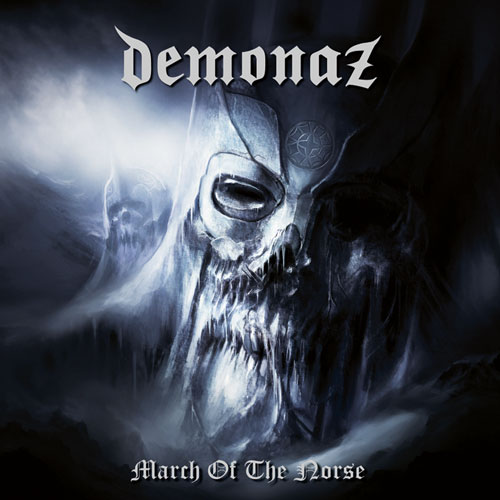

 Through the Shattered Lens