Been an uneventful day for me today which usually means a slow posting day. One thing that I did come across which came out today was a new trailer for one of my more highly-anticipated games this year. The latest trailer for THQ and Relic Entertainment’s Warhammer 40,000: Space Marine has been released and shows more gameplay footage and hints at the single-player campaign’s storyline.
I was once asked if I ever was given a chance to be a fictional character who would I choose to be. Well, as this trailer clearly shows I definitely want to be a Space Marine (or the more accurate term used in this fictional world: Adeptus Astartes). I mean look at the size of these guys and they even get to wear very ornate and baroque looking armor. Though I’m sure Lisa Marie would want that I paint the armor in more pastel colors.
Warhammer 40,000: Space Marine still set for a September 6, 2011 for the Xbox 360, PS3 and Windows PC.
Ok, I was already pretty hyped up for Skyrim even without seeing a second of gameplay video. That is just how big a fan of the Elder Scrolls rpg series I am. To say that I have spent close to near 3000+ hours playing the four games in this series would be an understatement. Yes, that does sound quite pathetic, but I don’t care because it’s awesome in my own personal world how much I’ve played this series.
This new trailer is not just voice-over with a cavern wall carving being panned around by the virtual camera. This new trailer I would consider Skyrim‘s first official cinematic trailer but also one that includes gameplay footage. Gameplay footage which shows off Bethesda’s latest game engine, Creation Engine, which has replaced the Gamebryo Engine that the studio used for Morrowind, Oblivion and the last two Fallout games. While the gameplay footage was all about action it does give some hints about changes to the faces and figures of the NPCs. Gamebryo was ahead of its time in 2001 when Morrowind came out but now it’s antiquated so I’m glad Bethesda listened to the pleas of fans to come up with a new and more advanced game engine.
I like the sound of the theme for the game which combines and remixes the themes from both Morrowind and Oblivion but with a nice male chorus doing something akin to a Norse battle-chant. Music composer Jeremy Soule will return to compose the music for Skyrim and that alone means I shall be acquiring the soundtrack, if and when, Bethesda releases the CD.
The game is set for a 11.11.11 release and I shall be one of the brave few who will pre-order the most expensive edition of this game because it deserves it.
Ok, first we get the debut trailer for Mass Effect 3 which will consume my life and time when it comes out. Now I find out that the one game series which has also consumed my life and time in the past is also coming out around the same time as the aforementioned title.
What do I speak of?
I speak of the game which, in my very honestful and truthiness opinion, is the Lord of the Rings of fantasy gaming rpgs. It is The Elder Scrolls series and this game marks the 5th entry in the series which will followed other entries in the franchise like Arena, Daggerfall, Morrowind and Oblivion. This franchise has spanned over a decade in gaming history and I expect nothing less than a new game from this series eating up close to 1000 hours of my life before I finally stop playing it to try something else.
And just like it sci-fi epic cousin in the Mass Effect series it is I who will be savior of the realms and kingdoms from whence this fantasy franchise lives in. While I may not be saving the galaxy it’s still no easy feat to save a fantasy kingdom full of lovely maidens and grateful millions.
Sidenote: Lisa Marie must be wondering what the hell I’m talking about with these last two blog entries.
The one game which I am willing to kill for to get my hands on the moment it comes out in time for the 2011 holidays is from video game developer BioWare. BioWare created a scifi-rpg franchise four years ago which has consumed my life everytime a new one in the series comes out. First there was Mass Effect then just this past January was it’s bigger follow-up Mass Effect 2. It looks like Mass Effect 3 will once again consume my time and life in the end of 2011.
From the look of the trailer the foreboding scenes in the end of the last game will culminate in the extra-galactic terror machines called “The Reapers” heading for Earth to once and for all stop the race who spawned the one man who dared challenge it’s millenia-long cyclical harvesting of all organic life from the galaxy. The fact that I am that human who stops them has no bearing on just how awesome this game franchise has been.
It will be the final game in this series as announced by BioWare, but I won’t be surprised if the universe created by this franchise continues on using a different name with a new set of heroes and villains. In the end, this game and any that follow it up will have one thing in common. A galaxy to save, a game as close to cinematic as we’ve ever seen and me as it’s savior.
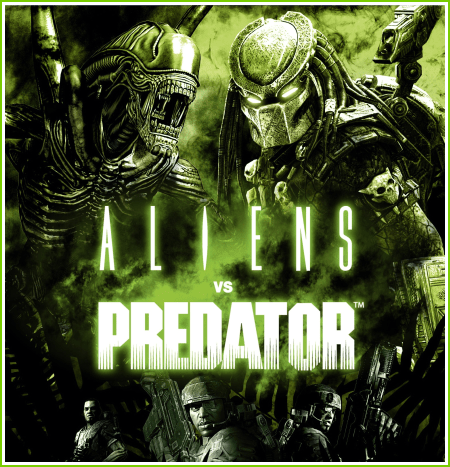
2010 is not even a month old and it already has two quality games already in the books with Platinum Games’ Bayonetta and Vigil Studios’ Darksiders. The end of January brings the heavily-anticipated follow-up to BioWare’s critically-acclaimed Mass Effect. Following in Mass Effect 2‘s wake will be Take-Two’s own sequel with the February 9th release of BioShock 2. The one game which seems to be running under most people’s radar is a little title from UK-based developer, Rebellion Developments. The game I speak of is the FPS-shooter simpy titled, Aliens vs. Predator.
That name alone should bring excitement to gamers who have played previous iterations of that very game on the PC years ago. Let’s just forget that the two films using that same name doesn’t even exist and concentrate on just how awesome this game seems to be turning out. The game’s premise is pretty simple from released info by the studio. It’s a FPS where three factions (Aliens, Predator and Colonial Marines) each have their own single-player campaign which would make-up the overarching storyline. Rebellion Developments knows that the single-player campaign shall be as epic as the films they’re based on, but in the end it is the multiplayer campaign where players get to play on-line with other players either as an Alien, a Predator or a Colonial Marine. I have a feeling that very last faction will be dying quite a bit when chosen by poorly-skilled on-line players.
The game will be coming out on February 16th here in North America with a February 19th release for Europe. The publisher handling it’s release will be SEGA with Rebellion Developments handling any updates, patching and future DLC for the game’s lifetime. As a special, albeit very pricey, extra for the gamer completist it looks like SEGA will be making available for pre-order a limited Hunter Edition of the game with loads of extras that may or may not justify a 99.99 dollar price tag.
Yes, my friends that is a fully-articulated face-hugger in that Hunter Edition. I think the only thing which would make it even better is if it could be remote-controlled to scuttle around. Other things in the Hunter Edition will be the collected edition of the original Dark Horse Comics’ Aliens vs. Predator mini-series. The game will be released on the PS3, Xbox 360 and Windows PC. Sorry, there’s no plans to release a Mac-version of the game. Sorry, Apple peeps.
I, for one, will be pre-ordering the Hunter Edition because that’s just how we player’s roll. here’s to hoping this game delivers on all that Rebellion has shown and promised the last couple years of its development.
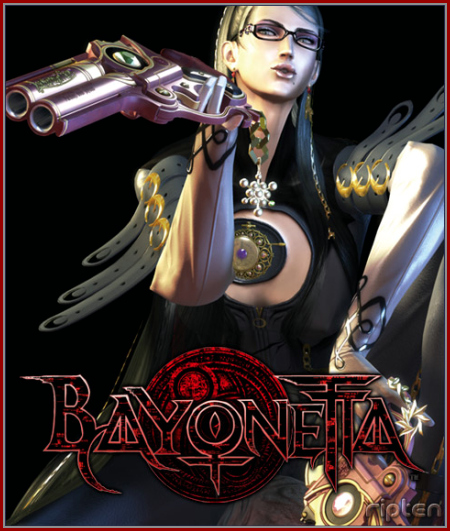
Hideki Kamiya is a name well-regarded by hardcore gamers everywhere. He was the man responsible for giving gamers the iconic action game series, Devil May Cry. The series lasted through four games and released to three different console systems (PS2, PS3, Xbox 360/Windows PC) and was seen by many gamers as one action series on par with Tomonobu Itagaki’s equally iconic franchise, Ninja Gaiden. In 2007, Platinum Games made an announcement about a game being directed by one of its founders (who happens to be Hideki Kamiya himself) that would make it’s way exclusively to the Xbox 360, but which in months ahead would get a PS3 port by way of the game’s publisher, SEGA. This game would turn out to be Bayonetta and looks to be the spiritual successor of Kamiya’s previous franchise, Devil May Cry.
The game received much buzz and fanfare from many gaming sites and bloggers. This was a game that would be a continuation of what Hideki Kamiya was doing with Devil May Cry over at the now-defunct Clover Studios at Capcom. With no news of another installment to the DMC series in the offing it was now up to Bayonetta to satisfy action game junkies the world over. Using the provocative titular character as a selling point for the game, Platinum Games’ was able to keep the title in the public’s consciousness but not so much that oversaturation would set in to create a backlash against a game that wasn’t even out yet when the middle part of 2009 rolled around.
After a couple of release date delays it is now January 2010 and the game has finally been released to both current generation console system in the Xbox 360 and the PS3. The game has turned out just as advertised and promised by Kamiya and his Platinum Games team. It is an action-packed title eerily reminiscent of Devil May Cry both in its presentation and it’s extremely fast gameplay. With Bayonetta developed independently of the much larger and previous employer of Kamiya and his team, the game uses the well-used over-the-top storyline and characters from DMC and adds a very oversexualized sheen to everything from Bayonetta herself to some of the many bosses and cutscenes in the game.
The game’s storyline takes place in a recognizable, albeit alternate Earth, where two clans of witches (the Umbra Witches and the Lumen Sages — Dark and Light respectively) have kept the world’s divine balance in check through the centuries. Using the prologue (and tutorial chapter) to explain some of the particulars as to what caused the destruction of both clans, the player learns some of the mystery behind the character of Bayonetta. She herself is one of the last remaining Umbran Witches who also happens to have forgotten her past as one. All she knows is that she acts as a sort of indepedent contractor for the daemonic side of the equation and hunts and kills the many angels sent by Heaven after her. The rest of the game is Bayonetta’s quest to learn more about her lost memories and to solve the puzzle of why Heaven is after her. Along the way much violence and mayhem ensues with her in the center and all of it heavily tinged with some of the mose provocative cutscenes, camera angles and dialogue outside of Japanese eroge‘s and dating sim games.
The gameplay is easy to pick up with the Y-button and the B-button on the Xbox 360 controller providing both punch and kick attacks respectively. The A-button is where the jump command is mapped to with the X-button relegated to action commands when not in combat and firing a simple pistol when in one. Players who are usually just button-mashers should be able to pull off tons of combos just randomly pressing all four buttons every which way but loose. True action game experts have access to pretty much all the combos in the game right from the beginning and will have a time of their life mastering and chaining all of them to try and get the best combo score in the several Verses which make up the sections in each Chapter (Stage) of the game. It’s pulling off these combos which fills Bayonetta’s magic meter and when full she can pull off the myriad of special finishing moves called Torture Attacks. These attacks are some of the more bizarre and inventive gameplay actions Platinum Games have brought to the action game genre. One Torture Attack has Bayonetta drop an Iron Maiden device behind her target which she then kicks repeatedly until they fly back into the device before it slams shut to kill them.
The one aspect of the combat mechanics in Bayonetta that helps both newbie and hardcore gamers alike is the addition of the “Witch Time Dodge” that could pulled off with the simple pull of the right trigger on the Xbox 360 controller. When a player pulls the right trigger (to dodge an attack)and successfully dodges an enemy who is about to land a blow the gameplay will purposely slowdown and the screen enter a purple-hazed time-delayed moment. It is in this moment which lasts between 5-10 seconds depending on the level of enemy being dodge that a player stays in regular speed while everything else on the screen stands still. This will allow a player to pull off a godly amount of attacks and combos not to mention avoid getting hit. Mastering the “Witch Time Dodge” is a necessity in the later stages of the game as enemies get stronger, faster and smarter in combat. Hopefully once a newbie player gets that deep in the game they’ve learned the nuances of the game and, at the very least, has gone beyond just button-mashing.
Each Verse in the 17 Chapters which make up the full game brings in an assortment of huge screen-filling Angelic Boss fights which raises the hectic and chaotic fights a player experiences. Some boss fights could end as quickly as under a minute depending on where the game’s difficulty level is set at to almost ten or more minutes. These mid-chapter bosses are not cheapies but could be as difficult to defeat as the big bosses which brings each chapter to a close. One thing which separates Bayonetta‘s fights, both regular and boss types, from other action games of its type is that they never feel cheap. They’re hard enough to do without being so mind-numbingly difficult (a la Ninja Gaiden) and with enough practice even a casual player could defeat in no time. They’re also not too easy that it takes away any sort of challenge and strategy from the gameplay. With patience and attention to detail about how the bosses behave the player can pull off Bayonetta’s Climax Moves which has her spooling out her hair to create a demonic portal for massive Infernal Demons (made up from her hair) which will finish off the bosses in question.
On the graphics and audio side of things Bayonetta ranks as one of the best games released on the Xbox 360. The game runs a consistent 60fps right from the get-go. There’s rarely a slow down in the game’s engine during gameplay even when the action gets extremely busy with the screen full of enemies all doing their own unique actions in addition to the player’s. When there is a slowdown it’s slight enough that it doesn’t cause the player’s commands to fail in pulling off attacks and combos. It actually seem to look like part of the game itself. Like adding a dramatic twist to the boss fight (where it usually occurs) right when the player is about to kill them off. There are some screen-tearing during certain parts of the game where the player navigates Bayonetta through the many varied Chapter environments, but like some of the rare slowdown in gameplay this graphical glitch doesn’t happen too often and when it does occur gameplay is not affected and didn’t pull me out of the gameplay moment.
The game’s art direction and design was well done with enough of an over-the-top 30’s Neoclassical look to the game’s locations to give Bayonetta a recognizable, but unique visual-style. The design of the Angelic host which make up the enemies in the game brings together the classical Renaissance-style of angels and heavenly figures and architecture, but with a slightly demented and disturbing twist to them. One mid-level boss is a flying two-headed dragon whose serpentine necks are attached to a body the size of a small mountain in the shape of a cherub’s face. Platinum Games design team should be commended in their work with Bayonetta. On their design alone I would recommend this game to others just for the sheer audacity of their chosen visual and design styles. But it’s Bayonetta’s look which will bring the most discussion amongst gamers.
Bayonetta I can only describe as combination of sexy British librarian, long-legged model dominatrix and sex personified. Bayonetta also pretty much spends a goodly amount of the game literally naked. I say this because her body-hugging leather outfit is actually created from the locks of her long hair which when she pulls off combo finishing moves (which is often) and Climax Attacks spool off of her body. While none of the special bits are ever shown a lot of skin do show up to be viewed. This design choice adds that touch of sexiness to the the ludicrous and imaginative designs throughout the game. Some may call this as Platinum Games using sex as a selling point for the game and they’ve been heard saying as such, but since that was the intent then people shouldn’t be shocked when they see it.
The voice over work in the game was actually pretty good. The lines of dialogue spoken were done so with panache and flowed well from the actors of the cast. Bayonetta’s voice actor gives the character a seductive and sexy British accent which just adds to an already oversexualized character. Innuendos and double-entendres flow from Bayonetta’s lips with the rest of the cast of characters on the receiving end. The dialogue was really nothing to write home about but when heard through Bayonetta they’re some of the most laugh out loud stuff to come out of games in a long while and will also elicit more than a few “WTF?!” moments. Again it all adds to the chosen decision by Hideki Kamiya and the Platinum Games team to create an over-the-top game which continues what they began with Dante in Devil May Cry.
Lastly, the music used I could only describe as a mixture of J-technopop, techno-jazz riffs and, in one instance, an amped up, bubblegum-pop jazz rendition of the classic song by Frank Sinatra, “Fly Me to the Moon.” Listening to this song as it plays throughout certain areas of the game does get old after awhile, but it still has a certain catchiness to it that I caught myself humming the tune myself while playing the game.
In the end, Bayonetta is one of those games which will appeal to both casual and hardcore gamers. The replay value from trying to unlock new items, costumes and difficulty levels (the hardest difficulty setting aptly named Non-Stop Infinite Climax) makes the game worth more than just one playthrough. The ease with which a player can pick up the game and become very adept in its combat mechanics makes it less of a niche game that only the elite of the elite action gamers could delve deeply into. This game is definitely not like Itagaki’s Ninja Gaiden or even Kamiya’s own Devil May Cry where the gameplay could get so difficulty and frustrating that it loses its appeal to most gamers who fail to see the fun in such a game. While the game itself is not perfect by any means there’s little the small flaws in the game can do to detract from the fun one will have playing it from beginning to end then playing it again to see what they can discover.
As an aside this review is from playing the Xbox 360 version which is superior in every way to the PS3 version whose development was actually given by Platinum Games to one of SEGA’s internal teams. The quality made by that decision of Platinum Games to outsource the port development definitely shows as the PS3 version’s graphics looks washed out, barely keeping a 30fps throughout the game (forget even getting 60fps) and too many long loading times some of which just ruins the game even for the most ardent PS3 supporter and fanboy. Really, the only place to play this game should be on the Xbox 360 and for those who own both systems I recommend they buy the Xbox 360 version.
It didn’t take BioWare too long to get the Expansion Trailer up and running. And it’s in prime HD-quality. I’m liking what I see in the trailer. I hope that Alistair is not the “old favorite” from the old crew that will be joining my hot, sexy city elf Grey Warden. She needs her girl Leliana by her side for this expansion. Though I’m sure she wouldn’t mind having Morrigan around as well.
One detail which BioWare fail to mention in their news release for the game is whether it will be download only all across thee platforms or will players be able to order the game with disc and case and all that comes with them. I’m almost afraid to that Gamestop may end up having a special item and/or goodies aplenty for ordering at their site or store. I’m still more than just a tad pissed off that they cutoff pre-orders for their Mass Effect 2 Collector’s editions. Shenanigans I say!! SHENANIGANS!
If the game will be download only I may need to make some room in my Xbox360 HDD or just plain buy one of them newfangled Elites. Having that Elite means playing this expansion on glorious HDMI connection to my HDTV. March 16, 2010 cannot come any faster. Let’s hope this won’t be the only full expansion for this awesome game that is Dragon Age.
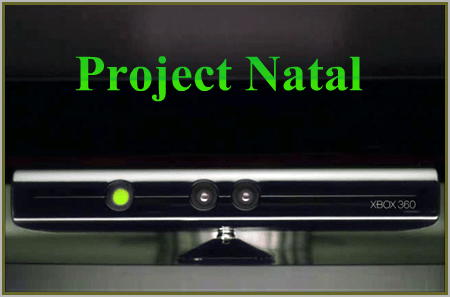
This past summer of 2009, during a company press conference the day before the start of E3 2009, an announcement which might have brought a paradigm shift in how consumers interact with their consumer electronics. The announcement I speak of is their 3D, full-body motion-cap sensor control scheme dubbed Project Natal. Tweets, texts and status updates across the ether that’s the web was a consensus jaw-dropping with a mixture of excitement and skepticism. The initial reaction was that this was Microsoft’s answer to the new 800 lb. gorilla in the gaming industry: Nintendo’s Wii.
It’s a logical reaction and one that was duplicated in a smaller part from Sony’s introduction of it’s own motion-based controller system. But Project Natal seems to be the one that has the world of not just gaming buzzing with excitement and possibilities, but the whole tech industry. Microsoft’s gamble and evolution of existing technology has the making of revolutionizing not just gaming but how people interact and use their PC and everyday home gadgets and technology.
First and foremost, Project Natal will be focusing on expanding the base of Xbox 360 owners and players to include not just the kids (both young and old) who play games ranging from kid-friendly to mature-oriented, but the rest of the family who want to be able to join in without having the master and pick up a controller. Yes, Project Natal will allow gaming to move forward with the option of actually not having to use a physical controller in one’s hands to play a game. Does it mean it will replace the handheld controller core gamers have gotten used to and by years of use become an almost intuitive part of their bodies? I don’t think it will, but instead become an option.
I will be the first to say that I will never ever get rid of my console gaming controllers. There’s an ease and familiarity of it in my hands when playing games. But the prospect of having the option of trying out all my games using my body as the controller itself is both exciting and intriguing. Project Natal is science quickly catching up to science fiction.
I say Project Natal both excites and intrigues me as a gamer for several reasons. It’s exciting to see how far gaming has evolved from the early days of the Atari VC (2600 for those who don’t recognize). While I have never been truly sold on the complete immersion Nintendo has touted the Wii and it’s Wiimote was to be for gamers, I will admit that it’s success has spurred it’s rivals to innovate and come up with the next step. If Natal is not bringing excitement back to an industry that is stagnating (even with the Wii’s innovation it has slowed down in terms of innovation) then why complain about the industry’s lack of innovation and imagination. Natal, whether one truly believes in it or believes it to be vaporware, has opened up a new door in how gaming will move forward in the forseeable future.
Another reason why Natal has me excited as a gamer is how it could breathe new life to old gaming experiences. I have never been a very adept fighting game players as combo systems and how to make them work on a controller pad has always eluded me. But with Natal I can see a future where even the most novice fighting game player could chain combos and attacks by simulating the moves themselves in a basic fashion. Playing Madden using the QB POV would actually become interesting and give a player a very close approximation as to what a real QB may see when standing in the pocket. The possibilities are endless.
Project Natal intrigue me as a gamer for the games dedicated to it that developers could come up with. Why have controller peripherals playing Rock Band when Natal could possibly make air guitar and air drumming a true reality. Console RTS would finally have a control scheme that could match the precision of keyboard and mouse system of their PC cousins. There will be hits and misses, but the fact that such a dynamic option on how games could be played should intrigue gamers looking to have a future in developing in the industry they love.
This coming evolution in gaming may be too ahead of its time. Some will say that Microsoft just took the existing technology already available with the Wiimote and EyeToy and just packaged both together into one package. That may be true but it doesn’t mean it won’t work. The industry has always been taking the latest innovation by one company and evolving and tweaking new ideas from it. While Nintendo and Sony may have arrived first in their respective tech they never thought of actually combining the two and adding new features to remove the controller outright.
Revolution that Natal brings will not be limited to gaming, but should also impact everything which relies on the synergy of software and hardware people’s everyday lives. Project Natal should be made to work with PCs, HDTVs, home electronic systems and everything in between.
It seemed such a coincidence that the one film depicting a near-future using a Natal-like technology would have its creator tout the new Microsoft technology. Project Natal does seem to be making the tech of Steven Spielberg’s Minority Report move from the realm of science fiction and into the realm of science reality. Natal has the possibility of allowing people to forgo the use of keyboards and mouse when using their computers. Pretty much the whole armor development sequence in Iron Man where Stark manipulates, designs and finally complete a new suit design without ever typing anything on a keyboard I could see Natal turning it into a real-world application for mechanical and electrical engineers. Not to mention research scientists in other fields.
While it is still too early to consider Project Natal as a success. It is still in a beta form with no announced released date other than sometime around 2010. It should be seen with eyes looking at the exciting and intriguing possibilities it opens up for gamers and the world of technology instead looking at it with cynical eyes already deciding to view it with skepticism. It doesn’t matter whether one likes Microsoft as a company or not. What they announced and showed on June 1, 2009 in the Galen Center in Los Angeles may just usher an evolution and revolution in gaming and tech that everyone will benefit from.
As we have seen with the pre-release and post-release reaction regarding James Cameron’s Avatar sometimes the product does live up to the promise and hype. When they do the general public will embrace it even if it does have some initial flaws and weaknesses. I think like Cameron, Microsoft’s Consumer Electronics and Gaming Division decided to gamble and leapfrog what others have started and move it in a direction no one had been expecting or even comtemplate as a remote possibility.
Before BioWare became famous for its console rpgs set in scifi settings (Mass Effect and Star Wars: Knights of the Old Republic), they were a company already well-known and well-loved by PC gamers for their excellent Baldur’s Gate and Neverwinter Nights fantasy-based rpgs. The company was able to take the rich and complex setting of AD&D’s Forgotten Realms universe and actually succeed in making it accessible to old and new fans alike. While they made one fantasy-based console rpg in the last couple years (the very underrated Jade Empire for the original Xbox), BioWare seem to have stuck mainly in making scifi rpgs. It was a nice surprise when just a couple years ago the company announced that in addition to developing Mass Effect for the Xbox 360 the company was also in the midst of creating a new and original fantasy-based rpg for the next-gen consoles (Xbox 360/PS3) and the PC. This game was to be called Dragon Age and was to be their latest rpg franchise. A fantasy one to bookend the scifi franchise they had established with Mass Effect. It took them a couple years, but the renamed Dragon Age: Origins was finally released in early November 2009 to some considerable fanfare. This was a game fans of the company’s earlier fantasy rpgs on the PC have been waiting for. Did fans of the Baldur’s Gate Series get what they’ve been wishing for or did BioWare misstep with their return to fantasy rpg in Dragon Age: Origins. I’m happy to say that BioWare more than lived up to their own hype of their latest fantasy offering.
Dragon Age: Origins is a a fantasy rpg based on a world wholly-created and owned by BioWare. Like it’s scifi sibling in Mass Effect, this game is an amalgamation of ideas from well-established franchises (Forgotten Realms, Lord of the Rings, Warhammer Fantasy) but with a rich history and background created from the ground up by the creative forces within BioWare. This world that DA:O inhabits is called Thedas with the realm of Ferelden being the main setting for this introductory game to what looks to be an on-going franchise. It is populated by the usual fantasy races such as elfs, dwarfs and imperial humans. The world has its own version of the usual orcs, goblins and other so-called evil races of fantasy. These races are generally called “darkspawn” and it is this danger which forms the main conflict the player must fight and defeat throughout most of the game’s playthrough. BioWare has also introduced a very complex political and intrigue element to the game in the form of a civil war brewing within the human faction in the game not to mention a conflict of succession on the dwarf side of the equation. The elf race (divided in two separate and distinct groups – city elf and Dalish elf aka wood elf) also get it’s own brand of subplot in the form of racial discrimination and a genocidal battle with a primal race. One common thread binds all these different races and the many classes one could choose from and that’s they all become Grey Wardens and the main hero of the game.
Such rich additions to an rpg are usually simple and minor in even some of the best rpgs of the past both western and Japanese. BioWare’s decision to make these sorts of storytelling additions very complex and rich makes for a more immersive gameplay. There are literally volumes of history and information to find and sort through in the game and from the impression I was able to glean from books and stories found throughout it barely scratches the surface of the history and background of Thedas and Ferelden. The world-building BioWare has done with DA:O was as deep and complex as Tolkien’s fantasy world and those created by the legion of writers who worked on AD&D’s Forgotten Realms. DA:O just doesn’t introduce you to the game and it’s world but immerses you in its details. These were details ranging from those needed to get through the game to the minutiae which doesn’t do much in terms of gameplay but does help make the world seem more real.
The gameplay begins with an introductory chapter which works as both introducing the origins of the player’s chosen race and class, but also as a way for new players to get an on-the-field tutorial on the game’s combat and inventory mechanics. Combat both melee and spellcasting has less to do with button-mashing once a target has been highlighted but instead similar to BioWare’s combat system in their KOTOR games. A player selects the appropriate special attacks and buffs using a radial menu (attacks and buffs used often can be hotkeyed to the appropriate button on the Xbox 360 controller for instant access). Other characters in the player’s combat party could either be left to attack, defend and support the player using preset commands similar to Square-Enix’s “Gambit System” in Final Fantasy XII or the player could pause the game to switch to those characters individually and set a particular command manually before unpausing the game to continue the fight. The combat in DA:O is more about managing how the party fights and making sure the right combinations of attacks and spells are chosen. In the beginning of the game the simplest commands should suffice to beat most enemies in small or large numbers, but as the game progresses deeper into the story both main and sidequests the need to make use of every type of attacks and spells became more important. Bulldozing one’s way through most of the game only works in the beginning and would only get a player and his party killed once they enter Chapter 2.
This type of gameplay mechanic might turn-off some players who prefer a more active-style of combat which BioWare implemented in Jade Empire. At times I still found myself button-mashng a particular hotkeyed attack even though I knew that pressing that attack nonstop didn’t make me attack faster (each use of an ability came with a cooldown time which last just mere seconds to minutes depending on their level and potency). It is definitely a combat mechanic that took some getting used to and at time it does make the player less an active participant in the game and more an observer. I’m still on the fence as to whether I like this micromanaging-style of combat. While it does add some complexity and strategy to how a player fights the multitudes of battles in the game it also makes some of the larger boss fights (especially the final boss fight) very long with a wrong choice of commands ending a fight as quickly as it started.
The graphics for DA:O on the Xbox 360 is pretty crisp and keeps a steady frame-rate throughout the game and it’s many cutscenes. I’ve heard comparisons about the look of the game on the 360 to the PS3 version with the latter having a more vibrant color palette but some slowdowns in the framerate when there’s many things going on in the screen. Until I actually get a chance to play the PS3 version I will say that the 360’s look and stability of its graphics I’d prefer than slowdowns which considering the type of combat mechanic it uses could really become detrimental to gameplay. It’s not the prettiest Xbox 360 game out there but this game makes’ ample use of the 360’s power to make gameplay as smooth as possible.
Now one can’t talk about the graphics without pointing out the pros and cons of the audio in the game. I’d say that it’s in this aspect of DA:O that BioWare had better success. Each weapon strike whether they be sword, staff or bow/crossbow has a very distinct sound to them. The sounds of the world around the player adds to the experience. Even when a player is not in battle and just stands around to admire the view the game still bombards them with sounds both ambient and natural depending on the area they’re currently at. One aspect of the sound design that would probably put a smile on many gamers would be the varying sounds of weapons and spells hitting flesh in the game. BioWare sure delivered on making a very violent world come to life with their sound design. I’d also like to make special mention to the soundtrack by longtime collaborator Inon Zur. His orchestral work in the game is a great mixture of Medieval Europe and Middle Eastern musical influences.
The voiceover work by the large cast in Dragon Age: Origins gives life to the dialogue both in and out of camp. I would say that pretty much 60 percent of all the dialogue in the game was spoken and done well. While it’s not on the same level as Mass Effect‘s voice work for an rpg it was a lot and helps distinguish it from it’s Japanese rpg counterparts where most dialogue outside of cutscenes are silent and read-only affairs. Some players might even recognize some of the voices in the game. Two who stood out where Claudia Black (of Farscape and Stargate SG-1 fame) as the witch Morrigan and Kate Mulgrew (Star Trek Voyager’s Capt. Janeway) as Morrigan’s mother, Flemeth. All the actors on in the game give off dramatic readings instead of flat, directionless reads which could break a player out of the moment. I think Black’s work as Morrigan was some of the best voiceover work in video game history and really fleshesh out her character. I knew that I kept her around through pretty much most of the game’s playthrough just to hear her speak.
Overall, Dragon Age: Origins was a great introduction to BioWare’s newest rpg franchise. It’s definitely the spiritual successor to their acclaimed Baldur’s Gate rpg series on the PC. As with most introductory games in a franchise it does have some flaws that could’ve been fixed prior to the game’s release, but these flaws were not enough to take away from the game’s enjoyment (on the Xbox 360 at least which I played it on). The rich and complex world-building BioWare’s creative magicians were able to inject into their own brand of rpg gameplay makes for a very immersive videogaming experience. Thedas and Ferelden come to life as do the Grey Wardens and it’s other inhabitants both good and evil. BioWare has already announced a new expansion to extend the game past it’s final boss fight. Here’s to hoping that they continue to support the game while they begin work on the sequel.
BioWare has long been a favorite game developer of mine. This love for their games goes back to their classic Baldur’s Gate series on the PC and then their KOTOR games for the Xbox 360 (still waiting for the third game in this series…still waiting). I’ve always enjoyed how conversations were not just affairs where as a player I just had to watch the dialogue unfold. BioWare has pretty much made it their own to have dialogue which branched out into different results and consequences depending on how the player responded.
In 2007, they released what I thought was one of the best games, if not the game of the year, in Mass Effect. It was an action-rpg clothed in space opera clothing which brought to mind the early Star Wars films (prequels don’t exist in my world) and some of the best supplemental novels based on Lucas’ scifi universe (the Zahn novels being the best of the bunch). While the game itself had its flaws they were never glaring enough to ruin the game and the story.
2010 is just days away and the release of the sequel to Mass Effect is just weeks away. In what could be one of the games to vie for 2010 Game of the Year, Mass Effect 2 returns to address some of the game mechanic flaws from the first game and expand on the galactic-wide story and history which unfolded before. This game looks to find the protagonist in the initial game (whether John Shepard or a customized player) out to save the galaxy once again, but this time around needing the help of one of the villains in the first game: Cerberus. In order to save the galaxy and the human race it looks like the player must go through what I could only call as “The Dirty Dozen” but in space.





 Through the Shattered Lens