The Fifth Annual Academy Awards: 1918


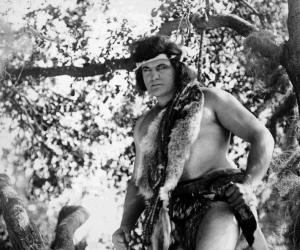
Over on Through the Shattered Lens Presents the Oscars, we are continuing to reimagine Oscar history, one year at a time! Today, we take a look at the year 1918. World War I ended, the Spanish Flu wiped out 5% of the world’s population, and the Academy embraced Tarzan of the Apes!

Lisa Marie Bowman's avatarThrough the Shattered Lens Presents The Oscars

A scene from Tarzan of The Apes A scene from Tarzan of The Apes

1918 was a year of dominated by war and pestilence.  As the world seemed to be intent on destroying itself, both the Academy and American filmgoers embraced escapism.

Overseas, the Great War continued to drag on.  With no end to the fighting in sight, there were fears that the American public would turn against the war and their elected leaders would withdraw American soldiers from the fighting.  The British government, realizing the potential of film as a propaganda tool, contacted director D.W. Griffith and offered to help him make a film.  The end result was Hearts of the World, an epic war film that starred Lillian Gish as a French girl who struggles to survive and find true love as the Germans raid her village.

Though Gish would later say that Griffith was displeased with the pro-war tone of Hearts Of The World

View original post 1,357 more words

The Third Annual Academy Awards: 1916


Over on Through the Shattered Lens Presidents the Oscars, Jedadiah Leland and I have been reimagining Oscar history, one year at a time! Today, we take a look at 1916, the year of Thomas H. Ince, Civilization, and Intolerance!

Lisa Marie Bowman's avatarThrough the Shattered Lens Presents The Oscars

Thomas H. Ince, the 2nd President of AMPAS Thomas H. Ince, the 2nd President of AMPAS

In the long history of the Academy of Motion Picture Arts and Sciences, 1916 was dominated by one man: Thomas H. Ince.

Today, Ince is a largely forgotten figure and his many accomplishments have been overshadowed by the mysterious and potentially sordid circumstances of his death in 1924.  However, in 1916, Ince was one of the most popular figures working in the film industry.  He was the first producer to build his own studio in California and, with D.W. Griffith and Academy President Mack Sennett, founded the Triangle Motion Picture Company.  When, following the 2nd Academy Awards ceremony, Sennett announced the he would not be running for a second term as president of the AMPAS, Ince was the obvious choice to replace him.

As President, Ince immediately launched a recruiting drive to bring more industry professionals into the organization…

View original post 1,487 more words

The First Annual Academy Awards: 1914


Hi there! The blogger known as Jedadiah Leland and I have launched a TSL side project. We are taking Oscar history, re-imagining it, and turning it into something much better, one year at a time! I, of course, will be handling the even years while he handles the odd years. (Why? Because Lisa doesn’t do odd numbers, that’s why!) Here’s our report on the First Annual Academy Awards, honoring the best of 1914.

(You read that right…)

Lisa Marie Bowman's avatarThrough the Shattered Lens Presents The Oscars

Mack Sennett, the 1st President of the Academy Of Motion Picture Arts and Sciences Mack Sennett, the 1st President of the Academy Of Motion Picture Arts and Sciences

Ironically, considering its current prominence in American culture, the origins of the Academy of Motion Picture Arts and Sciences are shrouded in mystery.

Reportedly, in February of 1914, a meeting was held in New York City that led to the founding of the Academy.  While all exact records appear to be lost, it is generally agreed that the meeting was attended by Mack Sennett,Thomas H. Ince, William Randolph Hearst, Charles O. Baumann, John R. Freuler, Samuel S. Hutchinson, Jesse Lasky, William Fox, Adolph Zukor,D.W. Griffith, Cecil B. DeMille, William Kennedy Dickson, Mary Pickford,J. Stuart Blackton, Albert E. Smith, Carl Laemmle, and L. Frank Baum.  By the end of the meeting, not only had the Academy of Motion Picture Arts and Sciences…

View original post 584 more words