Today’s song of the day comes from the soundtrack of Wim Wenders‘s 1991 film, Until The End of the World.
Today’s song of the day comes from the soundtrack of Wim Wenders‘s 1991 film, Until The End of the World.
4 Or More Shots From 4 Or More Films is just what it says it is, 4 shots from 4 of our favorite films. As opposed to the reviews and recaps that we usually post, 4 Shots From 4 Films lets the visuals do the talking!
Today, the Shattered Lens wishes a happy 78th birthday to the great German director, Wim Wenders! It’s time for….
4 Shots From 4 Wim Wenders Films

The American Friend (1976, dir by Wim Wenders, DP: Robby Muller)

Paris, Texas (1984, dir by Wim Wenders, DP: Robby Muller)

Wings of Desire (1987, dir by Wim Wenders, DP: Robby Muller)

Until the End of the World (1991, dir by Wim Wenders, DP: Robby Muller)
4 Or More Shots From 4 Or More Films is just what it says it is, 4 shots from 4 of our favorite films. As opposed to the reviews and recaps that we usually post, 4 Shots From 4 Films lets the visuals do the talking!
Today, we pay tribute to the year 1987! It’s time for….
4 Shots From 4 1987 Films
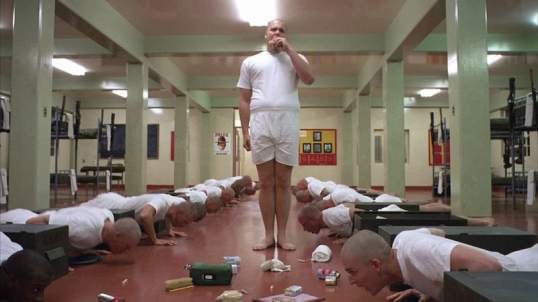
Full Metal Jacket (1987, dir by Stanley Kubrick, DP: Douglas Milsome)
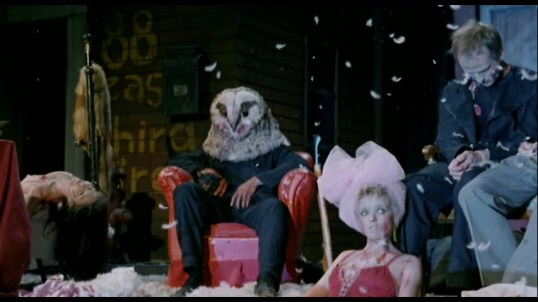
Stage Fright (1987, dir by Michele Soavi, DP: Renato Tafuri)
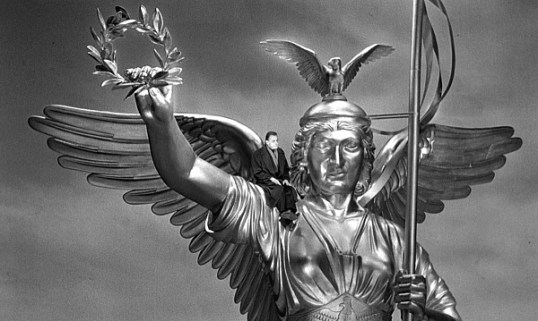
Wings of Desire (1987, dir by Wim Wenders, DP: Robby Muller)
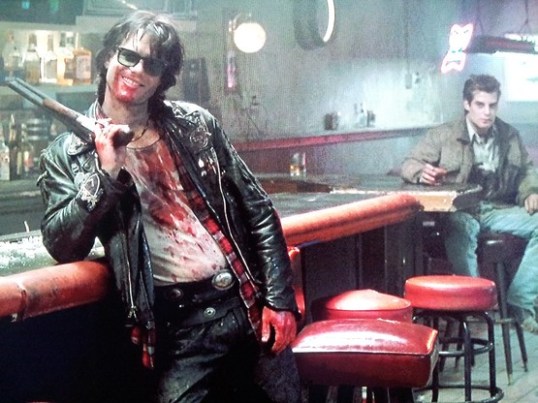
Near Dark (1987, dir by Kathryn Bigelow, DP: Adam Greenberg)
4 Or More Shots From 4 Or More Films is just what it says it is, 4 shots from 4 of our favorite films. As opposed to the reviews and recaps that we usually post, 4 Shots From 4 Films lets the visuals do the talking!
Today, we pay tribute to the year 1991! It’s time for….
4 Shots From 4 1991 Films
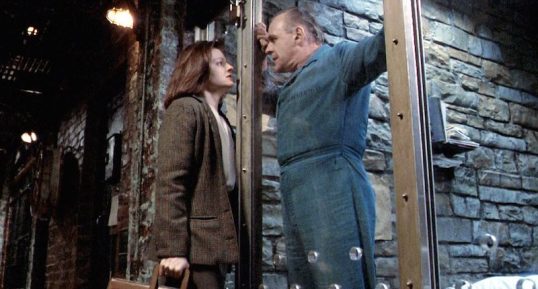
The Silence Of The Lambs (1991, dir by Jonathan Demme, DP: Tak Fujimoto)
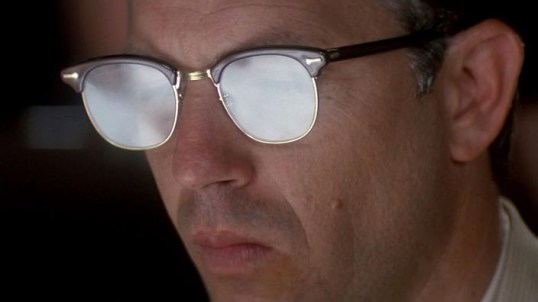
JFK (1991, dir by Oliver Stone, DP: Robert Richardson)
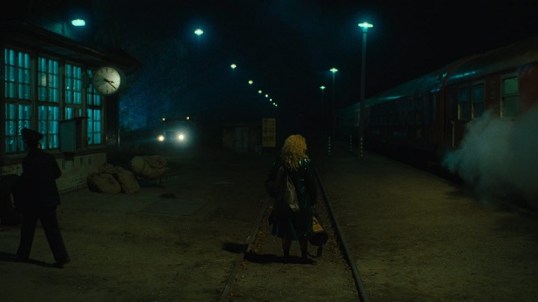
Until the End of the World (1991, dir by Wim Wenders, DP: Robby Muller)
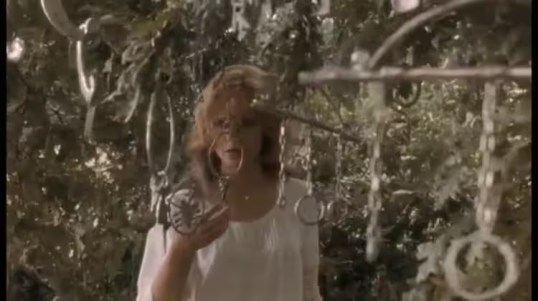
The Sect (1991, dir by Michele Soavi, DP: Franco Fraticelli)
Today would have been the 99th birthday of the great character actor, Harry Dean Stanton.
My scene that I love for the day comes from Wim Wenders’s Paris, Texas. This 1984 film gave Stanton a rare starring role as Travis, a man searching for Jane (Nastassja Kinski), the mother of his son. In this scene, physically separated and hidden from Jane by a one-way mirror, Travis talks about their relationship and their son.
4 Or More Shots From 4 Or More Films is just what it says it is, 4 shots from 4 of our favorite films. As opposed to the reviews and recaps that we usually post, 4 Shots From 4 Films lets the visuals do the talking!
Today, the Shattered Lens wishes a happy 78th birthday to the great German director, Wim Wenders! It’s time for….
4 Shots From 4 Wim Wenders Films
The American Friend (1976, dir by Wim Wenders, DP: Robby Muller)
Paris, Texas (1984, dir by Wim Wenders, DP: Robby Muller)
Wings of Desire (1987, dir by Wim Wenders, DP: Robby Muller)
Until the End of the World (1991, dir by Wim Wenders, DP: Robby Muller)

The initial line-up for the 2023 Cannes Film Festival was announced today. Usually, films are added (and occasionally even withdrawn) after the initial announcement so this list will probably be added to in the days and weeks to come:
COMPETITION:
Club Zero, Jessica Hausner
Asteroid City, Wes Anderson
The Zone of Interest, Jonathan Glazer
Fallen Leaves, Aki Kaurismaki
Les Filles D’Olfa (Four Daughters), Kaouther Ben Hania
Anatomie D’une Chute, Justine Triet
Monster, Kore-eda Hirokazu
Il Sol Dell’Avvenire, Nanni Moretti,
La Chimera, Alice Rohrwacher,
About Dry Grasses, Nuri Bilge Ceylan,
L’Ete Dernier, Catherine Breillat,
The Passion of Dodin Bouffant, Tran Anh Hung,
Rapito, Marco Bellocchio,
May December, Todd Haynes,
Firebrand, Karim Ainouz,
The Old Oak, Ken Loach,
Perfect Days, Wim Wenders,
Banel Et Adama, Ramata-Toulaye Sy,
Jeunesse, Wang Bing,
OUT OF COMPETITION:
Killers of the Flower Moon, Martin Scorsese
The Idol, Sam Levinson
Cobweb, Kim Jee-woon
Indiana Jones and the Dial of Destiny, James Mangold
Jeanne du Barry, Maiwenn
MIDNIGHT SCREENINGS:
Omar la Fraise, Elias Belkeddar
Kennedy,” Anurag Kashyap
Acide, Just Philippot
SPECIAL SCREENINGS:
Retratos Fantasmas (Pictures of Ghosts), Kleber Mendonca Filho
Anselm, Wim Wenders
Occupied City, Steve McQueen
Man in Black, Wang Bing
CANNES PREMIERE:
Le Temps D’Aimer, Katell Quillevere,
Cerrar Los Ojos, Victor Erice,
Bonnard, Pierre et Marthe, Martin Provost,
Kubi, Takeshi Kitano
For Oscar watchers, the big news is probably that both Asteroid City and Killers of The Flower Moon will be premiering at Cannes. Asteroid City is the latest from Wes Anderson and, to be honest, I have my doubts about it as an Oscar contender. The trailer indicates that it’s very, very quirky. While Anderson did receive some Oscar recognition for Grand Budapest Hotel, a good deal of that film’s success was due to Ralph Fiennes’s lead performance. Fieness kept Grand Budapest rooted in a stylized reality. I’m not sure if anyone in the cast of Asteroid City is going to perform the same duty. If Asteroid City is going to become an Oscar contender, a good showing at Cannes would definitely help.
As for Killers of the Flower Moon, it’s being shown out of competition. I can understand the logic. With all of the high expectations that come along with being Martin Scorsese’s latest film (as well as being the first Scorsese film to feature both De Niro and Di Caprio), it’s best not to run the risk of being snubbed by the unpredictable Cannes jury. The last thing anyone wants is for the narrative to shift from “sure-fire contender” to “late career disappointment.”
The Cannes Film Festival runs from May 16th to May 27th!
4 Or More Shots From 4 Or More Films is just what it says it is, 4 shots from 4 of our favorite films. As opposed to the reviews and recaps that we usually post, 4 Shots From 4 Films lets the visuals do the talking!
Today, the Shattered Lens wishes a happy 77th birthday to the great German director, Wim Wenders! It’s time for….
6 Shots From 6 Wim Wenders Films

Kings of the Road (1976, dir by Wim Wenders, DP: Robby Muller)

The American Friend (1976, dir by Wim Wenders, DP: Robby Muller)

Paris, Texas (1984, dir by Wim Wenders, DP: Robby Muller)

Wings of Desire (1987, dir by Wim Wenders, DP: Robby Muller)
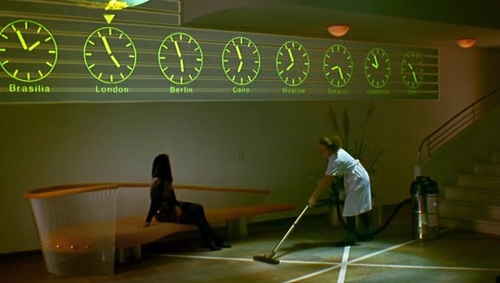
Until the End of the World (1991, dir by Wim Wenders, DP: Robby Muller)

Pina (2011, dir by Wim Wenders)
With the 2022 Cannes Film Festival coming to a close in the next few days, I’ve been watching some of the films that previously won the prestigious Palme d’Or. They’re an interesting group of films. Some of them have been forgotten. Some of them are still regarded as classics. Some of them definitely deserve to be seen by a wider audience. Take for the instance that winner of the 1984 Palme d’Or winner, Paris, Texas. This is a film that is well-regarded by cineastes but it definitely deserves to be seen by more people.
Though released in 1984, Paris, Texas opens with an image that will resonate for many viewers today. A dazed man stumbles through the desert while wearing a red baseball cap. Though the cap may not read “Make America Great Again,” the sight of it immediately identifies the owner as being a resident of what is often dismissively referred to as being flyover country, the long stretch of land that sits between the two coasts. Travis (Harry Dean Stanton) is lost, both figuratively and literally. After he stumbles into a bar and collapses, he’s taken to a doctor (played by German film director Bernhard Wicki) who discovers that Travis has a phone number on him. When the doctor calls the number, he speaks to Travis’s brother, Walt (Dean Stockwell). Walt has not seen Travis for three years and the viewer gets the feeling that Walt spent those years assuming that Travis was dead. Walt agrees to travel to West Texas to retrieve his brother and take him back to Los Angeles.
When Walt retrieves his brother, he’s annoyed that Travis refuses to explain where he’s been for the past three years. In fact, for the first fourth of the film, Travis doesn’t say anything. He just stares into space. Finally, when he does speak, it’s to tell Walt that he wants to go to Paris. Walt tells him that going to Paris might have to wait. Travis elaborates that he wants to go to Paris, Texas. He owns an empty parking lot in Paris, Texas.
It takes a while to learn much about Travis’s past. Like many of Wim Wenders’s films, Paris, Texas moves at its own deliberate pace and it features characters who tend to talk around their concerns instead of facing them head-on. What we do eventually learn is that Travis has a son named Hunter (Hunter Black). Travis’s wife, Jane, (played by Natassja Kinski) disappeared first. Travis disappeared afterwards, leaving Walt and his wife (Aurore Clement) to raise his son. At first, when Travis arrives in Los Angeles, he struggles to reconnect with Hunter but eventually, he does. He tries to be a father but, again, he sometimes struggles because, while Travis has a good heart, he’s also out-of-step with the world.
As for Jane, we eventually learn that she’s in Houston. She’s working in a tacky sex club, one where the customers and the strippers are separated by a one-way mirror. The customer can see and talk to the stripper but the stripper can’t see the customers. It’s all about manufactured intimacy. The customer can delude themselves into thinking that the woman is stripping just for him while the woman doesn’t have to see the man who is watching her. There are no emotions to deal with, just the illusion of a connection.
Even as Travis begins to make a life for himself in Los Angeles, he finds himself tempted to return to Houston to search for his wife….
As I said, Paris, Texas is a deliberately paced film. With a running time of 2 hours and 20 minutes, it feels like it’s actually three films linked together. We start with Travis and Walt traveling back to Los Angeles. The second film deals with Travis’s attempts to bond with his son. And the third and most powerful film is about what happens when Travis finally finds Jane. It all comes together to form a deceptively low-key character study of a group of lost souls, all of whom are dealing with the mistakes of the past and hoping for a better future. The film’s most memorable moment comes when Travis delivers a long and heartfelt monologue about his marriage to Jane. Beautifully written by Sam Shephard (who co-wrote the script with L.M. Kit Carson) and wonderfully acted by Harry Dean Stanton, it’s a monologue about regret, guilt, forgiveness, and ultimately being cursed to wander.
Despite the heavy subject matter, Paris, Texas is an undeniably joyful film. In a rare leading role, Harry Dean Stanton plays Travis as someone who is full of regrets but who, at the same time, retains a spark of hope and optimism. Life has beaten him down but he has yet to surrender. Once he reaches Los Angeles and Travis starts to fully come out of his fugue state, there’s a playful energy to Stanton’s performance. The scene where he dresses up as what he thinks a dad should look like is a highlight. For Travis, being a responsible adult starts with putting on a suit and walking his son home from school. Stanton’s excellent performance is matched by good work from Dean Stockwell and, especially, Natassja Kinski.
Visually, the film is all about capturing the beauty and the peculiarity of the landscape of the American southwest. Like many European directors, Wim Wenders seems to be a bit in love with the combination of rugged mountains and commercialized society that one finds while driving through the west. In the scenes in which Stanton wanders through West Texas, the landscape almost seems like it might consume him and, later, in Los Angeles and Houston, the garishness of the city threatens to do the same. Wherever he is, Travis is slightly out-of-place and the viewer can understand why Travis is compelled to keep wandering. At times, it seems like Travis will never fit in anywhere but the fact that he never gives up hope is comforting. In many ways, Travis’s own journey mirrors Stanton’s career in Hollywood. He had the talent of a leading man but the eccentric countenance of a great character actor. He may have never been quite fit in with mainstream Hollywood but he never stopped acting.
The film itself never visits Paris, Texas. Travis just talks about the fact that he owns an empty lot in the town and that he would like to see it. Still, I like to think Travis eventually reached Paris and I like to think that he did something wonderful with that lot.

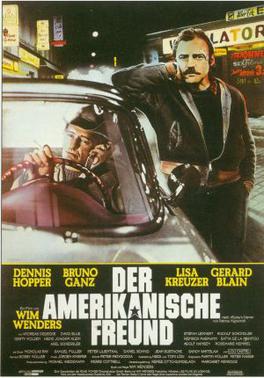
The 1977 German film, The American Friend, tells the story of two men.
Tom Ripley (played by Dennis Hopper) is an American. He’s also a very wealthy criminal. He wears a cowboy hat almost everywhere he goes and always tends to be a little bit too forceful when he talks to people. Because he’s wealthy, he is tolerated by high society but everyone seems to view him with a bit of suspicion. And perhaps they should because Ripley actually has a pretty good scheme going. Working with an artist named Derwatt (director Nicholas Ray), Ripley sells forged paintings. He goes to auctions and bids on these paintings, artificially driving up the price. When Ripley isn’t selling forged paintings, he’s traveling around the world and speaking into his tape recorder. He’s an existential cowboy, one who doesn’t appear to have any morals but who is still capable of exclaiming, “I’m confused!” with real anguish in his voice.
Jonathan Zimmerman (Bruno Ganz) is a German art restorer and picture framer who has a beautiful wife, two children, and a lovely shop. He also has leukemia and is obsessed not only with his impending death but also his fear that he’s going to end his life without really doing anything memorable. When Jonathan meets Ripley at an art auction, he refuses to shake Ripley’s hand because he knows about Ripley’s shady reputation. Ripley is offended but slightly forgiving when he learns, from a mutual acquaintance, that Jonathan has been sick.
Back at his mansion, Ripley receives a message from a French gangster named Minot (Gerard Blain). Minot wants Ripley to murder a rival gangster for him. Ripley, however, tells Minot that he should contact Jonathan and offer him the contract. Ripley then spreads a rumor that Jonathan’s illness has gotten worse and that both his doctor and his family are keeping the truth from him. Now believing that he’s on the verge of dying and desperate to make some money so that his family won’t be helpless after he’s gone, Jonathan is far more open to accepting Minot’s unexpected offer to become a hired gun.
To his shock, Jonathan is able to carry out the murder. However, Minot is not content to just have Jonathan kill one man. Minot is concerned about the activities of an American gangster (played by director Sam Fuller) and he expects Jonathan to keep killing for him. Meanwhile, Ripley, feeling a bit conflicted over his part in Jonathan’s new career, take it upon himself to help Jonathan out in his latest assignment. And so, on odd friendship is born….
The American Friend is based on Patricia Highsmith’s novel Ripley’s Game (which, itself, is a sequel to oft-filmed The Talented Mr. Ripley). In Highsmith’s novels, Ripley was always portrayed as being suave, well-spoken, and never suffering from self-doubt. Dennis Hopper plays Ripley as a cowboy who appears to be in the throes of an existential crisis. It’s quite the opposite of the literary Ripley but it works perfectly in the world created by The American Friend. At times, there’s something almost child-like about Hopper’s Ripley. As played by Hopper, Ripley is an unintentional force of destruction, one who targets Jonathan on an impulse and then, just as impulsively, decides to help him out. It’s one of Hopper’s best and most multi-layered performances.
Dennis Hopper is equally matched by the great Bruno Ganz, who plays Jonathan as being a gentle soul who is as shocked as anyone to discover that he’s capable of murder. Though he is morally offended by Ripley’s reputation, he still can’t help but try to help Ripley out when Ripley unexpectedly shows up at his shop. Even towards the end of the film, Jonathan seems to be so happy to finally be doing something unexpected with his life that his joy is almost infectious. You’re happy for him, even though you know things probably won’t turn out well for him.
As directed by Wim Wenders, The American Friend is a perfect mix of existential angst and film noir homage. While there’s undoubtedly a political subtext to the film — one gets the feeling that Ripley’s destructive friendship with Jonathan is meant to represent the way that America views Europe — The American Friend works best as an homage to the glorious B-movies of the 40s and 50s. (It’s probably not a coincidence that both Nicholas Ray and Samuel Fuller have prominent supporting roles.) There’s a sequence on a train that’s the equal to Hitchcock at his best and the story’s conclusion will stick with you long after the film ends.
Sadly, most of the principle members of the cast are no longer with us. All of them are at their best in The American Friend and Wim Wenders gives them all a terrific showcase in which to display their talent. The American Friend is definitely a film worth tracking down.
 Through the Shattered Lens