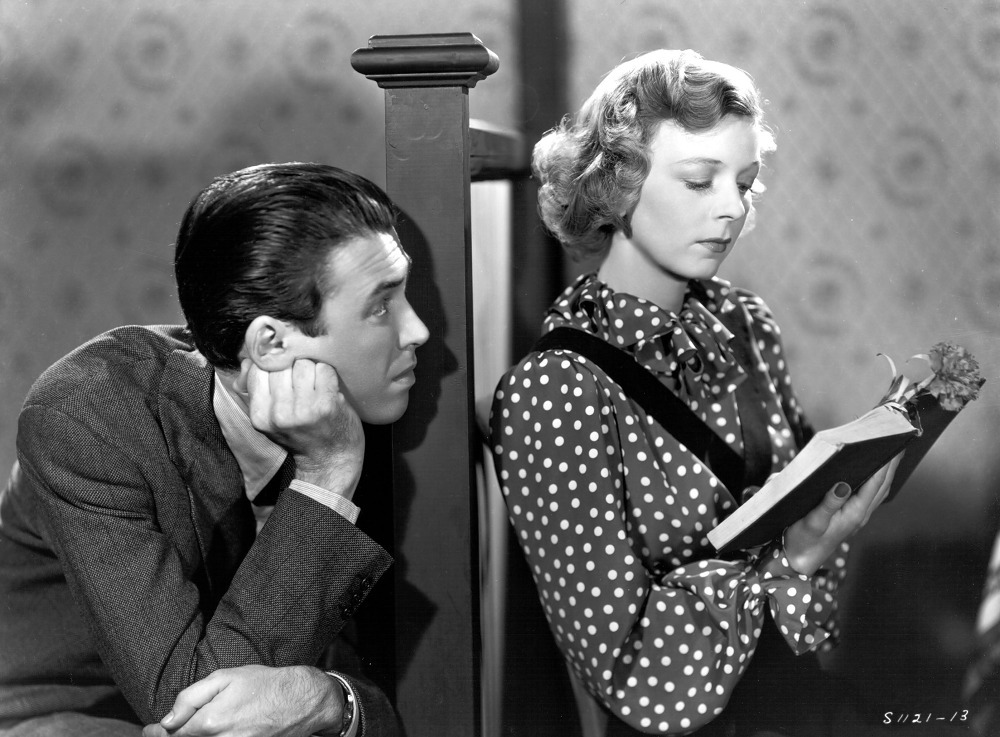
Set in Budapest, Hungary, we meet Alfred Kralik (James Stewart), the dependable head clerk at a retail establishment named Matuschek and Company. In walks Klara Novak (Margaret Sullavan), an attractive young lady who’s desperately in need of a job, so Mr. Matuschek (Frank Morgan) hires her as a new salesgirl. Alfred and Klara immediately take a disliking to each other and give each other quite a hard time at work. As we get to know Alfred and Klara, we find out that each of them is involved in a treasured “pen-pal” relationship with a mysterious someone who truly seems to understand their heart and soul. Wouldn’t you know it, even though they get on each other’s last nerves at the shop, Alfred and Klara are each other’s secret pen-pal! While navigating unexpected drama at work, mainly involving Mr. Matuschek, his wife, and a duplicitous employee, Alfred eventually discovers that Klara is his mystery correspondent without her knowing it. As he tries to reconcile the actions of the lady he knows from work with the heart of the person who wrote those letters, Alfred decides to show Klara who he really is to see if they can fall in love in real life!
THE SHOP AROUND THE CORNER is one of my very favorite romantic comedies, and I’d guess the lead performance of James Stewart is probably the main reason. He’s just perfect in the role of Alfred Kralik… earnest, proud, awkward, vulnerable, and above all else, decent. Stewart’s ability to portray characters with believable decency separate him as one of the all-time greats and that quality is well on display here. Margaret Sullavan, as Klara Novak, matches him perfectly. Known to have a good relationship off screen as well, the chemistry between Stewart and Sullavan is off the charts and their scenes together are quite powerful. Mostly known by me for his performance as the Wizard of Oz, Frank Morgan is also incredible as Mr. Matuschek, at times jealous, volatile, and ultimately benevolent.
Director Ernst Lubitsch, known for his “Lubitsch touch,” has made a movie that has stood the test of time because of its core of emotional truth. Even though it was made well before the days of social media or online dating, THE SHOP AROUND THE CORNER understands just how differently we present ourselves when writing (or online, or on social media), compared to how we actually behave in person. Maybe it’s because THE SHOP AROUND THE CORNER was made in 1940, but I love the way its time-tested story idea is used for comedy and sweet romance, without becoming cynical. That lack of cynicism leaves room not only for comedy and romance but also a genuine compassion for its characters as they deal with the very real emotions of loneliness, pride, jealousy, and fear.
All in all, THE SHOP AROUND THE CORNER may be 85 years old, but its tender and romantic payoff set on Christmas Eve still gets me every time. As far as I’m concerned, this is about as close to perfect as a romantic comedy can get!
(Author’s note: I’m also a fan of the 1998 remake, YOU’VE GOT MAIL, starring Tom Hanks and Meg Ryan, but I rate it below Lubitsch’s film.)
 Through the Shattered Lens