Retro Television Review: The American Short Story #13: Barn Burning


Welcome to Retro Television Reviews, a feature where we review some of our favorite and least favorite shows of the past!  On Saturdays, Lisa will be reviewing The American Short Story, which ran semi-regularly on PBS in 1974 to 1981.  The entire show can be purchased on Prime and found on YouTube and Tubi.
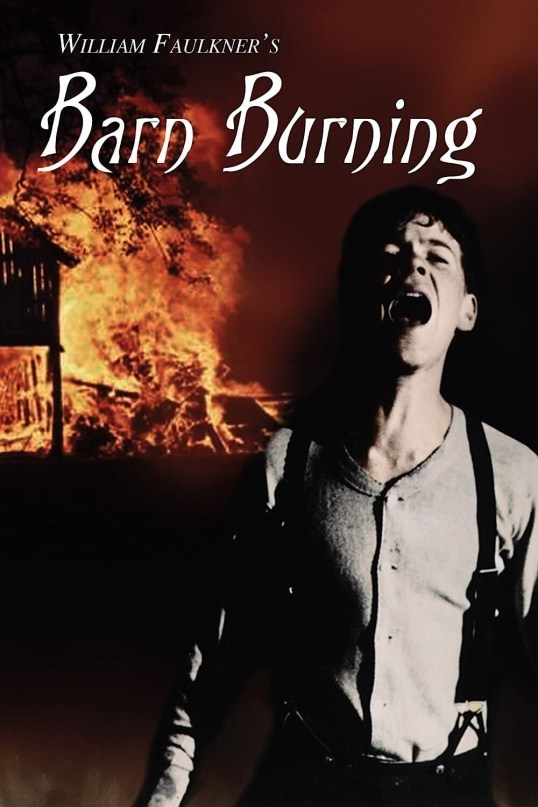
This week, we have an adaptation of a William Faulkner short story.

Episode #13: Barn Burning

(Dir by Peter Werner, originally aired in 1980)

The year is 1895 and everyone in Yoknapatawpha County, Mississippi knows that Abner Snopes (Tommy Lee Jones) is no good.  The taciturn and bitter Abner is notorious for burning down the barns of those who he feels have mistreated him.  When Abner is dragged into the Justice of the Peace’s courtroom (which also happens to be a general store), he’s only acquitted because the judge and the prosecutor realize it would be unfair to force Abner’s young son, Sartoris “Sarty” Snopes (Shawn Whittington), to testify against him.  Abner and his family are ordered to move to another town but Abner avoids any legal punishment.  Despite that, Abner still accuses Sarty of thinking about betraying him.

This episode follows Sarty as he tries to understand his abusive father, a man who is offended over being told to wash a rug that he intentionally damaged that he plots to burn down another barn.  (The owner of the rug is played by Jimmy Faulkner, the grandson of William Faulkner.)  Sarty wants his father’s love but it soon becomes clear that Abner is too angry and resentful to love anyone.  The story ends with a fire and an ambiguous tragedy, leaving both the fate of Abner and the future of Sarty unclear.

With his shifting viewpoints and his internalized style of narration, William Faulkner is not an easy writer to adapt to the screen.  With Barn Burning, director Peter Werner takes a straight-forward approach to Faulkner’s short story.  While Werner’s film might lack the nuance that was brought to the tale by Faulkner’s stream-of-consciousness style, it does work as a portrait of living with an angry man who is determined to let the world know that he’s not going to be pushed around anymore.  Tommy Lee Jones gives a strong, intimidating, and ultimately charismatic performance as Abner, a tyrant who only shows emotion when he feels that he’s been treated disrespectfully.  The story takes place in the ruins of the Old South and capture the struggle between the forced gentility of the old aristocracy and the crassness of the future, represented by Abner and his family.

This was a strong episode that truly did justice to William Faulkner’s short story.

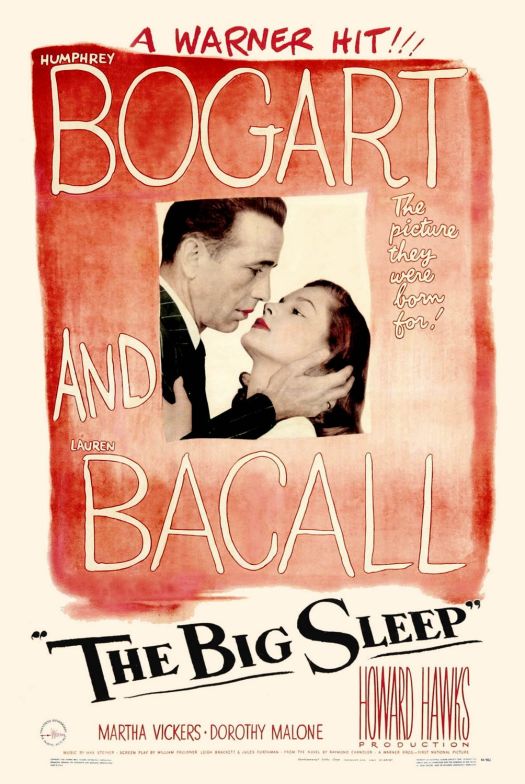
Marlowe at the Movies Returns!: Bogie & Bacall in THE BIG SLEEP (Warner Brothers 1946)


gary loggins's avatarcracked rear viewer

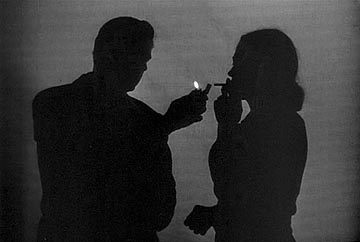
It’s been a long time since we last visited with Raymond Chandler’s fictional “knight-errant”, PI Philip Marlowe. Way too long, so let’s take a look at THE BIG SLEEP, starring Humphrey Bogart as the definitive screen Marlowe. This 1946 Howard Hawks film was a follow-up to 1944’s hit TO HAVE AND HAVE NOT, which introduced audiences (and Bogie) to luscious Lauren Bacall . The pair was dynamite together onscreen, and off as well, marrying a year later. Their May/December romance was one of Hollywood’s greatest love stories, lasting until Bogart’s death from cancer in 1957.

For me to try and explain the plot here would be futile, as it takes more twists and turns than a “Balinese belly dancer”. Marlowe is hired by elderly General Sternwood, whose sexy young daughter Carmen is being blackmailed. The General’s other daughter Vivien, a sexy divorcee, is also in trouble. This takes Our Man Marlowe…

View original post 582 more words

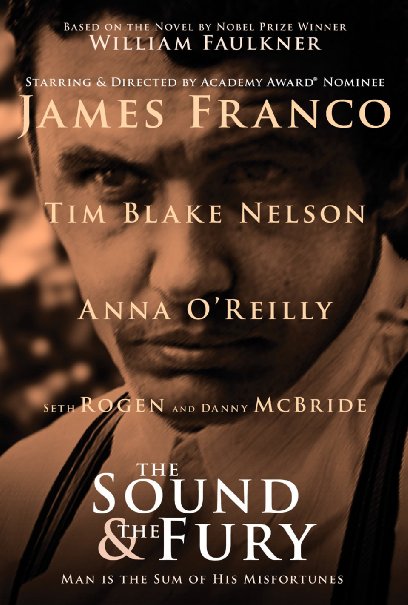
Cleaning Out the DVR Yet Again #37: The Sound and the Fury (dir by James Franco)


(Lisa recently discovered that she only has about 8 hours of space left on her DVR!  It turns out that she’s been recording movies from July and she just hasn’t gotten around to watching and reviewing them yet.  So, once again, Lisa is cleaning out her DVR!  She is going to try to watch and review 52 movies by the end of Thursday, December 8th!  Will she make it?  Keep checking the site to find out!)

the_sound_and_the_fury_2014_film

James Franco’s 2015 adaptation of William Faulkner’s classic novel, The Sound and The Fury, aired on Starz on November 2nd.

You know what?  Haters are going to hate but James Franco does more in an hour than most people do in a month.  Not only is James one of the most consistently interesting actors working today but he’s also a writer, a painter, a teacher, an activist, and a film director.

Indeed, it’s his work as a director that might be the most overlooked part of James’s prolific career.  Since making his directorial debut in 2006, with The Ape, James Franco has directed over 30 movies, television episodes, and short films.  As a director, James Franco has shown a talent for strong visuals and a willingness to take on difficult material.

For instance, can you imagine any other director who would have the guts to try to make a film out of The Sound and The Fury, the classic novel that may be the most unfilmable literary work this side of Finnegan’s Wake?

Told through the perspective of four related but very different characters, The Sound and The Fury details the fall of both the once mighty Compson family and the old South that the Compsons represent.  Benjy Compson is developmentally disabled and sees the world in a disjointed, nonlinear style.  Quinton Compson is fragile and sensitive and, while his section of the book starts in a fairly straight-forward enough manner, it quickly becomes nearly incoherent as Quinton’s mental state starts to deteriorate.  Jason Compson is cruel and evil but, because of his ruthless and self-centered personality, his section is the most straight-forward and the easiest to follow.  And finally, there’s Dilsey, the Compson family servant who is the only person to understand why the Compsons are in decline.  Faulkner utilized stream-of-consciousness throughout the entire novel, to such an extent that readers and critics are still debating just what exactly is happening and what Faulkner is actually saying.

In short, it takes courage to adapt a novel like The Sound and The Fury.  It takes even more courage when you’re an actor-turned-director who has his share of jealous haters.

Now, I should admit that James Franco was not the first director to attempt to make a film out of The Sound and The Fury.  In 1959, Martin Ritt made a version of the film, which reportedly did away with the nonlinear structure and centered the film around the straight-forward Jason.  (I haven’t seen the 1959 version.)  James Franco, on the other hand, not only adapts The Sound and The Fury but also adapts Faulkner’s style.

James Franco replicates the novel’s nonlinear structure and even takes on the role of Benjy himself.  It makes for a film that is occasionally frustrating and difficult to follow but which is also undeniably fascinating.  Filled with haunting images, James Franco’s The Sound and The Fury is a visual feast, one that perfectly captures the atmosphere of a decaying society.  The South, in this film, is trapped between the possibly imagined glories of the past and the harsh reality of the future.  There’s a dream-like intensity to the film.  It sticks with you.

As well, James Franco does an excellent job casting his film.  Tim Blake Nelson brings an enigmatic combination of grandeur and threat to the role of Mr. Compson and Jacob Loeb is haunting as the fragile Quentin.  Scott Haze dominates the film as the cruel Jason.  Though you never sympathize with Jason, you can understand how he became the man that he is.  Jason may not be a good man but, unlike the rest of the Compsons, you never doubt that he’s going to survive in one way or another.

James Franco took a big chance directing The Sound and The Fury and he succeeded.