If there is one artist I have consistently returned to every October for the 15 or so years that I’ve had a clue what I’m talking about, it’s Vratyas Vakyas. I first discovered Falkenbach via Audiogalaxy–a long forgotten site that stood out back in the Napster days for a design which allowed users to easily explore non-mainstream genres. I had never heard anything remotely similar to Falkenbach at the time, and I fell in love with the plodding hymns that seemed to turn black metal on its head and generate a spirit of reverence rather than darkness.
Of course, in hindsight Falkenbach fits into a broader historical progression, but his sound is still entirely unmistakable. Vratyas Vakyas was one of the earliest artists to really latch on to the ‘viking metal’ ideal that Bathory began in the late 80s, before too many stylistic norms were standardized, and the sound he landed on has never ceased to captivate me. “Heathen Foray” is the opening track to his fourth studio album, Heralding – The Fireblade (2005), and it also makes an appearance in somewhat grimmer form on his second album, …Magni blandinn ok megintiri… (1998). How far back the basic idea of the song dates is hard to say; there is a ton of earlier demo material available going as far back as 1989. I could have chosen any of dozens of stand-out songs to showcase here without any reservations, but this one has been speaking to me lately. Enjoy!
Lars Jensen has been working on his solo project, Myrkgrav, since 2003, but his discography is pretty brief. Trollskau, skrømt og kølabrenning (2006) is his only full-length album, and it’s a pretty solid entry into the annals of pagan metal. The album is a bit brooding overall, with a lot of slower tempo black metal-infused hymns, but the optimistic closing track has always stood out to me the most.
“Endetoner” feels like a victory anthem–a celebration of Norse history and tradition that honors those old gods who always seem to make a brief return to Midgard around this time of the year.
If I asked a random metal fan to name ten folk/viking metal bands, chances are they wouldn’t drop Sweden’s Månegarm among the contenders. It’s a bit odd, considering they’ve been around since 1995. But besides having a name that isn’t entirely easy to reproduce on a standard keyboard, there’s no reason to leave “Månegarm” off the list. Their ability to fly under the radar is something I don’t really understand; this band has definitely drawn less attention than they deserve over the years.
I am guilty to an extent, with nothing prior to Vargstenen–their 2007 release–in my collection, but I was still a little surprised to realize I had never featured this band before let alone this song. Following a brief intro track, “Ur själslig död” kicks off Vargstenen with epic bombast and a creative progression that avoids the easy temptation to repeat the track’s catchy main melody in excess. One thing that always stood out to me on this song was the vocals. Erik Grawsiö demonstrates a level of diversity I’m more accustomed to out of Slavic metal bands than their Germanic counterparts, and I absolutely love how he transitions back and forth between guttural singing and atonal growls. I couldn’t resist the urge to belt out a death metal roar of my own at the 40 second mark when I was listening to this in my car earlier today. So much for not scaring the new neighbors. <_<
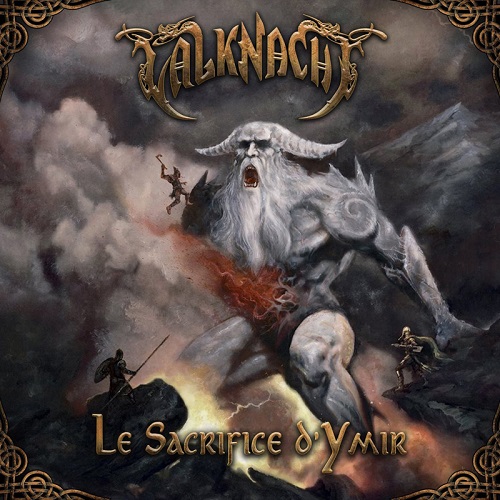
Valknacht is a five-piece paganish metal band from Quebec that have released three albums beginning in 2009–not to be confused with Walknut, the highly acclaimed side-project of Stringsskald from Темнозорь (Temnozor). I suppose I grabbed this album for an obvious reason: it presented a pagan tag from a relatively new act I had never heard of. With the folk and pagan metal scene now fifteen years in the making, a lot of the old stalwarts are simply running low on material. I am always hoping to stumble upon a new collaboration willing to pick up the slack and carry one of my favorite genres onward into a new era. Valknacht could be that band, but it’s going to take some work.
Valknacht – Bataille de Maldon, from Le Sacrifice d’Ymir
The album begins with a 3 minute intro track that I’ll not bother sampling here. You already know what it sounds like. Oars splash through the sea in time with viking voices oooing and OOOing and sometimes aaahhing. Break and repeat with some overbearing choral and brass synth, throw in a gong for good measure, and you will find yourself in the opening moments of “Bataille de Maldon”. Add a dash of synth woodwind, queue the crunch crunch crunch monotone guitar, and remind your drummer to make it metal in a few more measures. The black metal at 2:05 gives us a well-needed boost, and from there the song transitions to something that ought to be really, really cool. 2:40 made me think of Nokturnal Mortum’s “The New Era of Swords” from Weltanschauung, and for about one minute “Bataille de Maldon” is a song I really want to listen to. But the segment soon gives way to something fairly indistinguishable from what came before.
For the vast, vast majority of this 9:30 song, what you hear is an endless rain of double bass, rhythm guitar that only knows two patterns and three chords, a cheap synth whistle that’s totally unconvincing as the real deal, an admittedly interesting lead guitar, and total synth overkill plugging in every gap, sometimes doubled up with layers of “OOOOOOOOO”.
Yet, this could have all worked out really well. This band surely listened to a lot of Moonsorrow, and the string portion of the synth gets playfully close to Nokturnal Mortum at times. But the rest of the synth is just bad. It feels so fake. They use bold brass like they’re Equilibrium or Turisas, but the music isn’t nearly bombastic enough to merit it. The woodwinds have no depth, no air, no punctuation… Аркона (Arkona) is about the only band I can think of that pulls off fake woodwinds effectively (unless others are doing it so well I take them for studio musicians), and they must have much higher-end equipment than Valknacht at their disposal to do it with. It would have been nothing for one of the band members to pick up a whistle and record it proper. The vocals get really annoying really quickly for lack of dynamics or anything interesting to encase them. And the song goes on and on and on without ever adding much of anything. By 3:10 we’ve pretty much heard everything, and there’s next to nothing in the form of build-up or break until we hit a sudden transition at 8 minutes into an admittedly solid finale.
So, am I going to say anything good about this album? Surprisingly, yes. Quite a lot actually.
Valknacht – Le carmin des anges, from Le Sacrifice d’Ymir
The tragedy of Le Sacrifice d’Ymir is that just about anyone listening to this album will get the same impression that I did for its first 13 minutes. How many will keep listening? Few, I suspect, and it’s a shame because by the end this album is sounding pretty damn solid. “Le carmin des anges” is the closing track. It should have been the opening. Here is a song that cuts out all of the bullshit and condenses everything I did like about “Bataille de Maldon” into a much more manageable 5 minute package. The term “trying” drops back down my throat, and I hear some really badass Windir licks connected by groovy breaks and synth again reminiscent of Noktrunal Mortum. Thorleïf’s vocals do a total 360, and his previously dull deeper bellows sound epic when juxtaposed and then overlaid with higher-pitched rabid black metal screams.
The collective sound really works here, too. The Moonsorrow vibe they were going for in “Bataille de Maldon” flopped for a far-too-excessive attempt to be epic. That sort of music is meant to sound earthy, and the synth swarm just made it seem cheap and fake. On “Le carmin des anges”, a lot of the frivolous choral and brass sounds are gone, and what remains works far better with the Windir vibe they’re getting at.
Valknacht – Le sacrifice d’Ymir, from Le Sacrifice d’Ymir
You didn’t have to wait until the last track to find this though. The third, “Chants de guerre”, carries an infinitely more successful Moonsorrow vibe than the song before it. The woodwind’s fakeness is barely significant because the loop it plays is more of an unnatural Falkenbach chant than a harmony. Thorleïf’s full vocal range finally comes into play, and there is way more Windir-esque black metal–a sound they do right. Track 4, “Sur les ruines de Rome”, throws in some seemingly female screams and spoken lines that feel kind of reminiscent of Masha from Arkona, and could be a guest musician or further testament to Thorleïf’s range. (Liner notes for this album have been hard to come by.) As if Masha had been on their minds, track 5, “Le sacrifice d’Ymir”, feels pretty “slava!”, with some frantic whistle and guitar tapping. I had good cause to doubt another 10 minute track, but there is so much more going on here than in “Bataille de Maldon”. Thorleïf’s vocal dynamics alone are enough to make the overdrawn passages–and there are certainly a few–way less dull, the lead guitarist keeps up that Windir kick he’s proven pretty good at, that obnoxious rhythm guitar from the opener is all but missing, mixed down from a nuisance to its proper role and a background accessory.
“De murmures et de givre” starts nice but regrettably returns to a lot of the mistakes of “Bataille de Maldon”–a 7 minute track that could have probably made its point in three and a half. “Que le sang constelle mes mains” gives us our first and last taste of some accordion. Though its synthetic generation is painfully obvious, it does kick off with a melody pleasantly reminiscent of Finsterforst. Again though, the song drones on way too long with boring “I’m going to growl, you chugga-chug, and you hit a whole bunch of notes at once on your keyboard” moments.
So what’s the verdict? I think that this band either ran out of material and had to generate a few filler tracks, or else the minds behind it have some differences of opinion on how they ought to sound and they tried to accommodate everyone. Over all, fans of Windir will find plenty of moments to swoon over, and Moonsorrow die-hards will be modestly entertained. I got a Nokturnal Mortum vibe in some of the synth string utilization and rhythm guitar breakdowns, but not nearly enough to satisfy, and it has to take second stage to a lot of derivative crap. These guys have enormous potential, and they’re relatively young by band standards. I think the inclusion of “Bataille de Maldon” in its present state–at all let alone as the not-so-grand opener–is a little suspect. It would be nice to hear some session musicians for the folk instrumentation, or at least a better keyboard. And they really need to do something about song lengths relative to content. I will have long forgotten Le Sacrifice d’Ymir this time next year, but I won’t forget to check out their future releases. Turisas rose from a totally generic sound to release one of the best albums in folk metal. So did Finsterforst. Valknacht are certainly capable of becoming a band I could fall in love with.
Decade of last.fm scrobbling countdown:
16. Falkenbach (1,418 plays)
Top track (84 plays): Heathenpride, from En Their Medh Riki Fara (1996)
Featured track: Tanfana, from Tiurida (2011)
Happy Halloween! As you may have guessed, October 31st is our favorite day of the year here at Shattered Lens. I thought I’d celebrate with two entries in my Top 50 series that both happen to be particularly appropriate for the occasion. The first, coming in at 16th place with 1,418 listens over the past ten years, is the solo brainchild of Vratyas Vakyas: Falkenbach. A band I find some excuse to mention almost every October, Falkenbach have about as much of a right as Bathory or Enslaved to claim the invention of viking metal. While Vakyas certainly lacks the widespread influence attributable to Quorthon–only nine copies were supposedly ever made of the 1989 Havamal demo–he seems to have been a part of the movement from its very founding. Recording originally in Iceland and later settling down in Germany, Vakyas has dedicated his career as a musician to persistently refining a unique sound inseparable from the notion of viking metal.
“Viking metal” is a term I use sparingly. It marks, in my opinion, the transition of fringe metal bands away from reactionary Satanism and towards a more refined, pagan appreciation for pre-Christian European tradition. This process took the majority of the 1990s to fully realize, and many of the bands that most commonly receive a “viking” tag–Bathory, Enslaved, Falkenbach, Burzum–originated firmly within the spectrum of black metal. (The term “pagan metal” emerged in much the same manner further east, as Ukrainian and Russian black metal bands found similar cause to divorce Satanism.) Modern use of “viking metal” refers to little more than a lyrical theme, the transition to a folk aesthetic in black metal circles and beyond being at this point complete. “Pagan metal” seems to be the tag for any folkish band that still lies on the fringe, usually through heavy doses of black metal, provided they didn’t get dumped off in the “viking” bin first.
It would make a great deal of sense to me to lump the likes of Enslaved and Bathory into the “pagan” category where applicable, along with more recent acts like Moonsorrow, and abandon “viking metal” altogether. But if it is to persist, I find no band more appropriate for the title than Falkenbach. Much like Summoning, Falkenbach’s sound developed into an independent entity with no clear counterparts. From Ok Nefna Tysvar Ty (2003) onward, Vakyas’s sound has stood distinctly apart. The looping electronic woodwinds, acoustic guitar, mid-tempo beat, and chugging electric guitar in the sample track I’ve provided are all fundamental to the sound visible within the earliest available Falkenbach recordings and fully realized by 2003. But where Summoning has always defied classification, Falkenbach’s close ties to the onset of the viking metal movement seem to grant the term weight. It would be a bit silly to suggest that Falkenbach’s uniqueness is somehow more significant than the countless other innovative, folk-inspired metal bands of the 90s and 2000s, but his timing in history and lack of parallels, be they copycats or coincidental, has earned Vakyas a distinction beyond his impeccable song writing and sincere reverence for the old gods. Falkenbach is, for me at least, the closest thing to viking metal as a style of music that you will ever find.
Decade of last.fm scrobbling countdown:
28. Týr (1,101 plays)
Top track (75 plays): Hail to the Hammer, from various albums
Featured track: Regin Smiður, from Eric the Red (2003)
Viking metal, pagan metal, folk metal, call it what you will–it’s pretty impressive that Týr have managed to capture an extraordinary vision of the Norse past with absolutely no traditional instrumentation or synth choruses to speak of save the human voice. Since their second album, Eric the Red, Týr have revolved around Heri Joensen’s breathtaking vocals. Their unique brand of progressive rock instrumentation is heavy enough to blast out your stereo and yet entirely subservient to the driving vocal anthems. I would be very interested to gain a better understanding of where Joensen’s dedication to tradition gives way to his unique creativity as one of the most innovative musicians making music today–of the extent to which his vocals are derived from Faroese tradition. With an educational background in both vocals and Indo-European linguistics, he probably has a better idea than most of how traditional Germanic and Norse singing must have sounded, and I feel a sense of solidarity between the band and other students of folk vocalization such as Latvia’s Skyforger. At the same time, I gather that Norse musical tradition is a far more elusive beast than its eastern counterparts.
As a modern band, Týr seem to me the most central act of the whole “viking metal” scene. The term is a bit of a ruse, in so far as it lacks both the stylistic conformity of most genre labels and the acknowledged generality of catch-alls like “folk metal”. Whether a band might garner the label depends upon so many nuance factors that it is much easier to agree upon which acts ought to receive it than to discuss why. Attempts to properly define it are few and far between. The Wikipedia article on “viking metal”, for instance, is largely substantiated by a thesis on folk metal submitted by Aaron Patrick Mulvany in 2000. That is only 12 years removed from Bathory’s Blood Fire Death–now a quarter of a century behind us–and two years prior to one of the most significant bands of the “genre”‘s debut. With the utmost respect for anyone who acknowledges folk metal as a legitimate subject for scholarship (I’m looking forward to reading Mulvany’s thesis, available online, over the next few days), I would ascribe to him the gift of prophecy were it not hopelessly dated. But while I would say that Bathory was fundamentally black metal, Amon Amarth death metal at their core, Falkenbach hopelessly under-appreciated, and Thyrfing given to fantasy, the inherent catch-all-ism of progressive metal (not the Dream Theater worship standardized derivative) lends to Týr a sense of authentic originality. As a metal act they do their own thing, and that makes their tradition-influenced vocals and lyrics emerge with no strings attached.
Týr’s music is neither too confrontational nor too fanciful to be generally accessible. They are, in the very least, the first band I would recommend to an inexperienced listener who asked me what specifically Norse-derived folk metal sounded like. Their sound bleeds an authentic scholarly interest in Norse culture and plugs the myriad gaps with progressive rock that is both down to earth and impressively original. You’ll find no fallback to Tolkien here (album cover aside), and no hell-raising or Transylvanian hunger either; it’s something a bit more Apollonian, and exciting all the same. If I could pick any one artist to spend an evening in a pub with, Heri Joensen may very well top my list.
Decade of last.fm scrobbling countdown:
40. Ensiferum (782 plays)
Top track (38 plays): One More Magic Potion, from Victory Songs (2007)
Ensiferum descended on metal in 2001 with a force sufficient to crush any lingering doubts that folk metal was a genre in its own right. Their self-titled debut coincided with the first instance in which I was aware enough of metal music to fully recognize the birth of something new, and for that I’ll always view them with a sense of nostalgia. When I was first encountering the likes of Finntroll and Thyrfing, metal in general was still something of a novelty for me. The fledgling trend towards incorporating folk-centric fantasy and pagan themes graced my ears uncontextualized and thus timeless. When I first heard Ensiferum, I finally realized that this was an emergent process. The clerics of musical trendiness had been persuaded to change allegiance, and Odin and Thor would have their day in place of Satan for a time.
Ensiferum’s discography is not the sort of thing that ought to necessarily make them the hallmark of that glorious and now fading trend we call folk metal. Their history is a bit more rocky, oscillating between excellence and something less. Iron (2004) frankly bored me, and I could never quite get beyond the feeling that From Afar (2009) was a collection of Victory Songs (2007) b-sides–outstanding to be sure, but extremely similar and never quite as perfect. Unsung Heroes (2012) stands taller, I think, and its negative reviews are likely a consequence of a forgivably weak ending and single-minded fans looking for Victory Songs 3.0. But no, it’s not consistency of quality that makes “Ensiferum” one of the first names to pop into my head when I think of folk metal. It’s more a matter of timeliness–of peaking when it mattered most. Ensiferum (2001) sounds a little washed out now, but it was a triumph in its day, and it appeared at the cusp of the genre’s transition from an underground pulsation to a self-declared musical movement. Victory Songs (2007), their best album (I think most fans can agree to this), emerged at the pinnacle of the genre, when the original artists were coming into their mid-career highs and the best of the bandwagoners were leaving their marks. It was supported by a grand-slam of folk metal tour bar none here in North America the following year: Ensiferum playing in the USA for the first time, closing for a mind-blowing opening line-up of Eluveitie, Týr, and Turisas at Paganfest 2008.
Unsung Heroes (2012) appeared in time to claim ownership of folk metal’s end. I’ve been getting the sad feeling lately that 2011 marked the style’s grand last hurrah. It was a loaded year for metal, with a huge number of releases. The new trend away from earthy folk towards ethereal post-black was ever present, 2000s legends duking it out for album of the year with metal newcomers like Krallice, Liturgy, Altar of Plagues, and Deafheaven–those bands I’ll wax nostalgic about ten further years from now. Ensiferum got their two cents in a year late, in a sense, but perhaps this amounts to the honor of writing the final post-script. Sure, folk metal bands aren’t going away, but the spark of collective musical inspiration has moved elsewhere. Ensiferum happened to leave their greatest marks in the opening chapter, climax, and epilogue.
I’ll leave you with a really beautiful song from Unsung Heroes: Burning Leaves.
This is embarrassing. Here it is 2013, and my 2012 collection consists of only 38 albums, the majority of which I’ve listened to twice at best. I never heard the new Neurosis. I never heard the new High On Fire. Hell, forget metal, I didn’t even listen to the new Shins and Godspeed albums. I can’t offer an experienced, informed opinion now the way I could at the end of 2011. But I’ve been posting up some sort of album of the year list somewhere for over a decade now, and I’ll be damned if I let the fact that I didn’t really listen to any albums in 2012 stand in my way.
Or something like that. Here we go.
10. Dawnbringer – Into the Lair of the Sun God (track: IV)
It’s not often I get into a standard heavy metal album, but Dawnbringer did everything right in 2012. The songs rock along with a bit of an Iron Maiden drive to them, the power and black metal tendencies are tastefully incorporated to enhance the drive without altering the vibe, and the vocals know their limit. If it sounds a bit generic, don’t let that fool you. Not too many bands can pull this off without giving into the temptation to be more “epic” or “extreme” than they really are. Dawnbringer pull it off without the flare–without ever going over the top–and their accessibility places Into the Lair of the Sun God among the best of the year.
9. Korpiklaani – Manala
I wouldn’t say Hittavainen was the heart and soul of Korpiklaani, but he was an essential component. The band would be at a total loss without Jonne Järvelä, and their consistent line-up over the years has contributed enormously to their success, but Juho Kauppinen’s accordion aside, the folk instrumentation was almost all a product of Hittavainen. When he left due to health issues after Ukon Wacka in 2011, I feared it was the end of an era. Korpiklaani never missed a beat recovering from the loss in 2012. In addition to picking up the highly qualified Tuomas Rounakari as their new violinist, Jonne Järvelä stepped up to fill in the void by recording the mandolin, flute, and whistle tracks. I think I can hear some nuance differences between his and Hittavainen’s playing style, but it might just as well be in my head; Manala sounds like a Korpiklaani album through and through. I don’t like it as much as Karkelo and Ukon Wacka–it’s a bit heavier, too much so for my taste in folk metal–but in the greater sphere of Korpiklaani’s discography it is certainly composed and performed to par.
8. Ensiferum – Unsung Heroes
Ensiferum took a lot of slack for this album. I think a lot of people wanted to hear the over-the-top bombast that worked so effectively on Victory Songs, but in my opinion that was already growing stale on From Afar. Unsung Heroes is down to earth in a way they haven’t been since the 2001 self-titled debut, and I love it. They’re heading in exactly the direction I’d hoped for, and with the exception of the ugly mistake that is the album’s 17 minute closing track, Power Proof Passion, Unsung Heroes does not sound at all like a band past their prime. If they continue to push in the direction of tracks like Pohjola, they’re in position to trump Victory Songs and follow up Unsung Heroes with their best album to date.
7. Wodensthrone – Curse
I wish I’d taken the time to review this album earlier in the year, because I haven’t listened to it since the summer, and their flavor of epic black metal isn’t the sort of thing you can fully absorb in a quick last-minute listen. This is an album that can move nowhere but up in my charts over the months to follow, but for the time being I am content to place it somewhere in the middle. While busting out black metal that’s just as grim and unforgiving as the 1990s greats, Wodensthrone manage to infuse a tremendous amount of emotion that speaks of something beautiful hidden beneath the chaos. It’s buried a bit deeper than say, Femundsmarka by Waldgeflüster last year, but the feeling is similar.
6. Vattnet Viskar – Vattnet Viskar EP (song: Weakness)
If someone were to ask me what black metal sounded like in 2012, I might hand them this EP. It’s kind of cool getting to say that, because one of their members is a regular at the music forum where I get most of my recommendations. I wouldn’t have guessed back in March that they would be signed to Century Media by the end of the year, but I’m stoked to hear it. The whole notion of post-black metal has taken on a number of different flavors in these formative years, and Vattnet Viskar expand the genre by incorporating a lot of the all-encompassing guitar tones I associate with post-rock acts like Mono and This Will Destroy You. Top-notch stuff that’s really at the forefront of an emergent genre I’ve been anticipating for years.
5. Enslaved – RIITIIR
How Enslaved have aged so well is beyond me, but their last three albums have been their best three albums, and 22 years after the formation of this band they remain at the forefront of metal. Their viking-infused progressive black sound of late has done as much to shape the future of the genre as any new-found participant in the current popular trend towards black metal that has been taking shape over the past four years. RIITIIR is another outstanding output by the one classic early 90s black metal band that has managed to weather the ages unscathed.
4. Blut aus Nord – 777: Cosmosophy
The review I wrote of 777: Cosmosophy last month was one of the most thorough I’ve done all year, and there is nothing I care to say about the album that I haven’t said already. It is outstanding in its own right, but it does not feel like an entirely complete finale to their already classic 777 series. The first and third tracks, breathtaking though they may be, don’t seem to sufficiently progress from where the second album in the trilogy, The Desanctification, left off. The second track moreover, Epitome XV, is the weakest link on all three albums. The last two tracks compensate greatly by concluding in proper form, and I certainly think Cosmosophy is excellent. It can only be said to have “shortcomings” in so far as I expected it to be the best album of 2012. Fourth place isn’t too bad.
3. Torche – Harmonicraft (song: Reverse Inverted)
Calling Torche metal at this point is really pushing the limits of the definition. Since their early days writing crushing stoner anthems, they have evolved into a bizarre amalgamation equal parts metal and pop. But it’s not just the uniqueness of the happy, smiley-face hammers Harmonicraft beats you down with that makes it so appealing. Torche have become by all rights the heirs of the 1990s. These guys have more in common with the Smashing Pumpkins than they do with any of their stoner metal contemporaries. This is the sort of thing that 15 years ago we could have just labeled “alternative rock” and gone on enjoying without any need for classifications. While forging an entirely unique, original sound of their own, Torche have managed to capture a song-writing ethos that has been dead for a generation, and Harmonicraft is the cleanest breath of fresh air I’ve inhaled in years.
2. Krallice – Years Past Matter (song: Track 2)
Krallice is my favorite band making music today, and I dare say last year’s Diotoma might be my favorite album by any band ever. Seldom if ever has a band followed up such a masterpiece with something of equal worth, and I was shocked that Krallice had the energy left to release anything at all this year. Years Past Matter is an outstanding post-black metal outing in the vein of Dimensional Bleedthrough. The tracks took longer than usual to grow on me, and usual for Krallice entails dozens of listens, but the payout is always worth the time, and the slow process of appreciation is enjoyable in its own right. Mick Barr and Colin Marston’s dual tremolo is the grand ultimate ear-candy, and so long as they never compromise their commitment to that they will probably remain my favorite band. (Track 3 is my favorite song on Years Past Matter so far, but it was not available on youtube. Track 2 is a worthy substitute.)
1. Panopticon – Kentucky (song: Killing the Giants as They Sleep)
The fact that I didn’t review this album is almost embarrassing, because much like Aesthethica by Liturgy last year, it is an album that absolutely demands a thorough investigation to properly appreciate. I can’t easily tell you why I placed it this high, because frankly I don’t know yet myself. When I first read that a Louisville, Kentucky-based band called Panopticon had released a bluegrass black metal album, all sorts of thoughts ran through my head. Kentucky sounds like none of them. Do ignore the cliche “blackgrass” labels; while Austin Lunn listened to plenty of bluegrass in the process of recording this, he does not actually incorporate the genre as we might think of it. Instead he interweaves traditional Appalachian folk–not bluegrass particularly–as distinct tracks separated from the black metal. What folk does emerge in the bm is more akin to Waylander, and certainly far from “bluegrass”. That’s not a bad thing, just an–I think–important distinction to be made, because otherwise we might be left searching for genre stereotypes which simply aren’t present here. What Kentucky really accomplishes is a merging of a musical themes which perfectly juxtapose a beautiful landscape and a totally destitute human condition. The first half of “Killing the Giants as They Sleep” for instance generates landscape imagery with a degree of effectiveness similar to Femundsmarka by Waldgeflüster. (Have I referenced that album twice now? I think it’s time I paid it another visit.). You take a look around, take a deep breath, and really appreciate the natural beauty that surrounds you. About half way through the dialogue begins, and the explosion around 9:15 serves to draw you fully into the atrocities taking place here, both in the exploitation of workers and the desecration of the environment.
I don’t think Austin Lunn intended to make any sort of political statement here, but in succeeding so comprehensively to depict elements of Appalachia and its outskirts, he effectively did so. At a time when the working class of America is inexplicably becoming staunch supporters of big capital, this album hits a bulls-eye on all of the thoughts that have been forefront on my mind of late. His bleak renditions of union anthems like “Which Side Are You On?”, recently covered with such optimism by the likes of Dropkick Murphys, strike me as a painfully realistic reminder that the entire notion of equality as an American ideal is becoming antiquated.
But that might be seen as secondary. Wherever our ideas may lead us, Kentucky is the sort of album that inclines us to form them. It’s an album that makes me think. Like Aesthethica by Liturgy and Diotima by Krallice last year, it forces me to set aside my mundane daily routines and really engage the human experience. That alone, all other considerations aside, suffices to render it my favorite album of 2012.
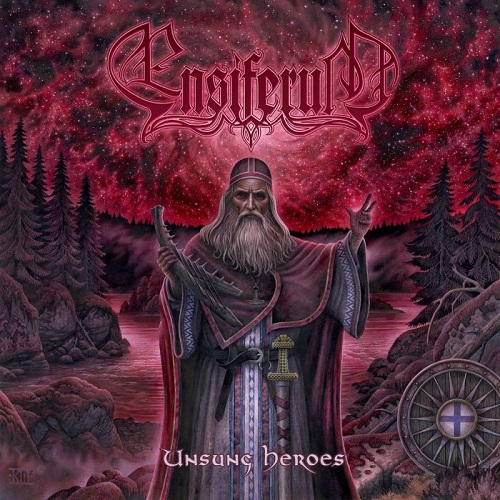
I read so many negative reviews of Unsung Heroes that I actually avoided listening to it for four months. My acquaintance with Ensiferum goes all the way back to their 2001 full-length debut, and I was in no hurry to hear such an essential and formative band for me fall by the wayside. I finally gave it a spin for the first time last night, and frankly I don’t know what everyone is bitching about.
In My Sword I Trust
I mean, sure, Unsung Heroes isn’t the explosive powerhouse of Victory Songs and From Afar. But was I the only person who got the feeling on From Afar that their standard formula was growing really stale really fast? Ensiferum may have set the standard for folk metal as we know it today, but beneath the fist-pumping and epic folk interludes of even tracks like Twilight Tavern and Stone Cold Metal I got the sneaking suspicion that they were beginning to succumb to the very genre stereotype they established. Victory Songs certainly stands as my favorite Ensiferum album to date, but I kind of felt like From Afar was riding too much on its success. Almost every song followed the formula that made Victory Songs so great, and while this certainly facilitated a fresh batch of great songs, it was less than I’d hoped from a band that had consistently paved their own way over the years.
Is Unsung Heroes a washed out version of Victory Songs and From Afar? Only if you claim that those albums capture exactly what Ensiferum ought forever more to sound like. I for one think it’s a breath of fresh air. It reminds me, if anything, of their 2001 self-titled. It humors the possibility of rocking out without lightspeed double bass. It dares to occasionally divorce overbearing synth and “epic” orchestrated overlays from the folk passages. It drops, I think, the degree of pretentiousness that concerned me on From Afar. I have no interest in listening to the musical equivalent of 300 spin-offs ad nauseam. The total testosterone indulgence of Victory Songs was exciting in its day, but in music and film alike it grows old quickly.
Pohjola
I really feel like Unsung Heroes is Ensiferum’s most mature work to date. That doesn’t make it their best; Victory Songs was just too perfect and the self-titled too nostalgic to be trumped any time soon. But on Unsung Heroes I can again feel like I’m listening to a band who share my nerdy lust for all things fantasy. There’s none of the glam and special effects that dazzled me on Victory Songs but made me begin to feel distanced from the band on From Afar. I’m absolutely thrilled to be able to connect with these guys again in the more personal way I felt on their first album.
And really, what can you possibly complain about on a track like Pohjola save that it doesn’t fall into the formula of their last two albums? I’ve heard people say they’re becoming a Turisas knock-off. That’s absolutely ridiculous. Post-Battle Metal Turisas has served as the ultimate Hollywood blockbuster band–glossy and refined, if Victory Songs was Ensiferum’s 300, Varangian Way was Turisas’s Lord of the Rings. Tracks like Pohjola might have epic operatic vocals and orchestration, but the surrounding atmosphere is completely different from either of those works. The viking metal riffs that really start to pick up at the 3 minute mark ought to be a revealing sign that this song is all about the steady drive. The orchestration ebbs and flows without many hard, dramatic stops. The synth whistle that accompanies the main riff in the earlier stages of the song gives it a light-hearted, positive feel that carries throughout. The acoustic guitar outro is beautiful, but it’s also accessible. It’s something you the listener could pick up your guitar and play.
Unsung Heroes isn’t perfect. Sami Hinkka’s clean vocals leave a bit to be desired, especially on “Last Breath” where they take center stage. That, the ninth track, is really the first moment on the album where I begin to see where any complaints might have a leg to stand on. If the 17 minute-long closer which follows–“Passion Proof Power”–was as good as we’ve come to expect from an Ensiferum grand finale, any petty complaints about “Last Breath” might be easily forgotten. The problem is that “Passion Proof Power” is frankly pretty bad. It starts off a lot slower than the rest of the album’s non-acoustic tracks, more inclined to bore me than build anticipation. When it does pick up there’s no clear direction as to what’s going on. The song gives way into some really, really lame progressive rock, coupled with boring, unconvincing spoken passages and completely misplaced operatic vocals. The song never really builds up into anything. There are moments here and there where you might find yourself drawn back in–at the 13 minute mark for instance–but as the song continues to go nowhere you’ll forget about it again soon enough. I can’t make any excuses here; “Passion Proof Power” is a waste of 17 minutes, and if you skipped ahead to it expecting to hear Ensiferum’s finest effort–a reasonable thing to do considering how they’ve concluded past albums–you may well be left with the impression that Unsung Heroes is terrible. Follow that up with an embarrassing bonus track cover of Gypsy Kings’ Bamboleo and yeah, you definitely have a right to demand the last 20 minutes of your life back.
Burning Leaves
In conclusion, this is perhaps Ensiferum’s most down to earth album to date. It’s all about moderation and maintaining a steady drive while never over-extending or burning out into a bore. It doesn’t crush or dazzle; it rocks along, and does so with some really compelling orchestration that’s uniquely accessible. I think there’s this common misconception that fantasy-themed music has to sound larger than life, but for me that’s a detriment in all but the most perfect, Victory Songs/Varangian Way-level instances. If it sounds fake it’s not doing a very good job of creating fantasy now, is it? Unsung Heroes paces itself and transitions in ways that feel legitimate. I love it, at least for the first 40 minutes. It doesn’t so much progressively decline from there as stall mid-air and nose dive; they should have put “Last Breath” before “Pohjola” and made the latter the finale. “Passion Proof Power” and “Bamboleo” are garbage B-sides better suited for some bonus disc on a collector’s edition. (I suppose Bamboleo technically is a “bonus” track.) To say Unsung Heroes is a great album while chucking out a full 20 minutes of its content is a bit of a stretch, but because the weak points are condensed on the fringe rather than interspersed throughout the album, and because 40 minutes of outstanding new Ensiferum is certainly sufficient, I am content to delete the last two tracks from my playlist and call it a success.
Norway’s Enslaved formed as a black metal band in 1991. That means Grutle Kjellson and Ivar Bjørnson have been playing together for at least 21 years. Most–I’d say the vast majority–of bands are pretty washed up by the 20 year mark. But Enslaved is a fluke. An anomaly. They stand on the cutting edge of the metal scene today, and their last three albums have been phenomenal.
Thoughts Like Hammers
Maybe some of it stems from their age. Bjørnson and Kjellson were 13 and 17 respectively when they began releasing demos as Enslaved. It’s hard to imagine a 20+ year old band whose founding members are in their mid-30s, but that’s what you get here: two artists in their creative prime.
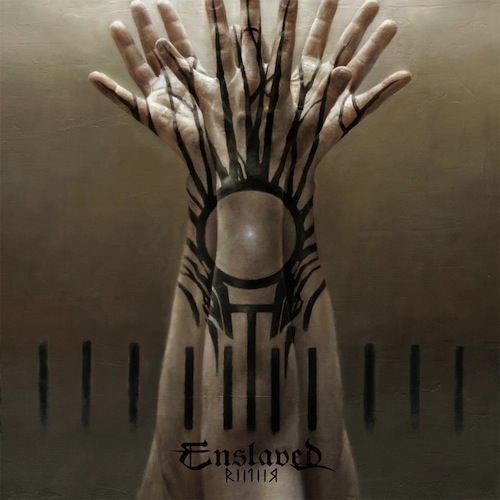
RIITIIR’s aptly-named opening track, “Thoughts Like Hammers”, starts out with a bit of incoherent chaos before busting into a crushing viking metal plod that immediately answers any question as to whether RIITIIR is going to follow the same path as Vertebrae and Axioma Ethica Odini. The relatively new viking-prog-black mix they’ve landed on is faultless, and about the only thing they could do wrong is change it. RIITIIR picks up right where Axioma Ethica Odini left off.
It would be kind of odd to speak of post-viking metal when so few bands have defined the original style in the first place. But what makes Enslaved perhaps the best metal band to ever make a late-career venture into the world of progressive rock is their impeccable ability to maintain all of their heavy metal credentials. Kjellson’s growls are some of the most distinct and cutting in the scene, and there can never be any question about the band going soft. The lofty progressive movements are lush with sound in just the sort of way that has made viking metal bands like Enslaved and Týr consistently great throughout the years. Their juxtaposition of uplifting musical sweeps and crushing, dark passages transition flawlessly, with none of the grating clash of styles that you might hear in bands inclined to force the issue.
RIITIIR
As for how RIITIIR matches up to Vertebrae and Axioma Ethica Odini, I think RIITIIR maintains the much needed improvement in production quality that distinguished Axioma from its predecessor. The major riffs and choruses are just as instantly memorable. I think Axioma had perhaps a stronger black metal side to it, but the difference is slight. What I really feel in RIITIIR more than the other two is the consistent drive–a sort of all-embracing power that gives the album no down time to speak of. Even the slowest folk interludes are exceptionally well constructed to fit the context of their songs and maintain a tense, brooding atmosphere.
My immediate impression of RIITIIR is that it’s the best album to date from a band that has at this point thoroughly proven their standing among perhaps the top ten metal bands making music today. I don’t really need to go into exceptional detail on this one; it’s exactly what they did on their last two albums, only even better. Don’t let this year-end contender pass you by.



 Through the Shattered Lens