Game Review: Bulletstorm


Unfocused Ramblings

I loved Gears of War. I just want to establish that before I begin a rant that no doubt is going to feel very much like some kind of savage attack at the heart of that game. My problem with Gears of Wars is simple. There’s just too much ultra-real-gritty-brown-and-gray in today’s media. It’s not confined to Gears. It’s everywhere. Films have taken a darker ultra-realism tone, video games seem to be obsessed with avoiding an artistic style in favour of an ultra-realistic one. I’m sure this trend was fueled by a hundred different factors – not the least of which being that people expect HD graphics to look like real life – and it’s not even wholly a bad thing. It’s just everywhere.

So imagine my surprise when Epic’s new first person shooter game isn’t gritty or ultra-realistic at all. Here’s the first and strongest thing I can say about Bulletstorm: It’s almost an anti-Gears of War. The setting is shiny and vibrant. There are colours everywhere. I don’t have trouble making out details of the setting because of the lack of contrast between surfaces. And it’s ridiculous over-the-top action. Now, of course, it’s also a traditional first person shooter rather than an over-the-shoulder affair and it isn’t cover-based, so it’s not in quite the same genre as Gears of War… but I’d say there are certainly some strong parallels in places. It’s just that Bulletstorm feels like a much livelier game.

Which is ironic, because the game is about a dwindling group of people trapped on the surface of a hostile alien world which is completely overrun with toxic mutants, carnivorous plant life, and five hundred foot tall monsters with a foul temper.

Bulletstorm is, at its heart, about over-the-top action. Throughout the game, you will acquire points by slaying enemies. The caveat is that the game doesn’t reward precision or efficiency, but creativity. Although a small point bonus is given for shooting an enemy with a devastating headshot, a much bigger one is given for kicking him off the side of a chasm into a swirling tornado which has become charged with lightning and presumably ending his day in a less-than-desireable way. These point bonuses are universally referred to as Skillshots, and there are a couple hundred of them, encompassing virtually every conceivable creative killing. Oh, at this point it might be worth mentioning that this isn’t a game for your young kids. Trust me. The language is strong, the violence is insane, and the themes of bitterness, revenge, and despair aren’t particularly accessible to the under-20 crowd. Of course anyone can appreciate a good action game… and this is definitely one of those, because you’ll be moving non-stop, even while you try to find creative ways to dispatch your hapless foes and occasionally take cover from the devastating fire being flung back at you.

Like Gears of War, Bulletstorm features a quick-switching weapon trio. We haven’t got any grenades, but we do have a supertech gadget called a Leash. This is the game’s outstanding feature, as it allows you to manipulate your environment in many ways, gripping objects, flinging them from place to place, and so on. Of course, it distinguishes itself from other physics-heavy weapons (like Half-Life 2’s famous gravity gun) in that it also directly manipulates your enemies themselves. You’ll use the Leash to draw enemies out from behind cover so they can be kicked onto some metal wreckage (for good bonus points!) or to maneuver an explosive container for a timely detonation. The Leash definitely offers the most potential for manipulation and fun, but of course there are some enemy types which are (mostly) immune to it except in special circumstances by virtue of being either too large or too fast… but you’ll be relieved to know that even at the end of the game’s single player mode most enemies are ready to be tossed around like rag dolls.

In addition to the Leash, Bulletstorm features a variety of weapons. We have the obligatory assault rifle, a high-caliber pistol, a sniper rifle with remote controlled bullets, a gun that launches drills, among other stand-outs. In addition to their basic firing mode, each weapon has an upgraded ‘charge’ mode which can be purchased (with those ever useful score points) that can be used in special circumstances. The ‘Peacemaker’ assault rifle, for example, can use its charge mode to fire a special hundred-shot clip instantly into a foe. This will literally disintegrate one or more opponents if you land it, with the accompanying visual effects. The Leash itself has an upgraded charge mode called the Thumper which will use a wide-area application of force to launch your enemies into the air and crash them into the ground. It has more applications than it sounds like, and can occasionally be used to dramatically clear an entire field of enemies.

The weapons are re-loaded, re-armed, and equipped at the discretion of the player who will use special containers called DropKits which will accept the currency of the player’s score (achieved, again, through killing enemies through the skillshots) in exchange for the player’s choice of weapons, charge ammo, regular ammo, Thumpers, and so on. This interface also features a handy database of skillshots. You know,  just in case there was a weapon effect that you hadn’t considered.

Game Modes

Bulletstorm features a feature-length single player campaign of what to me felt like ‘appropriate length’. I didn’t time my run through it, but I can say that I was neither left wanting more nor lamenting the time spent on it. It tells the story of Grayson Hunt (voiced by Steve Blum, of anime dub fame), a bitter alcoholic space pirate and his squad. In the opening moments, Grayson makes a poor decision amidst an alcohol-induced haze which lands he and his remaining friends on a hostile alien world. Before all is said and done, Grayson is left with only his emergency-rebuilt pal Ishi, who is now half machine and partially in the grips of a psychotic AI. Recognizing that, despite Hunt’s mistakes, their best chance lies in cooperation, Hunt and Ishi take off across the hostile alien terrain. They discover the overgrown remains of what seems to be a giant tourist-friendly resort which has apparently been taken over by inhuman mutants, hostile plant life, and others.

It also features the Echoes mode, which is essentially a series of time trials that take you quickly through sequences from the single player game only without the story bits and dialogue, and with the bonus of a timer. As a result, these levels are completed quickly, and they heavily emphasize using the point-boosting skillshots in order to achieve a high score (in this case, rewarded by Stars, which are essential to completing a number of Achievements/Trophies).

Multiplayer is another outstanding feature as long as you have some fun folks to play with. The game mode, which is called Anarchy, is similar to a Hordes or Firefight mode from other FPS titles. However, the Bulletstorm twist (as you might expect) is that the game is based around racking up a high score through the use of skillshots. The environments in Anarchy mode provide some extra opportunities to earn some skillshots not seen in the single player mode, which is good, because the team’s aggregate score must pass a certain minimum in order to advance out of the current round. A premium higher than survival or the overall massacre of your enemies is on using the terrain features correctly in order to maximize player score. Although it’s certainly a great deal of fun (at least, initially), you may ultimately find that there’s not a ton of variety to be had in the Anarchy mode. The main variation is in the specific details of the maps, but there’s not a PvP aspect to it, and the AI is the same as it would have been in the single player campaign mode.

The Bottom Line

The single key word to Bulletstorm is: fun. It’s not thought-provoking (although the characters are oddly compelling), and it’s not breaking new ground all over the place, but it is a great deal of fun just to sit down and play. It’s worth re-emphasizing that this isn’t a game for younger kids… the characters swear like sailors.

The Big Question

Is it now required by law (as opposed to just by convention) that every game needs to set itself up for its own sequel?

Game-Play

The game plays pretty tightly. Occasionally you’ll find the hit tracking on the melee attack isn’t so good against enemies who are right up in your grill, but this is only a problem when trying to pull off specific skill shots and not an overall problem when playing the game. Despite having quite a few mechanics going for it, Bulletstorm’s control system is simple and intuitive. If you’ve mastered the controls of any first-person shooter in the past you’ll have no trouble with Bulletstorm. Despite its variety of game modes, Bulletstorm is ultimately a bit limited in terms of the variety of experiences that it provides. However, as long as you ration your exposure, you could very well find the game fun forever.

Graphics

As we expect from Epic, the graphics in Bulletstorm are gorgeous. More importantly, we see some varieties in colour, with lush green foliage all over the place and a clear sky above. Now, of course, there are some areas of the game which are more breathtaking than others, but all of the sets were gorgeous in design, and some of the set pieces were very epic, and very cool. You’ll have such encounters as a hydroelectric dam which is coming to pieces around you (including its massive water-turning wheels), and trying to escape not only from enemies but also from terrain pieces aboard a fast-moving train. The character models are also very pretty, although some of the textures will sometimes break down in close-ups. The best character design in the game definitely has to go to Ishi and his newly-installed machine parts. You’ll also be treated to a number of interesting visuals directly tied to how you finish off your enemies, but those I’ll leave you to discover on your own.

Sound

The score is proficiently done and fits the settings pretty well. For the most part, the tracks are forgettable (although I do very much enjoy the main theme which plays on the menu and at places during the single player campaign). The voice acting is all very well done. I particularly like the voice acting for Ishi, which has been digitally modified to have a mechanical edge to it. His banter with Grayson is a little reminiscent of what you get between Dom and Marcus in Gears of War, but with a more genuinely hostile edge to it. The sound for the game’s effects, weapons and other features is tight and complete. Nothing to complain about in the sound department with this title.

Multiplayer

The Anarchy mode is definitely a lot of fun, but it’s not something that most people are going to want to play every day. Given the style of the game it’s not insane that there isn’t a strong PvP multiplayer component to Bulletstorm, but by its nature PvE multiplayer is going to have some limitations that there are no ways to overcome – human enemies will think creatively, and want to hurt you. AI opponents just do whatever they’re programmed to do.

Quick Take: Magicka


Quick Take

If you ever asked yourself how much fun it would be to randomly combine 10 different “elements” to create an absurdly large array of spell effects this game answers the question. For the rest? Don’t ask questions.

Unfocused Ramblings

I have, upon reflection, a soft spot for games that are developed by groups of Swedish students. I mean – in a broader sense, if you can make a game that people will enjoy, then why not? And through the magic of Steam, this game becomes available to the world. I know a lot of people have already played Magicka, and but I’m hoping more people will take the plunge into it.

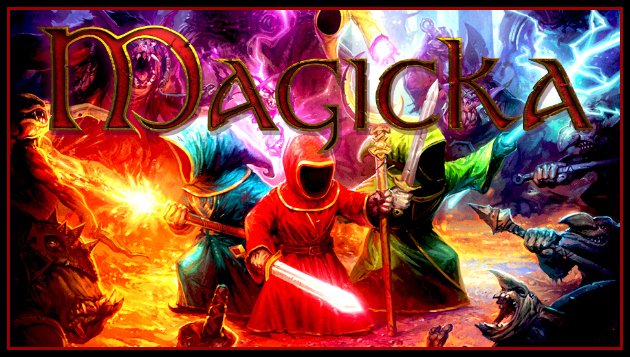
So what is Magicka? It’s a humorous adventure-RPG-ish-game set in a world that parodies a number of mythologies as well as aspects of pop culture. You’ll see a ton of references to pop culture icons like Star Wars, 300, and literally dozens of others. The opening movie which introduces the setting and the premise is chock full of pop culture references and popular memes, and it doesn’t slow down from there. The player takes command of a nameless mage clad in an obscuring robe who has been taught at the academy of magic, and learned to wield eight ‘basic’ elements in order to weave together ever-more-impressive spells. If that weren’t enough, you quickly learn about two basic combines which produce two other, we’ll say “hidden”, elements (which, themselves, are frequently used to create still more sophisticated spells). With these ten building blocks, tens of thousands of combinations are possible. And, since the game doesn’t really force you to progress forward, and even your most tenderly beloved allies are valid targets for your spells, the game really does encourage you to play with these elements until you create something you really like. And from there, to use that spell until you get tired of the animation… and develop something new… and so on.

And yes, there are some big booms available in the more sophisticated spell combinations.

On top of just randomly mixing and matching various elemental building blocks to create beams, balls, streams, and walls, there also exist a repertoire of ‘Magicka’; defined spells that you learn the combination to which have particularly powerful effects (such as Revive, which restores a dead ally, Haste, which allows your mage to run at incredible speed, or Grease which deposits some very flammable fun on the ground).

Your mages can collect weapons from time to time which have some special effects, but for the most part, the game attempts to steer clear of any kind of level-up or power-up type stuff. The focus is very much on the interplay of the spell combinations, and the limitless fun you can have blasting your friends up, over, and through the landscape elements using your magical powers.

All of that sounds good, right? Well, it is. But the game does have some problems, and I would be remiss if I didn’t warn you about them before you shell out your hard-earned cash for a copy of Magicka.

The single-player version of this game just doesn’t stand up well on its own. For several reasons. The most important one is that it’s very easy to kill yourself in Magicka, and if you do so when playing solo, you’ll find yourself regressing to a checkpoint that could be a good ways back. Quit the game? You’ll end up restarting the entire chapter. This glaring weakness still exists in multiplayer, but with a team of four, you can revive your comrades and hopefully not all die at once. This is tough in single player.

– There are some bugs. Let’s not mince words about this. In addition to wacky things that can happen with spell effects (many of which will send you or your enemies flying around the screen) the game seems to crash occasionally, and it just doesn’t feel quite as polished as you might expect from EA’s latest release.

– They made some inexplicable choices with the multi-player, such as not being able to reconnect to a game in progress, and the cut-scenes not being skip-able except by the host (and they’re pretty lengthy cut scenes at that. You can skip ahead of the cut-scene even if you’re not hosting, but you just stare at a loading bar until the cut-scene ends anyway).

– Despite having its own tutorial section, Magicka really doesn’t teach you much about how to play. Pay close attention to the controls it does show you, and don’t be afraid to experiment, but also don’t spend a lot of time looking for the game to guide you… because it won’t. That having been said, it’s not a crippling problem since experimentation is half of the fun in this title.

– Although the game is clearly more friendly for multi-player use, you’re definitely going to prefer putting together a group of four friends as opposed to playing open multiplayer. Friendly fire is a huge part of this game, and you’ll enjoy it more with your friends. Trust me.

The Bottom Line

Personally, I love Magicka. It’s a great multi-player experience and the combination of spell effects is a lot of fun. But it’s not a polished experience; it has some bugs, some of which are frustrating, and as a single player experience it leaves quite a bit to be desired. For what you’re going to pay for Magicka, however, you’ll feel as if you’ve gotten your money’s worth.

Review: Suikoden V


Konami’s Suikoden series has been a fixture in the Playstation console systems since the PS1. While not as graphically beautiful as Square-Enix’s Final Fantasy series of role-playing games, Konami’s own Suikoden rpgs more than held its own in complexity of character development and storylines. These two factors have become something the Final Fantasy rpgs have really lacked since Final Fantasy VII. I would even say the Final Fantasy series hit its high-point in Final Fantasy VI and has been downhill since. Not so with the Suikoden series. From the beginning the series has beautifully combined characters and storylines to create a game that still uses the basic stats and experience mechanics of most Japanese RPGs but with a unique brand of npc recruiting and a wholly realized complex world which grows and reveals itself with each successive game in the series.

In 2006, Konami released Suikoden V in North America and there were some trepidations on how well the game would turn out. The previous game in the series, Suikoden IV, was abit underwhelming in its execution. A rarity in the Suikoden series in that the game was just ok; with some fans calling it awful. But even Suikoden IV still played better and its story less cliche than most rpgs coming out of Japan. Suikoden fans needn’t have worried about this latest entry in the series. Suikoden V doesn’t bring anything new or innovating in terms of graphics to the genre (but then these games never has in the past) but what it did was bring back the series to the high-standard of character development and storyline the series was very well-known and critically-acclaimed for.

Set six years before the events which played out in Suikoden I, Suikoden V takes places in the Queendom of Falena whose current Queen has in her possession the Sun Rune. The Sun Rune is one of the 27 True Runes which makes the backbone of what makes the critical events of the Suikoden Universe so unique to the role-playing genre. Queen Arshtat rules Falena with the Sun Rune but events prior to the beginning of the game (told in flashback) has set into motion a dangerous game of political machinations and powergrabbing between two powerful groups in the Houses of Barows and Godwins with the Sun Rune in the middle of it all.

The player is given control of Queen Arshtat’s only son to figure out just what sort of secret plans either Houses has in store for the Royals. Accompanying the player are Arshtat’s sister Sialeeds, his bodyguard and lifelong friend Lyon, and Georg (a familiar face for those who have played the previous games in the series). As the game’s story unfolds the complexity of the power struggle between Barows and Godwins and those of the Falenan Royal Family becomes more than a struggle for the realm of Falena but for its ultimate survival as something powerful and beyond human comprehension has slowly influenced those in close proximity. There’s moments of extreme sadness and ultimate sacrifices and love. Machiavellian plots and counterplots from both the protagonists and antagonists keep the player guessing as to how the story will play out. There’s also betrayals and genocidal actions which gives this entry to the series the dark edge the previous fourth Suikoden lacked.

Unlike most JRPG’s (Japanese RPGs), Suikoden V doesn’t have an end-of-the-world storyline but one which stays regional, but makes the plot no less epic and actually gives the game more freedom in how the story unfolds. The game’s story has to rank up there with Suikoden II‘s as one of the best rpg storylines ever and only lags behind the second game due to that game’s having a brilliant and memorable villain in one Luca Blight. The main characters and most of the 108 Stars of Destiny characters were well-written with their own distinct personalities and motivations for joining the fight. The dialogue during the game is mostly done through text with each character show in anime-style profiles. The cutscenes on the other hand uses voice acting which for a rpg was done pretty well with voice actors who actually gave each character voiced a distinct personality. It would’ve been nice if Konami had included the Japanese voice-acting in addition to the English translation. It’s a minor gripe, but nothing that takes away from making Suikoden V such a great game.

The gameplay mechanics returns back to the 6-party formation from the first three games in the series. There’s still the usual co-operative attacks when certain combinations of characters are put in the battle party. The co-op attacks could involve just two characters all the way up to six characters combining to create devastating non-runic attacks. There’s also co-op attacks between characters using runes. These combined runic attacks are some of the most damaging attacks in the game and allows the player a reason to actually bring a balanced party of 6 characters that’s made up of fighter strong in physical attacks and those adept in runes. The newest change in the battle mechanics occur in the war battles. Gone is the turn-based system that’s worked well in the first four games. Suikoden V‘s war battles now takes place in real-time which makes for much more hectic battles. The player must constantly know where each of his units are and how they’re stacked up against the opposing forces.

Suikoden V is a great game and also brings the Suikoden series back to great form after an interesting but lackluster attempt at innovation with Suikoden IV. This fifth entry did everything right in what made the series great. It had a great and compelling storyline with complex and distinct characters. Suikoden V misses surpassing the great Suikoden II in greatness just due to that game having certain classic and memorable characters. This is an unfair comparison but something that still puts the second game ahead of V, but just barely. That shows just how great this game really is. Already announced by Suikoden’s creators that V will be the last Suikoden game for this current generation of Playstation console system. While the title hasn’t made a return to consoles that’s not handheld if this was the last game in the series then it was a proper send-off.

Review: Assassin’s Creed: Brotherhood


The Bottom Line

Assassin’s Creed just gets better and better. Ubisoft has proven that they understand what things work, and what things don’t, in this series.

Unfocused Ramblings

No one was more excited than I was when the original Assassin’s Creed was announced. It brought to my head dreams of my days of playing Thief. I’d been starving for a new stealth-based game for years. It just seemed like nobody was making those kinds of games anymore, and this one had real potential to be what I’d been missing. Well, of course, anyone who played the original Assassin’s Creed can attest to the fact that stealth had little to do with Altair’s journey through the twelfth century Holy Land. I enjoyed the game, but it definitely had its flaws, and I fervently hoped that these things had been addressed when I bought my copy of Assassin’s Creed II. I was not disappointed. The team from Ubisoft working on these games understands what works in their games. I don’t know how better to explain it. And they continue to let the game evolve in a desirable way with Assassin’s Creed: Brotherhood.

Brotherhood once again follows Ezio de Auditore in Renaissance Italy, literally beginning at the minute that Assassin’s Creed II ended, as he exits the Vault. This time, Ezio begins the game as a fully trained assassin, though he’s missing some of his bag of tricks due to an event near the game’s open. And he finds himself in the city of Roma circa the late 16th century, once again pursuing the Borgia family; Cesare, Lucrezia, and of course, Rodrigo. As the game moves along, Ezio can eventually regain all of the mechanical tricks from the previous title plus a couple of new ones… including a long-awaited gem in the crossbow. As a weapon, the crossbow does not disappoint. It kills swiftly and silently, and carries a fair amount of reserve ammo. If you’re anything like me, you’ll use the crossbow a lot.

Piling on to the improvements in the game are the huge number of side missions available (although they are met with a disappointing reduction in the girth of the core story). There are several guilds in the city whose allegiance Ezio must win. Once he has it, they each come with a slew of side missions that he can undertake. In addition, Leonardo Da Vinci returns, this time having been forced to craft war machines for the Borgia. Fortunately, Ezio can destroy these mechanical monstrosities in a series of stealth-based side missions that take him to other places in the Italian countryside. Templar Agents must be brought down in side assassination missions. We explore more of Ezio’s past through missions that center around Cristina, a beautiful Italian girl, and Ezio’s first love. The Followers of Romulus have a series of underground lairs which must be negotiated Tomb Raider style, much like the Assassin Tombs found in Assassin’s Creed II, which will grant a special set of armor.

Oh, and we still have the whole ‘rebuild the town and generate income’ mechanic, except this time you’re rebuilding the entire city of Roma, which has fallen into disrepair under the neglect of its Borgia masters. To seize control of the city, Ezio must destroy Borgia towers (essentially, viewpoints that are owned by the Borgia) from which they extend their influence into the city.

And then, of course, there’s the reason this game is called Brotherhood. As you might have noticed if you’re a fan of the series, the Assassins are often a hard-luck bunch, always taking casualties and being beat up on by the Templar. Fortunately, people can be found willing to take a stand against oppression. After saving certain bold citizens from the Borgia guards, Ezio can recruit them into the Brotherhood of Assassins. These Assassin recruits can be called in to assist Ezio in fighting, assassinate a target, or bombard an area with a storm of arrows to massacre a guard patrol. Their effectiveness grows as they are used, and they can also be sent on missions for the Assassins all over Europe, returning to Ezio with florins and special items gained while out on their assignments (these assignments are of the boring point-click-and-wait variety, but if you do things intelligently the process isn’t too laborious).

And all of that is strictly in addition to a palatable, if not necessarily filling, main storyline that begins to tie in Desmond Miles and his compatriots in the year 2012 much more than in previous titles. Desmond continues to be able to exit the Animus at any time to converse with his Assassin friends, but now that he has mastered Ezio’s skills, he can also cruise around the modern version of Monteriggioni, and there are some action sequences that utilize Desmond as well.

The Big Question

How soon will the next Assassin’s Creed be out? Because I’m already hungry for more, and not just because of the serious cliffhanger that Brotherhood ends with. This series is one of the best-handled that I have ever had the pleasure to play. Each installment is noticeably better than the last. The games become more polished, more fun, and with more stuff. Once this franchise has run its course, which might just take a while, I’m equally excited to find out what this development team will be working on next.

Overall Game-Play: 8.0

The gameplay hasn’t changed tremendously since the original Assassin’s Creed. Minor improvements and polishes have made the contextual controls a little better, but they still suffer from the same limitations as always. If you play the game enough, you’ll occasionally find Ezio infuriatingly doing something you didn’t intend; likely to your cost. But once you’ve really gotten the hang of the controls and gotten into a rhythm, these incidents are likely to be few. The biggest limitation to the game play (and, I will add, I don’t have any great suggestions on how to fix the issue) is probably the use of the ranged weapons available in the game. The pistol still feels clumsy and useless, and while the crossbow is predictably powerful with its silent kills, it’s tough to use against enemies who have been alerted to Ezio’s presence.

It’s definitely worth noting that while Assassin’s Creed basically eschewed stealth except for the mundane business of traveling from place to place, while Assassin’s Creed II embraced it and made it a valuable tool at your disposal, Brotherhood seems to demand it. There are a number of sequences where stealth will make your mission a hundred times easier, and others where it is required by the mission itself. And I’m not just talking about tailing people in the market. As much as I appreciate the game fully embracing, and even desiring, your use of stealth, I’m actually now a little aware of the limitations of the controls as far as stealth goes. I feel odd not being able to crouch and skulk silently, or press up against cover, like Sam Fisher. Ezio can presumably do these things. If stealth is going to become a focus, I’d love for the controls to be more conducive to it being successful.

Story 9.0

The story is a quality affair. For this return trip to Ezio’s memories, we now have a very explicit goal; to recover the Apple of Eden that Ezio took in the 16th century in the year 2012. Desmond is already a full-trained assassin, so we’re spared any introductory sequences where we gain valuable abilities one by one over time. Instead, the story literally begins where Assassin’s Creed 2 ended. From there, Ezio’s life of seeking revenge while staying distant even from his family continues. The story gets rolling more quickly now; we already know almost all of the characters on Ezio’s side of the story. We only need to meet a few of the new villains that we know we’ll be assassinating to get things moving.

And actually, it’s probably worth noting that the core storyline doesn’t seem to focus on or revolve around the individual assassination of individual people the way it did before. It also gives us a lot more reasons to specifically dislike each person we’re assassinating as opposed to just making them a part of a conspiracy too large for us to get to know each member of. All of that is fine, and the level to which we can now use stealth to make kills is incredible. Did I mention that I like stealth?

To me, this more mature Ezio is a much less vibrant character than the youthful assassin we met in the last game. It makes sense, given his life experience, but I really do feel like there’s an aspect of sadness to Ezio’s character and his life by now. He’s determined, and strong, and I still find him very likable (especially compared to the dryness of Altair) but his life is as an assassin. Presumably he’s spent too long, and killed too many people, to be anything else.

Anyway, since Desmond now has a much more focused goal while perusing Ezio’s memories, and he can now do things outside of them, we have a bigger tie-in with the year 2012 than we did in the previous games. While the 2012 side of the story does advance, it’s still not a core part of the game. I think a lot of people anticipated more action in the frame story in this installment, and it could be considered a disappointment. I guess it’s worth noting that it didn’t bother me much; I still found Ezio (and the city of Roma) compelling.

Graphics 10.0

I suppose I’ve just come to expect this from the Assassin’s Creed franchise. The game is visually breathtaking. The city of Roma has more recognizable landmarks per capita than any place we’ve yet been, and they’re rendered spectacularly. As are are the buildings. The major characters. The minor characters. The random guards. The civilians who have you no interaction with whatsoever. The game is gorgeous. I’m not sure that anyone would be surprised by that at this point.

Sound 8.0

The voice acting is held to a high standard, as it has been through the franchise. The music is also compelling, and features from beautiful tracks, but I actually fervently wish they had done more with it; or at least included more variety of tracks for the streets of the city, or something. I eventually found myself growing a little tired of the ubiquitous “traveling the streets of Roma” track. Still, the sound is unlikely to disappoint all but the pickiest and most easily-bored gamers (like me).

Quick Take: Halo: Reach


Sometimes, a full review isn’t terribly useful to people. Quantitative numbers on Halo: Reach from me aren’t particularly likely to sell more copies of the game. But I do think this game is worth discussing; it’s important, in a way. So here’s some thoughts, for which you are most welcome to join me.

Halo: Reach

I was only peripherally aware that Halo: Reach was launching. I mean, it wasn’t marketed, and it’s only a small-time game series… okay, no, of course, I was suffocated by the news. And I was as excited as any casual fan of the series. The problem is… I’ve never been a casual fan of the series. I’ve played thousands of games of Halo between Combat Evolved, Halo 2, and of course, Halo 3 (I only got Halo ODST because it was bundled for free with my new XBox Arcade), and that’s the telling point for me. By the time Halo: Reach came out, I wasn’t as excited for it as I should have been. I didn’t have it pre-ordered, I wasn’t enticed by the Legendary Edition (although I’m not much for collector’s editions of any kind). And the reason why is very simple, and it’s ultimately the most important thing that I can tell you about this game.

I already knew what to expect, and I wasn’t as excited as I used to be. Were you?

By now, Halo fans know exactly what to expect. The game is based around the balanced trinity of grenades, guns, and melee attacks. It is not a cover or tactical shooter, but rather a fast-paced action shooter with players protected by regenerating energy shields. In most ways, the popular multi-player shooter was defined by Halo: Combat Evolved. The graphics are an improvement, the features have expanded, and this is the biggest and best game that we’ve yet seen in the Halo universe. Bungie is run by very intelligent people; the fans don’t want the wheel to be re-invented. They want a new release that fixes perceived problems with previous titles, hands over a whole new slew of maps, re-imagines some of the weapons while leaving other fan favourites in place, and adds a couple toys that we haven’t seen before. In a lot of ways, Halo: Reach is like Madden 11. If you change too much, then you’re not playing Halo anymore, and then what’s the point? Bungie themselves obviously understand this; to go in a new creative direction, they must create a new series.

So what’s my bottom line with Reach?

Well, like all of the Halo titles, it has a surprisingly meaty single player experience. I know that people look at you funny if you even mention the story of Halo: Combat Evolved, but there’s more there than you might expect. It’s at least as elaborate as the story in any Call of Duty title. And the storytelling is done partially through the environments we travel through. Bungie has done a consistently good job of creating beautiful environments scored by epic music. The locations and places are familiar, and yet somehow very alien. It’s an excellent narrative when you bring everything together, complete even with single moments that make you get the tingles. For my money, Halo 2 was the weakest single player campaign, but the story bridged between the set-up in Combat Evolved and the conclusion of Master Chief’s story in Halo 3.

ODST took things to another level, adding more characters to the dynamic. We saw real interaction between characters, even if the player’s character, the rookie, is the typical “strong, silent type”. Reach, I think wisely, took its cues from ODST. We’re treated to an entire cast of powerful Spartan soldiers in their powered armor, with disparate personalities and motivations that make them interesting to us. But Reach also taps into something that we haven’t seen before in the Halo universe. Reach is a prequel. It’s a historical event in the universe, and we already know how things turn out. Disastrously. So woven into the narrative of Reach is a sense of despair. The Covenant is overwhelming. Each move the Spartans make seems like it could be the tipping point, but we’re always knocked back down by the inevitability of it all. It’s rather sad.

Now, from a gameplay standpoint, I had my problems with Reach‘s single player mode. I thought it went on ages too long (although, for me, it seems that I just don’t love Halo the way I used to) and grew tedious. But the narrative quality of the single player was good; far and away better than contemporary rivals like Call of Duty: Black Ops. It took a little time for me to digest the experience, but in the end, I thought that Halo: Reach was definitely worth playing, and makes a fantastic capstone to a series that has really been revolutionary in terms of a genre that is now one of the biggest around.

Oh, and the multi-player is good. I didn’t focus on it here, though, because as I said in the open, it is exactly what you expect. There are new wrinkles – and they’re good ones! – but all it boils down to is this: Do you still love Halo? Then play on!

Review: League of Legends


The Bottom Line

A top notch multi-player experience sometimes marred by its terrible community.

Unfocused Ramblings

When a friend of mine first told me about League of Legends during its Beta period in 2009, my interest was piqued, but I’d been drawn in by World of WarCraft, and it wasn’t until early in 2010 when I finally took the time to download the free client and begin playing League of Legends with my friends. I wish I hadn’t waited. Even years after I stopped playing WarCraft 3 or The Frozen Throne for their own merits, I had continued to occasionally play a game or two of Defense of the Ancients: All Stars. As powerful as the World Editor was in WarCraft 3, there were still always going to be limitations on how far Defense of the Ancients could progress solely as a custom map within a game published by someone else. The natural evolution of course was for some of the developers of Defense of the Ancients to go to work for Riot Games to produce their own title; an experience totally under their control but based on the same style as the wildly successful custom maps that preceded it.

If you liked Defense of the Ancients, the odds are pretty strong that you’re going to love League of Legends. It incorporates most of the things that made Defense of the Ancients great, and eliminates some of the inherent weaknesses of working within a real-time strategy engine. After all, WarCraft 3 is designed to have a little inherent command latency, and the engine itself limits what kinds of spells and special powers (as well as the physical skinning of) any and all heroes. Moreover, the core game-play statistics can’t be changed for the benefit of a single custom map (obviously), so League of Legends is a much more polished experience. Now we have Ability Power as a core game-play stat to increase the power of spells and helping to balance the scales between powerful physical damage heroes and heroes with ridiculous spell abilities in the late-game, among a thousand other things.

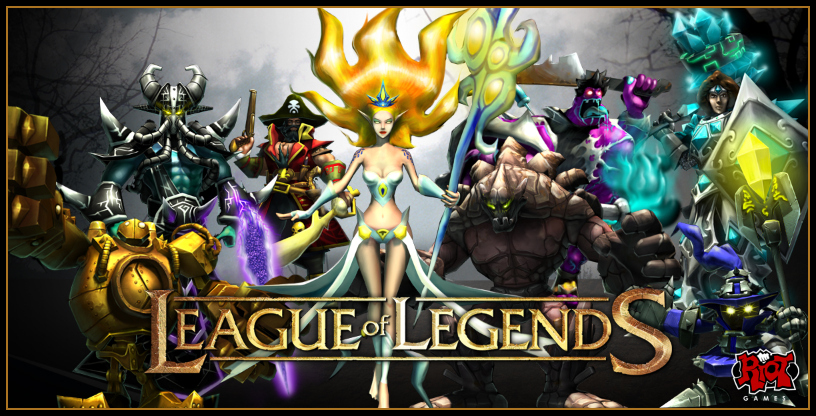
Okay, for the rest of you who didn’t waste many hours of your lives playing Defense of the Ancients, what is League of Legends? It’s a duel between two teams of either three or five champions supplemented by a limitless army of minions. Each champion is a heroic figure with five unique special abilities (as well as a variety of “core” game statistics, like movement speed, attack range, damage dealt, total armor, etc.) and your objective is to breach the defenses of the opposing army by knocking out their defensive towers to gain access to their base, and ultimately, to destroy the opposing Nexus, a capitol building, which ends the game in victory. Your Champions gain experience points to progress through 18 levels (at each level gaining or improving one of their special abilities) as well as harvest gold pieces which are used to buy items that enhance your Champion in various ways. Along the way to victory or defeat, obviously, you will be opposed by the Champions of the other team, controlled by other human beings. They represent your true opposition, and you’ll have to overcome them if you plan to win the day.

Playing matches levels up your Summoner (that is, the personification of the player) and allows you access to a tree of “Masteries” which offer little bonuses to various things that your Champions can do, as well as access to customizable “pages” of Runes. Each match you select a Rune page from your book, which provides fully customized benefits to your Champion such as increased Mana regeneration, a higher chance to dodge enemy attacks, and more. Your multiplayer games also net you access to “Influence Points” which can be used to buy new Champions as well as Runes inside of the League of Legends store. You can download the client and play the game for free even to this day, but Riot also allows players to purchase “Riot Points” from their store which can be used to purchase champions, alternate skins for them, and other bonus content within the store as well. New content is added very frequently, and the product is at a consistently high quality, which really speaks well of Riot Games and its staff of developers.

The Big Question

Aside from ‘why did it take even this long to create a title like League of Legends‘ ? The question absolutely must be: Where do we go from here? It’s a common theme amongst my game reviews; I know. It’s an important question, though. League of Legends is an impressively complete experience. The developers have adequately explored core game-play mechanics, and the game and its objectives themselves are somewhat non-negotiable. Obviously we can continue to enjoy new Champions and Items eternally, but this isn’t truly a source of growth. A third question might be, “where did all the trolls come from” ? One thoroughly maligned aspect of League of Legends is the community, many of which are players that came from Defense of the Ancients, who are a surly, foul-mouthed lot. It’s hard to defend the community, and people with a thin skin might want to avoid this game.

Overall Game-Play: 9.0

The game play very occasionally suffers from graphical or camera glitches. Since they’re always correctable (if only by recalling to base in some cases) it’s not a game-breaking problem, but it’s also the only real criticism I have for a game-play system that is very tight for the most part. Because the interface is designed intentionally for the player to command only their own Champion, you don’t end up targeting another unit and losing control of your hero (as could happen frequently within the WarCraft 3 engine). The four ‘active’ hot keys are consistent amongst every Champion (Q, W, E, R, matching the skills from left to right on your interface) and aren’t competing with internal game commands (as occasionally happened in WarCraft 3). In addition, there’s no inherent latency, so commands are executed crisply and cleanly (barring lag, of course) which makes so-called ‘skill shots’ (that is, abilities which must be aimed and strike the target to take effect) much more common and much more use-able than they ever were before.

The match-making system, champion selection screens, and other framework for the game also deserves a notable mention. Although it’s gone through a couple of iterations by now, the system works very well. New users will learn their way around quickly.

Story 6.0

Although the game obviously has no single player aspect to it, the creators still actually took the time to create a world in which the game is set. Each Champion comes with their own piece of back-story that fits into a larger overall narrative about a world in turmoil, the various nations within, and their larger-than-life heroes – who obviously bring their talents to the institutional League of Legends to test themselves against other such powerful figures. It’s obviously not a focus of the title, but the story is cohesive, and to my mind, appreciated. It’s nice to have a little understanding of who my favourite Champion is, how s/he gained their powers, and what their goals are. Of course, it’s all just fluff, and you can ignore all of the story elements of the game and never miss a beat in terms of game-play.

Graphics 7.0

The graphics are of the cell-shaded variety and look very nice. The most impressive graphics are, of course, the skins of the Champions themselves. Given how many custom looks are available for your Champions and the sheer number of Champions that now are available in the game, I have to give a little nod to Riot. Of course, there’s no real place in the game for incredibly flashy or ultra-realistic graphics, so you won’t see anything in-game that’s going to blow you away. That having been said, all of the models are nicely crafted, and the game’s graphics definitely have a polished feel. The graphical performance is smooth and doesn’t break, and the look and ‘feel’ is consistent across the character models despite their diversity.

Sound 7.0

The sound in this case comes from combat and spell sounds, a relatively quiet announcer (who nonetheless is unfailing in her ability to identify key gameplay situations), and a simple score. Oh, and the unique voice acting for every single one of the League’s champions. Obviously this last part is what you’re going to deal most with, as your Champion responds to everything from you initially selecting them before the game begins to moving about, attacking, or casting spells. We’re not treated to an epic score in the background that fires our passions as we play, but the sound, like the graphics, is a polished effort that doesn’t disappoint.

Multi-Player 9.0

Well, in this case, there is literally no single player aspect to the game, so I suppose this could stand as an overall score for the title. Personally, I find little to complain about. The most important thing for you to know, though, is that Riot is dedicated to keeping this game updated, changing, and improving. I touched on this briefly in my open, but it’s important to expound on the point. Riot patches League of Legends frequently, tweaking abilities and items in order to provide the most balanced experience. Just as importantly, the stream of new Champions is very steady, which ultimately is the only method by which the game can expand. Obviously, there’s not much (if anything) that is going to change about the way the game is played from start to finish, so everything is in the details here.