Review: Patriot Games (dir. by Phillip Noyce)


“You don’t know what it’s like to have your life destroyed by one stupid mistake!” — Sean Miller

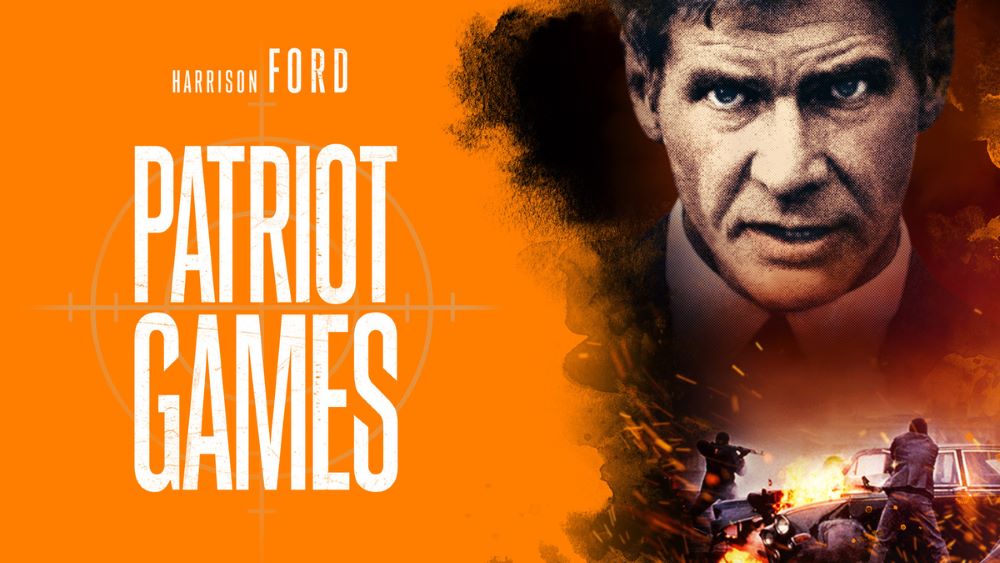
Patriot Games hits the ground running by thrusting Jack Ryan and his family into the heart of a terrorist ambush on a London street, targeting a key British official tied to the royal family. Harrison Ford plays Ryan as a sharp-minded history professor and former CIA analyst on a simple vacation with his wife Cathy and daughter Sally, but his old Marine training surges up—he charges in, kills two attackers including one terrorist’s brother, and gets winged by a bullet himself. Right away, this setup grabs attention by showing how a random act of guts can boomerang into endless trouble, forcing a guy who craves quiet lectures to dodge bullets and betrayal across oceans, and it plants seeds about whether playing hero is worth the fallout on everyone you love.

Back in Maryland at the Naval Academy, Ryan tries piecing together normalcy, grading papers and dodging CIA calls, but Sean Miller—the captured terrorist whose sibling Ryan killed—gets sprung in a brutal prison convoy hit that leaves cops dead in the dirt. Miller, now laser-focused on payback, reroutes his rogue Ulster splinter group’s rage straight at Ryan’s home front, culminating in a savage freeway pileup where goons ram Cathy’s car off the road, injuring her and Sally badly. Ford nails the shift from composed academic to seething protector, his clenched jaw and urgent phone calls conveying a dad pushed to the brink, while these family-targeted strikes crank the paranoia, transforming everyday drives and school runs into potential kill zones that linger long after the crashes fade.

Sean Bean invests Miller with a coiled, wordless intensity—scarred features and piercing glares that scream obsession without needing speeches, flipping Ryan’s principled stand into the villain’s fuel for a mirror-image crusade. This fictional IRA offshoot rolls with pro-level gear for hits from UK alleys to U.S. suburbs, dodging authorities with insider tips, but their flat-out villainy skips any cracks in loyalty or ideology, turning them into efficient machines rather than messy humans with grudges worth unpacking. Anne Archer holds Cathy together through hospital beds and hushed fears, emerging tougher, as James Earl Jones’ Admiral Greer supplies the gruff guidance that tugs Ryan toward Langley, balancing the intimate home front with globe-spanning spycraft that feels like a real squeeze on one man’s bandwidth.

The camera shifts smoothly from rain-slicked London corners to bright Maryland bays, capturing open spaces that make characters look small and exposed against the sprawl. Gunshots snap clean and engines growl low during pursuits, pulling you deeper into the fray without drowning out the quieter beats. Horner’s soundtrack builds with brooding pipes and driving rhythms that hit hard in the final bay showdown, boats tearing through darkness with bursts of flame from hands-on stunts that pack a punch even now. Action ramps up step by step from early scraps to that watery chaos, mixing smarts with muscle, even if plot points line up a bit too neatly at times.

CIA war rooms buzz with satellite feeds sharpening grainy Libyan camp footage into proof of terror training, a tech showcase that echoes Clancy’s gearhead love and ramps brainpower against brute force without flashy overkill. Ryan hashes out returns to duty with British contacts, including a Sinn Féin type disavowing the extremists, sketching post-Cold War shifts where lone wolves replace nation-states in the threat lineup. Book-to-screen changes crank Ryan’s field time over desk strategy, letting Ford flex rugged moves that thrill audiences but sand off novel layers of naval tactics and alliance chess for punchier pacing.

Ford and Archer capture the raw friction in Ryan’s marriage through tense, whispered spats about diving back into danger, their easy chemistry making the pushback feel lived-in and real rather than scripted melodrama. Miller’s storyline hurtles toward a frantic leap onto Ryan’s rocking boat, boiling his grudge down to savage, no-holds-barred combat amid crashing waves. On-screen locations—from echoing Naval Academy corridors to churning bay waters—breathe life into the settings, casting national pride as a bruising, up-close shield instead of hollow cheers. Subtle audio touches, like distant creaks in the dim Ryan house, crank up the exposed feeling, linking slick production values to gut-punch emotions without piling on the noise.

Those procedural deep dives—poring over red-haired accomplice sketches or grilling shaky informants—add authentic wonkery, like Ryan spotting tells in grainy photos that crack the case wide, but they drag amid family rehab montages where Sally’s recovery mirrors the slow-burn hunt. The baddies’ cartoonish zeal glosses Northern Ireland’s brutal splits, opting for clear-cut evil over thorny politics that could’ve mirrored real headlines from the era, a choice that streamlines tension yet dates the take harshly next to modern nuance. Endgame flips the house siege into a decoy boat trap, Ryan baiting Miller solo on fiery Chesapeake swells, evolving his street-brawl start into tactical payback, though the tidy win lacks the submarine slyness of earlier Ryan yarns.

This swap prioritizes visceral family shields over shadowy sub hunts, hooking casual viewers while purists miss the book’s flowchart plotting, yet it spotlights Ford’s prime reluctant-warrior groove amid practical blasts that crush today’s green-screen slop. Pacing ebbs in alliance huddles, but peaks like the SAS desert wipeout—watched live via infrared ghosts—deliver clinical thrills tying brains to bangs seamlessly.

Taken together, the taut opener, vengeful pursuits, tech-savvy thrills, emotional anchors, dated politics, and solid craftsmanship add up to a clear verdict: Patriot Games is a good film, a reliable ’90s thriller that delivers crowd-pleasing tension and strong leads without reinventing the wheel. It holds up for its practical stunts and intimate stakes, earning replays as Ford’s standout Ryan turn, even if flaws like simplification and lulls keep it from greatness. Worth the watch for anyone craving balanced action with heart.
October True Crime: Winter of Frozen Dreams (dir by Eric Mandlebaum)


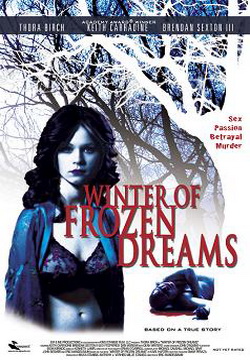
The 2009 film, Winter of Frozen Dreams, opens with a young woman named Barbara Hoffman (Thora Birch) in a Wisconsin courtroom in 1980.  She is on trial, having been accused of committing two murders.  The jury reads their verdict and the film flashes back three years to show us how how Barbara ended up in that courtroom.

It’s a bit of an odd way to open the film, one that robs the story of any suspense.  The story of Barbara Hoffman is a true one but, unlike other true crime stories, it’s not a commonly known one.  I had not heard of Barbara Hoffman until I watched this film and, after the film ended, I immediately went to Google to make sure that the film was actually telling the truth when it claimed to be based on a true story.  Barbara Hoffman and her trial apparently were a big deal in 1980.  (Her trial was the the first murder trial to ever be televised.)  But it is now so obscure that it doesn’t even have a Wikipedia entry.

As seen in the film, Barbara Hoffman was a genius.  She had a 145 IQ and was the valedictorian of her high school class.  She went to college to study chemistry and was doing quite well academically.  However, when she got a job answering the phones in a massage parlor, she realized that she could make a lot more money as a sex worker than as a chemist.  She dropped out of college before starting her final semester and went to work for a pimp named Ken Curtis (Dean Winters).

Barbara was engaged to two different men.  One was Harry Berge (Dan Moran), who has a taste for bondage and being ritually humiliated.  At first, his co-workers thought he was kidding when he started introducing the much younger Barbara as being his fiancée but Harry actually signed over all of his property to her and allowed Barbara to take out a life insurance policy on him.

It was Barbara’s other fiancé, a mild-mannered video clerk named Jerry Davies (Brendan Sexton III), who Barbara called on Christmas to tell him that she had discovered Harry’s dead and battered body in her bathroom.  Convinced that Harry had been murdered by Ken, Jerry helped Barbara to hide the body in the Wisconsin snow.  Of course, even while Jerry was helping Barbara cover up Harry’s death, Barbara was taking out a considerable life insurance policy on him.

After Jerry has an attack of conscience and leads the police to the body, it falls to the pipe-smoking Detective Lulling (Keith Carradine) and his partner (Leo Fitzpatrick) to figure out who was responsible for Harry’s murder.  Lulling’s instinct is to suspect Barbara but everyone else seems to think that either Ken or Jerry is the more obvious suspect.  After all, Barbara’s a genius.  Why would she kill someone?

It’s an interesting story, though Winter of Frozen Dreams is never quite as compelling as one might wish.  Some of that is because, despite her genius IQ, Barbara herself never becomes that interesting of a character and Thora Birch never seems to be that invested in her performance.  She delivers her lines in a rather flat manner, never really showing the charisma necessary to be convincing as a real-life femme fatale.  That said, you do feel sorry for the two men, especially Brendon Sexton III.  And Keith Carradine and Leo Fitzpatrick make for an amusing detective team.  I almost wish the two of them had starred in their own series, where they traveled the Pacific Northwest and solved small town murders.

Of course, the biggest problem with this movie is that it opens with the verdict so we already know what’s going to happen.  We know who is going to die and we know what’s going to happen to Barbara as a result.  There’s zero suspense as to how things are going to work out.  It’s an error on the part of the filmmakers and an unfortunate one.

2022 In Review: The Best of Lifetime


First off, my apologies for being so late in finishing up my look at the best of 2022!  I’ve still got three categories to go, so let’s get to it by taking a look at the best of Lifetime!

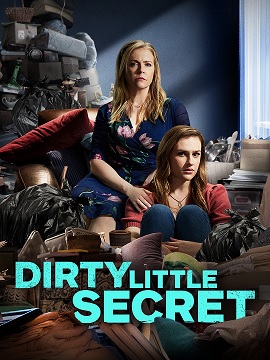
As chaotic as 2022 may have been, one thing remained unchanged!  Lifetime provided me with both a lot of entertainment and a lot to think about!  Not only did it embrace the melodrama with films like Deadly Yoga Retreat but it also sensitively dramatized the real-life tragedies of The Gabby Petito Story and Dirty Little Secret.  Below, you’ll find my picks for the best Lifetime films and performances of the past year!

(For my previous best of Lifetime picks, click on the links: 20142015201620172018, 2019, 2020, and 2021!)

Best Picture: The Gabby Petito Story

Best Director: Thora Birch for The Gabby Petito Story

Best Actress: Melissa Joan Hart in Dirty Little Secret

Best Actor:  Jonathan Bennett in Deadly Yoga Retreat

Best Supporting Actress:  Maja Vujicic in Mommy’s Little Star

Best Supporting Actor:  Roderick McNeil in Mommy’s Little Star

Best Screenplay: Dirty Little Secret

Lisa Marie’s 2022 In Review:

  1. 16 Worst Movies
  2. 10 Favorite Songs
  3. 10 Top Non-Fiction Books
  4. Lisa Marie’s Favorite Novels

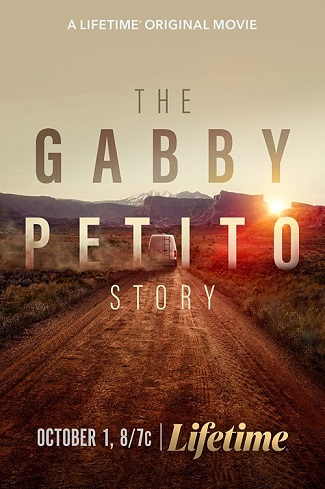
Lifetime Film Review: The Gabby Petito Story (dir by Thora Birch)


Last night, when I watched The Gabby Petito Story on Lifetime, my inital reaction was to think that it was a bit gauche just how quickly Lifetime had turned the story of Petito’s murder into a movie.

“Wow, I thought, this only happened a few months ago and they’ve already turned it into a movie?”

However, I then took a look at Gabby’s Wikipedia page and I discovered that it has actually been over a year since Gabby Petito disappeared while driving across the country with her fiancée Brian Laundrie.  It has been over a year since her family frantically asked that anyone with information come forward.  It has been over a year since the release of the footage of the police talking to a distraught Gabby Petito while Brian laughed about the situation on the other side of their van.  It has been over a year since Brian himself vanished.  It has been over a year since Gabby’s remains were found and the coroner confirmed that she had indeed been choked to death.  And it’s been over a year since Laundrie’s skeletal remains were found, along with a note in which he confessed to killing Gabby.

It’s been over a year but it seems like it was just yesterday.  That’s how invested many of us became in the search for Gabby Petito and that’s how fresh our anger over what happened remains.  Why did Gabby Petito’s disappearance capture the public imagination in a way that so many other disappearances haven’t?  Some claim that it’s because Gabby was young, pretty, and white and that might be the case with some people.  But, for many of us, the reason why Gabby’s disappearance captured our imagination is because every woman has known at least one man like Brian Laundrie, the self-declared nice guy who is actually controlling, manipulative, and mentally (and often physically) abusive.  We watched the footage of Gabby telling the police that Brian’s anger was all her fault because “I just get so OCD” and we realized that the same thing could have just as easily happened to us.  Brian hit Gabby because she asked him to not track dirt and mud into the van in which they were going to spend the next few months living.  And, when the police showed up to ask what was going on, she blamed herself.  No one was there to save Gabby and we all felt that if we had found ourselves in the same situation that there would not have been anyone there to save us either.

The Gabby Petito Story stars Skyler Samuels as Gabby and Evan Hall as Brian Laundrie.  It follows them from the moment that their relationship began and we watch as Brian goes from being endearingly awkward to being an out-of-control monster, one who hides behind his anxiety disorder and his nerdy persona.  It’s not always easy to watch, as the film does a good job of showing how an abusive relationship develops and also how it will inevitably end.  It’s difficult to be comfortable with any show that uses a true life tragedy to generate ratings (and knowing that Lifetime was probably started planning the film even while Gabby was still missing doesn’t help) but The Gabby Petito Story is well-acted by Samuels and Hall and it’s well-directed by Thora Birch, who also plays Gabby’s mother.  If nothing else, it shows why so many of us became obsessed with Gabby’s disappearance and why her tragic fate continues to haunt us a year later.

Film Review: Kindred Spirits (dir by Lucky McKee)


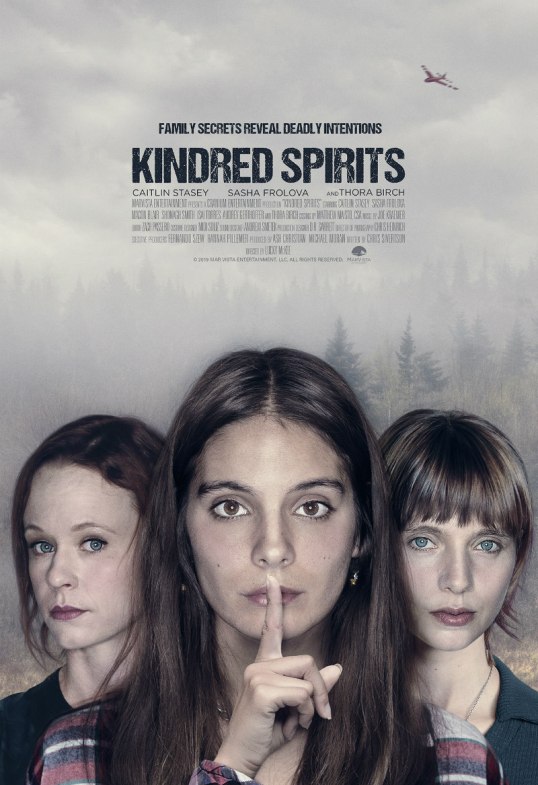
Kindred Spirits tells the story of two sisters.

Chloe (Thora Birch) is the older sister.  She’s the one who literally raised her younger sister, Sadie (Caitlin Stasey).  At one point, in the film, Sadie even says that she thinks of Chloe as being her mom.  Chloe got pregnant when she was 17 and had a daughter named Nicole (Sasha Frolova).  Just as Sadie considers Chloe to be her mom, she also grew up considering Nicole to be more of a little sister than a niece.  Once, Sadie even saved a very young Nicole from getting run over by a car.  That’s what a good sister does.

Eventually, Sadie left home.  When Kindred Spirits begins, it’s been a while since anyone has heard from Sadie.  As for Chloe, it’s been a struggle but she’s built a good home and good life for herself and her daughter.  However, Nicole has now reached her own rebellious stage and Chloe’s clumsy attempts to warn her about “making the same mistakes I did” do not make things any less awkward between them.  Chloe has stated as secret relationship with her neighbor, Alex (Blue Ruin‘s Macon Blair) but she doesn’t know how Nicole will react.

And I’m sure that many people would dismiss Nicole as just being a ungrateful brat or Chloe as just being an overly protective mother but both Sasha Frolova and Thora Birch do a very good job of bringing some unexpected shading to their roles.  The details of Nicole and Chloe’s relationship ring true, everything from the awkward conversations to the rare moments of open closeness.

Suddenly, Sadie shows back up!  Both Chloe and Nicole are happy to see her and, when Sadie says that she needs a place to say, they of course invite her to live with them.  At first, everything’s perfect but soon, Sadie is showing some signs of instability.  She wants to be Chloe’s daughter but, at the same time, she wants to be Nicole’s best friend.  She starts dressing like Nicole and even sneaks off to a high school party where she’s thrilled to discover that everyone thinks that she’s still a teenager. Nicole starts to suspect that something might be off about Sadie.  Meanwhile, Sadie is busy murdering people.  Throats will be slit.  Dollhouse furniture will be driven into foreheads.  Blood will be spilled.

In fact, quite a lot of blood will be spilled.  Though this film aired on the Lifetime Movie Network towards the end of October and it’s plot certainly sounds Lifetime-y, Kindred Spirits only ended up on LMN after traveling the film festival circuit.  As such, it’s a bit more graphic than the usual Lifetime film, with close-ups of wounds and plenty of language that ended up getting awkwardly silenced during the film’s airing.  The ending is also considerably darker than the average Lifetime film.

I liked Kindred Spirits.  The story may be predictable but Lucky McKee directs with a lot energy and brings a lot of atmosphere to the film.  Best of all, Birch, Frolova, and especially Stasey all give excellent performances.  It’s nice to see a film with not just one but three strong female roles.  It’s a pity that a few good people end up dying but …. well, that’s family.

Embracing the Melodrama Part II #98: American Beauty (dir by Sam Mendes)


American_Beauty_posterWhat crap!

I know, I know.  “American Beauty is an incisive satire that looks at the stifling conformity of American suburbia with Kevin Spacey giving the definitive portrait of the male midlife crisis and blah blah blah blah blah blah.”  Listen, American Beauty is a terrible film.  I don’t care if it won a lot of Oscars, including the 1999 award for best picture.  American Beauty is a shallow film that, at its worst, is deeply misogynistic.

American Beauty tells the story of two people.  They’re married.  They live in the suburbs.  They have a teenage daughter who is a cheerleader.  They pretend to have the perfect life but actually, everyone’s extremely unhappy.

WOW!  OH MY GOD!  PEOPLE ARE SECRETLY UNHAPPY IN THE SUBURBS!?  MY MIND IS BLOWN!  WOW, NO ONE’S EVER HAD THAT THOUGHT BEFORE!  OH.  MY.  GOD!

Anyway, the husband is named Lester (Kevin Spacey).  Lester’s a loser.  He narrates the film and he’s played by Kevin Spacey so you’re supposed to think that he’s really this great guy who deserves better but honestly, Lester’s a whiny little jerk.  He’s upset because, now that he’s an adult, he misses being a teenager.  Life hasn’t turned out the way that he wanted it to.  Boo hoo.  As I said, Lester is kind of whiny but the film treats him like he’s an enlightened truth seeker.  In order to keep the audience from realizing that Lester is a loser, the film surrounds him with one-dimensional stereotypes.

And really, Lester is the ultimate male fantasy.  Everything that he says and thinks is wise.  His every thought and feeling matters.  To its discredit, the world has failed to recognize that Lester’s vapid thoughts are worthwhile.  Lester quits his job and finds employment working in fast food.  Lester fantasizes about fucking his daughter’s best friend (Mena Suvari).  Lester starts to smoke weed with his teenage neighbor (Wes Bentley).  In real life, Lester would just be another pathetic guy having a midlife crisis but, in the world of American Beauty, he’s a seeker of truth,

Anyway, eventually, Lester gets shot in the back of the head and dies but that doesn’t keep him from still narrating the film.  You just can’t shut him up.

Meanwhile, Lester’s wife is Carolyn (Annette Bening) and wow, is she evil!  Get this — she actually tries to keep the house clean, is obsessive about her job, and wants her family to eat dinner together.  Oh my God, so evil!  She ends up having an affair with Buddy Kane (Peter Gallagher) and, when they have sex, we’re supposed to laugh at them because they’re so cartoonishly loud.  And when Lester catches them, the audience is expected to applaud and say, “Way to go, Lester!”  The film ridicules Carolyn’s affair but it idealizes Lester’s sexual fantasies.  Lester’s determination to be independent and do what he wants is presented as being heroic.  Carolyn’s determination to have a life that does not revolve around her pathetic husband is presented as being villainous.

And why is that?

Basically, it comes down to the fact that Lester has a penis whereas Carolyn has a vagina.

American Beauty is probably one of the most misogynistic films that I have ever seen, one in which men are exclusively victims of all those unreasonable and untrustworthy women.  Whiny loser Lester is presented as being a hero.  Ricky, the next door neighbor played by Wes Bentley, spends his time going on and on about the beauty of an empty bag and we’re supposed to see some sort of higher truth in his pretentious blathering.  Meanwhile, Carolyn is portrayed as being a shrew.  Lester’s teenager daughter (Thora Birch) is a spoiled brat.  Lester’s sexual obsession, the cheerleader played by Mena Suvari, is presented as being a suburban seductress but, in the film’s eyes, she’s partially redeemed when she suddenly admits to being a virgin.

(The film seems to think that the revelation that teenagers lie about sex is truly shocking.  This is one of those films that makes you wonder if the filmmakers have ever hung out with anyone outside of their own small circle of friends.)

One huge subplot deals with Ricky’s father, a military guy played by Chris Cooper, mistakenly believing that Lester is gay.  And, honestly, American Beauty would have been a better film if Lester had been a gay man and if, instead of buying a new car and getting a crappy job, Lester had dealt with his identity crisis by coming out of the closet.  Certainly, a lot of Lester’s anger would have made a lot more sense if he was a man struggling to come to terms with his sexuality as opposed to being a man who just doesn’t like his job and is upset that his wife no longer has the body of a 17 year-old.

(We are, of course, supposed to be shocked when Cooper suddenly reveals that he himself is gay.  But, honestly, the film’s plans for Cooper are obvious from the minute he first appears on-screen and dramatically squints his eyes in disgust at the sight of two men jogging together.  Cooper is a good actor but he’s terrible in American Beauty.)

It would have taken guts to make Lester gay and, at heart, American Beauty is a very cowardly film.  It attacks easy targets and it resolutely refuses to play fair.  So desperate is it to make Lester into a conventional hero that it refuses to let anyone around him be human.  As a result, a talented cast is stuck playing a collection of one-note stereotypes.  No wonder a lot of people love this film — it makes you feel smart without requiring that you actually think.

American Beauty was written by Alan Ball and directed by Sam Mendes.  Both Ball and Mendes have subsequently done far better work, which is good because American Beauty is a terrible movie.  The script is a pretentious mess and Mendes never seems to be quite sure what exactly he’s trying to say from scene-to-scene.

American Beauty did win best picture but who cares?

It’s a crappy film.