Review: The Devils (dir. by Ken Russell)


“I have been a man. I have loved women. I have enjoyed power.” — Father Urbain Grandier

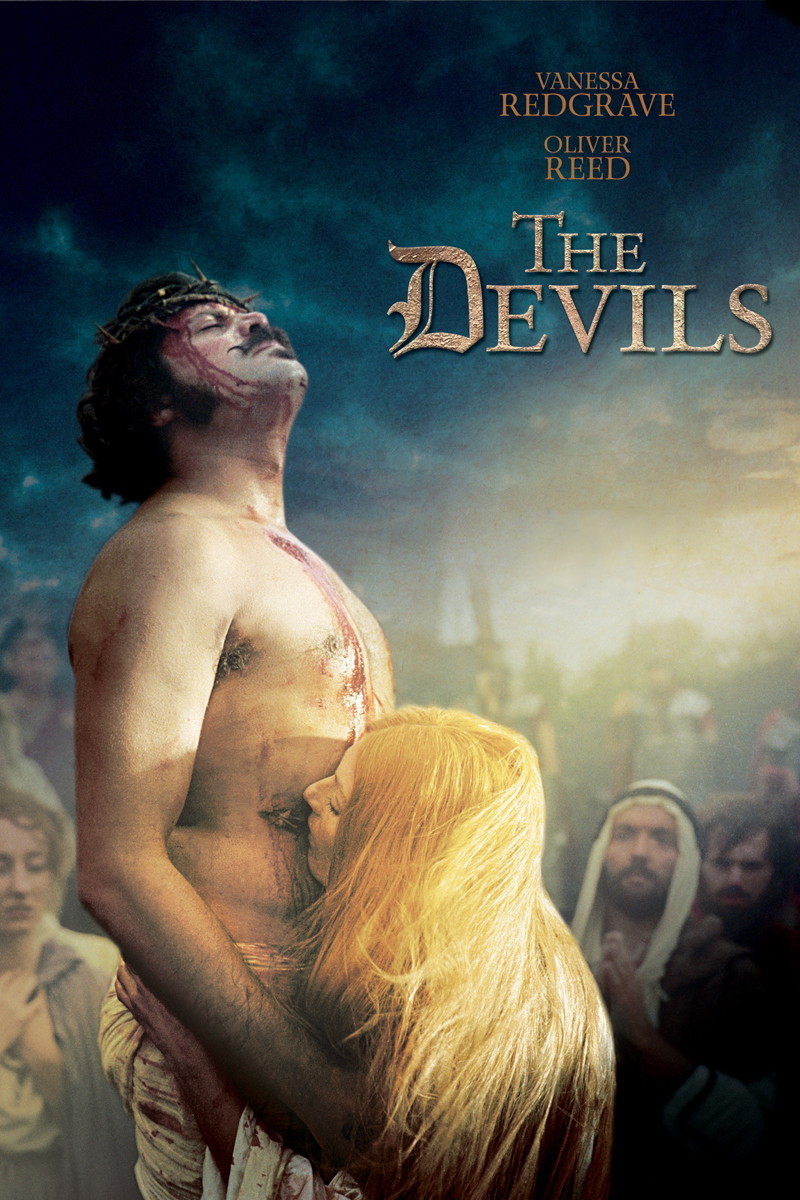
Ken Russell’s The Devils (1971) stands as one of the most provocative and polarizing films in cinema history, a visceral plunge into the hysteria of religious fanaticism and political intrigue set against the backdrop of 17th-century France. Adapted loosely from Aldous Huxley’s historical account The Devils of Loudun and John Whiting’s play The Devils, the film dramatizes the real-life case of Father Urbain Grandier, a charismatic priest accused of witchcraft amid a scandal of supposed demonic possessions at a Loudun convent. Directed with unbridled fervor by Russell, who infuses every frame with operatic excess, the movie challenges viewers to confront the grotesque intersections of faith, sexuality, power, and repression. While its boldness earns admiration for unflinching social commentary, its stylistic indulgences can overwhelm, making it a work that demands both endurance and reflection.

The story unfolds in the walled city of Loudun, a Protestant stronghold under threat from Catholic forces led by the cunning Cardinal Richelieu. Oliver Reed delivers a towering performance as Grandier, portraying him not as a saintly martyr but as a flawed, hedonistic figure—a womanizer who preaches liberty while bedding Madeleine (Gemma Jones), a young Protestant whose quiet devotion contrasts sharply with the surrounding debauchery. Grandier’s defiance of Richelieu’s edict to demolish the city’s walls marks him as a target, but his downfall accelerates through the hysterical claims of Sister Jeanne (Vanessa Redgrave), the hunchbacked prioress of the Ursuline convent. Twisted by unrequited lust for Grandier, Jeanne accuses him of sorcery, sparking a wave of mass possession among the nuns that spirals into public spectacle. Russell draws from historical records to depict these events, emphasizing how personal pathologies fueled institutional corruption.

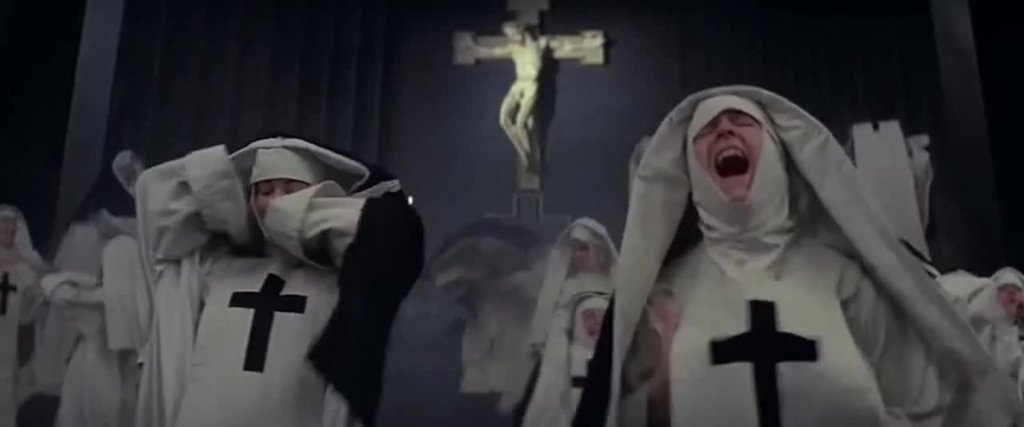
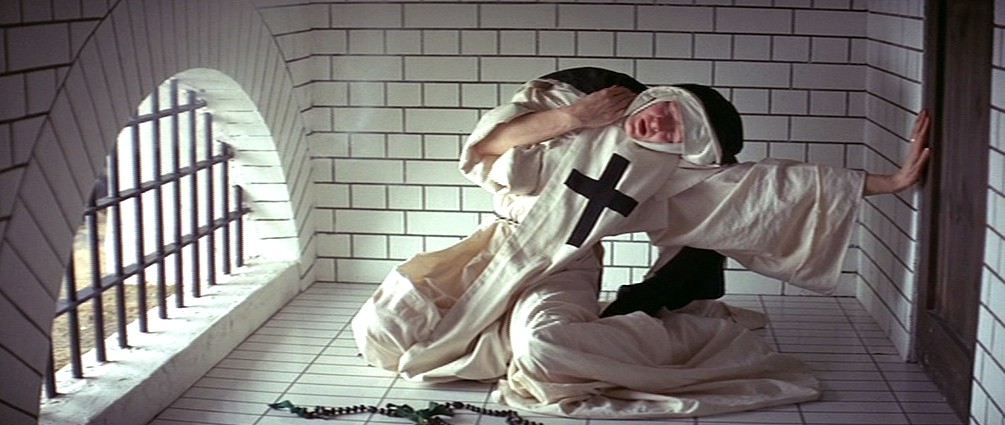
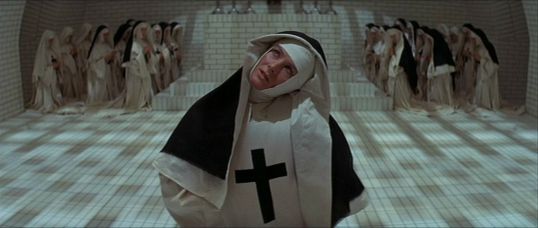
Visually, The Devils is a tour de force of baroque horror, with production designer Derek Jarman crafting sets that evoke a pristine white monastery defiled by filth and frenzy. Cinematographer David Watkin employs distorted wide-angle lenses and frenetic camera movements to mirror the characters’ unraveling psyches, turning sacred spaces into nightmarish arenas. The infamous “nunsploitation” sequences—where possessed sisters writhe in orgiastic fits, desecrate crucifixes, and simulate blasphemous acts—remain shocking even today, not merely for their explicitness but for their raw psychological intensity. These scenes serve Russell’s thesis: repressed desires, when twisted by authority figures like the witch-hunting Father Barre and Father Mignon, erupt into collective madness. Fairly assessed, these choices underscore Russell’s intent: to expose how power structures weaponize female hysteria, a theme resonant in historical witch hunts and modern reckonings with abuse.

Russell’s direction amplifies this through rhythmic editing and a pounding score by Peter Maxwell Davies, which blends liturgical chants with dissonant percussion to evoke a descent into hell. The film’s opening, with its ritualistic execution of a wise woman amid fireworks and folk rituals, sets a tone of pagan vitality clashing against ecclesiastical oppression. Midway, hallucinatory visions plague Grandier, blurring reality and delusion in a style reminiscent of Russell’s later explorations of ecstatic breakdown. The film unflinchingly depicts torture scenes—a burning at the stake, an afternoon in the rack, headscrews, a douche with boiling water—highlighting its raw confrontation with human cruelty. However, this excess risks tipping into self-parody; moments like the nuns’ simulated levitations or Jeanne’s contortions can strain credulity, prompting questions of balance between provocation and restraint.

Performances anchor the chaos, with Reed’s Grandier embodying defiant charisma undercut by hubris. His courtroom defiance and final quartering—nailed alive to a burning cross—culminate in a crucifixion scene of harrowing power, rivaling traditional passion narratives in emotional weight. Redgrave’s Jeanne is a revelation, her physical deformity symbolizing inner torment; she veers from pitiable to monstrous without caricature. Supporting turns shine too: Dudley Sutton as the impish Baron de Laubardemont, scheming for Richelieu; Max Adrian as the syphilitic priest whose decaying face mirrors moral rot; and Christopher Logue as the predatory Cardinal, whose urbane cruelty chills. The ensemble’s conviction elevates the material, ensuring characters feel flesh-and-blood rather than allegorical pawns.

Thematically, The Devils indicts institutional religion not as anti-faith but as a critique of its perversion by human ambition. Russell draws parallels to scandals where church power intertwines with politics, arguing that true devilry lies in hypocrisy. The film posits sexuality as a battleground: Grandier’s libertinism versus Jeanne’s repression, with the church exploiting both for control. This aligns with Huxley’s original thesis, expanded by Russell into a broader assault on authoritarianism. Politically, it skewers absolutism; Richelieu’s agents manipulate “possessions” for territorial gain, much as witchfinders historically profited from purges. Balanced against this, the film acknowledges Grandier’s flaws—he fathers a child out of wedlock and mocks piety—preventing hagiography. Upon release, it faced cuts in various countries, its controversial rating reflecting discomfort with its uncompromised vision.

Stylistically, Russell risks the “ridiculous” for the sublime. The white-tiled convent, pristine yet prone to vomit and excrement, symbolizes false purity; smashing it in the finale cathartically liberates Loudun from fanaticism. Influences from montage masters appear in crowd scenes, synthesized into a singular fever dream. Pacing falters in the trial’s verbosity, and some anachronistic flourishes—like Louis XIII’s cross-dressing ballet—inject campy levity, diluting gravity at times. Yet these quirks humanize the director’s bombast, reminding us of cinema’s power to provoke laughter amid horror. Compared to Russell’s Women in Love or TommyThe Devils stands as his most structurally coherent assault on repression.

Historically contextualized, the Loudun possessions of 1634 involved Urbain Grandier, executed for allegedly bewitching Ursuline nuns via a pact with Satan. Huxley documented the hysteria, linking it to political machinations under Richelieu, who sought to crush Huguenot resistance. Russell amplifies the carnality for dramatic effect, prioritizing emotional truth over literalism. Restored versions reveal its full ferocity, influencing not just cinema but broader media, including comics like Argentinian artist Ignacio Noé’s The Convent of Hell, which echoes its themes of convent-based depravity and demonic intrigue in vivid, explicit sequential art.

Ultimately, The Devils endures as a lightning rod: a moral film cloaked in immorality, pro-religion by exposing its distortions. Its ugliness—filth-smeared faces, ruptured bodies—serves illumination, urging viewers toward wisdom. For every viewer repulsed by its excesses, another finds genius in its candor. Russell’s gamble pays off; in risking the absurd, he achieves a sublime confrontation with our shadowed souls. At around 109 minutes in its uncut form, it repays multiple viewings, rewarding the brave with insights into faith’s fragility and power’s perils. Not flawless—its hysteria occasionally exhausts—yet undeniably vital, The Devils remains essential cinema, a shattered lens on humanity’s eternal dance with darkness.
4 Shots From 4 Ken Russell Films


4 (or more) Shots From 4 (or more) Films is just what it says it is, 4 (or more) shots from 4 (or more) of our favorite films. As opposed to the reviews and recaps that we usually post, 4 (or more) Shots From 4 (or more) Films lets the visuals do the talking.

Today, we pay tribute to the iconoclastic British director Ken Russell with….

4 Shots From 4 Ken Russell Films

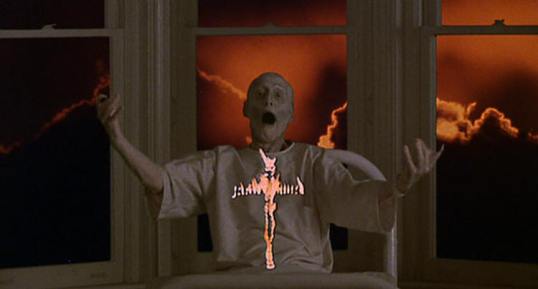
The Devils (1971, directed by Ken Russell, DP: David Watkin)

Altered States (1980, dir by Ken Russell, DP: Jordan S. Croneweth)

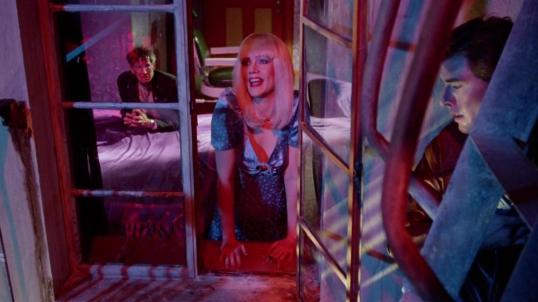
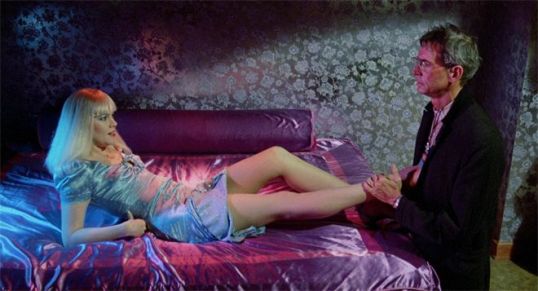
Crimes of Passion (1984, dir by Ken Russell, DP: Dick Bush)

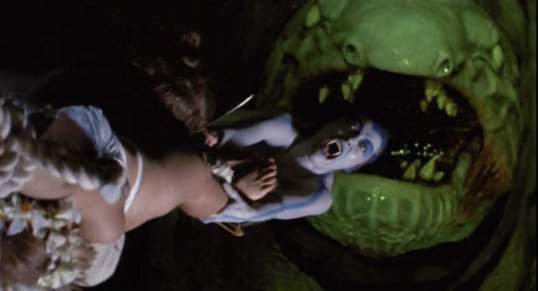
The Lair of the White Worm (1988, dir by Ken Russell, DP: Dick Bush)

4 Shots From 4 Films: Special Ken Russell Edition


4 (or more) Shots From 4 (or more) Films is just what it says it is, 4 (or more) shots from 4 (or more) of our favorite films. As opposed to the reviews and recaps that we usually post, 4 (or more) Shots From 4 (or more) Films lets the visuals do the talking.

Today, on what would have been his 97th birthday, the Shattered Lens pays tribute to the iconoclastic director Ken Russell.  It’s time for….

4 Shots From 4 Ken Russell Films

The Devils (1971, directed by Ken Russell, DP: David Watkin)

Crimes of Passion (1984, dir by Ken Russell, DP: Dick Bush)

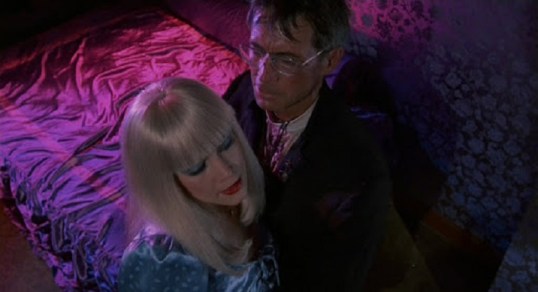
Gothic (1986, dir by Ken Russell, DP: Mike Southon)

The Lair of the White Worm (1988, dir by Ken Russell, DP: Dick Bush)

6 Horrific Trailers For October 9th, 2022


It’s Sunday and it’s October and that means that it’s time for another edition of Lisa Marie’s Favorite Grindhouse trailers!  For today, we have six trailers from the early 70s.  This was the era when horror started to truly get …. well, horrific!

  1. The Bird With The Crystal Plumage (1970)

First off, we have the blood and scream-filled trailer for Dario Argento’s The Bird With The Crystal Plumage.  This Italian thriller made quite a splash when it was released in America.  Indeed, for many Americans, this was their first exposure to the giallo genre.  This would go on to become Argento’s first (and, so far, only) film to be nominated for a Golden Globe.  (Read my review here!)

2. House of Dark Shadows (1970)

Speaking of blood and screaming, 1970 also saw the release of House of Dark Shadows.  Personally, I think this is one of the best vampire films ever.  The trailer is heavy on atmosphere.

3. The Devils (1971)

In 1971, British director Ken Russell scandalized audiences with The Devils, a film so shocking that it will probably never been in its full, uncut form.

4. Tombs of the Blind Dead (1972)

Italy was not the only country sending horror films over to the United States.  From Spain came the Tombs of the Blind Dead.

5. The Last House on the Left (1972)

Speaking of controversy, Wes Craven made his directorial debut with the infamous The Last House On The Left.  The trailer featured one of the greatest and most-repeated horror tag lines of all time.

6. Dracula A.D. 1972 (1972)

Finally, even as horror cinema changed and became more extreme, Hammer Studios continued to tell the long and twisted story of Count Dracula.  They brought him into the present age and dropped him in the middle of hippie-infested London.  No matter how much the rest of the world changed, Dracula remained Dracula.

8 Shots From 8 Horror Films: The Early 70s


4 Or More Shots From 4 Or More Films is just what it says it is, 4 shots from 4 of our favorite films. As opposed to the reviews and recaps that we usually post, 4 Shots From 4 Films lets the visuals do the talking!

This October, I’m going to be doing something a little bit different with my contribution to 4 (or more) Shots From 4 (or more) Films.  I’m going to be taking a little chronological tour of the history of horror cinema, moving from decade to decade.

Today, we take a look at the early 70s!

8 Shots From 8 Horror Films: The Early 70s

The Bird With The Crystal Plumage (1970, dir by Dario Argento, DP: Vittorio Storaro)

House of Dark Shadows (1970, dir by Dan Curtis, DP: Arthur Ornitz)

Hatchet For The Honeymoon (1970, dir by Mario Bava, DP: Mario Bava)

The Devils (1971, directed by Ken Russell, DP: David Watkin)

Tombs of the Blind Dead (1971, dir by Amando de Ossorio, DP: Pablo Ripoll)

Children Shouldn’t Play With Dead Things (1972, dir by Bob Clark, DP: Jack McGowan)

Last House on the Left (1972, dir by Wes Craven, DP: Victor Hurwitz)

Dracula A.D. 1972 (1972, dir by Alan Gibson, DP: Dick Bush)

6 Shots From 6 Ken Russell Films


4 (or more) Shots From 4 (or more) Films is just what it says it is, 4 (or more) shots from 4 (or more) of our favorite films. As opposed to the reviews and recaps that we usually post, 4 (or more) Shots From 4 (or more) Films lets the visuals do the talking.

This October, we’re using this feature to highlight some of our favorite actors and directors, all of whom have made invaluable contributions to the horror genre!  Today, we pay tribute to the iconoclastic British director Ken Russell with….

6 Shots From 6 Ken Russell Films

The Devils (1971, directed by Ken Russell, DP: David Watkin)

Altered States (1980, dir by Ken Russell, DP: Jordan S. Croneweth)

Crimes of Passion (1984, dir by Ken Russell, DP: Dick Bush)

Gothic (1986, dir by Ken Russell, DP: Mike Southon)

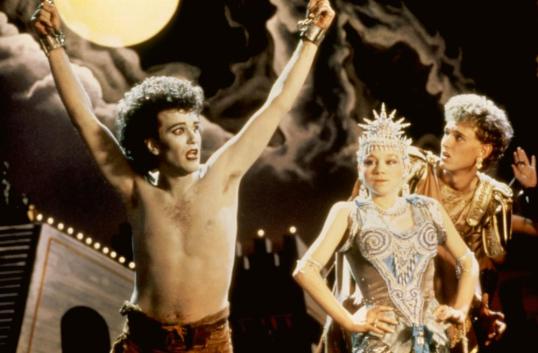
Salome’s Last Dance (1988, dir by Ken Russell, DP: Harvey Harrison)

The Lair of the White Worm (1988, dir by Ken Russell, DP: Dick Bush)

Horror Film Review: The Devils (dir by Ken Russell)


In 17th Century France, Louis XIII (Graham Armitage) may be king but it’s the devious Cardinal Richelieu (Christopher Logue) who holds the power. Richelieu has convinced that king that every walled city in France should have its walls blown up, the better to keep track of what’s actually happening within the city. Unfortunately, for Richelieu, Louis XIII promised the Governor of Louden that he would never harm any structure in the city, leaving its walls untouchable. While Louis XIII concentrates on throwing outdoor parties where murdering protestant is the main source of entertainment, Richelieu searches for an excuse to destroy the walls of Loudon.

Along with being frustrated by the fact that Loudon retains its walls, Richelieu is also upset that the unofficial leader of the city is Ubrain Grandier (Oliver Reed), a decadent priest who has not only criticized the discipline of clerical celibacy but who has also publicly opposed the Cardinal’s efforts to increase his own political power. Grandier has made it clear that, as long as he’s in control, the walls of Loudon will never came down and the people of Loudon, fearful of the plague that is ravaging the world outside of the walls, support him.

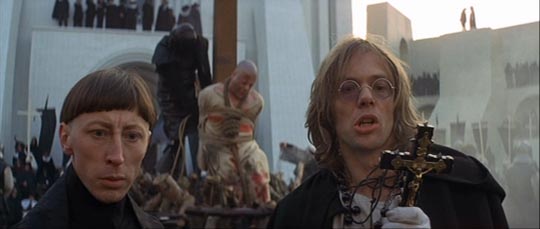
Among Grandier’s many admirers is Sister Jeanne des Agnes (Vanessa Redgrave), a hunchback who is also the abbess of the local convent. Having become sexually obsessed with Grandier, Agnes requests that he become the confessor of the convent. When Grandier refuses, it sets off a chain reaction that eventually leads to Grandier being accused of worshipping the Devil and “bewitching” Sister Agnes and several other nuns. With the arrival of Father Barre (Michael Gothard), a fanatical witch hunter, the city of Loudon descends into darkness and decadence.

Directed by the infamous (and, let’s just admit it, brilliant) Ken Russell and first released in 1971, The Devils is not an easy film to see. When the film was originally released in Britain, it was controversial for its uncompromising depiction of 17th century torture and its combination of religion and sexual imagery. (This, of course, was a recurring theme in almost all of Russell’s work.) The British censors demanded a few minor cuts before agreeing to approve the film for release. While the British censors focused on the scenes of violence, Warner Bros. also removed several sexually explicit scenes, the most infamous of which was a sequence in which a group of naked nuns sexually defiled a statue of Christ. Also removed was a scene of a priest masturbating while watching the nuns and finally, a scene in which Sister Jeanne masturbated with a charred femur bone. Russell was not happy with the changes and, needless to say, he was even more upset when Warner Bros. removed an additional three minutes before releasing the film in the United States.

In the U.S., The Devils was even more controversial than it had been in the United Kingdom and, while many critics praised it as being a powerful attack on hypocrisy, others described it as merely being pornographic. Despite the cuts that were made, the American version of The Devils was slapped with an X rating and Warner Bros. attempted to distance itself from the controversy that had developed around the film. As of this writing, The Devils has never been given a proper Region 1 DVD or Blu-ray release. It’s rare that ever shows up on any streaming platforms. Even YouTube has only a handful of scenes. If you want to watch The Devils in America, you’re going to have to track down a VCR player and watch it on VHS. And, even then, you’ll only be seeing the version that was cut for the U.S.

Will Ken Russell’s original, uncut version ever be seen in America? It’s a question that many film students have asked themselves. In 2002, a 117-minute edition of The Devils played in London, featuring some of the footage that was cut from the film’s original release. However, that version is still considered to be incomplete and it’s certainly not available here in the United States. The Devils does occasionally show up on Shudder, which is how I saw it earlier this year. Of course, the Shudder version was the cut American version, which Russell repeatedly disowned.

Watching the film, I could understand Russell’s anger. It wasn’t just that scenes had been cut out of the film. It was that the scenes were often edited out with such a lack of finesse that it made the film seem disjointed. Russell was a director known for his hallucinatory and deliberately over-the-top style. When the film abruptly cuts away from showing us its most shocking images, it feels antethical to everything that Russell was about as a filmmaker. On the one hand, it’s easy to say, “Who cares if a scene of Vanessa Redgrave masturbating with a charred femur bone has been removed from the film? Who wants to see that?” But if you watch The Devils, it becomes apparent that it’s not about what would be pleasant to see. Indeed, in many ways, The Devils is meant as a deliberate attack on the senses, one in which shocking imagery is used to awaken the audience from their complacency. As such, the controversy about how the film was cut is not about what’s acceptable. Instead, it’s about the fact that Russell has created a world where it somehow makes total sense that Sister Jeanne would pick up the femur and make use of it. By editing the scene so that it abruptly ends with Jeanne merely looking at the bone, Warner Bros. forced The Devils to not be true to itself.

And yet, despite all of that, The Devils remains a powerful and disturbing film, a hallucinatory collection of nightmarish images and haunting scenes. The excessive stylization that was Ken Russell’s trademark is perfect for this story of an entire community caught up in a frenzy of paranoia and repression. Though a period film (and based on a true story), Russell’s Loudon resembles an alien landscape, an almost expressionistic city of pristine walls and dirty streets. Vanessa Redgrave’s twisted nun stalks through the film like an ominous spirit, both wanting and hating Grandier at the same time. When the “possessions” begin, the possessed finally have the excuse to do what they truly want and to live just as wantonly as the men who previously controlled their lives. Because they’ve come to believe that they’re no longer responsible for their own actions, they can indulge in every depravity. But with Louis XIII casually murdering protestants for sport at his estate and Richelieu manipulating church policy to his own ends, the film asks why the people’s actions are more worthy of condemnation than the actions of the people who rule them.

The Devils has reputation for being blasphemous. It is, of course, nothing of the sort. After I watched the film, I did a little research and I was not surprised to discover that Ken Russell was a practicing Catholic because only a Catholic could make a film that both celebrated what the Church could be while also condemning it for so often falling short. While Richelieu represents the people who use religion as a vehicle for their own drive for power and Sister Jeanne and the witch-hunter Father Barre represents the fanatics who use church doctrine to justify their own madness, it is the sinner Father Grandier who represents what the Church should be. It is Grandier who is ultimately forced to put his own life at risk to protect the people of Loudon.

Is The Devils are horror film? Some would probably argue with my claim that it is. They would probably claim that it’s a historical drama with a heavy political subtext, However, for me, the imagery itself is disturbing enough to justify calling The Devils a horror film. The possessed of Loudon eventually prove themselves to be as mad as any of the infected people from George Romero’s The Crazies and the torture that Grandier suffers is frightening specifically because it’s all based on fact. There really was a town named Loudon that had walls. There really was a priest named Grandier who was accused of practicing witchcraft and who suffered the most vile torture as a result.. The Devils is a film about people driven made by a combination of repression and fanaticsm. It’s a horror film because it’s true and, needless to say, the madness that possessed Loudon didn’t die out in the 17th Century. It’s continued into the present day.

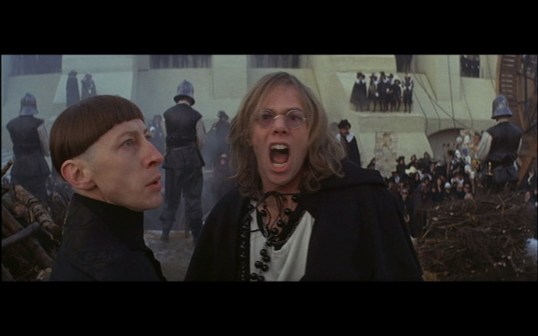
Oliver Reed may seem like an odd choice to play a priest but he gives one of his best performances as the charismatic but foolishly cocky Grandier. Vanessa Redgrave is frightening as the disturbed Sister Jeanne and British actor Murray Melvin is alternatively sympathetic and pathetic as a priest who comes to believe in Grandier’s innocence. For me, though, the film is stolen by Michael Gothard, who plays the fanatical witch hunter, Father Barre. With his long hair and his glasses, Father Barre bears a definite resemblance to John Lennon and the film portrays him as being the 17th century equivalent of a rock star, an arrogant and sensual man who encourages people to indulge in their most secret desires so that he can then declare them to be possessed and in need of an exorcism. Gothard had a magnetic screen presence, allowing him to steal scenes from even formidable talents like Oliver Reed and Vanessa Redgrave. Gothard would go on to play the silent assassin in the James Bond film, For Your Eyes Only and was, again, memorably threatening. Sadly, Gothard took his own life in 1992.

Someday, perhaps the full unedited version of The Devils will be available. Until then, even the edited version retains its power to shock, disturb, and make you think. Today, more than ever, its portrait of hypocrisy and mass madness feels relevant. The modern age is still ruled by hysteria and paranoia and our leaders are still looking for any excuse to take down any walls that might protect us from having to submit to their will. How different is Sister Jeanne from the people who are currently hurling accusations on social media? How different is Father Barre from the the people who were are currently told have all the answers? We may no longer burn people at the stake but we’ve found new ways to silence voices of dissent. The film may have been set in 17th Century France and first released in 1971 but Ken Russell’s masterpiece is all about the modern age. The Devils in not an easy film to watch or find but it is more than worth the effort to track down.


4 Shots From 4 Ken Russell Films: The Devils, Crimes of Passion, Gothic, The Lair of the White Worm


4 Shots From 4 Films is just what it says it is, 4 shots from 4 of our favorite films. As opposed to the reviews and recaps that we usually post, 4 Shots From 4 Films lets the visuals do the talking!

This October, we’re using this feature to recognize and honor some of our favorite horror directors!  Today, we honor the legendary Ken Russell!

4 Shots from 4 Films

The Devils (1971, dir by Ken Russell)

Crimes of Passion (1984, dir by Ken Russell)

Gothic (1986, dir by Ken Russell)

The Lair of the White Worm (1988, dir by Ken Russell)