“What is it exactly that you want?” a preacher (Frank Maxwell) asks a congregation of leather-clad bikers.
“We want to get loaded!” Heavenly Blues (Peter Fonda) replies, “And we want to have a good time!”
And have a good time, they proceed to have. Of course, it’s a good time for them. Everyone else who meets the bikers at the center of 1966’s The Wild Angels are horrified by this collection of rebellious and violent outsiders. Sure, Heavenly Blues might actually be a soulful guy who mistakenly believes that he can control the gang’s more excessive tendencies. His girlfriend, Mike (Nancy Sinatra), actually seems rather reserved and conservative when compared to the rest of the gang. But make no mistake about it, the majority of the members of the gang are into violence for its own sake. They are bullies who couldn’t make the football team so, instead, they hopped on a motorcycle and formed their own society. They’re self-styled rebels but what are they rebelling against? What have you got?
I know, I know. That famous line comes from Marlon Brando and it was uttered in The Wild One. Peter Fonda, to put it lightly, was no Marlon Brando and, as directed by Roger Corman, The Wild Angels doesn’t have the societal concerns that lay at the hear of The Wild One. As Corman was often the first to admit, his main concern when it came to making movies was to make money. Corman wasn’t necessarily against message films. He often stated that, as a director, 1962’s The Intruderwas the film in which he took the most pride. The Intruder took a firm stand against racism and it let everyone know where Corman stood on when it came to the Civil Rights Movement. It was also one of his few films to lose money. The Wild Angels celebrates rebellion but one gets the feeling that celebration is motivated by the fact that younger filmgoers would be happy to pay to see a movie about a bunch of “youngish” people telling the old folks to shut up and get out of the way. The Wild Angels themselves don’t seem to be motivated by any sort of grand ideology. Heavenly Blues preaches about getting loaded and having a good time and celebrating freedom but he also allows the members of the gang to drape a Nazi flag over a casket. What does Heavenly Blues actually believe in?
Heavenly Blues believes in loyalty to his friends. For all the fights and the orgies and the scenes of motorcycles roaring down country roads, this is ultimately just a film about a guy who wants to give his best friend a decent burial. The Loser (Bruce Dern) dies about halfway through the film and one gets the feeling that he probably would have lived if the gang hadn’t kidnapped him from the hospital. Heavenly Blues wants to give The Loser the type of wild funeral that Blues thinks he would have wanted though I think The Loser probably would have been happier not have been killed by the actions of his idiot friends. Diane Ladd, who was married to Bruce Dern at the time and who has said Laura Dern was conceived during the filming of The Wild Angels, is heart-breaking as The Loser’s girlfriend, Gaysh. Gaysh wants to mourn her boyfriend while the rest of the gang is more concerned with figuring out who her next boyfriend is going to be.
Does Heavenly Blues ever realize that he’s traveling with a bunch of animals? He does but one gets the feeling that he’s accepted his fate. There’s no going back. The past can’t change and the future cannot be controlled so Heavenly Blues is content to live in the present. All he can do is try to give his friend a decent burial while the sirens of cops shriek in the distance.
The Wild Angels was a controversial film when it was first released. It also made a lot of money and led to a whole cycle of outlaw biker films, culminating with Easy Rider. Seen today, it’s a portrait of a society coming apart, with the establishment and the bikers not even willing to stop fighting long enough to allow for a simple burial. It’s definitely a time capsule film, one of those productions that epitomizes an era. There’s not much going on underneath the surface and most of the film’s bikers really are awful people but there is something touching about Blues giving it all up just to try to give his friend a decent burial.
Though Corman worked in almost every type of film genre imaginable, he’s probably best remembered for his science fiction and horror films. This was one of the first of them.
2. Bucket of Blood (1959)
In Bucket of Blood, Roger Corman gave Dick Miller a starring role and also mixed comedy and horror in a way that influence many future horror directors.
3. Little Shop of Horrors (1960)
Roger Corman famously shot Little Shop of Horrors in just two days. The end result was a mix of comedy and horror that continues to be influential to this day. The musical is very good but I still prefer the cheerful low-budget aesthetic of the Corman original.
4. The Terror (1963)
Corman was famous for his ability to spot new talent. His 1963 film The Terror starred a then unknown actor named Jack Nicholson.
5. The Masque of the Red Death (1964)
In the 60s, Corman was also well-known for his Edgar Allan Poe adaptations, the majority of which starred Vincent Price. With these colorful and flamboyant films, Corman showed himself to be a pop artist at heart.
6. Frankenstein Unbound (1990)
In the 1970s, Corman retired from directing and instead focused on producing and distributing movies. In 1990, he briefly came out of retirement and gave us his final directorial effort, Frankenstein Unbound.
I was a bit shocked to discover that I’ve neve actually sat down and written up a real review of 1979’s Mad Max for this site. Considering how much I like this film and all the scenes and shots that I’ve share from Mad Max, you would think that I would have at least written about why I like this violent but intriguing film so much. Today is George Miller’s birthday so let’s talk about the film that launched his career.
Mad Max is often described as being a post-apocalypse film but that’s not quite true. It does take place in a “near future,” one in which there seems to be noticeably less people around. The roads of Australia are dominated by crazed punks who have taken their obsession with their cars and motorcycles to the extreme. (Director George Miller trained as a doctor and has said that this film was partially inspired by the auto crash victims who were brought into the emergency room on a nightly basis.) Civilization is on the verge of collapsing but it is still hanging on by a thread. For every Night Rider (Vincent Gil), ranting as he crashes into people, and for every psycho gang leader like Toecutter (Hugh Keays-Byrne), there are people just trying to survive day-to-day. The nightly news is still televised though the news is always so bad that no one seems to pay it much mind anymore. There are still cops, like Max Rockatansky (Mel Gibson) and Goose Rains (Steve Bisley), who patrol the roads in their cars and who do whatever is necessary to chase down the people who appear to be destined to inherit a world that they very much want to destroy. Society still exists but it’s obviously on its last legs and the attempts to maintain some sort of normalcy — laws, news, vacation homes, sexy saxophone playing — can’t hide the fact that the world is coming to a violent end. Max tries to deny that reality until, finally, he has no choice but to accept both the new world and his place in it.
Whenever I watch Mad Max, I’m always surprised by the fact that Mel Gibson almost seems like a supporting character for the majority of the movie. When the movie starts, Max is tightly wound and in control and he doesn’t show much emotion while he’s on the job. The flamboyant and always joking Goose seems like a much more likable protagonist. He’s the guy that the viewer wants to spend time with and, when he ends up getting burned nearly to death by Toecutter and Toecutter’s protegee, Johnny the Boy (Tim Burns, cast as one of the most loathsome characters ever to appear in a film), it’s a shocking moment. Goose had so much life to him. The attention then shifts to Max’s wife, Jessie (Joanne Samuel). When she finds herself being menaced by Toecutter and his gang, it’s alarming because she’s both a mother and she’s eventually isolated from both her family and from Max. We don’t want to see anything bad happen to Jessie. When something bad does happen, we’re more than ready for Max to step up and get some vengeance. And that’s exactly what Max does. One of the film’s most iconic images features Max not even flinching at the sound of an explosion in the distance. He’s gotten his vengeance but at the price of his soul. And, even as the film comes to an end, it’s obvious that nothing can be done to stop society’s collapse. Max has accepted what neither Goose nor Jessie could. There is no safety or society in the new world. There is only the road and the battle to control the remains of the world.
What makes Mad Max such a thrilling film? A lot of it has to do with the stuntwork, which remains truly spectacular to this day. Made in the era before CGI, Mad Max features real cars that are being driven by real people who put themselves into real danger to capture some of the most stunning crashes captured on film. As well, the cast truly brings their characters to life. Tim Burns makes Johnny the Boy into a truly hateful character, one who manages to somehow be both whiny and dangerous at the same time. Joanne Samuel and Steve Bisley are sympathetic as Jessie and Goose. And then you’ve got Mel Gibson, young and on the verge of the superstardom that people now tend to pretend never happened, showing the intensity that would become his trademark as the increasingly unhinged Max. (I love Tom Hardy but, as good as he was in Mad Max: Fury Road, he never came close to capturing the soul-shattering intensity of Gibson’s thousand-yard stare,)
That said, I think the main reason why Mad Max continues to resonate is because it all feels so plausible. One looks at the world of Mad Max and it’s very easy to imagine finding yourself there. Unlike other apocalypse films that often seem to be taking place in an entirely different universe, Mad Max feels like it could be playing out just a few miles away from the closet motorway. For all of the spectacular stunts and flamboyant characters, Mad Max is a film that continues to feel very real. For that, George Miller deserves a lot of credit. Mad Max is a true classic of grindhouse filmmaking, featuring a story that feels more powerful with each passing year.
Or maybe you don’t. Sometimes, I forget that not everyone can read my mind. Anyway, I used to do a weekly post of my favorite grindhouse trailers. Eventually, it went from being a weekly thing to being an occasional thing, largely due to the fact that there’s only so many trailers available on YouTube. Now, Lisa Marie’s Favorite Grindhouse and Exploitation Film Trailers is something that I usually only bring out on a holiday.
Like today!
So, here are 6 trailers for the last week of October!
Last House On The Left (1972)
“Two girls from the suburbs. Going to the city to have …. good time….” Wow, thanks for explaining that, Mr. Creepy Narrator Dude. That classic tag line about how to avoid fainting would be imitated time and again for …. well, actually, it’s still being imitated. This was Wes Craven’s 1st film and also one of the most influential horror films of all time.
2. The Texas Chainsaw Massacre (1974)
Speaking of influential horror movies, the trailer for The Texas Chainsaw Massacre is almost scarier than the film itself!
3. Lisa Lisa (1977)
I love this trailer! Can you guess why?
4. Ruby (1977)
Ruby, starring Piper Laurie! I’m going to assume this was after Piper Laurie played Margaret White in Carrie. Don’t take your love to town, Ruby.
5. Jennifer (1978)
Jennifer was another film that pretty obviously inspired by Carrie. In this one, Jennifer has psychic control over snakes. So, don’t mess with Jennifer.
6. The Visitor (1979)
Finally, this Italian Omen rip-off features Franco Nero as Jesus, so it’s automatically the greatest film ever made.
Though Corman worked in almost every type of film genre imaginable, he’s probably best remembered for his science fiction and horror films. This was one of the first of them.
2. Bucket of Blood (1959)
In Bucket of Blood, Roger Corman gave Dick Miller a starring role and also mixed comedy and horror in a way that influence many future horror directors.
3. Little Shop of Horrors (1960)
Roger Corman famously shot Little Shop of Horrors in just two days. The end result was a mix of comedy and horror that continues to be influential to this day. The musical is very good but I still prefer the cheerful low-budget aesthetic of the Corman original.
4. The Terror (1963)
Corman was famous for his ability to spot new talent. His 1963 film The Terror starred a then unknown actor named Jack Nicholson.
5. The Masque of the Red Death (1964)
In the 60s, Corman was also well-known for his Edgar Allan Poe adaptations, the majority of which starred Vincent Price. With these colorful and flamboyant films, Corman showed himself to be a pop artist at heart.
6. Frankenstein Unbound (1990)
In the 1970s, Corman retired from directing and instead focused on producing and distributing movies. In 1990, he briefly came out of retirement and gave us his final directorial effort, Frankenstein Unbound.
This western was the first film that Roger Corman was credited with directing.
2. The Day The World Ended (1955)
Though Corman worked in almost every type of film genre imaginable, he’s probably best remembered for his science fiction and horror films. This was one of the first of them.
3. Not of this Earth (1957)
Not of this Earth was not only one of Corman’s better sci-fi films but this also the first film in which Corman really took full advantage of character actor Dick Miller. (Miller, a longtime friend of Corman’s, largely improvised his role as a hip vacuum cleaner salesman.)
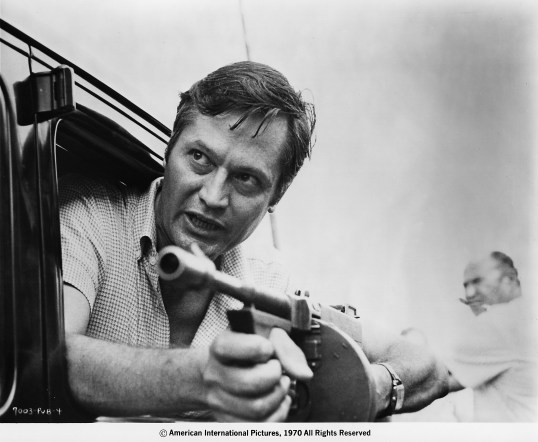
4. Machine Gun Kelly (1958)
Along with westerns and sci-fi films, Corman also directed several gangster classics. Machine Gun Kelly is remembered as one of his best.
5. Bucket of Blood (1959)
In Bucket of Blood, Roger Corman gave Dick Miller a starring role and also mixed comedy and horror in a way that influence many future horror directors.
6. Little Shop of Horrors (1960)
Roger Corman famously shot Little Shop of Horrors in just two days. The end result was a mix of comedy and horror that continues to be influential to this day. The musical is very good but I still prefer the cheerful low-budget aesthetic of the Corman original.
7. The Intruder (1962)
Corman was an exploitation filmmaker with a conscience. At a time when other films were avoiding social issues, Corman dove right in with challenging films like The Intruder.
8. The Terror (1963)
Corman was famous for his ability to spot new talent. His 1963 film The Terror starred a then unknown actor named Jack Nicholson.
9. The Masque of the Red Death (1964)
In the 60s, Corman was also well-known for his Edgar Allan Poe adaptations, the majority of which starred Vincent Price. With these colorful and flamboyant films, Corman showed himself to be a pop artist at heart.
10. The St. Valentine’s Day Massacre (1967)
The St. Valentine’s Day Massacre featured Corman directing a film for a big studio. The film recreated the gang war between Al Capone and George Moran while also finding room for Corman regulars like Jack Nicholson, Dick Miller, and Jonathan Haze.
11. The Trip (1967)
Roger Corman was always sympathetic to the counter-culture, which led to the remarkably nonjudgmental nature of The Trip, a film in which Peter Fonda drops acid under the guidance of Bruce Dern and Dennis Hopper. Jack Nicholson wrote the script.
12. Frankenstein Unbound (1990)
In the 1970s, Corman retired from directing and instead focused on producing and distributing movies. In 1990, he briefly came out of retirement and directed his final film, Frankenstein Unbound.
That’s what they say about John Steele, the man who Martin Kove plays in 1987’s Steele Justice. John Steele served in Vietnam and he was one of the best and most fearless members of the special forces. On the final day of the war, he was on the verge of arresting the corrupt General Kwan (Soon-Tek Oh) until Kwan suddenly announced that the war was over and the Americans were leaving. Steele laughed, shrugged, and turned his back on Kwan and started to walk away. Was Steele planning on just walking back to America? Well, regardless, Kwan shot Steele and his friend in the back. Fortunately, Steele survived. Steele may be stupid but he’s strong.
Years later, both Steele and Kwan are now living in California. Kwan is a prominent businessman who is also the secret leader of the Vietnamese mafia. Naturally, his main henchman is played by Al Leong. If Al Leong’s not working for you, are you even evil? John Steele has not been quite as successful. He was a cop until he got kicked off the force. Then he got a job transporting horses across California. Despite his cool guy name, John Steele doesn’t seem to be that good at anything that doesn’t involve killing people.
But then Kwan murders Steele’s best friend and former partner, Lee (Robert Kim). In fact, Kawn not only murders Lee but he also kills Lee’s entire family. The only survivor is Lee’s daughter, Cami (Jan Gan Boyd), a piano prodigy who is supposed to be 14 years old even though she’s being played by someone who is in her 20s. Steele and Lee’s former boss, Bennett (Ronny Cox), gives Steele permission to track down the people responsible for Lee’s death.
John Steele sets out to destroy Kwan. The film gives us a lot of reasons to be on Steele’s side but it’s hard not to notice that a lot of innocent people end up getting killed as a result of Steele’s vendetta. Any time that Steele goes anywhere, Kwan’s people attack and a bunch of innocent bystanders get caught in the crossfire. For example, Steele’s ex, Tracy (Sela Ward), agrees to look after Cami. It turns out that Tracy is a music video director and, of course, she takes Cami to work with her. The video shoot turns into a bloodbath, with even the members of the band getting gunned down. And yet, not even Tracy seems to be particularly disturbed by that. One might think that Tracy would at least sarcastically say something like, “Hey, John, thanks for getting the band killed before I got paid,” but no. Tracy just kind of laughs it all off. At no point does Steele or Bennett or really anyone seem to feel bad about all of the people who get killed as a result of the decision to unleash John Steele. Those people had hopes and dreams too, you know.
I really like Martin Kove on Cobra Kai. I love how his portrayal of the over-the-hill and burned-out John Kreese manages to be both intimidating and pathetic at the same time. I’ve also seen a number of interviews with Kove, in which he’s discussed his career as an exploitation mainstay and he always comes across as being well-spoken and intelligent. That said, Martin Kove appears to be totally lost in Steele Justice, unsure if he should be playing John Steele as a grim-faced avenger or as a quick-with-a-quip action hero. Whenever Steele is angry, Kove looks like he’s on the verge of tears. Whenever Steele makes a joke, Kove smiles like an overage frat boy who, while cleaning out his old storage unit, has just discovered his long lost copy of Bumfights. It’s a confused performance but, to be honest, no one really comes out of Steele Justice looking good. This is a film that features a lot of talented actors looking completely and totally clueless as to why they’re there.
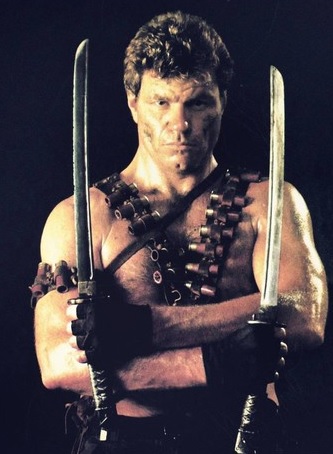
On the plus side, Steele Justice did give this world this totally intimidating shot of Martin Kove, preparing to be get and give justice. Recruit him? No, just unleash him!
Seriously, I can see the good in almost all of the creatures of the world but I hate rats and I hate cockroaches and I hate both of them for the exact same reason. They’re just so dirty! I mean, they are two of the filthiest animals on the planet. Look up the source of any plague that nearly wiped out humanity in the pre-modern era and rats are somehow going to be to blame. I’m very proud to say that there has never been a single rat or a mouse in any home in which I’ve ever lived. (When I was in college, however, I did once see a mouse running from classroom to classroom. Consider that. I keep my home cleaner than the average college.)
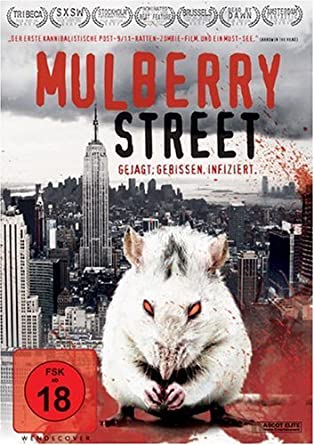
Mulberry Street is a horror film from 2006 that gives us an entirely new reason to dislike rats. Not only do they spread the Bubonic Plague but they also turn people into human/rat/zombie hybrids! At least, that’s what happens in this film. Set in New York City during one very long and very hot summer day, Mulberry Street imagines a world in which the rats get tired of hiding in the subways and they finally take over Manhattan. People are bitten. People are transformed into humanoid rats. People go crazy and attempt to infect other people. It get wild out there. They say you can see anything in New York and apparently, you can. Unfortunately, the cost of seeing is turning into a rat. That kind of sucks.
Casey (Kim Blair) has just returned from serving her country in Iraq and she would rather not be turned into a rat. Her father, Clutch (Nick Damici), is an ex-boxer and he would also rather not turn into a rat. In a world dominated by rats, what are the ratphobic to do? Clutch, Casey, and a handful of others barricade themselves inside their apartments and they try to survive the night while the rats scratch at the door.
Yes, Mulberry Street is yet another zombie film. I mean, they may be rat hybrids as opposed to being the undead but, in the end, they might as well be a zombies. However, Mulberry Street works better than the average zombie film because it was shot guerilla-style on the streets of New York City. There’s a raw authenticity to Mulberry Street, with its jittery camerawork and it’s cast of talented but unknown actors. The threat feels real. The struggle to survive feels real. The fears feels real. At no point are you confident that Casey, Clutch , and their friends are going to survive the night. Mulberry Street feels as real as any film featuring human/rat hybrids can. Even before the rats attack, Mulberry Street presents us with a New York that feels sick and dying. In the end, the rats are just the next logical step. The city has devolved to such an extent that an attack of zombie rats feels predestined.
Mulberry Street was well-directed by Jim Mickle. Mickle would go on to direct Cold in July, one of the best modern noirs to be released over the past few years. Be sure to check out both films.
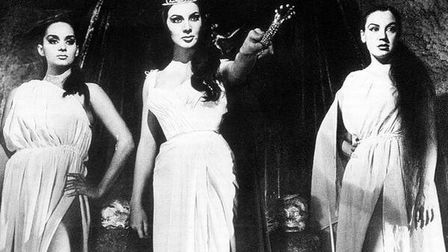
If a group of vampires are determined to ruin your night, what should you do? Well, according to the classic Mexican film Santo vs. las Mujeres Vampiro, your first move should be to call a wrestler.

 Through the Shattered Lens