20 Horror Films For Halloween (10/29/25)


Here’s 20 suggestions, some of which are obvious and some of which are not.

The Essentials

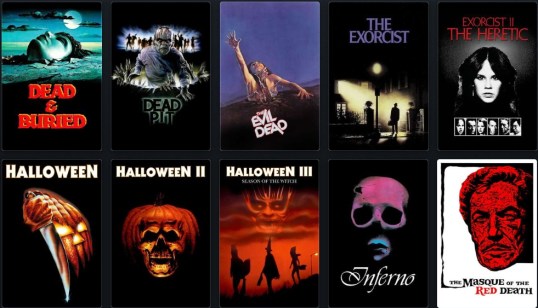
What would Halloween be without watching Halloween (1978)?  And, just to make clear, I’m talking about the John Carpenter Halloween and not any of that David Gordon Green crap.  John Carpenter’s Halloween continues to be one of the most effective horror films ever made and it’s also the rare example of a slasher film in which the victims are just as memorable as the killer.  I love Donald Pleasence’s performance as Dr. Loomis.  Halloween can be viewed on Shudder.

Halloween II (1981) picks up right where the first Halloween ended.  Jamie Lee Curtis doesn’t really do much in this version, other than spend her time limping through the hallways of Haddonfield’s nearly deserted hospital.  However, that just means that we get to spend more time with Dr. Loomis!  Halloween II is nowhere near as effective as the first film but it still introduced some really interesting ideas, like Samhain and Laurie being Michael’s sister.  David Gordon Green decided all of that unnecessary.  I disagree.  Halloween II can be viewed on Peacock.

Halloween III: Season of the Witch (1982) does not feature Michael Myers or Laurie Strode or even Dr. Loomis.  However, it does feature the Silver Shamrock theme song, Tom Atkins yelling like a badass, and Don O’Herlihy explaining the true meaning of Halloween.  “….and Happy Halloween.”  Halloween III can be viewed on Peacock.

The Exorcist (1973), William Friedkin’s masterpiece and the first horror film to ever be nominated for Best Picture, is one of the few horror film to remain frightening even after repeat viewings.  I will add that you don’t have to be Catholic to get The Exorcist but it definitely helps.  The Exorcist can be viewed on HBOMax. 

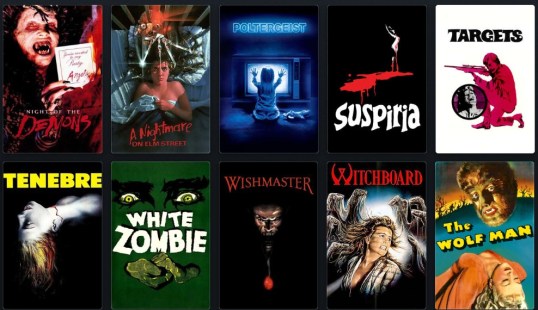
Suspiria (1977) remains Dario Argento’s best film, a dizzying masterpiece of horrific pop art that mixes blood, ballet, witches, music, and names that start with S.  From the moment that Jessica Harper (giving a great performance) steps into the rainy night to the shocking double murder at the red apartment building to the mind-bending climax, Suspiria is a brilliant mix of suspense and horror.  Do not see the remake.  (What is the deal with pretentious schmucks remaking brilliant horror films?)  The original is all you need.  It’s on Tubi.

Inferno (1980) is one of Argento’s more unfairly overlooked films.  A loose sequel to Suspiria, Inferno is a masterpiece of both horror and paranoia.  Irene Miracle’s opening swim is one of Argento’s most haunting set pieces.  The killer kitties are adorable.  The ending features effects work from none other than Mario Bava.  Sadly, the making of Inferno was not a happy experience for Argento and it temporarily soured him on working in America.  This brilliant film is on Tubi.

After his bad experience with Inferno, Argento returned to his giallo roots with Tenebrae (1982).  A series of murders in Rome are connected to an American writer.  Argento reportedly did not get along with star Anthony Franciosa but he still got a good performance out of him.  The wonderfully quirky supporting cast includes John Saxon, Daria Nicolodi, Christian Borromeo, John Steiner, Lara Wendel, Ania Pieroni, and Giuliano Gemma.  This film features several frightening and suspenseful set pieces.  The relentless dog still freaks me out.  Tenebrae can be viewed on Tubi.

A Nightmare on Elm Street (1984) — again, the original and not the remake — holds up surprisingly well.  Whenever I watch it, I’m shocked to be reminded of just how scary Freddy Krueger actually was in his first film appearance.  This Wes Craven shocker is available on HBOMax.

Poltergeist (1982) — the original, not the remake — also holds up well.  JoBeth Williams finding the strength after being thrown around her room to limp down that ever expanding hallway to save her children continues to be both horrifying and inspiring.  Craig T. Nelson’s over-the-top delivery of “YOU LEFT THE BODIES!” continues to make me smile.  Poltergeist can be viewed on HBOMax.

It’s not Halloween without Bruce Campbell and Evil Dead (1981) — the original, though the remake isn’t bad — is available on Tubi.  Though it lacks the humor of the sequels, the first Evil Dead holds up very well and one can definitely see why not only Bruce Campbell but also Sam Raimi went on to have active and successful career afterwards.

In my previous entry, I listed several Vincent Price/Roger Corman collaborations.  Somehow, I failed to include The Masque of the Red Death (1964), which is the best of them all.  Vincent Price is wonderfully evil.  Roger Corman’s direction is appropriately intense.  Nicholas Roeg’s cinematography is beautifully ominous.  It can be viewed on Tubi.

The Wolf Man (1941) — the original, even though I like the remake — is one of my favorite Universal horror films, even if it does leave me wondering how Lon Chaney, Jr. could possibly be the son of Claude Rain.  In future films, Larry Talbot would become a bit too whiny for his own good.  In this one, your heart breaks for him and his father.  The Wolf Man can be viewed on Peacock.

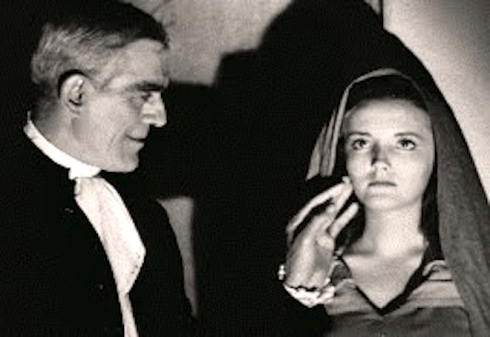
White Zombie (1932) is considered to be first feature-length zombie film.  It’s a bit creaky but it does feature one of Bela Lugosi’s best performances.  One should see it for its historical significance, if nothing else.  It can be viewed on on Tubi!

Odds and Ends

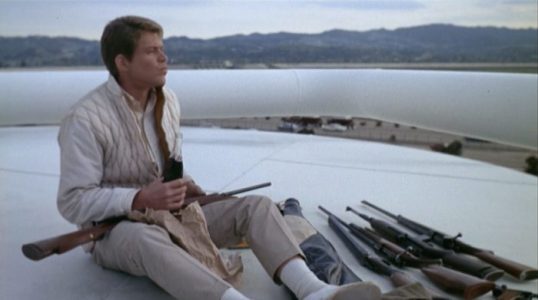
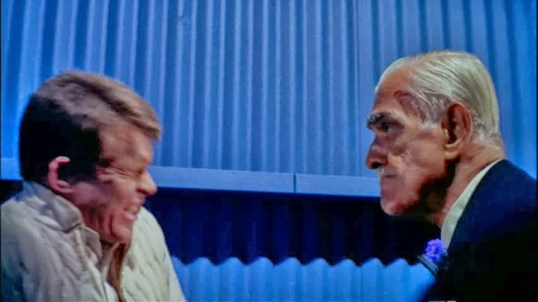
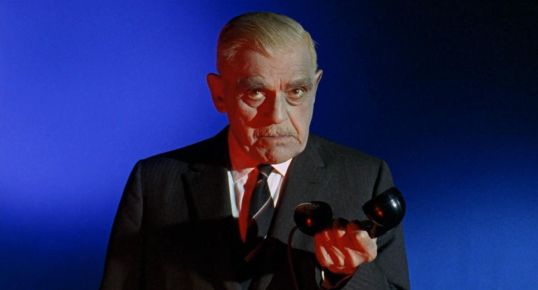
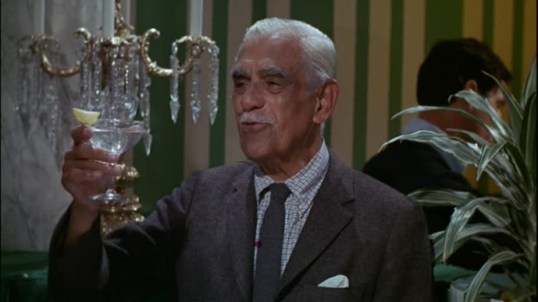
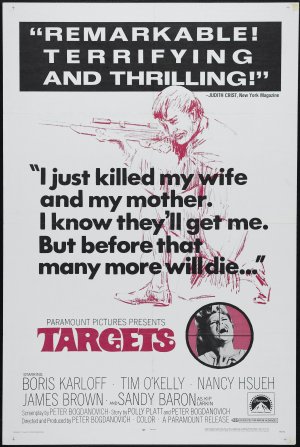
One can debate whether or not Targets (1968) should be considered a horror film or a thriller but it features what is perhaps Boris Karloff’s best performance, playing an aging horror star who fears that his old movies can’t compete with reality.  For once, Karloff is the hero, bravely confronting a madman who starts shooting at the people attending a showing of one of Karloff’s old films.  Targets can be viewed on Pluto TV.

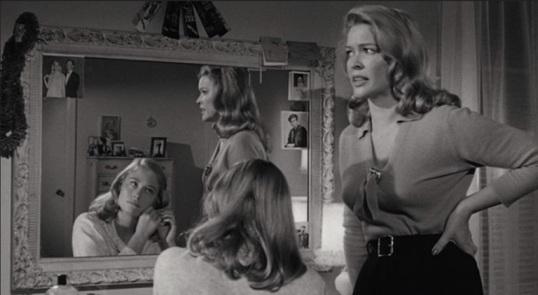
The Dead Pit (1989) is a personal favorite of mine.  An amnesiac (energetically played by Cheryl Lawson) finds herself in an insane asylum where she spends a lot of time running around in her underwear while a doctor performs experiments and the dead rise.  Lawson’s committed performance and director Bett Leonard’s atmospheric direction elevate the entire film.  This is 80s, low-budget horror at its best and it’s on Tubi.

Night of the Demons (1988) asks the question, “Is it really a good idea to have a party in a deserted house?”  Night of the Demons is enjoyable in its shameless and demented way.  Linnea Quigley and Angela Kinkade throw themselves into the role of the two girls throwing the party.  The film is energetic, surprising, witty, and occasionally even scary.  It can be viewed on Tubi.

From the same director as Night of the Demons, Witchboard (1986) is the ultimate film about why one shouldn’t mess with a Ouija board.  I relate to Witchboard because it’s about a redhead who never curses.  Beyond that, though, this is a good horror film that features Stephen Nichols getting upset when everyone fails to take his Ouija board seriously.  This film actually has its share of very real jump scares.  It can be viewed on Tubi.

Wishmaster (1997) is well-remembered for Andrew Divoff’s creepy intensity as the Djinn but the cast is actually a who’s who of horror royalty.  Robert Englund, Tony Todd, George “Buck” Flower, Kane Hodder, Reggie Bannister, Joe Pilato, they all made appearances.  I like the fact that no one ever chooses their words carefully when speaking to Wishmaster.  The film is on Tubi.

Dead and Buried (1981) features strange things happening in a coastal town.  This film feels like a particularly gruesome episode of The Twilight Zone and features a strong performance from Jack Albertson as the coroner with a secret.  It’s on Tubi.

Exorcist II: The Heretic (1977) has a terrible reputation that is largely deserved but I have to admit that I find it to be strangely fascinating.  It’s such a misfire that you really can’t look away and it takes an all-star cameo approach to its story that feels so wrong that it leaves you wondering whether John Boorman was intentionally going for a parody or not.  Richard Burton doesn’t waste any time with being subtle.  See if you can figure out what’s going on during the flashback scenes.  It’s on Tubi and I dare you to watch it.

Click here for the weekend’s list!


4 Shots From 4 Films: In Memory of Peter Bogdanovich


4 Or More Shots From 4 Or More Films is just what it says it is, 4 shots from 4 of our favorite films. As opposed to the reviews and recaps that we usually post, 4 Shots From 4 Films lets the visuals do the talking!

I just read that director Peter Bogdonavich passed away earlier today.  He was 82 years old.

Bogdanovich’s directorial career serves as both an inspiration and a cautionary tale.  He achieved the dream of many a film journalist by making the jump from writing about films to actually making them.  He went from interviewing Orson Welles to being declared the next Orson Welles.  His first film, Targets, allowed him to give Boris Karloff one final, great role.  His second film, The Last Picture Show, was nominated for Best Picture.  With his next film, Paper Moon, he directed Tatum O’Neal to an Oscar.  At a time when the so-called “movie brats” were rejecting the old ways of making films, Bogdonavich paid homage to the classic films of the past.  At his height, he made films that were both entertaining and, if you got all the references, educational.

Unfortunately, Bogdanovich’s later films were not as successful with critics or audiences.  Bogdanovich himself would later say that he underestimated just how much some of his former colleagues resented both his early success and his very public relationship with actress Cybil Shepherd.  In short, the critics were waiting for him to slip up and they attacked films like Daisy Miller and At Long Last Love like sharks in a feeding frenzy.  By the end of the 70s, he often found himself struggling to raise the money to make the movies that he wanted to make.  So determined was he to see that his film They All Laughed was released that he distributed it himself, at great financial cost.

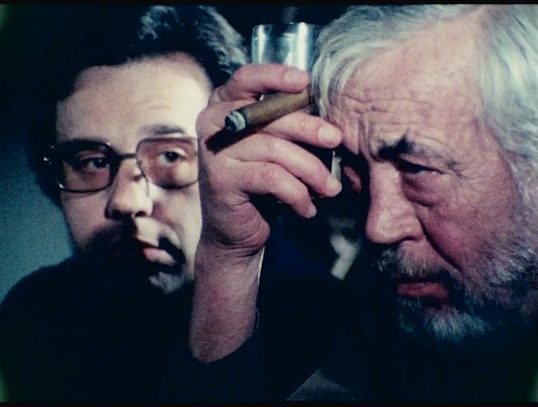
Regardless of his later career struggles, Bogdanovich remained a tireless advocate for watching and appreciating the films that were produced during the the Golden Age of Hollywood and he was a regular fixture on TCM, where he would discuss the films of Welles, John Ford, John Huston, Howard Hawks, and others.  He oversaw the release of Orson Welles’s long-delayed The Other Side of the Wind, a film in which he co-starred with John Huston.  Along with directing, Bogdanovich was a reliable character actor and those who don’t know him as a director might know him as Dr. Melfi’s therapist on The Sopranos.

Finally, a lot of the Bogdanovich films that were initially dismissed have subsequently been positively reappraised.  Bogdanovich was correct when he said that many of his later films were unfairly criticized or dismissed.  If nothing else, Bogdanovich’s love of the movies came through in everything that he did.  He will be missed for film historians everywhere.

Here are….

4 Shots From 4 Peter Bogdanovich Films

Targets (1968, dir by Peter Bogdanovich, DP: Laszlo Kovacs)

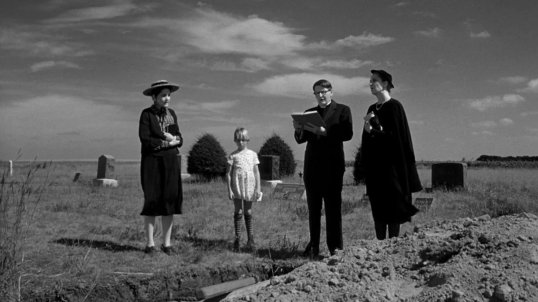
The Last Picture Show (1971, dir by Peter Bogdanovich, DP: Bruce Surtees)

Paper Moon (1973, dir by Peter Bogdanovich, DP: Laszlo Kovacs)

The Thing Called Love (1993, dir by Peter Bogdanovich, DP: Peter James)

4 Shots From 4 Boris Karloff Films


4 Shots From 4 Films is just what it says it is, 4 shots from 4 of our favorite films. As opposed to the reviews and recaps that we usually post, 4 Shots From 4 Films lets the visuals do the talking.

Since we yesterday paid our respects to the great Bela Lugosi, it only seems right that today, we should honor Boris Karloff.  By all account, Boris Karloff was a remarkably gentle and friendly man.  Perhaps that’s why he could find the soul in almost any character, even the ones who didn’t have one.

It’s time for….

4 Shots From 4 Boris Karloff Films

Frankenstein (1931, dir by James Whale, DP: Arthur Edeson)

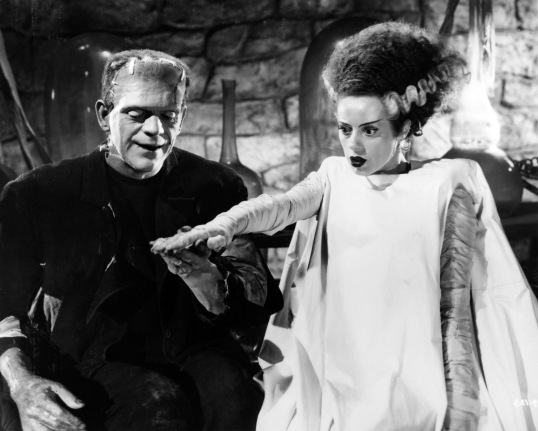
Bride of Frankenstein (1935, dir James Whale, DP: John J. Mescall)

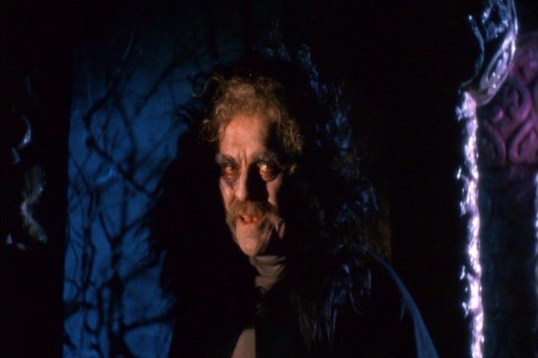
Black Sabbath (1963, dir by Mario Bava, DP:Ubaldo Terzano and Mario Bava)

Targets (1968, dir by Peter Bogdanovich, DP: Laszlo Kovacs)

4 Shots From 4 Films: Special Boris Karloff Edition


4 Shots From 4 Films is just what it says it is, 4 shots from 4 of our favorite films. As opposed to the reviews and recaps that we usually post, 4 Shots From 4 Films lets the visuals do the talking.

Today, TSL pays tribute to the one and only Boris Karloff, born on this day in 1887 in London.

It’s time for….

4 Shots From 4 Boris Karloff Films

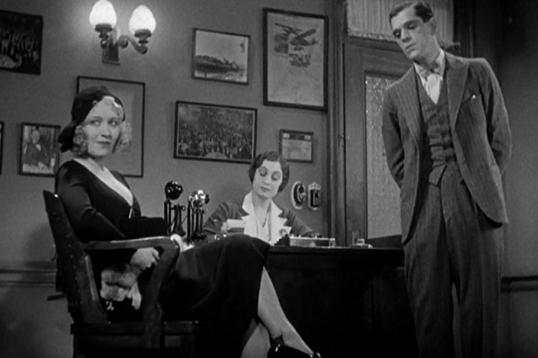
Five Star Final (1931, dir by Mervyn LeRoy)

House of Frankenstein (1944, dir by Erle C. Kenton)

Black Sabbath (1963, dir by Mario Bava)

Targets (1968, dir by Peter Bogdanovich)


Scenes That I Love: Boris Karloff Tells A Story In Targets


In the 1968 film, Targets, Boris Karloff gave one of his final performances.  It was also one of his best.

Karloff played an aging horror actor named Byron Orlok, a role that was based on Karloff himself.  Though once a huge star, Orlok’s style of horror has gone out of fashion.  As he explains it, the real world has gotten so scary that his horror films are now tame by comparison.  In this scene, Orlok proves that he can still give a compelling performance when he recites a short story about death and fate.

Reportedly, Karloff did this scene in one take and received a standing ovation after director Peter Bogdanovich called cut.


Horror Film Review: Targets (dir by Peter Bogdanovich)


targetsposter

The year was 1968 and legendary producer Roger Corman had aging horror star Boris Karloff under contract.  Karloff still owed Corman two days of work and Corman was never one to let an opportunity pass him by.  Corman approached film critic Peter Bogdanovich and made him an offer.  Corman would finance any film that Bogdanovich wanted to make, on the condition that he stayed under budget, used Boris Karloff, and included some scenes from The Terror.  Bogdanovich agreed and the end result was one of the best films of Karloff’s long career.

Karloff plays Byron Orlok.  Orlok (named, of course, after the vampire in Nosferatu) is a veteran horror star who now finds himself working almost exclusively in B-movies.  When the film starts, he’s just announced his retirement.  Orlok is bitter that Hollywood never fully appreciated his talents but, beyond that, he’s come to believe that horror movies can never hope to compete with the horrors of the real world.  People have become so desensitized to horror that it’s impossible to scare them, he believes.  Orlok plans on making one final promotional appearance at a drive-in that will be showing his final film.  (His final film, of course, is The Terror.)

Meanwhile, there’s a man named Bobby Thompson (Tim O’Kelly) and he’s about to shock the world.  Bobby has just recently returned from Vietnam.  He works as an insurance agent and his cheerfully bland countenance hides the fact that Bobby is going insane.  He is struggling to pay the bills and he resents the fact that his wife is now working and that they have to live with his parents.  His strict and taciturn father continues to criticize him, especially after Bobby points a rifle at him during target practice.  Bobby, incidentally, loves his guns.  After he murders both his wife and his mother, Bobby uses that gun to start shooting at strangers.

Bobby starts his rampage by shooting at cars on the freeway but eventually, he ends up at the drive-in.  While The Terror plays out on the big screen, Bobby shoots at the men, women, and children who have gathered to watch the movie, proving Orlok’s point that cinematic horror cannot hope to match the horror of everyday life…

Even though it was made 48 years ago, Targets is a film that feels extremely relevant today.  As I watched the film, I couldn’t help but think about not only James Holmes’s 2012 rampage in Aurora, Colorado but also the more recent sniper attacks in my hometown of Dallas.  For me, it was interesting to see that apparently this stuff was going on even in 1968.  (We tend to think of mass shooting as being a recent phenomena.)  Targets is an open plea for gun control (which, again, is something that we tend to think of as being a relatively new thing).  I’ll leave the political debate for others to consider and instead just say that Targets is a chilling portrait of both madness and violence.

However, Targets also works brilliantly as a tribute to Boris Karloff.  Though he may have never been as bitter as Orlok, Karloff is basically playing himself in Targets.  He’s portrayed as a cultured and kindly man who just happened to be very good at playing scary characters and Karloff gives perhaps his best performance in the role. Some of the best scenes in Targets are the scenes where Orlok (and, by extension, Karloff) discusses his career with his friend, Sammy Michaels (played by Bogdanovich).  You find yourself really wishing that you could have hung out on the set of Targets just to hear the stories that were told while the cameras weren’t rolling.

(Incidentally, Sammy Michaels was named after famed director Sam Fuller, who helped to write the film’s screenplay and provided a good deal of free advice to Bogdanovich.)

Targets works as both a horror film and a tribute to a great actor.  If for no other reason, watch it for Boris.

4 Shots from 4 Films: Happy Birthday, Boris Karloff!


4 Shots From 4 Films is just what it says it is, 4 shots from 4 of our favorite films.  As opposed to the reviews and recaps that we usually post, 4 Shots From 4 Films is all about letting the visuals do the talking. The late, great King of Horror Boris Karloff was born on this date in 1887. Here’s 4 Shots from 4 Films in his memorable career:

Bride of Frankenstein (1935)

Bride of Frankenstein (1935)

Bedlam (1946)

Bedlam (1946)

Black Sabbath (1964)

Black Sabbath (1964)

Targets (1968)

Targets (1968)