Documentary Review: Sly (dir by Thom Zimmy)


Now streaming on Netflix, Sly is a documentary about the life and career of Sylvester Stallone.

The documentary opens with Stallone watching as all of his belongings in his Hollywood mansion are packed in boxes so they can be shipped to his new home in New York.  As I listened to Stallone talk about how you sometimes have to return to your roots to discover who you truly are, it occurred to me that Stallone is one of those people who is never not playing a role.  Even when he’s not Rocky Balboa or John Rambo or any of the other characters that he’s played in the movies (or, less frequently on television), he’s still playing Sylvester Stallone, the bigger-than-life movie star who has been an inescapable part of the American pop cultural landscape for longer than I’ve been alive.  Watching Stallone talk about what it’s like to go, overnight, from being an unknown to being a celebrity, I never doubted his sincerity but I was always aware of how carefully chosen his words seemed to be.  Sylvester Stallone lets the audience in but he’s still careful about how much he reveals about himself.

The same can be said of the documentary, which largely focuses on Rocky, Rambo, and The Expendables, with a little Lords of Flatbush, F.I.S.T., Paradise Alley, and Cop Land trivia tossed in as well.  Stallone admits that he’s not proud of all of the films that he’s made, citing Stop!  Or My Mom Will Shoot! as his biggest regret.  (Arnold Schwarzenegger pops up to brag about how he was smart enough to turn down the script when it was originally sent to him.)  That said, there’s not much attention given to Stallone’s films with Roger Corman or for the films that he did for Cannon.  Sorry, there’s no Over The Top trivia.  There are a few clips from Cobra and Rhinestone but not much more.  If you’re looking for a documentary about the B-movies of Sylvester Stallone, this is not it.  (Interestingly enough, even films like Demolition Man — which was one of Stallone’s better non-Rocky and non-Rambo films — are also glossed over.)  Beyond talking his troubled relationship with his father, mentioning his love for daughters, and a moment where he gets noticeably emotional while talking about his late son, there’s not much information here about Stallone’s private life.  And again, it’s not that Stallone owes anyone any of that information.  At one point, Stallone says that he hasn’t had a moment of privacy since the release of Rocky and he’s probably right.  He’s earned the right to keep some things private.

Also interviewed in the documentary are Frank Stallone, Quentin Tarantino, film critic Wesley Morris, director John Herzfeld, and Talia Shire.  Frank comes across as a lot more genuine here than he did in his own documentary while Talia does the best job of understanding the appeal of Rocky.

This is a documentary that will probably best be appreciated by people who are already fans of Stallone.  Stallone doesn’t attempt to win over his doubters but, having been a star for nearly 50 years, Stallone can definitely argue that his doesn’t owe his doubters any effort.  Watching the documentary, it became clear to me that Stallone is one of those pop cultural figures who it is impossible not to love.  Everything about him, from the rough Hell’s Kitchen childhood to his decision to write a movie for himself to his decision to move into the director’s chair, is pure Americana.  There’s a reason why Rocky Balboa often appears with an American flag.

(That said, I still think that Stallone’s best performance was in First Blood and, in this documentary, Stallone gets genuinely emotional as he discusses when he discusses why he felt it was important for Rambo to survive the end of the film.)

He’s a survivor and he’s confident enough to admit that he got a bit arrogant after the success of Rocky.  Stallone still has that confidence that borders on arrogance but he’s aging well and it’s hard not to feel that he’s earned the right to brag on himself.  (It helps, of course, that he’s become a better actor as he’s aged.)  Stallone may not totally open up but he still has his movie star charisma.  When he talks, you listen.  When he moves, you watch.  We’ll miss him when he’s gone.


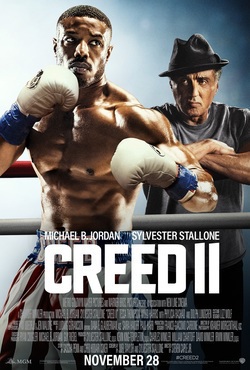
Film Review: Creed II (dir by Steve Caple, Jr.)


Yesterday, in anticipation of finally watching Creed III, I decided that I should first rewatch 2018’s Creed II.  I actually did see Creed II when it was originally released in theaters and I seem to remember that I enjoyed it but, the more I thought about it, the more I realized that I couldn’t remember much more about it.

In Creed II, Adonis “Donnie” Creed (Michael B. Jordan) finally becomes heavyweight champion of the world and immediately finds himself being taunted by Viktor Drago (Florian Munteanu), the son of Ivan Drago (Dolph Lundgren).  To be honest, Donnie really does have more to think about then some other boxer demanding that Donnie give him a fight.  Donnie has finally married his girlfriend, Bianca Taylor (Tessa Thompson), and she’s pregnant.  However, Donnie cannot get Viktor out of his mind because Viktor is the son of the man who killed Donnie’s father in the ring.  Ivan Drago has not only raised his son to be a fearsome fighter but he’s also Viktor’s trainer.

Have you ever wondered if Ivan Drago ever felt guilty about causing the death of Apollo Creed?  This film suggests that he does not and that he instead blames Apollo’s friend, Rocky Balboa (Sylvester Stallone), for not stopping the fight.  In Creed II, Ivan and Viktor fly to Philadelphia to try to get their fight with Donnie.  Ivan goes to Rocky’s restaurant by himself and he explains that, after losing to Rocky in Russia, he lost everything.  Rocky went home a hero while Ivan went home with nothing.  By turning his son into a fearsome boxer, Ivan is vicariously getting the career that he feels he deserved.  Ivan wants Donnie to fight Viktor and Donnie wants to fight Viktor.  However, Rocky wants nothing to do with it and, when you consider how big Viktor is compared to Donnie, it’s easy to understand why.

Donnie recruits Little Duke (Wood Harris, who co-starred with Jordan on The Wire) to serve as his new manager and trainer.  The fight between Donnie and Viktor is a disaster, with Donnie letting his emotions get the better of him.  Donnie is nearly killed in the ring but Viktor proves to be such an aggressive fighter that he loses by disqualification.  Will Donnie survive the inevitable rematch with Viktor and will that rematch be fought in Moscow?  Will Rocky finally agree to train Donnie and also find the courage to travel up to Canada to see his son and meet his grandson?  Will Ivan realize that he’s pushing his son too hard?  Even if you haven’t seen the film, you can probably guess the answers to all of those questions.

As opposed to the first film, there aren’t many surprises to be found in Creed II.  It’s a well-made but thoroughly conventional boxing movie and it lacks both the grit and the attention to detail that Ryan Coogler brought to the first Creed.  Running over two hours, Creed II has a few too many slow spots and even the big training montage drags a bit.  That said, Creed II works wonderfully well as an epilogue to Rocky IV.  The most ridiculed of the Rocky sequels actually provides a poignant backdrop to this film as both Donnie and Viktor struggle to both live up to and make peace with the complicated legacies of their fathers.  Donnie finally feels worthy of his family name while Viktor shows the same type of raw courage that Rocky Balboa showed in his earlier films.  Perhaps most surprisingly, Ivan Drago finally reveals his humanity.  The scene where Ivan finally realizes that he’s turning his son into a machine who will not stop fighting until he is thoroughly broken is surprisingly powerful and Dolph Lundgren truly seems to be happy to have the chance to finally show that Ivan Drago is a human being after all.

Interestingly enough, Rocky Balboa spends much of the film sidelined and, even more so than in the first film, the emphasis is on Donnie’s emotional growth.  It’s always good to see Stallone and he’s as likable as always as Rocky but, re-watching this film, it was easy to understand how a sequel could be made without the character’s presence.  In the end, the best thing about the Creed films is that Donnie himself is a strong enough character that he can be compelling both with or without Rocky Balboa’s help.

Monday Live Tweet Alert: Join Us For The Zebra Killer and Over The Top!


As some of our regular readers undoubtedly know, I am involved in hosting a few weekly live tweets on twitter and occasionally Mastodon.  I host #FridayNightFlix every Friday, I co-host #ScarySocial on Saturday, and I am one of the five hosts of Mastodon’s #MondayActionMovie!  Every week, we get together.  We watch a movie.  We snark our way through it.

Tonight, for #MondayActionMovie, the film will be 1974’s The Zebra Killer!  Selected and hosted by Bunny Hero, this movie is also known as Combat Cops!  They had to name it twice because it was so good!   


Following #MondayActionMovie, I will be guest-hosting hosting the #MondayMuggers live tweet.  Assuming twitter cooperates (which is admittedly a pretty tall order nowadays), we will be watching 1987’s Over The Top, starring Sylvester Stallone!  The film is on Prime and Tubi!

It should make for a night of fun viewing and I invite all of you to join in.  If you want to join the live tweets, just hop onto Mastodon, pull up The Zebra Killer on YouTube, start the movie at 8 pm et, and use the #MondayActionMovie hashtag!  Then, at 10 pm et, switch over to Twitter and Prime, start Over the Top, and use the #MondayMuggers hashtag!  The live tweet community is a friendly group and welcoming of newcomers so don’t be shy.   

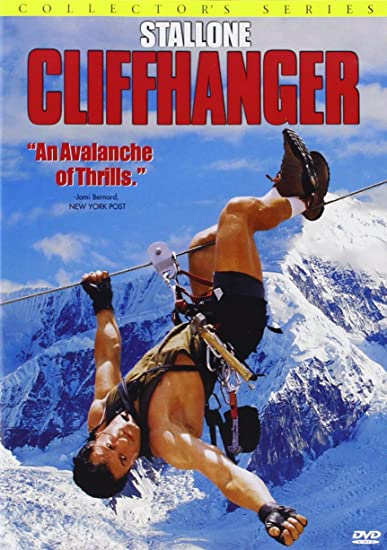
Cliffhanger (1993, directed by Renny Harlin)


Sylvester Stallone is Gabe, a mountain climber who also works as a rescue ranger.  Michael Rooker is Hal, Gabe’s colleague and former best friend.  Hal blames Gabe for the death of his girlfriend, Sarah.  Gabe also blames himself and is planning on getting out of the rescue game.  But before Gabe can quit, he’s got one last mission to perform.  Qualen (John Lithgow) is a psychotic former spy who has masterminded a multi-million dollar robbery.  A plane crash leads to the loot getting scattered in the mountains.  Qualen takes Hal and Gabe prisoner and tries to force them to help him track down the money.

Cliffhanger was made during one of the slower periods of Stallone’s career.  He had temporarily retired the roles of both Rocky Balboa and John Rambo and, as an action star, he was being overshadowed by Arnold Schwarzenegger.  Stallone had tried to reinvent himself as a comedic actor, with the result being Stop!  Or My Mom Will Shoot!  The former Oscar nominee was now only winning Razzies and he was running the risk of becoming better known for his messy divorce from Brigitte Nielsen than for his recent films.  Things weren’t looking good for Stallone but, fortunately, the box office success of Cliffhanger revived his career.

Seen today, Cliffhanger holds up well as an undemanding but enjoyable action film.  It’s a very much a film of its time, complete with John Lithgow hamming it up as a British villain and Northern Exposure’s Janine Turner playing Stallone’s loyal, helicopter-owning girlfriend.  Stallone’s best films are the ones where he is willing to surrender his ego and he does that in Cliffhanger.  It may be a Stallone film but the best lines go to Michael Rooker and the true stars of the film are the mountains and the scenes of Stallone and Rooker trying to climb them.  With Cliffhanger, Stallone was smart enough to stay out of the way and just trust that the image of him dangling above the Rockies would bring in the audience.  It was a smart decision.  Though Cliffhanger is often overshadowed by Stallone’s other 1993 hit, Demolition Man, it’s still an entertaining film in its own right.

Cliffhanger was directed by Renny Harlin, the Finnish action specialist whose promising career would subsequently take a hit and never really recover from directing Cutthroat Island.  Mountain climbing and Renny Harlin just seem to go together and Cliffhanger is one of his better films.  Here’s hope that, just as Stallone has done many times in the past, Renny Harlin will eventually his comeback as a director.

Scenes That I Love: The Robot Montage from George P. Cosmatos’s Cobra


On this date, in 1941, future director George Pan Cosmatos was born in Italy.  Cosmatos would go on to direct some of the most financially successfully (if critically lambasted) films of the 80s.  He’s also credited as being the director on Tombstone, though it’s generally agreed that Cosmatos largely deferred to Kurt Russell on that film.  (Cosmatos was a last minute replacement for the film’s original director.)

Other than Tombstone, Cosmatos is best-known for the films that he did with Sylvester Stallone.  And today’s scene that I love comes from the 1986 film, CobraCobra stars Stallone as a motorcycle-riding cop who never asks question when he can just shoot a big gun instead.  Stallone’s show-no-mercy attitude may upset his superiors but it turns out to be just what’s needed to take care of a murderous cult.  Now, Cobra may be a fairly dumb film but it does have one sequence that pretty much epitomizes an era.  If nothing else, George Pan Cosmatos deserves to be remembered for Cobra’s famous robot montage.  While Sylvester Stallone searches for the murders who are decimating his city, model Brigitte Nielsen poses with a bunch of life-size robots.

One reason why this sequence works is because it really does seem to come out of nowhere.  The film goes from Stallone promising to wipe out the bad guys to a bunch of adorable robots.  It’s all very 80s.  And we have George Pan Cosmatos to thank for it.

Here’s a scene that I love:

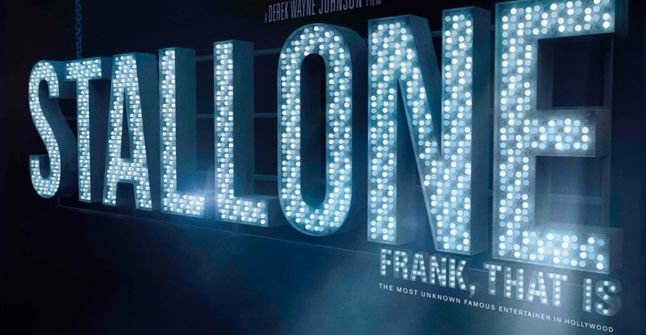
Film Review: Stallone, Frank That Is (dir by Derek Wayne Johnson)


Frank Stallone is a great musician and a talented guy and you should really spend some money to see him perform.

That would seem to be the main message of the new documentary, Stallone: Frank That Is. This documentary, which profiles the brother of Sylvester Stallone, was produced by Frank himself so we perhaps shouldn’t be surprised that it’s full of people attesting to what a great entertainer Frank is. Billy Zane, Billy Dee Williams, Christopher McDonald, Joe Mantegna, Duff McKagen, Richie Sambora, and Frankie Avalon all pop up and assure the viewers that Frank is a talented musician. Arnold Schwarzenegger tells us that Frank deserves to be known as more than just Sylvester Stallone’s younger brother. Sylvester Stallone himself shows up, to tell stories about how he and Frank once lived in a condemned apartment building and how they smashed a hole in the wall so that their two apartments could become one big loft.

What’s interesting is that, despite the fact that the film often seems like it was largely made to provide Frank Stallone with some encouragement and an ego boost, it also convinces us that Frank does deserve to be known for being something more than Sylvester Stallone’s brother. There’s enough performance footage to show that Frank Stallone actually is a pretty decent singer. Though the film is honest about the quality of most of Frank’s filmwork, there’s still enough footage from the 1987 film Barfly to convince us that, when cast in the right role, Frank Stallone is capable of giving a memorable performance. When he’s interviewed on camera, Frank Stallone comes across as being likeable and a good raconteur. He’s someone who you might want to have dinner with, just so you can listen to his stories about being a struggling musician in New Jersey in the late 60s. (Be sure to ask him about the time that he and his band opened for Bruce Springsteen.) Frank is also honest about how much of his career his owes to his brother, even if he never comes across as if he’s really made peace with that fact.

In fact, Frank Stallone is actually pretty forthright when it comes to admitting that being permanently overshadowed by his older brother totally sucks. After spending several years struggling to make it as a musician, Frank wrote a song for Rocky. Sylvester admits that the main reason Frank was asked was because the budget was too tight to hire anyone who wasn’t a relative. Frank and his band appeared in Rocky, as well as the film’s sequels. He went on to record songs for several of Sylvester’s films, most famously for Staying Alive. And while working on Sylvester’s films made Frank known and even helped him achieve a brief stardom when one of his Saying Alive songs reached the top of the charts, Frank also knew that everyone assumed that he only got hired because he was Sylvester’s brother. When Frank would perform at clubs, he would be credited as being “Rocky’s brother, Frank Stallone.” Understandably, Frank was not happy about that. (Sylvester at one point says that Frank was bitter and that “Frank’s still bitter and that’s one reason why I love him, he’s consistent.”) The only people less happy about the situation than Frank were Frank’s bandmates who found themselves overshadowed by the guy who was best known for being overshadowed by his brother. Frank admits that he often struggled to deal with his odd claim to fame and, as a result, his alienated a lot of people around him.

For all of the celebrity testimonials and funny stories, there’s also wistful sadness that runs through this documentary. As positive and upbeat as Frank Stallone tries to present himself, there’s always a feeling that there’s a lot of regret right underneath the surface. Being Sylvester Stallone’s brother comes across as being both a blessing and a curse. On the one hand, it opened doors for Frank that probably would never have been opened, On the other hand, it also ensured that Frank is always going to struggle to get people to take him seriously as anything other than a famous sibling. (Even in this documentary, some of the most memorable moments come from Frank imitating Sylvester’s trademark deep voice.) Stallone: Frank, That Is does a good job of suggesting that Frank deserves to be known for more than just his family while also admitting that it probably won’t ever happen.

Scenes That I Love: The Opening of Staying Alive


We’re still in the process of recovering from last week’s winter storm down here and I have to admit that, for me personally, it’s been a bit of a struggle to actually maintain my focus.  Last week’s combination of power outages and freezing weather threw me off of my usual rhythm and I’m still getting it back.

Fortunately, I have a little help from my friends.  Earlier tonight, a group of us watched the 1983 film, Staying Alive.  Staying Alive is the somewhat notorious sequel to Saturday Night Fever.  If Saturday Night Fever was actually a dark and gritty coming-of-age story disguised as a crowd-pleasing musical, Staying Alive is …. well, it’s something much different.  It’s a film about dancing and Broadway, directed and at least partially written by Sylvester Stallone.  Why exactly would anyone think that Sylvester Stallone was the right director to make a movie about dancing and Broadway?  Your guess is as good as mine but, in the end, the important thing is that Stallone wrote a key supporting role for his brother, Frank Stallone.  Frank not only performs several songs but he proves that he can glare with the best of them.

As for the film itself, it opens with Tony Manero (John Travolta) having left behind Brooklyn and the world of disco.  Now, he lives in Manhattan, he teaches a dance class, he humiliates himself looking for an agent, and he’s struggling to make it on Broadway.  (Basically, he’s turned into Joey from Friends.)  When Tony’s lucky enough to get cast in a lavish musical called Satan’s Alley, Tony has a chance to become a star but only if he can …. well, I was going to say control his ego but actually, his ego isn’t that much of a problem in Staying Alive.  Actually, there’s really nothing standing in Tony’s way, other than the fact that — in Staying Alive as opposed to Saturday Night Fever — he’s portrayed as kind of being an irredeemable idiot.  If Saturday Night Fever was all about revealing that Tony was actually smarter and more sensitive than he seemed, Staying Alive seems to be all about saying, “Whoops!  Sorry!  He’s just as obnoxious as you thought he was.”

Staying Alive is a notoriously ill-conceived film, though it’s also one of those films that’s just bad enough to be entertaining when viewed with a group of snarky friends.  That said, the opening credits montage — which features Tony dancing while Kurtwood Smith glares at him — is actually pretty good.  Travolta smolders with the best of them and the sequence does a good job of capturing Tony’s mix of desperation and determination.  It’s unfortunate that Kurtwood Smith pretty much disappeared from the film following the opening credits.  Judging from what little we see of him, Smith would have been pretty entertaining as a permanently annoyed choreographer.  Finally, how can you not love the neon credits?  This a scene that screams 80s in the best possible way.

So, while I continue to work on getting back to my usual prolific ways, why not enjoy this scene that I love from Staying Alive?

Stop! Or My Mom Will Shoot (1992, dir. by Roger Spottiswoode)


I always thought this was a made-up movie but it does exist!  I just watched it on Showtime.  This thing is real!

Sylvester Stallone is a tough cop whose mother (Estelle Getty) comes to visit him.  She witnesses a murder and, even though she could easily identify the killers and get them off the streets and save lives, she decides to lie to the police because she’s looking for an excuse to spend more time with her son.  Mother and son team up to take down the bad guys and Sylvester Stallone shouts, “Stop!  Or my mom will shoot!”

I laughed a few time when the movie started, because it was actually funny to see Sylvester Stallone freaking out because his mom was coming to visit.  I even laughed when his mother decided to clean his service revolver with Clorox.  I probably shouldn’t have laughed when Estelle Getty pointed the barrel of the gun right at her face so that she could check to see if it was loaded but I couldn’t help myself.

But then, mom witnesses the murder and lies to the police and Stallone has a dream where he’s an adult but he’s still wearing a diaper.  There are car chases and shoot outs and Getty tries to help Stallone hook up with his boss by sending her a hundred red roses.  Getty shoots a man and then says that no one hurts her boy.  During the entire film, Stallone has a look on his face like he knows that he’s just made the worst decision of his life but it’s too late to get out of it now.  Stop! Or My Mom Will Shoot really one has one joke, which is Sylvester Stallone being nagged and embarrassed by his mom.  That jokes get stale after 15 minutes.  By the time mom actually shoots, there’s nothing left.