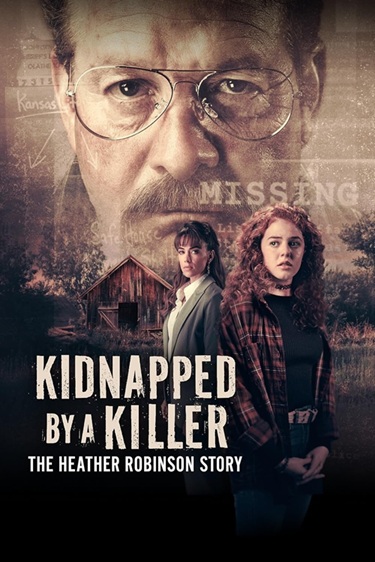
Lifetime Film Review: Kidnapped By A Killer: The Heather Robinson Story (dir by Lee Gabiana)


John Robinson has been described as being the Internet’s first serial killer.

I don’t know if that’s an accurate description but it is true that Robinson, who most of his neighbors and family knew as just being a somewhat eccentric businessman who always seemed to be in trouble with the IRS, did make contact with several of his victims in online chatrooms.  No one is quite sure how many women Robinson killed in the 80s and the 90s.  Robinson himself has given contradictory numbers.  What is know is that Robinson started out by luring women to his home by claiming that he had a job for them.  Many of the women who accepted his job offer were either never seen again or their bodies were eventually found on his properties in Kansas and Missouri.  Eventually, after serving time on fraud conviction, Robinson started to use internet chatrooms to find his victims.  He used the screenname Slavemaster, something that would have undoubtedly stunned all of his neighbors.

In Kidnapped By A Killer, Steve Guttenberg plays John Robinson.  Now, it should be noted that Guttenberg doesn’t get much screentime and he’s also nearly unrecognizable under a ton of old age makeup.  Guttenberg plays Robinson as being a creepy old man who uses the fact that he walks with a cane to put people at ease.  The film doesn’t spend much time with Robinson and it doesn’t show any of his murders.  Instead, the focus is on the police who investigated Robinson and also on Heather Robinson, a young woman who was Robinson’s adoptive niece but who was also the daughter of one of Robinson’s victims.  After killing her mother, Robinson “gave” Heather to his brother and sister-in-law, telling them that her mother had been a drug addict who abandoned her baby.

The majority of the film focuses on Heather (Rachel Stubington), who is a teenager when John is arrested for the murders that he committed.  Heather struggles to come to terms with the knowledge that her uncle — who seemed kindly, if a bit corny — murdered her mother and that she was essentially kidnapped and given away.  What seemed like an act of kindness — Uncle John not wanting a drug addict’s daughter to get lost in the system — was actually John Robinson’s attempt to cover up his crimes.  Much like the criminal who starts a business to launder money, Heather’s adoption was John’s attempt to launder evidence.  Stubington does a good job as Heather, capturing her struggle to come to terms with her identity.  The scenes of her dealing with her feelings towards John and the scenes of hardened detectives recoiling in shock as they discover the remains of John’s victims all serve as a reminder that murder is not an isolated crime.  It’s something that effects communities and families long after the act itself has been completed.

Kidnapped By A Killer deserves credit for focusing on a victim instead of on John Robinson, himself.  Too often, when it comes to true crime movies, the victims are forgotten while the serial killer gets all the best lines and the big moments.  Kidnapped By A Killer presents John Robinson as being a rather pathetic old man and that’s perhaps the best thing about it.
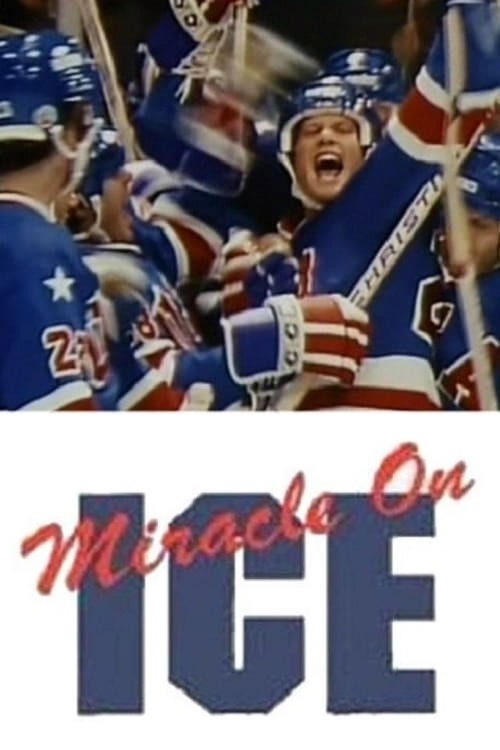
Miracle On Ice (1981, directed by Steven Hilliard Stern)


On February 22nd, 1980, the U.S. Olympic Hockey team pulled off one of the greatest upsets in sports history when they defeated the Soviet team during the Winter Olympics.  At a time when America was struggling under Jimmy Carter and the Soviet Union appeared to be winning the propaganda war, a group of unheralded college students brought the U.S. together in celebration as they defeated the Soviets and then went on to defeat Finland for the gold medal.

Everyone knows that the Miracle On Ice, as it was called, served as the basis of the Disney film Miracle, with Kurt Russell playing coach Herb Brooks.  What is now forgotten is that the story was first recreated in 1981, with a made-for-tv movie called Miracle On Ice.  Who played Herb Brooks in that movie?

Karl Malden.

Keep in mind, Herb Brooks was 42 years-old when the U.S. team defeated the Soviets and he was a former player himself.  Malden was 69 when he starred in Miracle On Ice and didn’t look like he had ever worn skates in his life.  Malden is convincingly grumpy and hard-nosed as Brooks but he’s still very miscast and the movie misses the point that one of the reasons why Brooks could coach the young American team was because he was still relatively young himself.  The actors playing the members of the team are better cast, with Andrew Stevens playing team leader Mike Eruzione and Steve Guttenberg cast as goalie Jim Craig.  A lot of time is devoted to Craig’s financial difficulties and his fear that remaining an amateur for the Olympics, instead of going pro, will continue to make life difficult for his family.  On the one hand, it is messed up that the U.S., at the time, did not allow its Olympians to turn professional.  On the other hand, the fact all of the players were considered to be “amateurs’ made their victory over the Soviets all the more special.

It takes a while for Miracle on Ice to get to the main event.  There’s a lot of scenes of Brooks dealing with everyone’s skepticism and Eurozione trying to keep the players from giving up in the face of the Soviet Union’s previous domination of the game.  Once the movie does finally reach the Winter Olympics, it relies on actual footage from the game, which is actually pretty cool.  Watching the real footage, you can still feel the growing excitement in both the stadium and the broadcast booth as people started to realize that the American team was going to pull it off and defeat the Soviets.  It’s impossible not to be inspired by the Soviet Union getting humiliated by a bunch of American college players.  The Soviets may have had the performance enhancing drugs but the Americans had the spirit!

Of the two films about America’s victory, Miracle is definitely the one to see but Miracle On Ice still pays tribute to a great moment.

The Eric Roberts Collection: Amazing Racer (dir by Frank E. Johnson)


2009’s Amazing Racer is the story of a teenage girl who meets her mother and learns how to ride a horse.

Shannon Greene (Julianne Michelle) is traumatized when her father dies and, having been told that her mother died giving birth to her, she now believes herself to be an orphan.  However, Dr. Rita Baker (Daryl Hannah) reveals that Shannon’s father was just a damn liar.  First, he told Shannon’s mother that her baby was stillborn.  Then, as Shannon was growing up, he told her that her mother was dead.  This is a lot to take in for both Shannon and the viewer.  Myself, I wondered not only how someone could do that but why they would do that.  Making the scene in which Shannon hears the truth even more surreal was the presence of Michael Madsen and Joanna Pacula, playing Shannon’s guardians.  Madsen played his good guy role in much the same way he played his bad guy in Reservoir Dogs.

Anyway, Shannon ends up living with her mother, Dr. Christine Pearson (Claire Forlani), and her mother’s boyfriend, Eric (Jason Gedrick).  Understandably, considering everything that she’s been through, Shannon is initially difficult and bratty but eventually, she comes to enjoy working on Eric’s horse ranch.  She even starts riding a horse and winning races!  This brings her to the attention of evil Mitchell Prescott (Eric Roberts), who wants her horse for himself and even has a spy working on the ranch….

There are a lot familiar faces in this movie.  Charles Durning makes his final film appearance as Floyd.  Steve Guttenberg has a bizarre cameo as a guy transporting a horse trailer.  Scott Eastwood and Kirsta Allen show up.  When it’s time for Shannon to finally start training for the big race, Lou Gossett Jr. pops up as the trainer.  The film itself a fairly predictable horse ranch movie and it’s enjoyable if you like that sort of thing.  (Myself, I like ranches and I like horses so I don’t mind movies like this.)  But really, most of the movie’s entertainment value comes from guessing who is going to show up next.  Some of the famous faces are bit distracting.  But sometimes, it really pays off.  I really wish Lou Gossett, Jr.’s role had been bigger because he does a great job with what little time he has.

As for Eric Roberts, he gets a bit more screentime than usual.  One gets the feeling that he may have actually spent more than two days shooting his scenes for this one.  Roberts is playing a villain here and he gives a enjoyably avuncular performance as the evil Mitchell.  Roberts has fun with the role and, as a result, he’s fun to watch in this movie.

I enjoyed Amazing Racer.  It had horses and it has Eric Roberts.  What more could you want?

Previous Eric Roberts Films That We Have Reviewed:

  1. Star 80 (1983)
  2. Blood Red (1989)
  3. The Ambulance (1990)
  4. The Lost Capone (1990)
  5. Love, Cheat, & Steal (1993)
  6. Voyage (1993)
  7. Love Is A Gun (1994)
  8. Sensation (1994)
  9. Dark Angel (1996)
  10. Doctor Who (1996)
  11. Most Wanted (1997)
  12. Mercy Streets (2000)
  13. Wolves of Wall Street (2002)
  14. Mr. Brightside (2004)
  15. Six: The Mark Unleased (2004)
  16. Hey You (2006)
  17. In The Blink of an Eye (2009)
  18. Enemies Among Us (2010)
  19. The Expendables (2010) 
  20. Sharktopus (2010)
  21. The Dead Want Women (2012)
  22. Deadline (2012)
  23. The Mark (2012)
  24. Miss Atomic Bomb (2012)
  25. Bonnie And Clyde: Justified (2013)
  26. Lovelace (2013)
  27. The Mark: Redemption (2013)
  28. Self-Storage (2013)
  29. This Is Our Time (2013)
  30. Inherent Vice (2014)
  31. Road to the Open (2014)
  32. Rumors of War (2014)
  33. Amityville Death House (2015)
  34. A Fatal Obsession (2015)
  35. Stalked By My Doctor (2015)
  36. Enemy Within (2016)
  37. Joker’s Poltergeist (2016)
  38. Prayer Never Fails (2016)
  39. Stalked By My Doctor: The Return (2016)
  40. The Wrong Roommate (2016)
  41. Dark Image (2017)
  42. Black Wake (2018)
  43. Frank and Ava (2018)
  44. Stalked By My Doctor: Patient’s Revenge (2018)
  45. Clinton Island (2019)
  46. Monster Island (2019)
  47. The Savant (2019)
  48. Seven Deadly Sins (2019)
  49. Stalked By My Doctor: A Sleepwalker’s Nightmare (2019)
  50. The Wrong Mommy (2019)
  51. Exodus of a Prodigal Son (2020)
  52. Free Lunch Express (2020)
  53. Her Deadly Groom (2020)
  54. Top Gunner (2020)
  55. Deadly Nightshade (2021)
  56. The Elevator (2021)
  57. Just What The Doctor Ordered (2021)
  58. Killer Advice (2021)
  59. The Poltergeist Diaries (2021)
  60. The Rebels of PT-218 (2021)
  61. A Town Called Parable (2021)
  62. Bleach (2022)
  63. My Dinner With Eric (2022)
  64. Aftermath (2024)
  65. The Wrong Life Coach (2024)

Diner (1982, directed by Barry Levinson)


Which member of the Diner gang would you be?

I think that is the question that everyone, or at least every guy, asks themselves after watching Barry Levinson’s debut film.  Most would probably want to say that they’re Boogie (Mickey Rourke), because he’s cool, all the ladies love him, and he makes creative use of a popcorn box at the movies.  Some would probably say that they want to be Fenwick (Kevin Bacon) because he’s smart and sarcastic.  No one wants to be Billy (Tim Daly) or Eddie (Steve Guttenberg), even though we would all want to be their friend.

The truth is that most of us would probably be Shrevie (Daniel Stern), the just-married one who is discovering that being an adult means working an unglamorous job and discovering the rest of the world doesn’t care about your taste in music.  The luckiest of us might be Modell (Paul Reiser), the funny one who doesn’t get a story but who makes a lot of jokes.

Diner was one of the first great hang-out movies.  There is no plot, at least not in the traditional sense.  Instead, it’s about a group of long-time friends who live in Baltimore in 1959.  They grew up together.  They went to high school together.  They’ve been hanging out at the same diner for as long as they can all remember.  And now, they’re at the point in their lives where the world expects them to act like adults and accept all the responsibility that goes along with that.  It’s a film that celebrates their friendship while also acknowledging that some of them are using that friendship as an excuse to not grow up.  They escape into trivia and movies, with one minor character reciting Sweet Smell of Success by memory.  Fenwick drinks.  Boogie gambles.  Even Billy, who doesn’t even live in Baltimore anymore, reverts to his old ways as soon as he returns for Eddie’s wedding and ends up sucker punching someone because of an old high school incident.

The preparations for Eddie’s wedding gives the film what structure it has.  Eddie is marrying the unseen Elyse, assuming she can pass his demanding quiz about the Baltimore Colts.  (That may sound unfair but if you’re from Baltimore, you’ll understand.)  While Eddie gets ready for his wedding, Shrevie’s marriage to Beth (Ellen Barkin) seems to be falling apart and she finds herself tempted to cheat with Boogie, who has his own problems with a local bookie.  Meanwhile, Billy learns that his girlfriend (Kathryn Dowling) is pregnant.

The film is about friendship and the friendships between the men feel real.  Levinson held off on shooting the largely improvised diner scenes until the end of the film, by which time all of the actors had developed their own idiosyncratic relationships with each other.  The heart of Diner is to be found in scenes like the one where Modell tries to ask for someone else’s sandwich without actually coming out and asking for it.  The dialogue in that scene and so many others has the ring of age-old friendship.  Though the film makes it easy to see why Mickey Rourke and Kevin Bacon become movie stars while Tim Daly has spent most of his career on television, the entire cast is still perfect in their roles.  It’s about as strong as an ensemble as you could ever hope to see.  They become the characters and watching the movie, it’s impossible not to see yourself and your friends in their performances.

Barry Levinson has gone on to direct many more films but for me, Diner will always be the best.


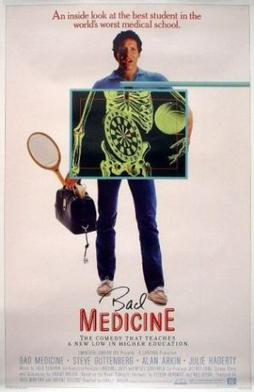
Bad Medicine (1985, directed by Harvey Miller)


Jeff Marx (Steve Guttenberg) is a smart but lazy pre-med student whose grades are so bad that he can’t get accepted to any of the good medical schools.  His father (Bill Macy), who is also a doctor and who wants Jeff to one day take over the family practice, arranges for Jeff to attend medical school in a fictional Central American country.  The head of the school, Dr. Ramon Madera (Alan Arkin), is also the country’s dictator.  Dr. Madera is happy to make money off of desperate Americans but he still enforces strict rules of behavior at the school.  He also makes it clear that none of the medical students are to treat the poor villagers who live near the school.

When Jeff arrives at his new school, he discovers that his classmates are, like him, all screw-ups.  They’re also played by a cast of actors who, like Guttenberg, epitomize the 80s ensemble comedy craze.  Curtis Armstrong, of Revenge of the Nerds and Risky Business, plays Jeff’s best friend.  Fast Times At Ridgemont High‘s Robert Romanus is the Italian medical student who is loved by all the ladies.  Airplane!‘s Julie Haggerty is the idealistic medical student who wants to take care of the local villagers.  Even Gilbert Gottfried is in this movie!  He plays Dr. Madera’s main assistant and hatchet man.

Bad Medicine was released in between the first and the second Police Academy films and it basically tells the same sort of story that made those two films unlikely hits.  Guttenberg and his fellow students start out as a screw-ups but, by the end of the movie, they’ve proven themselves as doctors.  Perhaps because it was based on a novel that was written by an actual doctor, Bad Medicine is a little more sincere than Police Academy.  In Police Academy, the scenes of the recruits doing police work were the biggest jokes of all and, even after he helped to save the city, you still never bought the idea that Steve Guttenberg would have stuck around after graduation so that he could wear a uniform and walk a beat everyday.  Though Bad Medicine is full of the usual Police Academy-style hijinks, it doesn’t treat the work that the doctors are doing as a joke.  Though regrettable stereotypes abound (this is a film that features Gilbert Gottfriend playing a character named Tony Sandoval, after all), Bad Medicine treats the villagers with respect.  Guttenberg gives a relaxed and likable performance, without making Jeff into as much of a wiseass of Police Academy‘s Cary Mahoney.  Julie Haggerty brings her usual spacey charm to her role.  Not surprisingly, it’s Alan Arkin who steals the film, though you do have to wonder how Dr. Madera has time to run both a country and a medical school while also falling in love with Julie Haggerty.  Give the man some credit for knowing how to multitask.

It ends, much like Police Academy, with the med students giving a chance to prove themselves in a crisis situation.  Unlike Police Academy, Bad Medicine was not a hit at the box office, though it did make a small profit.  As a result, there was never a Bad Medicine 2, which is unfortunate because we could always use more good doctors.

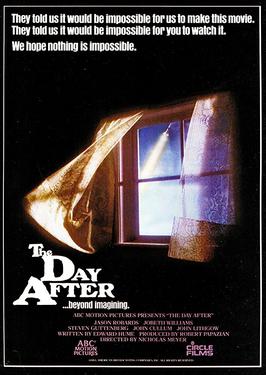
Film Review: The Day After (dir by Nicholas Meyer)


“This is Lawrence. This is Lawrence, Kansas. Is anybody there? Anybody at all?”

The words of Joe Huxley (John Lithgow) hang over the ending of The Day After, a 1983 film that imagines what the aftermath of a nuclear war would be like not on the East or the West Coasts but instead in the rural heartland of America.  Huxley is a professor at the University of Kansas and, as he explains early on in the film, Kansas would be an automatic target in any nuclear war because it houses a number of missile silos.  When he explains that, it’s in an almost joking tone, largely because the missiles haven’t been launched yet.  Instead, the only thing we’ve heard are a few barely noticed news stories about growing tensions between America and Russia.  About halfway through The Day After, the bombs go off and there are suddenly no more jokes to be made.

When the bombs drop over Kansas, we watch as cities and field and people burst into flames.  In a matter of minutes, several thousands are killed.  I’m almost ashamed to admit that I was probably more upset by the image of a horse being vaporized than I was by the death of poor Bruce Gallatin (Jeff East), the college student who was planning on marrying Denise Dahlberg (Lori Lethin).  I guess it’s because horses — really, all animals — have nothing to do with the conflicts between nations.  Humans are the ones who take the time to build bigger and better weapons and The Day After is one of the few films about war that’s willing to acknowledge that, when humans fight, it’s not just humans that die.

The bombing sequence is lengthy and I have to admit that I was a bit distracted by the fact that I recognized some of the footage from other movies.  A scene of panicked people running through a building was taken from Two-Minute Warning.  A scene of a building exploding and a construction worker being consumed by flames was lifted from Meteor.  As well, there’s some stock footage which should be familiar to anyone who has ever seen a documentary about the early days of the Cold War.  Still, despite that, it’s an effective sequence simply because it’s so relentless.  Some of the film’s most likable characters are vaporized before our eyes.  Steve Guttenberg, of all people, is seen ducking into a store.

Guttenberg plays Stephen Klein, a pre-med student who manages to survive the initial attack and takes shelter with the Dahlberg family at their ranch.  At first, it’s a bit distracting to see Steve Guttenberg in a very serious and very grim film about the nuclear apocalypse but he does a good job.  The sight of him losing both his teeth and his hair carries a punch precisely because he is reliably goofy Steve Guttenberg.

If the film has a star, it’s probably Jason Robards, the doctor who witnesses the initial blast from the safety of his car and then treats the dying in Lawrence, Kansas.  He does so, despite the fact that he doesn’t know if his wife, son, and daughter are even still alive.  He continues to do so until he also falls ill with radiation poisoning.  Knowing that he’s dying, he heads home just to discover that there is no home to return to.

Home is reccuring theme throughout The Day After.  Everyone wants to return to their home but everyone’s home has been wiped out.  “This is my home,” Jim Dahlberg (John Cullum) tries to explain before he’s attacked by a group of feral nomads.  Home no longer exists and trying to pretend like life can go back to the way it once was is an often fatal mistake.

Real happy film, right?  Yeah, this isn’t exactly a film that you watch for fun.  I have to admit that I made a joke about how I wouldn’t want to die while wearing the unfortunate blue jumpsuit that Jason Robards’s daughter chooses to wear on the day of the nuclear attack and I felt guilty immediately.  (Well, not that guilty.  Seriously, it was a terrible fashion choice.)  The Day After is a film that gives audiences zero hope by design.  It was made at a time when it was generally assumed that nuclear was inevitable and it was designed to scare the Hell out of everyone watching.  And while I can’t attest to how audience may have reacted in 1983, I can say that, in 2020, it’s still a powerful and disturbing film.

“Is anybody there? Anybody at all?” Joe Huxley asks and by the end of the film, the answer doesn’t matter.  The damage has already been done.

Police Academy 4: Citizens on Patrol (1987, directed by Jim Drake)


Long before the end credits of 22 Jump Street imagined Jonah Hill and Channing Tatum going to culinary school, the flight academy, and into outer space, the Police Academy films bravely tested just how far one already thin premise could already be stretched.

In Police Academy 4, Commandant Eric Lassard (George Gaynes) comes up with another plan to make the city safer.  (Since Lassard has been coming up with plans for three years without any success, it may be time to let the old man retire peacefully.)  This time, he wants to institute Citizens on Patrol, which would mean training citizens to act like cops.  It sounds like the type of terrible idea that could get a city sued into bankruptcy but considering that this is a city where a human sound effects machine and the former head of the 16 precinct’s biggest gang can become decorated police officers, I guess it’s as good an idea as any.

As usual, Carey Mahoney (Steve Guttenberg) and the gang are ready to help Lassard.  Bruce Mahler’s Fackler is no longer a part of the ensemble but Bubba Smith, Bobcat Goldthwait, Michael Winslow, David Graf, Tim Kazurinsky, Marion Ramsey, and Brian Toschi are all back.  Also returning, after skipping out on the first two sequels, is Capt. Harris (G.W. Bailey).  Harris wants to see Lassard fail so that he can take over the police academy.  It’s the same thing as the first three films.  As in previous Police Academy films, there’s a visit to the Blue Oyster leather bar and a last minute crime wave to give the Citizens on Patrol a chance to prove they belong in the program.  The Citizens on Patrol include Billie Bird, Brian Backer, David Spade, wrestler Tab Thacker, and Corrine Bohrer as a love interest for Bobcat Goldthwait.  Sharon Stone also makes an appearance, playing a journalist and improbably falling for Steve Guttenberg.  Watching the film, it is obvious that the idea was that, in future Police Academy films, the Citizens on Patrol could replace any of the regular cast members who wanted too much money to return.  As a result, almost every veteran of the cast has a doppelganger in the Citizens on Patrol.  Brian Backer could replace Steve Guttenberg.  Tab Thacker is there to put Bubba Smith on notice that no one is irreplaceable.  Is Bobcat Goldthwait being difficult?  Just remind him that David Spade can play a crazy eccentric too.

Police Academy 4 is the most crowded of the Police Academy films and, even by the franchise’s undemanding standards, most of the jokes fall flat.  Jim Drake took over as director after the director of the previous two films, Jerry Paris, died of a brain tumor and Drake struggles to balance low comedy with police action.  Guttenberg and company don’t have the same energy in this installment as they had in the previous three and the new cast members all feel as if they’re out place sharing scenes with the veterans, like a group of underclassmen who have been invited on the senior trip.

This would be the final Police Academy film for Steve Guttenberg.  Would the franchise be able to survive without him?  Check here tomorrow to find out with my review of Police Academy 5!

Police Academy 3: Back in Training (1986, directed by Jerry Paris)


Police Academy 3 opens with a state in the middle of a fiscal crisis.  Money has to be saved somewhere and the governor (Ed Nelson) has decided that it’s not necessary for the state to have two police academies.  I am not sure why the governor would be the one to make that determination since the previous two Police Academy films established that the academies are run by the city but I guess I should remember that I’m watching a Police Academy film and not ask too many questions.

Which academy is going to be closed down?  Will it be the academy run by Commandant Lassard (George Gaynes) or the one run by Commandant Mauser (Art Metrano, returning from the second film)?  Mauser is willing to use any dirty, under-handed trick to keep his academy open.  Meanwhile, Lassard has his most recent graduating class returning to instruct his latest batch of recruits.  Can Mahoney (Steve Guttenberg) and Michael Winslow’s human sound effects machine save the academy?

When I watched Police Academy 3 this weekend, I was surprised to discover that it wasn’t as bad as I remembered.  Maybe it’s because I watched it immediately after the first two films and my senses were dulled but Police Academy 3 turned out to be an amiable and enjoyably stupid comedy. It helped that two of the new recruits were played by Tim Kazurinsky and Bobcat Goldthwait.  Returning to the roles that they first played in the second movie, Kazurinsky and Goldthwait make for a good comedic team.  As for the rest of the Police Academy regulars, they all do their usual comedy bits like pros and without any fuss.  It’s predictable and sometimes, funny.

Police Academy 3 was the first Police Academy film to have a PG-rating and, as a result, the jokes were still as juvenile and crude as the first two movies but, at the same time, Police Academy 3 seems to have made peace with the fact that it’s target audience was a bunch of adolescent boys dropped off at the theater by their mothers.  Mauser is still regularly humiliated but no one gets a blow job while standing in front of a podium.  This is a Police Academy for the entire family, assuming that your family is easily amused and not too demanding.

Police Academy 3 is a dumb movie and the recurring joke about policemen accidentally entering the Blue Oyster Bar is even less funny the third time that it’s used.  There’s also a Japanese recruit who only seems to be included because, back in the 80s, American films were obsessed with making fun of Japan.  Despite all that, Police Academy 3 is still not as bad as the usual Police Academy sequel.

But what about Police Academy 4?  Check in tomorrow to find out if it’s also better than I initially remembered.

(It’s not.)

Police Academy 2: Their First Assignment (1985, directed by Jerry Paris)


In an unnamed city that is probably meant to be Los Angeles but which looks like Toronto, a criminal gang known as the Scullions have taken over the 16th precinct.  Led by the loud, marble-mouthed Zed (Bobcat Goldthwait), the Scullions are terrorizing the citizens and harassing one shop owner, Carl Sweetchuck (Tim Kazurinsky), in particular.  The captain of the 16th precinct, Pete Lassard (Howard Hesseman), calls his brother, Eric Lassard (George Gaynes), and asks for the best cadets to have recently graduated from the police academy.

Carey Mahoney (Steve Guttenberg) and a few other of the cadets from the first Police Academy movie end up in the 16th.  Tackleberry (David Graf) is there and so is accident-prone Douglas Fackler (Bruce Mahler).  Bubba Smith is back as Hightower and so is Michael Winslow, the human sound effects machine.  They’re determined to help Lassard’s brother but it’s not going to be easy because they have to work with Lt. Mauser (Art Metrano) who is basically a dick who wants to be captain.  Mauser is exactly like Harris from the first film, except his name is Mauser and, instead of getting his head stuck up a horse’s ass, he gets his hands super-glued to his head.

Police Academy 2 is less raunchy than the first film but still not quite as family friendly as the films that would follow.  There’s still one f-bomb dropped and a few adult jokes, as if the film wasn’t fully ready to admit that it was destined to become associated with juvenile viewers who would laugh at almost anything involving a bodily function.  There is one funny moment where Steve Guttenberg goes undercover to join Zed’s gang, mostly because he’s Steve Guttenberg and he’s even less believable as a gang member than he was as a cop.  The closest thing that movie has to a highlight is Bobcat Goldthwait’s manic turn as Zed and Tim Kazurinsky’s desperation as he watches his store get repeatedly destroyed.  Tackleberry also gets an amusing romantic subplot, where he meets a police woman (Colleen Camp) who loves guns almost as much he does.  Unfortunately, Tackleberry’s romance gets pushed to the side by all of the gang activity.

Police Academy 2 is stupid but, depending on how much tolerance you have for Bobcat Goldthwait, sometimes funny.  It’s not as “good” as the first film but it’s still better than most of what would follow.  Speaking of which, tomorrow, I will be reviewing the first Police Academy film to get a PG-rating, Police Academy 3: Back in Training.

Police Academy (1984, directed by Hugh Wilson)


God help us, it has come to this.  After a month and a half being locked down, Lisa and I watched the first two Police Academy movies last night.

The first Police Academy takes place in an unnamed city that appears to be in California.  Due to a shortage of officers, the mayor has announced that the police academy will now accept anyone who wants to apply, regardless of their physical or mental condition.  Naturally, this leads to a collection of misfits applying.  Martinet Lt. Harris (G.W. Bailey) is determined to force all of them to drop out of the academy and he has a point because I wouldn’t trust Michael Winslow’s human sound effects guy to investigate any crimes that were committed in my neighborhood.  What’s he going to do?  Make silly noises while I’m trying to figure out who stole my car?

The leader of the recruits is Carey Mahoney (Steve Guttenberg).  Mahoney is being forced to attend the academy because otherwise, he’ll have to go to jail for disturbing the peace.  Police Academy is a film that asks you to believe that a character played by Steve Guttenberg has not only frequently been in trouble with the law but would also make a good cop. Guttenberg doesn’t really do a bad job as Mahoney.  He’s a likable actor, even if his filmography has more duds than hits.  But he’s still miscast in a role that demands someone like Bill Murray, who could be both tough and funny.

The other recruits include Bubba Smith as Hightower and David Graf as the insane gun nut, Tackleberry.  Kim Cattrall is the rich girl who wants to be a cop and who falls in love with Mahoney.  George Gaynes is Commandant Lassard, who is out-of-it but not as out-of-it as he would be in the sequels.

You have to wonder how many parents, in the late 80s and early 90s, allowed their children to rent the R-rated Police Academy from the local video store without realizing the the first Police Academy is considerably more raunchy than the later sequels.  How did mom and dad react when they walked into the room and discovered their children watching Georgina Spelvin giving George Gaynes a blow job from underneath a podium?  Or how about the scene where recruit George Martin (Andrew Rubin) is spied having a threesome in the girl’s dorm?  The first Police Academy film is definitely made from the same mold as Animal House, Caddyshack, and Stripes.  It’s just not as funny as any of those films.

However, it is funnier than every Police Academy film that followed it.  There’s enough solid laughs to make the first Police Academy fun in a stupid way.  For instance, just about every scene involving accident-prone Cadet Fackler (Bruce Mahler) was funny.  Bubba Smith gets a lot of laughs just by being Bubba Smith in a stupid movie.  It’s also hard not to love it when Cadet Hooks (Marion Ramsey) yelled, “Don’t move, Dirtbag!”  Hell, I even laughed at the sound effects guy once or twice.

All of the Police Academy films are now on Netflix.  Tomorrow, we’ll take a look at Police Academy 2: Their First Assignment.