Sofia Coppola’s Lost in Translation left a strange impression on me. In a way I can only really compare to Casablanca, it burrowed into my memory like an actual personal experience. I don’t review movies, and I am ill equipped to explain what made it such a special film for me, but the bond that Bob Harris (Bill Murray) and Charlotte (Scarlett Johansson) forge over a few days in Tokyo is something I’ll always carry with me and look back on fondly. That’s pretty weird, but I’m not complaining.
Music was essential to Lost in Translation, embedded into scenes as a part of what Bob and Charlotte actually experience. The hotel lounge has a live jazz band. “The State We’re In” by The Chemical Brothers plays in the club they visit. Phoenix’s “Too Young” pumps over the stereo when they go to a friend’s apartment. A woman dances to Peaches’ “Fuck the Pain Away” at the strip club. The actors aren’t just seen singing karaoke; they perform it at length. Coppola was pretty clever about extending this integration to the more traditionally situated background music. Happy End’s “Kaze wo Atsumete” enhances the feeling that Bob and Charlotte are winding down from an exhausting night, but it drifts faintly into the hallway, as if playing from the karaoke room. Charlotte is wearing headphones when we first hear Air’s “Alone in Kyoto”. The Jesus and Mary Chain’s “Just Like Honey” kicks off as Bob enters his cab. The encore of “Kaze wo Atsumete” in the credits could easily be playing in Bob’s head. Almost every song in the movie functions within the environment, not just as a peripheral enhancement.
Garden State tried something like this a year later, though I don’t recall the extent of it beyond the awkward Shins sequence. The effect was a sort of garish, in-your-face endorsement of director Zach Braff’s favorite tunes. It didn’t really cut it for me, in spite of the soundtrack’s impressive cast. In Lost in Translation, Coppola was a lot more attentive to creating continuity between songs and bringing musicians on board with the film’s atmosphere. She didn’t stop at using “Sometimes” by My Bloody Valentine; she dug founder Kevin Shields out of relative obscurity to compose four original pieces. A lot of the other artists formed a pre-existing community of sorts, suited to engage the project as art rather than a quick paycheck. Soundtrack supervisor Brian Reitzell performed drums for Air on their 2001 album 10 000 Hz Legend. Both Air and Roger Joseph Manning Jr, a fellow studio musician on that album, contribute original music to Lost in Translation. Phoenix previously performed with Air, and Sofia Coppola ultimately married their singer. While their contribution was recycled (“Too Young” appears in the context of young adults who would have been familiar with obscure but up and coming artists; using Phoenix’s first single made sense), the band was still involved in Coppola’s social sphere of musicians.
“Alone in Kyoto” plays as Charlotte travels through the classic side of Japan, visiting shrines and observing ancient customs. While that could possibly put it at odds with my theme, Air’s approach keeps the feeling modern, casting tradition as a subtle, delicate element of the present rather than as a form of escapism. It also occurs in a sequence without character interaction, permitting a pure sense of exploration. Within Lost in Translation‘s soundtrack, “Alone in Kyoto” reaches closest to that Japanese dream that still permeated a lot of American subcultures in 2003. The movie itself brought many of us the closest we would ever come to actually living that dream.
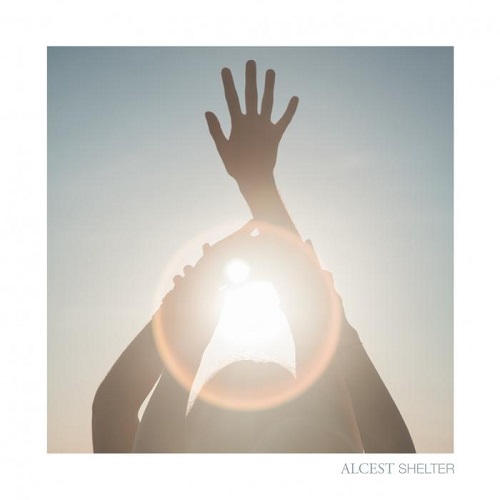
I have a bad habit of failing to keep up with bands in the years after their big breakthrough albums. As a consequence, I tend to be caught off guard when I find an old band doing something drastically different from their old sound. That is not the case with Alcest. I have eagerly gobbled up everything Neige has thrown out there since Le Secret (2005), and I was well aware ahead of time that Shelter was not going to be a metal album. That did not phase me. Neige’s sound has evolved dramatically over the years, and as early as Souvenirs d’un autre monde (2007) you could not detect a residual shred of the style he presented on Tristesse Hivernale (2001). A dream pop/shoegaze/post-rock album was a reasonable thing to expect given the general direction his music had been going. I clicked play on Shelter fully convinced that I would enjoy it.
Alcest – Wings and Opale, from Shelter
If I was going to have doubts, they might have been about the level of external influence surrounding Neige’s music of late. Was it going to show? Would this not quite sound like Alcest? Neige claimed no knowledge of shoegaze music when he recorded Le Secret and Souvenirs d’un autre monde. I remember his publicized surprise when an early release of Souvenirs‘ title track got plastered with the genre label all over the internet. Since then, Neige has developed quite the fondness for those classic bands to which he was compared. Shelter even features a guest appearance by Neil Halstead of Slowdive. If Shelter was not going to be metal, there was certainly a chance we would hear a lot more of that influence in place of Neige’s self-derived affinity to the sound.
I don’t think that is an issue here at all. I can’t say I have heard much classic dream pop or shoegaze outside of Loveless, but if Neige had continued to boast total ignorance of the genres, I think I would have believed him. Shelter sounds deliciously like Alcest, whether the style is a departure or not. The album opens with the angelic, echoed vocal chant that by Les Voyages de l’Âme had become a staple Alcest sound. For the first minute and thirty seconds, there is nothing to distinguish Shelter from another Alcest black metal album. The instant familiarity is a pleasant relief for any fan that had major doubts. You might still wonder whether he could pull off a full 46 minute album of “soft” Neige without ever using metal to vary the dynamics, but that question dissolves into air a minute and a half in, as the first full track, “Opale”, kicks off. It’s so vibrant that your speculation seems a petty distraction in the face of the musical moment.
Alcest – Voix sereine, from Shelter
This feeling definitely persists through the third track, “La nuit marche avec moi”, and on it Neige’s trending toward post-rock, audible on “Opale”, becomes substantially more apparent. “Voix sereine”, 11 minutes into the album, is the first time things really calm down from a pretty jubilee to get your mind wandering again. It kicks off slow and simple, rather dull really, and I for one had a hard time remaining attentive for the first three minutes. Was this the sort of “down time” I ought to have feared could come with a complete abandonment of metal? Perhaps it is, but 3 minutes of bore could be easily forgiven from most musicians. At the three minute mark, the song transforms into something substantially more palpable, and my second thoughts are largely forgotten. Much to my delight, I do find out that Neige fibbed a bit about the album’s contents. We might not encounter any blast beats or gut-wrenching screams on this album, but he did not forget how to turn on the distortion altogether. As the song gets heavier and substantially more… substantive, the boredom of the build-up fails to hold. It becomes a really great song. On a re-listen, knowing that something fairly aggressive will come of it, the lull is easier to swallow.
Alcest – Délivrance, from Shelter
The next song, “L’éveil des muses”, finds a more interesting starting point, but another slow build-up gives me serious doubts for the first time. What holds post-rock in the moment is the knowledge that something earth-shattering will come of it all. Knowing that “Voix sereine” is likely as heavy as the album is going to get, and without the instant gratification of the opening dream pop tunes, I struggle to give the song 100% of my attention. Track six, “Shelter”, is a much needed return to something more upbeat. It opens with the sort of pitch shifting distortion made famous by My Bloody Valentine, and from start to finish it’s an enjoyable ride. “Away”, the track featuring Neil Halstead on vocals, is a beautiful composition that, I think, would have been a thousand times better with Neige singing. Halstead kind of kills it for me–not because of the quality of his singing but because it sounds totally out of place on an Alcest album.
And then we close with “Délivrance”. The longest track by far at 10 minutes, it carried the weight of my overall opinion of the album. Shelter had so far offered a lot of stellar moments, but at its calmest it dangled dangerously on the edge of boredom. “Délivrance” needed to be a pretty epic piece of post-rock. At 3 minutes, a really classic post-rock guitar kicks off to confirm my hopes–at least to a point. It’s where the song heads from here that really disappoints me. We’re building, and we’re building, and it’s definitely a fun ride, but then right when you expect the song to really cast its shell aside and go all-out…. did it just end? Not a ten minute song after all, “Délivrance” concludes with a three and a half minute toned down outro.
It’s not common for me to speak of a song being too short, but “Délivrance” feels so incomplete to me. I accepted the first 3 minutes because I assumed we were going somewhere. I loved the next 4 because we were going somewhere. But we never really got there. Neige is the guy who made post-black metal a reality in the first place. Granted the full-fledged, conscientious post-rock/black metal cross-overs came later, I guess I expected such a hero of modern metal to aim a bit higher when confronting a fairly traditional post-rock sound. I can try to enjoy “Délivrance” for what it does offer, but I can’t help but think that he failed to see how much further he could have taken it. It’s something that would have sounded appealing in the late 90s but seems incomplete to me today, when post-rock bands are a dime a dozen and competition is a bit more formidable. I can’t quite get over that enough to fully enjoy it.
In the end, I guess you might say Shelter disappoints me. Maybe that’s because I came into it with really high expectations, where a lot of fans might have set the bar low when they found out there would be no black metal element. The first three tracks boosted my expectations all the more by offering a really novel sound that grabbed me and held on. But that dream pop vibe did not last, and the more he got back to sounds you might expect from an Alcest album of old, the more they felt depleted of the old energy rather than infused with a new one. Where the post-rock kick would normally give way to a black metal rockout, here it just fizzes away. Tracks like “Opale” set a precedent for how I wanted the entire album to sound. I got half of that, and half something that just makes me hope he goes back to his roots on the next release.
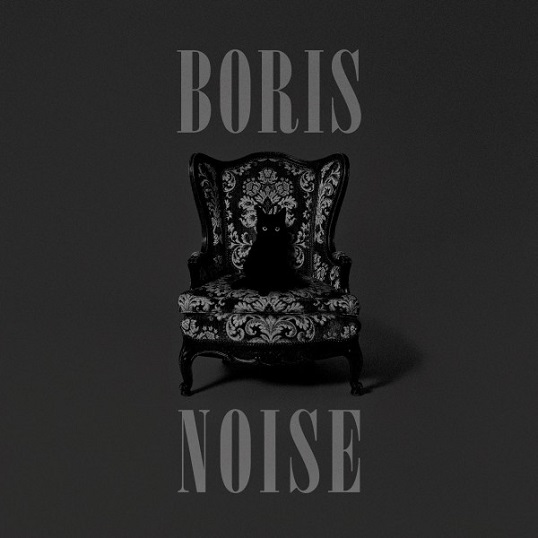
But you shouldn’t have been looking at that. You should have been looking at the two words surrounding it, because it suggests something we haven’t heard much of in quite a while. Beginning with Japanese Heavy Rock Hits Vol. 1, Atsuo Mizuno, Takeshi Ohtani, and Wata have spent a lot of time playing at pop stars. Their really quality works of late have mostly been pop oriented, and in the world of metal they’ve been mostly playing around. Heavy Rocks 2011 felt like a joke–a quick fun studio session to take some of the stress off of recording New Album and Attention Please. Präparat offered us the total mindfuck known as “Elegy”, but “Method of Error” and “Bataille Suere” could hardly be taken seriously. We got the long-overdue Boris performing “flood” and a rerelease of The Thing Which Solomon Overlooked, but that wasn’t new material.
Boris deserved a break from their old traditions. Christ, they have 78 releases to their name, and like 95% of that has been beyond fabulous. But as good as their pop and chillout sounds of late have been, we’ve all been itching for some good old Boris noise. Not Absolutego drone. I mean I want to hear some “Heavy Friends”, some “Akuma No Uta”, some “Farewell”, some “My Neighbor Satan”, something to make my brain turn inside out and hug itself. Well, Boris did deliver. They did it last year, in the easily overlooked The Thing Which Solomon Overlooked Extra. In fact, it was so easily overlooked that I am only just now skimming through its tracks for the first time! I can already tell it is awesome, but that will have to wait. Tonight I spin Noise for the first time.
Boris – Melody, from Noise
If you are a Boris fan, this opening track needs no commentary. I suppose no track on the album does, really. But if you are not a Boris fan, picture yourself in our shoes for a minute: You have ridiculous, irrationally high expectations for this album. You can justify it, because the band has never let you down before. But you don’t have a clue what’s in store for you. The graceful drone in the opening 40 seconds could go on for the entire track, and it would not be out of character. Suddenly we’ve got a pretty, shoegaze guitar, and for a brief six or seven seconds your mind wonders whether they might be trying something akin to Alcest. At 47 seconds, a techno beat comes in, and we are on pace for something totally novel. Is it going to be some weird psychedelic technogaze? I wouldn’t put it past them, and I just might like it. But things are picking up… something is about to give….. and bam, at the 1 minute mark Boris unleashes everything I could have ever hoped for and more.
Takeshi slamming out a crushing stoner metal groove under Wata’s wailing blur of blissful noise, and in five seconds we find that techno beat wasn’t just an intro. What IS this amalgamation of mutually exclusive genre standards into an inexplicably majestic whole? This is Boris, doing what Boris always do: taking everything they’ve done before and making it even better. This is a band that remains totally aware of everything going on in music at large and has had twenty three years playing together to master their class. Wata has one of the most beatiful guitar sounds in the world. She slides around the neck with a grace that puts Billy Corgan to shame and rocks the effect pedals so keenly that “Paranoid Android” sounds amateur. Atsuo drums with a persistent intensity that rivals Jimmy Chamberlin (I’ve always felt a bizarre connection between Boris and The Smashing Pumpkins–two bands that defy all categorization.) Takeshi’s mastery of bass and distortion is as good as any stoner band on the market, and his vocal control has come miles from Smile and earlier works.
Stonergaze techno pop? Yeah, we can do that.
Boris – Vanilla, from Noise
The next track, “Vanilla”, is just as fascinating. For the first 40 seconds (55 in the official video) we get a vocal melody and beat that wouldn’t have been out of place in a mid-90s up-tempo rock track–it bizarrely made me think of the Foo Fighters–layered of course with Wata and Takeshi’s constant motion. Then we hit a deep, brooding pause with haunting synth, doomy bass crunch, and a spooky arpeggio loop that says this song is going nowhere near where we expected. The song quickly move back into rock mode, but now we’re expecting something. The guitars embrace a rhythmic metal crunch, and the hard shift to a bassy stoner/doom beatdown for six notes at 1:20 (1:35) makes your brain jitter. No other band would even THINK to do something like that. We’re back into the opening motion, then another break and… is Takeshi playing a death metal riff? Mmhmm. And it’s not like the trashy games they were playing on Heavy Rocks 2011 and a few Präparat tracks. It’s fully immersed and totally appropriate. Wata goes wild, and I am in bliss.
Boris – Heavy Rain, from Noise
I could narrate every track on this album and never be at a loss for commentary. “Ghost of Romance” might offer the fewest surprises–a traditional Boris chillout song with a pensive undercurrent brought to life with haunting guitar tones and a breath effect that suit the title. It offers a modest post-rock build-up to louder levels of chill, but never at the expensive of a full break from the main vibe of the song. “Heavy Rain”, my personal favorite on first listen, virtually demands you crank the speakers up to 11. Despite the tempo never changing and Takeshi’s heaviest tones coming out within the first minute, this song accomplishes a mindblowing progression. They manage to accomplish the build-up in reverse, putting forth a bunch of sound at once and increasing the suspense by slowly peeling it back. The moment we reach the point of dead silence, the explosion hits, and the rest is all driven by Wata’s ever-growing layers of noise and Atsuo’s knack for making every single percussion count.
“Taiyo No Baka” is a bizarre, sugary, initially minimalistic pop ditty that should confound anyone unfamiliar with the band. But far from filler, it’s quite delightful and has a lot of really interesting effects going on throughout. If I am going to keep the Pumpkins comparisons rolling, this might equate to Mellon Collie‘s move from “X.Y.U.” to “We Only Come Out at Night”. “Angel” is the traditional post-rock track of the album, with six minutes of minimalistic build-up to a crushing guitar plod spiced with Atsuo’s hyper-intense slow drumming and a crooning Wata solo. This in turn serves as build-up to a spirited, meaty rock-out at 9:30 peppered by a highly mobile bass line and some good old post-rock tremolo. We’ve still got over 7 minutes to go as this part winds down, and the rest of the track plays out with a lot of eclectic, melodic experimentation that has to stand among Boris’s best. I’ll be surprised if “Angel” doesn’t grow into my favorite track on the album once I’ve given it a good dozen listens.
Boris – Quicksilver, from Noise
“Quicksilver”, the second to last track, might be where Noise gets its name. Dirty, wild crust with classic tremolo solos encase a sad and pleasing heavy punk chorus. Takeshi’s sung vocals run totally counter to what you might expect in this style of music, and Atsuo’s accompanying screams are out of this world. This is only the beginning. The song is ten minutes long, and while I’ll humor the possibility that it does drag on without much variation at times–it could go on for an hour and I wouldn’t complain–this is the most punk song Boris has pumped out in years. I would die if I saw them play it live–possibly literally. At 6:20, the main thrust of the song climaxes with a monotone tremolo wail, a crusty three chord repeat from Takeshi, and a total Atsuo explosion that for all its collective simplicity doesn’t sound quite like anything I’ve ever heard in metal before. The last 3 minutes of the song are weird to the point of being a little creepy–totally out of character with the seven minutes preceding them and featuring a bubbling static sound that makes your hair stand on end.
The closing track is “Siesta”, and I have to think it was inspired by Atsuo and Michio Kurihara’s recent collaboration with Stephen O’Malley from Sunn O))) and Bill Herzog: Ensemble Pearl. It’s a slow, echoed, jazzy chill-out that wraps Noise up nicely. I would feature it here, but I couldn’t find a version on youtube.
So what do I think of this album? Do you even need to ask? It’s everything I could hope for. Sure, it doesn’t offer a killer stand-alone track like “Elegy” from Präparat or “Farewell” from Pink, but it just feels so complete. There is absolutely zero twiddling around, zero wasted time, just 58 action-packed minutes of every technique and style Boris has incorporated into their sound across their illustrious 23 year history. It is a really mature work–perhaps their most mature album to date–and I think it’s the most start-to-finish shear brilliance they have offered on a full-length cd since at least Akuma No Uta–maybe even since Flood. It doesn’t get much more original and imaginative than this.
Has it really been two years since I’ve reviewed a new album? The fact came as a bit of surprise, but here it is late October and I’m staring at a massive horde of 2014 releases that I’ve barely cracked. I was a bit more diligent about keeping up with these when I actually took the time to write about them!
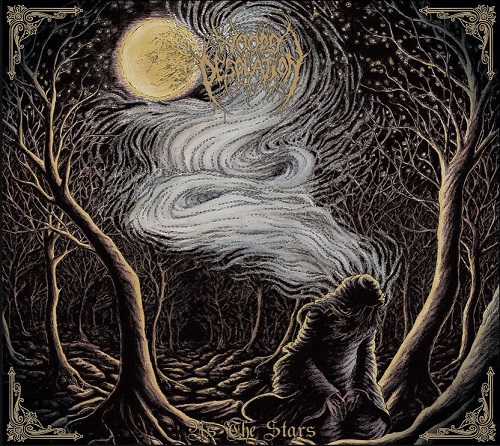
I hope to jump back into this business in force, but in case I fail, I’ll not put off the cream of the crop. My album collection is starting to get overrun by “Woods of” X artists; it seems to be the most popular black metal prefix after “Dark” these days. But one among them might be destined to distinguish itself with my #1 album of the year pick.
Woods of Desolation – Unfold, from As the Stars
I spent a great deal of my late teens and early 20s basking in the polarizing glories of post-rock and black metal. The likes of Explosions in the Sky, Sigur Rós, Emperor, and Nokturnal Mortum pumped the residual poison of rock and roll out of my blood and raised me to higher expectations of musical fulfillment. I listened to them not with a care for technical precision or physical skill, but in search of an experience I did not fully understand. Both genres approached this through similar means, but fell short as social stigmata demanded modesty or brutality carry the day. As I grew into an adult, the ice was broken. Neige’s Le Secret whispered its meaning into my ears just as I was old enough to embrace it. He’d broken the Berlin wall of music, and what awaited beyond was strange and beautiful.
Post-black metal, shoegaze metal, “transcendental”, call it what you will. Ten years ago, this album–what the woefully uninformed all-purpose reviewers will write off as a Deafheaven copycat–was not possible. It emerged as many musicians with the same thoughts and greater talent than myself caught glimpse of that beautiful beyond and embraced it. You can name a dozen artists that might have influenced the Australian solo project known as Woods of Desolation, but this brave new genre demands our presence in the here and now. It calls on us to bask in glorious tremolo sweeps triumphant over entwined barricades of light and darkness. “Proud to be living in the echo–the mist of all things combined,” Krallice once wrote, and though they designed to crush it, we retain the luxury to return. When I hear a song this triumphant, that line always comes to me, and the albums that accomplish it are still few and far between. I still love Explosions in the Sky and their ilk, but they offer a different sort of grandeur. Theirs is an experience of climbing to the peak. Songs like “Unfold” allow us to explore the pinnacle at length, from start to finish.
Woods of Desolation – Like Falling Leaves, from As the Stars
To start at the summit and know where you stand. That might be post-black metal in a nutshell. What we can do there… that is still an on-going exploration. Where Liturgy and Primordial roar like lions into the jaws of death, “Like Falling Leaves” is something of the opposite. It accepts the end awaiting it. In this track we don’t hear any of the overarching optimism of “Unfold”. Instead, we’re accepting that something dear is gone forever, and we are held fast in that moment of realizing the fact’s finality. The bulk of the album seems in keeping with these two vibes, sometimes heightened, sometimes subdued, sometimes entwined. “Withering Fields” and “And If All the Stars Faded Away” seem peculiarly triumphant and longing simultaneously, while “Ad Infinitum” is pretty enough for a new Alcest album. Nearly every track bears a sufficiently memorable hook to sound familiar by the second or third play through, and at a mere 35 minutes, it does not waste much time dragging out build-up in between.
I don’t know that As the Stars will retain my #1 spot through the end of the year, especially if I start to pump out album reviews in force again. It is nothing remotely on par with my picks for the last three years, and it suffers from muddy production that can’t always do the song writing justice, but I stand by it as my favorite so far. This is one I’ll keep near and dear to me long after the bulk of my 2014 collection has been forgotten.
Decade of last.fm scrobbling countdown:
27. Alcest (1,127 plays)
Top track (154 plays): Souvenirs d’un autre monde, from Souvenirs d’un autre monde (2007)
Featured track: Là Où Naissent Les Couleurs Nouvelles, from Les Voyages De L’Âme (2012)
About two years ago I passed up a rare opportunity to strike up a one on one conversation with a musician I admire to no end. Alcest had just finished opening for Enslaved on their 2011 U.S. tour, and I stumbled upon Neige idling in the outdoor smoking lounge, standing exposed in the middle without a pesky fan in sight. I’m not the sort to pester someone over a stupid autograph, and I couldn’t think of a question worth asking on the spur of the moment, so I let the opportunity pass. But if I could have it back again, I would ask him what bands he’d been listening to when he recorded Le Secret (2005). Influence has been a hot topic for Alcest interviews ever since Neige denied any knowledge of shoegaze music at the release of Souvenirs d’un autre monde (2007). He responded to the comparisons by actively engaging a lot of relevant 80s and early 1990s bands, such that the perceived similarities lead to real influence down the road. I don’t think that is as apparent in his more recent works as some fans would like to believe; in Alcest, Neige produces the sort of uniqueness and quality that transcends genres. Nevertheless, my fascination with the history of music begs the question. Le Secret delivered what I wanted with a unique innocence that could only ever succeed once, and it certainly wasn’t “shoegaze” that paved the way for it.
Le Secret rather felt to me like something the black metal scene was destined to produce sooner or later. I’d been craving it since I first heard Ulver’s “Of Wolf and Passion”. If black metal had always been more about De Mysteriis than Dom Sathanas, “Le Secret” was the final incantation–the first real invocation in a world of petty summoners. Le Secret battered down the stereotyped walls, presenting a glorious first glimpse at what dwelt beyond that meditative barrier of blast beats and tremolo. On Souvenirs d’un autre monde and beyond, Neige gave us a beautiful vision of just how that world appeared to him, and he continues to improve on it with each new release. “Là Où Naissent Les Couleurs Nouvelles”, the 2012 track here featured, might be his most encompassing song to date.
Don’t get me wrong. Neige was certainly not the first black metal artist to think outside the box. The Ukrainian black metal scene especially had been doing it for years. But I feel like Neige’s artistic accomplishment and subsequent popularity really paved the way towards a widespread abandonment of black metal’s pseudo-machismo persona in exchange for the artistry necessary to accomplish a more sublime beauty and brutality alike. If we are ever going to speak of “post-black metal” or some “third wave” supplanting the early 1990s establishment, it began in 2005 and 2006 with the likes of Alcest and Agalloch. It is only an odd coincidence that the term “shoegaze” has regained popularity outside of metal and adopted new definitions. I look at Alcest not as a merging of two styles, but as a change in mindset which has empowered countless bands over the last few years to let their novel ideas be heard and widely distributed.
Le Secret will always be my favorite Alcest recording because of its timeliness and audible obliviousness to this transition which was slowly gaining ground. But perhaps I’ve beat that horse to death over the past few years. When I listen to Les Voyages De L’Âme (2012), I hear a musician in his prime, undeterred by the expectations of any particular genre, who has successfully improved with every new album. Alcest’s sixth major release, Shelter, should be coming out some time later this year, and I have really high hopes.
You would be hard-pressed to find an album which more reviews have simultaneously labeled generic and beautiful than Les Voyages De L’Âme. It’s an odd situation. Neige has definitely found his sound. I have to imagine that he personally is more satisfied with his work now than ever. The catch is that a lot of people appreciated his music best when he was still searching for something. Les Voyages De L’Âme is beautiful, no doubt about it. It’s a journey through a mysterious, fanciful world that I have taken for 50 minutes frequently this year; it was released in early January, so it’s technically a year old at this point.
Là Où Naissent Les Couleurs Nouvelles
But such descriptions cannot characterize all of his works. Neige’s music has a bit of a narrative in it, told not so much in a single album as in the scope of his career. His first release, Tristesse Hivernale (2001), was a poorly produced sinister ride not particularly unlike the debuts of the Norwegian legends. It also happened to feature an early appearance by Famine, whose Peste Noire took a drastically different and equally admirable path in the years to follow.
Neige didn’t release an Alcest follow-up until 2005, but “Le Secret” revolutionized metal. The two-track EP was an odd consequence of Neige continuing to play black metal while aspiring towards the atmospheric polar opposite. What you got was something beautiful but perpetually fragile; a glimpse at something angelic in music’s darkest corner, which threatened to fade away at any given moment. It’s the sense that what you’re hearing reveals itself in temporary, fleeting form that really places Le Secret above the rest of Neige’s work for me.
Neige was openly bothered by the reviews Le Secret received. A lot of people just didn’t get it, or more likely did get it but felt some bone-headed sense of masculinity in jeopardy should they admit to getting it. Neige regarded the album as a failure. I think the failure was on the part of the listeners who reviewed it, and I was borderline devastated when Neige re-recorded Le Secret last year. But in any case, the fleeting nature of Le Secret’s sound reflected a real fleeting feature of Neige’s style: It wasn’t what he was ultimately aiming for. It was, rather, the last step on the way to getting there. Souvenirs d’un autre monde was the full realization. We might for stylistic purposes label it shoegaze black metal, but it was really post-black metal in the most literal sense.
Souvenirs d’un autre monde was, to me, all about the triumph. It reached for that light buried within Le Secret and made it through to the other side. Neige’s music finally entered that fanciful world of light and beauty that he had envisioned all along. If Le Secret was all about getting there and Souvenirs d’un autre monde was the overwhelming awe he felt when he reached it, Écailles de Lune might be understood as a more orchestrated exploration of what waited on the other side.
Faiseurs De Mondes
This might seem a very peculiar and abstract way to go about describing a discography, but I think it reveals the reason why Les Voyages De L’Âme feels in some sense generic or repetitive. I don’t think Neige planned out any sort of progression from Tristesse Hivernale through to Écailles de Lune. Rather, he is one of those truly great musicians capable of effectively recreating his thoughts in music, and as Neige the man/musician developed his vision over time, his music progressed to reflect it. In the two years that separate Écailles de Lune from Les Voyages De L’Âme not much appears to have changed, and what Les Voyages De L’Âme lacks has absolutely nothing to do with quality. The music is superb. It’s just that we have come over the years to expect perpetual transition, and Les Voyages De L’Âme instead continues to explore the other-worldly landscape Neige first fully entered on Souvenirs d’un autre monde. Les Voyages De L’Âme is in every way Écailles de Lune Part 2.
Given Neige’s past responses to criticism, who knows how he might react to the labels of “generic” being pasted on Les Voyages De L’Âme in otherwise positive reviews. I think the aspect of his sound that is being criticized in this regard isn’t really something he can help, and anyway the context in which the album may be called “generic” is a major stretch from the normal sense of the word. Better to say that it is a continuation of Écailles de Lune, and outstanding as such.
If there are any further doubts, I should inform you that Sophie loved it. She has impeccable taste.
VGM Entry 26: Tim Follin’s noise machine
(Thanks to Tish at FFShrine for the banner)
In most cases it’s fairly reasonable to think of the ZX Spectrum as a secondary system for game music. It didn’t seem to have the capacity of the Commodore 64, and a lot of the game themes that ended up there were toned down takes on C64 originals, attempting to emulate the SID sound as closely as possible. But the ZX Spectrum did have its own unique if seldom exploited flavor, and over the course of three years one ingenious artist in particular would develop that into a brilliant new chiptune style to rival anything produced for the SID.
Some time in 1985, or perhaps a bit earlier, Mike Follin scored a programming job at Insight Software. Mike passed the soundtrack of what would be his first commercially released game, Subterranean Stryker (Insight, March 1985), down to his musically inclined younger brother Tim, who thereby got his first taste of programming. The result was fairly simple–little more than an amateur doodle–but for a 15 year old kid with no prior programming experience it was a pretty sound start. Insight Software were satisfied enough to keep Tim Follin around, and over the next year he familiarized himself with the sounds of the ZX Spectrum.
What he probably didn’t do was familiarize himself with the sounds of Rob Hubbard. What emerged from Tim Follin’s early experimentation on the ZX Spectrum was a sound all of its own. Agent X (Mastertronic, 1986) was heavily influenced by progressive rock, a feature which would characterize Tim’s work across multiple decades and platforms, but its uniqueness rested on his productive employment of the system’s excessively distorted tones. Rather than viewing the distortion as an obstacle blocking the path to quality arrangements, Tim Follin made it an essential and intrinsic feature of the music.
Agent X didn’t appear out of nowhere. Follin’s sound steadily improved during his short stint with Insight Software, such that on Vectron (late 1985) you can definitely hear a rough draft of things to come. His better works also coincided with his first real job. Follin was hired by developers Software Creations in 1986 (they developed all of the Mastertronic games I’ll be featuring here); he was no longer tailing his brother and composing for spare change. The compositional quality understandably improved in turn.
Tim Follin’s ZX Spectrum sound was unlike anything heard on the Commodore 64. It was a sort of post-rock prog shoegaze madness before any such notion formally existed, meant to be blasted at maximum volume, encasing the listener in a wall of sound. Future Games (Mastertronic, June 1986), my personal favorite on the system, was a far more intelligent piece than Agent X. The way the song slowly builds up into a glitch-beat explosion at 2:06 is a tremendous feat given how little Follin had to work with. The song essentially ends unfinished at 2:31, but I think that can be forgiven in light of what all he accomplished here.
I think a lot of this style is the product of Follin’s own originality, and fairly unprecedented in its day. Certainly outside influence on some of the progressive rock elements is self-evident, and in an interview probably dated to 1999 or 2000, the original of which is now lost, Follin acknowledged that he was exposed to a lot of Genesis, Yes, and Rush growing up. But the shoegazey layer of static and especially the glitch beats are features I don’t start to identify in other musical scenes until some time later. It’s not like he was listening to Aphex Twin and Venetian Snares at home.
Agent X II (Mastertronic, 1987) was a good deal more accessible than most of his previous works, featuring a bluesy groove and plenty of rock and roll soloing, but noise was still the glue that held it all together. I think it’s pretty telling that when Tim Follin programmed the Commodore 64 port sound–Agent X II and Scumball (Mastertronic, 1987) were his first attempts at C64 composition–he wrote an entirely new set of songs. Follin based everything he wrote around the instrument with which he wrote it, and however much other artists were trying to make the ZX Spectrum sound like a C64, these were two different animals.
Chronos (Mastertronic, 1987) is probably his most famous ZX Spectrum theme, and understandably so. Technically, or so I gather from the comments I’ve read, it is his most outstanding effort on the system. I don’t know enough to recognize technical skill in chiptune programming when it slaps me in the face. But I think the music speaks for itself. Tim Follin was to the ZX Spectrum what Rob Hubbard was to the Commodore 64, and it was only his first of many legacies.
It’s not really a coincidence that the two genres of music I’ve listened to most over the years are black metal and post-rock. Something about tremolo guitar very consistently inspires me, and these are the two styles that most frequently and effectively utilize it. But post-rock is one of the most diverse styles of music on the market, and if it employs techniques found in black metal to capture its most intense moments, its other reaches are inexhaustible. It’s characterized more by the effect it produces in the listener than by the means it employs towards this end, and tremolo guitar just happens to be the best–certainly not the only–technique suited for it. The effect it produces is, you might say, a general sense of awe.
When we speak of post-black metal we’re suggesting a branching out from something that is much more locked in place. Technically black metal means tremolo guitar and blast beats, plain and simple. Thematically it goes a bit beyond post-rock, exploring and reveling in a very wide array of human emotions which, to conform to a cultural misconception, might be generally described as negative. Sometimes a post-black metal tag suggests bands that break out from tremolo and blast beats but stick to the same “negative” themes, as in say, Agalloch. Sometimes a post-black metal tag suggests something more like “progressive black metal” which finds creative new ways to employ blast beats and tremolo picking, like Ihsahn or Krallice.
Obviously musical classifications are dubious, sometimes illogical, and only really practical as a shorthand for “you might like this band if you like x”. But with a great deal of discretion they may also be employed to track the general evolution of music–the emergence of new methods and themes, the passive and active influences of any of these upon another, etc–and to predict where it is headed next.
Violet
Deafheaven are a brand new band out of San Francisco. They haven’t been releasing demo tapes unnoticed for a decade like a lot of “new” bands; they only just formed in 2010, and Roads to Judah is their debut album. It was the logical next album for me to review, in a sense. I love Krallice, I was told if you like Krallice check out Liturgy, Liturgy’s popularity lead me to reconsider Wolves in the Throne Room, and a broader consideration for “popular” black metal meant the next band to listen to was Deafheaven. (I would imagine I’ll be completing this path by checking out Ash Borer some time next week.)
Now, stylistically none of these four bands have very much in common. Furthermore, I am standing by my opinion that Wolves in the Throne Room are overrated, mediocre, and generic. But Krallice, Liturgy, and Deafheaven all deserve acute attention. Each, in very different ways, is completely redefining black metal. Krallice are doing so by pretty much perfecting everything I’ve ever loved about the style. Liturgy are doing so by embracing a subtle theme within it. Deafheaven, the band I am exploring now, are something of a grand amalgamation of pre-existing genres of music which have often shaken hands but never before so fully embraced each other. As regards my opening observations, they could just as easily be described as “blackened post-rock” as “post-black metal.”
I think the significance of this has been obscured by people calling them shoegaze black metal. Yes, one of their guitarists, Nick Bassett, was in a shoegaze band prior to Deafheaven (Whirr), but you can’t honestly tell me you hear it in this music. Post-rock is greatly in debt to shoegaze in a lot of ways, but it’s not the same thing, and you can’t tell me this sounds more like The Jesus and Mary Chain than Mono. Not that shoegaze black metal isn’t itself a creative new genre, the fact that Alcest already did it (though Neige denies any direct influence) and a lot of bands copies him drastically downplays its significance. But calling Deafheaven shoegaze is like calling it classic rock, because, you know, somewhere down the line The Who influenced metal. No, this is an amalgamation of post-rock and black metal. That is why it’s on the cutting edge. That is why there’s no obvious term with which to describe it.
I’m not sure exactly what all to take from it. Violet doesn’t inspire me in the way that a lot of black metal does, but that’s not to say it falls short. I almost want to say I’d have to see them live to fully appreciate them. I mean, very few post-rock bands deliver on their studio albums. With the exceptions of Explosions in the Sky and Godspeed! You Black Emperor I almost always have to see a post-rock band in concert to appreciate them, and even then no matter how much they blow me away I don’t necessarily enjoy their albums. I get the same vibe from the four opening minutes of Violet that I get from bands like Mono and This Will Destroy You–a pleasant bore through my stereo and a total mindfuck live. You have to feel this sort of music encompassing you and see the musicians creating it to fully take it in.
Language Games
The second track, Language Games, is much more accessible and immediately appealing. What’s more, it progresses into something which feels an awful lot like screamo to me, most notably in the emotionally tortured screams laid over a simple undistorted melody at 3:50 and the drum roll that follows. I wouldn’t be the first to describe Deafheaven as a screamo black metal crossover, and they are, after all, on Converge frontman Jacob Bannon’s record label, Deathwish Inc. Am I then to call this blackened post-screamo? That’s fucking stupid. I think what you can really take from Deafheaven is something a little more inspiring. Like Liturgy, it is a grand realization of hidden trends growing within music in general, and as such it fits no “genre” tags at all until more bands come along that sound like it.
Whatever you want to call Liturgy’s sound, I’ve been pointing out signs of it for a while now, here in an Ulver song, there in an Alcest song, and many other places besides. As regards Deafheaven, black metal and post-rock have always shared a bit in common, and I would argue that screamo is no foreigner either. It’s a word I’ve been hesitantly coughing up to describe more and more black metal recently. Ars Poetica by Drudkh bewildered me with its likeness to Envy, I explicitly noted a post-rock/screamo vibe at the end of The Puritan’s Hand by Primordial, and I pointed out similarities in Altar of Plagues as well, to name a few. Deafheaven took up a growing theme and ran with it.
Unrequited
Deafheaven are definitely at the top of my bands to see live list, and Roads to Judah is an exceptional album, but it’s kind of a downer in so far as none of the tracks deeply move me. I can get into the vibe but I can’t latch on to any particular moment. It’s significance for me is more in what it accomplishes as the most pronounced and maintained example of a combination of stylistic crossovers long in the making.
But let’s end this on a cautionary note. To suggest black metal broke out of its shell in 2011 would be ridiculous. If I turn to Sagas by Equilibrium in 2008, Ballade cuntre lo Anemi francor by Peste Noire in 2009, Luna by Boris in that same year (the Chapter Ahead Being Fake split with Torche), or Blut aus Nord right now, I can find plenty of examples of older bands doing much more progressive (and impressive) things with black metal than what you’re hearing on Roads to Judah. Deafheaven (and Liturgy for that matter) feel pretty immature when competing in the big leagues. The uniqueness of these bands arises from their willingness to shout out something previously only whispered, not from their having perfected anything. (Mind you I am not suggesting they sound remotely similar.)
This act of shouting is only one of many features which have given rise to a lot of derision. With Deafheaven boldy embracing screamo, Liturgy sounding like the Neutral Milk Hotel of black metal, and both bands dressing like trendy assholes, it’s no wonder “hipster” denunciations are flying right and left. “Emo” and “black metal” go together like two gay cowboys at a Texas Republican convention. But really, the more we admit that black metal has always been a little emo the more we detract from the power of subtlety, and there’s some legitimate concern that their appearance is more likely to catch on than their performance. Liturgy and Deafheaven are both great, and some really shitty bands are going to follow in their wake. But it was there all along. This was all bound to happen.
I like to think of Attention Please as Boris’s main release for the year. If the other two are really good, this one’s something closer to brilliant. Typically when Boris release a “normal” album–something composed of distinct tracks, not a concept piece–there’s always a few tracks that fail to do much for me. Even Akuma No Uta and Smile had their down time. Attention Please does not. Every single track is wonderful. It’s also got the least in common of their 2011 works with anything they’ve released before, which, if you know Boris, is a sure sign that you’re in for something good.
Attention Please
The album is a melting pot of laid back songs like the opening track, dreamy shoegaze, and a sort of dirty pop sound that probably finds precedence in genres I’ve never explored. No matter which they’re tapping into at a given moment, they do it well. But it might be kind of pointless for me to just heap endless praise on this. If you’re already a fan of Boris then all you need to know is it’s really good. If you’re unfamiliar with them, then you’re hearing this all in a completely different state of mind than me. Let me give you a little background.
Boris – Track 3 off Vein, 2006
This is also Boris.
Party Boy
So you have to understand, half the fun of the album is hearing what they’re going to do next, and being astonished by how well they pull it off. Maybe this isn’t the best dance electro pop whateverthehell out there, I wouldn’t even know. It’s the fact that Boris is doing it that makes it so remarkable. At least to a point. I mean, a lot of these songs are still excellent by any standard.
Spoon
So enjoy it for its own sake, but also enjoy it because it is Boris. I think that’s all I have to say. Sorry if this isn’t really a “review” of the album. I’m too much of an infatuated fanboy to do much more than drool when I think about it. New Album has its ups and downs, and Heavy Rocks 2011 is somewhat inaccessible, but Attention Please is among their very best. Yeah, I said that about their 4-volume EP series and split with Torche in 2009. Yeah, I said that about Smile in 2008, and pretty much everything dating back to Flood, when I first heard them. But hell, why not. I hope I can keep saying it for years to come.
I’ll leave you with my favorite track off the album, which is kind of an unusual selection you might say, but calms me down in a way no band really has since Sigur Rós released ( ).
I really ought to have reviewed this album back in March when it was released, because a few things about it have changed. For one thing, the band has since released two additional full lengths, bringing their total discography up to 28 studio albums since 1996 and enough singles and ep releases to make your head spin. More importantly, six of its ten tracks have since been rerecorded. With a seventh song having appeared in a rather different form on an ep in 2009, it is now difficult to regard New Album as its own unique work and not a sort of compilation.
But Boris have never made the reviewer’s life easy, what with changing their style nearly every year and constantly reworking older recordings. This is a band that just refuses to conform to any norm of musical creation. They’ve been doom metal, they’ve been stoner rock, they’ve been drone, they’ve been heavy metal, they’ve been psychedelic rock, they’ve been post-rock, they’ve been shoegaze… It was in 2009 that they really started to go crazy though. They didn’t release much in the way of studio albums that year, at least by Boris standards. Most of what they had to offer came in the form of short one to four track recordings. But there wasn’t a style of the year this time, no one flavor they opted to focus on for a set period of time. No, they’d release a straight up pop single one month and a black metal song the next, with every style previously mentioned somehow incorporated in between.
フレア (Flare)
So what is New Album, and how is it distinguished from their other two releases, which share a number of the same tracks? Well, first of all New Album is j-rock. It was only released in Japan, and all of the songs that were to later appear as hard rock or dream pop here, without losing those characteristics, take on a much more happy, upbeat, decidedly Japanese flavor. The opening song, Flare, is the most telling, both because it is the most characteristically j-rock song of the lot and because it does not appear on any other releases.
Pardon?
But this brief summary doesn’t quiet explain New Album. I mean, the three songs that are exclusive to it–Flare, Pardon?, and Looprider–share very little in common. It’s the album’s take on tracks that reappear later that make it j-rock, far more so than the other two new additions. Wata’s chilled out psychedelic guitar solo on Pardon? is if anything the most thematically out of place portion of the whole album.
Where Heavy Rocks 2011 really stands apart, the distinction between New Album and Attention Please isn’t all that strong. The latter is better, the former is a bit more Japanese. Since I intend to cover their other two albums later this week, I don’t want to reveal too much. Let’s just say this is the happiest, poppiest of the three, and if that appeals to you then it’s definitely worth picking up. Or downloading, I guess, since it won’t be released in North America.
I’ll leave you with by far the most stand-out song on the album (and one that is again a bit out of place, if the album can be said to have an overall stylistic theme at all.) In 2009 Boris released Black Original as the second of two tracks on Japanese Heavy Rock Hits Volume 2. It was a pretty simple, subdued work, featuring a single synthy drum beat, Wata playing a continuous solo that never incorporated more than one note at a time, and Atsuo singing in airy vocals with an occasional small accompaniment. The new Black Original, in contrast, is anything but minimalistic.



 Through the Shattered Lens