Retro Television Review: The Love Boat 6.11 “The Tomorrow Lady/Father, Dear Father/Still Life”


Welcome to Retro Television Reviews, a feature where we review some of our favorite and least favorite shows of the past!  On Wednesdays, I will be reviewing the original Love Boat, which aired on ABC from 1977 to 1986!  The series can be streamed on Paramount Plus!
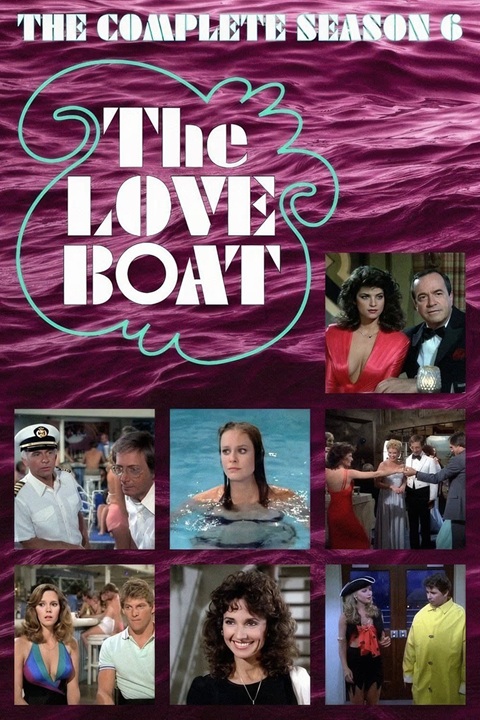
This week, a man tells a terrible lie, Greer Garson can see the future, and Isaac is losing his hearing!  Come aboard, we’re expecting you….

Episode 6.11 “The Tomorrow Lady/Father, Dear Father/Still Life”

(Dir by Richard A. Wells, originally aired on December 4th, 1992)

This episode of The Love Boat features one of the worst stories ever.  Ken Miller (Lawrence Pressman) wants to date Sarah Curtis (Kim Darby).  However, Sarah is on the cruise as a member of the Single Parents Group and, when Sarah first sees Ken, she assumes that Ken is a single father because he’s standing with Libby McDonald (played by the one-named Louanne), who is the daughter of Ken’s friend, Tom (Jim Stafford).  So, Ken just decides to lie about being a father.

Eventually, Sarah finds out.  When she notices that Libby is spending all of her time with Tom, the gig is up.  Sarah, however, FORGIVES Ken and accepts his marriage proposal!  (“Looks like I won’t be a member of Single Parents anymore….”)  Lady, he lied to you about having a daughter!  He recruited a little girl to pretend to be his daughter!  THIS IS NOT THE WAY TO START A MARRIAGE!

The other two stories were better.  One featured Greer Garson (in her final screen performance before retiring) as a woman who was a self-described “good guesser.”  She met a struggling businessman (Howard Duff) who wanted to use her power to play the stock market but eventually, he fell in love with her for her and not her powers.  Howard Duff’s character was not particularly likable but Greer Garson seemed to be having fun.

The other story featured Isaac struggling with a double ear infection and fearing that he would permanently lose his hearing.  He didn’t, which is good considering that he’s the ship’s head bartender and he’s the guy who everyone comes to with their problems.  (It always amuses me how a passenger will just automatically start talking to Isaac as if they’re best friends when they’ve only been on the boat for a couple of hours.)  What made this story work, though, was the performance of Ted Lange.  He was so believably scared of losing his hearing that you just wanted someone to hug him and reassure him that it would all be okay.  When his hearing finally came back, I breathed a sigh of relief.  Obviously, playing Isaac was probably not the most challenging roll of Ted Lange’s career.  I mean, the man has played Othello!  Still, Lange gave a really good and honest performance in this episode.  He didn’t use the fact that he was acting on The Love Boat as an excuse to just coast.

This cruise …. it was kind of forgettable.  Still, at least Ted Lange got a chance to shine!
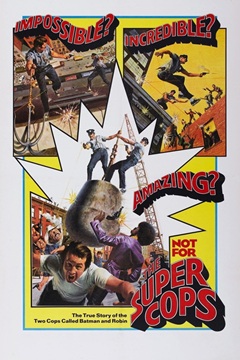
The Super Cops (1974, directed by Gordon Parks)


David Greenberg (Ron Liebman) and Robert Hantz (David Selby) are two tough and smart New York City cops who become detectives and play by their own rules.  They make arrests off-duty.  They drive their lieutenants crazy.  They bust drug dealers and prostitutes and single-handedly clean up their police precinct.  They’re the Super Cops and they’re even nicknamed Batman and Robin.  When they throw punches, a graphic “POW” appears on screen with a sound effect.

There’s an old saying about how, when the truth is different from the legend, always print the legend.  That’s certainly the case here.  The real-life David Greenberg went into politics and ended up doing time for mail fraud, insurance fraud, and obstruction of justice.  Robert Hantz was busted for possessing marijuana while he was on vacation in the Bahamas.  The arrest led to a demotion and Hantz quit the force as a result.  The film hints at Greenberg and Hantz’s involvement with the Knapp Commission, which investigated police corruption in the 70s.  (Lisa wrote about it when she reviewed Serpico.)  But the film does not mention that the Knapp Commission suspected that Greenberg and Hantz murdered two drug dealers.

You don’t get any of that with The Super Cops, which tries to mix the grittiness of films like The French Connection, The Seven-Ups, and Serpico with moments of cartoonish comedy and it really doesn’t work.  (Years after The Super Cops was released, Hill Street Blues proved that gritty drama and dark comedy could be mixed but it has to be done just right.)  Ron Liebman overacts while David Selby doesn’t seem to be acting at all.  (Liebman and Selby are both good actors but you wouldn’t know that from this movie.  For Liebman, I suggest checking out his performance in Night Falls On Manhattan.  For Selby, I recommend an overlooked dark comedy called Headless Body in Topless Bar.)  It’s hard to believe that Gordon Parks went from doing Shaft to doing this.  Shaft would have tossed the Super Cops through a window.  Popeye Doyle would have given him an assist.

There is one good thing to note about The Super Cops.  Edgar Wright is a fan of this film and it partially inspired the far superior Hot Fuzz.


Film Review: Firehouse (1973, directed by Alex March)


Firefighter Shelly Forsythe (Richard Roundtree) has just been assigned to a new firehouse and, from the minute he shows up, it’s trouble.  Not only is he resented for taking the place of a popular (if now dead) firefighter but he’s also the first black to have ever been assigned to that firehouse.  Led by angry racist Skip Ryerson (Vince Edwards), the other firemen immediately distrust Forsythe and subject him to a grueling hazing.  However, Forsythe is determined to prove that he’s just as good as any white firefighter and refuses to be driven out.  While the firehouse simmers with racial tensions, a gang of arsonists is setting buildings on fire.

Firehouse does not have much of a plot but what little it does have, it deals with in a brisk 72 minutes.  Forsythe shows up for his first day.  Everyone hazes him.  Forsythe gets mad.  There’s a big fire.  And then the movie ends, without resolving much.  Ryerson is still a racist and Forsythe is still mad at almost everyone in the firehouse.  The characters are all paper thin and most of the fire fighting scenes are made up of grainy stock footage.  What does make the film interesting is the way that it handles the causal racism of almost every white character.  Ryerson, for instance, comes across as being an unrepentant racist but the film suggests that this is mostly due to him being too stubborn to change his ways and that Ryerson’s not that bad once you get to know him.  When Andrew Duggan’s fire chief instructs Forsythe not to take any of the constant racial remarks personally, Firehouse portrays it as if Duggan is giving good and reasonable advice.  The mentality was typical for 1973 but wouldn’t fly today.

One reason why Firehouse ends so abruptly is because it was a pilot for a television series.  At the time Firehouse aired, it had been only two years since Roundtree starred as John Shaft and NBC hoped that to recapture that magic on a weekly basis.  However, it would take another year before the Firehouse television series went into production and, by that time, Roundtree had left the project.  In fact, with the exception of Richard Jaeckel, no one who appeared in the pilot went on to appear in the short-lived TV series.

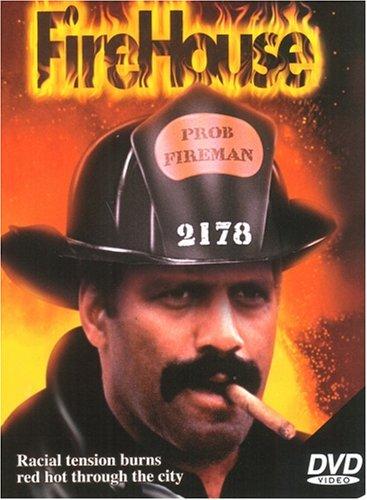
The DVD of Firehouse is infamous for featuring a picture of Fred Williamson on the cover, in which Williamson is smoking a cigar and wearing a fireman’s helmet.  Williamson does not appear anywhere in Firehouse and I can only imagine how many people have sat through Firehouse expecting to see a Fred Williamson blaxploitation film, just to discover that it was actually a Richard Roundtree television pilot.  Firehouse probably would have been better if it had starred Fred Williamson.  Roundtree’s good but sometimes, you just need The Hammer.

That’s Blaxploitation! 8: SUPER FLY (Warner Brothers 1972)


gary loggins's avatarcracked rear viewer

superfly1

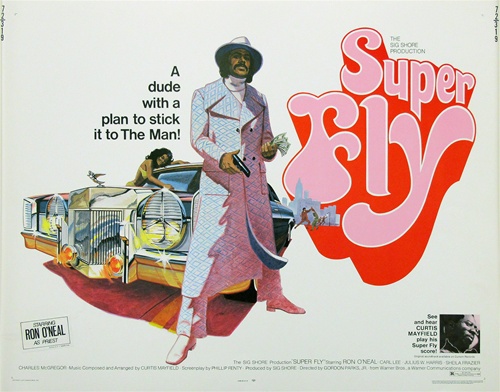
Pimpmobiles, outrageous fashions, and the funkiest score in movie history are only part of what makes SUPER FLY one of the best Blaxploitation/Grindhouse hits of all time. This low-budget film by director Gordon Parks Jr. captures the grittiness of 70’s New York in a way few larger productions ever could in its portrait of a street hustler yearning to get out of the life.

superfly2

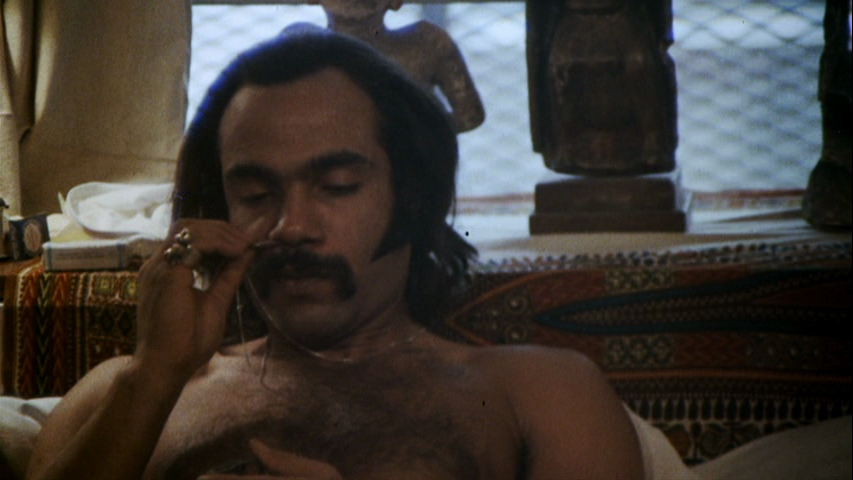
Priest is a New York City coke dealer with all the outward trappings of success. As his partner Eddie puts it, he’s got “8-Track stereo, color TV in every room, and you can snort a half piece of dope every day… that’s the American dream, nigga! Ain’t it?”. To Priest, the answer is no. He’s tired of the hustle, the rip-off artists, and the deadbeats like Fat Freddie, and he’s got a plan to get out for good by scoring 30 keys through his mentor Scatter, selling…

View original post 635 more words