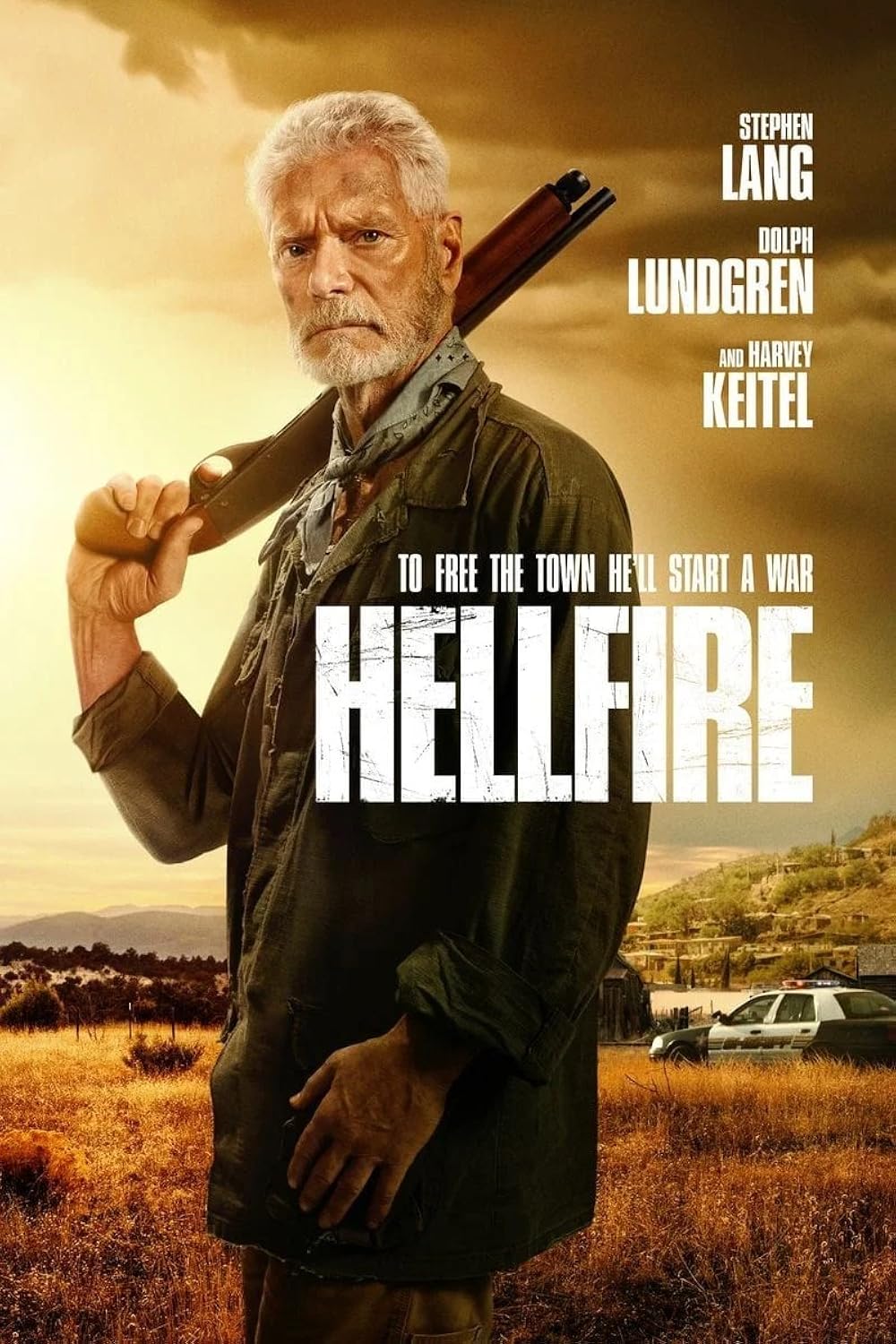
Review: Hellfire (dir. by Isaac Florentine)


“What you started here today? About to get a whole lot worse.” — Nomada

Hellfire is the kind of mid-budget, throwback action-thriller that knows exactly which bar it’s aiming for—and then mostly clears it with room to spare. Set in 1988 and built around a classic “mysterious drifter wanders into a rotten town” premise, it leans hard into familiar tropes but finds some personality in its cast, pacing, and sense of place. It’s not a game-changer for the genre, but if you’re in the mood for a lean, old-school small-town showdown, it gets the job done more often than not.

The setup is comfort food for action fans. A nameless drifter, played by Stephen Lang, rolls into the dying Southern town of Rondo, where the locals are quietly suffocating under the control of drug boss Jeremiah Whitfield, a politician-connected crime lord who pretty much owns the place. The bar owner Owen gives the drifter some work and a meal, the sheriff shows up to strongly suggest he move along, and you can basically feel the town holding its breath, waiting for somebody—anybody—to push back. That somebody, obviously, is this guy, who’s soon nicknamed Nomada and revealed to be an ex–Green Beret with a messy past and a higher capacity for violence than his weathered demeanor suggests. The story is straightforward to the point of being telegraphed, but that simplicity is part of its appeal; you always know what lane Hellfire is driving in.

Performance-wise, the movie’s biggest asset is Lang. At this point, watching him settle into the “old guy you really shouldn’t mess with” archetype is half the fun, and Hellfire plays that card well. He doesn’t oversell the trauma angle, but the film gives him just enough flashbacks and quiet beats—like those bath-time war memories—to suggest a guy who’s been stuck in fight mode for decades and doesn’t know what to do with peace. His physicality is still convincing, and director Isaac Florentine is smart about staging the action around what Lang does well, letting him move with purpose instead of pretending he’s 30 years younger. He’s not reinventing the “wandering warrior” type, but he grounds Nomada enough that you buy people trusting him even when they’re terrified. There’s a warmth under the stubble and scars that gives the character a little more dimension than the script strictly requires.

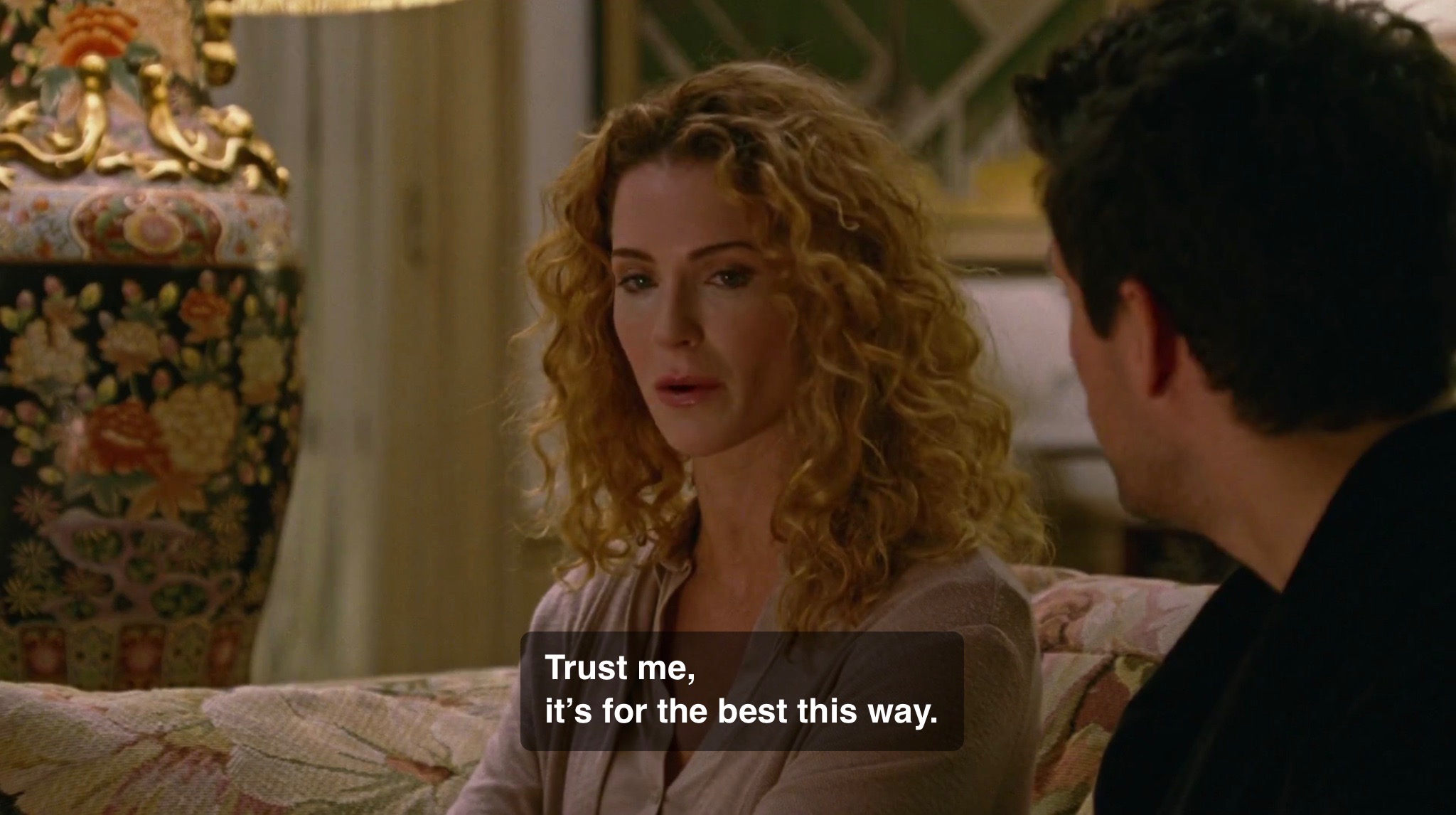
The supporting cast is a mixed bag, but the core players are solid. Harvey Keitel’s Jeremiah Whitfield is exactly the kind of villain you expect in this setup: soft-spoken, smug, and insulated by money and enforcers. He doesn’t get a ton of screen time, but there’s something appropriately gross about how casual he is with other people’s lives, like he’s already factored their suffering into his monthly budget. Dolph Lundgren shows up as the corrupt sheriff Wiley, playing the heavy who’s technically the law but functionally just another thug with a badge. Lundgren brings some weary menace to the role, and there’s a nice little tension in how much he’s genuinely bought into Jeremiah’s world versus how much he’s just too compromised to get out. Scottie Thompson’s Lena, Owen’s daughter, is the emotional anchor; she’s the one with something real to lose, and while the film doesn’t push her arc especially far, she’s likable enough that you care when things go sideways.

On the weaker end, Michael Sirow turns in a caricature performance as Spencer, the entitled and whiny son of Jeremiah, all sneers and petulance that feels like it stepped straight out of a ’80s cartoon villain playbook without any nuance to back it up. Similarly, Johnny Yong Bosch as enforcer Zeke sleepwalks through every scene that isn’t action, delivering a by-the-numbers performance for a character supposed to be the crime boss’ dangerous right-hand man; even in the fights, it’s rote and uninspired, missing the edge that could’ve made Zeke a real threat.

On the character side, Hellfire actually does a bit more groundwork than you might expect from what is essentially a B-movie revenge Western in modern dress. The early stretch spends time letting you feel the town’s exhaustion and fear—bars that are half-empty, people looking over their shoulders, everyone resigned to Jeremiah’s stranglehold. That world-building pays off once the violence kicks in, because it’s clear what’s at stake beyond simple body count or spectacle. The film also tries to deepen Nomada’s backstory, hinting at survivor’s guilt and a lingering sense that he’s been wandering from one moral debt to another, but it never quite connects those dots in a satisfying way. By the time the movie starts circling around for a full-circle emotional payoff, you can see what it’s going for, yet the groundwork feels a little thin, like pages were cut or ideas left half-developed.

Pacing-wise, Hellfire is tighter than its 95-ish-minute runtime might imply, and that’s mostly a compliment. The first half is surprisingly light on action, preferring to simmer instead of boil; you get a few scuffles and tense stand-offs, but Florentine holds back on the big fireworks. When things finally explode—hostages, ambushes, warehouses, the works—the film shifts into a mode that feels like controlled chaos, mixing gunfights, hand-to-hand scraps, and vehicle beats with a clarity that’s increasingly rare in this budget range. The trade-off is that the final act feels a bit rushed, like the movie suddenly remembered it had to tie off multiple arcs and body the main villains within a fairly strict time limit. The last stretch does what you expect it to do, including Jeremiah’s fiery fate, but it doesn’t linger long enough to fully earn the emotional weight it’s shooting for.

The action itself sits in that “serviceable to occasionally inspired” space. Florentine, coming from a background in stunt-heavy genre work, keeps things clean and legible; you always know who’s shooting at whom and from where. The shootouts can get cheesy—there’s a bit of that “nobody can hit anyone until the plot needs it” energy—but there are also flashes where staging and geography line up to deliver genuinely satisfying beats. A warehouse sequence where Nomada protects Lena while taking out multiple attackers is a standout, capturing both his tactical skill and the desperation of the situation. The film clearly favors quality over volume; genre die-hards who want wall-to-wall mayhem might wish for more set pieces, but the ones you get mostly land. If anything, some of the tonal shifts—bouncing from grim brutality to borderline goofy machismo—don’t always mesh perfectly, though that’s also kind of baked into the retro B-movie DNA.

Visually, Hellfire doesn’t reinvent the wheel, but it looks better than a lot of its DTV-adjacent peers. Shot in Arkansas and set in the late ’80s, it leans into dusty small-town Americana: sun-faded storefronts, weathered bars, lonely roads. Ross W. Clarkson’s cinematography keeps things grounded, with an emphasis on practical locations and natural light that makes the town feel like an actual lived-in place rather than a backlot abstraction. The period setting isn’t showy—you’re not constantly being smacked with nostalgia props—but it subtly shapes the world, especially in how isolated and cut-off Rondo feels without modern communication and surveillance everywhere. The score by Stephen Edwards does what it needs to do, nudging tension along without ever becoming a character in its own right.

Where the film stumbles is mostly in how predictable and occasionally clumsy it can be. You can see many of the beats coming from miles away: the town’s breaking point, the betrayals, who will die to motivate whom. There is one darker turn that genuinely catches you off guard, and it helps shake the movie out of its comfort zone for a bit, but the script overall is content to color inside the genre lines. Some dialogue leans on cliché, and a few supporting characters feel like they wandered in from a rougher first draft—the kind of broad sketches you’ve seen a dozen times before. It’s never bad enough to sink things, but it does cap how high Hellfire can climb; this is a movie that’s satisfied with solid rather than special.

Still, taken on its own terms, Hellfire works. It gives Stephen Lang a solid platform to do what he does best, surrounds him with a fun mix of seasoned character actors, and delivers enough muscular, clearly shot action to justify the ticket or rental. The town feels real enough that you actually care whether Nomada cleans it up, and the film respects the basics: clear stakes, likable underdogs, villains you’re happy to see go down in flames. If you go in expecting a tight, modest, R-rated throwback with a few rough edges and a couple of standout moments rather than a new genre benchmark, you’ll probably come away satisfied. It’s generic, sure—but it’s the kind of generic that remembers to give you characters to root for, action you can actually see, and just enough personality to make the ride worth taking.

The TSL’s Horror Grindhouse: Broken Ghost (dir by Richard Gray)


Odd film, Broken Ghost.

It opens with two bikers slowly approaching a big house that appears to be sitting out in the middle of nowhere.  They enter the house, we hear gunshots, and then suddenly….

….a new family is moving into the house!  The Day family is full of secrets, some of which we learn about immediately and others of which are only gradually revealed.  Samantha Day (Scottie Thompson) has recently bought the local drug store and is frustrated by the fact that her husband, William (Nick Farnell), is impotent.  William is a moody artist who is struggling to get over an addiction to pornography.  And then there’s their teenage daughter, who insists on being called Imogen (Autry Haydon-Wilson) even though her real name is Grace.  Or maybe she now wants to be Grace and her original name was Imogen.  To be honest, it’s hard to keep track because everyone refers to her by both names throughout the film.  We do know that Samantha occasionally calls her the wrong name because everyone yells at her about it.

Anyway, Imogen is the reason that the Days have moved to a new house.  Apparently, something bad happened at Imogen’s old school and, as a result, she’s changed her name and her hair.  Imogen is an interesting character and Autry Haydon-Wilson does a good job playing her.  Imogen’s moods swing back and forth, between depression and angry, insecurity and defiance.  You’re on her side as soon as you meet her.  Imogen suffers from a severe vision impairment and the film occasionally shows the world through her eyes.  It’s a uniquely threatening place.

As soon as the Days move into their new home, strange things start to happen.  The television turns on at random and it’s usually showing porn.  Imogen starts to hear a voice calling her name.  Samantha finds herself tempted to run off with every strange man that she sees at the local bar.  William, at least, finds himself artistically inspired.  When his wife and his daughter point out to him that the house is obviously haunted and that it might be a good idea to move somewhere else, William replies, “I’m doing my best work!”

It turns out that the house has quite a history, one that goes beyond those two bikers that we saw earlier.  The house was previously owned by another artist, one who murdered his wife and his children.  When William finds the murderer’s artwork, he starts to slip even further into insanity.  Could it be that William is possessed by the murder’s malevolent spirit or is there a twist lurking in the shadows….

Yes, there is a twist.  I won’t spoil it, beyond saying that it was a pretty bad twist and that it didn’t really make any sense.  In fact, it made me want to throw something at the television.  But, oh well.  I guess we should be happy that Broken Ghost tried to do something unexpected.  Still, as a result of the twist, the movie ends on a rather sour note and it’s hard not to feel that one member of the Day household has been excessively punished while another member of the family has basically gotten away with acting like a complete asshole.  And that’s all I’ll say about that.

So, it’s a flawed film that doesn’t really work but there are still some effective moments.  As I said, Imogen’s an interesting character and I almost wish that the film had dropped all of the supernatural mystery stuff and instead just focused on her character and her struggle to move on with her life.  Say what you will about the script but the cinematography is gorgeous and full of atmosphere.  There’s good moments all through Broken Ghost.

It’s just a shame about that ending.

What Lisa Watched Last Night #197: My Daughter’s Ransom (dir by Doug Campbell)


On Thursday, I watched the first Lifetime film of 2019, My Daughter’s Ransom!

(a.k.a. My Daughter’s Ransom)

Why Was I Watching It?

New year, new lifetime movies!  Every year brings changes but one thing that will never change will be my love for these films and the enjoyment I get from reviewing them.

What Was It About?

Rachel (Scottie Thompson) has a good life.  Her husband, Tony (Matthew Pohlkamp), is a successful businessman who is on the verge of finalizing a big deal.  Her daughter, Lindsey (McKinley Blehm), is intelligent enough to know all about the theories of Charles Darwin.

Unfortunately, Rachel also has an ex-boyfriend named Carter (Lucas Kerr).  Carter’s just been released from prison and, as quickly becomes apparent, his incarceration did not lead to rehabilitation.  After spending months stalking Rachel and her family, Carter kidnaps Lindsey at the zoo.  If Rachel doesn’t do everything that Carter orders her to do, he’ll kill her daughter.

As Rachel tries to figure out a way to save her daughter, she also has to keep following Carter’s orders, which are not only increasingly outlandish but also increasingly dangerous for both Rachel and everyone that she loves….

What Worked?

As anyone who has spent any time watching the channel can tell you, the theme of abduction is a popular one when it comes to Lifetime movies.  That’s because these films deal with the fears that every parent has, not only that your child will be abducted but that you’ll be powerless to rescue them.  My Daughter’s Ransom did a good job of making that fear feel real, especially in the early moments when Rachel was desperately running around the zoo, looking for her daughter.  (The camera holds Rachel in a tight close-up while she searches for her daughter, emphasizing Rachel’s desperation to find her.)

For a film like this to work, you need a good villain and Lucas Kerr did a great job making Carter into the type of creepy, hissable bad guy who you just couldn’t wait to see get his comeuppance.  In the role of Rachel, Scottie Thompson also did great work and it was impossible not to sympathize with her as she tried to get someone to notice that she was in trouble without Carter figuring out what she was doing.

In fact, the entire cast did a great job.  My two favorite supporting characters were Gina (Davida Williams), the wife of Tony’s business partner, and Skates (Erika Fong), Tony’s secretary.  Neither one of them was willing to put up with any nonsense.  Personally, I think we need a sequel where Gina and Skates team up and solve crimes.

What Did Not Work?

It all worked!  My Daughter’s Ransom got the year off to a good start.

“Oh my God!  Just like me!” Moments

Much like Rachel, I once had a weakness for bad boys.  Actually, now that I think about it, I still do.  That said, the character I most admired was Skates because it didn’t matter how much Carter ordered Rachel to yell at her and threaten to fire her, Skates wasn’t going to let anyone stop her from doing her job.

Lessons Learned

Bad boys never change.

Because anything this divisive gets my attention. So, I also watched The Leisure Class…


IMG_3925

First off, I have never watched that TV Show, and based off of Lisa’s description in her review of this film, I’m glad I don’t. It sounds like a seasons worth of footage of that dog from Godard’s Goodbye To Language (2014) pooping. In other words, I had no vested interest in this movie developed by watching the show. I just wanted to see what all the fuss was about.

The movie opens with that title card which would make you think you’re about to watch something like Last Year At Marienbad (1961). Then we cut to a party and meet some of our characters.

IMG_3926

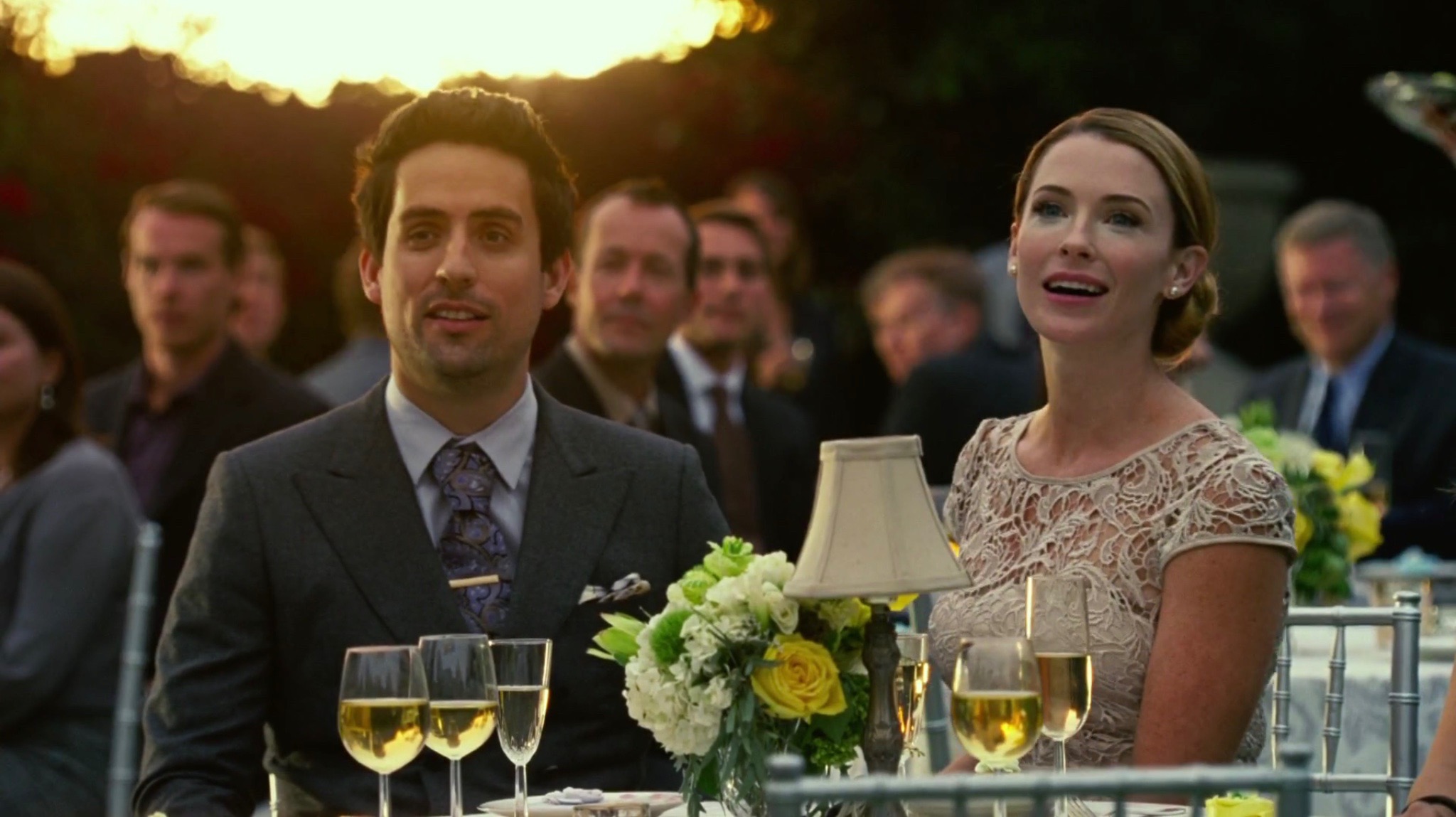
That’s William (Ed Weeks) and Fiona (Bridget Regan). One thing that stuck with me from Lisa’s review about the production of this is that it was shot on film, and it shows. I don’t know if it comes through in that screen shot, but it feels like it’s trying to remind me of Merchant Ivory Productions from the 70s and 80s.

IMG_3935

That’s Edward (Bruce Davison) and Charlotte (Brenda Strong). This is a party the family is having to celebrate the wedding of William and Fiona that is going to take place the next day. William is marrying into this wealthy political family.

IMG_3966

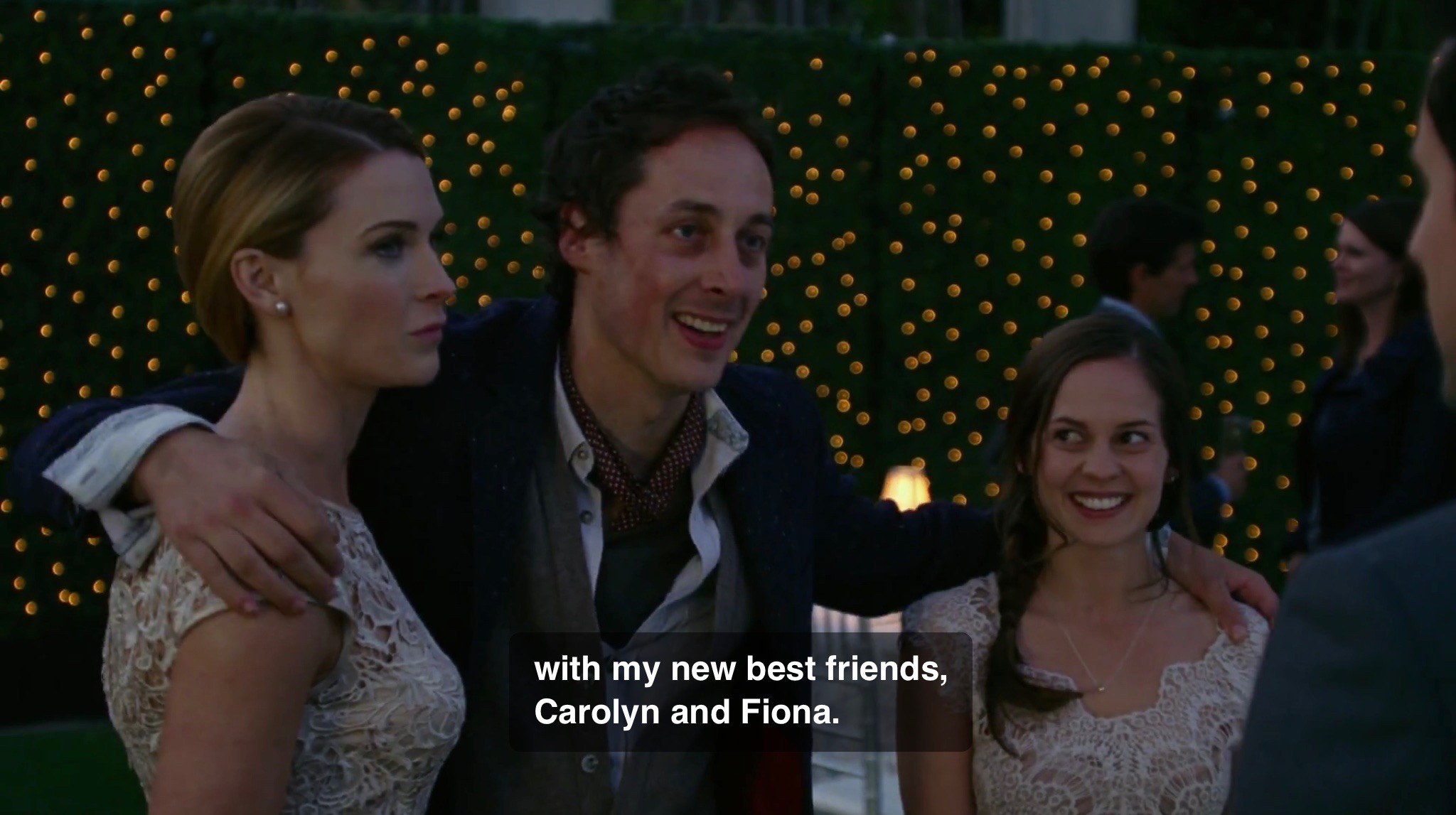
This is Carolyn (Melanie Zanetti) who is Fiona’s sister. She’s the short horny sister whose character is abandoned rather quickly and seems to exist only to give the next character who shows up a foothold in this whole setup.

IMG_3999

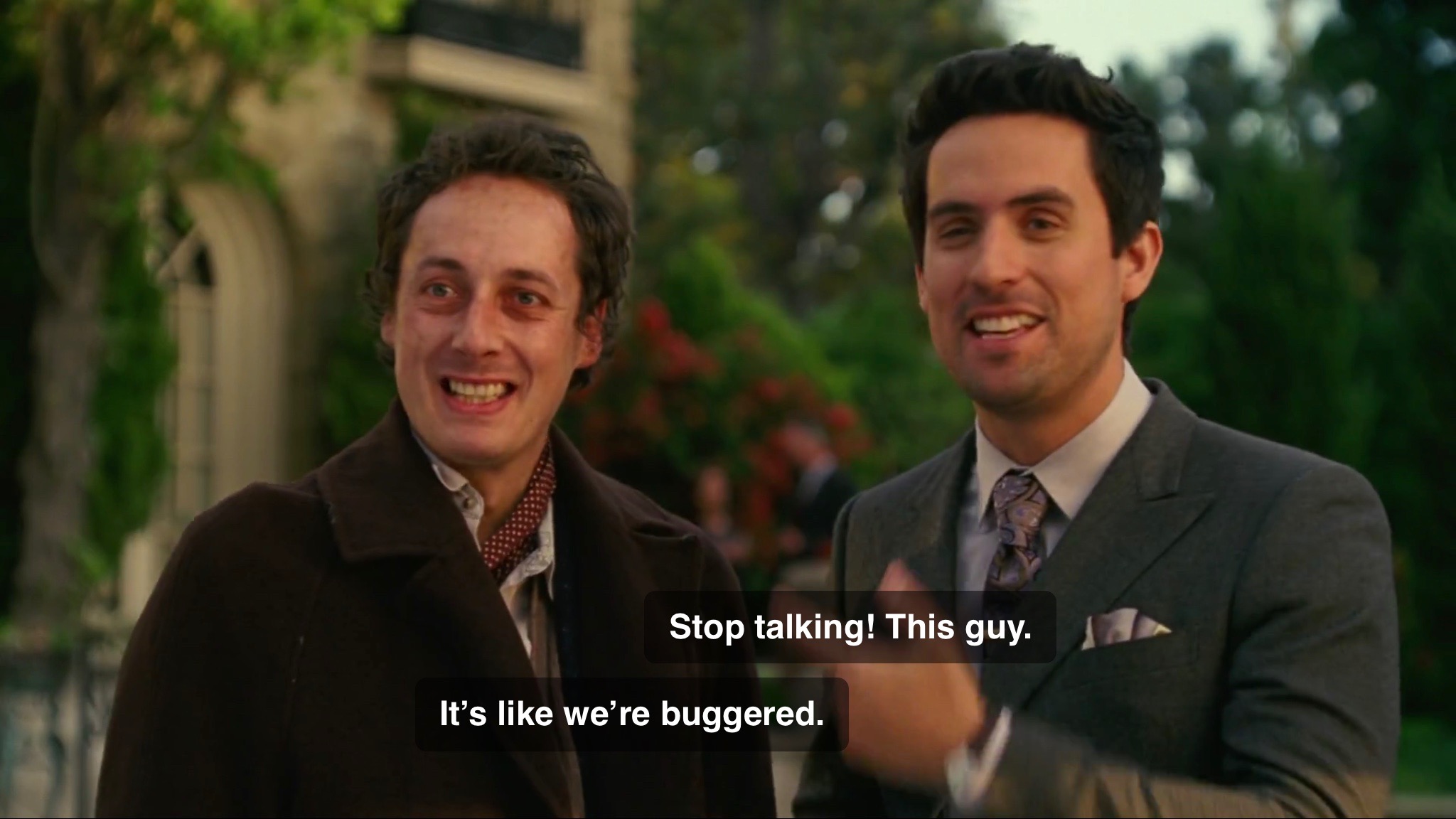
Then this guy shows up at the party. He is William’s brother and is about to throw a wrench into William’s plan to marry into this family. William is actually a conman. A lousy conman cause this movie already starts telegraphing the ending of the film to you at this point. Now the brother does have a name in the movie, but let’s call him what he is. He’s Withnail (Tom Bell), minus any lines people will be quoting decades from now. William tells Withnail to leave the party, but of course he doesn’t even for money. He latches on to Carolyn and generally begins acting like a jackass.

IMG_4049

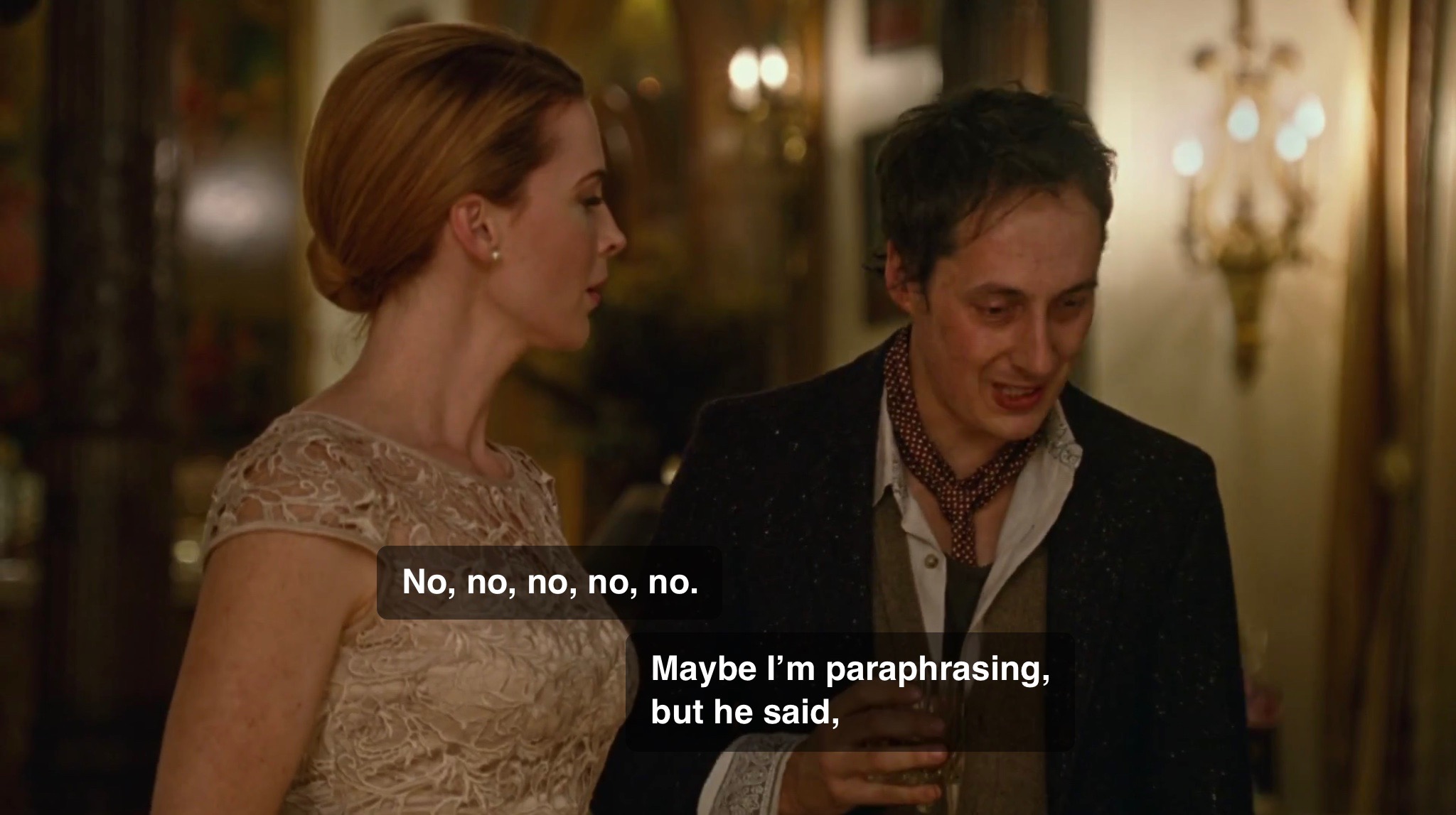
Since night is upon them, they move inside. Then what I can only assume is the boom mic pops in from the upper left hand corner.

IMG_4115

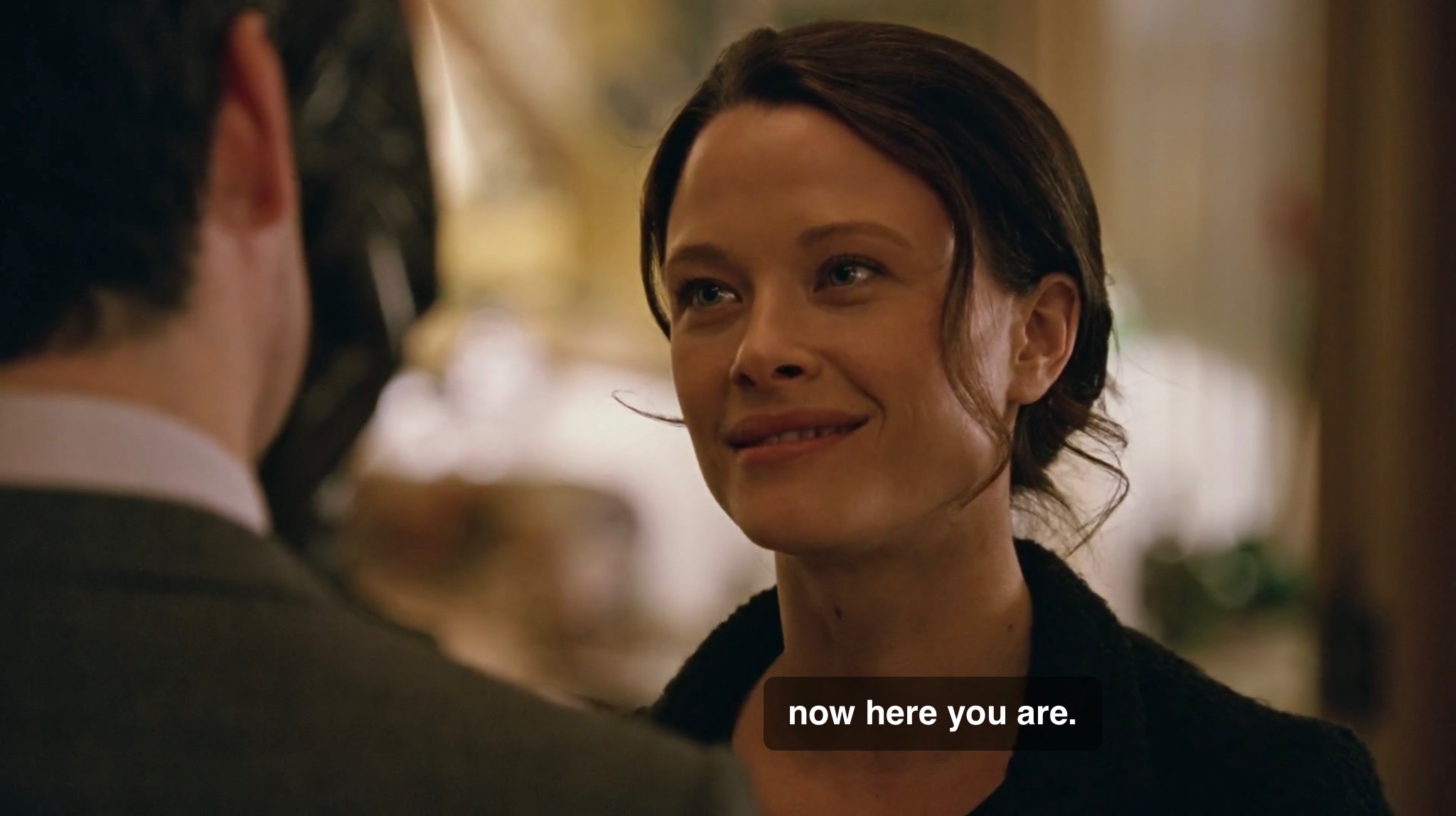
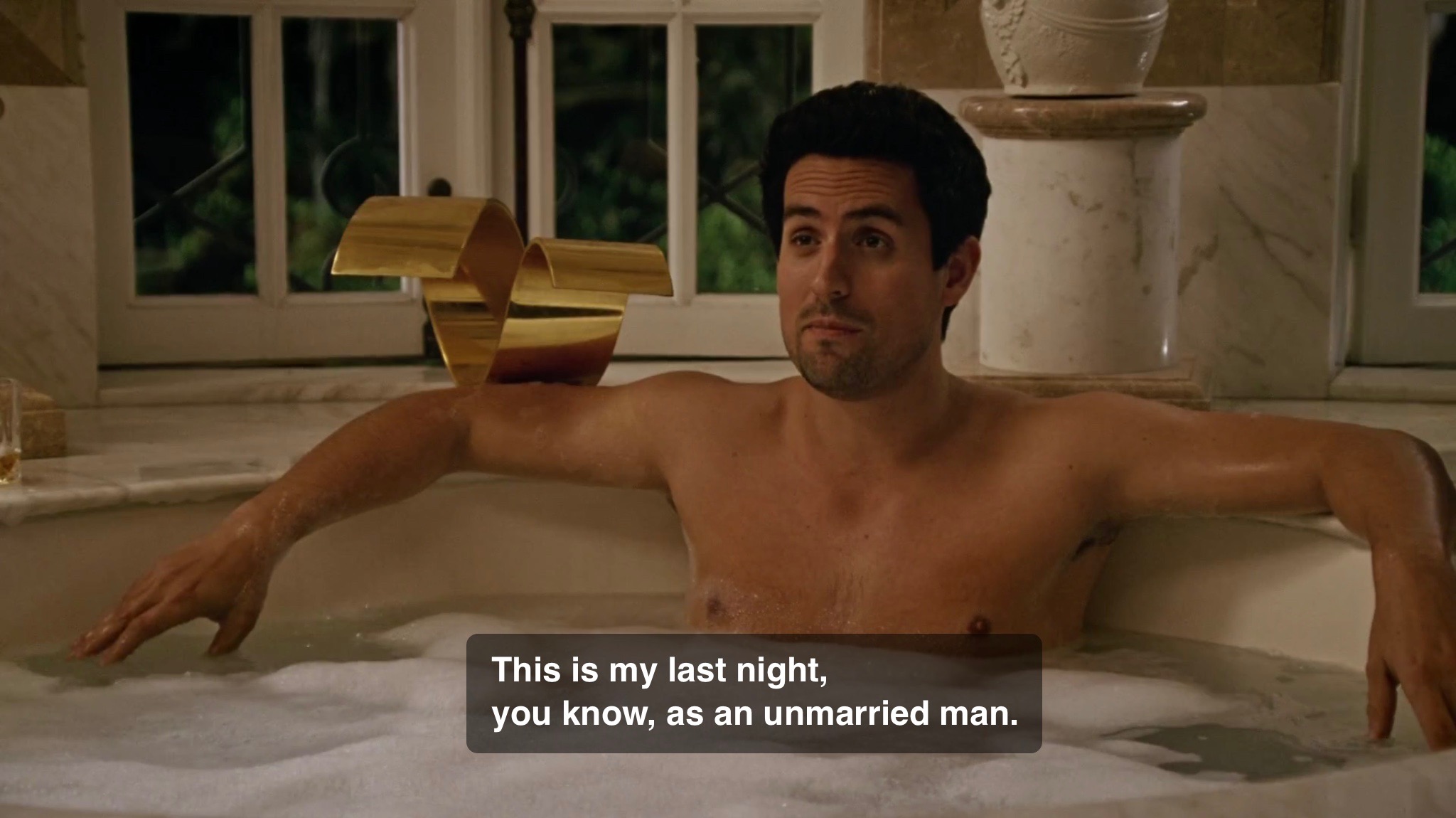
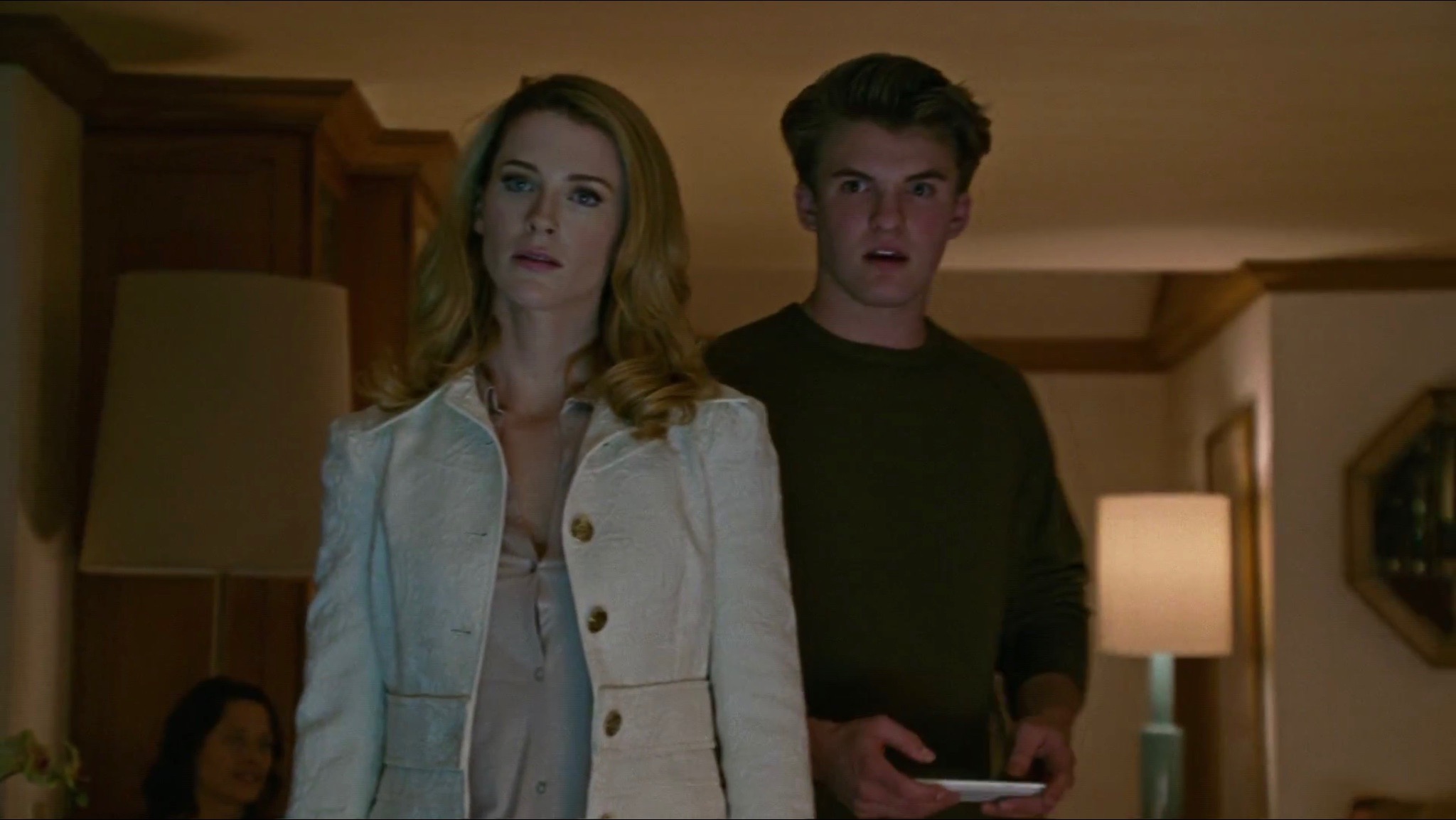
But enough of that little technical goof because we need more characters. We have the parents who seem to be basically oblivious at this point. Fiona is basically the same way at this point. Carolyn wants With to Nail her. And of course there’s our conman William. Naturally that’s why the movie needs a detective character. That comes in the form of another sister named Allison (Scottie Thompson). She tends to stay away from the family and is a lawyer.

IMG_4131

And you can tell she doesn’t like him because of that I just met you, but I already know your kind very well look on her face.

Well, after William tries to get some.

IMG_4176

And so does take me now Carolyn.

IMG_4185

Withnail decides to round up some booze and people to go off to a party!

IMG_4247Now take a good look at Fiona’s hair here. I’ll bring that up later. Now a couple of them, including Fiona jump in a pool.

IMG_4258

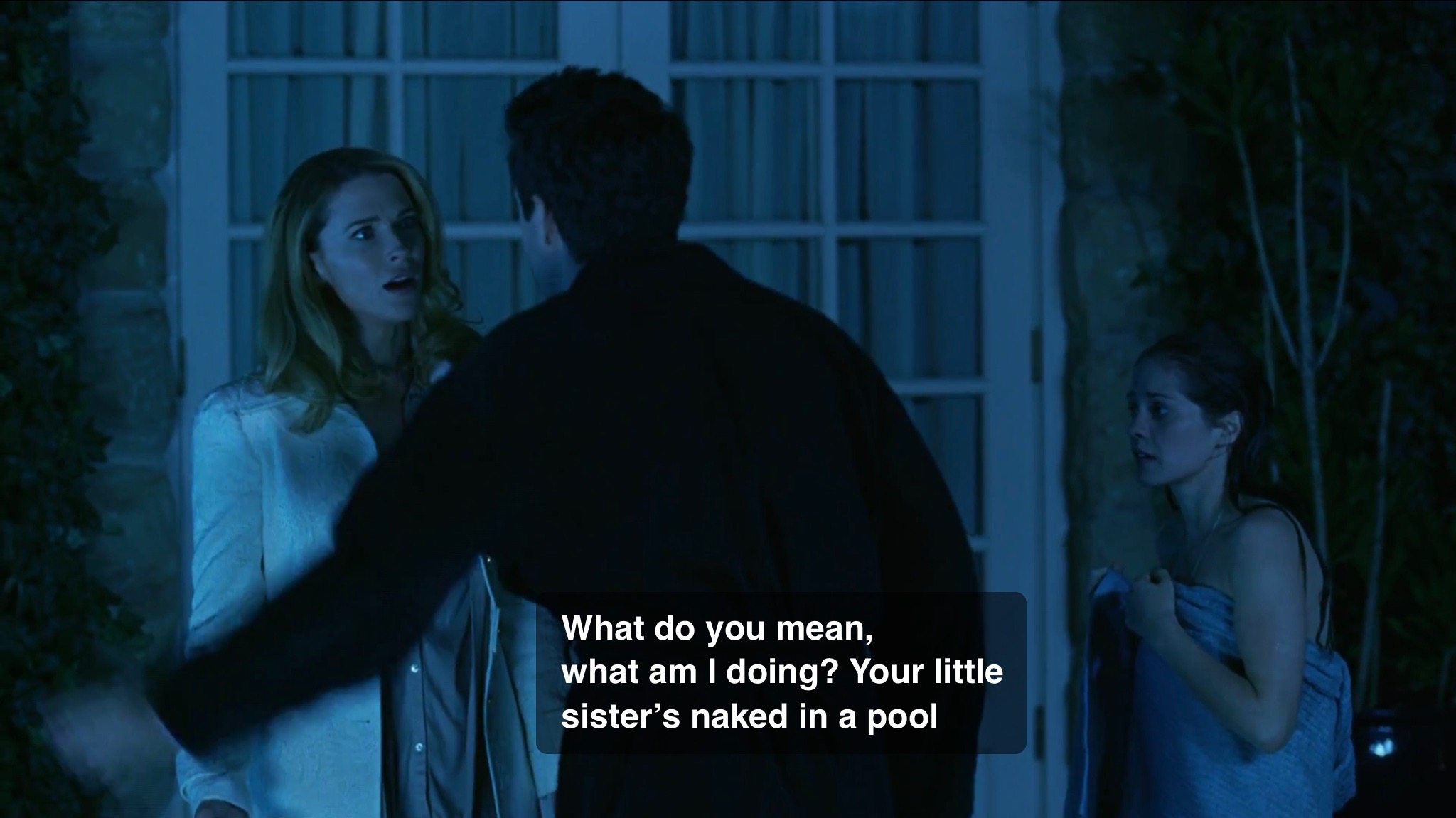
Oh, did I say a pool. I meant a plot device to clearly establish that Carolyn is drunk, Fiona is her own woman, and William is in over his head. Well, seeing as Carolyn is drunk and something needs to bring things to a head, we get a car accident.

IMG_4282

You see the look on Fiona’s face. That’s the look of the audience when they realize this scene only works if William has never seen a movie where rich people get away with things like car accidents they are at fault for. I hate when movies depend on their characters existing in a world where movies don’t exist that have covered situations they’re in. But again, they are trying to foreshadow the ending of this movie some more here.

IMG_4337

This is when you need to take another look at Fiona’s hair. I have taken physics before so I’m aware of how hair works when it comes to hydrogen and disulfide bonds, but something tells me being in a pool for all of a couple of minutes doesn’t transform hair from looking perfectly straight to looking like you just had it curled at a salon. I’ll have to ask the lady who does my hair, but this struck me as a continuity error. A minor error like the boom mic, but my only guess is that it was left in to make her character appear more vulnerable and less hoity toity so that we would see her come full circle back to the way she was at the beginning, but worse.

IMG_4349

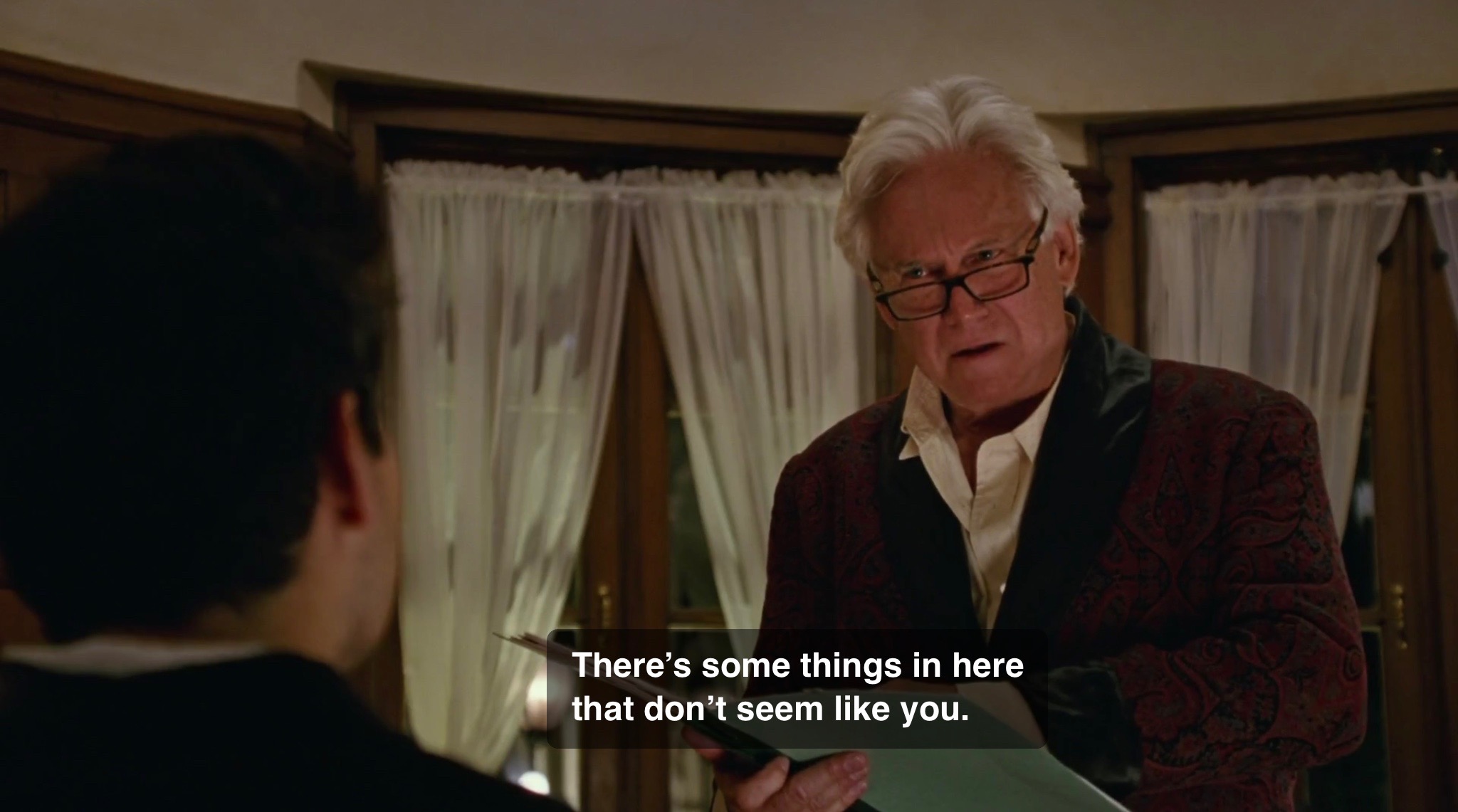
Anyways, this is when Edward decides to give William a good talking to. So he pulls out a report that apparently shows all sorts of inconsistencies in William’s story. Hmmm…and why he didn’t pull this report out I don’t know… prior to the night before the wedding? The movie never really says. The best explanation we are given is in a scene coming up when Edward makes it clear that he wanted a son to carry on his name, but he only seems to produce girls. Perhaps we are expected to believe that Edward was willing to turn a blind eye to this report that he clearly had before because it meant he would have a son-in-law. Fiona also gets a talking to about how the wedding could affect his and her political careers. But who cares about that because we need another character…apparently…for reasons?

IMG_4410

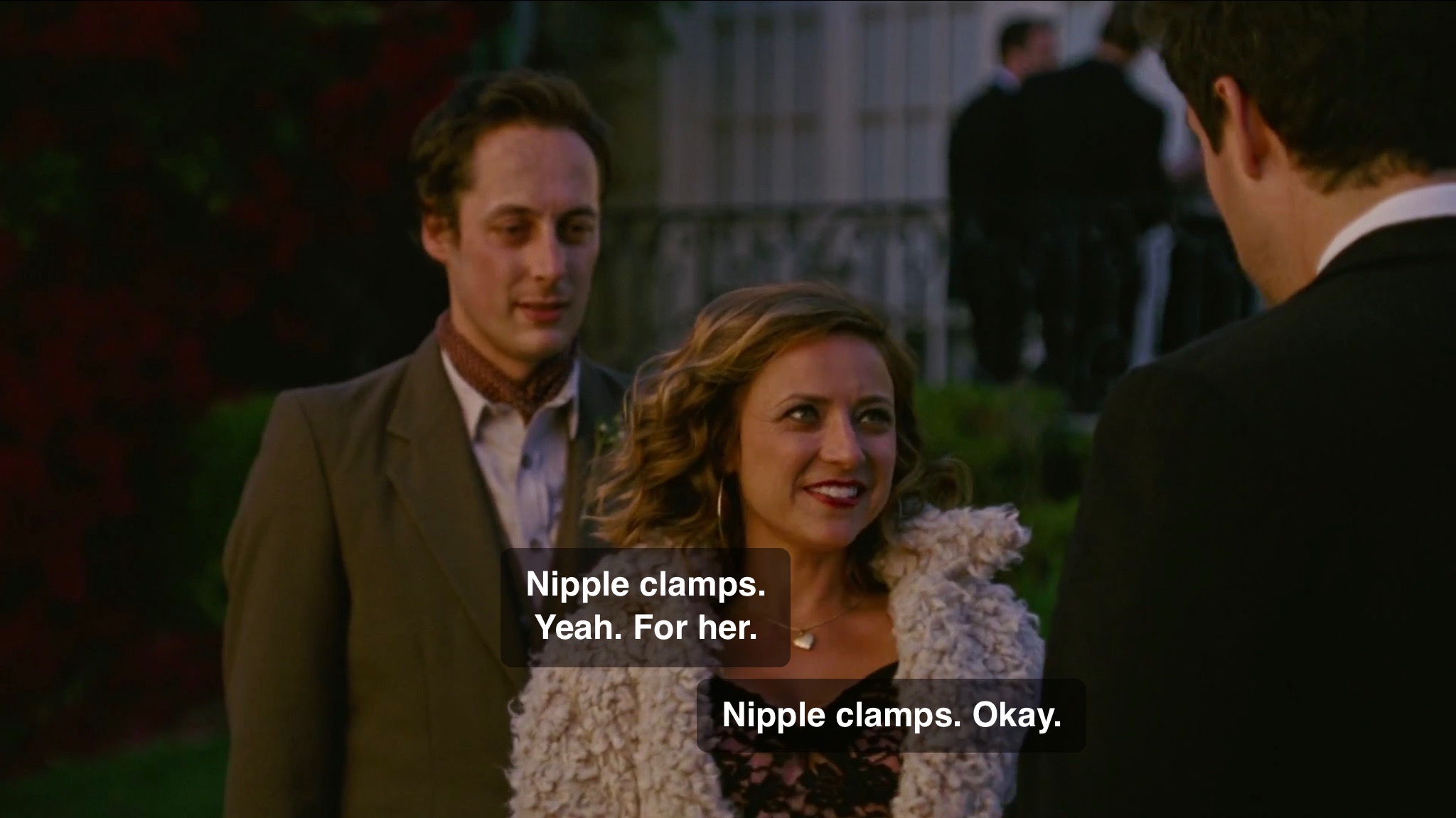
This is Carla the prostitute played by Christine Lakin. I actually know who she is since she played Jackie on Melissa & Joey. The girl who wanted Joey’s sperm to impregnate her one way or another. Here she plays a pointless character thrown in so that Withnail won’t leave the movie alone. At least I hope that’s the reason because otherwise she’s just a character who brings Fifty Shades Of Grey (2015) into this movie by bringing up nipple clamps. I know what you are thinking. This movie needs a scene that looks like it belongs in a Tarantino movie or something like Funny Games. And it comes next.

IMG_4457

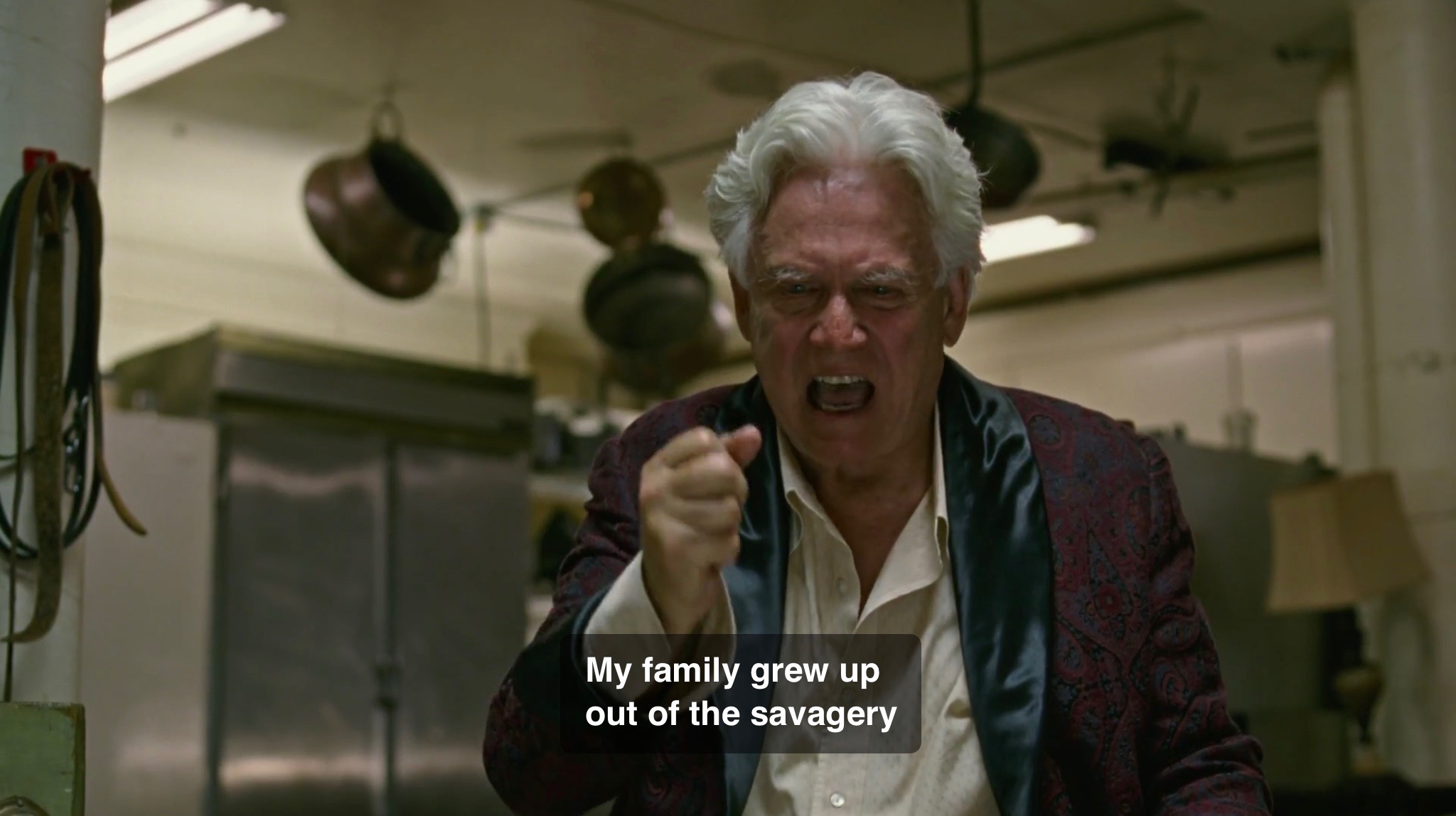
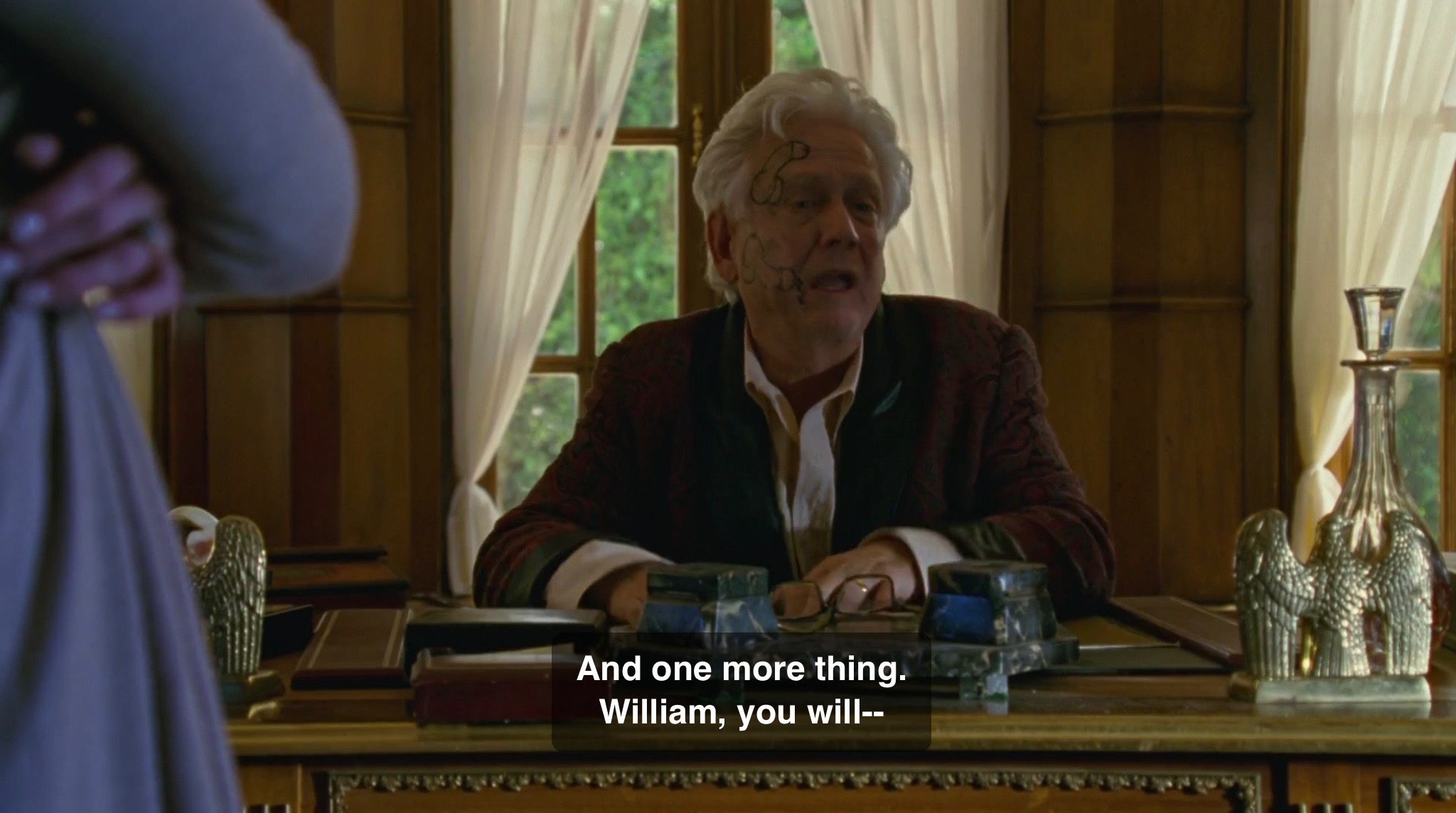
This is when Edward just flips out on the boys and his family. He pulls out a gun, he strips and whips Withnail, and probably give the best performance in this whole movie. Even if it is a bit much.

IMG_4643

Cut to the next morning and Edward with two penises drawn on his face makes his daughter and Withnail offers they can’t refuse. Much to the dismay of William who at this point probably figured he and Fiona would be riding off into the sunset having told her the truth about himself and that he truly does love her. At least Carla leaves the bride with a wedding present.

IMG_4696

Then a little wedding stuff before the movie ends on this shot.

IMG_4707

And that’s The Leisure Class. Why did this movie stir up so much crap over Lisa’s review? It’s a movie with it’s fair share of problems, but those are a dime a dozen. Director Jason Mann tried something probably a little too ambitious for the conditions he was working under, and it never really came together. It happens. It’s his first film. What were people hoping for here? I don’t know. I just know what the finished product is. A forgettable movie that amounts to Withnail Crashes A Wedding.

As for some of the nasty comments that came Lisa’s way. I don’t mind the down votes. That’s what they’re for, but if you only want to hear what you have to think about something then don’t read other people’s reviews of things. You don’t need anyone else’s validation to have an opinion about something.

Well, I’m moving on with my life now.

So, I watched The Leisure Class…


leisureclasspic

Well, it had to happen sometime.

After 8 weeks of showing us how the film was made, HBO finally had to broadcast the latest Project Greenlight film.  Over the course of the series, we’ve watched the seemingly humorless director Jason Mann struggle to maintain his “artistic vision” while directing his first feature film, The Leisure Class.  We watched as he fought for and won the right to shoot on film.  We wondered if Jason would be able to pull off the film’s big stunt.  Even more importantly, we watched because we were hooked on the hostility between Jason and the film’s producer, Effie Brown.  Jason resented having to answer to Effie.  Effie resented having to work on something like The Leisure Class.  For 8 weeks, viewers were either Team Jason or Team Effie.

And through it all, we wondered — was The Leisure Class any good?

From the minute that Jason was named as The Leisure Class‘s director, I had my doubts.  A comedic sensibility is something that you either have or you don’t.  At first glance, there was nothing about Jason that suggested he even had a sense of humor.  Once filming started, nothing that we were shown looked all that promising.  The film’s trailer felt more frantic than anything else and I slowly found myself dreading the prospect of sitting through The Leisure Class.

But sit through it I did and … well, it was bad.  Unfortunately, it really wasn’t bad enough to be enjoyable.  Instead, it was just a bland misfire.  If the film was interesting, it was because I related each scene to what I had previously seen on Project Greenlight.  Wow, I thought, Effie sure was mad when they were shooting this scene.  A few minutes later: Is this the scene that Jason was worried would be underlit?  And then later: This is the scene where Bruce Davison wasn’t sure whether he should say pricks or dicks!  I’m glad they were able to make a final decision…

As for the film itself — well, how do you describe the plot of a film that really didn’t seem to have a storyline?  Charles (Ed Weeks) is actually William, a British con artist.  He is about to marry Fiona (Bridget Regan), the daughter of Sen. Langston (Bruce Davison).  At first, Charles was just planning on stealing Langston’s money but now he’s fallen in love with Fiona.  The day before the wedding, Charles’s alcoholic brother, Leonard (Tom Bell), shows up at the Langston estate.  He pretends to be Charles’s best friend.  And then, Leonard gets drunk and encourages a bunch of teenagers to skinny dip.  And then there’s the car accident.  (This is the big stunt that Jason was so concerned with.)  And then Sen. Langston gets drunk and there’s this amazingly ugly scene where he says a lot of nasty things to his wife and his daughters.  And then Langston nearly murders Charles and Leonard but Fiona ends up pulling a gun on him.  And then the next morning, Leonard draws on Langston’s face.  There’s also a prostitute, named Carla (Christina Lakin), who shows up for no reason but at least she gets a few funny lines.  The film doesn’t add up too much, with none of the characters or their actions making much sense.  The script feels like a first draft and, even at only 80 minutes, the movie seems to be way too long.

The overriding theme of Project Greenlight‘s fourth season has been that Jason has gotten nearly everything that he wanted while shooting his film.  Personally, it wouldn’t surprise me to discover that this season was pretty much edited to cast Jason in as negative a light as possible.  (Otherwise, the HBO execs would have to take responsibility of the train wreck that is The Leisure Class.)  Still, it’s impossible to deny that Jason fought a lot of battles and that none of them seem to have made much difference as far as the end product is concerned.

Jason fought to shoot The Leisure Class on film, as opposed to going digital.  He even turned down extra shooting days so that he could get film.  But visually, The Leisure Class is flat and boring.  It may have been shot on film but it still looks like a single camera sitcom.  (In fact, it’s hard not to feel that the film could have been improved if it had taken an Office or Modern Family mockumentary approach.  At least that way, the characters could have explained their often confusing motivation.)

Jason got the cast that he wanted but that cast is let down by a poorly conceived script.  All of the characters are so one-dimensional that it’s doubtful that there’s much anyone in the cast could have done to make them interesting.  I like both Ed Weeks and Tom Bell but the film let both of them down.  Meanwhile, Bruce Davison is reduced to bellowing out his lines.

Jason fought to find the perfect location and spent a lot of time talking about how the Langston estate was almost as important as the characters.  The house looks gorgeous but the film is directed in such a haphazard manner that you never really get to appreciate it.  For a director who spent so much time obsessing over minutiae, Jason’s film is unique for its total lack of interesting detail.

Let’s not forget — when the season began, Jason was selected to direct a broad comedy called Not Another Pretty Woman.  Jason is the one who suggested making The Leisure Class instead.  That said, I have a hard time believing, as some have suggested on twitter, that Not Another Pretty Woman would have been much of an improvement.

Ultimately, Jason seems to be an okay technical director.  He knows how to light a scene.  He understands the importance of moving the camera.  I imagine he could probably spend hours explaining why he chose to use a certain type of lens.  Unfortunately, there’s not a single scene in The Leisure Class that feels spontaneous.  There’s no humanity to the characters.  It’s a cold movie that feels more like a student film than anything else.

From what I’ve read, it appears that there will be at least one more season of Project Greenlight.  And I’m happy to hear that because the show makes for good drama.  I just wish that it would occasionally make for a good movie.