The great Alec Guinness, one of the best actors of all time, was born 124 years ago on this date.
Today’s scene of the day comes from the film that won Guinness the Oscar for Best Actor, 1957’s The Bridge on the River Kwai. In that film (which was one of many that Guinness made with director David Lean), Guinness plays Col. Nicholson, a British POW who is tasked, by the Japanese, with building a bridge. Though many of his men claim that it will mean collaborating with the enemy, Col. Nicholson feels that the bridge should be a symbol of British ingenuity. As Nicholson explains it, the bridge will show what the British are capable of doing, even under the most trying of circumstances. Eventually, Nicholson’s obsession with showing up his captors by constructing the perfect bridge blinds him to everything else that is going on.
In this scene, Nicholson reveals just how obsessed he has become. It’s a phenomenal piece of acting from Guinness, an actor who — up until the film — was largely known for his comedic performances.
Today would have been the 92nd birthday of the great Debbie Reynolds.
Today’s scene that I love comes from the 1952 classic, Singin’ In The Rain. In this scene, Debbie performs the song Good Mornin’ with Gene Kelly and Donald O’Connor.
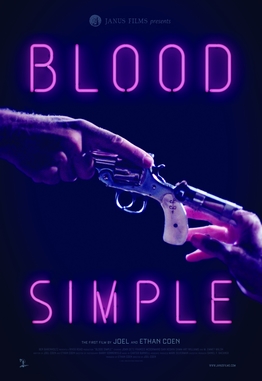
The great character actor M. Emmet Walsh passed away yesterday. He was an actor who had a long career, often playing small but important roles. 1985’s Blood Simple brought Walsh one of his few starring roles and today’s scene that I love comes from that film.
In this scene, M. Emmet Walsh’s sleazy private detective meets with bar owner Dan Hedaya and reveals the result of his investigation into whether or not the bar owner’s wife is cheating on him. Blood Simple was the directorial debut of the Coen Brothers and featured Frances McDormand in one of her first starring roles. It also featured M. Emmet Walsh at his best.
Today, the Shattered Lens wishes a happy 91st birthday to Sir Michael Caine.
Today’s scene that I love comes from 2010’s Inception, a film that featured Caine in a small but key role. Caine shares this scene with Leonardo DiCaprio and, as good an actor as DiCaprio may be, Caine dominates from the moment he first looks up.
Today is not just Oscar Sunday! It’s also Chuck Norris’s 84th birthday!
In honor of the birthday of the toughest man alive, here’s a scene that we love from 1982’s Silent Rage. Watch as a bunch of bikers learn that no one should mess with Chuck!
Today, we wish filmmaker George Miller a happy birthday!
Today’s scene that I love comes from 1983’s Mad Max 2 (a.k.a. The Road Warrior). In the scene, Lord Humongous and his followers arrive at a compound. Humongous and his followers are both ludicrous and menacing at the same time. While watching this scene, Miller makes sure that the viewer knows that, even if Humongous’s followers are a little bit daft, Humongous himself is truly dangerous.
Incidentally, when Mad Max 2 was in the pre-production stages, one idea was that Max would discover that, underneath the mask, was his old partner from the first film, Jim Goose! Miller says that idea was abandoned but, just as I imagine Immortan Joe was actually Toecutter grown up, I also always assume that Humongous was the formerly cheerful Jim Goose.
Today, the Shattered Lens wishes a happy birthday to director Ron Howard!
Ron Howard has been in the film business for his entire life, first as an actor and then as a director. He is perhaps the epitome of the mainstream, Hollywood film director and, as such, he doesn’t always get the credit that he deserves. He’ll never be considered an auteur but no matter! Ron Howard makes efficient and often entertaining films and, in this age of bloated budgets and self-indulgence, there’s something to be said for his professional approach.
Plus, he gave us this absolutely beautiful scene from 1995’s Apollo 13. In this scene, Jim Lovell (Tom Hanks) takes a look at the moon and, for a minute, thinks about what could have been. Though Lovell may dream of walking on the moon, he knows it won’t happen and that his only concern now is getting both himself and his crew back home. He’s a professional, much like Ron Howard himself.
Today would have been the 92nd birthday of one of the greatest film stars of all time, Elizabeth Taylor!
Today’s scene that I love comes from 1963’s Cleopatra. Cleopatra is often dismissed as the film that nearly bankrupted a studio but it’s enjoyable if you’re in the right mood and you’ve got four hours of free time. Elizabeth Taylor may not have been a historically accurate Cleopatra but who cares? It seems appropriate that the most glamorous woman of what was then the modern world played the most glamorous woman of the ancient world.
In this scene, Cleopatra arrives in Rome with all of the fanfare befitting the world’s most beautiful and powerful woman. Keep in mind that this scene was done in the days before CGI and — *shudder* — AI. Every costume was real. Every extra was real. Everything about this scene was real.
Today, we celebrate what would have been the 93rd birthday of the rugged American actor Christopher George.
George may have gotten his start in westerns and war movies but he is best remembered for a series of horror films in which he appeared in the late 70s and early 80s. One of the best of those was Lucio Fulci’s 1980 classic, City of the Living Dead.
In today’s scene that I love, Christopher George plays a reporter who realizes that psychic Catriona MacColl has been buried alive. He digs her up. Of course, this is a Fulci film, so things nearly go terribly wrong.
Today, the Shattered Lens wishes a happy 86th birthday to the one and only Paul Morrissey!
Though he may not be as well known as some of his contemporaries, Paul Morrissey is one of the godfathers of independent film. He first came to notice as a collaborator of Andy Warhol’s. Morrisey’s first films were shot at the Factory and starred the members of Warhol’s entourage. At a time when the indie film scene barely even existed, Morrissey was making boldly transgressive films and distributing them largely on his own. In fact, it could probably be argued that, if not for Paul Morrissey, the American independent film scene would never have grown into the impressive artistic and financial force that it is today.
There’s always been some debate over how much influence Warhol had over Morrissey’s films. Morrissey has always said that Warhol had next to nothing to do with the films, beyond occasionally taking a producer’s or a co-director’s credit. Others have disagreed. What can be said for sure is that, even after Warhol retreated from directly involving himself in the cinematic arts, Morrissey continued to make fiercely independent films.
Paul Morrissey made films about outsiders. While other directors were telling stories about the middle and upper classes, Morrissey was making movies about junkies, prostitutes, and people simply trying to make it from one day to another. His films also frequently satirized classic Hollywood genres. In fact, his two best-known films, Flesh for Frankenstein and Blood for Dracula, not only satirized the old Universal horror films but also the Marxist-themed films being made in Europe. A devout Catholic and a political conservative, Morrissey took a particular delight in tweaking the left-wing assumptions of the counterculture. Who can forget Joe Dallesandro’s gloriously shallow revolutionary in Blood for Dracula?
Today’s scene of the day comes from Paul Morrissey’s 1985 Mixed Blood, a film about a war between a Brazilian gang and a Puerto Rican gang that is fought almost entirely by underage soldiers. (The film compares the street soldiers to the members of the boy band Menudo, in that they are rotated out once they reached the age at which they could be tired as adults.) In this scene, a police officer visits a drug operation that is almost entirely staffed by children.


 Through the Shattered Lens