Since we’ve been talking a lot about the original Little Shop of Horrors today, it’s only appropriate to share a scene from the remake for today’s scene of the day.
From 1986’s Little Shop of Horrors, here is Steve Martin performing Dentist! Because there’s nothing scarier than going to the dentist, right?
The opening of Dario Argento’s 1977 masterpiece, Suspiria, is about as perfect an opening as one could hope for. American ballet student Suzy Banyon (Jessica Harper) arrives in Frieburg, Germany. Both Argento and Harper perfectly portray Suzy’s confusion as she makes her way through the airport and, as torrential rain drenches her, attempts to hail a taxi and get a ride to the dance academy. (What Suzy doesn’t know, of course, is that the dance academy is home to the ancient witch known as Our Mother of Sighs.) With this opening scene, Argento both immediately establishes the off-center, nightmarish atmosphere of Suspiria and establishes Suzy as a character who we, as the audience, relate to and care about. Suspiria is a great film and certainly one that didn’t need a pretentious remake. The greatness of the original Suspiria all begins with this brilliant opening.
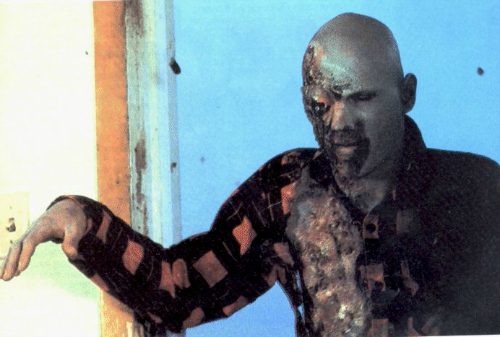
Today’s horror scene that I love is from George Romero’s 1978 zombie masterpiece, Dawn of the Dead.
The first time I saw this film, I was so upset when Roger died. Not only was Roger my favorite character but I also knew that if Roger — who was so funny and so charismatic and so competent — couldn’t survive then that meant that no one was going to survive.
Today’s horror scene that I love comes from 1970’s The Wizard of Gore. Directed by Herschell Gordon Lewis, this uniquely acted scene should be familiar to anyone who has ever watched the montage that opens most of the Something Weird video releases.
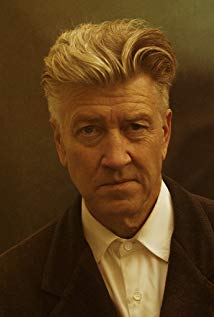
It’s not usually described as being a horror film but this scene from David Lynch’s 2001 Mulholland Drive literally made me jump the first time I saw it.
Personally, I think this is the scariest moment that David Lynch ever directed.
Today’s horror scene that I love is the opening production number of Michele Soavi’s 1987 masterpiece, Stagefright.
Not only does the opening scene wonderfully satirize both a certain type of stage production and a certain type of exploitation film, it also lets the audience know that they’re about to something that is more than just another Italian slasher film. With this opening sequence, Soavi announced his arrival as a major filmmaker.
Personally, I can’t help but laugh when the saxophone makes an appearance. Anyone who has ever been involved in a community theater will relate to the moment.
Jim Jarmusch’s The Dead Don’t Dieis a film that definitely grew on me. When I first watched it, I thought it was intriguing but perhaps a bit too cutesy and enamored with itself. However, I later came to realize that Jarmusch actually found the perfect tone for his look at our zombie-saturated culture.
In the scenes below, Bill Murray, Chloe Sevigny, and the wonderful Adam Driver all deal with the inevitability of doom that comes with being a character in a zombie film.
This is from the original 1987 Hellraiser. The Cenobites were probably never scarier than they were in their very first appearance. They are all the more horrifying because, rather than being stereotypically good or evil, they’re actually neutral. They’re doing their job and, if you don’t want to see them, don’t mess around with the puzzle box. Doug Bradley was brilliant in the role of the head Cenobite (who, of course, would later be known as Pinhead).
Dracula (1931, starring Bela Lugosi as the Count, Dir by Tod Browning, DP: Karl Freund)
On this day, 143 years ago Bela Lugosi was born in what is now Romania. Lugosi began his career in his native country, appearing on stage. After serving as an infantryman in World War I, Lugosi moved into the movie industry and appeared in silent Hungarian films. The young Lugosi was an activist, involved in labor issues and trying to unionize the Hungarian film industry. When a new government came to power in Hungary in 1920, the politically-active Lugosi moved first to Germany and then eventually ended up in the United States. After a period of working as a merchant seaman, Lugosi returned to acting.
He first played Dracula on stage in New York City. In 1928, while touring in the role of Dracula, he moved out to California and quickly became a part of the Hollywood community. When Universal produced a film adaptation of Dracula in 1931, Lugosi was the obvious choice for the lead role. The film made Lugosi a star and it also typecast him. Lugosi never stopped acting, though the films varied widely in quality. By the end of his career, Lugosi was a member of the Ed Wood stock company. Even appearing in something like Bride of the Monster, Lugosi still made an impression.
In the scene below, from 1931’s Dracula, Lugosi suggests that Edward van Sloan’s Van Helsing should perhaps leave the country.