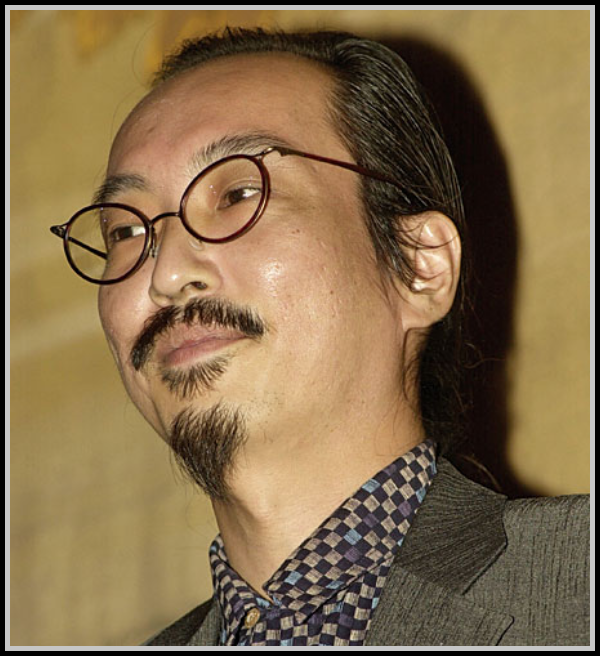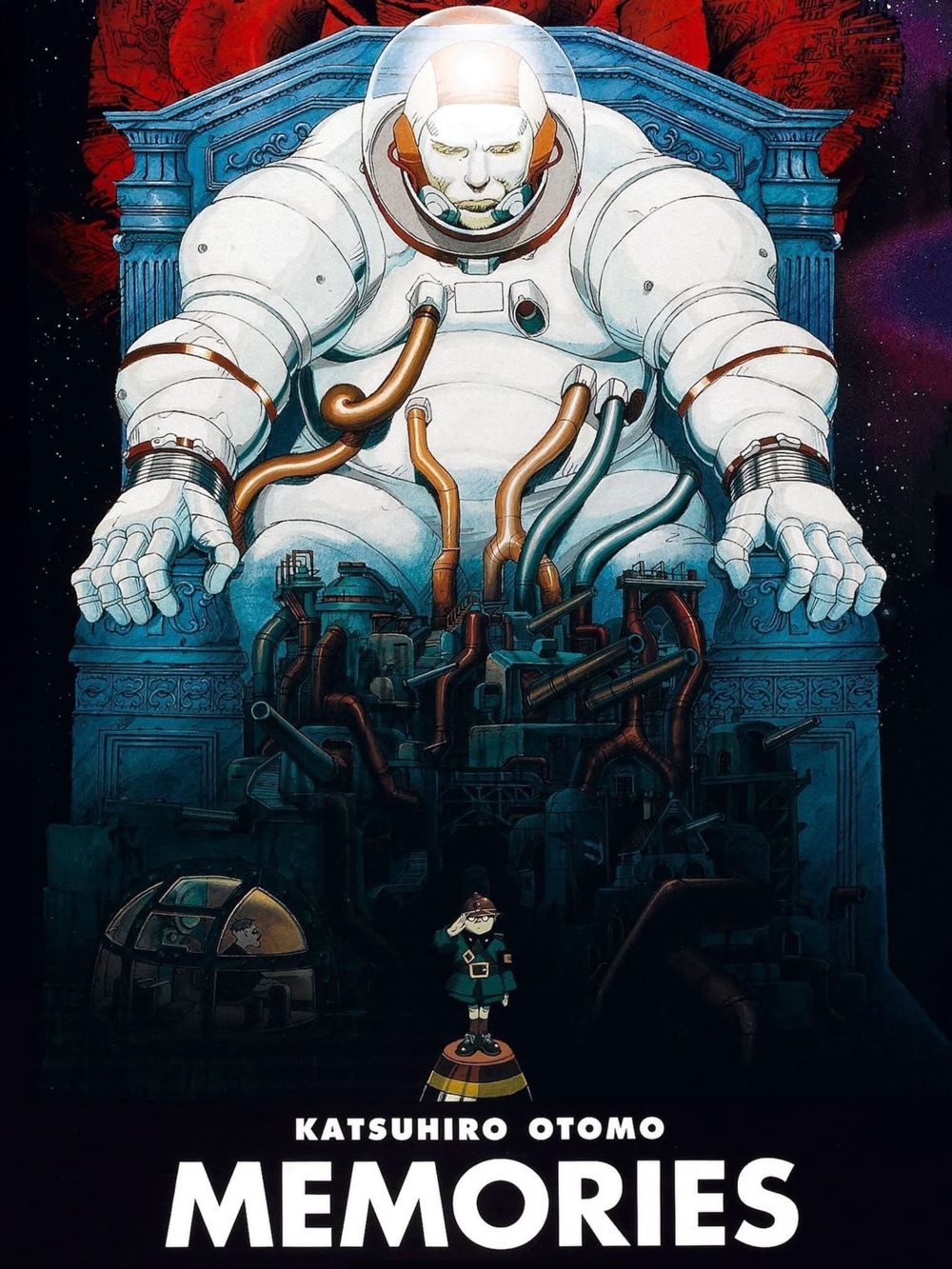
Anime You Should Be Watching: Memories


“Memories… memories are not to be toyed with!” — Heinz

Memories is a mid‑90s anime anthology that feels like a snapshot of how wild and experimental the medium could be when a bunch of heavy hitters got to play in the same sandbox. It’s made up of three separate stories—“Magnetic Rose,” “Stink Bomb,” and “Cannon Fodder”—that don’t connect plot-wise but circle around similar ideas: how technology intersects with memory, systems, and human weakness. The end result is uneven in spots but consistently interesting, and when it clicks, it’s honestly outstanding.

“Magnetic Rose” is the clear showpiece. Directed by Kōji Morimoto and written by Satoshi Kon, it follows a deep-space salvage crew that investigates a distress signal and discovers a derelict structure haunted by the lingering memories of a famous opera singer. The visual approach blends cold, utilitarian sci‑fi hardware with crumbling, ornate interiors, so it feels like the crew is trespassing inside someone’s decaying mind as much as an abandoned ship. The way the environment morphs and lies to the characters, folding past and present together, already hints at the kind of reality‑slipping storytelling Kon would later become famous for.

The sound design and score really push this one over the top. Yoko Kanno leans into big, emotional, opera‑flavored cues that give the segment a tragic, almost theatrical sweep rather than just standard genre tension. Instead of simply backing up jump scares or space thrills, the music amplifies the grief and obsession at the heart of the story, so it plays less like straightforward sci‑fi horror and more like a ghost story built out of longing and denial. The characters themselves are drawn pretty broadly—they mostly function as recognizable types (the seasoned veteran, the younger hothead, the crew just doing their job) rather than deep, fully explored people—but that simplicity keeps the short moving and leaves room for the atmosphere to breathe. In practice, the combination of visuals, sound, and escalating psychological pressure makes “Magnetic Rose” feel rich and layered even without a lot of explicit character backstory.

After that, Memories swerves sharply into “Stink Bomb,” a dark comedy directed by Tensai Okamura. The premise is almost absurd on its face: a lab worker accidentally turns himself into a walking biohazard and slowly becomes the epicenter of a massive crisis. The tone is much lighter, even cartoonish, but there’s a sharp satirical edge underneath. Most of the jokes come from watching institutional systems totally fail to understand or handle what’s happening, ramping up their response in increasingly overblown ways while the poor guy at the center of it all has no idea how dangerous he’s become. It’s a fun, briskly paced piece that lets the animators go wild with chaos and destruction.

That said, “Stink Bomb” is also the segment that feels the most limited conceptually. Once the central gag is in place—this one ordinary guy unintentionally leaving disaster in his wake while officials keep making things worse—the short mostly riffs on variations of that idea. The animation stays lively and the satire lands, and there are flashes of real bite in how it portrays bureaucracy and military decision‑making. But compared to the emotional and thematic density of “Magnetic Rose” or the chilling world‑building of “Cannon Fodder,” it leaves less to chew on once the credits roll. It’s enjoyable, just not as haunting.

“Cannon Fodder,” directed by Katsuhiro Otomo himself, is the quietest but in some ways the most unsettling of the three. It takes place in a city whose entire existence revolves around firing gigantic cannons at an enemy no one ever actually sees. Everything—from education to labor to family routines—is oriented toward that single, unexamined purpose. Visually, it stands apart from the rest of the film: the designs are rougher and more stylized, drawing on European comic and industrial influences rather than sleek anime polish. The big stylistic flex is the way the segment is staged to feel like one continuous movement, with the “camera” drifting through streets, factories, and cramped apartments, watching people go through their day.

There isn’t much conventional plot here, and that’s intentional. The story follows workers and a single family long enough to show how thoroughly the ideology of constant war has soaked into everyday life. Kids learn artillery math at school; adults talk about shell trajectories like it’s the weather. Because the short avoids big twists or overt exposition, it hits more like a living political cartoon: the point is how normalized the whole nightmare has become. Some viewers might find the slower, observational rhythm a bit dry or abstract, especially coming after two more immediately engaging segments. But if the mood clicks, “Cannon Fodder” leaves a lingering, uneasy aftertaste that fits the anthology’s preoccupation with systems and dehumanization.

Stepping back, the three shorts show off just how flexible this medium can be. You get operatic space horror, satirical disaster comedy, and austere anti‑war parable in a single package. There is no explicit framing device tying them together, and the shifts in tone are dramatic, so the film doesn’t feel “smooth” in the way a more unified narrative would. That can be a downside if you’re expecting a cohesive movie rather than a curated set of pieces. On the other hand, that variety is a big part of the appeal: each segment has its own personality and agenda, and the anthology structure lets them coexist without compromise.

On a technical level, Memories holds up surprisingly well. The hand‑drawn animation retains a level of texture and physicality that still looks great today, and the layouts and background work in all three segments are consistently strong. “Magnetic Rose” in particular could be screened alongside other top‑tier anime films from the era and not feel out of place. “Cannon Fodder” still feels formally bold because of its faux‑continuous-shot approach and its distinct visual tone. If anything has aged, it’s more about pacing—modern viewers used to ultra‑fast editing and constant exposition might find some stretches slower than expected—but the film rewards anyone willing to lean into its rhythms.

In terms of accessibility, Memories isn’t the most beginner‑friendly anime film. The first segment leans into psychological horror and tragedy, which can be intense if you’re mostly used to lighter or more straightforward sci‑fi. The comedic whiplash of “Stink Bomb” right after might feel tonally off if you’re still processing the emotional punch of “Magnetic Rose.” And “Cannon Fodder” asks you to be okay with a more metaphor‑driven, open‑ended piece rather than a neatly resolved story. That mix means the anthology is more likely to resonate with viewers who are already interested in anime as a cinematic form and are curious to see different approaches pushed side by side.

What really makes Memories feel important, though, is the cluster of talent involved and what they went on to do. Katsuhiro Otomo brings the weight of Akira and uses this film as a space to experiment with scale and structure. Kōji Morimoto’s work here sits right in the trajectory of his later, more explicitly experimental projects. Satoshi Kon’s script for “Magnetic Rose” reads almost like a prototype for the identity‑fracturing stories he’d later build entire films around. Tensai Okamura and Yoshiaki Kawajiri bring a sensibility for action and genre that gives “Stink Bomb” its bite, and Yoko Kanno is already showing the range and emotional intelligence that would make her one of anime’s most beloved composers. Even if you stripped away the historical context, the film would still be worth watching—but knowing what these creators went on to do makes it feel like catching a moment just before a lot of big ideas fully explode.

Taken as a whole, Memories plays like a compact tour through different corners of what anime could do in the 1990s when it wasn’t worried about franchising or playing it safe. It’s not flawless, and not every segment will work equally well for every viewer, but the high points are strong enough that the anthology earns its reputation. For anyone interested in the evolution of anime as an art form—especially on the sci‑fi and psychological side—it’s absolutely worth the time, both as a film in its own right and as a window into a formative creative era.
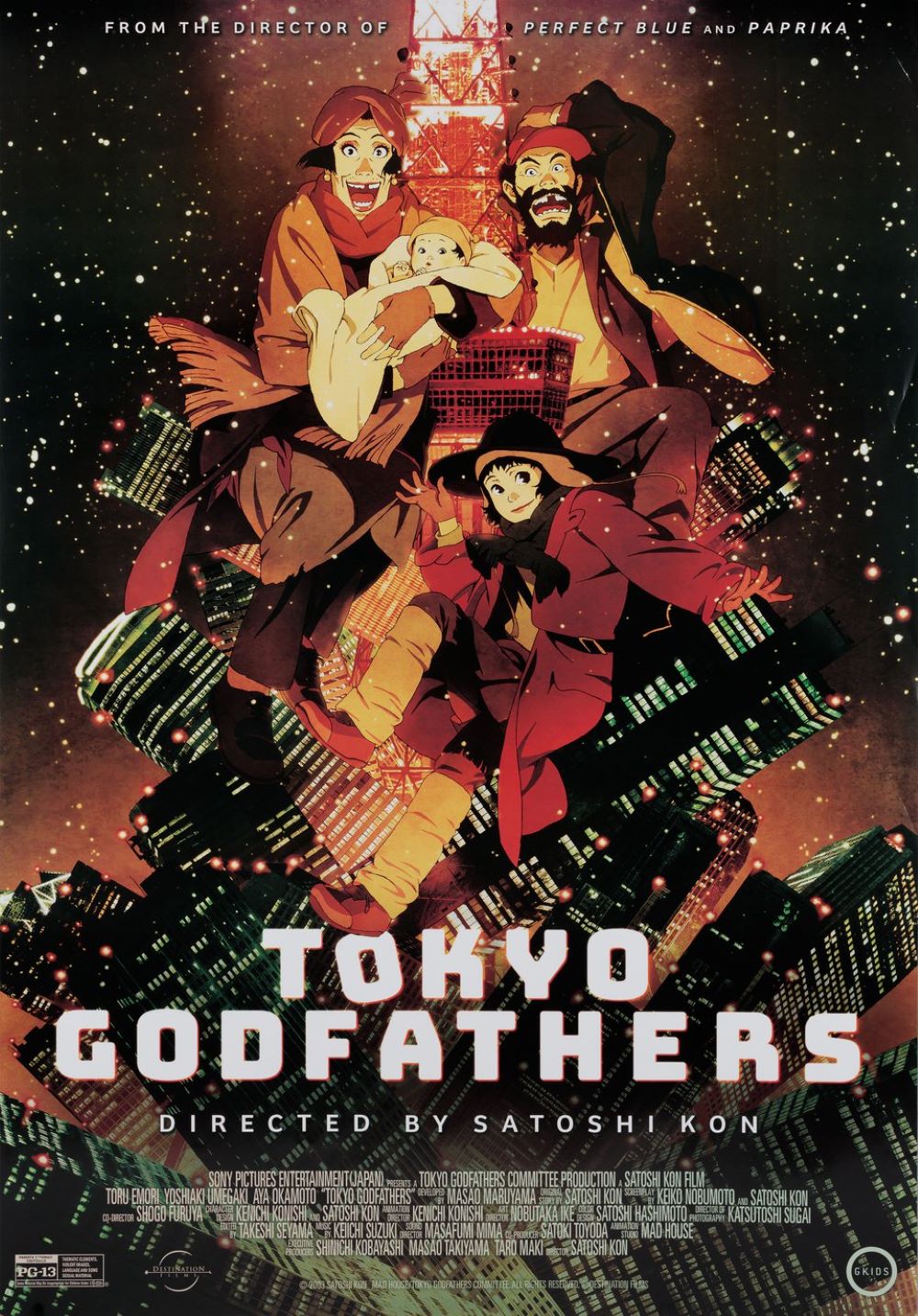
Anime You Should Be Watching: Tokyo Godfathers (Tōkyō Goddofāzāzu)


“I’m scared of my family, but I want to go home.” — Miyuki

Tokyo Godfathers is a film that shows how hope and kindness can be found in the most unexpected places, all wrapped up in a hilarious, chaotic, and heartwarming story set on Christmas Eve in Tokyo. Directed by Satoshi Kon, this 2003 anime follows three unlikely characters: Gin, a middle-aged alcoholic with a troubled past; Hana, a lively transgender woman who dreams of being a mother; and Miyuki, a guarded teenage runaway dealing with her own pain.

The adventure begins when the trio, scavenging through garbage for Christmas presents, discovers an abandoned newborn baby. Hana names the baby Kiyoko, meaning “pure child,” and the three set off on a mission to find the baby’s parents using a few clues left behind. Their journey takes them into the depths of Tokyo’s bustling city life—through snowy streets, a yakuza wedding, and encounters with all kinds of characters, from hitmen to estranged families.

What makes Tokyo Godfathers stand out is its perfect blend of humor and emotional depth. It’s easy to laugh at the trio’s bickering and mishaps, but the film also offers sincere moments of vulnerability and growth. Hana’s fierce protectiveness, Gin’s struggle for redemption, and Miyuki’s search for acceptance form a trio of deeply relatable characters. Their rough lives and personal regrets are shown honestly, but the warmth they create together feels genuine and touching.

The film doesn’t shy away from depicting the harsh realities of their world, including violence, abuse, and loss. Yet even in moments of hardship and conflict, acts of giving and empathy persist. Sometimes these harsh and tender moments intersect in the same sequence—such as tense confrontations that unexpectedly end in compassion, or scenes where despair is met with generosity. This layering creates a powerful sense of life’s complexity, showing that kindness can shine brightest amidst chaos and pain.

Visually, the film captures the chilly, neon-lit cityscape with beautiful detail. The animation highlights not only the busy and bright streets of Tokyo but also the subtle emotions of the characters, from shy glances to moments of frustration or tenderness. The film’s mix of grounded realism with moments of coincidence or miracle lends it a magical yet believable atmosphere.

At its core, the film explores what family really means. The three main characters, though not related by blood, support and care for each other in ways many traditional families don’t. The baby Kiyoko serves as a catalyst for each character to confront their past and rethink their relationships. The story gently shows that family can be chosen, formed through shared hardship and love rather than just genetics.

The film’s holiday setting works beautifully because it taps into the holiday themes of forgiveness, second chances, and hope. But it doesn’t shy away from showing the harsh realities of homelessness, loss, and loneliness—making the moments of joy feel even more earned. The characters are flawed but deeply human, and their journey toward reconciliation and connection is both honest and uplifting.

Though the story relies on some lucky coincidences and wild turns, these moments of serendipity feel like part of the film’s charm, highlighting how unpredictable and strange life can be. These surprises keep the story moving and weave a sense of wonder through the gritty city streets.

The supporting characters the trio meet add layers of complexity and humor, and small scenes—like Miyuki bonding with a single mother despite a language barrier or Hana’s reflections on her past love—enrich the narrative. These interactions remind us that no one’s story is simple and everyone carries hidden struggles.

By the end, each main character faces their own moment of truth—whether it’s Gin reconnecting with his daughter or Miyuki standing up to her past. The film leaves viewers with a hopeful message: even when life feels broken, it’s possible to find grace, redemption, and unexpected family.

Tokyo Godfathers is perfect if you want a holiday movie with heart, humor, and a refreshing dose of realness. You don’t need to be an anime fan to appreciate its warmth and message. It’s a touching reminder that kindness and connection can be found in the most unlikely places—even on the coldest winter nights.

Anime You Should Be Watching (Horror Edition): Perfect Blue (dir. by Satoshi Kon)


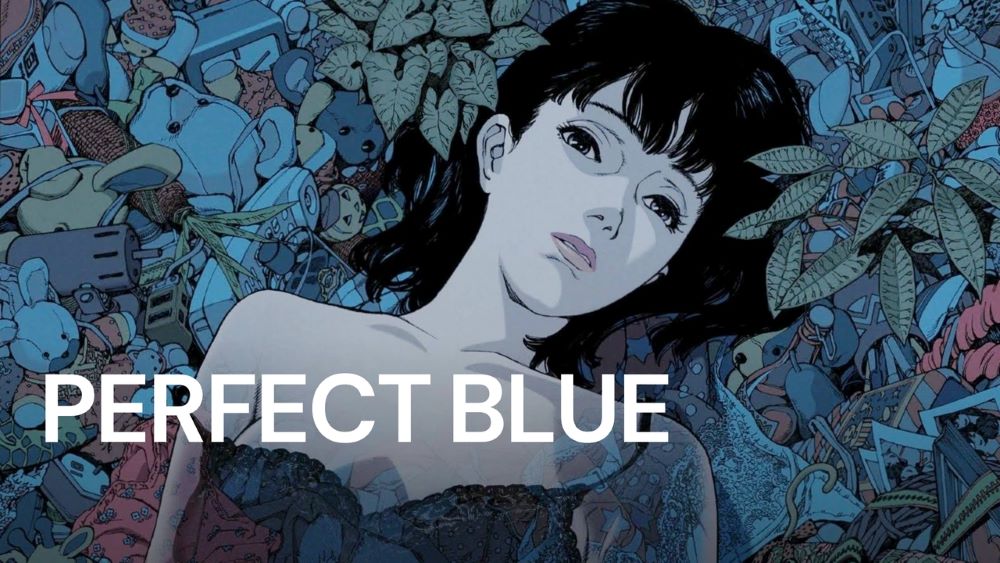
Satoshi Kon’s 1998 psychological thriller Perfect Blue remains a striking and influential work nearly three decades after its release. Despite being an animated film, it evokes the unsettling style and tension found in the classic Italian giallo thrillers of the 1970s and ’80s—films by directors like Dario Argento and Mario Bava—and melds them admirably with elements of 1970s Eurotrash exploitation and arthouse psychological thriller reminiscent of Brian De Palma. Kon’s debut feature is a haunting exploration of fractured identity, blending show-business satire, Hitchcockian suspense, and surreal nightmare imagery into a profoundly relevant story in today’s age of parasocial fandom and digital voyeurism.

The film centers on Mima Kirigoe, a member of the bubblegum J-Pop group “CHAM!” who decides to leave the idol world to pursue a career in serious acting. This choice, rooted in her desire for personal growth and artistic expression, sets off devastating consequences. For her managers and many fans, Mima’s break from the manufactured idol persona is viewed as betrayal—a dissolution of a carefully crafted image designed for maximum market appeal. The pristine, innocent figure worshipped by fans begins to crumble, replaced by the complicated reality of adulthood and the harsh glare of fame.

To fully grasp the horror underpinning Perfect Blue, it’s important to understand the nature of Japanese idol culture. These idols are not merely singers or performers—they are highly managed brands. Every lyric, outfit, choreographed move, and public appearance is tightly controlled to project purity and accessibility. This system bears close resemblance to the meticulously produced Western pop acts of the late 1990s and early 2000s like Britney Spears and the Backstreet Boys. Both rely on constructing polished, artificial personas that maximize commercial appeal, often at the expense of genuine selfhood. When an idol deviates from this script, it frequently provokes obsession, confusion, and even violent reactions from a subset of fans unable to reconcile the constructed image with evolving reality.

Mima’s transition from ingénue pop star to serious actress thrusts her into an intense psychological crucible. Her first major acting role requires her to perform a deeply disturbing rape scene, one that blurs lines between professional obligation and personal violation. Kon lingers on Mima’s shocked expression—a powerful mask of confusion and repressed trauma. This sequence sets the tone for the film: a world where performance, identity, and exploitation intertwine irrevocably, creating a landscape where self and roles imposed by society become indistinguishable.

As Mima’s public persona shifts, darker forces emerge. An eerie fan website titled “Mima’s Room” chronicles her life with disturbing accuracy but is clearly authored by an unknown party. Even more threatening is an obsessed fan fixated on the idol version of Mima, stalking her and insisting that the “real” Mima no longer exists. This duality—between reality and imitation, self and construct—becomes the film’s thematic centerpiece. The narrative loops and fractures, cutting between dreams, televised drama, and supposed reality until neither Mima nor the viewer can be sure what is authentic. This masterful ambiguity immerses us in the protagonist’s psychological collapse.

The horror in Perfect Blue operates on two deeply intertwined levels. First, it is a psychological portrait of a young woman’s unraveling, echoing themes explored in Roman Polanski’s Repulsion and Darren Aronofsky’s Black Swan—films focused on fragile female psyches under immense pressure. While Aronofsky has publicly denied that Black Swan was directly inspired by Perfect Blue, the similarities in theme and specific visual motifs suggest otherwise. Both films explore the disintegration of identity in a young woman caught between innocence and adult roles, with dreamlike, unsettling sequences blurring reality and hallucination. The parallels in their portrayal of psychological breakdown, stalking, and the pressure of performance are striking, though Aronofsky’s work is set in the world of ballet rather than pop music and acting.

Second, Perfect Blue channels the lush, stylized dread characteristic of giallo cinema. Kon borrows Argento’s fascination with voyeuristic camera angles, saturated color palettes, and the interplay of beauty and violence. Like Argento’s heroines trapped in a hall of mirrors, Mima finds herself caught in a labyrinth where surreal horror becomes tangible and murder might be just another staged act in a disturbing performance.

Yet unlike Suspiria’s occult grotesques, Kon’s horror resides not in supernatural forces but within the mind and media itself. Animation becomes a revelatory choice—rather than softening violence, it frees Kon from physical constraints, allowing reality to fracture visually with startling fluidity. Identities shift from frame to frame, reflections move independently of their sources, and timelines collapse and fragment like psychic glitches. The medium’s flexibility intensifies the film’s psychological disorientation, blurring fact and fantasy in ways live-action cinema would struggle to capture so viscerally.

Kon’s prescient understanding of media obsession resonates more strongly than ever today. Long before social media reshaped how identity is constructed and perceived, Perfect Blue envisioned the internet as a distorting mirror that erases the line between self and performance. The “Mima’s Room” website serves both as diary and prison—a disturbing precursor to the carefully curated digital personas that dominate social media platforms now. As Mima reads falsified diary entries that resemble her life more “truthfully” than her own memory, she grows alienated from reality. The omnipresent gaze of fans, stalkers, and producers merges into an oppressive force she cannot escape.

This taps into a modern phenomenon: parasocial relationships. These one-sided emotional bonds fans develop with celebrities or fictional characters foster a dangerous illusion of intimacy and knowledge, often masking boundaries between admiration and entitlement. In Perfect Blue, the deranged fan believes he “knows” Mima in a way that justifies controlling her, even committing violence to preserve the image he idolizes. This mirrors the darker side of parasocial dynamics today, where fans demand absolute authenticity or control over public figures’ identities, sometimes leading to harassment or stalking. Kon’s film foreshadows how internet culture can exacerbate these fragile boundaries, blurring realities and fueling destructive obsession.

The film’s editing amplifies this psychological suffocation. Kon intercuts scenes from Mima’s TV drama—ironically titled Double Bind—with moments from her “real” life until one blurs imperceptibly into the other. Viewers are drawn deeper into uncertainty: are we witnessing actual events, staged fiction, or yet another deceptive layer? This deliberate manipulation creates unease without relying on cheap jump scares or graphic violence. The horror is existential—losing trust not only in others but in one’s own mind.

This theme has become exponentially more relevant with the rise of social media influencers and online streaming personalities. Today, countless individuals cultivate personal brands that blend their private lives with public personas online, often with blurred or deliberately ambiguous boundaries. The intense fan interaction, constant scrutiny, and expectation of accessibility echo the pressures Mima faces. As social media blurs the line between “real” self and online performance, the risks of losing grip on one’s identity—as Mima does—feel more immediate and widespread than ever.

It is extraordinary that Perfect Blue was Kon’s first feature film. His command of cinematic language is masterful—harnessing animation as a means to probe psychological depths rather than as mere escapism. His subsequent works—Millennium ActressTokyo GodfathersPaprika—build on themes of identity, memory, and the fluid borders of reality, but Perfect Blue remains his rawest and most unsettling contribution. His untimely death from pancreatic cancer in 2010 at just 46 left the film community mourning a visionary whose full promise was tragically unfulfilled.

One of Perfect Blue’s greatest achievements is rejecting outsider stereotypes about anime. It is neither childish fantasy nor gratuitous erotica, though it fearlessly explores sexual anxiety, trauma, and performance under intense scrutiny. Kon’s film proves that animation can tackle mature themes—mental illness, societal pressure, gender identity—with subtlety and emotional gravitas usually reserved for live-action cinema. It challenges the misinformed Western association of adult anime with “hentai,” affirming animation’s capacity as a serious art form.

Kon’s film also critiques fandom’s darker impulses, asking difficult questions about ownership and identity. How much of a celebrity’s life belongs to the public? How much of one’s self must be sacrificed under the weight of expectation? In today’s hyperconnected online world, Kon’s portrayal of obsessive fans demanding idealized idols is uncannily relevant and urgent.

Ultimately, Perfect Blue transcends genre and era. It is not merely a psychological thriller or celebrity critique but a mirror held to an increasingly performative world. Long before social media dissolved the lines between private and public selves, Kon foresaw how image can consume reality. The result is a masterful fusion of paranoia, empathy, and stunning visual style—a giallo-inspired fever dream painted in blood-red and neon blue. For animation, it remains a landmark in artistic maturity; for cinema as a whole, it stands as one of the most chilling and insightful portraits of fame’s corrosive gaze and the dark side of parasocial obsession.

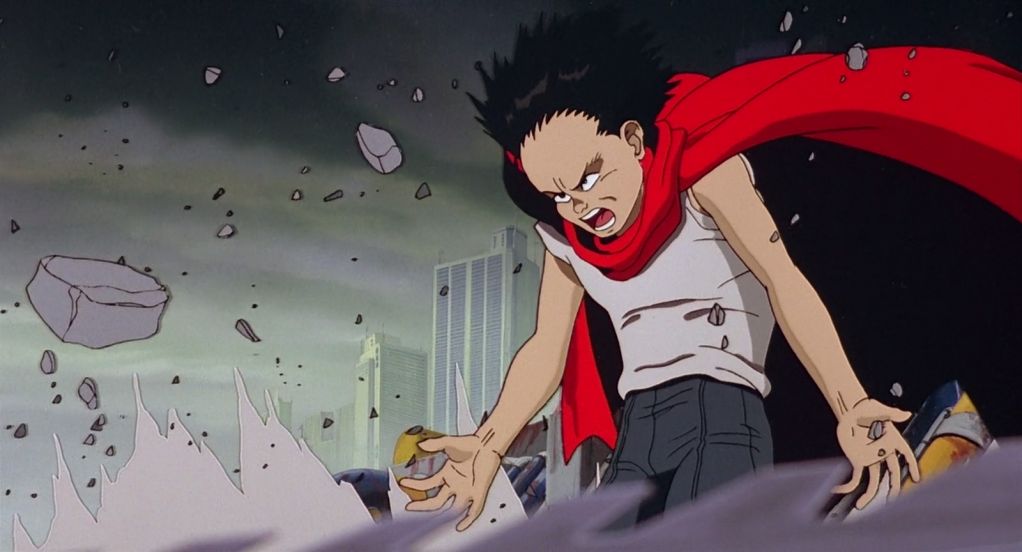
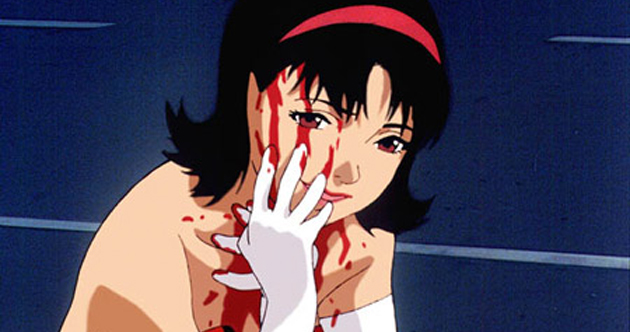
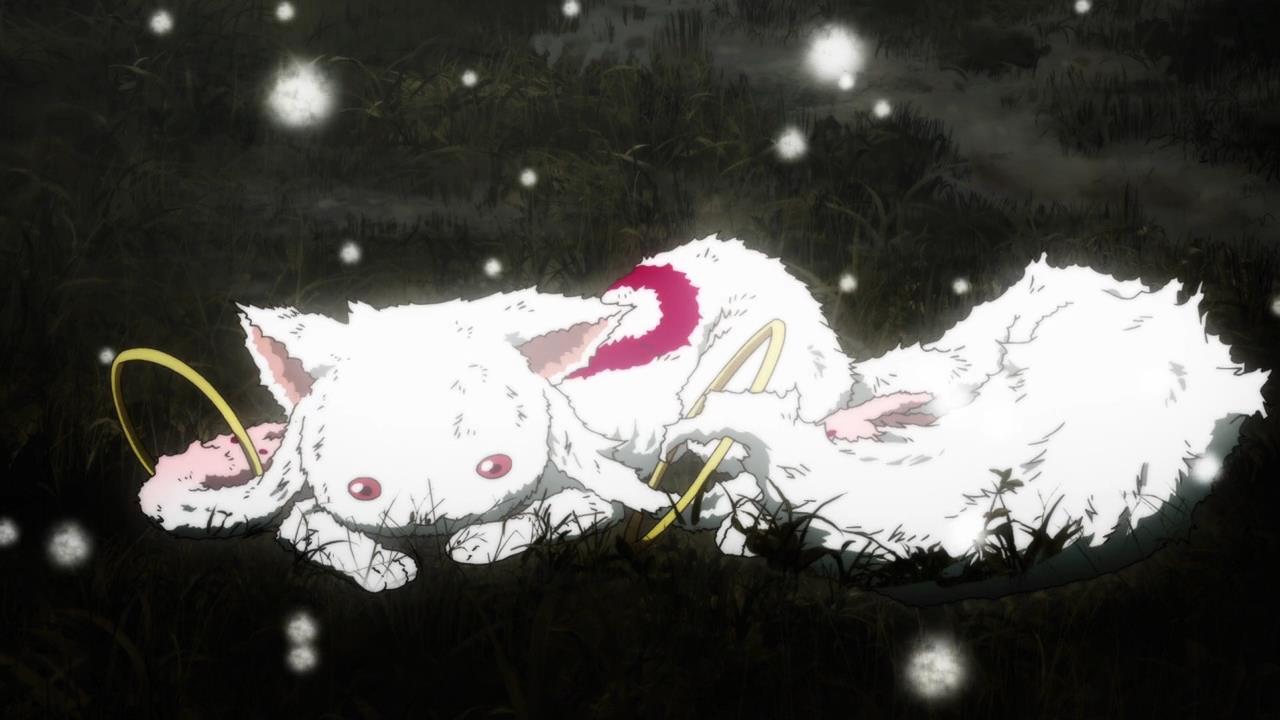
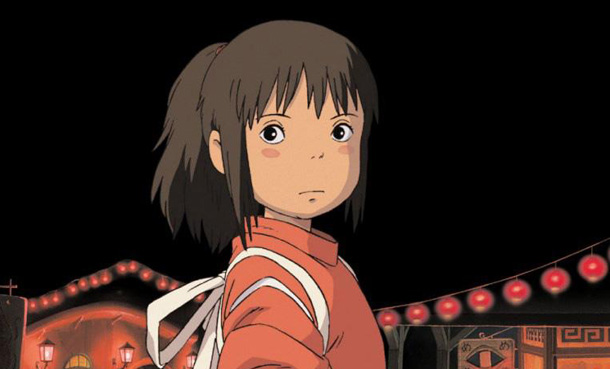
4 Shots From 4 Films: Akira, Perfect Blue, Madoka Magica Rebellion, Spirited Away


This column was a great idea since I’m a man of few words.

4 SHOTS FROM 4 FILMS

Akira (dir. by Katsuhiro Otomo - 1988)

Akira (dir. by Katsuhiro Otomo – 1988)

Perfect Blue (dir. by Satoshi Kon - 1998)

Perfect Blue (dir. by Satoshi Kon – 1998)

Puella Magi Madoka Magica Rebellion (dir. by Akiyuki Shinbo, Yukihiro Miyamoto - 2013)

Puella Magi Madoka Magica Rebellion (dir. by Akiyuki Shinbo, Yukihiro Miyamoto – 2013)

Spirited Away (dir. by Hayao Miyazaki - 2001)

Spirited Away (dir. by Hayao Miyazaki – 2001)


Satoshi Kon’s Final Blog Post


The sudden passing of Satoshi Kon this past August 24, 2010 was a shock to anime and non-anime fans of his work. No better words were spoken to describe his contribution to the medium he so loved than one posted here last week.

I, myself, never realized that he was the one who had directed the very mature anime works I had seen and found to be on the level of any live-action production by such luminaries as Aronofsky, Nolan, Cronenberg and many other masters of their craft. The suddenness of his death has shocked the anime community and even almost a week since it happened his passing away and his legacy still the talk of the community.

His legacy is undisputable and will forever remind fans of anime just how much his talent will be missed. Satoshi Kon was able to leave behind one final document which has been posted in his blog posthumously by his loved ones. These last words from Satoshi Kon brings to light one man’s personal and intimate perspective on one’s mortality. It’s almost as if life was imitating art this time around. To try and describe any more of this man’s last words cannot be done as I lack the insight and grasp of the English language to give it the proper due.

Below is the link to Makiko Itoh’s site who was kind enough to translate Satoshi Kon’s final words.

SOURCE: Makiko Itoh’s Blog Satoshi Kon’s last words