In 1969, a group of television network executives get together and decide the world needs a sitcom that will mix music with family comedy. The result is ThePartridgeFamily. While Shirley Jones (Eve Gordon) tries to keep her television family safe from the networks and, in some cases, their own dysfunctional families, David Cassidy (Rodney Scott) struggles with being a teen idol and Danny Bonaduce (Shawn Pyfrom) deals with living with an abusive father (William Russ). Danny finds a new father figure in the form of co-star Dave Madden (Michael Cheiffo) while Danny dates his tv sister, Susan Dey (Kathy Wagner).
This was one of the many made-for-TV movies that took advantage of boomer nostalgia at the turn of the 20th Century. Like most of those movies, ComeOnGetHappy is on the shallow side, providing the details that everyone had already heard without digging too far underneath the surface. The main thing that sets this film apart from so many other behind-the-scenes movies is that the cast, for the most part, actually resemble the real-life people that they’re playing. That’s especially true in the case of Shawn Pyfrom. If you’re a fan of the show or Cassidy’s music, this movie might appeal to you. I Think ILoveYou is still a banger.
It’s well-made but it’s still hard not to feel that it would have been more entertaining just to watch a 2-hour interview with the real-life Danny Bonaduce.
In 1987’s The Last Innocent Man, Ed Harris plays Harry Nash.
Harry is a criminal defense attorney, one who specializes in defending people who have been charged with committing murder. He’s good at his job but he’s not sure that he’s happy with his life. He went into the law to save people from Death Row but years of getting acquittals for guilty people have taken their toll on Harry’s psyche. His most recent client was Jonathan Gault (David Suchet), a man accused of having killed his wife. The verdict was “not guilty” but Harry suspects that Gault may have been guilty of both what he was charged with and also countless crimes for which he hasn’t been charged. It doesn’t help that Gault confronts Harry in a parking lot and says he wants Harry to co-write a book about how he got Gault acquitted. Gault proceeds to tell Harry that he did kill his wife, before suddenly laughing and saying that he’s only joking.
Despite all of the money and the fame, Harry needs a break from dealing with guilty people. He tells his shocked partner that he will be temporarily stepping back from their practice. Along with being burned out, Harry is also interested in pursuing a romantic relationship with Jenny Stafford (Roxanne Hart). Jenny is married but she assures Harry that she is in the process of getting a divorce from her husband, Philip (Darrell Larson).
However, when Philip is arrested and accused of murdering a policewoman who was working undercover as a prostitute, Harry finds himself defending Philip in court. Philip swears that he’s innocent of the crime and that he’s never even been with a prostitute. He claims that, when the murdered occurred, he was at home with his wife. Jenny is willing to collaborate Philip’s alibi, even though Harry suspects that she’s lying.
As you can probably guess, there are plenty of twists and turns to the plot of The Last Innocent Man. Unfortunately, they’re not exactly shocking twists and turns. The Last Innocent Man is a courtroom drama and it pretty much sticks to the rules of the genre, which means a lot of snarky comments between Harry and the prosecutor and also plenty of scenes of various lawyers snapping “Objection!” and demanding a recess. This is the type of film where people fall apart on the witness stand and the audience in the courtroom murmurs whenever something shocking happens. The Judge can’t pound that gavel hard enough to make The Last Innocent Man anything more than a standard courtroom drama.
That said, director Roger Spottiswoode keeps the action moving at a quick-enough pace and Ed Harris is ideally cast in the role of the morally conflicted Harry Nash. As well, there’s an entertaining supporting performance from Clarence Williams III, cast here as a cocky pimp, and David Suchet is chillingly evil as the worst of Harry’s clients. The Last Innocent Man doesn’t quite reach the Hitchcockian heights that it was reaching for but, still, fans of courtroom dramas will enjoy it or, at the very least, show a little leniency in their judgment.
(As I sit here writing this, the Sundance Film Festival is currently in full swing in Utah. Starting last Thursday with Blood Simple, I have been reviewing films that originally made a splash at Sundance.)
As I mentioned in my review of Circle of Power, the Sundance Film Festival was not always the Sundance Film Festival. For the first few years of its existence, it was known as the US Film Festival. It wasn’t until 1984 that the US Film Festival became the Sundance Film Festival. (And let’s be honest — as far as names go, Sundance is a huge improvement over its generic predecessor.) That year, the inaugural Sundance Grand Jury Prize was awarded to a coming-of-age story called Old Enough.
Old Enough is a New York movie, one that follows Lonnie (Sarah Boyd) and Karen (Rainbow Harvest) over one eventful summer. Lonnie is 12 years old. She lives in a nice apartment and she attends an exclusive private school. She has a close relationship with her mother (Susan Kingsley) while her father is a stuffy snob. From the minute that Lonnie first sees Karen, she wants to be her best friend. Karen is a year or two older and her family is definitely not rich. Karen is uninhibited and, on the outside at least, totally confident. Lonnie is envious of Karen’s freedom. Karen is envious of Lonnie’s stability. From that, an unlikely friendship is born.
At first, the film focuses on how much Lonnie looks up to Karen. Karen wears makeup so Lonnie starts to wear makeup. Karen is Catholic so Lonnie decides to be Catholic as well. Karen shoplifts so Lonnie gives it a try. Karen tries to dress like Lonnie and she even tries to navigate the streets of New York with the same confidence. It’s only later in the film, when Lonnie attempts to introduce Karen to her friends from school, that it becomes clear that Karen is as out of place in Lonnie’s world as Lonnie is in Karen’s.
The film is at its best when it concentrates on the friendship between Karen and Lonnie. There’s a wonderful scene where Karen and Lonnie go up to the roof of Karen’s apartment building and take in the beautiful view of New York City at night. It’s a scene that perfectly captures what it’s like to be young and to know that there’s an amazing world out there, waiting for you to discover it. And then there’s an extended shoplifting scene, one that I absolutely loved even if it did bring back enough memories to make me cringe just a bit.
Old Enough struggles during it second half, when the focus shifts from Karen and Lonnie’s friendship to Lonnie’s crush on Karen’s older brother, Johnny (Neil Barry). Johnny, however, is obsessed with the new neighbor (Roxanne Hart), who may be having an affair with Karen’s father (Danny Aiello). Those scenes feel a bit forced, as if Robert McKee suddenly popped up and said, “Time for Act III!”
No, the heart of the film is in Karen and Lonnie’s friendship. Both Sarah Boyd and Rainbow Harvest gave very naturalistic and believable performances as the two unlikely friends. By the end of the movie, you’re happy they got to spend a summer together even though you know they probably won’t still be friends in another five years. It’s a sweet movie, one that provides a very realistic portrait of growing up.
If you’ve never heard of Old Enough, you’re not alone. Until I started doing research for these reviews, I had never heard of it, either. Some times good movies are forgotten. That’s why it’s important to always keep looking.
As of this writing, Old Enough can be viewed on YouTube.
“We interrupt our regularly scheduled programming for a special report…”
Led by veteran anchor John Woodley, the RBS news team is providing continuing coverage of a developing crisis in Charleston, South Carolina, where terrorists are holding several members of the coast guard, a local new reporter, and his cameraman hostage on a small tugboat. These are not typical terrorists, though. Two of them are nuclear scientists. One of them is a social worker. Another one is a nationally-renowned poet. The final terrorist is a former banker robber who was just recently released from prison. This unlikely group has only two demands: that the U.S. government hand over every single nuclear trigger device at the U.S. Naval Base and that RBS give them a live television feed so that they can explain their actions to the nation. If either of those demands are not met, a nuclear bomb will be detonated and will destroy Charleston.
This made-for-TV movie was shot on video tape, to specifically make it look like an actual news broadcast. Though much of the movie seems dated when compared to today’s slick, 24-hour media circus, Special Bulletin was convincing enough that, when it was originally broadcast in 1983, it caused a mini-panic among viewers who missed the opening disclaimer:
Because the movie deals with the threat of nuclear terrorism instead of a U.S.-Soviet nuclear war, it still feels relevant in a way that many of the atomic disaster films of the 1980s do not. Beyond making an anti-nuclear statement, Special Bulletin is also a critical look at how the news media sensationalizes every crisis, with the RBS news team going from smug complacency to outright horror as the situation continues to deteriorate. David Clennon and David Rasche are memorable as the two most outspoken of the terrorists and Ed Flanders is perfectly cast as a veteran news anchor struggling to maintain control in the middle of an uncontrollable situation. Special Bulletin won an Emmy for Outstanding Drama Special and can be currently be found on YouTube.
Keep an eye out for Michael Madsen, who shows up 57 minutes in and gets the movie’s best line: “That guy’s a total psycho ward.”
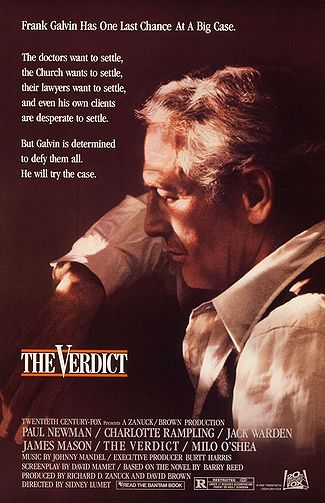
Speaking of the good, old-fashioned star power of Paul Newman, The Hustler and Butch Cassidy and the Sundance Kid were not the only films to receive an oscar nomination as the result of his charisma. There’s also The Verdict, a 1982 best picture nominee that would probably be forgotten if not for Paul Newman’s performance. However, since Paul Newman did play the lead role in The Verdict and he did give an amazing lead performance, The Verdict was nominated for best picture and, 33 years later, it ended up on TCM where I just watched it.
That’s the power of good acting.
Paul Newman plays Frank Galvin, a Boston-based attorney. At one time, Frank was a lawyer at an elite firm. But he has since fallen on hard times. Now, he’s the type of attorney who crashes funerals and hands out his card. He spends his spare time at his favorite bar, playing pinball and telling long jokes while stumbling about in a drunken haze. In many ways, Frank represents everything that people hate about personal injury attorneys but, since he’s played by Paul Newman, you know that he’s going to turn out to be a good guy.
Frank only has one friend left in the world, his former mentor Mickey (Jack Warden). Looking to help Frank out, Mickey sends Frank a medical malpractice suit. A woman at a Catholic Hospital was given an anesthetic during child birth that has led to her now being brain dead. Both the woman’s family and the Archdiocese are looking for a settlement. The family needs the money to pay for her medical care. The Archdiocese just wants the case to go away. All Frank has to do is accept whatever settlement deal is offered…
However, something has changed for Frank. He’s visited the comatose woman and, looking at her trapped in a vegetative state, he’s decided that the hospital needs to be held responsible for its mistake. He rejects the settlement and takes the case to court, looking for both justice for the victim and redemption for himself.
That’s easier said than done, of course. The Archdiocese has hired Ed Concannon (James Mason, perfectly cast), one of the best and most powerful attorneys in Boston. Ed has a huge legal team working on the case. Frank has Mickey. As well, the Judge (Milo O’Shea) makes little effort to hide his contempt for Frank.
Probably the only bright spot in Frank’s life is that he’s met a woman. Laura (Charlotte Rampling) meets him in a bar and soon, they’re lovers and Frank is confiding in her about the case. What he doesn’t suspect is that Laura herself is a spy, hired by Concannon.
It looks like all is lost but then Frank discovers that there is one nurse (Lindsay Crouse) who might be willing to tell the truth about what happened at the hospital…
In many ways, The Verdict is a predictable film. From the minute we first meet him, we know that Frank is going to be redeemed. From the minutes that we hear about the case, we know who we’re supposed to root for and who we’re supposed to hiss. Just about every courtroom cliché is present, right down to a surprise witness or two…
But no matter! The Verdict may be predictable but it works. As he proved with 12 Angry Men, Director Sidney Lumet knew how to make legal deliberations compelling and the entire film is full of small but memorable details that elevate it above its simplistic storyline. As a director, Lumet gets good performances from his cast and, as a result, this is a film where the hero is flawed and the antagonists aren’t necessarily evil. Even the Bishop of the Archdiocese of Boston (who, in most films, would have been a cardboard villain) is given a scene where he’s allowed to show some humanity.
And, of course, Paul Newman is great in the role of Frank. When we first meet Frank, he looks and sounds terrible. Indeed, it’s strange to see Paul Newman playing a character who is essentially such a loser. (Even Eddie Felson in The Hustler had an appealing swagger about him.) It’s during the scenes where Frank considers the woman in a coma that Newman starts to reveal that there’s more to Frank than what’s on the rough surface. By the end of the film, Frank may be a hero but Newman doesn’t play him as such. He’s still has that alcoholic rasp in his voice and his eyes still betray hints of insecurity and a fear that, at any minute, he’s going to screw up and mess everything up. It’s a great performance, one for which Newman received a nomination for best actor.
Speaking of star power, Bruce Willis also shows up in The Verdict. He’s an extra who appears as an observer in the courtroom. He’s sitting a few rows behind Paul Newman. (He’s also sitting beside Tobin Bell, the Jigsaw Killer from the Saw films). It’s probably easiest to spot Willis towards the end of the film, when the verdict is read. Bruce breaks out into a huge grin and almost looks like he’s about to start clapping. Bruce only gets about 10 second of screen time but he acts the Hell out of them!
Thanks to Paul Newman, The Verdict is a memorable and entertaining film. Be sure to watch it the next time it shows up on TCM.
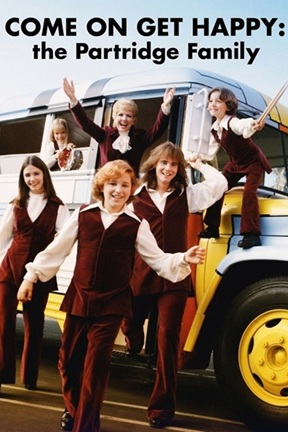 In 1969, a group of television network executives get together and decide the world needs a sitcom that will mix music with family comedy. The result is The Partridge Family. While Shirley Jones (Eve Gordon) tries to keep her television family safe from the networks and, in some cases, their own dysfunctional families, David Cassidy (Rodney Scott) struggles with being a teen idol and Danny Bonaduce (Shawn Pyfrom) deals with living with an abusive father (William Russ). Danny finds a new father figure in the form of co-star Dave Madden (Michael Cheiffo) while Danny dates his tv sister, Susan Dey (Kathy Wagner).


 Through the Shattered Lens