10 Movies For The Week (7/20/25)


Here Comes Shark Week

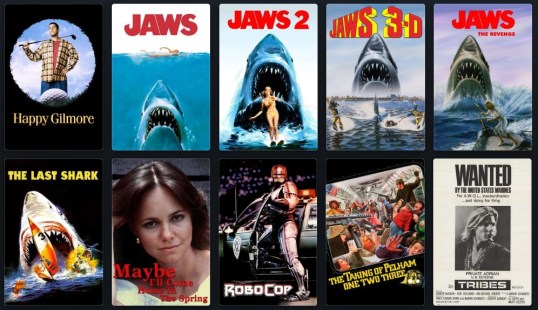
This upcoming week is Shark Week.  At the risk of making the most obvious recommendation ever, Jaws (1975) is currently on Netflix.  I doubt that I need to sell anyone on the film.  Jaws is one of those films that everyone accepts is a classic.  I’ll just say that every time that I watch Jaws, I’m surprised at how well it has held up over the years.  I watched it a few weeks ago while flying to Hawaii and, even when viewed in less than ideal conditions, it still held my attention and made me jump a little.  To be honest, I sometimes miss the Spielberg who directed Jaws.  It’s such a fun and scary movie, all the more so because it was made by a director who clearly lived for film.  Jaws is currently streaming on Netflix.

Jaws 2 (1978) does not get the same respect as the first Jaws, nor does it deserve it.  That said, I can’t help but kind of like Jaws 2.  If the first Jaws has a timeless quality to it, Jaws 2 is proudly a product of the 1970s.  Jaws 2 has some pacing issues but it also features Roy Scheider going totally crazy at the end of the film.  After giving a fairly subdued performance in the first Jaws, Scheider went all out for Jaws 2.  Just listen to him yell at that shark!  Jaws 2 is also on Netflix.

Jaws 3 (1983) is a bit of a guilty pleasure, largely because it was originally filmed in 3-D and the special effects are charmingly bad.  Roy Scheider does not return for this one but Dennis Quaid shows up as Chief Brody’s son.  This film was shot at SeaWorld Orlando but the main message seems to be, “Stay away from Seaworld!”  For the record, I relate to Lea Thompson’s character.  It can be viewed on Netflix!

The makers of Jaws: The Revenge (1987) decided to see what would happen if they made a Jaws film that centered on the least interesting character from the first film.  With Chief Brody having died of a heart attack and one of her sons having been eaten by a shark, Mrs. Brody heads down to the Caribbean and is apparently followed by a shark.  Its dumb but Michael Caine is charming and I’m a completist at heart.  If you’re going to watch one this week, you might as well watch all four!  Jaws: The Revenge is on Netflix.

Great White (1981) is an Italian film that was also released under the title The Last Shark.  Directed by Enzo G. Castelleri, Great White was so similar to Jaws that Universal actually sued the filmmakers in an attempt to keep the film from being released in the States.  To me, that’s always seemed like an overreaction.  There were hundreds of Jaws rip-offs released after 1975.  Great White is actually a pretty entertaining film.  James Franciscus and Vic Morrow team up to take on a giant shark.  The shark eats a helicopter.  This film can currently be viewed on YouTube.

In Praise of Joseph Sargent

Jaws: The Revenge was directed by Joseph Sargent.  Sargent would have been a hundred years old on July 22nd.  Sargent was a classic, no-nonsense director who could handle many different genres.  Here’s a few Sargent films that are not Jaws: The Revenge.

The Taking of Pelham One Two Three (1974) is probably Sargent’s best film.  Four criminals hijack a subway train.  The police spend their time negotiating, arguing, and searching.  It’s certainly my favorite example of the “New Yorkers Will be Rude To Anyone” genre.  Featuring great performances from Walter Matthau, Robert Shaw, Jerry Stiller, and Martin Balsam, this is one of the great New York heist films.  It can be viewed on Tubi.

Maybe I’ll Come Home In The Spring (1972) is a personal favorite of mine, a made-for-television film featuring a young Sally Field as a hippie who returns home and David Carradine as her controlling boyfriend.  This is a lowkey but effective look at life in the suburbs and it features an excellent performance from Sally Field.  It can be viewed on Tubi.

Tribes (1970) features Jan-Michael Vincent as a peace-loving hippie who is drafted and Darren McGavin as the drill sergeant who tries to turn him into a soldier.  Jan-Michael Vincent is absolutely gorgeous in this film.  It can be viewed on YouTube.

Odds and Ends

Paul Verhoeven celebrated a birthday a few days ago.  The original (and still the best) Robocop (1987) is available on Tubi.  Much like Jaws, it’s a film that has stood the test of time and survived countless imitations.

Finally, with the sequel due to be released on the 25th, this week is a great time to amuse yourself with the original Happy Gilmore (1996)!  I love this film and I make no apologies for it.  Bob Barker beating up Adam Sandler?  Seriously, how can you not love this film? Personally, I’ve always felt bad for Shooter McGavin.  Making him hit that ball off of Richard Kiel’s foot?  Totally unfair!  Happy Gilmore is streaming on Netflix.

Click here for last week’s movies!
 

4 Shots From 4 Films: Special Paul Verhoeven Edition


4 Shots From 4 Films is just what it says it is, 4 shots from 4 of our favorite films. As opposed to the reviews and recaps that we usually post, 4 Shots From 4 Films lets the visuals do the talking.

It’s Paul Verhoeven’s birthday and that means that it is time for….

4 Shots From 4 Paul Verhoeven Films

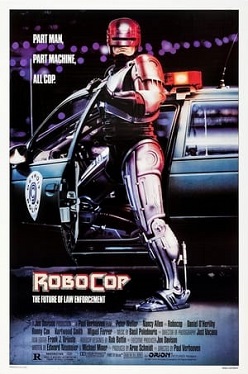
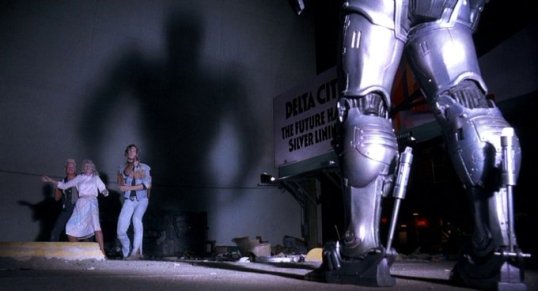
Robocop (1987, dir by Paul Verhoeven, DP: Jost Vacano)

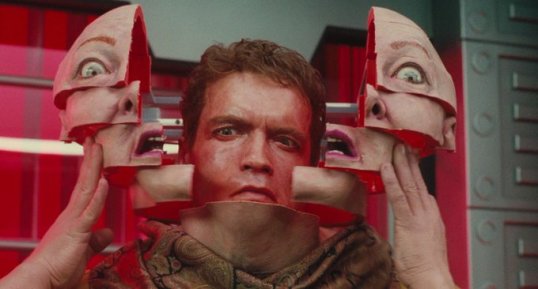
Total Recall (1990, dir by Paul Verhoeven, DP: Jost Vacano)

Showgirls (1995, dir by Paul Verhoeven, DP: Jost Vacano)

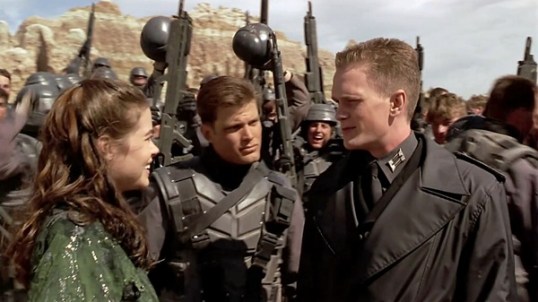
Starship Troopers (1997, dir by Paul Verhoeven, DP: Jost Vacano)

A Scene That I Love: Robocop Comes Home


Today is the birthday of Peter Weller, the actor best-known for playing the original Robocop in 1987.  Robocop is best-known for being violent and satirical but it also features one of the saddest scenes that I’ve ever seen.

Trying to piece together who he was before he was rebuilt, Robocop visits his former home and has flashbacks to his past life as Officer Murphy.  The house is empty now but the flashbacks show that it was once full of life.  Even with only half of his face visible, Weller shows Murphy’s loneliness as he walks around the house that he once called home.

Live Tweet Alert: Join #FridayNightFlix for Robocop!


As some of our regular readers undoubtedly know, I am involved in a few weekly live tweets on twitter.  I host #FridayNightFlix every Friday, I co-host #ScarySocial on Saturday, and I am one of the five hosts of #MondayActionMovie!  Every week, we get together.  We watch a movie.  We tweet our way through it.

Tonight, at 10 pm et, #FridayNightFlix has got 1987’s Robocop!

If you want to join us this Friday, just hop onto twitter, start the movie at 10 pm et, and use the #FridayNightFlix hashtag!  It’s a friendly group and welcoming of newcomers so don’t be shy.

Robocop is available on Prime and Tubi!  See you there!

Film Review: Robocop (dir by Paul Verhoeven)


Last week, I watched the original Robocop (along with Robocop 2 and Robocop 3) and I have to say that the first film holds up far better than I was expecting. Made and released way back in 1987, Robocop may be one of the most prophetic films ever made.

Consider the plot:

America is torn apart by crime and a growing gap between the rich and the poor. That was probably true in 1987 and it’s certainly true in 2021.

Throughout the film, we see news reports about what’s happening in the world. The news is always grim but the reporters are always cheerful and the main message is that, no matter what’s happening, the government is not to blame and anyone who questions the wisdom of the establishment is a fool. If that’s not a perfect description of cable news and our current state-run media, I don’t know what is.

The populace is often too busy watching stupid game shows to really pay attention to what’s happening all around them. I’m writing these words on a Wednesday, which means that Game of Talents will be on Fox tonight, immediately after The Masked Singer.

Detroit, a once proud center of industry, has now turned into a dystopian Hellhole where no one feels that they’re safe. Now, I don’t live in Detroit so I don’t know how true that is but I do know that most of the recent news that I’ve heard about the city has not exactly been positive. Also, this seems like a good time to point out that, even though the film is set in Detroit, it was shot in Dallas. Though the Dallas skyline has undoubtedly changed a bit since 1987, I still recognized several buildings while watching Robocop. Seeing Reunion Tower in the background of a movie that’s supposed to be set in Detroit was interesting, though perhaps not as interesting as seeing our City Hall transformed into the headquarters of Detroit’s beleaguered police force.

OCP, a multi-national conglomerate that’s run by the amoral but occasionally charming Old Man (played by the brilliant Dan O’Herlihy), has a contract with city of Detroit to run their police department. This certainly doesn’t seem far-fetched in 2021. Considering that we now have prisons that are run by private companies and that the government has shown a willingness to work with private mercenaries overseas, it’s not a stretch to imagine a city — especially one on the verge of bankruptcy — handing over the police department to a private company.

Two OCP executives — Dick Jones (Ronny Cox) and Bob Morton (Miguel Ferrer) — are competing to see who can be the first to create and develop a peace-keeping robot, a machine that will replace the need to employ (and pay) human police officers. Dick Jones goes with an actual robot, which malfunctions during a boardroom demonstration and guns down another executive. (The scene where the poor exec is targeted is both terrifying and darkly humorous at the same time. Particularly disturbing is how everyone in the boardroom keeps shoving him back towards the robot in order to ensure that they won’t accidentally be in the line of fire.) Bob Morton, however, takes a mortally wounded cop named Murphy (Peter Weller) and turns him into Robocop!

Robocop turns out to be a huge success and is very popular with the media. (Anyone who doubts this would really happen has obviously never watched news coverage of a drone attack.) As you can guess, Dick is not particularly happy about getting shown up by Morton and his robocop. Dick also happens to be secretly in league with Clarence Boddicker (Kurtwood Smith), the crimelord who blew Murphy apart in the first place.

(A gangster and a businessman working together!? I doubt that was shocking even in 1987.)

Robocop claims that he’s just a machine, without a past or emotions, but he’s still haunted by random flashes of his life as Murphy. Working with Lewis (Nancy Allen), Murphy’s former partner, Robocop tracks down Boddicker and his gang. A lot of people die in outrageously violent ways. (The scene where Boddicker and his gang use a shotgun to torture Murphy is still shocking, even after all these years.) The violence is so over-the-top that it soon becomes obvious that director Paul Verhoeven is deliberately trying to get those of us watching to ask ourselves why we find films like this to be so entertaining. On the one hand, Robocop is an exciting action film with a sense of humor. On the other hand, it’s the type of subversive satire of pop and trash culture to which Verhoeven would return with Basic Instinct, Starship Troopers, and Showgirls. This is the type of film that asks the audience, “What are you doing here?”

34 years after it was first made, Robocop remains a triumph. Peter Weller’s performance holds up well, as he does a great job of capturing Robocop’s anguish while, at the same time, never forgetting that the character is ultimately a machine, one that’s trapped in a sort of permanent limbo. I also really liked the performance of Miguel Ferrer, who takes a character who should be unlikable and instead makes him into a surprisingly sympathetic figure.

Of course, a film like this lives and dies on the strength of its villains and both Ronny Cox and Kurtwood Smith are ideally cast as Dick Jones and Clarence Boddicker. Kurtwood Smith especially took me by surprise by how believably evil and frightening he was. As a I watched the film, I realized that it was his glasses that made him so intimidating. Wearing his glasses, he looked like some sort of rogue poet, a sociopathic intellectual who had chosen to use his talents to specifically make the world into a terrible place. Boddicker’s crew was full of familiar actors like Paul McCrane, Ray Wise, and, as the always laughing Joe Cox, Jesse Goins. Interestingly enough, all of the bad guys seemed to genuinely be friends. Even though they were all willing to betray each other (“Can you fly Bobby?”), they also seemed to really enjoy each other’s company. That somehow made them even more disturbing than a group of bad guys who were only in it for the money. The villains in Robocop really do seem to savor the chance to show off just how evil they can be.

(Incidentally, for all of the Twin Peaks fans out there, this film features three members of the show’s ensemble: Miguel Ferrer, Ray Wise, and Dan O’Herlihy.)

Robocop holds up well as entertainment, prophecy, and satire. Though not much was expected from it when it was first released, it became a surprise hit at the box office. Needless to say, this led to a sequel. I’ll deal with that film in about an hour.

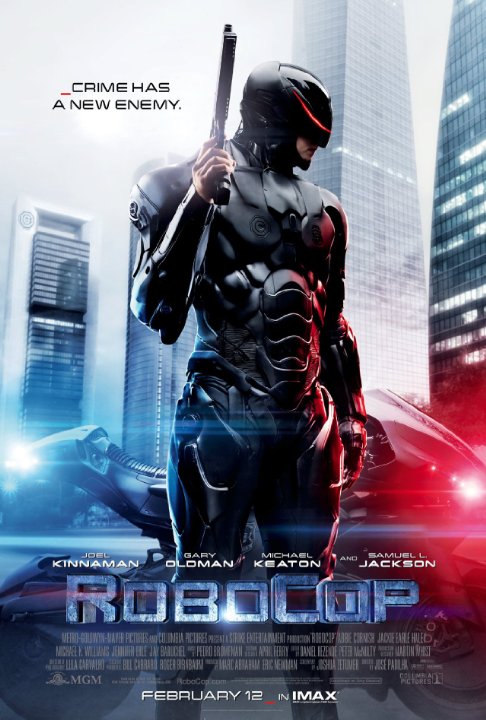
Robocop 2014


robocopposter

Boom.

So, I did, in fact, see Robocop 2014. It was suggested that some of our readers might have heard about this one. I will tell you right now that my own take on the film is… largely unbiased. The original Robocop never entrenched itself in my lexicon as an ‘essential’ film. I generally considered it to be a fun film, very watchable, fairly standard 80’s action fare… and, really, with the fingerprints of noted Dutch filmmaker Paul Verhoeven all over it. I definitely remember it fondly, but I’m by no means a Robocop purist. The puzzling direction the series took after the original (Robocop 2, in particular, strikes me as one of the worst films I can recall seeing, and 3 is somehow less memorable. I’m sure that does not mean good things). One thing probably anyone would tell you about the original film is that it was violent. Controversially so. Or perhaps that it is infested with foul language? To the point where the f-bombs seem to become their own point. Well, to start with, 2014’s Robocop went for the path of least creativity, and stuck itself in a PG-13 body that is actually pretty teen-friendly. More on that in a minute. But between the absence of Verhoeven’s style, the infusion of 201X’s powerful visual effects, the over the top violence and language, and the absence of any 80s camp, this film bears very little resemblance to the original.

If you wish to appreciate this film at all, you will be forced to do so on its own merits. Looking at it through the prism of the original film will probably not satisfy you, though I may be mistaken. I suppose it depends on how much you loved the first iteration.

2014’s incarnation of Robocop is directed by José Padilha, directing his first English language film. He is best known for his work on the Elite Squad films. His background is in action, and his style is not one that we’ve been down that road before with. I suspect that if this film had been helmed by a Michael Bay, it might have been disastrous. Instead, the result is surprisingly gritty at times, especially during an early shootout between Detroit police detectives and a hit squad sent to eliminate them to cut off their investigation of a local gunrunner. Obviously, the film has plenty of antiseptically clean sets, and the sophisticated visual effects involved give us lots of clean lines and gleaming, metallic surfaces… so it was, in a way, grounding to see some sequences in an experienced hand. Sadly, this style does not hold true through the entire picture, which features some predictably infuriating shaky cam work where our ability to understand and process the action is limited by the way in which it is shot. Some would probably argue this is realistic, and that if I were actually in a gun battle, I could only understand a tiny part of it even afterward… but as an action film viewer, it turns me off like few other things do.

The ED-209 has certainly never looked better.

The ED-209 has certainly never looked better.

The plot is a significant variation on the 1987 original, though it does have some pieces of the framework still intact. The year is 2028, and the United States is now projecting its power worldwide through the use of formidable robotic drones provided by Omnicorp (a division, we learn, of the original film’s OCP. Unlike the original film, in which the ED-209 is clearly the shoddy work of a corporation trying to make money by sending to the lowest bidder, it seems that the ED-209 is an extremely efficient and deadly enforcer and peacekeeper. Its primary flaw, that it cannot reason like a human, and does not know right from wrong, is central to the questions that the film posits. To the extent that it posits anything, that is. As with the original 1987 film, 2014 is introduced to us by a nationwide news broadcast… except, this time, instead of a simple evening news program, we’re treated to an extremely high production news opinion show (something like The O’Reilly Factor, perhaps) starring Pat Novak, a highly opinionated right-wing security lobbyist (a well cast Samuel L. Jackson delivers an energetic performance). Pat Novak wants to know why these drones aren’t keeping America’s streets safe, too.

The answer, of course, is that Americans want their protectors to have a soul. The film does make it clear, incidentally, that the United States has not asked other parts of the world if they’d prefer this same consideration… and this is where the film’s satire lies… in pumping up world peacekeeper thinking until it explodes.

With the realization that public opinion has to change or Omnicorp will never be able to deploy its products to the American market, the company’s executives, Marketing Director Tom Pope (Jay Baruchel) and, Legal Department Chair Liz Kline (Jennifer Ehle) and the CEO Raymond Sellers (Michael Keaton) decide to try and create exactly what their market wants: a man inside of a machine. Using the revolutionary cybernetics developed by Dr. Dennett Norton (Gary Oldman, in a very wistful, emotional role) they scour the country’s cops debilitated in the line of duty in search of the perfect candidate – an emotionally balanced cop with the reason and the desire to get back in the game.

Enter Alex Murphy (Joel Kinaman, from AMC’s “The Killing”), grievously injured, with wife Clara (Abbie Cornish) and son David (John Paul Ruttan) desperate not to let him go. Using Dr. Norton’s technology, Omnicorp rebuilds him into the ultimate crime fighting machine… where things go from there is, frankly, fairly predictable. Throughout the narrative, Pat Novak’s show continues to break in, stitching the narrative exposition together with both more of Novak’s bluster and with interviews with other major players like CEO Sellers and the Senator who is leading the opposition to Omnicorp’s technology, Hubert Dreyfuss (Zach Grenier). You will no doubt anticipate the conclusion of the film well before it reaches those final moments, and so aside from a couple of exceptionally well crafted sequences, this film does not exactly break new ground.

What does stand out, and I apologize for stuffing those last couple paragraphs full of as many names as possible (and I still missed plenty!), is the casting, and the acting, that are on display in this film. Everyone involved stands more or less head and shoulders above what’s being asked of them. I particularly enjoyed Michael Keaton in the role of the film’s villainous CEO, who gives a very reserved performance. There is very little evil mania from Keaton, who instead comes off exactly as coldly off-putting as I would expect from a sociopath in his position, going from decision to decision with an eye for the company’s financial future. The more scenery chewing villainy is left up to Jackie Earl Haley as Omnicorp’s in-house military QC, Rick Mattox, and from some villains scattered about the mean streets of 2028’s Detroit.

The original Robocop had a kind of wry humour to it that is entirely absent this reproduction. Curiously, the film is also almost entirely without meaningful visual violence, and almost totally absent of profanity (the traditional single use of ‘fuck’ for a PG-13 film is, in fact, bleeped, since it’s delivered by Pat Novak on his live TV show), and instead feels more like playing a modern Call of Duty or Battlefield video game in its depiction of Robocop battling his foes. This film coasts by absolutely safely at a PG-13 level (seriously, this is not the film you need to be worried about protecting your kids from).

While elements of the film are certainly a visual feast, these sumptuous visuals are actually mostly confined to the laboratory in which Robocop is built and maintained, and in the sophisticated battle armor that the titular supercop wears. The sequences on the ground, so to speak, feel a little more real. I suppose it’s the same faint sense of grittiness that the director’s hand gives this movie, which only rarely becomes a victim of its own visual effects. This is largely a good thing, as I think we’ve all developed a little bit of special effects fatigue over several heaping courses of Michael Bay’s “Transformers”, “Star Wars” prequel films, and other overblown projects. This film struck a fair balance, I felt, between taking advantage of the visual effects available, and trying to substitute them for any kind of substance. There is something going on at the core of this film. Unfortunately, I ultimately felt that it was not enough to satisfy, but plenty to entertain. Your own mileage will, of course, vary.

For those purists out there who are decrying the necessity of this remake (there was none) and the wisdom of doing so anyway… in perfect honesty, this is a film that simply wouldn’t have been made this way in 1987. In saying that, please, let’s admit that the 1987 film would also never have been made that way today. People’s outlook has changed. They look for, fear, and hope for, different things out of the world. Robocop 2014 is by no means a perfect – or even great – film… but it is a much better film for the post 9/11 world than the original one is. It fits its era. Between that, and a slew of excellent performances, you may just find this film to be above your expectations. It certainly surpassed my own.

Let’s Second Guess The Academy: 1987 Best Picture


Near-Dark-Bill-Paxton

It’s time for another edition of Let’s Second Guess the Academy!  This time, we’re taking a second look at the race for Best Picture of 1987.

Can you remember which film won Best Picture for 1987?  Don’t feel bad if you can’t because Bernardo Bertolucci’s The Last Emperor is one of the lesser known Oscar winners.  The film’s relative obscurity leads to one natural question: was it truly the best film released in 1987?

Or should the Oscar have gone to one of the other films nominated — Broadcast News, Hope and Glory, Fatal Attraction, or Moonstruck?

Let your voice be heard by voting below!

After voting for which nominated film you think should have won, give some thought to some of the 1987 films that were not nominated.  Was Moonstruck truly a better film than Near Dark or Full Metal jacket?  Ask yourself what would have happened if The Last Emperor hadn’t been released in the United States or what if Fatal Attraction hadn’t been a huge box office smash.  What if none of the five best picture nominees had been eligible to be nominated in 1987?  Which five films would you have nominated in their place?

Let us know by voting below.  As always, you can vote for up to five alternative nominees and write-ins are accepted!

Happy voting!

dirty-dancing-lift