Halloween Night, 1965. While the high school holds a pep rally and the Beverly Hills Homeowners Association debate the best way to tackle the problem of juvenile delinquency, the Hollywood Knights hang out at Tubby’s Drive-In, their favorite burger joint. The Hollywood Knights are a car club and a group of fun-loving rebels, determined to have a good time and to always humiliate Officers Clark (Sandy Helberg) and Bimbeau (Gailard Sartain). In practice, this amounts to a lot of jokes about flatulence and Newcomb Turk (Robert Wuhl) mooning the cops every chance the he gets. I’m hoping a stunt butt was used for the mooning shots. If I had known watching HollywoodKnights would mean seeing Robert Wuhl’s bare ass a dozen times over 91 minutes, I wouldn’t have started the movie.
The humor is crude but the movie has a serious side, one that was cribbed from AmericanGraffiti. Duke (Tony Danza), a senior member of the club, is upset that his girlfriend (Michelle Pfeiffer, in her film debut) is working as a car hop. He’s also sad that his buddy, Jimmy Shine (Gary Graham), is leaving in the morning for the Army. Jimmy’s not worried about being sent to Vietnam because Americans are only being sent over there as advisors. HollywoodKnights doesn’t end with a Graffiti-style epilogue but if it did, Jimmy would be the one who never came home. The serious scenes work better than the comedy, due to the performances of Gary Graham, Michelle Pfeiffer, and Tony Danza. I can’t believe I just said that either. Danza, though he’s way too old to be playing a high school student, is actually really good in this movie. Pfeiffer doesn’t get to do much but, from her first scene, it’s easy to see why she became a star. The camera loves her and she brings her character to life, despite not having much screen time.
Unfortunately, the drama takes a back seat to a lot of repetitive humor. The problem isn’t that the humor is crude. One thing that has always been true is that, regardless of the year, teenage boy humor is the crudest humor imaginable. Even back in prehistorical times, teenage boys were probably drawing dirty pictures on the walls of their caves. The problem is that the humor is boring and Robert Wuhl is even more miscast as a high school student as Tony Danza was. Fran Drescher plays a high school student with whom Turk tries to hook up. Drescher, like Pfeiffer, comes across as being a future star in the making. Robert Wuhl comes across as being the future creator of Arli$$.
TheHollywoodKnights has a bittersweet ending, the type that says, “It’ll never be 1965 again.” This movie made me happy that it will never be 1965 again. 1965 should have sued TheHollywoodKnights for slander. HollywoodKnights tried to mix the nostalgia of AmericanGraffiti with the raunchiness of AnimalHouse but it didn’t have the heart or creativity of either film. At least some of the member of the cast went onto better things.
In Bull Durham, Kevin Costner plays Crash Davis, a veteran catcher in the minor leagues who is brought onto the Durham Bulls so that he can teach a rookie pitcher, Ebby LaLoosh (Tim Robbins), how to play the game and also get him ready for his inevitable move to the major leagues. Also helping to get the dim-witted but sincere Ebby ready is Annie Savoy (Susan Sarandon), who worships at the Church of Baseball and who has an affair with a different player every season. The film follows the Bulls through their season, as both Crash and Annie mentor Ebby while also falling in love with each other. Ebby even gets a nickname, Nuke.
Considering how much I love baseball, it might surprise you to learn that, up until recently, I had never seen Bull Durham. I had read that it was one of the best baseball movies ever made but I never actually watched it. I’m glad that I finally did watch it because it is a really good baseball movie. It’s a movie that loves the game and I wasn’t surprised that the director was a former minor league player because Bull Durham is full of the type of details that you would only get from someone who had actually been there. I especially liked the scene where it was revealed what the players and the coaches are actually talking about when they all gather on the pitcher’s mound. It turns out that they’re not always talking about how to strike out the pitcher.
The love triangle part of the film didn’t work as well as for me. I could relate to Annie’s love for baseball but her character still didn’t quite ring true for me and her narration was overdone. Both Annie and Nuke seemed cartoonish whenever they got together. Kevin Costner, though, was great as Crash Davis. He was believable as an athlete and a mentor. My favorite Costner moment was when a batboy told him to “Get a hit, Crash,” and he replied, “Shut up.” It rang true.
I don’t agree with those who say Bull Durham is the best baseball movie. I think Eight Men Out is better. But I still enjoyed Bull Durham. It’s a movie that loves the game almost as much as I do.
Saturday Night, which presents what I assume to be a highly fictionalized account of the 90 minutes before the 1975 premiere of Saturday Night Live, did the impossible. It made me feel sorry for Chevy Chase.
Don’t get me wrong. As played by Cory Michael Smith, Chevy Chase is not presented as being a sympathetic character in Saturday Night. The film acknowledges his talent as a comedian and that he was the first star to come out of Saturday Night Live. But he’s still presented as being arrogant, self-centered, rude, and often deliberately self-destructive. The film portrays Chevy Chase in much the same way that most people describe him in real life. Chevy Chase has apparently always been a difficult person to work with and, I suppose to his credit, it doesn’t appear that Chevy himself has ever claimed anything different. But Saturday Night so piles on Chevy that even I felt it went a bit overboard. It’s one thing to present Chevy as being the arrogant jerk that he’s admitted to being. It’s another thing to fill the movie with moments in which people stop what they’re doing to tell Chevy that his career is going to start strong and then fade due to his bad behavior. At one point, the NBC executive played by Willem DaFoe comments that Chevy could host his own late night talk show. We’re all meant to laugh because eventually, Chevy Chase did host a late night talk show and it was such a disaster that it’s still, decades after its cancellation, held up as a prime example of a bad career move. But, in the context of the film, it feels a bit like overkill. It’s one thing to be honest about someone being a pain in the ass. It’s another thing to repeatedly kick someone while they’re down. Chevy, much like the NBC censor who is chanted down in the film’s cringiest moment, simply feels like too easy of a target.
Of course, Saturday Night is full of moments that are meant to comment more on the future than on whatever was going on in 1975. The whole point of the film is that Saturday Night Live, a show that the network has little faith in and which is being produced by a hyperactive visionary (Gabriel LaBelle as Lorne Michaels) who seems to be making it up as he goes along, is eventually going to become a cultural phenomenon. Every time someone tries to convince Lorne Michaels to cancel the premiere or to miss with the format, we’re meant to think to ourselves, “Little do they know that this show is going to be huge for several decades before eventually just becoming another predictable part of the media landscape.” The scenes of Garrett Morris (Lamorne Morris) wandering around the set and asking, “What is my purpose? Why am I here?” may not feel like something that would have happened in 1975 but they’re there because it’s something that people were asking about in 2024. Watching the film, it helps if you know something about the history of Saturday Night Live. It helps to know that Dan Aykryod (Dylan O’Brien), John Belushi (Matt Wood), and Gilda Radner (Ella Hunt) are going to carry the show after Chevy Chase leaves. It helps to know that Billy Crystal (Nicholas Podany) is going to become a Hollywood mainstay even after he gets dumped from the premiere for refusing to cut any material out of his act. It helps to know that the mellow, pot-smoking band leader is actually Paul Shaffer (Paul Rust). It helps to know that Lorne Michael and Dick Ebersol (Cooper Hoffman, giving one of the best performances in the film) are going to become powerful names in American television. The film may be set in 1975 but it’s actually about all the years to come.
It’s still an entertaining and well-made film, one that I enjoyed watching. Saturday Night manages to create the illusion of playing out in real time and director Jason Reitman captures the excitement of being backstage before opening night. It’s an excitement that everyone can relate to, whether their opening night was on television, Broadway, or just a community theater in their small college town. The backstage chaos of Saturday Night is wonderfully choreographed and, most importantly, it captures the feeling of being young, idealistic, and convinced that you can change the world. Reitman also gets good performances from his cast, with Cooper Hoffman, Dylan O’Brien, and Rachel Sennott (playing writer Rosie Shuster) as stand-outs. That said, the film is pretty much stolen by J.K. Simmons, who has a memorably lecherous cameo as Milton Berle and who provides Chevy Chase with a look at what waits for him in the future. If the film is never quite as poignant as it wants to be, that’s because Saturday Night Live is no longer the cultural powerhouse that it once was. If Saturday Night had been released just 18 years ago, before SNL became best-known as the place where Alec Baldwin hides out from bad publicity, it would probably be an Oscar front runner right now. Released today, it’s just makes one feel a little bit sad. The show that was built on never selling out eventually sold out.
The Clericuzio saga continues and it’s sillier than ever!
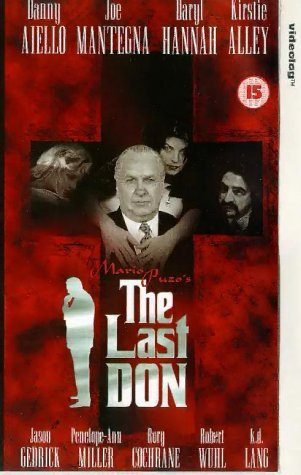
The Clericuzios were the Mob family who were first introduced in a Mario Puzo novel called The Last Don. In 1997, CBS turned The Last Don in a three-part miniseries. The ratings were good enough that, in 1999, the network gave the world a two-episode sequel, The Last Don II. The Last Don II was created without the input of Mario Puzo (who died shortly before the miniseries aired) but director Graeme Clifford returned, as did a few members of the cast.
For example, Danny Aiello briefly returns as the honorable but aging Don Domenico Clericuzio, talking about life in the old country and demanding to know why some of his children have yet to marry. Under his leadership, the Clericuzios are almost totally legit and they’ve even become powerful in Hollywood. Claudia De Lena (Michelle Burke) is in charge of the family’s film studio and has recently become engaged to a film star named Dirk Von Schelburg (Andrew Jackson, trying to do an Arnie impersonation but coming across more like Jean-Claude Van Damme). Still, despite the fact that the Clericuzios are (slowly) abandoning organized crime, they haven’t completely cut their ties. They still have enemies. And when Don Clericuzio dies after dancing at his final birthday party, those enemies are set to strike.
Who can run the Clericuzio family? Only one of the Don’s son was actively involved in the underworld aspect of the organization and he’s promptly (and, to be honest, hilariously) crushed when someone drops a shipping crate on him. Another Clericuzio son is gunned down at his legitimate business, proving that someone is trying to take out the entire family, regardless of whether they’re a part of the family business or not. Georgio Clericuzio (David Marciano) goes to Paris and tires to convince Claudia’s brother, Cross (Jason Gedrick), to return from exile to take things over. Cross refuses because he’s happily married to the most famous actress in the world, the improbably named Athena Aquataine (Mo Kelso, replacing Daryl Hannah in the role). However, Athena is subsequently blown up by a bomb that was meant for Cross and that’s all it takes to bring Cross back to America.
Now that Cross is in charge, he sets about to discover who, among the other Families, is targeting the Clericuzios. Helping him out with this is Billy D’Angelo (James Wilder), who we are told is the the most important of the Clericuzios capos, despite the fact that he was neither seen nor mentioned in the previous Last Don. It seems pretty obvious from the start that Billy is not to be trusted. Everyone who has ever seen The Godfather will automatically look at Billy and say, “There’s your rat.” But Cross is a remarkably naïve crime lord. He’s apparently the only guy in the Mafia who has never seen a Mafia movie.
Of course, there’s more going on than just Cross trying to figure out who is targeting the Clericuzio family. His unstable aunt, Rose Marie (Kirstie Alley), wants revenge for the murder of her son Dante but, fortunately, she’s distracted by an affair with the family’s priest (Jason Isaacs, of all people). Disgraced former studio exec Bobby Bantz (Robert Wuhl) is plotting against Claudia. And finally, Cross is falling in love with his stepdaughter’s nanny (Patsy Kensit) despite the fact that it’s kind of obvious that the nanny is actually an undercover FBI agent. Remember what I said about Cross being impossibly naïve?
The Last Don was a fairly silly miniseries. The Last Don 2 is even sillier but, for that every reason, it’s also a bit more entertaining. If the first Last Don was held together by the rivalry between Cross and Dante, the sequel is held together by a nonstop flow of melodrama, overheated dialogue, and thoroughly unsubtle acting. It’s as if the director looked at every over-the-top scene and said, “It’s okay but can we turn things up just a little bit more?” As such, tt’s not enough for Danny Aiello to merely make a cameo before his character dies. Instead, he has to deliver cryptic words of wisdom about family and and honor and he has to do one final, Zorbaesque dance of joy before his heart gives out. Meanwhile, Kirstie Alley really throws herself into playing the insane Rose Marie and whether she’s seducing a priest or hoarsely yelling that she doesn’t know how to ice skate, her performance is always more than strange enough to be watchable. Jason Isaacs, meanwhile, furrows his brow desperately as he tries to resist temptation. Patsy Kensit is the world’s worst FBI agent while Kim Coates shows up as one of her colleagues. Conrad Dunn returns as Lia, the Sicilian assassin with the world’s silliest mustache. Even the presence of Robert Wuhl is less of a problem in the sequel. With everyone chewing up every piece of scenery that they can get their hands on, it somehow makes sense that Robert Wuhl would show up and start yelling, “DON’T LAUGH AT ME!” Somehow, it even seems appropriate that Joe Mantegna receives a “special appearance” credit, even though his character pretty much only appears in the archival footage used during the opening credits. The Last Don II is just that type of miniseries.
Jason Gedrick and James Wilder are both good actors and they both do what they can with the roles of Cross and Billy. Unfortunately, both of them were seriously miscast in The Last Don 2. Neither one of them is the least bit Italian and Wilder was a bit too young to be convincing as the most feared capo in the family. Compared to the classic gangster films that inspired them, both The Last Don and its sequel feels more like gangster cosplay than an actual portrait of life as a member of the Cosa Nostra. Like the first Last Don, The Last Don II suffers from a lack of authenticity but it’s just ludicrous enough to be fun.
First broadcast over three nights in 1997, The Last Don tells the story of a powerful and respected Mafia family. They control politicians across the country and they own casinos in Vegas and their power even extends all the way to Hollywood. Despite having many enemies, the family has thrived due to the leadership of a wise but ruthless Don. This Don remembers the old ways and imparts lessons about honor to the members of his own family. Never let anyone know what you’re thinking. Never side against the family. If someone like you were to make enemies, they would become the Don’s enemies and then they would fear you …. you know, stuff like that.
However, times are changing and America is changing with it. The underworld is no longer run by men of honor. On top that, the Don is aging and in ill-health. Who will succeed him? One possible successor is respected by all but he’s stayed out of the dirtier aspects of the family’s business and, in fact, he seems to have no desire to be a feared man. Another possible successor is ruthless and has a terrible temper. He sometimes speaks out of turn, because the Don has a sentimental weakness for his children. This possible successor’s anger is feared but perhaps fear is the future of the organized crime in America. The old ways are changing but one thing remains the same. The Don believes in America and he believes in family and….
Wait.
Okay, is it just me or does this all sound just a little bit familiar?
If it does, that’s probably because The Last Don is based on a novel by The Godfather‘s Mario Puzo. Though the family may be called The Clerichuzios and the action may have been moved fro the 40s and the 50s to the 60s, 70s, and 80, the story is still the same basic one that was told in The Godfather. Don Clerichuzio (Danny Aiello) is an honorable man whose time is coming to an end. His grandnephew, Cross (Jason Gedrick), is the possible successor who isn’t crazy. His grandson, Dante (Rory Cochrane), is the possible successor who is violent and doesn’t know how to negotiate. Don Clerichuzio’s dream is for the family to become completely legitimate but good luck with that when the film business and the political world are just as corrupt as the Mafia. I supposed one could argue that The Last Don is narrated by Don Clerichuzio while The Godfather has no narration at all but, seriously, once you have to add a voice-over to explain what’s going on, you have pretty much already last the war.
And yes, I did mention the film business. When Francis Ford Coppola first read The Godfather, he famously hated the Hollywood sections of the book and, with the exception of Tom Hagen’s visit to Jack Woltz (and Woltz’s subsequent discovery of a horse’s head in his bed the next morning), Coppola refused to include them in the movie. The second half of The Last Don, however, goes full Hollywood and, more or less, proves Coppola’s point. Cross’s sister, Claudia (Michelle Burke, who also co-starred with Cochrane in Dazed and Confused), gets a job as an agent and one of her clients is the world’s most famous actress, the ludicrously named Athena Aquataine (Daryl Hannah). When Athena has trouble with her crazy ex-husband (Chris Meloni, bringing a spark of genuine danger to the production), Cross helps her out, falls in love, and gets involved in the production of her next film. This brings him into conflict with a studio exec named Bobby Bantz (Robert Wuhl). Unfortunately, all of the Hollywood stuff is pretty dull. One gets the feeling that Puzo was perhaps settling some old scores with the character of Bobby but Robert Wuhl is one of those goofy actors who belongs nowhere near a Mafia drama. And don’t even get me started on country singer k.d. lang, who is bizarrely cast as a film director.
(Add to that, how can anyone take a character named Athena Aquataine seriously? I never miss an Athena Aquataine movie!))
The Hollywood stuff distracts from the Mafia stuff, which is unfortunate because the Mafia stuff is at least occasionally interesting and it’s certainly better-acted than the Hollywood scenes. Joe Mantegna plays Pippi, who is Cross’s father and who, years earlier, killed Dante’s father. (Mantegna’s always good but it’s a struggle to take any character named Pippi seriously.) Kirstie Alley plays Rose Marie, who is Dante’s mentally unstable mother and the Don’s only daughter. Aiello, Mantegna, and Alley all give good performances, as do Burt Young and Seymour Cassel in the roles of family associates. As for the “younger generation” of Clerichuzios, Gedrick is a bit dull but then again, Cross isn’t a very interesting character. The slightly-built Cochrane is miscast as Dante but ultimately, that miscasting kind of works in that it reminds us that, due to his father being the scion of a rival family, Dante is destined to always be viewed as being an outsider.
As I said earlier, The Last Don was originally broadcast over three nights. I watched the whole thing — all five hours of it — in one sitting and, yes, it was a bit of an endurance test. It’s not just that it’s long but also that it keeps getting bogged down in all of the Hollywood stuff. You don’t watch a film like this because you want to spend five hours watching Robert Wuhl mug for the camera. You watch a film like this for the Mafia action and, for a film called The Last Don, there really wasn’t enough Mafia action. It has its moments but it never feels as authentic as The Godfather, Casino, Goodfellas, The Irishman, The Sopranos or any of the other classic films and shows about the Mafia.. The Last Don needed to be extremely Italian but instead, it was only slightly Italian. Robert Evans famously said that Coppola was selected to direct The Godfather because Coppola would make audiences “smell the pasta.” There’s very little pasta in The Last Don.
Here on the Shattered Lens, the love for Batman is very strong. There are too many Batman related articles to fully list, but for a good start, go with Ryan’s Which Way Forward for the Batman Franchise.
This isn’t so much a review for Batman as it’s just me looking back on the film.
I spent the Saturday Morning of June 24th, 1989 standing on a line that snaked around the white walls of the Sunrise Multiplex Cinema in Valley Stream. Thankfully, by the time I arrived, there were only a few people there. Most of them were my friends, so we were close to the door. The following year, the Sunrise would go down in history as being the only movie theatre I’ve ever known with metal detectors after a shooting around the release of The Godfather Part III prompted tighter security. Before then, anyone going into the theatre had a free run of the place. From that incident to the theatre’s shutdown in 2015, you always had to pass the metal detectors.
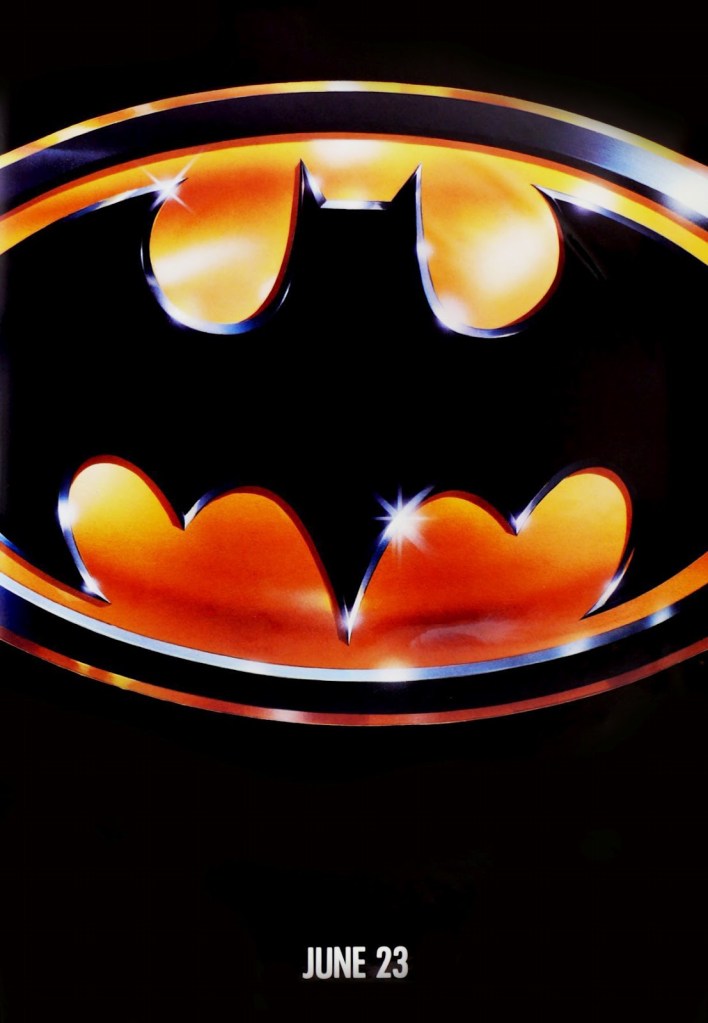
You knew Tim Burton’s Batman was going to be something grand when they first put up the posters in bus stations. The character was so well known that the poster was simply a black and gold Batsymbol with a date – June 23. In my neighborhood, the poster lasted a week before the bus stop’s glass was broken and it was stolen. This was how mad people were for the film. Although merchandise was already available, it moved at an incredible pace. For a film made before pre-Internet, the buzz was just amazing.
“Okay, Everyone, we know you’re looking forward to seeing the movie.”, came the announcement over the theatre’s loudspeaker, which caused a few murmurs from everyone. It was a smooth, business like voice, probably from someone who had never even heard of The Caped Crusader. “We’re going to open up the doors and we want everyone to proceed to the ticket booths in a nice, orderly fashion.”
I was 14 at the time. Batman was the first movie I ever saw without my family. My parents, a cop and a bartender, saw so much of the worst of NYC that they figured the best place for me was home. Still, since I was among friends they knew, I gave me a pass. It was a big deal. My friend Pierre and I had a plan, along with the 4 others that came with us. We’d head in, make for the ticket booth and go right in for our seats near the back right side.. No refreshments were necessary, since we could all go eat at the mall later on after the move was done. To make sure I didn’t miss anything, I had already read the novel for the story beforehand.
Anyone close to the door could see the theatre workers as they approached, keys in hand. The layout of the Sunrise was such that after stepping through the front door, you could cut to your immediate left or right down a open path to separate ticket booth. As the door unlocked, was pushed open and secured, someone from near the middle of the line decided it was time, declaring in a loud scream.
“Batman!!!!!”
It was madness. Utter madness. Bodies piled into the theatre in a mad scramble for the ticket booth. On the way there, I was shoulder blocked and fell to the floor. I instantly curled into a ball to keep from getting trampled, wondering if my parents were right about not letting me out. ‘Here lies Lenny…”, my epitaph would read. “…he died at the movies after being let outside on his own just once.”
Thankfully, I was scooped up to my feet a few seconds later by one of my friends.
“Go on! We’ve got your tickets! Head for the ticket guy, we’ll meet you there!” he yelled over the crowd passing us on sides.
“Okay!!” I’d been to the Sunrise tons of times, so I knew it well. I moved through the crowd, bypassing the concession stand, which was already developing a line of its own. I thought they were going to go in without me and leave me there. I don’t know they did it, but within a few minutes of reaching the ticket taker. most of my group caught up, tickets in hand for all of us.
The actual experience of Batman was a packed crowd with almost non-stop talking throughout. After all, the audience was made up of teens and DC fans that that were ravenous for anything Batman related. Superman had about four films by the time Batman premiered. I think the only real time the entire audience hushed was near the beginning when we first see Batman grab the one robber and they ask him what he is. After that, the crowd pretty much erupted in applause.
Of course, that line would become famous and reused over the years, such as it was with the WB’s Supernatural.
Even before the film was released, the buzz for Batman was immense.
Batman focuses on Gotham City, a grand town with a great deal of crime. Reports are coming in of a mysterious vigilante figure resembling a giant bat that’s taking down random criminals. Crime in Gotham is run by Boss Carl Grissom (Jack Palance, City Slickers), with his right hand man, Jack Napier (Jack Nicholson, The Departed). After discovering that Napier’s spent some quality time with his girl, Alicia (Jerry Hall, Urban Cowboy), Grissom sets him up so that he’ll be caught by the cops. Things don’t go as planned, and after falling into a vat of chemicals, Napier is reborn as The Joker. Can the Dark Knight defeat this new menace?
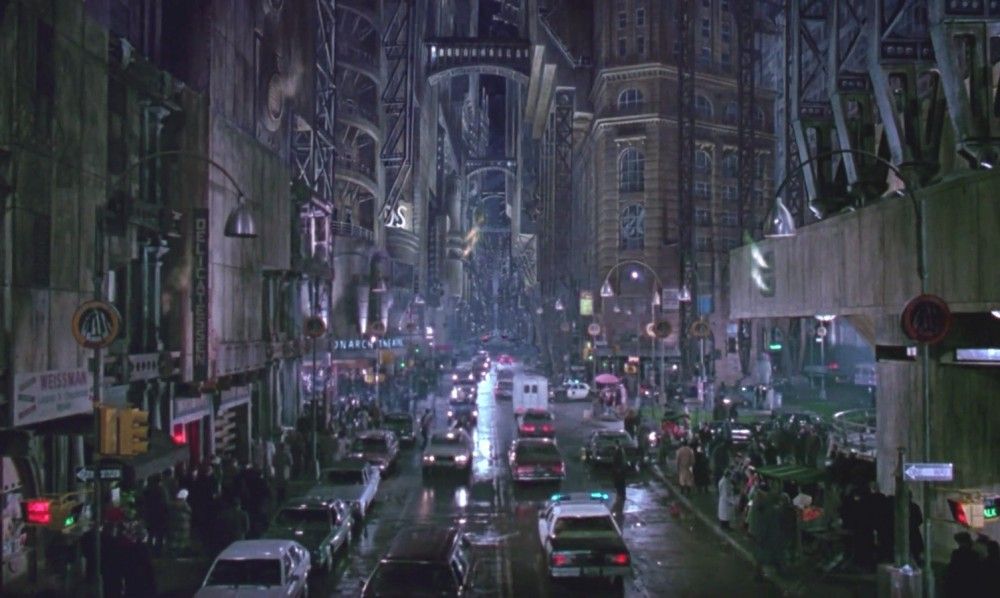
One of Anton Furst’s designs for Batman.
For me, one of the most interesting elements of Tim Burton’s Batman is how Jack Nicholson was the main draw for the film. Nicholson stands front and center in this film. If any real eyebrows were raised, it was over casting Michael Keaton as the Dark Knight. Keaton and Burton worked together on Beetlejuice, so there was some chemistry. However, when the announcement for Keaton being cast in Batman, most people were pretty skeptical. Keaton was known for playing more comedic roles, and playing the Batman required a more serious attitude. However, I’ve always felt that comedians are the most shocking when they take on a serious role. Some examples of this are Patton Oswalt in Big Fan, Robin Williams’ Academy Award winning performance in Good Will Hunting and most recently, Adam Sandler in Uncut Gems. I feel that worked for Keaton, and most viewers underestimated what he could bring to both Bruce Wayne and Batman. As Wayne, Keaton seems a bit subdued. As Batman, he’s a little scary simply because he doesn’t quite look like the kind of individual who would roam the streets at night dressed as a bat. My parents would later argue over Batman’s drop of Jack Napier at Axis Chemicals. I thought it was a situation where he just couldn’t hold on to him. My parents’ viewpoint was that Batman deliberately did it. We never really know for sure, but it did seem a little convenient that Batman couldn’t hold on to Napier. Overall, Keaton’s Batman plays second fiddle to Nicholson’s Joker, who also had a some sway in the design of the nemesis for the film.
Batman’s cast also includes Kim Basinger (L.A. Confidential) as Vicki Vale, Robert Wuhl (Bull Durham), Billy Dee Williams (Nighthawks) and Pat Hingle (Sudden Impact) as Commissioner Gordon, The cast is pretty perfect here, without anyone really falling out of step. Batman stories would grow more serious by the time Nolan would step in, but for the 1980s, it was just fine.
Anton Furst would win an Oscar for Best Art Direction for his design of Gotham City, which was for its time, quite dazzling. On par with some of the designs from Blade Runner and The Crow, Furst’s rendition of Gotham was dark and brooding, compared to the more modern backdrop of Batman Begins. In addition to Gotham’s look, Furst also helped design the Batmobile, which was based off the Chevy Impala (another Supernatural connection). When the film was released on home video, my family caught sight of the Batmobile up close on the street as it delivered VHS Copies to a video store in Manhattan. Although he died some years later, Furst’s work on Batman remains an influence on both the comics and future installments of the movies.
1989 was also a big year for Danny Elfman. His score for Batman would earn him a Grammy, and the main theme would become a definitive one for the Caped Crusader throughout the early 1990. Shirley Walker would build on the theme with her music from Batman: The Animated Series. It was also something of a surprise for Prince. With songs like Trust, Electric Chair and Vicki’s Waiting, Prince’s Batman Soundtrack is full of great hits that you really wouldn’t think would fit in a story like Batman. Still, they manage to do just fine, and even elevate scenes like the Joker’s entry in the Gotham Museum and the Balloon Parade.
Batman is not without a few problems. It gets a little long in the tooth in the film’s second half, particularly in the scenes leading up to the Monarch and Bruce losing his parents. It’s not a terrible slowdown, since it has to set the tone for some of the more spectacular fights later on. It could have been edited just a little tighter. Additionally, when compared to some of the modern versions, 1989’s Batman can feel a little bit dated (to me, anyway). That’s more of a nitpick, or where you stand on the Batman universe as a whole. Everyone has their favorite adaptation on the Caped Crusader.
Burton and Keaton would later reunite in 1992’s Batman Returns, and the franchise on a whole would take a different turn with Joel Schumacher’s takes in 1995’s Batman Forever and 1997 Batman & Robin.
Blue Chips is a movie that will always make me think of England.
When I was a kid, I would spend every summer over in the UK. When I flew over for the summer of ’94, the in-flight movie was Blue Chips. I can still remember sitting in the back of the plane, trying to watch the movie on that tiny screen. At the time, I did not pay much attention to Blue Chips. It was about basketball, which was not something that I was interested in. It also starred Nick Nolte, who, over the years, starred in a lot of the movies that I saw while flying over the Atlantic Ocean. Try as I might, I could not understand a word that Nolte was saying. It was impossible to separate his gravely voice from the drone of the plane’s engines. I didn’t care much about Blue Chips.
Two months later, I was sitting in the back of my return flight when the flight attendant announced, “Our in-flight movie will be Blue Chips, starring Nick Nolte.” Still not caring about basketball and still unable to understand a word that Nick Nolte was saying, I sat through Blue Chips for a second time. What else was I going to do? Step outside and go for a walk?
Looking back, I can understand why Blue Chips would be shown on a plane. There’s nothing unconventional or controversial about Blue Chips. It’s not going to start any fights or leave anyone offended. Nick Nolte plays Pete Bell, a college basketball coach who, coming off of his first losing season, resorts to unethical measures to recruit three star players. Ricky Roe (Matt Nover) is a farmboy from Indiana and his racist father wants the college to buy him a new tractor. Penny Hardaway plays Butch McRae, whose mother (Alfre Woodard) wants a new house. Neon Bordeaux (Shaq!) doesn’t want anything but still gets a new Lexus. The corrupt head of the school’s booster club is named Happy and is played by J.T. Walsh. Other than Happy Gilmore, has there ever been anyone in a movie named Happy who hasn’t turned out to be bad news?
Blue Chips was directed by William Friedkin, though you’d never guess that this by the numbers movie was from the same director who did The French Connection, The Exorcist, or To Live And Die In L.A. In his autobiography, The Friedkin Connection, he devoted just a few words to Blue Chips, saying, “It’s hard to capture, in a sports film, the excitement of a real game, with its own unpredictable dramatic structure and suspense. I couldn’t overcome that.”
Friedkin’s right but I’m always happy whenever I come across Blue Chips on cable because it reminds me of that long-ago summer in England.
For tomorrow’s movie a day, it’s another sports-related film that always makes me think about Britain: Alan Clarke’s The Firm.
As I’ve mentioned in a few other reviews, filmmakers have always loved to make movies about the crazy demagogues that we have historically tended to elect down here in the South. Sometimes, those movies are serious and thought-provoking, like All The King’s Men.And sometimes, like in Hold That Co-Ed, a film will attempt to play up the inherent humor in rabble rousing. And then you’ve got films like Adaand Hurry Sundown, which are so melodramatic that those of us down South just have to shake our heads in amazement that people up North actually believe this stuff.
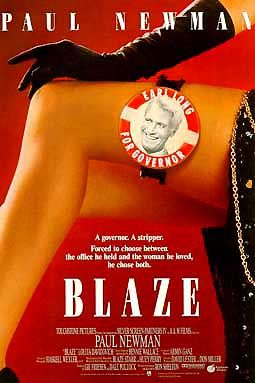
The 1989 film Blaze (which is currently making the rounds on cable) is a part of this cinematic tradition of films about flamboyant Southern politicians. It’s part comedy and part melodrama and, perhaps not surprisingly, it takes place in 1950s Louisiana.
(Why isn’t that surprising? Listen, my family used to live in Louisiana. I still visit Louisiana on a fairly regularly basis. Louisiana is crazy. That’s one reason why I love it.)
Blaze is based on the true story of Gov. Earl K. Long (played here by Paul Newman). The younger brother of former Governor Huey P. Long (who himself served as the basis for the character of Willie Stark in All The King’s Men), Earl served as governor for three non-consecutive terms. He was a flamboyant populist, in the style of his older brother, the type who campaigned as one of the “common” people and who was either extremely corrupt or extremely progressive, depending on which historian you happen to be reading.
In Blaze, Earl is nearing the end of his third term. Because the state’s constitution does not allow a governor to succeed himself, Earl is currently campaigning for lieutenant governor, with the plan being that one of Earl’s allies will be elected governor and will then resign so that Earl can succeed him. While this is traditionally the sort of thing that voters in Louisiana would love, Earl is struggling because some voters are angry over his support for the civil rights movement.
Earl is also struggling because he’s just met Blaze Starr (Lolita Davidovich), a much younger stripper from West Virginia. For Earl, it’s love at first sight and soon, Blaze feels the same way. Soon, she and Earl are going across the state together. However, after Earl’s opponents arrange for him to be sent to a mental asylum, Blaze is forced to consider that she might be too big of a political liability to remain with the man she loves.
If that all sounds incredibly romanticized — well, it is. After I watched Blaze, I did a little bit research on Earl and Blaze. To say the film is fictionalized would be an understatement. (Though, interestingly enough, Earl actually was sent to a mental asylum while serving as governor.) But is that really a surprise? Would audiences rather watch a movie about a corrupt, old racist who regularly cheated on his wife or would they rather watch a romanticized love story with hissable villains and moments of crowd-pleasing comedy?
As for the film itself, it’s okay. It moves a bit too slowly for its own good and it’s never quite as enthralling as you might hope it would be, but both Paul Newman and Lolita Davidovich are well-cast and have a likable chemistry. I related to the film’s version of Blaze Starr, mostly because we’re both redheads with big boobs who have a natural distrust of authority figures. If you’re into Southern politics and you’re not obsessed with historical accuracy, you might enjoy Blaze.
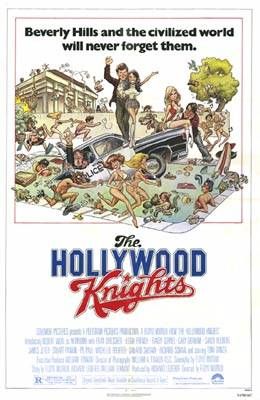 Halloween Night, 1965. While the high school holds a pep rally and the Beverly Hills Homeowners Association debate the best way to tackle the problem of juvenile delinquency, the Hollywood Knights hang out at Tubby’s Drive-In, their favorite burger joint. The Hollywood Knights are a car club and a group of fun-loving rebels, determined to have a good time and to always humiliate Officers Clark (Sandy Helberg) and Bimbeau (Gailard Sartain). In practice, this amounts to a lot of jokes about flatulence and Newcomb Turk (Robert Wuhl) mooning the cops every chance the he gets. I’m hoping a stunt butt was used for the mooning shots. If I had known watching Hollywood Knights would mean seeing Robert Wuhl’s bare ass a dozen times over 91 minutes, I wouldn’t have started the movie.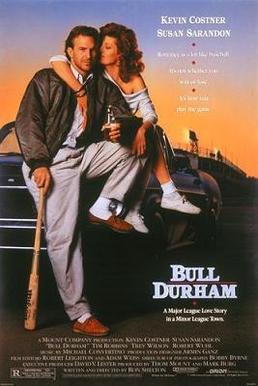



 Through the Shattered Lens
