
From the very first few scenes of the 1985 film, The Mean Season, one thing is abundantly clear. People are dying in Florida.
In itself, that’s probably not a shock. Death is a part of life, after all. Add to that, the majority of The Mean Season takes place in Miami, the seventh most populous area of the United States. It makes sense that the more people you have living in one area, the more people are also going to end up dead. That’s just the way things work.
Still, Malcolm Anderson is getting tired of all the death. Played by a youngish and sexy Kurt Russell, Malcolm’s a journalist. He covers the crime beat for the Miami Herald. He spends all day reporting on death and violence and he’s finally reached the point where he’s burned out. He and his girlfriend, a teacher named Christine (Mariel Hemingway), are even planning on moving to Colorado. Malcolm says that he could be very happy working at a small town newspaper. His editor (Richard Masur) doesn’t believe him and, quite frankly, neither do we. Malcolm may say that he wants peace and quiet but it’s hard not to feel as if he’s fooling himself.
One day, Malcolm gets a phone call. The voice on the other line (which belongs to character actor Richard Jordan) is deceptively calm. The caller explains that he’s a fan of Malcolm’s work. The caller also claims to be responsible for a series of murders that have recently taken place. At first, Malcolm is skeptical. After all, he gets calls from crazy people all the time. That’s one reason why he wants to leave Miami, after all. But then the caller starts to give Malcolm details about the crimes, details that haven’t been released to general public…
The killings continue and, after every murder, the caller contacts Malcolm. Soon, Malcolm is appearing on the national news, giving carefully calculated interviews about what it’s like to be a celebrity. Malcolm is soon on the front page of all the papers. Malcolm’s happy. His editor is happy. But you know who isn’t happy? The killer. He didn’t go to all the trouble to kill those people just so Malcolm could get famous off of his hard work! Soon, the killer is no longer content to just call Malcolm. Now, he wants to meet face-to-face and maybe even get to know Christine as well…
The Mean Season is one of those movies that starts out well but then falls apart towards the end. It’s not a spoiler to tell you that the killer eventually ends up kidnapping Christine. You probably figured out that was going to happen as soon as I told you that Malcolm had a girlfriend. (It doesn’t help that Christine is such an underwritten character that it feels like the only reason she was put in the film was so she could be used for one gratuitous nude scene and then get kidnapped.) Once the killer kidnaps her, he goes from being a genuinely intriguing menace to just being a typical and overly verbose movie psycho.
That’s a shame because the first half of The Mean Season is really quite good. The film makes excellent use of its locations, capturing the humid atmosphere of Florida in the summer. As the killer, Richard Jordan alternates between being coldly calculating and surprisingly vulnerable without missing a beat. (Interestingly, he appears to be personally hurt when he realizes that Malcolm doesn’t consider him to be a friend.) Not surprisingly, Kurt Russell is likable as the conflicted Malcolm but his best moments are the ones where he suggests that Malcolm has become so addicted to fame that he’s almost hoping that the killer strikes again. As the two homicide detectives who are assigned to keep an eye on Malcolm, both Richard Bradford and Andy Garcia are perfectly cast. A scene where Bradford tries to comfort a child who accidentally gets in the middle of the search for the killer is the best in the film. “We’re just looking for the bad guys,” he tell the traumatized child. It’s small moments like this that elevates The Mean Season above the typical mid-80s serial killer film.
Seen today, The Mean Season — with its emphasis on newspapers — feels like a historical artifact. If the film were made today, Russell would definitely work for either a 24-hour cable news channel or an online news site. It actually would be interesting to see this story updated and retold for the age of clickbait. Somebody needs to get on that and, while they’re at it, come up with the type of ending that an otherwise intriguing story like this deserves.
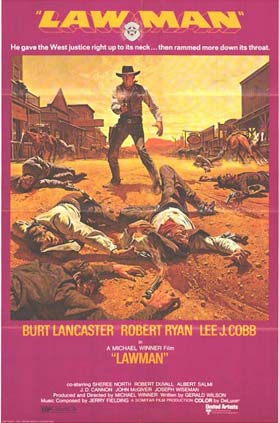 In the 1880s, Jared Maddox (Burt Lancaster) is the marshal of the town of Bannock. After a night of drinking and carousing leads to the accidental shooting of an old man, warrants are issued for the arrest of six ranch hands. Maddox is determined to execute the arrest warrants but the problem is that the six men live in Sabbath, another town. They all work for a wealthy rancher (Lee J. Cobb) and the marshal of Sabbath, Cotton Ryan (Robert Ryan), does not see the point in causing trouble when all of the men are likely to be acquitted anyway. Maddox doesn’t care. The law is the law and he does not intend to leave Sabbath until he has the six men.
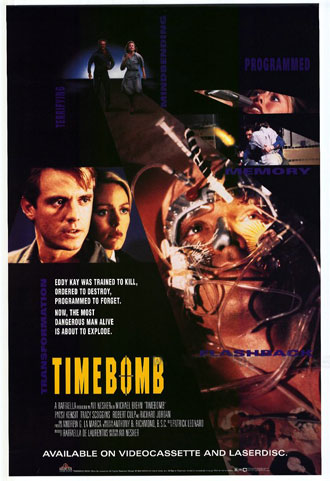 Recall Total Recall?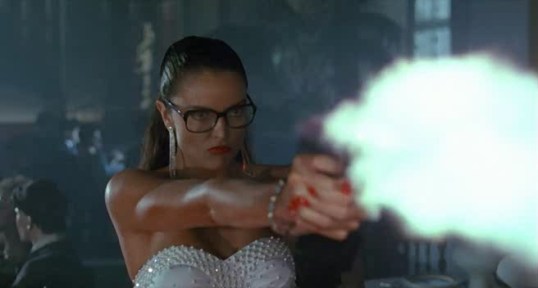
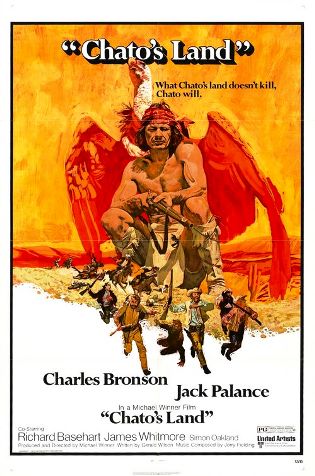 Don’t mess with Charles Bronson.
 Through the Shattered Lens