Today’s song of the day is one that was used so memorably in An American Werewolf In London. From Creedence Clearwater Revival, here is Bad Moon Rising.
Bad Moon Rising
I see a bad moon rising. I see trouble on the way. I see earthquakes and lightning. I see bad times today.
Don’t go around tonight, Well, it’s bound to take your life, There’s a bad moon on the rise.
I hear hurricanes a-blowin’. I know the end is comin’ soon. I feel rivers overflowin’. I hear the voice of rage and ruin.
Don’t go around tonight, Well, it’s bound to take your life, There’s a bad moon on the rise. Alright!
Hope you got your things together. Hope you are quite prepared to die. Looks like we’re in for nasty weather. One eye is taken for an eye.
Well, don’t go round tonight, Well, it’s bound to take your life, There’s a bad moon on the rise.
Don’t come around tonight, Well, it’s bound to take your life, There’s a bad moon on the rise.
Future serious actor Robert Vaughn made his film debut in 1958’s TeenageCaveman. Directed by Roger Corman, TeenageCaveman tells the story of a rebellious young man (that’s Robert Vaughn) who chooses to defy his father’s warnings and venture beyond the caves and into “the forbidden zone.” He’s told that monsters roam in the forbidden zone and indeed, at least one of them does. However, neither the Teenage Caveman nor his father are prepared for what lies at the heart of the forbidden zone.
(What will he find out there, Dr. Zaius?)
Robert Vaughn later said that, out of all the bad films that he made, this was the worst. Personally, I think he was being a bit too hard on the film. It’s not good but it is definitely fun. Along with watching all of the dinosaur stock footage, you get to wonder how a caveman — especially a teenage caveman! — could possibly have such perfect hair. Even more importantly, if you stick with it, this film has a twist ending that has to be seen to be believed.
In 2015’s Alison’sChoice, Chanel Marriott plays Alison.
Alison is a teenager who has a difficult relationship with her father. He holds back his emotions from her. She’s been left feeling insecure as a result and is perhaps a bit too dependent upon validation from other men. For instance, her no-good boyfriend, Rick (Julian Alexander), bullies her into having sex in his tiny car. When Alison later discovers that she’s pregnant, Rick’s response is to tell her to get rid of it. He tells her to go find a clinic and have an abortion and then talk to him later. Rick makes it clear that he will not paying for the procedure. He also leaves it up in the air as to whether or not he’ll even come to the clinic to support Alison.
Classy guy, that Rick.
At the clinic, Alison finds herself having doubts. Does she really want to get an abortion? The clinic’s rather harsh and antiseptic atmosphere doesn’t make things any easier. One nurse (Liz Randall) tries to pressure Alison to go through with her abortion. The doctor (Britt Prentice) confesses that he can’t guarantee that abortion isn’t murder. At the front desk, Ms. Glo (Bunny Gibson) asks Alison is she’s really sure she wants to go through with the procedure. A pushy social worker named Marta (Amy Lydon) assures Alison that it’s not big deal. Lecretia (Alicia Monet Caldwell) makes fun of Alison for being a first-timer.
And, of course, Jesus (Bruce Marchiano) shows up as a janitor and encourages Alison not to get an abortion. Actually, he encourages everyone all over the world not to get an abortion and, whenever anyone does, he starts crying. He says that he’s been working as a janitor since 1973. That, of course, was the year of Roe v Wade.
Bruce Marchiano has played Jesus in a number of films. He played Jesus in The Encounter, which is something of a guilty pleasure of mine. Marchiano has a calm and soothing voice and his eyes tend to radiate kindness, which makes him a good choice to play Jesus. From what I’ve seen of him in various faith-based productions, he’s not a bad actor at all. He can deliver his lines without looking straight at the camera and he’s capable of showing emotion. By the standards of many faith-based films, that makes him almost Brandoesque.
Unfortunately, Alison’sChoice is so heavy-handed and awkwardly acted by everyone else in the cast that Marchiano’s characteristically good and empathetic performance can’t really save it. I’m not going to get into the specifics of whether or not the film is correct about abortion, beyond saying that this is not a film that is going to change anyone’s mind about the issue. It’s a heavy-handed pro-life tract. (Then again, there’s also been more than a few heavy-handed pro-choice tracts.) What I will say is that Alison, as a character, is so indecisive and, quite frankly, annoying that it didn’t take me long to lose interest in her. Even after she becomes convinced that she’s actually talking to Jesus, she still can’t decide whether or not she loves her boyfriend. Girl, Jesus just told you that your boyfriend is no good. I don’t care what anyone thinks about abortion. If Jesus suddenly shows up and tells you to dump your boyfriend, you do it.
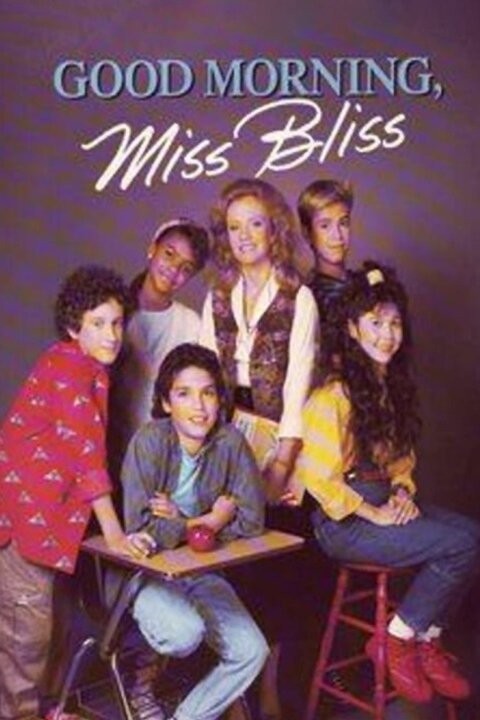
Welcome to Late Night Retro Television Reviews, a feature where we review some of our favorite and least favorite shows of the past! On Saturdays, I will be reviewing Good Morning, Miss Bliss, which ran on the Disney Channel from 1988 to 1989 before then moving to NBC and being renamed Saved By The Bell. The entire show is currently streaming on Prime!
This week, we close out the Miss Bliss years.
Episode 1.13 “The Mentor”
(Dir by Gary Shimokawa, originally aired on March 18th, 1989)
For some reason, Miss Bliss’s mentor — James Lyman (Robert Donner) — shows up at the school to visit his favorite student, Carrie Bliss. (Apparently, the very British Miss Bliss grew up in Indiana. I’m not saying it’s not possible, as her parents could have come over when Miss Bliss was still young. That said, it just seems odd that no one — not even her students — ever mention anything about Miss Bliss being British. It would seem like something Miss Bliss would have mentioned during all of those lessons about the Constitution and American history.) Mr. Lyman is retired but he agrees to substitute for Miss Bliss while she spends a week doing paperwork. (Most teachers would probably just have to suck it up and both teach and do paperwork during the week but not our Miss Bliss!)
This is one of those annoying episodes where Mr. Lyman is the unconventional teacher who gives the kids free hall passes and takes them on extended field trip without getting permission beforehand. Mr. Lyman makes learning fun! (Gag!) Miss Bliss gets upset because Mr. Lyman isn’t following her lesson plan and Mr. Lyman basically accuses Miss Bliss of being a sellout. For once, I’m on Miss Bliss’s side here. Mr. Lyman is a substitute. His job is to follow the lesson plan. If Miss Bliss doesn’t want him to handing out hall passes, that’s her right. It’s her class! And this whole thing of trusting the students not to abuse the hall pass? I would have totally abused a free hall pass. Everyone would abuse a free hall pass! I would laughed at any teacher dumb enough to give me a free hall pass. It’s almost as if the people who wrote this episode had absolutely no knowledge of how teenagers think. In the end, Mr. Lyman comes across as being an unlikable crank. The episode ends up with dressing up like Abraham Lincoln and showing up, unannounced, in Miss Bliss’s classroom. Seriously, someone call the cops on their weirdo.
Meanwhile, Nikki worries that boys don’t see her as being feminine. Lisa teachers her how to wear makeup. Next year, maybe Nikki and Zach….
Oh, wait a minute. Sorry, Zach, Mr. Belding, Screech, and Lisa are all moving to California. Nikki, Mickey, Miss Bliss, Ms. Palladino, Mylo are staying in Indiana. The Mentor was the final episode of Good Morning, Miss Bliss. The Disney Channel canceled the show but producer Peter Engel took some of the cast over to NBC and launched Saved By The Bell. The Miss Bliss episodes would later be repackaged for syndication with Zach saying, “I remember this time in Junior High…..” I remember changing the channel whenever I realized a Miss Bliss episode was starting.
We’ll start Saved By The Bell next week. Finally, the tyranny of Miss Bliss is over.
Eh. I’m not really interested in Melissa’s adventures as a sixth grade teacher. As well, Tariq really hasn’t been amusing since the end of the first season. I worry this show is reaching the “treading water” phase of its existence.
Hell’s Kitchen (Thursday, Fox)
After a week of commercials that implied the police would be showing up at Hell’s Kitchen to arrest one of the chefs, this week’s episode featured the cops showing up at Hell’s Kitchen so the chefs could make them breakfast. I wasn’t really surprised. Hell’s Kitchen has always been shameless about doing stuff like that. That’s actually a part of the show’s appeal. As for this week’s episode, everyone appears to be remarkably incompetent. I wouldn’t accept a meal from any of these people.
Law & Order (Thursday Night, NBC)
Another week, another murder. Once again, Maroun was upset over having to do her job. The law half of this show is usually pretty good but the order half is awful. Nolan is such a wimp. Maroun should have been fired the first time she ever suggested allowing a criminal to go free.
Ozark Law (Hulu)
I guess this show ran on A&E earlier this year. I watched the first episode on Hulu. It was a reality show about cops in small town Missouri. They had to deal with a bunch of people hanging out at the lake for the Fourth of July weekend. It was the usual stuff. The cops arrested a woman for having an expired license. A man’s house was burglarized. The male cops were all heavily tattooed and bearded. The female cops all looked like the hyper-religious girl from high school who would judge you for wearing a short skirt. All the cops had that terse cop way of speaking.
The Prisoner (Nightflight Plus)
Jeff and I watched the final episode of this 60s show on Friday night. I’ll miss Rover.
Special Force: World’s Toughest Test (Fox, Thursday Night)
Jussie Smollett has left the show so what even is the point now?
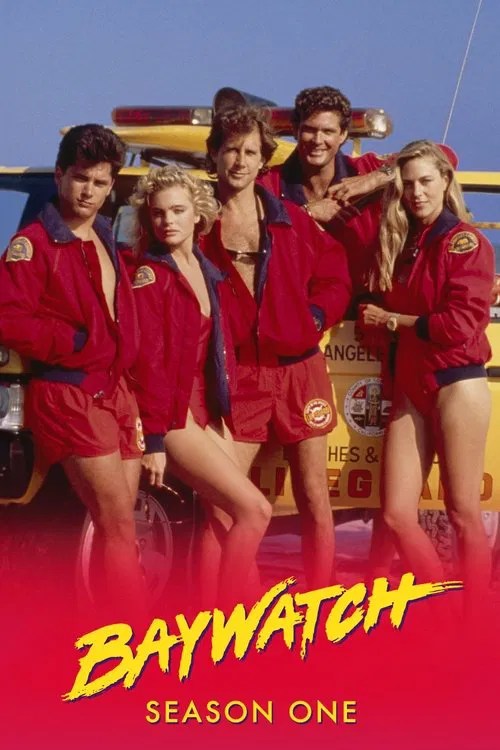
Welcome to Retro Television Reviews, a feature where we review some of our favorite and least favorite shows of the past! On Saturdays, I will be reviewing Baywatch, which ran on NBC and then in syndication from 1989 to 2001. The entire show can be purchased on Tubi.
This week, Hobie’s a snitch!
Episode 1.1 “In Deep”
(Dir by Peter H. Hunt, originally aired on September 22nd, 1989)
Hobie, you idiot!
Mitch’s young son is spending the summer with his father and he’s supposed to be concentrating on summer school. Instead, he hanging out with two older guys, Scott (Christopher Murphy) and Ron (Lance Gilbert), and basically letting himself be used as a slave in return for jet ski lessons.
Mitch is not a fan of jet skis. They’re unregulated and they’re dangerous, he says. As if to prove Mitch’s point, Scott collides with a windjammer! The woman on the windjammer is killed. (Craig and Eddie pull her body out of the ocean, which is the type of sad thing that Baywatch would eventually stop featuring.) Hobie, realizing Scott is guilty, tries to find the evidence to prove it and nearly gets himself killed as a result. Fortunately, Mitch is able to save him and Scott is arrested. I have to say that, after this episode, I kind of found myself agreeing with Mitch’s ex-wife. The beach is too dangerous!
Meanwhile, Craig caught Eddie sleeping in his lifeguard tower and realized that Eddie, who I assume is getting paid to be a lifeguard, doesn’t have a home. Did he ever have a home? Has he been sleeping on the beach all this time? How did he apply for Lifeguard School without an address? Anyway, Craig takes Eddie back to his Venice loft, where Craig’s wife (now played by Holly Gagnier, replacing the pilot’s Gina Hecht) decides that they should let Eddie rent their storage room. It’s even got a view of the beach, if you ignore all the other buildings in the way and instead just find that one unobstructed alley to look down. (Actually, Eddie finding and looking down that alley was cute and likable. He was so excited!) I have to say that, for a lawyer, Craig’s loft really sucked. It was pretty impressive for a lifegaurd, though.
In 1977’s Looking for Mr. Goodbar, Diane Keaton plays Theresa Dunn.
A neurotic and single woman who has never emotionally recovered from her childhood struggle with scoliosis, Theresa is trying to find herself in the wild and promiscuous world of the 1970s. After losing her virginity to a condescending college professor (Alan Feinstein), Diane goes on to have relationships with a needy social worker (William Atherton) and an hyperactive petty criminal (Richard Gere). During the day, she teaches deaf children and she’s good at her job. She even manages to win over the distrustful brother (Levar Burton) of one of her students. At night, she hits the bars. She buys drugs from the neighborhood dealer (Julius Harris). She tries to read the book that she always carries with her. (Some nights, it’s The Godfather and other nights, it’s something else.) She picks up strange men and takes them to her roach-infested apartment. One of those men, Gary (Tom Berenger), turns out to both be a bit insecure about his masculinity and also totally insane….
Looking for Mr. Goodbar is an adaptation of a novel that was inspired by the real-life murder of a New York school teacher named Roseann Quinn. The book was best seller and, just as he had with a previous best-selling true crime novel, director Richard Brooks bought the rights and both wrote and directed the film. Diane Keaton, who at that point was best-known for playing Kay Adams in The Godfather and for appearing in Woody Allen’s comedies, took on the demanding role of Theresa and, whatever one may think of the film itself, it can’t be denied that Keaton gives a brave performance as the self-destructive Theresa. In fact, I would say it’s one of Keaton’s best performances, outside of her work with Woody Allen and The Godfather Part II. If she had been played by a lesser actress, Roseann could have been unbearable. As played by Diane Keaton, though, she’s everyone’s best friend who just need some time to find herself. The viewer worries about her and wants to protect her as soon as they see her, making her ultimate fate all the more tragic.
As for film itself, I’ve watched Looking For Mr. Goodbar a few times and I’m always a little bit surprised by how bad the movie actually is. The film actually gets off to a strong start. The scenes between Theresa and the professor make for a sensitive portrait of a repressed young woman finally getting in touch with her sexuality and, in the process, discovering that she deserves better than the man she’s with. But once Theresa moves into her apartment and starts hitting the bars at night, the film takes on a hectoring and moralistic tone that leaves the viewer feeling as if the film is blaming Theresa for the tragedy that’s waiting for her at the end of the story. Diane Keaton and Tuesday Weld (who plays her sister) both give excellent performances but everyone else in the film either does too much or too little. This is especially true of Richard Gere, who is very hyperactive but still strangely insubstantial in his role. (Whenever Richard Gere appears on screen, one gets the feeling that they could just walk right through him.) A scene where Gere jumps around the apartment is meant to be disturbing but it’s more likely to inspire laughter than chills.
It’s an overly long film and the moments in which Theresa has dark, sexually-charged fantasies are never quite as powerful as the film obviously meant for them to be. (Brian Dennehy makes his film debut as a doctor who kisses Theresa’s breast during one of her fantasies.) As opposed to the empathy that he brought to In Cold Blood, one gets the feeling that director Richard Brooks didn’t like anyone in this movie and that he was more interested in Theresa as a cautionary tale than as a human being. With this film, Brooks seemed to be standing athwart the Sexual Revolution and shouting, “Stop!” That said, the film’s final moments are genuinely disturbing and difficult to watch. It’s the one moment where Brooks’s lack of subtlety pays off. Those last minutes are about as horrific as anything you could expect to see.
As for Roseann Quinn, her killer was eventually arrested. John Wayne Wilson hung himself in prison, 5 months after murdering her.
Inferno (1980, dir by Dario Argento, DP: Romana Albano)
Today’s horror song of the day comes from Keith Emerson’s soundtrack of Dario Argento’s Inferno. Emerson did not have an enviable task, having to follow up Goblin’s soundtrack for Suspiria. But Emerson pulled it off, crafting a score that compliments Goblin’s earlier work while maintaining an identity of its own.
The 1997 Italian horror film, Wax Mask, takes place in Rome at the turn of the 20th Century.
The film opens in 1900, with a young girl named Sonia witnessing the murder of her parents by a man with an iron claw and a wax mask. 12 years later, Sonia (Romina Mondello) steps into a Rome’s newest sensation, a wax museum where all of the wax figures appear to either be victims or murderers. The museum is meant to scare people. One man accepted a dare to spend the night in the museum and he was found dead the next morning, frightened to death. Sonia’s not interested in being scared. She just needs a job. Her mother taught her how to make clothes for wax figures. The owner of the museum, Boris (Robert Hossein), hires her.
When Sonia leaves the museum, her picture is taken by Andrea (Riccardo Serventi Longhi), a reporter who is investigating the mysterious deaths that have been connected to the museum. Meanwhile, Inspector Lanvin (Aldo Massasso) contacts Sonia to let her know that he’s following up some new leads concerning the still-unsolved deaths of her parents. He seems quite concerned about her working at the museum. When Lanvin later turns up dead, Sonia becomes concerned as well.
You can probably guess where all of this is going. Wax Mask is a remake of House of Wax, with the action moved to Rome and also with a lot more nudity and considerably more gore. The murders are brutal and bloody and the same can be said of what Sonia discovers when she starts to take a closer look at the wax figures in the museum. Perhaps the most disturbing aspect of this film is the idea that the wax figures are actually suspended in a state between life and death, aware of what is happening but unable to move, speak, or do anything about it. WaxMask is a frequently diverting throwback to the bloody but atmospheric giallo films of the 70s. Suspense is mixed with special effects, some of which are more effective than others.
Wax Mask was originally meant to be Lucio Fulci’s final film. Dario Argento saw his old cinematic rival, Lucio Fulci, in 1994, by which point Fulci was using a wheelchair and was in frequent pain. Thinking that working on a movie might be good for Fulci’s state-of-mind and overall health, Argento agreed to produce Fulci’s next film. The idea that they came up with was to remake House of Wax. While Argento wanted to concentrate on spectacular death scenes, Fulci wrote a script that emphasized atmosphere over blood. Tragically, Fulci died in 1997 while the film was still in pre-production. Argento replaced Fulci with Sergio Stivaletti, a special effects artist who has worked on several Argento films.
Stivaletti rewrote the script and put the emphasis back on the special effects. (In the end, the killer has as much in common with The Terminator than with a traditional giallo killer.) Stivaletti does a good job directing the film. There are plenty of scary scenes. The film looks good. Even the special effect shots that don’t quite work still have a certain charm to them. That said, it’s hard to watch the film without thinking about what Fucli, at his best, could have done with the material.
In the end, though, WaxMask is an effective work of late era Italian horror.







 Through the Shattered Lens